
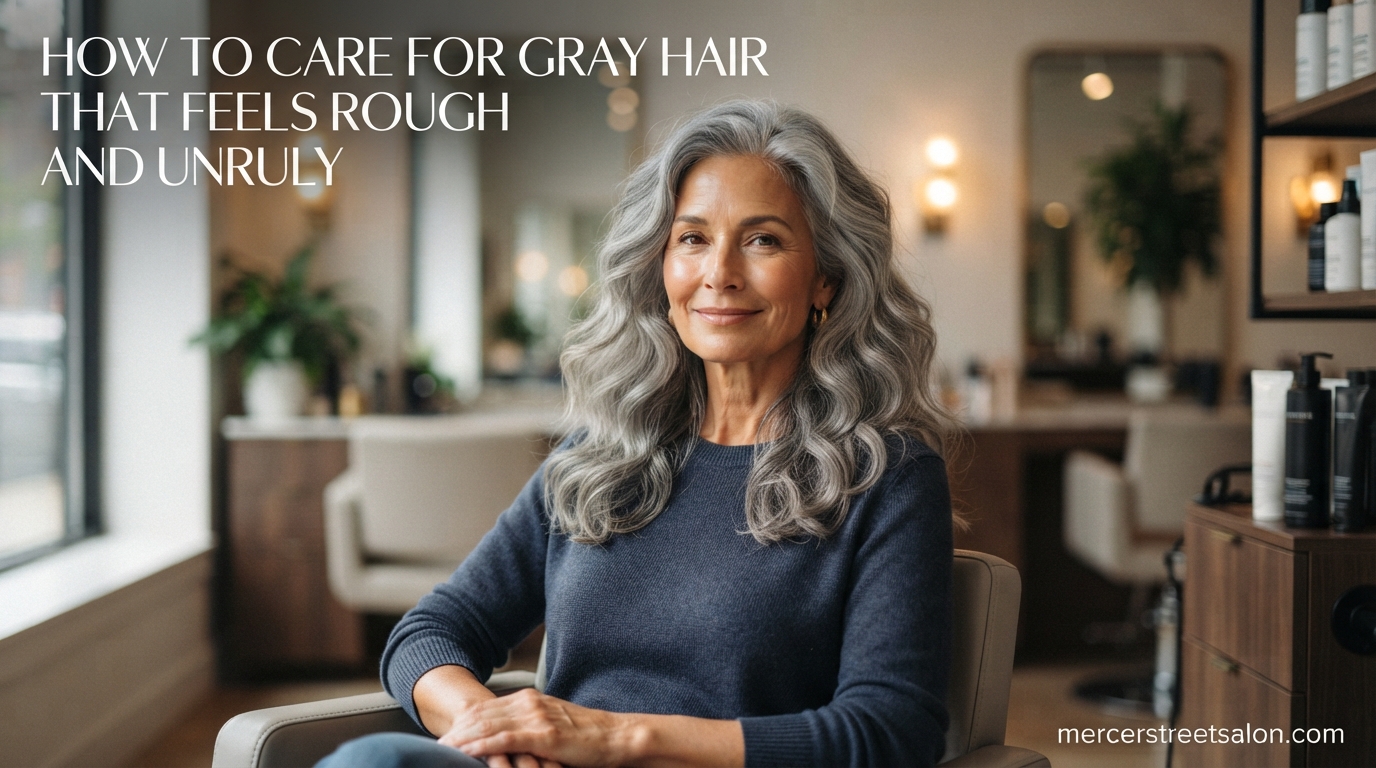
If you have noticed your gray hair feeling rough, wiry, or completely unmanageable, you are not imagining things. At Mercer Street Salon, our team has worked with countless clients who describe their silver strands as feeling like straw, steel wool, or wire. Learning how to care for gray hair that feels rough and unruly changes everything about your daily routine.
Gray hair undergoes real structural changes that make it drier, coarser, and more prone to frizz than pigmented hair. The good news is that once you understand what is happening beneath the surface, you can build a care routine that transforms rough texture into soft, shiny, manageable silver.
In this guide, we walk through the science behind why gray hair changes texture, the hydration strategies that actually work, a daily routine you can start today, and the specific techniques that tame wiry strands. We also cover common mistakes that could be making your hair worse without you realizing it.
Table of Contents
Why Gray Hair Becomes Rough and Unruly
Gray hair feels rough and unruly because of three structural changes that happen when hair loses its pigment. Understanding these changes is the first step to fixing the texture.
Melanin Loss Changes Hair Structure
When hair turns gray, the follicle stops producing melanin, the pigment that gives hair its color. Melanin is not just about appearance. It also provides structural integrity to the hair shaft. Without melanin, strands become more fragile and the texture shifts from smooth to coarse.
One Reddit user in the r/Haircare community explained it well: “The wiry texture happens because gray hair loses the melanin that gave it structure, and the cuticle layer lifts more easily.” That lifted cuticle is what makes each strand feel rough to the touch rather than smooth.
Sebum Production Drops Significantly
This is the biggest factor behind why your gray hair feels like straw. Your scalp produces sebum, a natural oil that travels down the hair shaft to moisturize and protect it. As hair turns gray, the follicle produces significantly less sebum.
Less sebum means less natural conditioning. Your hair is quite literally starved of the moisture it used to get automatically. A user on r/Aging put it plainly: “Apparently when hair turns grey, the hair follicle doesn’t produce as much sebum anymore, which usually moisturises the hair.” This is why your old hair routine suddenly stops working.
The Cuticle Becomes More Porous
Gray hair tends to have a more open, lifted cuticle layer compared to pigmented hair. This increased porosity means moisture escapes faster and humidity gets in more easily. The result is hair that feels dry on its own and turns frizzy the moment there is any moisture in the air.
Higher porosity also means your hair absorbs products differently. Heavy creams can weigh it down while lightweight products evaporate too quickly. Finding the right balance is part of what makes gray hair care feel so frustrating at first.
Hormonal Changes Play a Role Too
Many of our clients first notice rough, wiry gray hair during perimenopause or menopause. Estrogen levels dropping directly affects hair texture, thickness, and oil production. One community member shared: “Once I hit menopause at 55, my hair became more frizzy, especially the gray hair. The wiry, sticking straight out kind.”
This hormonal shift compounds the natural changes happening in gray hair follicles. If you are going through menopause and your hair texture has changed dramatically, the two are connected. Your care routine needs to account for both factors.
How to Care for Gray Hair That Feels Rough and Unruly: Hydration Strategies
Hydration is the single most important factor in caring for rough gray hair. Since your scalp is no longer producing enough natural oil, you need to replace that moisture manually and lock it in effectively.
Switch to a Hydrating, Sulfate-Free Shampoo
Sulfates are harsh detergents that strip away what little natural oil your gray hair still has. Look for sulfate-free shampoos labeled as moisturizing, hydrating, or formulated for dry and damaged hair. These cleanse gently without worsening the dryness problem.
Wash less frequently too. Every wash removes natural oils that take days to replenish on gray hair. Aim for two to three washes per week at most, using a dry shampoo or water rinse between wash days if needed.
Use Deep Conditioning Weekly
A regular conditioner is not enough for rough gray hair. You need a deep conditioning treatment or hair mask applied once a week. Look for products containing ceramides, which help rebuild the cuticle layer, and hyaluronic acid, which draws moisture into the strand.
Apply your deep conditioner to damp hair, cover with a shower cap, and leave it for 15 to 30 minutes. The shower cap traps heat, which opens the cuticle slightly and allows the conditioning ingredients to penetrate more deeply. This single step makes the biggest difference for rough texture.
Layer Leave-In Products on Damp Hair
Apply your leave-in products to hair that is damp, not soaking wet and not dry. Damp hair absorbs products most effectively because the cuticle is slightly open from the water. Start with a lightweight leave-in conditioner or cream, then seal with a small amount of oil.
This layering approach mimics what your scalp used to do naturally. The leave-in provides the moisture, and the oil acts as a sealant to prevent that moisture from evaporating. Without the oil seal, even the best leave-in conditioner will disappear within hours on porous gray hair.
Choose the Right Oils for Gray Hair
Not all oils work the same way on coarse gray hair. Based on our salon experience and community recommendations, these oils consistently perform well:
Jojoba oil closely matches the sebum your scalp naturally produces, making it one of the best options for gray hair. A user on r/longhair recommended: “Jojoba oil or grapeseed oil, a few drops on the scalp in parted sections, massage it in works well.”
Argan oil is rich in vitamin E and fatty acids that smooth the cuticle and add shine without weighing hair down. Grapeseed oil is lighter and works well for finer gray hair that gets greasy quickly. Coconut oil can work as a pre-shampoo treatment but may be too heavy for daily use on some hair types.
Building Your Daily Gray Hair Care Routine
A consistent daily routine matters more than any single product. Here is the routine our team at Mercer Street Salon recommends for gray hair that feels rough and unruly.
Morning Routine
Step 1: Mist your hair lightly with water from a spray bottle. Dry gray hair responds better to styling when it has slight dampness. Do not soak it, just add enough to reactivate yesterday’s products.
Step 2: Apply a pea-sized amount of leave-in conditioner or hair cream to the mid-lengths and ends. Avoid the roots unless your scalp feels particularly dry.
Step 3: Smooth two to three drops of jojoba or argan oil over the surface of your hair, focusing on the ends. This seals the cuticle and adds immediate shine.
Step 4: Style as desired, always using a heat protectant if you reach for any hot tools.
Evening Routine
Step 1: Brush your hair with a boar bristle brush for two to three minutes. This distributes the natural oils from your scalp down to the ends, which is critical for gray hair that lacks sebum.
Step 2: Apply a few drops of oil to the lengths if your hair feels dry. Focus on the ends, which are the oldest and driest parts of your hair.
Step 3: Braid your hair loosely or wrap it, then sleep on a silk or satin pillowcase. Cotton pillowcases absorb moisture from your hair overnight, while silk allows your hair to retain hydration and prevents friction that causes frizz.
Weekly Deep Treatment
Once a week, replace your regular conditioner with a deep conditioning mask. Apply it to clean, damp hair and leave it on for at least 20 minutes. For extra penetration, sit under a warm hooded dryer or wrap a warm towel around your head.
Once a month, consider a protein treatment to help rebuild the structural integrity that melanin loss has compromised. Look for products with keratin or bond-building ingredients. Do not overuse protein treatments, as too much protein can actually make hair feel brittle.
How to Soften and Tame Wiry Gray Hair
Softening wiry gray hair requires specific techniques beyond general hydration. Here are the methods that actually work based on our salon experience and what real users report.
Use Purple Shampoo Correctly
Purple shampoo keeps gray hair bright and prevents yellow tones from environmental factors like UV exposure and product buildup. But many people use it incorrectly, which worsens dryness.
Use purple shampoo once a week at most. Leave it on for only two to three minutes before rinsing. Purple shampoos can be drying because they contain toning pigments, so always follow with a deep conditioner. If your hair feels rougher after using purple shampoo, switch to a purple conditioner instead, which tones more gently.
Try the Oil Pre-Poo Method
Applying oil to your hair before shampooing protects the cuticle from being stripped by cleansers. Coat your dry hair from mid-shaft to ends with warm coconut, argan, or jojoba oil 30 minutes before washing. You can also leave it on overnight for an intensive treatment.
When you shampoo, focus on the scalp only. Let the suds run through the lengths as you rinse. This cleanses your scalp without aggressively stripping the oil from your lengths.
Stop Gray Hair From Sticking Up
Wiry gray hairs that stick straight up are a common frustration. These stubborn strands happen because the hair shaft has changed shape as it lost pigment, growing in with a different curl pattern or texture than the surrounding hair.
To tame them, apply a small amount of styling cream or pomade to your fingertips and smooth directly over the problem areas. Do not use hairspray alone, as it dries hard and makes the wiry texture more obvious. A lightweight cream or balm holds the hair down while keeping it soft to the touch.
For stubborn flyaways, a clean mascara wand or toothbrush sprayed lightly with hairspray works wonders. Gently brush the unruly strands down and they stay put all day.
Invest in a Boar Bristle Brush
A boar bristle brush is one of the best tools for gray hair. Unlike synthetic bristles, natural boar bristles distribute sebum from your scalp all the way down to the ends of your hair. This mimics the natural oil distribution that gray hair desperately needs.
Brush slowly from scalp to ends for two to three minutes every evening. You will notice your hair becoming softer and shinier within a week of consistent use. This single habit makes a visible difference.
Protect Your Hair From Heat and Sun
Gray hair is more susceptible to heat damage than pigmented hair. Always use a heat protectant spray or cream before blow-drying, flat ironing, or using hot rollers. Keep hot tools below 350 degrees Fahrenheit to minimize damage.
UV rays also damage gray hair, causing it to yellow and become even drier. If you spend time in direct sunlight, wear a hat or use a hair product with UV protection. This prevents the yellowing and brittleness that sun exposure causes.
Common Mistakes That Make Gray Hair Worse
Sometimes the things you do to care for your hair are actually making the roughness and unruliness worse. Here are the most common mistakes we see at the salon and how to fix them.
Washing Too Frequently
Every shampoo strips your hair of natural oils. Gray hair already produces less sebum, so frequent washing creates a cycle of dryness that no product can overcome. Reduce your wash frequency to two or three times per week and use a shower cap on non-wash days.
Using Hot Water
Hot water opens the hair cuticle and strips oils aggressively. Wash your hair with lukewarm water instead, and finish with a cool rinse to seal the cuticle. This simple change makes hair immediately smoother and shinier.
Skipping Heat Protectant
Even one blow-dry without heat protectant can damage already fragile gray hair. The heat lifts the cuticle further and causes micro-fractures along the strand. Make heat protectant a non-negotiable step every single time you use a hot tool.
Ignoring Hard Water
Hard water leaves mineral deposits on your hair that build up over time, making it feel rough, waxy, and impossible to moisturize. If you live in an area with hard water, install a shower filter. You can also use a chelating or clarifying shampoo once a month to remove buildup.
Mineral buildup is also what causes gray hair to take on a brassy or dull appearance. If your silver is looking tarnished despite using purple shampoo, hard water may be the culprit.
Using the Wrong Brush
Synthetic bristle brushes create static and friction that make wiry gray hair worse. They glide over the surface without distributing oils. Switch to a boar bristle brush or a mixed boar-and-nylon brush for daily brushing. Your hair will feel noticeably softer within days.
Overusing Protein Treatments
Protein treatments can help rebuild damaged gray hair, but too much protein causes hair to feel stiff and brittle. Balance protein treatments with deep moisture treatments. A good rule is one protein treatment per month paired with weekly moisture masks.
Professional Treatments and Natural Remedies
Sometimes home care is not enough on its own. Professional treatments and natural remedies can bridge the gap when your hair needs extra attention.
Professional Options Worth Considering
A keratin smoothing treatment can dramatically soften coarse gray hair for three to five months. Unlike traditional relaxers, modern keratin treatments do not contain harsh chemicals that damage hair further. They work by coating the cuticle with a protective protein layer.
Bond repair treatments, like those offered in salons, rebuild the internal structure of damaged hair. These are especially helpful if your gray hair has been colored in the past or regularly heat-styled. Ask your stylist about in-salon bond treatments that complement your regular maintenance.
A clear gloss or glaze treatment adds shine and smooths the cuticle without changing your hair color. This is an excellent option for gray hair that has lost its natural luster.
Natural Remedies That Actually Work
Community-tested natural remedies can supplement your regular routine. An overnight hot oil treatment using warm jojoba, argan, or sweet almond oil provides intensive moisture. Apply the warm oil to dry hair, wrap in a warm towel, and leave overnight.
An aloe vera gel mask applied for 30 minutes before washing adds hydration without weighing hair down. Honey mixed with your regular conditioner creates a humectant treatment that draws moisture into the strand. These natural methods work particularly well between salon visits.
FAQs
How to calm wiry grey hair?
To calm wiry grey hair, apply a leave-in conditioner to damp hair, seal with a few drops of jojoba or argan oil, and brush through with a boar bristle brush to distribute oils evenly. Sleep on a silk pillowcase to reduce friction and avoid hot water when washing, which makes the wiry texture worse.
Why does my grey hair feel like straw?
Grey hair feels like straw because the follicle produces significantly less sebum, the natural oil that moisturizes and protects the hair shaft. Melanin loss also changes the structural integrity of each strand, making the cuticle more porous so moisture escapes faster than your scalp can replace it.
How do you tame wiry grey hair?
Tame wiry grey hair by washing less frequently with a sulfate-free shampoo, applying a weekly deep conditioning mask, using a boar bristle brush to distribute natural oils, and sealing the ends with jojoba or argan oil daily. A silk pillowcase and heat protectant also prevent the texture from worsening.
Why is gray hair coarse and wiry?
Gray hair becomes coarse and wiry because melanin loss changes the hair’s internal structure and the follicle produces less sebum. The cuticle layer lifts more easily without melanin, making each strand feel rough. Hormonal changes during menopause can compound these effects, making texture changes even more pronounced.
How to moisturize dry gray hair naturally?
Moisturize dry gray hair naturally by applying warm jojoba, argan, or sweet almond oil as a pre-shampoo treatment for 30 minutes before washing. Use aloe vera gel as a hydrating mask, add honey to your conditioner for extra moisture retention, and sleep on a silk pillowcase to prevent overnight moisture loss.
How to stop grey hair sticking up?
To stop grey hair from sticking up, smooth a lightweight styling cream or pomade over problem areas with your fingertips. For stubborn flyaways, lightly mist a clean toothbrush or mascara wand with hairspray and gently brush the strands down. Washing with cooler water and using a boar bristle brush also helps hair lie flat.
Conclusion
Caring for gray hair that feels rough and unruly comes down to understanding what your hair needs now versus what it needed before. Melanin loss, reduced sebum production, and increased porosity mean your old routine will not work anymore. But with the right approach, gray hair can be soft, shiny, and beautifully manageable.
Focus on three pillars: consistent hydration through sulfate-free cleansing and weekly deep conditioning, oil sealing to lock in moisture, and gentle daily habits like boar bristle brushing and silk pillowcases. Avoid common pitfalls like frequent washing, hot water, and skipping heat protectant.
Learning how to care for gray hair that feels rough and unruly takes patience, but the results are worth it. Stick with your new routine for at least four weeks to see a real transformation. Your silver strands can look and feel better than ever with the right care and consistency.