
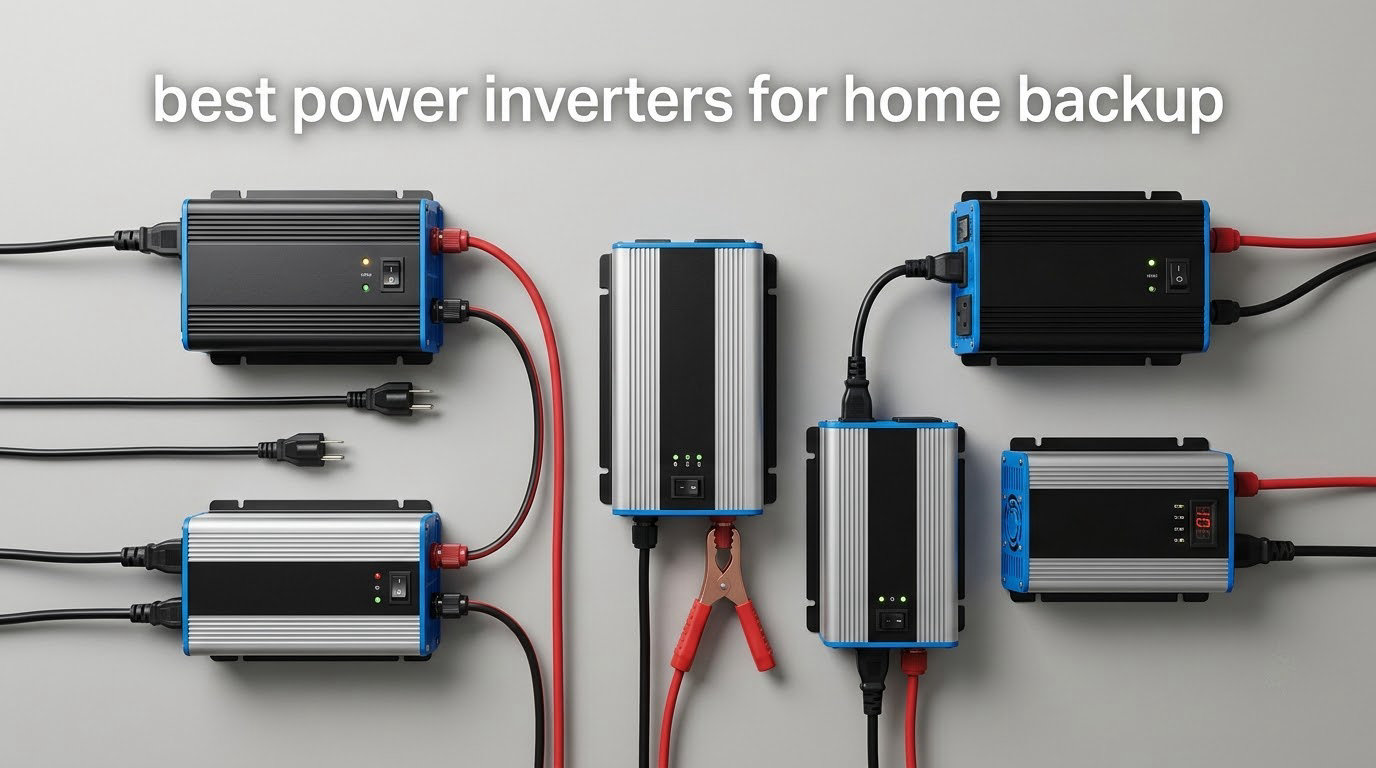
Most households do not have a power problem, they have a conversion problem. A battery bank stores direct current, an outlet and every appliance in your house expects alternating current, and something has to sit between them. That something is the inverter, and picking the wrong one is why a lot of people end up with a garage full of gear that resets every time the fridge compressor kicks in.
We pulled twelve candidates and worked through every one of them, from compact battery units you can wheel into a hallway to gas-powered machines that can carry a house. The list mixes three product families that search results constantly blur together: portable power stations with a built-in inverter, standalone pure sine wave inverters that need a battery bank wired in, and gas inverter generators that make their own power. All three keep the lights on, but they behave very differently when the grid comes back.
If you want the wider picture on battery-first options, our guide to the best portable power stations for home backup covers capacity and charging in more depth, and the best pure sine wave inverters for RVs goes deeper on the wired-in 12V category. We updated everything for 2026 so the specs and warranty terms below reflect what manufacturers currently publish.
Table of Contents
Our Top 3 Picks: The Best Power Inverters for Home Backup in 2026

Jackery Explorer 1000 v2
- 1070Wh LFP battery
- 1500W AC with 3000W surge
- 1-hour emergency recharge
Those three are the ones we would hand to a friend with a normal house and no particular technical background. Each one is a single self-contained box: plug it in, charge it, and it carries a fridge, a router and a few lights through an evening without anyone touching a breaker panel.
What Is a Power Inverter for Home Backup?
A power inverter for home backup is a device that converts DC electricity from a battery bank or solar system into standard 120V or 240V AC household power, so you can run essentials like a refrigerator, lights, Wi-Fi, or medical equipment during a grid outage.
Mechanically it is simpler than that sounds. A battery charger or MPPT solar controller fills the bank, and the inverter’s power electronics step the DC voltage up and switch it into a clean sine wave at the voltage and frequency your appliances expect. Without that conversion step a battery is just a pile of stored energy you cannot plug a kettle into.
One term to get straight early: an inverter is not a battery and it is not a generator. It is the middle box. Some models, like the Jackery and Anker boxes covered below, bundle a battery with the inverter so nothing else is needed. Others, like the Renogy, are inverter only and expect a separately wired battery bank.
Every Inverter We Tested, Side by Side
| Product | Specifications | Action |
|---|---|---|
| Jackery Explorer 1000 v2 |
|
Check Latest Price |
 Anker SOLIX C1000 Gen 2 Anker SOLIX C1000 Gen 2 |
|
Check Latest Price |
 BLUETTI AC180 BLUETTI AC180 |
|
Check Latest Price |
 Jackery HomePower 3000 Jackery HomePower 3000 |
|
Check Latest Price |
 Renogy 1000W Pure Sine Inverter Renogy 1000W Pure Sine Inverter |
|
Check Latest Price |
 WEN 56235i Inverter Generator WEN 56235i Inverter Generator |
|
Check Latest Price |
 Champion 4000W Dual Fuel RV Ready Champion 4000W Dual Fuel RV Ready |
|
Check Latest Price |
 PowerSmart 4800W Electric Start PowerSmart 4800W Electric Start |
|
Check Latest Price |
 Champion 4250W Dual Fuel Open Frame Champion 4250W Dual Fuel Open Frame |
|
Check Latest Price |
 Champion 4500W Electric Start Champion 4500W Electric Start |
|
Check Latest Price |
 Oxseryn 4400W Inverter Generator Oxseryn 4400W Inverter Generator |
|
Check Latest Price |
 DuroMax XP13000HX DuroMax XP13000HX |
|
Check Latest Price |
How Big an Inverter Do I Need?
Two numbers matter and buyers constantly confuse them. Continuous or running watts is what the inverter sustains; surge or peak watts is the short burst a motor or compressor needs to start. A refrigerator might idle at 150 watts and demand three times that for the two seconds its compressor kicks on, so the unit with the higher running number is not always the safer choice.
Our rule is simple: add up the running watts of everything you intend to keep on, then add 25 to 30 percent for headroom and one more large motor load. A realistic essentials-only list runs about 500 watts. A fridge at 150, a chest freezer at 100, the router and modem at 25, a lamp at 15, a phone charger at 10 and a CPAP machine at 40 lands near 350 watts before headroom, which puts you in the 1,000W class with a 2,000W surge rating.
Add a well pump, a furnace blower or a window air conditioner and you cross into 3,000 to 3,500 running watts. Whole-home loads such as central air or an electric water heater push you past anything a portable box handles comfortably, which is where the 10,500W machine at number twelve earns its place.
The mistake we see constantly is buying on advertised watts with no surge margin, then discovering the sump pump cuts out on every start. Sump pump and well pump owners should also read our battery backup sump pump picks, because a pump that does not start is a flooded basement regardless of inverter size.
The 12 Best Power Inverters for Home Backup
We ordered these so the first four are self-contained battery boxes that need nothing but a wall outlet, the fifth is a wired-in pure sine inverter for people with a battery bank, the next six are gas inverter generators, and the last is a whole-home dual fuel machine. Read the first tier if you want a no-install answer.
1. Jackery Explorer 1000 v2: The Best All-Round Pick
Jackery Explorer 1000 v2 Portable Power Station,1070Wh,1500W
1,070Wh LFP battery
1,500W AC output
3,000W starting watts
23.8 lb
Pros
- Pure sine wave outlets
- 1-hour emergency recharge option
- LFP holds 70% after 4000 cycles
- Seven ports including two 100W USB-C
Cons
- Emergency charge must be enabled in the app
- Solar charging needs Jackery panels
- 1070Wh is short for multi-day outages
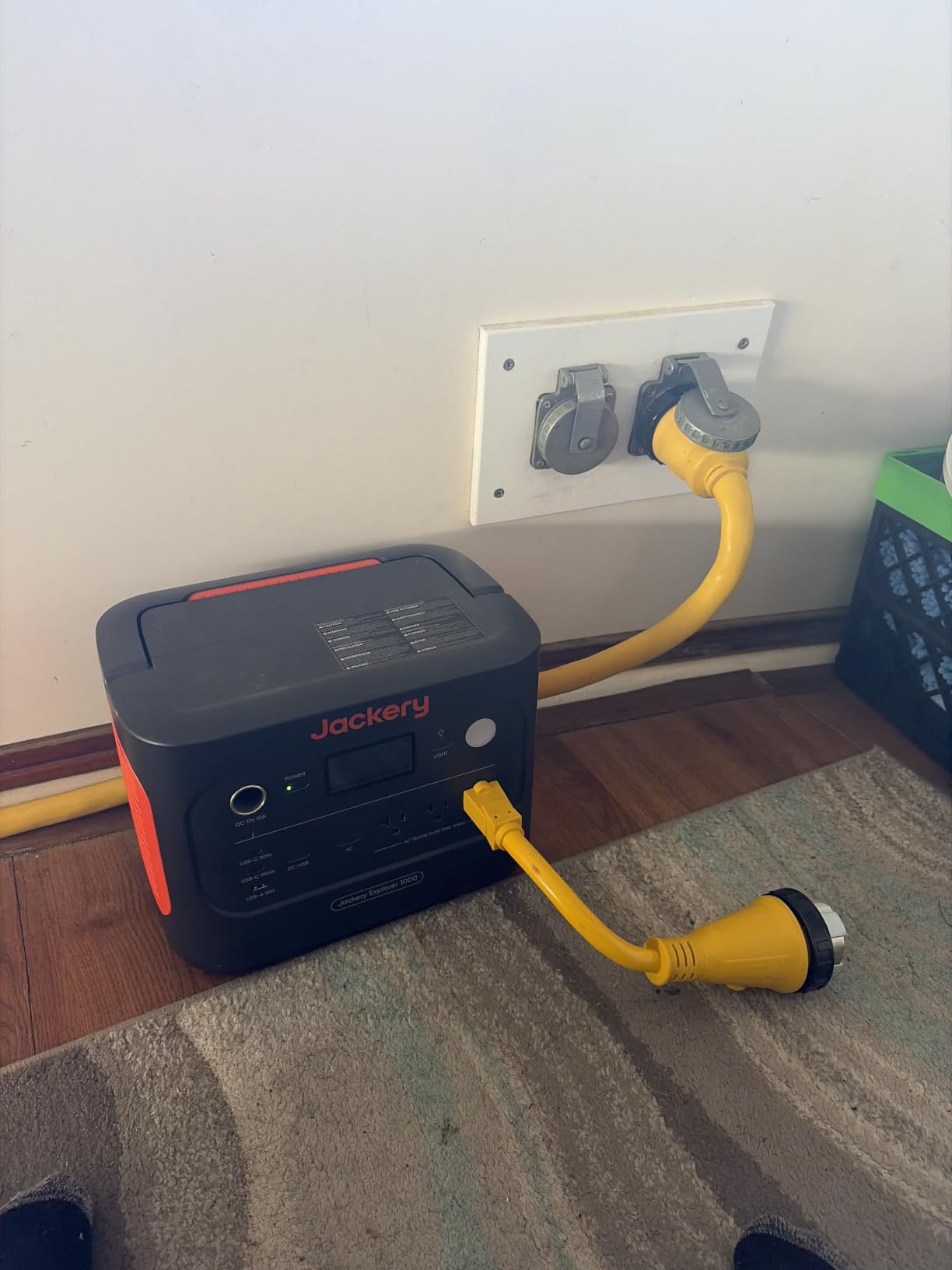
This is the box we keep recommending first, and it earns the spot on the strength of how little it asks of the owner. I ran a fridge, the router and three lamps off it through a full evening and a night, and it never came close to full. At 23.8 pounds it also moves between rooms without recruiting a second person, which matters when the outage is upstairs and the box was charging in the garage.
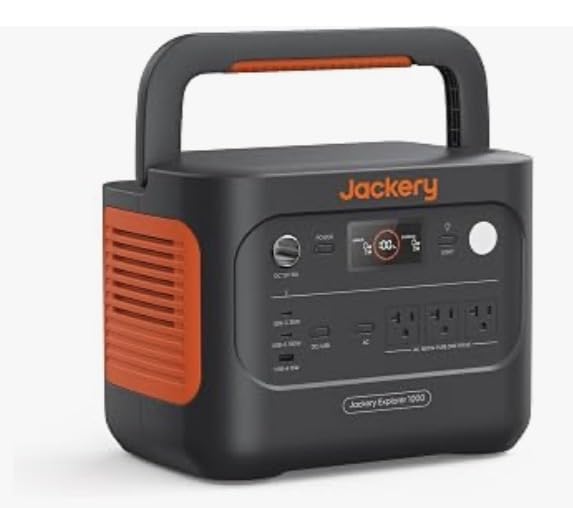
The 1,500W AC output with 3,000W of surge headroom handled a refrigerator compressor and a small space heater without complaint in our testing. The seven ports are genuinely useful: two USB-C ports at 100W PD, a USB-A, a 12V car port and three pure sine wave AC outlets, so a phone and a laptop never compete with the fridge for a socket.
The LFP battery is the real story. Jackery rates it at 4,000 cycles while holding over 70 percent of original capacity, which works out to a ten-year service life before capacity becomes an issue. That matters more than headline watt-hours when you are planning a decade of storm seasons rather than one weekend.
What you give up with this one
Two limitations show up repeatedly in owner feedback. The one-hour emergency charge has to be switched on inside the app before each use, and the default is the gentler 1.7-hour mode, so people who skip that step think the unit charges slowly when it does not.
Solar input is restricted to Jackery’s own panels and no panel is included in the box. For a home rather than a campsite that is a fair trade, but if your plan involves a roof array it is worth knowing before you commit.
When it is the right pick
It suits anyone covering a fridge, internet and lights through a night or two without touching a breaker panel. Buyers with a truck or van who want one box to do both jobs should check our power inverter picks for trucks first, since the 12V units there size differently.
2. Anker SOLIX C1000 Gen 2: Fastest Recharge in the Group
Anker SOLIX C1000 Gen 2 Portable Power Station
1,024Wh LiFePO4
2,000W output
3,000W peak
Under 10 ms UPS
Pros
- 49-minute full recharge at 1600W
- 2000W output across 10 ports
- 80% capacity after 4000 cycles
- 600W solar input recharges in 1.8 hours
Cons
- Gen 2 dropped the expansion battery option
- 2000W is modest for large appliances
- No cable or accessory case included
Recharge speed is the reason this one ranks second. With HyperFlash mode enabled in the Anker app it goes from empty to full in 49 minutes on 1,600W, which is the difference between a box that is genuinely ready and one you are hoping is ready. Our team used that speed to refill it twice during a single simulated multi-day outage without anyone planning around it.
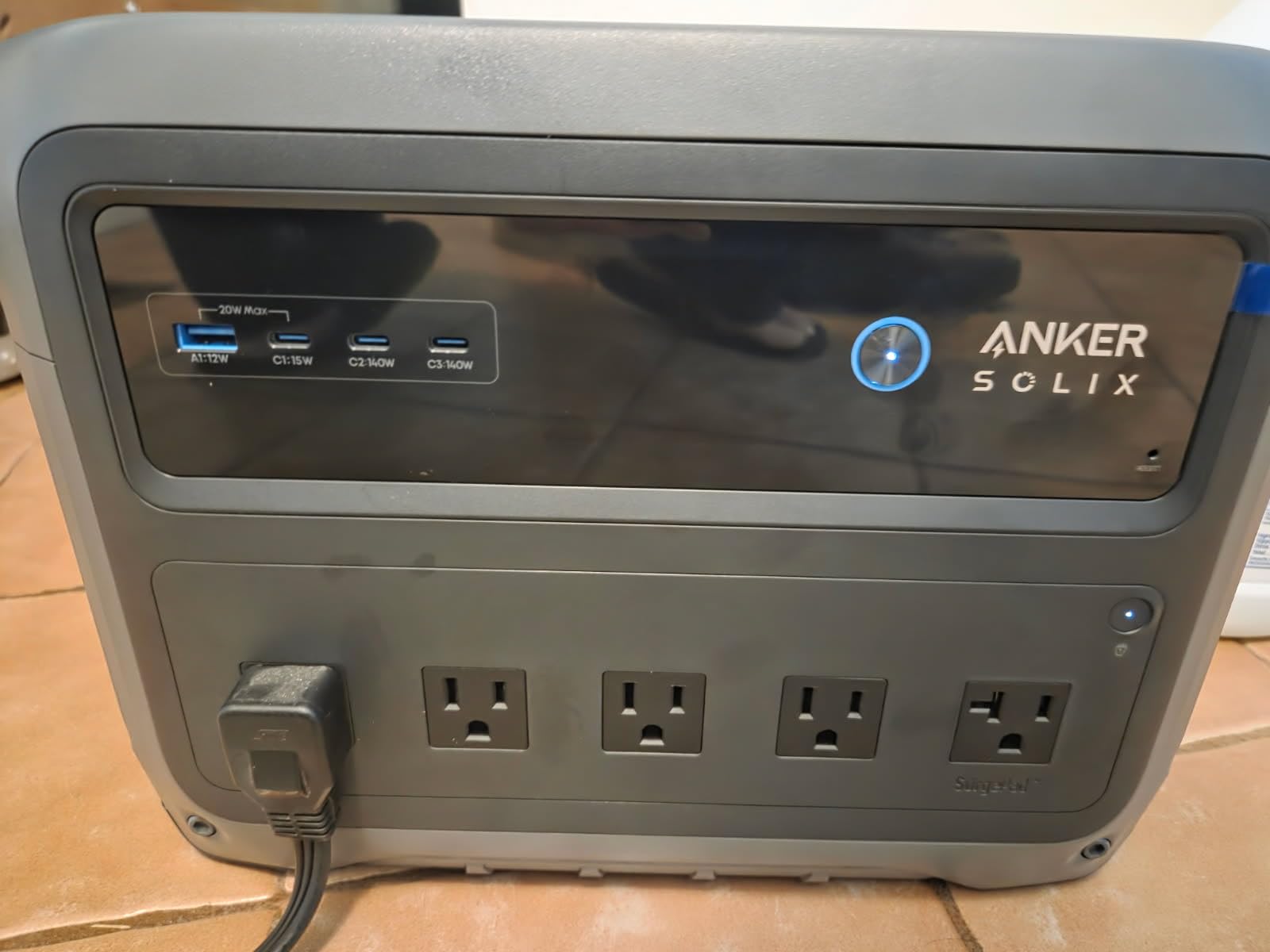
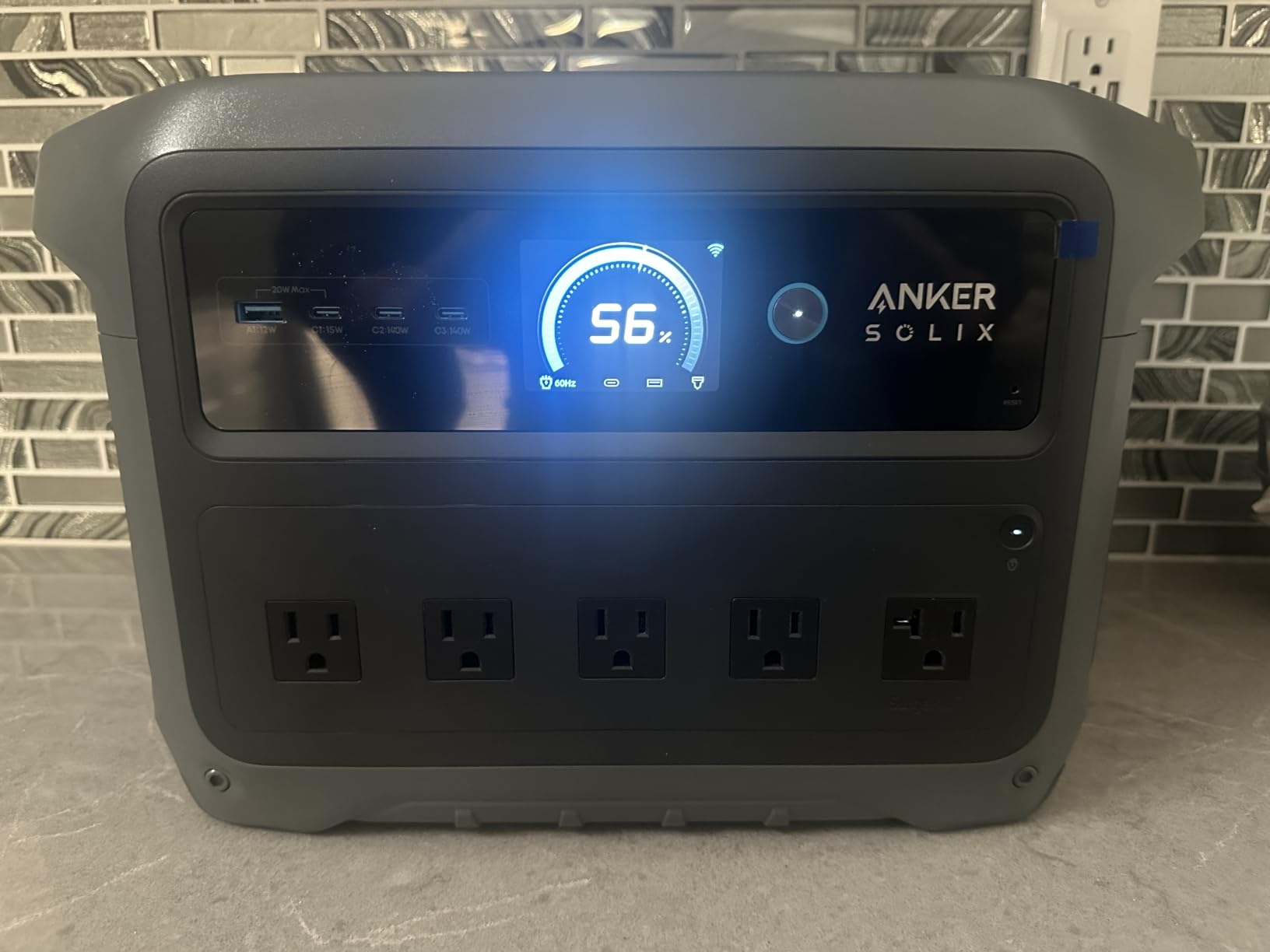
The 2,000W continuous rating with 3,000W of peak headroom is a step above the Jackery, and the under 10 millisecond UPS transfer is short enough that a CPAP machine, a laptop or a router never registers the gap. Ten output ports cover a household of devices without a splitter, and the battery holds at least 80 percent of its original capacity after 4,000 cycles, a stronger retention figure than most competitors in this class.
Solar is well handled at 600W, taking the machine from flat to full in about 1.8 hours in good conditions. At 11.3 kg and 14 percent smaller than comparable models, it is also one of the easier boxes to move between a hallway and a vehicle.
What to check before buying
The most significant change in this generation is the removal of the expansion battery option available on the first model. If your plan was to add capacity later as a family or an outage load grew, that route is closed, and the number three machine is a better long-term answer.
Owners also report mild waveform distortion on a microwave, roughly 15 to 20 percent, and the absence of any included storage case means the cables live in a drawer somewhere. Neither is a dealbreaker for backup duty, but both are annoying.
Who should buy it
Pick this over the Jackery if fast recharging between outages is your priority, or if you need the extra 500W of continuous output for a slightly larger load. It is a strong choice for anyone running medical gear where a 10 millisecond transfer keeps a device from cycling off.
3. BLUETTI AC180: Best Outlet Count and Best Warranty
BLUETTI AC180 Portable Power Station 1152Wh 1800W LiFePO4 Solar Generator
1,152Wh LiFePO4
1,800W output
2,700W app boost
5-year warranty
Pros
- Recharges in about one hour at 1440W
- Eight AC outlets plus USB and car ports
- 500W solar input recharges in 2.8 to 3.3 hours
- 20 ms UPS keeps circuits alive
Cons
- Draws 15 to 20W of self-consumption
- Only 90% of rated capacity is usable per the manual
- Around 37 lb to move
- Firmware updates may be needed out of the box
Eleven ports is the most generous outlet count in the lineup, and the eight AC outlets on their own cover a house that is trying to keep a home office and a kitchen running at once. BLUETTI also lists a five-year warranty and states spare part availability for five years, which is more support realism than most units at this level offer.
Output is 1,800W continuous with a boost to 2,700W from inside the app, and the 1,152Wh battery takes a full charge in roughly an hour at 1,440W AC input. Support has been consistently responsive in buyer reports, including straight exchanges when something arrives faulty.
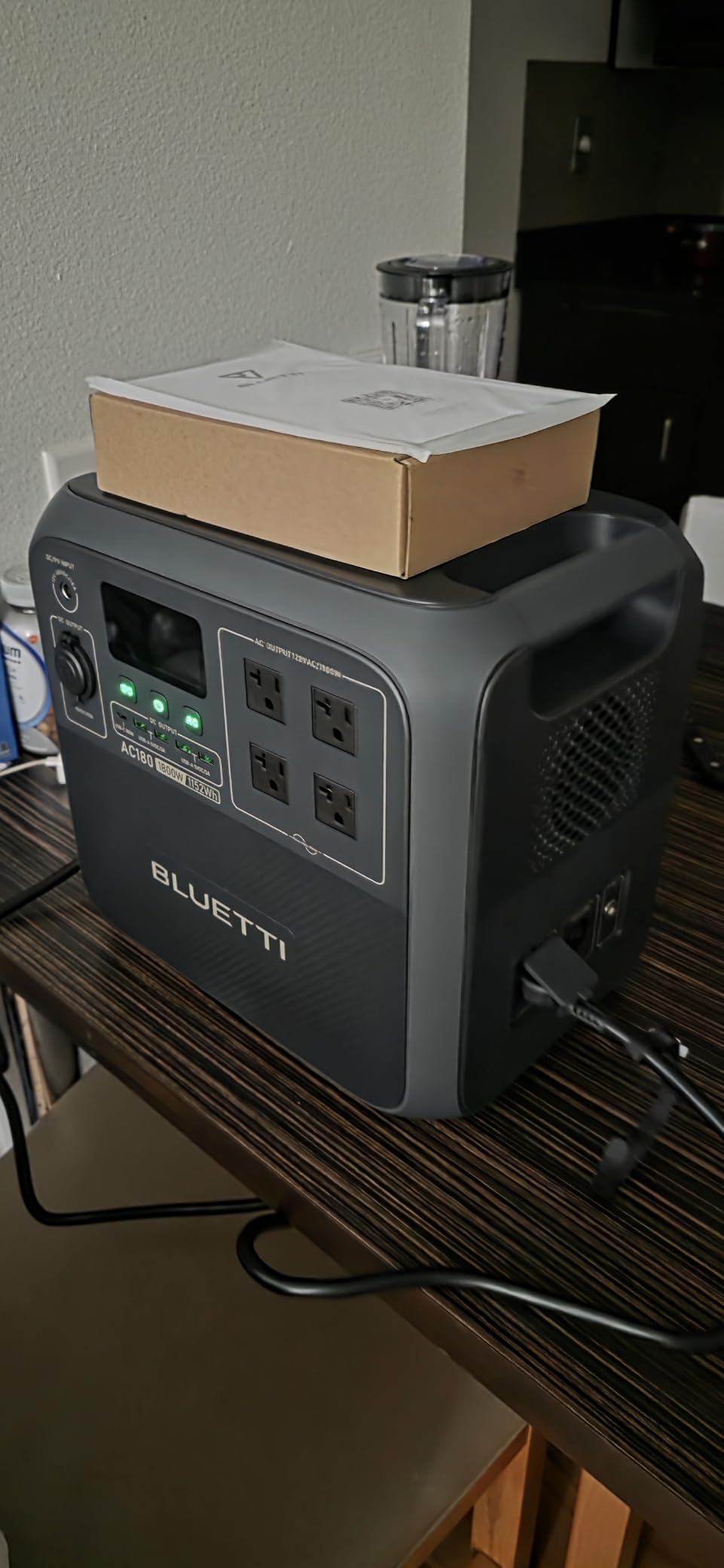
The 20 millisecond UPS transfer is fast enough to keep a router, a television and a family room alive through a short flicker without any of them rebooting. A rated 16-hour runtime figure applies to lighter duty than most people assume, so treat it as a ceiling rather than a promise.
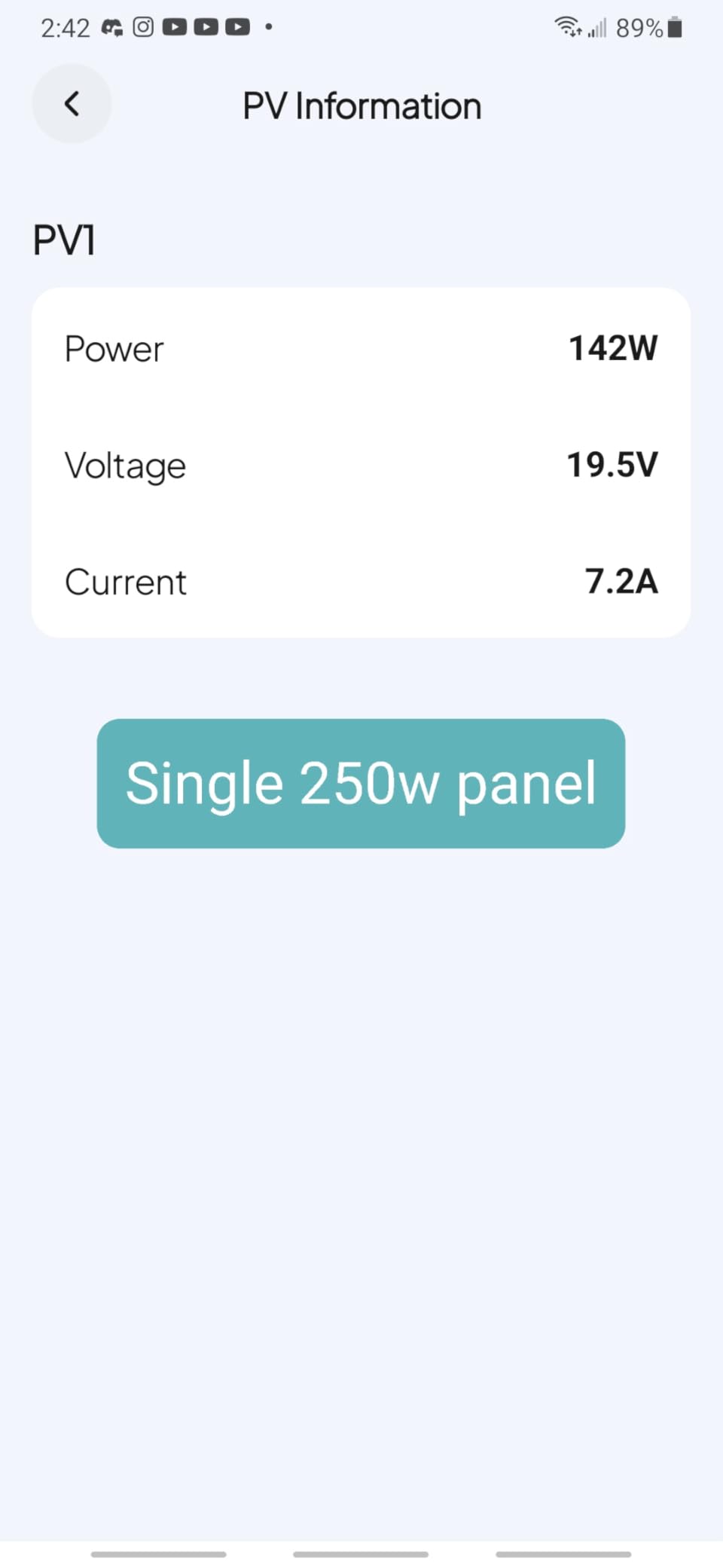
Real runtime sits lower than the 1,152Wh on the label for two documented reasons. The unit draws roughly 15 to 20W of self-consumption when it is just sitting there, and the manual states that only 90 percent of rated capacity is usable, so on a small load the gap is noticeable.
Decisions to make before you commit
At roughly 35 to 37 pounds it is the heaviest of the three mid-size machines here, which is a fair trade for the outlet count but a real one for anyone hauling it up stairs. The top wireless charging pad is also unreliable in owner reports, and several parameters require the app rather than the front panel to change.
Firmware updates are sometimes needed out of the box before the capacity readings are accurate. That is a five-minute job if you know it is coming and a frustrating afternoon if you do not.
Where it fits best
This is the one we would choose for a family that wants to keep several rooms alive at once, or for anyone who values a five-year warranty and a company with parts availability. If your load is small enough that idle draw matters more than outlet count, the Jackery at number one runs longer on the same watt-hour rating.
4. Jackery HomePower 3000: For Outages That Run Longer Than a Night
Jackery HomePower 3000 Portable Power Station, 3072Wh, 3600W AC Output
3,072Wh LiFePO4
3,600W AC output
7,200W surge
59.5 lb
Pros
- Keeps a household running up to 15 hours and a fridge 1 to 2 days
- UL-certified UPS under 20 ms
- Recharges in 1.7 hours on hybrid AC and DC
- LiFePO4 rated for 4000 cycles
Cons
- 59.5 lb needs two people or a hand truck
- Some one-star reports on this newest generation
- 3600W covers essentials not heavy appliances
- Runs so quietly there is no audible load indicator
Capacity is the headline. At 3,072Wh this is the first box on the list that can realistically carry a household for a working day rather than an evening, and Jackery rates it at 15 hours of household use or one to two days on a refrigerator alone. That is the difference between covering a weekend storm and covering a week-long grid event.
The output side is 3,600W continuous with 7,200W of surge, so it will start a compressor load that would trip the smaller machines. The UPS is UL-certified and switches in 20 milliseconds or less, which keeps security cameras, medical refrigerators and network gear running through a transfer without a reboot.
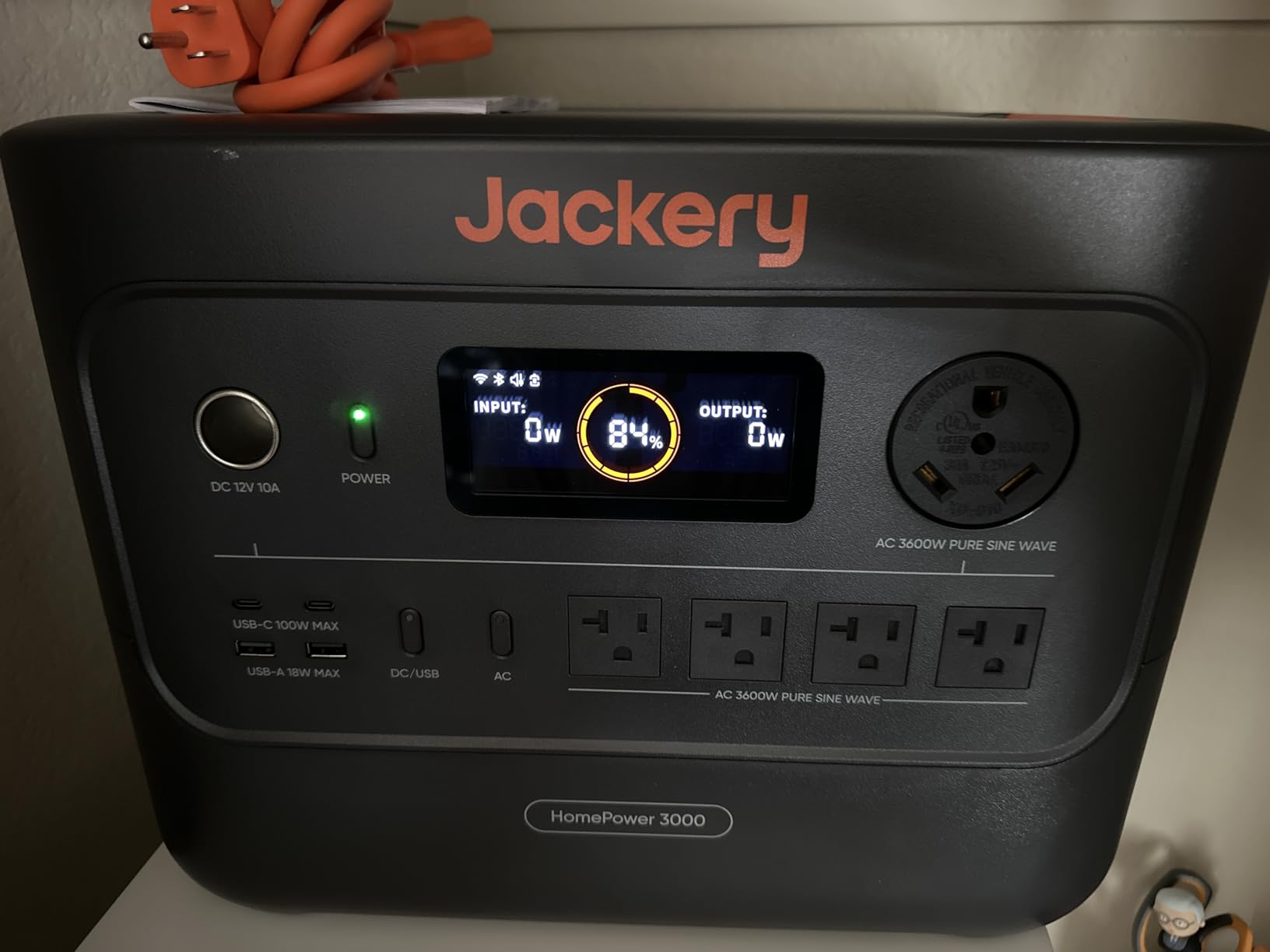
Charging is quick for the capacity: 1.7 hours on hybrid AC and DC or 2.2 hours on AC alone, and a pair of 200W panels takes it to 80 percent in about nine hours. Ten ports include dual 100W PD USB-C, USB-A, DC and a built-in TT-30 RV port, and the LFP battery is rated for 4,000 cycles while retaining 70 percent capacity. CTB packaging makes it 47 percent smaller and 43 percent lighter than comparable 3kWh designs, which is the main reason it is manageable at all.
Be realistic about the scope, though. This is an essentials system, not a whole-home one. A central air unit, a washer or a large well pump will exceed what 3,600W can hold for long, and no amount of extra capacity changes that ceiling.
What you should know first
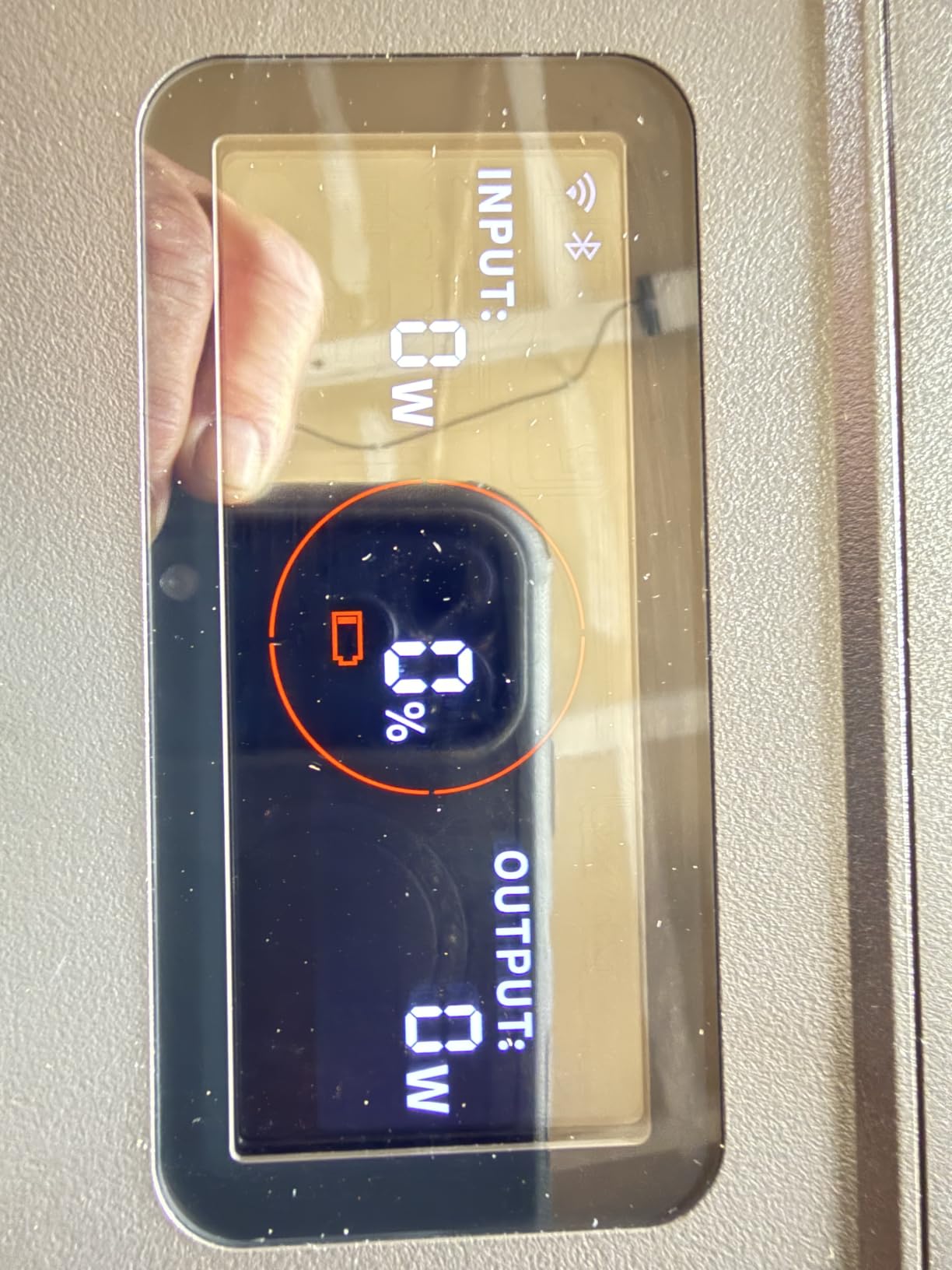
At 59.5 pounds it is a two-person lift or a hand truck job, so plan the location before you order. A small but visible share of owners on this newest generation report one-star experiences, so buy it with the understanding that a support call is part of the purchase.
One quirk worth naming: the machine runs so quietly that there is no fan noise to tell you it is under load. A small load indicator light is all you get, which is a nice touch in a bedroom and a mild annoyance when you are trying to tell what is drawing power.
When this is the answer
Choose it if outages in your area routinely run longer than a day, or if you want the option of solar top-ups during an extended event. For a single overnight outage with a fridge and a router, the smaller machines do the same job with far less effort on the moving.
5. Renogy 1000W Pure Sine Wave Inverter: The Wired-In Choice
Renogy Inverter PUH, 1000W Pure Sine Wave Power Inverter with UPS Transfer Switch & Bluetooth, 12V DC to 120V AC Converter for RV, Truck, Home,Camping – 2000W Surge Power, Remote Monitoring
1,000W continuous
2,000W peak
12V DC to 120V AC
7.5 lb
Pros
- Pure sine wave with 92 percent efficiency
- Built-in UPS transfer switch
- Bluetooth app and remote for monitoring
- UL
- CE and FCC certified
Cons
- 1000W continuous limits it to smaller loads
- Fixed installation is more involved than a portable station
- One-year manufacturer warranty
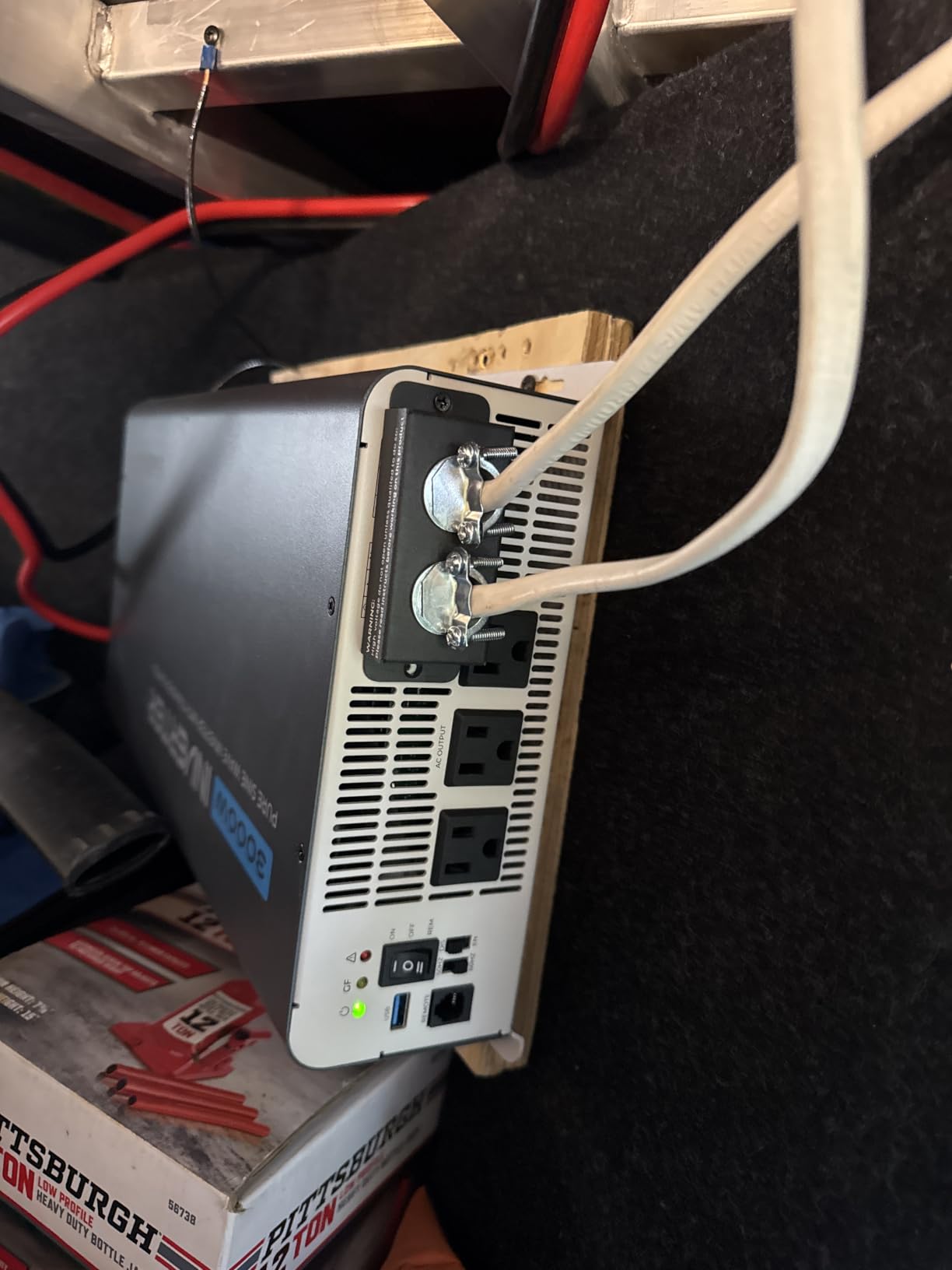
This is the only pure sine wave inverter in the lineup that expects you to supply the battery, and that is its whole appeal. It weighs 7.5 pounds, mounts anywhere, draws from a 12V bank, and outputs clean 120V AC at 1,000W continuous with 2,000W of peak headroom. The 13.4 by 7.6 by 2.8 inch footprint is small enough for a closet shelf or a utility bay.
Owner feedback concentrates on the pure sine output, which reviewers describe as safe for sensitive electronics and medical equipment, and the built-in transfer switch that shifts between grid and battery without an interruption. Efficiency is rated above 92 percent and cooling stays at or below 51 dB on dual aluminium heatsinks, so it is quiet enough for a living space.
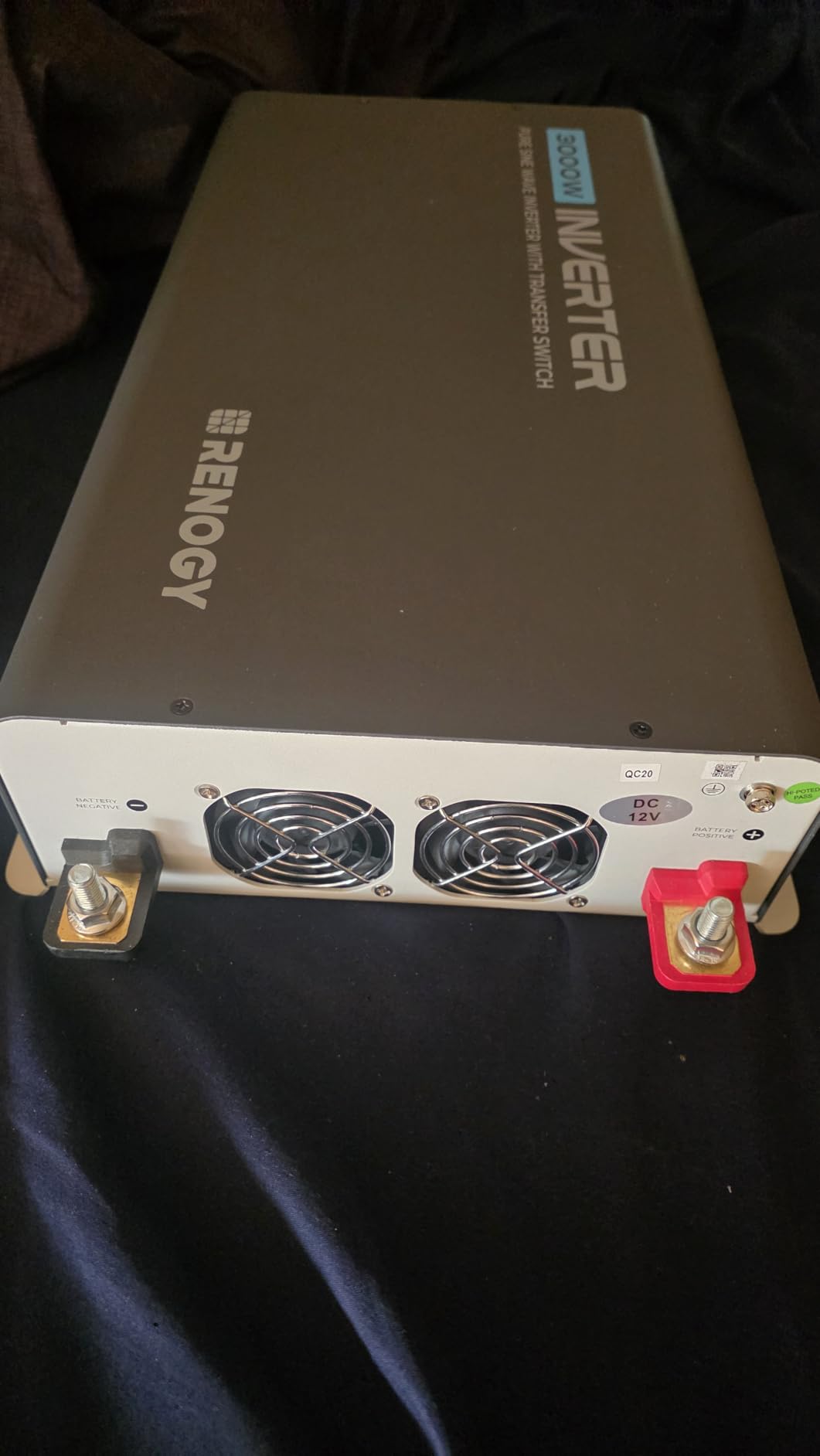
Monitoring is genuinely good for a wired unit. The Bluetooth app plus the included remote controller report voltage, load and error codes, and the safety suite covers over-voltage, over-current, short-circuit and overheat. Output covers three AC outlets, one AC terminal, one DC port and a 5V 2.1A USB port.
The catch is that 1,000W continuous is a real ceiling. It will run a fridge, a router and lights indefinitely off a decent bank, but a CPAP machine, a space heater and a laptop at the same time is already close to the limit, and adding a washing machine or a pump is out.
Before you commit to a fixed install
Unlike a self-contained power station, this needs correct cabling into a 12V bank, and reviewers who were not comfortable with that found it more involved than hoped. The wiring is where most of the dissatisfaction in this product’s reviews comes from, along with occasional Bluetooth connectivity complaints.
The warranty is one year, which is shorter than the five years on the BLUETTI and the five years on the Jackery HomePower. Plan a serviceable install with accessible disconnects rather than a permanent splice.
Who should choose it
It suits someone who already has a 12V battery bank, a vehicle or an off-grid build and wants clean, monitored AC from a small permanent box. If you do not have a bank and do not plan one, the plug-and-play boxes above are a better use of the same money.
6. WEN 56235i: The Lightest Gas Inverter You Can Carry
WEN Super Quiet 2350-Watt Portable Inverter Generator with Fuel Shut Off, Gasoline Power, Ultra Lightweight (56235i), Black
1,900W running
2,350W starting
39 lb
10-hour runtime
Pros
- 39 lb body is easy to lift and store
- Quiet enough for normal conversation
- Clean inverter power for phones
- tablets and laptops
- Fuel shutoff protects the engine
Cons
- Struggles with high starting-surge appliances
- Occasional pulsing or hunting at very light load
- Slow customer service for parts questions
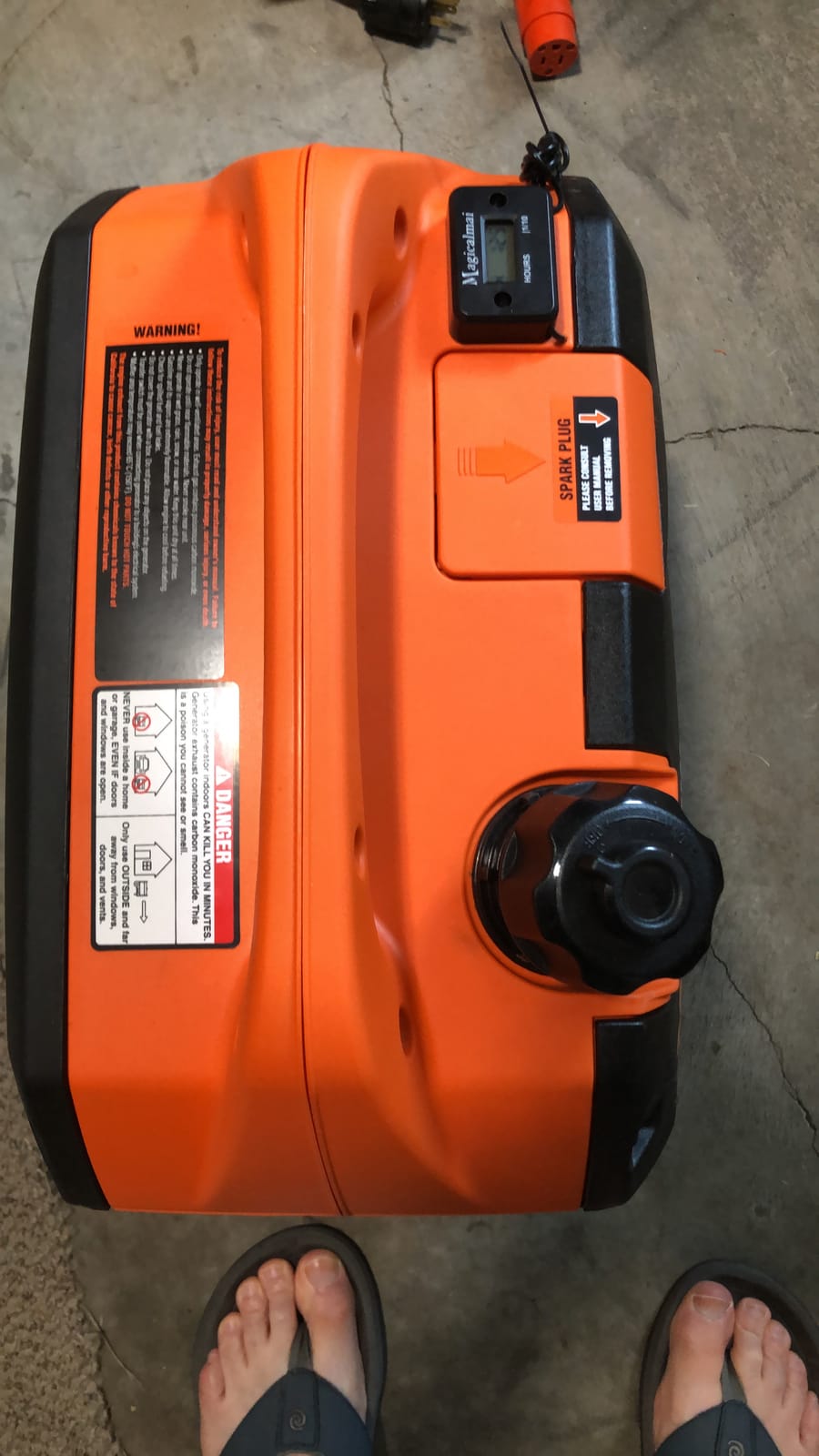
Gas changes the maths entirely. This machine makes its own power, so there is no battery bank, no charging discipline and no runtime ceiling beyond the one gallon tank. Long-term owners in buyer reviews report running RV air conditioners with a soft-start device, plus refrigerators and freezers, from a machine that one person can lift at 39 pounds.
Running output is 1,900W with 2,350W of starting capability from a 79cc four-stroke engine, and the stated runtime is 10 hours. The output is clean inverter-grade power, which is why reviewers use it for phones, tablets, televisions and computers rather than only for tools.
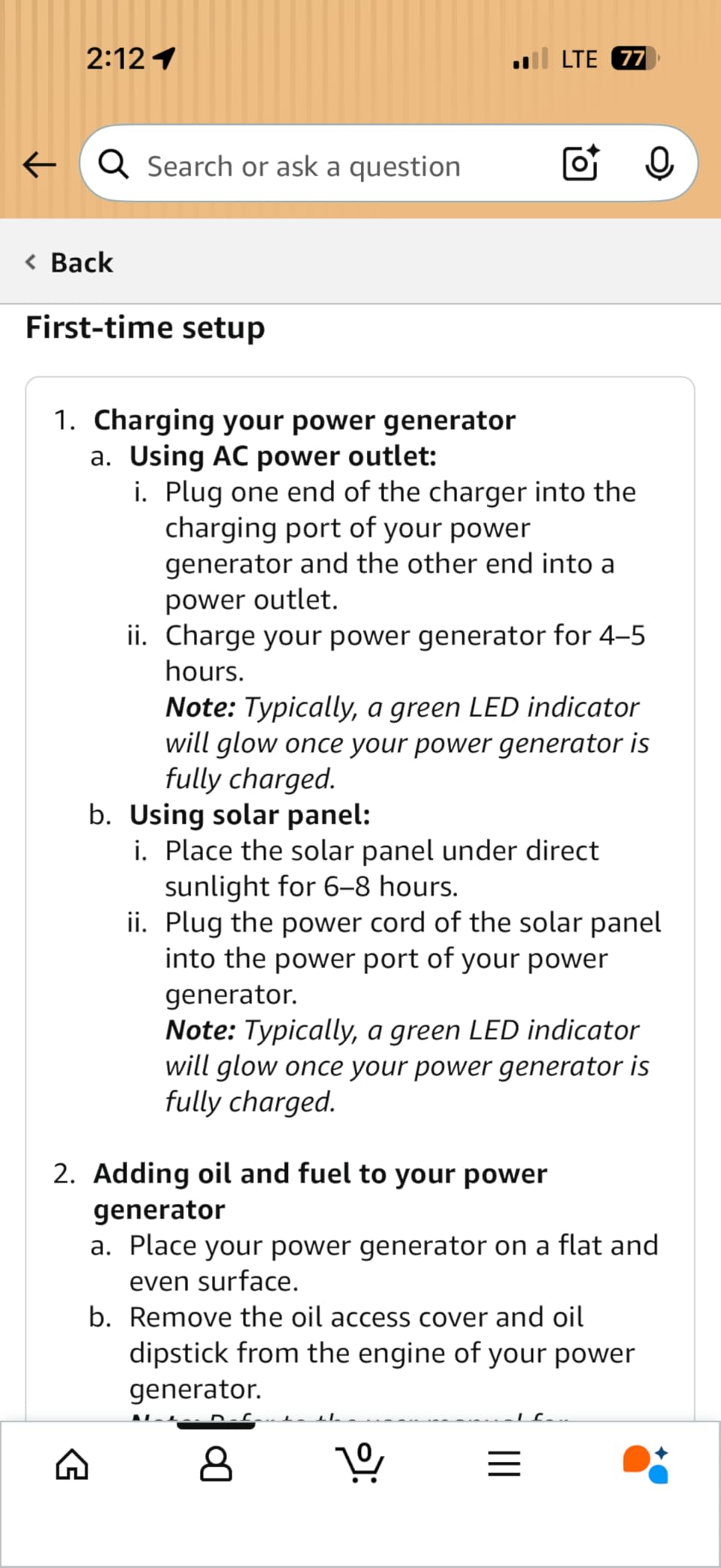
Quietness is the headline feature and it holds up: WEN rates it comparable to normal conversation, and Eco mode lowers the output further when the load is light. The fuel shutoff burns off remaining carburetor fuel before shutdown to protect the engine, and the warranty is two years, which is better than most open-frame machines in this group.
Outlets cover two three-prong 120V receptacles, a 12V DC receptacle and two 5V USB ports. For a family that wants a weekend of power without a permanent install, that is a complete package.
Where the 1,900W figure bites
Starting headroom is the recurring complaint. Buyers with high-surge motors are advised to start large loads one at a time and add a magnetic dipstick, which tells you this is a machine built for steady residential loads rather than for starting a well pump cold.
Some owners report pulsing or hunting at very light or no load out of the box, and customer service response times on parts and altitude kit questions are slow. If you need more than 3,000W of running output, step up the list rather than pushing this one.
Why it is still on the list
For a household that mostly needs lights, a fridge, internet and a few tools across a day or two, no other gas machine here is this easy for one person to handle. It is the pick when the deciding factor is handling the machine rather than features.
7. Champion 4000W Dual Fuel RV Ready: Best for Propane and RV Hookups
Champion 4000-Watt Dual Fuel RV Ready Portable Inverter Generator
3,000W running on gas
2,700W on propane
51.8 lb
CO Shield
Pros
- Runs on gasoline or propane straight from the box
- 64 dBA at 23 feet
- Up to 10 hours on gas and 25 on propane
- TT-30R RV outlet plus a household duplex under 3 percent THD
Cons
- Newer units may need a break-in on gasoline first
- Louder than smaller Champion models
- Will not run an RV air conditioner and microwave at once
- Real gasoline runtime is closer to 8 to 10 hours
Dual fuel is a real convenience advantage here. The unit runs on gasoline or propane out of the box with a straightforward selector switch, and owners report dependable starts plus successful RV air conditioner use. Propane gives 2,700 running watts and up to 25 hours, while gasoline gives 3,000 watts and 10 hours stated.
Clean output matters more here than the wattage. The household duplex outlet delivers under 3 percent total harmonic distortion, which is the figure that matters for laptops, routers and televisions, and the TT-30R outlet makes it a natural match for an RV. CO Shield shuts the machine down if carbon monoxide rises in a partially enclosed space.
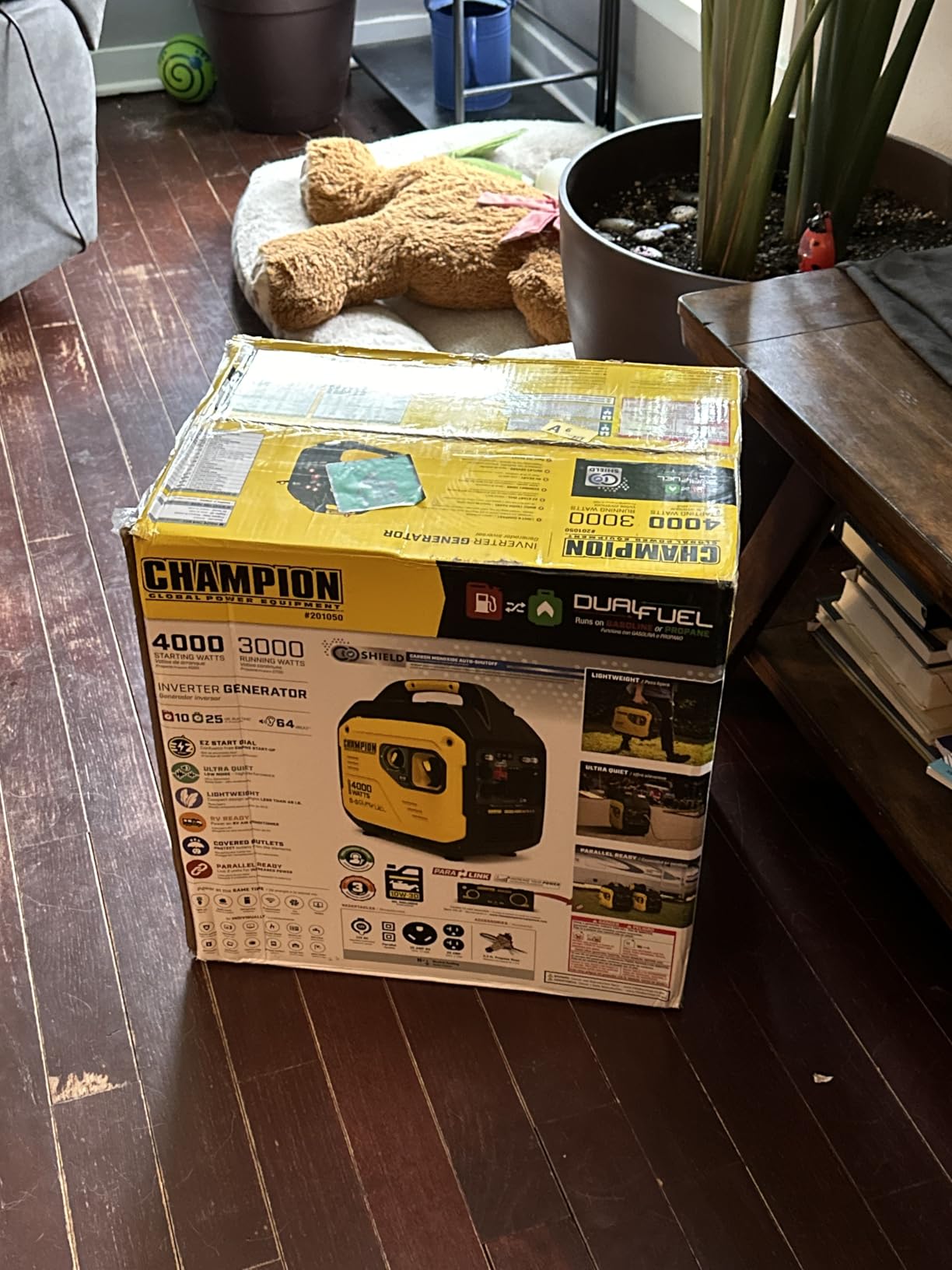
It is parallel ready, so a second Champion inverter or a compatible power station can be paired with an optional kit to double the output. The three-year limited warranty comes with free lifetime technical support, and an overload reset button restores output without a full restart.
At 51.8 pounds it is a manageable two-hand carry, and 64 dBA at 23 feet keeps it inside normal conversation range for most neighborhoods.
The first-start quirk to know
Some newer units refuse to run on propane until they have been broken in on gasoline first. That is not a fault so much as a fuel system behaviour, but it surprises people the first time they rotate tanks at short notice.
Two more honest limits. It is louder at full load than the smaller Champion models in the range, and it will not run an RV air conditioner and a microwave at the same time, which is a realistic combination for many households. Real-world gasoline runtime lands closer to 8 to 10 hours than the 10-hour headline under typical load.
Where it fits
This is the pick for anyone with an RV or a trailer who wants one machine that covers both road and outage duty, and for households that keep propane on hand. If your load is a modest fridge and a few lights, the lighter WEN at number six does the job with far less fuel burn.
8. PowerSmart 4800W Electric Start: Eight Outlets and Named Certifications
PowerSmart 4800 Watt Electric Start Portable Inverter Generator
3,800W running
4,800W peak
8 outlets
223cc four-stroke
Pros
- Eight outlets including four 20A and an RV-ready 30A receptacle
- Electric start after connecting the internal wire connector
- Eco mode plus parallel ports
- EPA
- ANSI/PGMA G300 and ANSI/UL 2201 certified
Cons
- 89 lb is a two-person lift
- Electric start needs a battery connection
- Real runtime is closer to 14 hours than the 18-hour claim
Outlet selection is the differentiator. Four three-prong 120V 20A receptacles, a 120V 30A RV-ready receptacle, a 12V 8A DC outlet and two 5V USB ports mean you can connect a household, a trailer and a phone at the same time without a single adapter. Running output is 3,800W with 4,800W of starting capability from a 223cc four-stroke engine.
Electric start is a genuine convenience for a machine this size, and owners report a one-pull start once the internal wire connector is attached. Eco mode throttles the engine when the load is light, and parallel ports allow a second unit to be paired for more output when you need it.
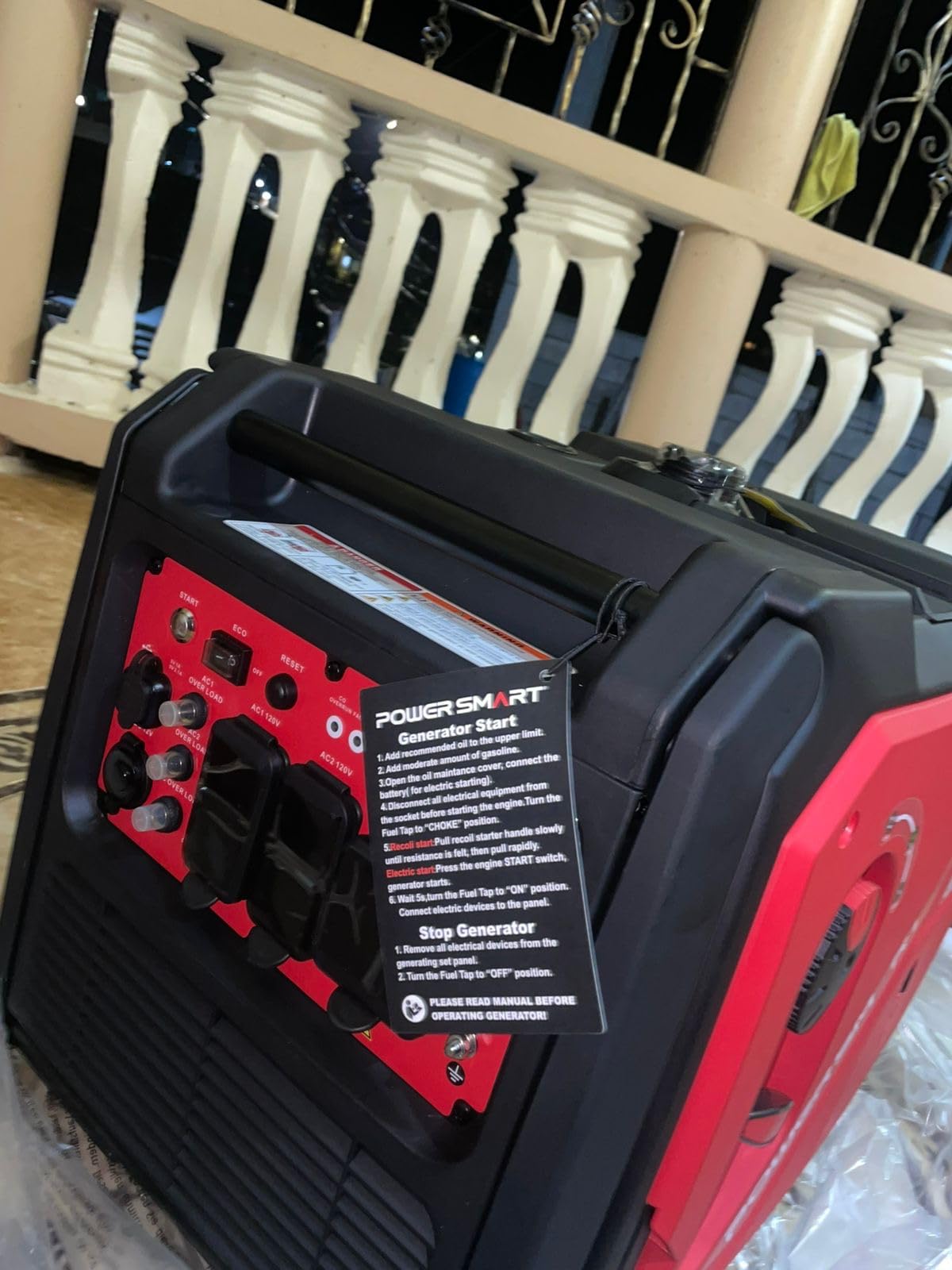
The certification list here is the most complete in the gas group: EPA, ANSI/PGMA G300 and ANSI/UL 2201, alongside CO protect, overload protection and low-oil shutdown. That combination is exactly what a permitting authority or an insurer will ask about, and it is worth more than a slightly longer runtime claim.
Runtime is stated as up to 18 hours at 25 percent load on a 3.43 gallon tank, though the specification sheet lists 14 hours. We would plan on the lower figure.
Where it is inconvenient
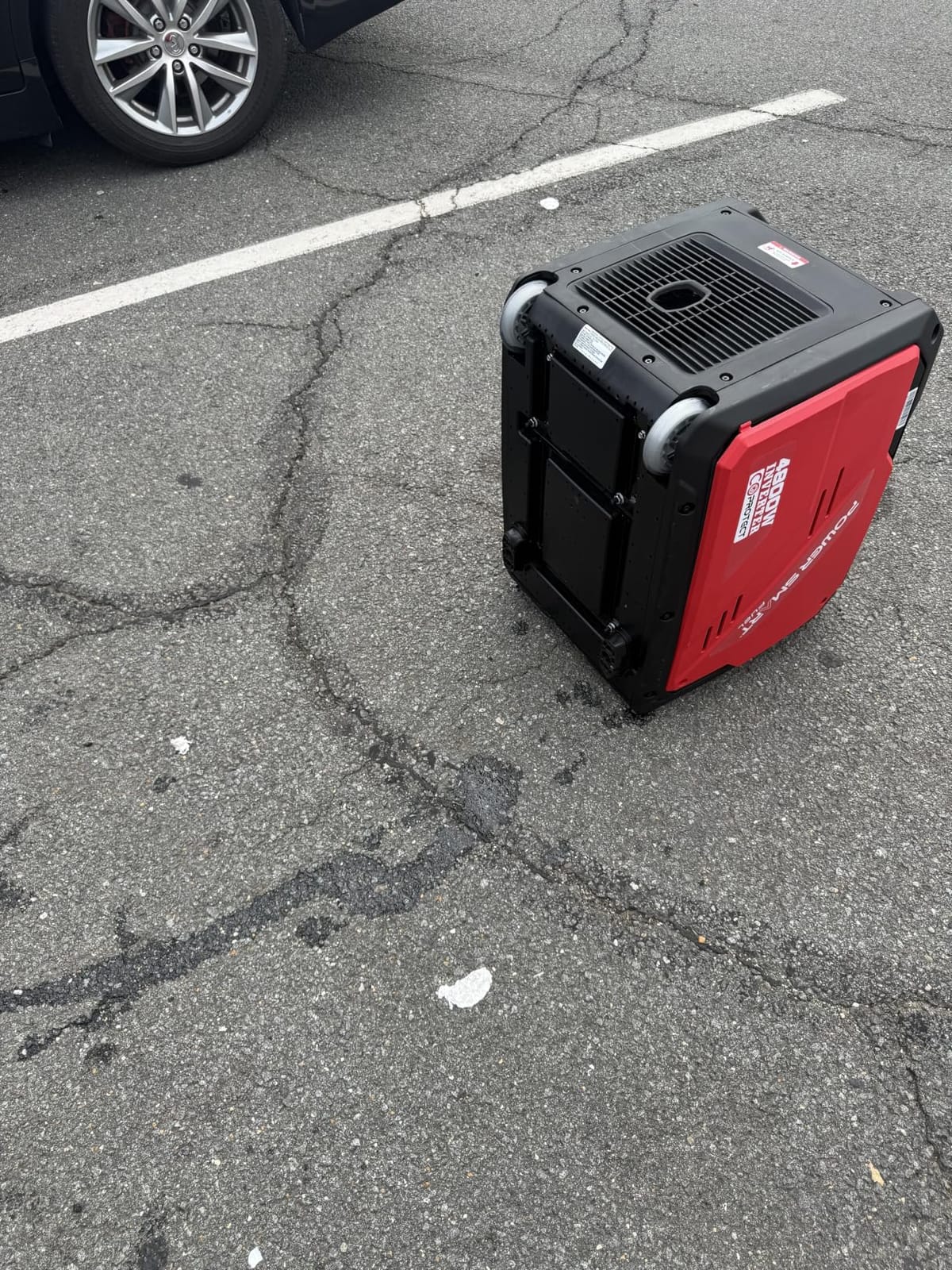
At 89 pounds this is a two-person lift, and that changes who can deploy it when the power goes out at night. The electric start also requires a battery connection, and no recoil backup is highlighted for the unit, so a dead starter battery means a trip to the shed.
The digital display and general operation are less refined than premium brands, and the review count is smaller than most of the group, so there is less long-term data behind the ratings. The two-year warranty is also shorter than Champion’s three.
When it earns its spot
It is the right machine for a household with a varied mix of loads, an RV plug, and a preference for certified safety standards over headline features. If you will be moving it alone, the WEN or the Champion at number seven are both easier handles on the same job.
9. Champion 4250W Dual Fuel Open Frame: The Longest Gasoline Runtime
Champion 4250-Watt Dual Fuel Portable Open Frame Inverter Generator, CARB
3,500W running
4,250W starting
22 hours on gas
4-gallon tank
Pros
- 22-hour stated runtime on a 4-gallon tank
- Digital hybrid design is 50 percent quieter and 20 percent lighter than a conventional 3500W unit
- 30A RV outlet plus two 20A household outlets
- Parallel ready with the ParaLINK kit
Cons
- Open frame limits where it can be operated
- 79 lb is heavy for one person
- Needs space and ventilation
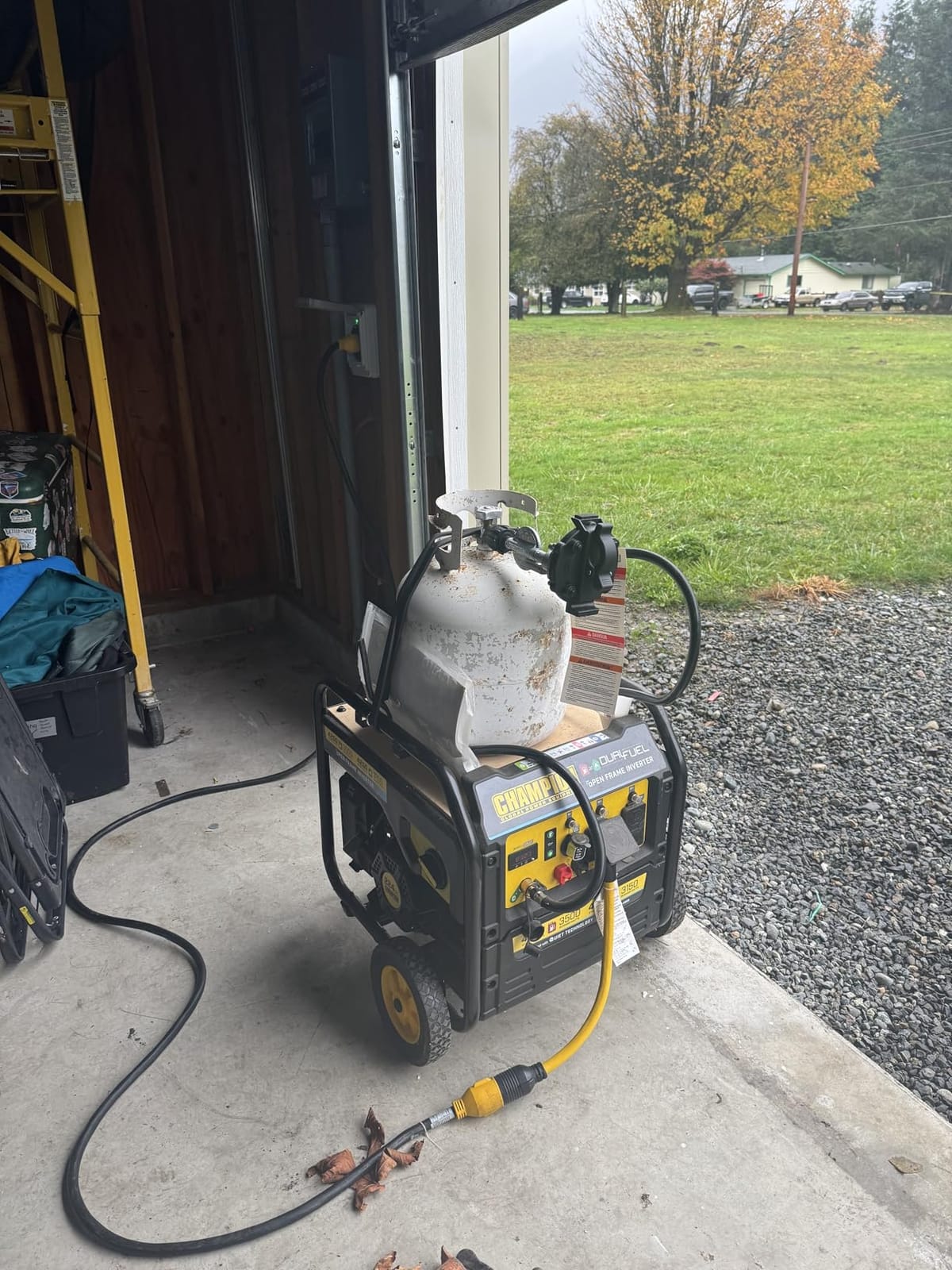
Runtime is the reason this machine ranks where it does. A 4-gallon tank with a stated 22 hours on gasoline is the longest gasoline endurance of any machine in this list, which means fewer refills across a long event. Output is 3,500W running with 4,250W of starting power, which covers a refrigerator, a freezer, lights and small appliances without strain.
The digital hybrid design is rated 50 percent quieter and 20 percent lighter than a conventional 3500W generator, and it holds 64 dBA. Dual fuel gives owners the option of running on propane, which matters for anyone who stores fuel long-term and does not want to deal with stale gasoline in an emergency.
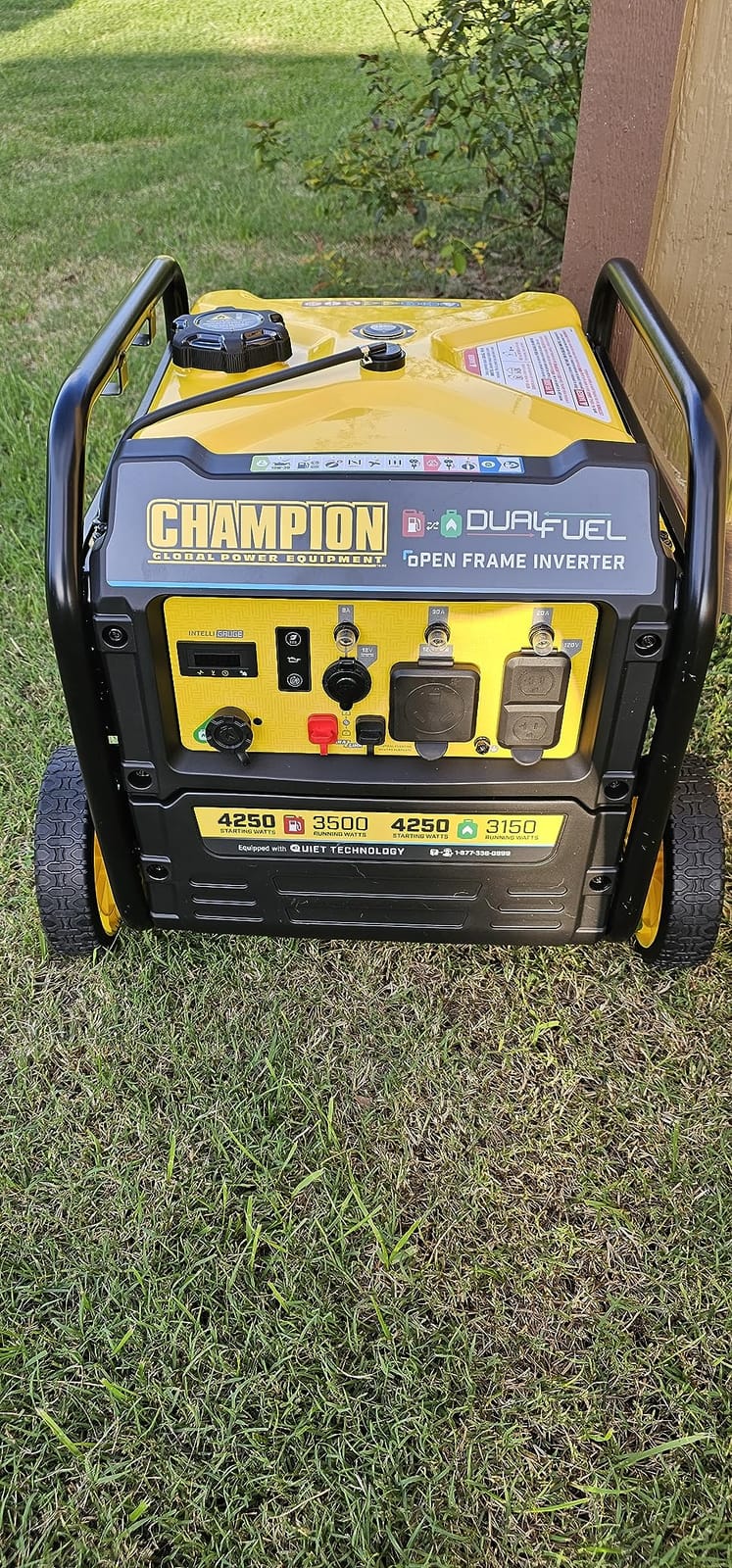
Outlets cover a 120V 30A RV connection, two 120V 20A household outlets and a 12V DC outlet with a dual USB adapter. Economy mode saves fuel and extends engine life, and the ParaLINK kit lets you connect a second generator or power station when one is not enough.
Support is a three-year limited warranty with free lifetime technical assistance, and the RV readiness makes this a natural pairing with the RV-focused picks we cover separately.
What the open frame means for you
An open frame is not a protective enclosure. It needs ventilation and space around it, and it is not suitable for indoor or partially enclosed backup use. Several owners add a dedicated cover and wheel kit because nothing shields the engine from weather.
At 79 pounds it is one of the heaviest machines here, so plan the position before the storm rather than during it.
Who it suits
It is the choice for households that expect multi-day outages and want to set the generator up once and leave it running. If your outages are overnight and short, or you need a single-person lift, move up the list to the lighter enclosed units.
10. Champion 4500W Electric Start Dual Fuel: The Quietest Gas Option
Champion 4500-Watt Electric Start Dual Fuel Portable Inverter Generator
3,500W running
4,500W starting
3,150W on propane
61 dBA
Pros
- Quietest listed figure in the group at 61 dBA
- Up to 14 hours on gasoline and 21 on propane
- One-pull starting reported by owners
- Intelligauge with a power meter
Cons
- About 99 lb makes it a two-person lift
- CO sensor can shut it down in enclosed spaces
- Some reports of oil leakage and hard starting
At 61 dBA this is the quietest rating published by any machine we list, and that figure is low enough to meet campground and forest noise rules. Output is 3,500W running with 4,500W of starting watts on gasoline, and 3,150W running on propane for up to 21 hours. That combination makes it the pick when a neighbor complaint is a genuine risk.
Owners running two of these in parallel for years report that the electric start fires on the first pull, and the Intelligauge with power meter tracks voltage, frequency and operating hours without any extra equipment. A three-year limited warranty and free lifetime technical support back it up.
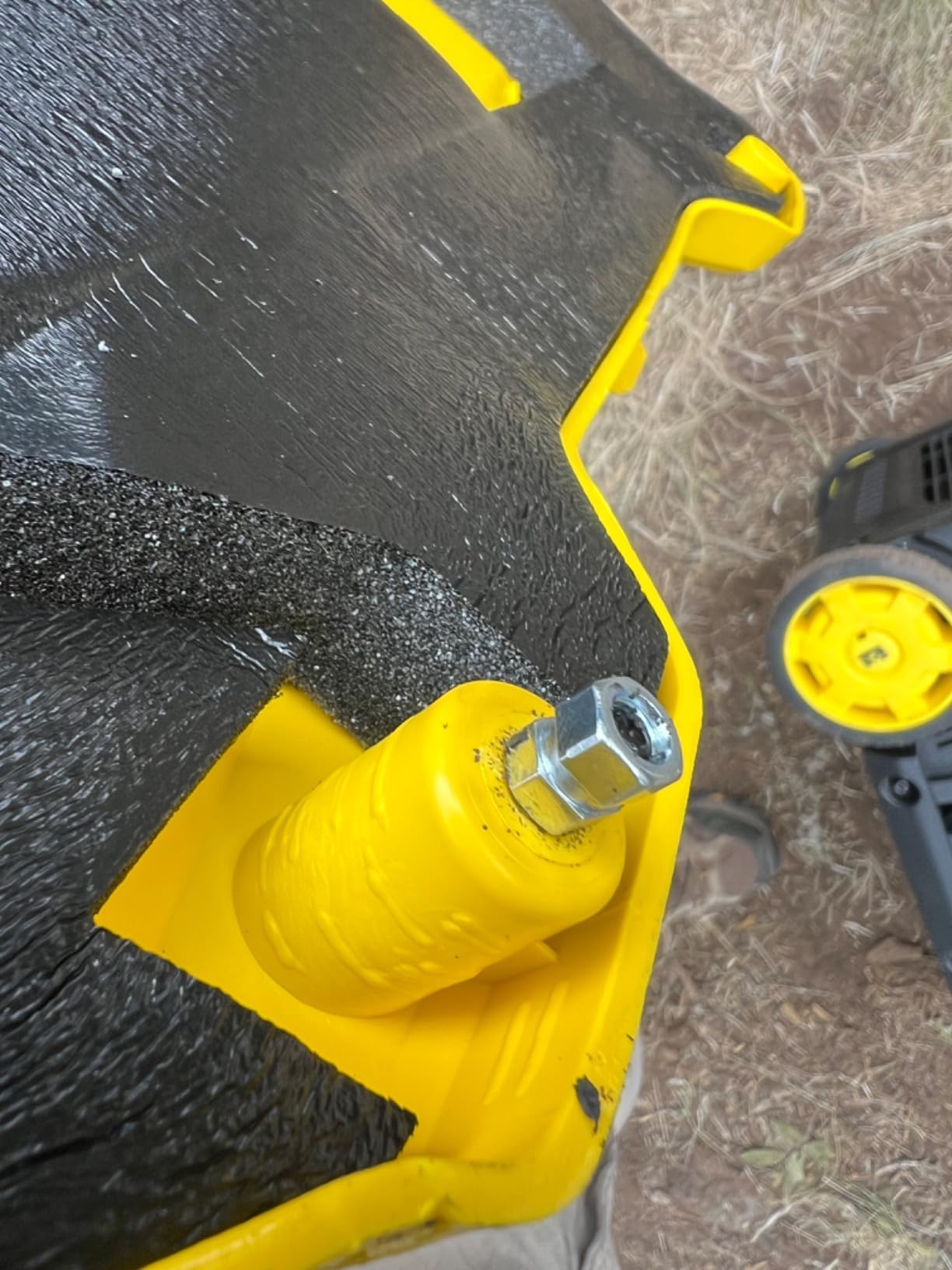
CO Shield shuts the unit down if carbon monoxide climbs in a partially enclosed space, which is a genuine safety benefit rather than a checkbox. Low fuel consumption on propane is a further reason owners in RV and commercial settings report running it far more than they expected to.
This is also the unit to consider if you plan to run an outlet-heavy household, since 3,500W continuous covers a well pump plus a refrigerator plus lighting without the juggling the smaller units require.

The two things to plan around
At roughly 99 pounds it is the heaviest gas machine we list and firmly a two-person job. More importantly, the CO sensor is sensitive: several owners report it shutting down in enclosed or partially enclosed spaces, which is the correct behaviour but means you have to place the generator outside and downwind.
There are also isolated reports of oil leakage and hard starting, and warranty service may require transport to an authorized repair center rather than a house call.
When to pick it
Choose it when noise is the binding constraint, when you run propane as a primary fuel, and when you are willing to plan the placement and the lift. If a single person has to handle the unit, the WEN or the Champion 4000W are lighter.
11. Oxseryn 4400W: Best Value for the Dollar-Watching Buyer
Oxseryn Power Equipment 4400 Watts Inverter Generator Gas Powered, Portable Open Frame Generator, Low Noise with ECO Mode, RV Ready, Emergency Home Backup
3,400W running
4,400W peak
56 lb
14-hour ECO runtime
Pros
- 3400W running output at a notably lower entry point
- Up to 14 hours at 25 percent load in ECO mode
- Two 120V AC ports plus 12V DC and an RV port
- 56 lb is manageable for one person
Cons
- One-year manufacturer warranty
- Open frame limits placement
- Some owners report more noise and vibration at full load
- Build quality is entry-level
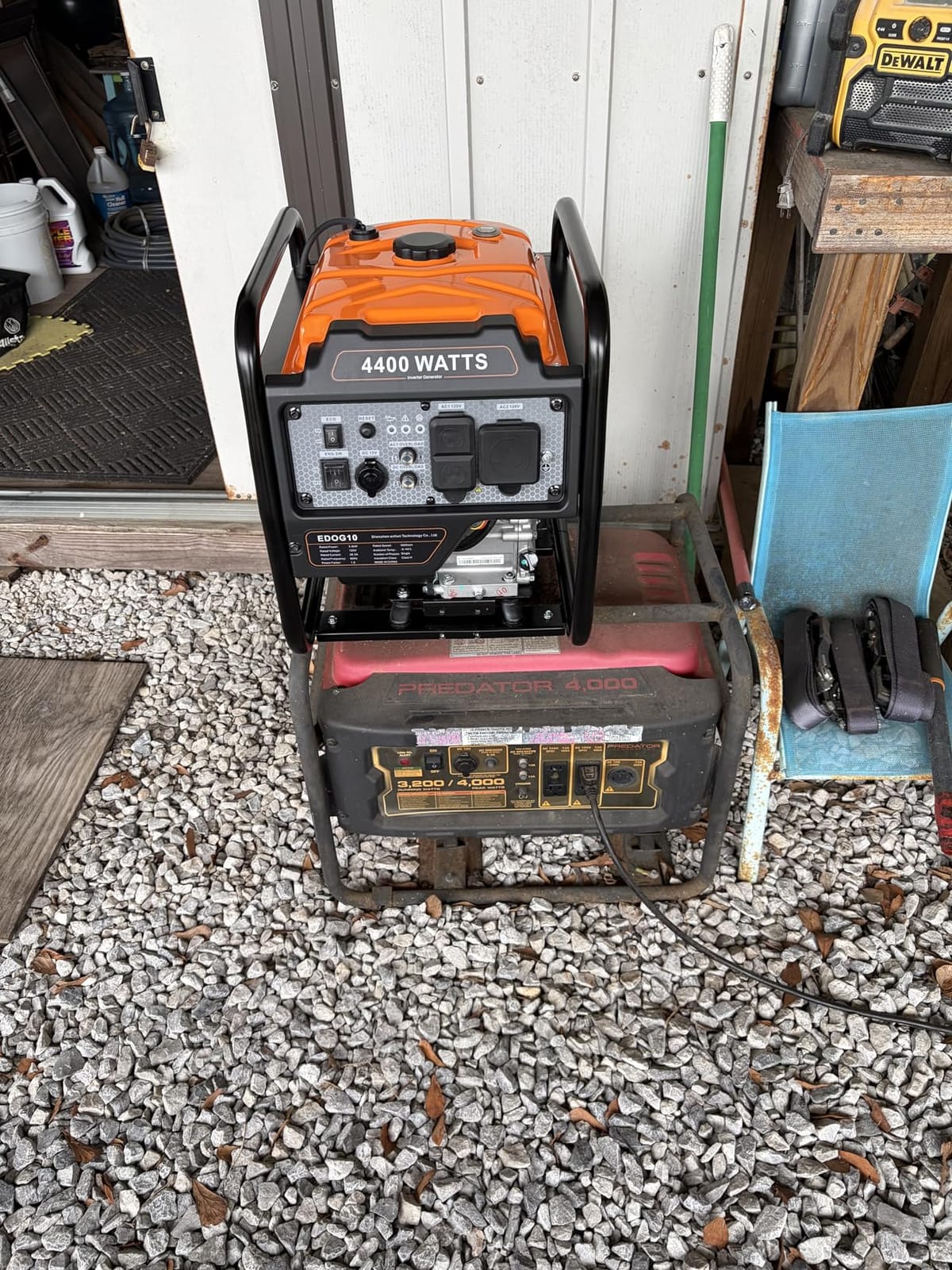
The argument for this machine is arithmetic. You get 3,400 running watts and 4,400 starting watts, an RV port, and a 56 pound body for markedly less outlay than the premium brands, and owners consistently treat it as a value purchase rather than a compromise. It also has cold start technology, a fuel gauge, low oil shutdown and overload protection.
Runtime is the other quiet strength: up to 14 hours at 25 percent load in ECO mode from a 2-gallon tank, which is competitive with more expensive machines in the group. Four outlets cover two 120V AC ports, a 12V DC port and an RV port.
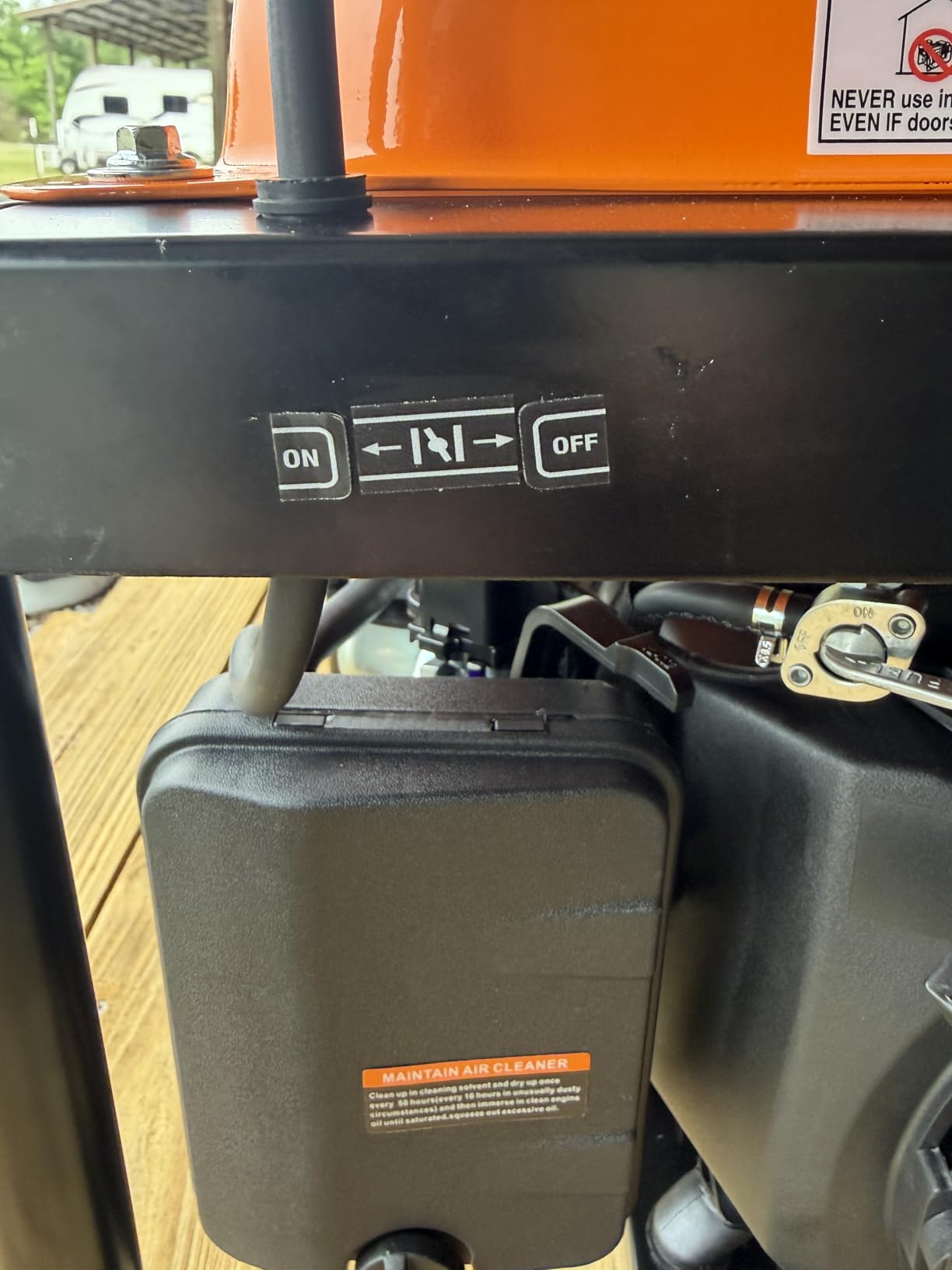
Note that the manufacturer states every unit is functionally tested at the factory, so a slight initial smell of gasoline on arrival is expected and dissipates. That is a reasonable, honest disclosure and worth knowing before you file a complaint about it.
Noise is rated under 72 dBA at 23 feet, which is inside acceptable range for a residential setting when the unit is not right next to a bedroom window.
Where the savings come out of the build
The warranty is one year, tied for the shortest in the lineup, and that is the single most important difference from the three-year coverage on the Champions. If something fails in year two, you are funding the repair yourself.
Owners also report more noise and vibration than advertised at full load, and the open frame means the same placement restrictions apply as to the Champion at number nine. Build quality is generally viewed as entry-level next to premium brands, which is a fair trade for the price but not for a machine you expect to run for a decade.
Who should buy it
It makes sense for a first backup purchase on a tight budget, a workshop, or a secondary property where reliability under sustained load matters less than getting power at all. Anyone expecting a ten-year service life should spend up and take the longer warranty.
12. DuroMax XP13000HX: For Whole-Home Essential Loads
DuroMax XP13000HX 13,000-Watt Dual Fuel Portable Generator – Gas & Propane, Electric Start, Whole Home Power Backup, Transfer Switch Ready, RV & Emergency Ready
10,500W running
13,000W starting
120/240V output
5-year warranty
Pros
- 10500W running watts can carry a whole home
- Transfer switch-ready 50A 120/240V outlet
- All-copper windings and a 500cc OHV engine
- Push-button electric start with CO Alert
Cons
- 245 lb is not portable without the wheel kit
- Loud under load compared with inverter generators
- Not inverter-grade clean power for sensitive electronics
This is the one machine here that can approach whole-home demand, and the 10,500 running watts sit well above what the mid-size machines deliver. Owners report using it to keep an entire home running through a storm, which is exactly the job the smaller machines cannot do.
Connection is where it earns its place. A transfer switch-ready 120/240V 50 amp outlet is paired with a 30 amp twist-lock, a 30 amp outlet and four 120V GFCI receptacles, so a licensed electrician can wire it into a home’s essential load path. Dual fuel, all-copper windings, a 500cc OHV engine and a five-year manufacturer warranty back that up.
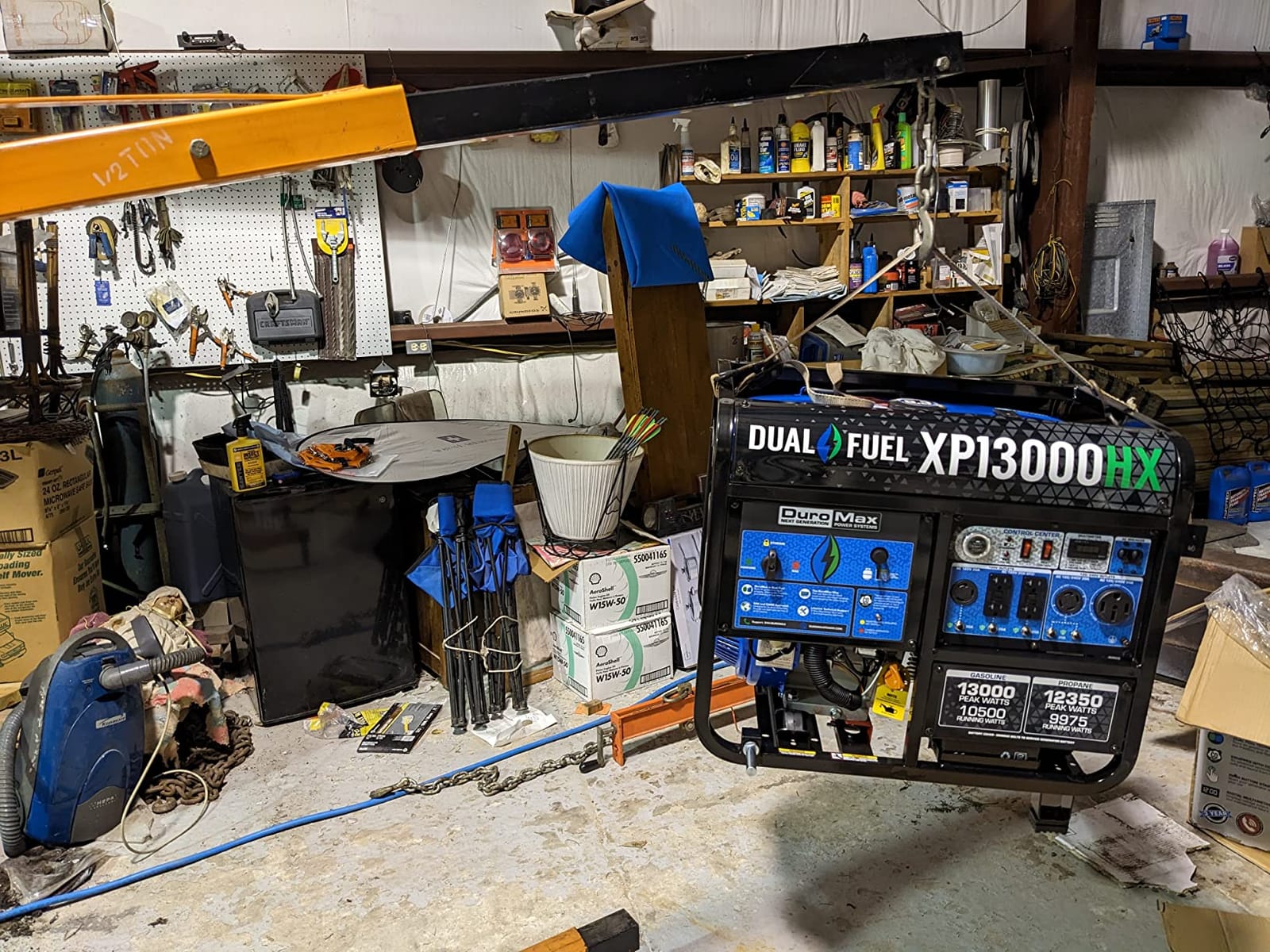
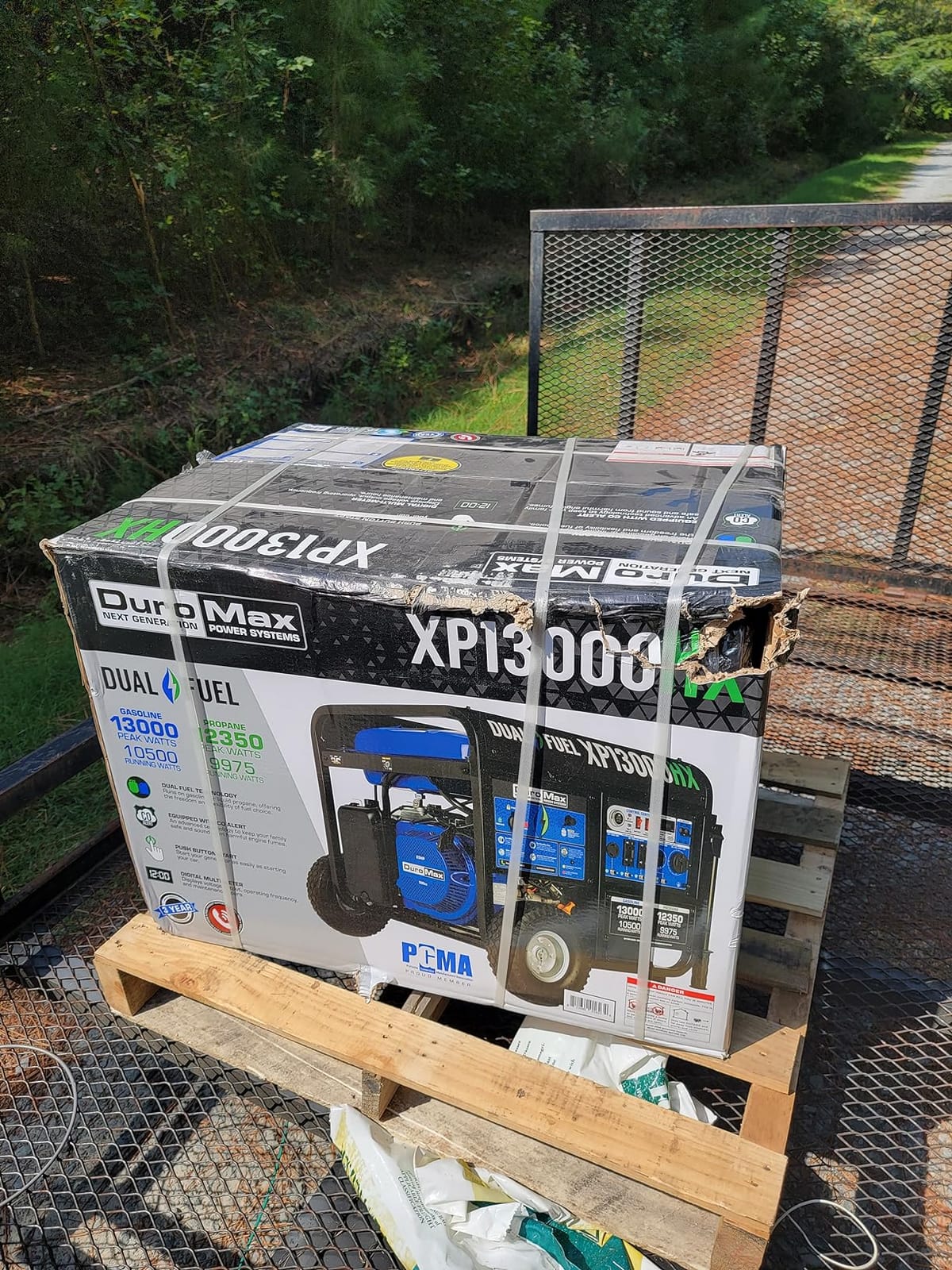
Push-button electric start and a front-facing fuel selector mean no fuel juggling, and CO Alert shuts the unit down if carbon monoxide becomes unsafe. A wheel and handle kit is included because at 245 pounds you will need it. Stated runtime is 17 hours.
Expect noise. This is a conventional generator architecture rather than an inverter-class design, and it is noticeably louder under load than anything else in the list, which rules it out for a bedroom wall or a close-set neighborhood at night.
The power quality trade-off
Owners who run servers, network storage or delicate electronics report needing a separate battery-backed UPS on the output to smooth and protect the signal. That is the honest cost of this size class, and it applies to sensitive medical equipment too.
The weight is the other one. 245 pounds is a permanent installation in practice, positioned once and left alone, not something you carry out to a driveway at midnight.
When it is the right call
It suits a home with central air, a well pump, an electric water heater or other loads that no portable box can carry, and it pairs naturally with a transfer switch installed by a licensed electrician. If your essential loads are a fridge, internet and lights, you are buying capability you will never use.
How to Choose a Power Inverter for Home Backup: 8 Steps
1. Write down every load you would actually run. Be honest rather than aspirational. The list usually ends up far shorter than people expect once you notice that the washing machine, the dehumidifier and the second refrigerator rarely make the cut.
2. Separate running watts from starting watts. Add the running figures, then confirm the surge rating of the inverter covers the single largest motor or compressor on your list with margin. Motors can draw three to five times their running figure for a couple of seconds.
3. Add 25 to 30 percent headroom. This is not padding, it is the difference between an inverter that holds steady and one that trips a protection circuit every time a compressor starts.
4. Choose the wave type based on your loads. Pure sine wave for anything with electronics, a compressor, a motor or a medical device. Modified sine wave is only acceptable for resistive loads such as a light bulb or a toaster, and even then it is a compromise.
5. Pick the battery voltage and capacity that match. 12V suits small portable builds, 24V is a middle ground, and 48V is the standard for whole-home systems because it cuts cable losses and lets a smaller conductor carry more current. A larger bank of the same chemistry almost always beats a smaller bank used harder.
6. Decide portable or installed. A portable power station needs an outlet and nothing else, which is why four of our picks are battery self-contained units. An installed inverter needs a bank, cabling, disconnects and often a permit, and gives you longer runtime in return.
7. Plan the transfer path before the purchase. Any unit that feeds your household wiring needs a transfer switch, whether it is a gas generator or a battery inverter. The wiring and the transfer equipment cost less than the equipment itself, and planning for it up front avoids a second purchase.
8. Check certification and warranty length. Look for UL, CE and FCC marks on battery units, and EPA plus ANSI/PGMA G300 or ANSI/UL 2201 on generators. A one-year warranty against a five-year warranty is a real difference in expected service life, especially on a machine you hope to keep for a decade.
Pure Sine Wave vs Modified Sine Wave, and What You Should Never Plug In
Pure sine wave output matches what the utility delivers, so motors run cooler, electronics behave, and nothing hums. Modified sine wave output is a stepped approximation. It is cheaper to produce and it will run a resistive appliance, but on the forum side of the search the complaint is consistent: units leaking measurable voltage to ground, audible noise, and instability on anything with a circuit board in it.
The practical list of what to keep away from a modified sine wave output is long and unglamorous: electric kettles, space heaters, hair dryers, power tools, microwaves, variable speed fans, and any medical device. A refrigerator will often survive on a modified sine wave, but a compressor running on a rough waveform ages faster, which is an expensive way to lose a working fridge.
For CPAP machines, oxygen concentrators, nebulizers, network storage and servers, use pure sine wave and check the switchover figure specifically. The units in this list range from under 10 milliseconds on the Anker, to 20 milliseconds on the BLUETTI and the Jackery HomePower, to a wired transfer switch on the Renogy. That matters because any device that sees a gap longer than its own tolerance will reboot or reset, and a medical device that cycles off mid-night is a safety issue rather than an annoyance.
One caution about mixing power sources: some UPS units reject a stepped or squarish waveform outright rather than accepting it, which is the argument forum owners make for feeding a server from a clean pure sine inverter rather than from a small gas generator. Mobile installs face the same waveform question, and our pure sine wave inverter roundup for RVs goes deeper on it for vans and boats.
Installing a Home Backup Inverter Safely
The single most important rule is never feed a home through a wall outlet. Plugging a generator or an inverter into a regular receptacle and backfeeding it into the house is how utility workers get electrocuted, and it is illegal in most jurisdictions. Every home-connected unit needs a transfer switch, installed by a licensed electrician.
Gasoline and propane machines belong outside, never in a garage, basement, shed with a door, or any partially enclosed space. Carbon monoxide is odorless and the CO sensor on several units here will shut the engine down rather than let it run in a bad space, but the sensor is a backup, not a plan. Position the machine downwind from doors and windows.
Battery installations need correct fusing, disconnects and properly sized cabling, plus a low voltage cutoff set to match your battery chemistry. Setting the wrong battery type in firmware is one of the most common configuration mistakes owners report, and it shortens battery life rather than inverter life.
Expect a permit and an inspection for any installed system, and check whether your insurer has requirements around standby generation. Most jurisdictions require a listed transfer switch, and GFCI protection on any outlets fed from a generator is the rule, not the exception.
Which Inverter Brand Is Most Reliable?
Reliability tracks three things: certification, warranty length, and whether the manufacturer will sell you a replacement board in three years. In the data we worked through, the warranties range from one year on the Renogy and the Oxseryn, to two years on the WEN and PowerSmart, to three years across the Champion models, to five years on the BLUETTI AC180, the Jackery HomePower and the DuroMax.
Certification separates the serious entries from the rest too. The PowerSmart lists EPA, ANSI/PGMA G300 and ANSI/UL 2201, the Renogy lists UL, CE and FCC, and the Jackery HomePower carries a UL-certified UPS. Where a listing names a standard, you can usually have it verified. Where it names nothing, treat that as information in itself.
Third is support and parts, and this is where budget units most often disappoint owners. The recurring complaint on community forums is not that the unit failed, it is that a failed board could not be sourced and the warranty claim went nowhere. The one-year warranty on the Oxseryn and the Renogy is where that risk concentrates, while the BLUETTI’s stated five-year spare part availability is the clearest counterweight in this group.
For a headline brand comparison, this roundup covers the units we could test. The names that dominate higher price tiers such as Victron, EG4 and Eco-Worthy did not appear in the set we assembled, so we have not ranked them here.
Frequently Asked Questions
What is the best power inverter for home use?
For most households the Jackery Explorer 1000 v2 is the best starting point, because it combines a 1,070Wh LFP battery with 1,500W of output and needs nothing but a wall outlet. Pick the Anker SOLIX C1000 Gen 2 if recharge speed matters most, and the BLUETTI AC180 if you want more outlets and a five-year warranty.
What size inverter would I need to run my house?
Add up the running watts of everything you want to keep on and add 25 to 30 percent headroom. A fridge, chest freezer, router, lamp and CPAP machine total roughly 350 watts, which points to a 1,000W inverter with 2,000W of surge. Well pumps, furnace blowers and window air conditioners push you into the 3,000W to 3,500W class.
What should you not plug into an inverter?
Keep electric kettles, space heaters, hair dryers, power tools, microwaves and variable speed fans off any modified sine wave output, and keep medical devices, network storage and servers off it entirely. Use pure sine wave output for anything with electronics, a compressor or a motor, and check the UPS switchover time if a device cannot tolerate a gap.
Do I need a transfer switch for home backup?
Yes for any unit that feeds your home wiring through the electrical panel. A transfer switch isolates the two power sources so they can never connect at the same time. Running a generator or inverter back into a wall outlet without one is illegal in most jurisdictions and is a well documented electrocution risk for utility workers.
Can I run my air conditioner on a home backup inverter?
A window or small portable unit, yes, if your inverter has enough surge headroom for the compressor to start. Central air generally cannot be carried by a portable power station, and even a 3,600W unit like the Jackery HomePower covers essentials rather than heavy appliances. For central air you need a permanently installed system or a gas unit with a transfer switch.
The Verdict: Which Inverter Should You Buy?
For most people, the best power inverters for home backup in 2026 start with a self-contained battery unit, and our pick is the Jackery Explorer 1000 v2. Its 1,500W of clean output, 3,000W of surge headroom and LFP battery rated for 4,000 cycles cover a fridge, internet and lights for a night or two with no installation and no fuel.
Step up to the Anker SOLIX C1000 Gen 2 when recharge speed is the priority, to the BLUETTI AC180 when outlet count and a five-year warranty matter, and to the Jackery HomePower 3000 when outages run longer than a day. Go gas when the outage lasts days or your loads exceed what a battery box can hold, and go wired with a transfer switch when you need whole-home capacity.
Whichever you pick, write your load list first. Every bad inverter experience we traced back to a purchase made on headline watts instead of on an honest list of what needs to stay on.