
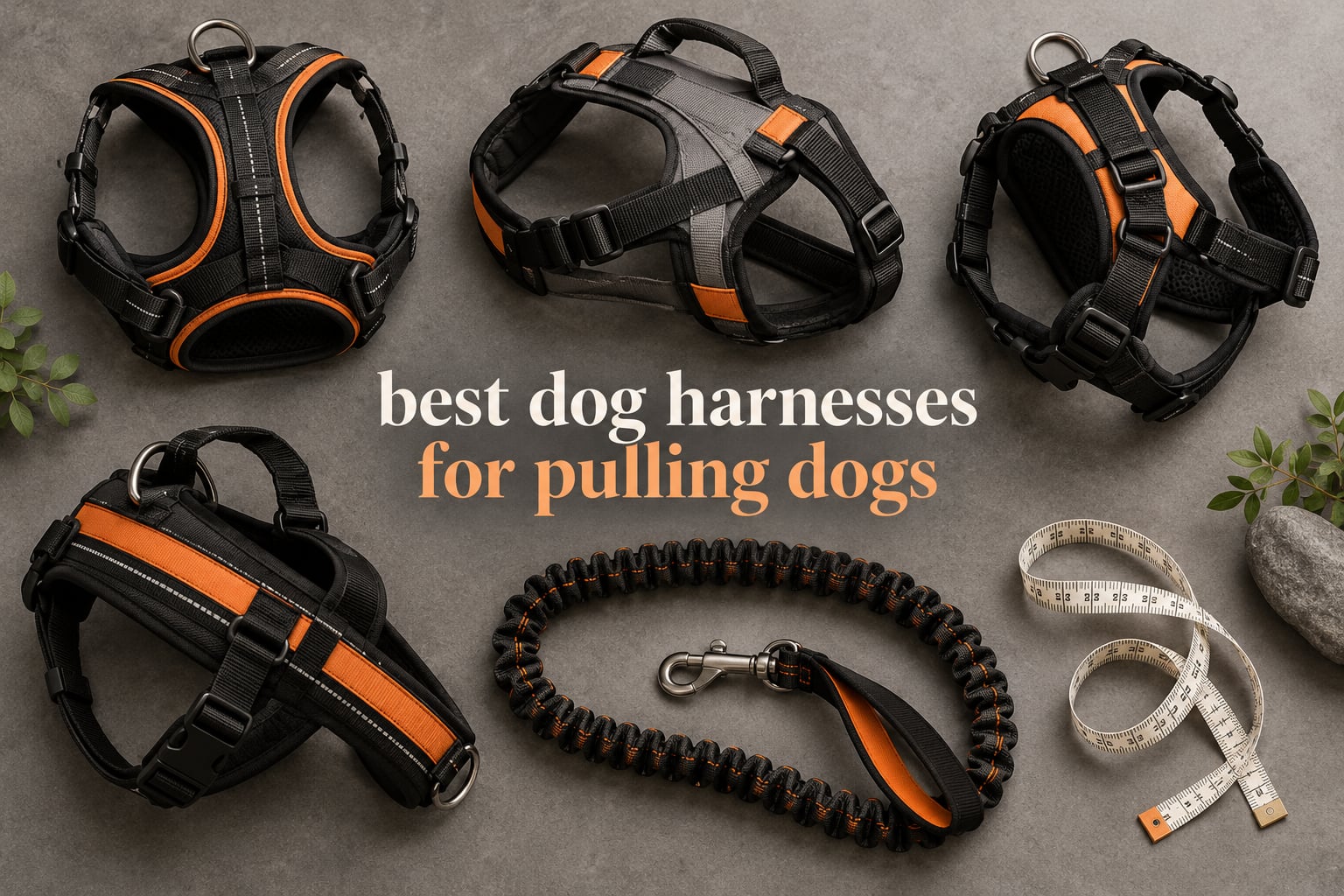
There are two different problems hiding inside the phrase best dog harnesses for pulling dogs, and most owners only find the second one after buying the wrong harness. The first is a dog that lunges, drags or surges ahead on an ordinary walk and you want that to stop. The second is a dog trained to pull on purpose, for canicross, bikejoring, skijoring, sled work or weight pulling, where you want force transmitted through the body and nowhere near the throat.
A walking no-pull harness and a sport pulling harness are not variations on one product. One has a high chest ring that turns a forward surge into a sideways drift. The other has wide webbing, a Y-shaped or X-back frame and steel hardware that lets a dog lean into a tow strap for miles. Buy a walking vest for a sled dog and the buckles deform. Buy a sport harness for a reactive walk and your dog fights something bulky at the throat.
We pulled twelve harnesses owners actually use on dogs that pull, weighed the reviews, and split them by job: six walking and control, six sport and pulling. The detail that decides most purchases is not the marketing, it is what the hardware is made of and where the stitching sits.
One thing up front. A harness makes pulling less effective. It does not teach loose-leash walking. Owners on r/Dogtraining and r/GSP describe the same pattern: the front clip buys a few weeks of calmer walks, and the training does the rest. Everything below assumes you are training too. We update this list for 2026.
If your dog is elderly and stiff, comfort and padding matter more than pulling strength, and our guide to dog strollers for senior dogs covers that problem. If your dog works alongside you, a GPS tracker for working dogs is worth pairing with anything on this list.
Table of Contents
Quick Picks: the Best Dog Harnesses for Pulling Dogs in 2026

Julius-K9 IDC Powerharness
- Single-buckle over-the-head build
- Top handle for physical control
- Adjustable front and belly straps

AUROTH Tactical Vest
- High chest ring redirects lunges
- Four metal adjustment rings
- Molle side panels for gear

rabbitgoo No Pull Harness
- Front chest clip plus back clip
- Four adjustment straps
- Padded breathable mesh
Six picks if you want to skip the detail:
Best overall for stopping pulling on walks: Julius-K9 IDC Powerharness, a single-buckle over-the-head build with a top handle reviewers describe as very hard for a dog to wiggle out of.
Best for large, strong pullers: AUROTH Tactical Vest, whose high chest ring makes a lunging dog turn rather than roll.
Best value: rabbitgoo No Pull Harness, the most-reviewed walking vest here, with a front chest clip, a back clip and four adjustment straps.
Best for escape artists: ICEFANG Tactical Harness, seven adjustment points and three leash clips, though the front snap connectors need checking.
Best for canicross and skijoring: Non-stop dogwear Freemotion 5.0, a Y-shaped neck that routes pulling force through the sides.
Best for weight pulling and sled work: PET ARTIST Sled Harness, 50mm webbing with reinforced stitching and a stated resistance up to 1200 lbs.
All 12 Pulling Harnesses Compared Side by Side in 2026
| Product | Specifications | Action |
|---|---|---|
| Julius-K9 IDC Powerharness |
|
Check Latest Price |
| AUROTH Tactical Vest |
|
Check Latest Price |
| rabbitgoo No Pull Harness |
|
Check Latest Price |
 ICEFANG Tactical Harness ICEFANG Tactical Harness |
|
Check Latest Price |
 Non-stop dogwear Freemotion 5.0 Non-stop dogwear Freemotion 5.0 |
|
Check Latest Price |
 Neewa Sled Pro Harness Neewa Sled Pro Harness |
|
Check Latest Price |
 PET ARTIST Sled Harness PET ARTIST Sled Harness |
|
Check Latest Price |
 miR Sled Harness miR Sled Harness |
|
Check Latest Price |
 Ruffwear Front Range Ruffwear Front Range |
|
Check Latest Price |
 Embark No Pull Harness Embark No Pull Harness |
|
Check Latest Price |
 ShawnCo Essential Harness ShawnCo Essential Harness |
|
Check Latest Price |
 Carhartt Nylon Duck Harness Carhartt Nylon Duck Harness |
|
Check Latest Price |
1. Julius-K9 IDC Powerharness — the best everyday control harness for escape-prone pullers
Julius-K9, 16IDC-DPN-0, IDC Powerharness, Dog Harness, Size: 0, Dark Pink
Chest 22.8-30 in
Dog weight 31-55 lbs
2.4 oz, made in Europe
Pros
- Dogs rarely wiggle out of it
- Slips over the head with one buckle
- Top handle gives real control
- Reflective edges and chest strap
- Interchangeable hook-and-loop patches
Cons
- Front strap adjusts from the inside so the vest comes off
- Front strap crosses the shoulder blades
- Not a front-attach no-pull design
- Ring diameter rejects narrow leash clips
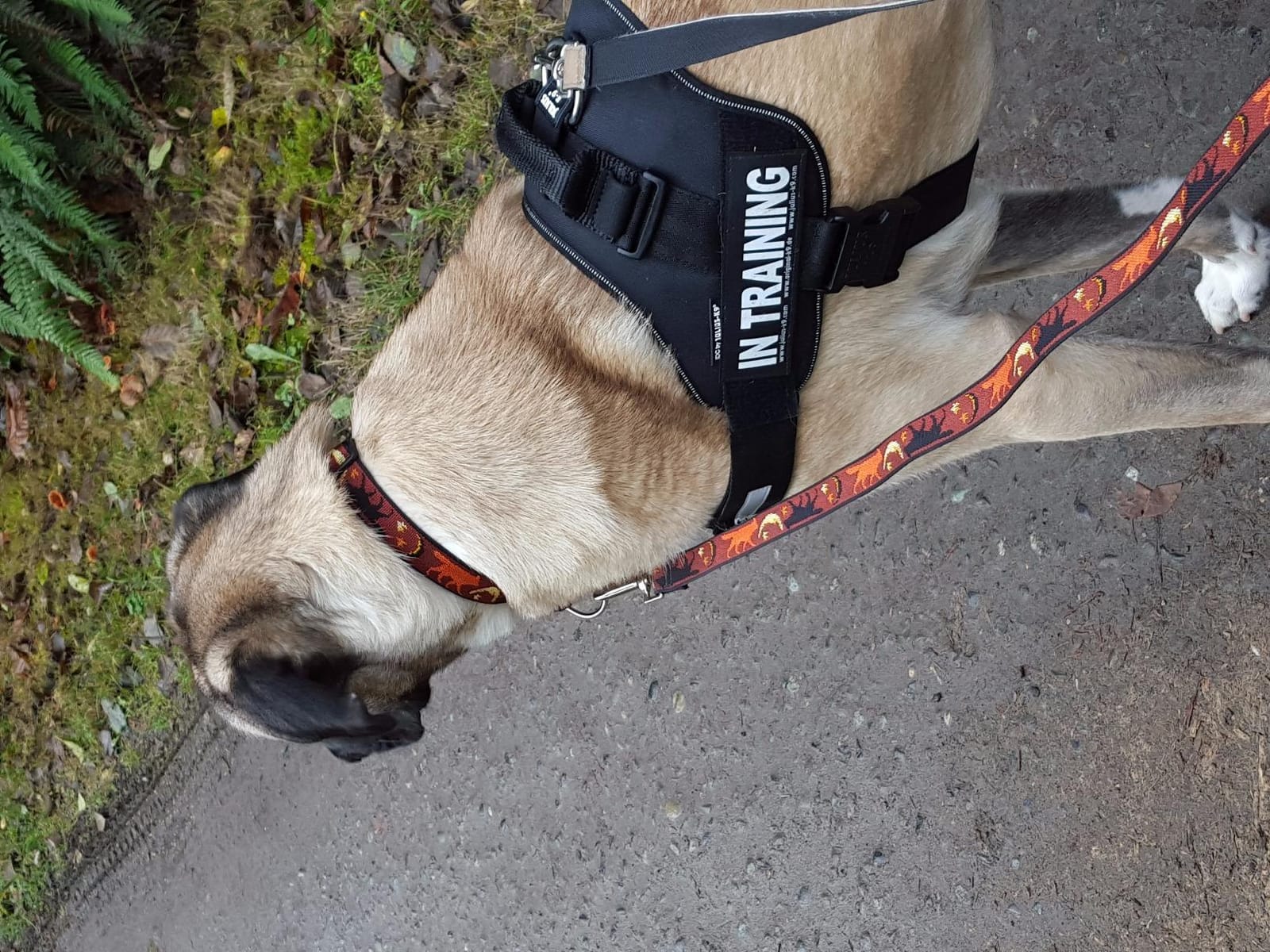
This is the harness we keep coming back to for a dog that plants and leans. It goes over the head and closes with a single buckle under the chest, so there is no second strap to fiddle with mid-walk while your dog is already dragging you toward a driveway.
The top handle is the part owners mention most, and the part cheap vests fake. On a 50-pound dog it is a real difference: you get a moment of physical control without hauling on the neck. It also makes the harness useful for a nervous or reactive dog, because you have something to hold rather than only a leash to yank.
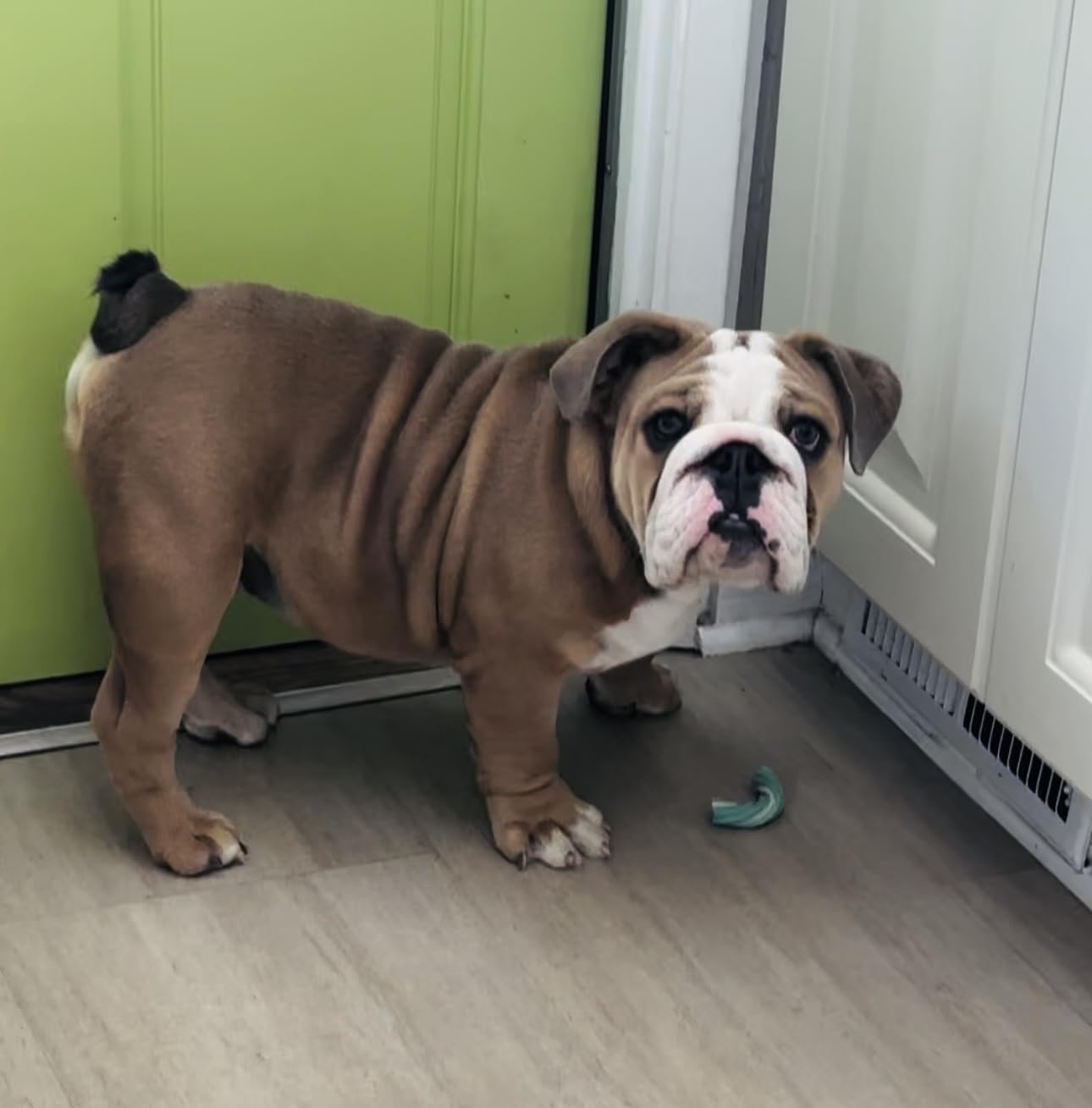
Construction is European-made with a breathable inner liner, adjustable front and belly straps and heavy duty buckles. At 2.4 ounces it is one of the lightest here, which matters for a dog that scrunches up the moment something clicks on.
Two honest limits. The front strap adjusts from inside the vest, so a small tweak means taking it off, and that same strap crosses the shoulder blades, which owners notice when jogging.
Is it actually escape proof?
Escape-resistant, yes. Escape-proof as an absolute claim, no. What it does well is leave very little slack for a dog to exploit. Add a safety strap from the back ring to a martingale collar and you get the layering owners on r/dogs recommend most for dogs who have already wriggled out of a rear-clip harness.
Who should buy it, and who should not?
Buy it for a strong dog in the 31 to 55 pound band that is a confirmed escape risk, especially one that lunges. The size range covers 22.8 to 30 inches of chest. Skip it for distance running, and for narrow clip hardware, since the ring diameter rejects newer narrow-style snap connectors. It is also not a no-pull design, so control comes from the handle and from training.
2. AUROTH Tactical Vest — the best harness for large, strong pullers
AUROTH Dog Harness for Large Dogs, No Pull Tactical Dog Vest Heavy Duty
Four metal adjust rings
Front and back leash points
Molle panels on both sides
Pros
- High chest ring makes dogs turn
- Very hard to back out of
- Reinforced nylon stitching
- Top handle for lifting and control
- Molle panels accept gear and ID
Cons
- Sizes run small so size up
- Some large variants use plastic rings
- Straps loosen over time
- Not for sled or weight pulling
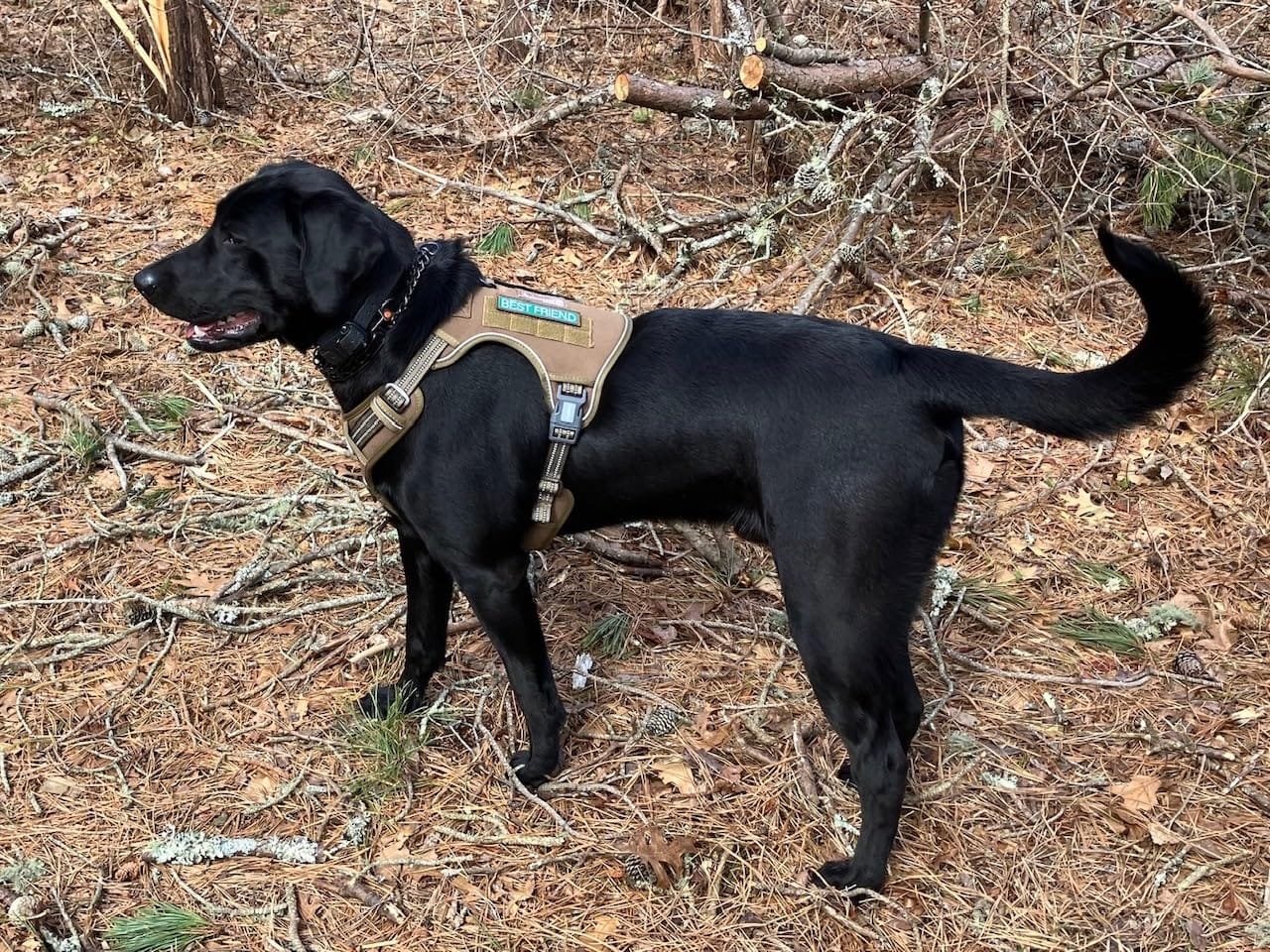
The decision that separates this from every other walking vest here is where the front ring sits. High on the chest rather than low near the sternum, which means a surging dog gets steered into a turn instead of rolling over the ring and continuing.
That single change is why owners of Rottweilers, Labs, German Shepherds, Dobermans and bully breeds rate it so highly. For a dog dragging you sideways off a footpath, it is very good at exactly that problem.
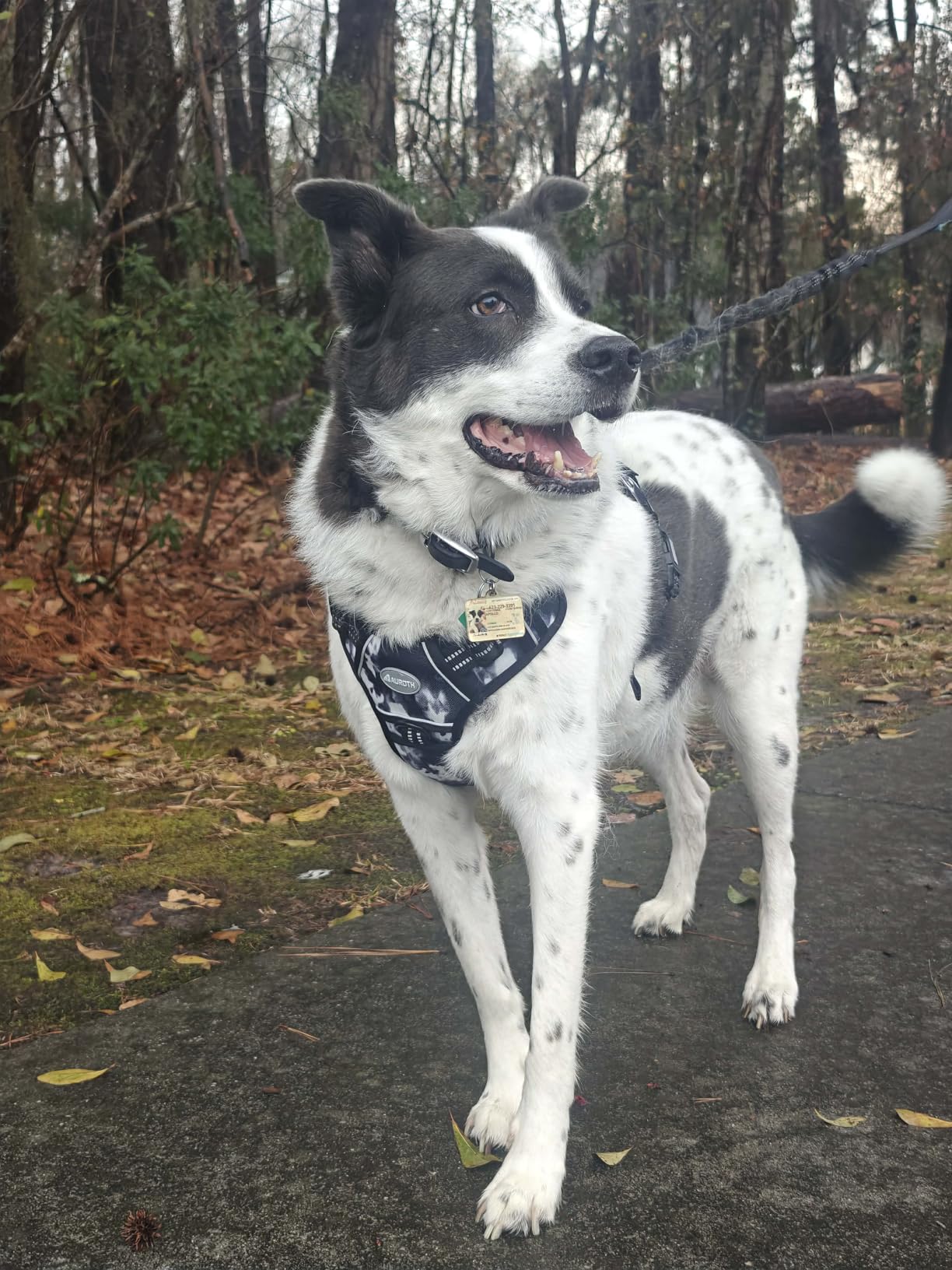
The build is durable nylon with reinforced stitching, padded pressure points and breathable air mesh. Two quick-release buckles and four fully adjustable metal rings give a genuinely snug fit, which is the main defence against backing out. Molle strips down both sides take pouches, patches and identification panels.
Be clear about the limits. The product data is explicit that this is not a sport harness, so keep it off the sled and the tow line.
How do I get the sizing right?
Check both neck and chest against the published measurements, and expect to size up. The most common complaint by far is that sizes run small, especially for puppies nearly finished growing. Sizing up to grow into is the exact mistake harness owners warn against, so measure first.
What are the real drawbacks?
Some larger variants ship with plastic rather than metal ring hardware, which is precisely the part you depend on with a hard puller. Check before you walk rather than after. Straps also need periodic re-tightening more than most, so re-check every ring after the first week.
3. rabbitgoo No Pull Harness — the best value walking vest for large dogs
rabbitgoo Dog Harness, No Pull for Large Dogs with 2 Leash Clips, Pet Vest
Front chest clip plus back clip
Four adjustment straps
Padded oxford and air mesh
Pros
- Chest clip measurably reduces pulling
- Two quick-release buckles
- Fast over-the-head fit
- Room for a growing puppy
- Bright reflective strips
Cons
- Webbing is not for sled loads
- Sizing runs large between sizes
- Neck strap can rub on hard lungers
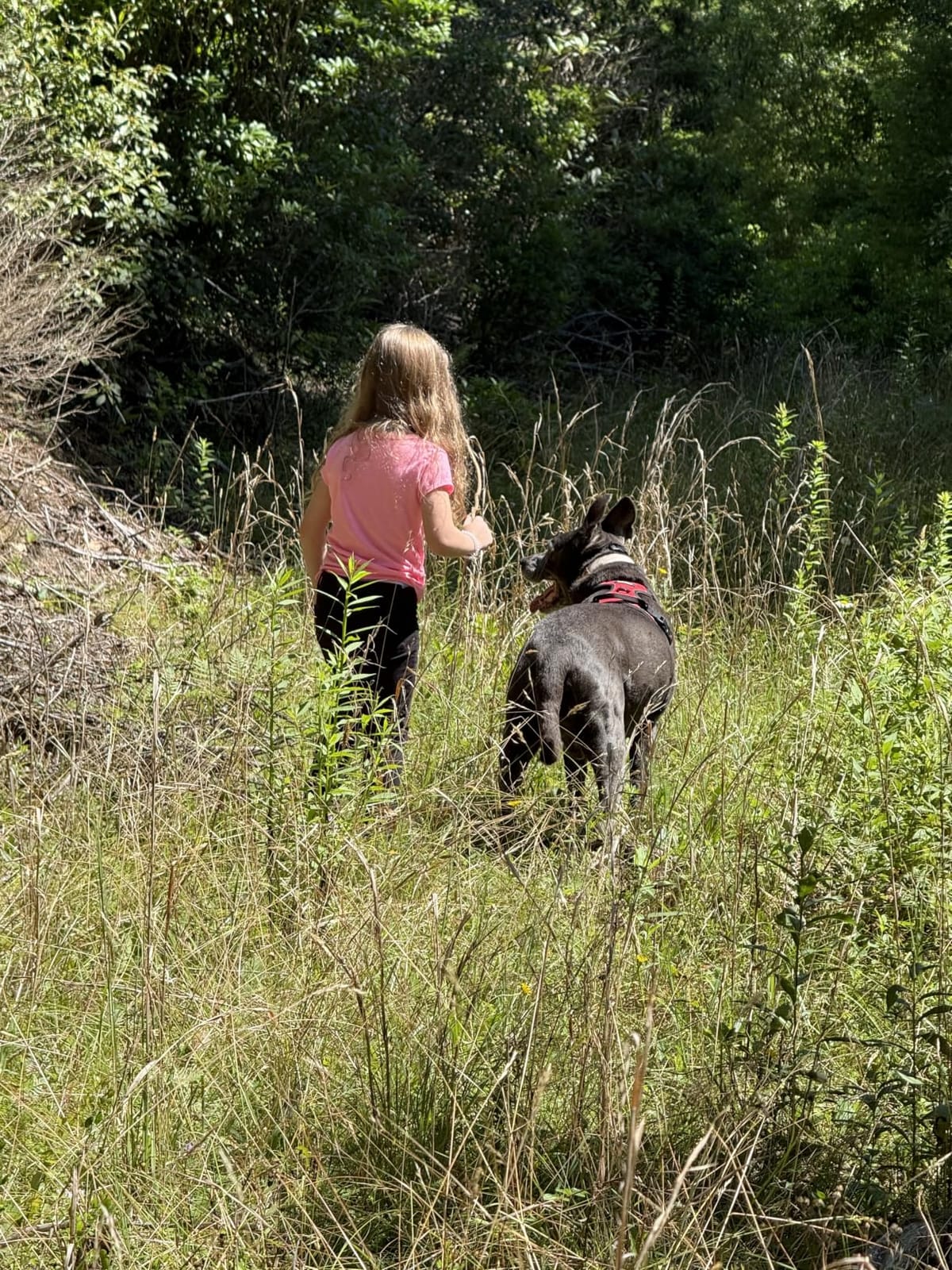
With more than 184000 reviews this is the most widely used walking harness in our set, and the reason is simple: it does the basic no-pull job for a large dog without asking you to learn anything new. Two metal leash rings, one on the chest for training and one on the back for relaxed walks.
For a strong neighbourhood puller the front clip does what it should. The dog cannot get a straight line of pull into the neck, so forward motion becomes a drift back toward you. Owners credit it with stopping choking behaviour as much as pulling.
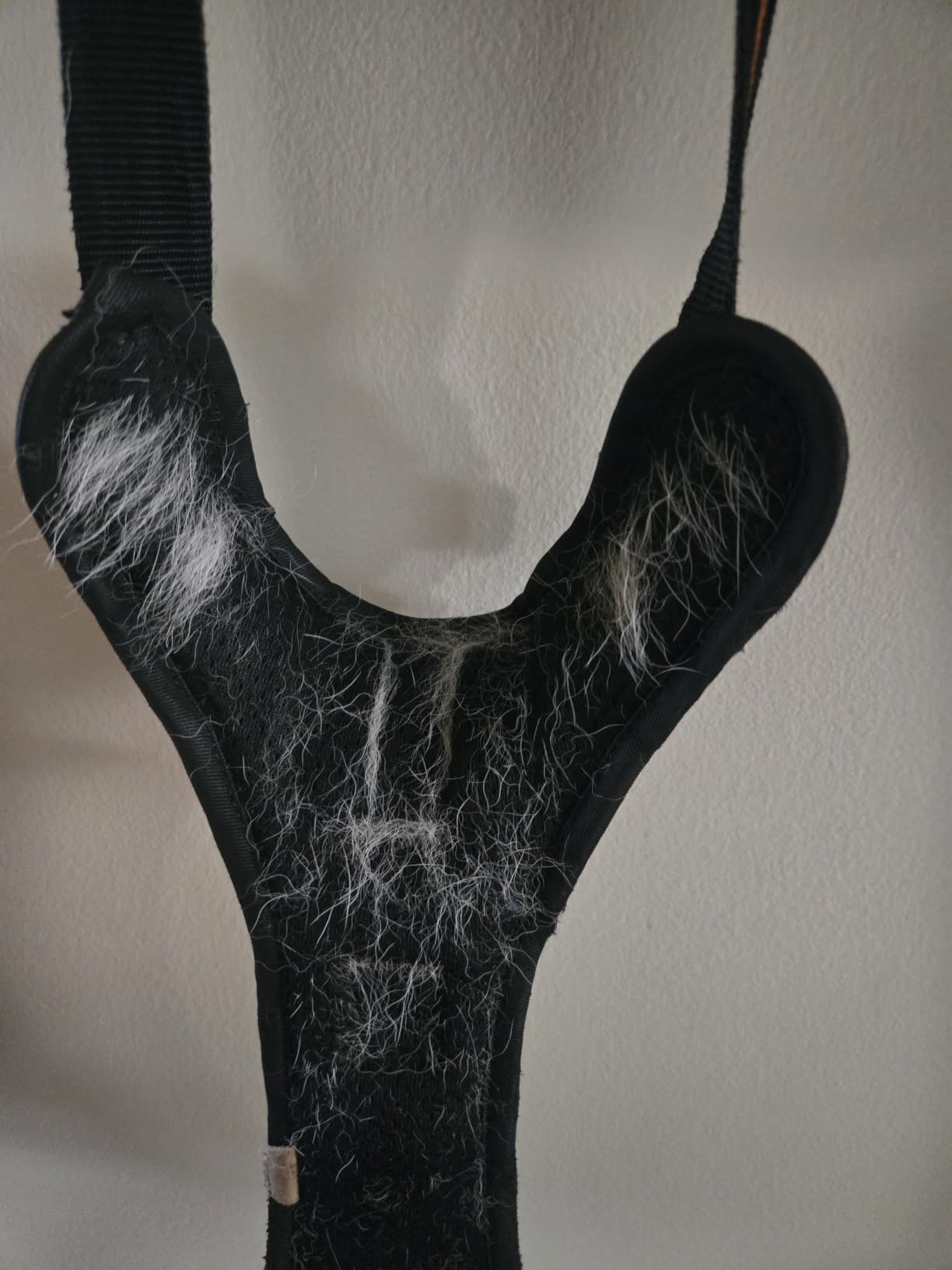
It goes on over the head with two quick-release buckles, and four adjustment straps at neck and chest mean a puppy has room to grow into it. Material is polyester oxford with soft cushion padding, breathable air mesh and reflective strips.
Be clear what the webbing is for. This is a walking vest, and its soft polyester webbing is not intended for sled or weight-pulling loads. On a dog hooked to a tow strap you are asking the wrong part of the product to do the work.
Does a no-pull harness actually work?
It works mechanically, and temporarily. The chest ring removes the dog’s mechanical advantage, so pulling produces no forward progress. What it does not do is teach anything, and owners report the effect fading once a dog learns to twist out of the ring sideways.
Is it right for a powerful puller?
Yes for a large dog that walks with you. No for a dog that drags you to the ground on every walk, and no for sport work. Between sizes it can run large, so pick on chest girth measurement rather than the label. Use the front clip for training sessions, then the back clip for relaxed walks once the loose-leash habit holds.
4. ICEFANG No Pull Tactical Harness — the best escape-proof harness for a determined dog
ICEFANG No Pull Tactical Dog Harness for Large Dogs,Adjustable Dog Vest
Three leash clips
Seven adjustment points
2 metal and 4 plastic buckles
Pros
- Escape artists cannot back out
- Highest average rating in this roundup
- Front anti-pull D-ring gives real control
- Metal buckles and heavy stitching
- Molle and loop panels for gear
Cons
- Front snap connectors can look latched when they are not
- Sizing runs large
- Bulkier than a basic vest
- Seven points take time to dial in
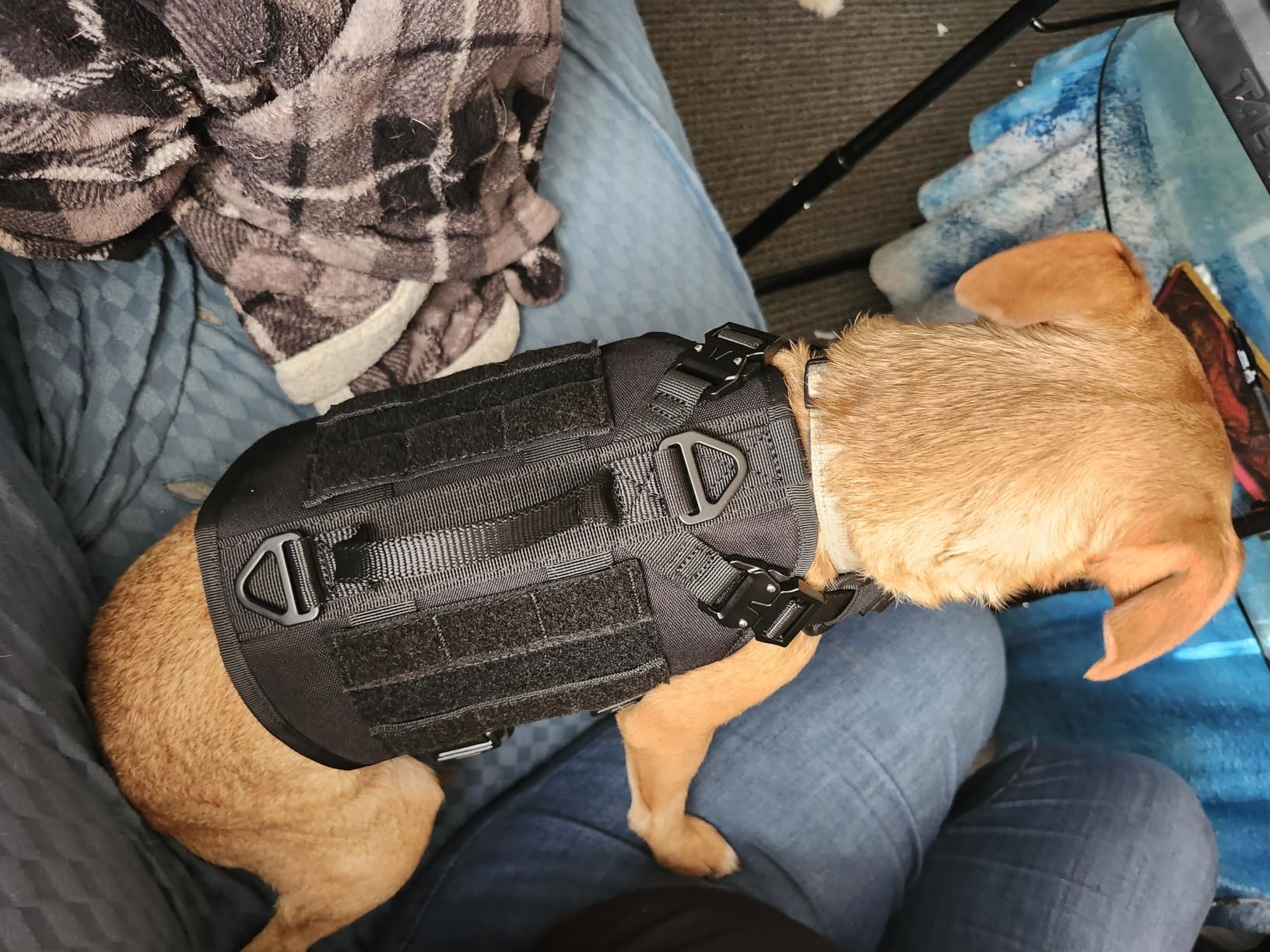
This is the security-first option, and it carries the highest average rating in the roundup at 4.7 across more than 8400 reviews. Owners of pit bulls, bully breeds, Rottweilers and escape-artist rescues give one reason: the fit is so snug that backing out is not physically available to the dog.
There are three leash attachment points, including a heavy duty V-ring near the neck, a back clip and a front anti-pull D-ring. Six quick-release buckles, two of them metal, and seven adjustment points give more places to remove slack than any other walking harness here.
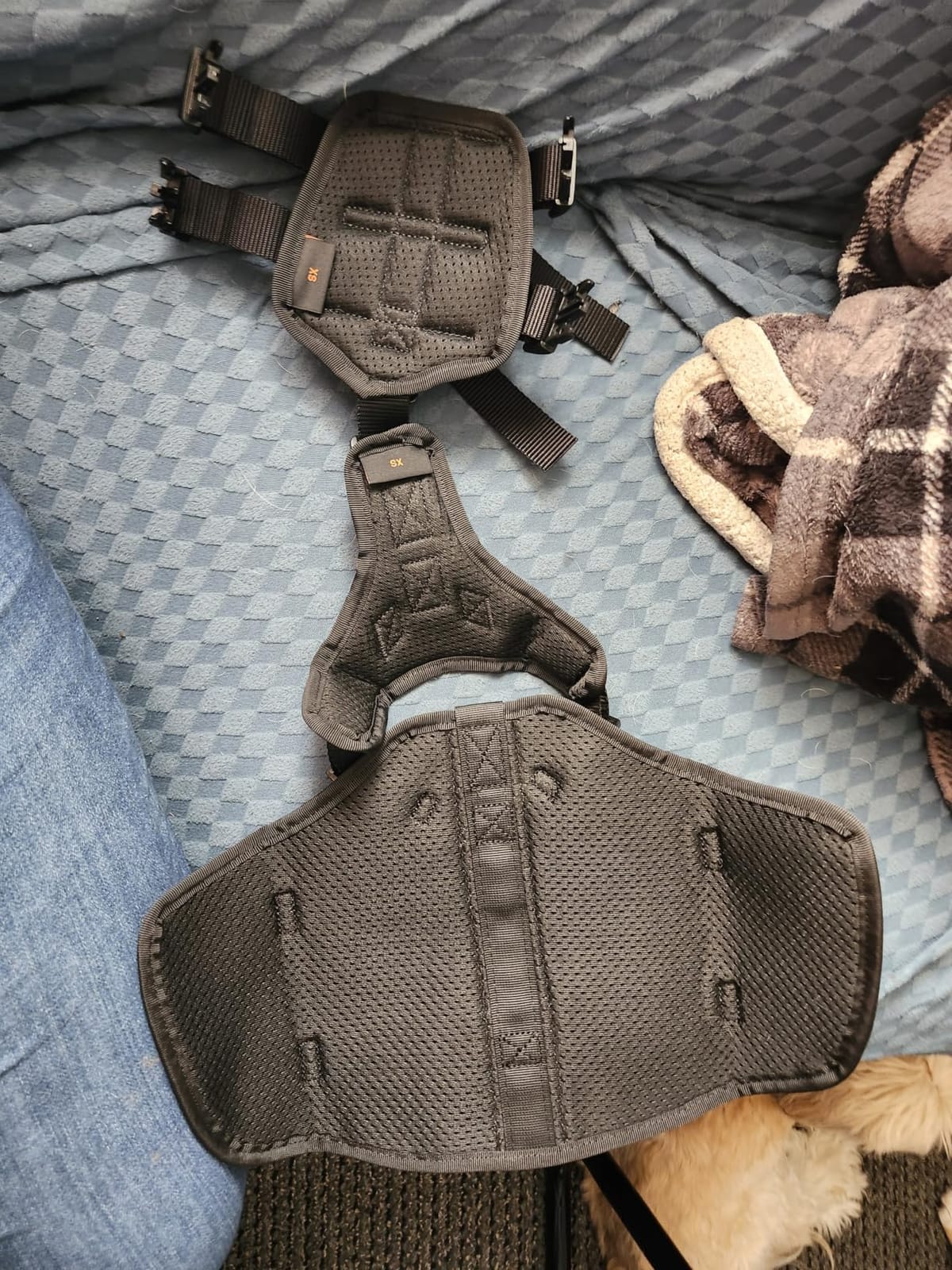
The trade-off for that security is bulk. It is a tactical vest with gear panels, not a minimal walking harness, and sensitive dogs sometimes object to the on and off process. The chart runs from XS with a 12 to 17 inch neck and 17 to 23 inch chest through XL with a 20 to 28 inch neck and 32 to 39 inch chest.
One complaint deserves real attention. The front snap connectors can look closed without being latched, and can release if a dog bites or paws at the clip. Rare, but it is a leash failure, so check those two clips before every walk.
Is it the best anti-pull harness for large dogs?
It is the most secure with the most redirect authority, at the cost of being the bulkiest option. For a dog that escapes, that trade is worth making every time. For a long walk on soft ground, a lighter vest wins. Expect a few minutes of adjusting on the first walk as you find the seven points; once set, it holds.
How should it be layered for escape-proofing?
Clip a safety strap from the back ring to a martingale collar, the single most repeated escape-proofing tip across the dog forums we read. It costs nothing and covers the failure nobody can design out, which is a dog working a strap loose with a paw. Keep in mind sizing runs large, so the smallest size may still be big for a dog under about 20 pounds.
5. Non-stop dogwear Freemotion Harness 5.0 — the best harness for canicross and skijoring
Non-stop dogwear Freemotion Harness 5.0 Dog Pulling Harness for Sports Like Running, Biking and Skiing with Dogs, Professional Adjustable Dog Harness, Orange/Black, Size 4
Y-shaped neck construction
Pull force loaded from the sides
Padded neck opening
Pros
- Shoulders stay free
- Padding beats most pulling harnesses
- Force distributed from the sides
- Adjusts to very different shapes
- 3M reflective piping and loop
Cons
- Hard to put on for a dog unaccustomed to it
- Sizing is unforgiving and returns are common
- Dye bleeds when wet
- One rear strap has failed at the seam
This is the reference point for sport work in the forum corpus, and the mechanism differs from every walking harness on this list. Pulling force enters from the sides of the harness rather than the front, spreading around the ribcage instead of pulling the head and neck forward.
The Y-shaped neck opening is what matters for distance. Owners running tens of miles report that the shoulder joints stay free through the stride, and the padded neck and chest area is noticeably more cushioned than competing pulling harnesses of similar weight.
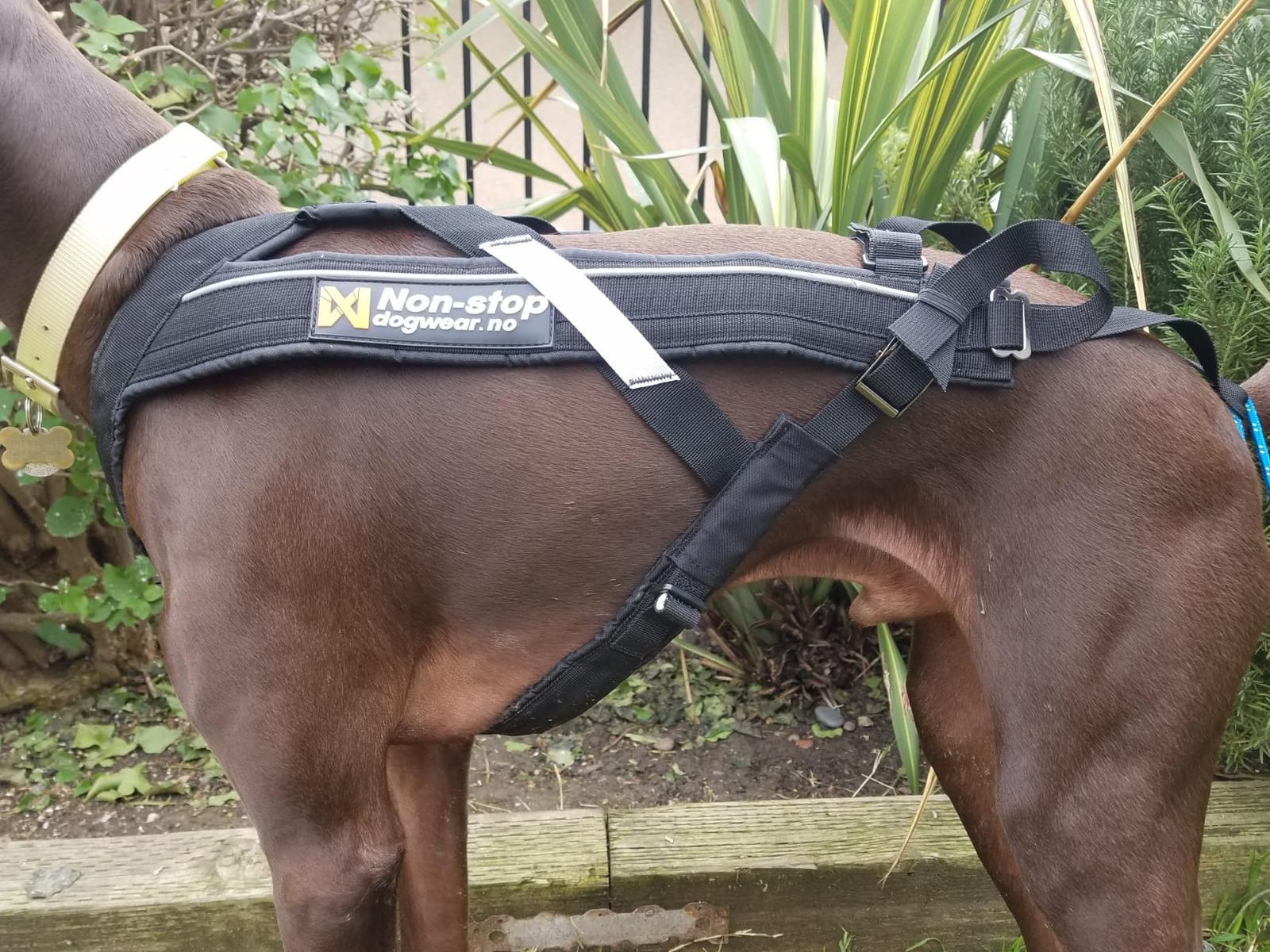
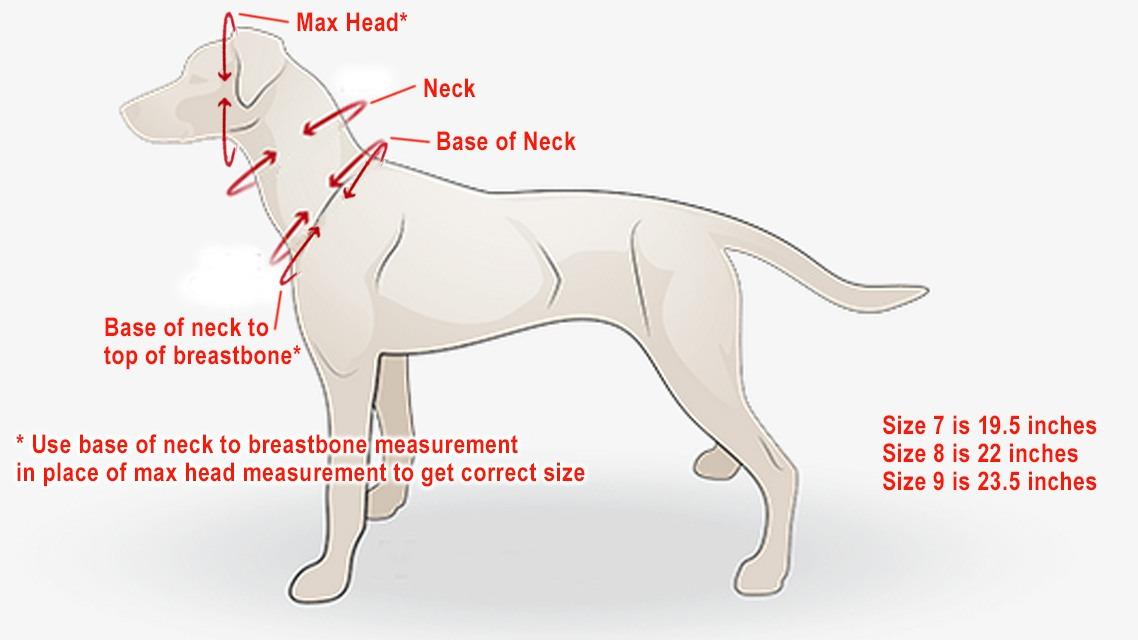
It weighs 12.8 ounces and adjusts enough to fit very different shapes, provided you measure correctly. The measuring guide is accurate, but buyers frequently over- or under-size, and several ended up returning it because the chart did not match their dog’s shape.
The dye bleeds heavily and hand washing can discolour the harness, so keep it out of a white sink. One owner also reported a rear strap failing at the seams after roughly a month and a half of use, which matters if you check stitching weekly.
Do I need a bungee leash to run with a pulling dog?
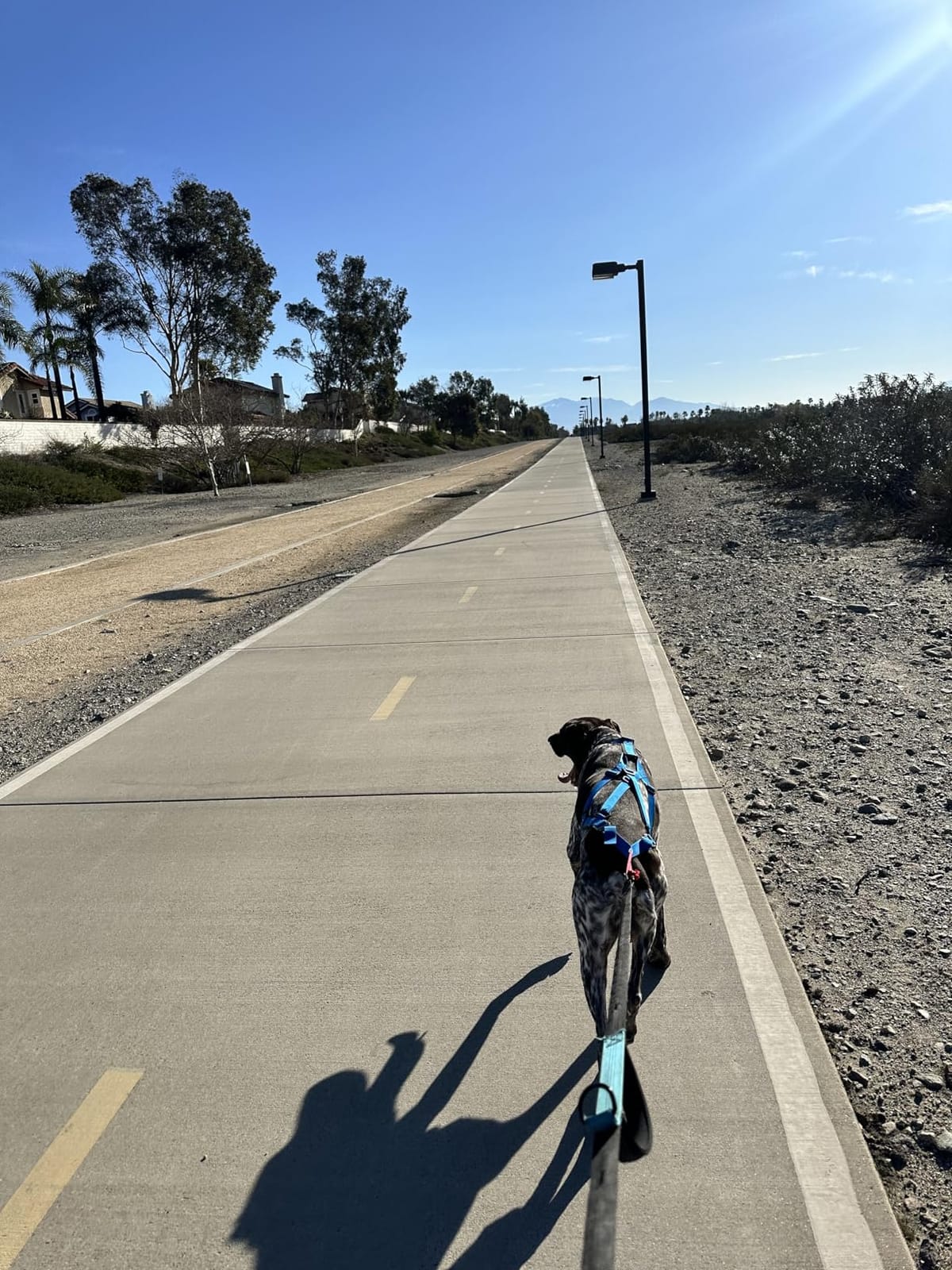
Yes, and this is the detail competitors leave out. Runners consistently report that a normal lead is unusable once the dog is doing the pulling, because the tension arrives before you are ready for it. A bungee or coupler absorbs the surge and gives you a couple of strides of slack to recover. The 3M reflective piping and reflective loop matter far more here than on a slow walk.
What are the compromises for a casual owner?
It is hard to put on for a dog unused to harnesses, and the sizing demands real measuring rather than a guess. If you only walk the dog around a block, this is a lot of harness for the job.
6. Neewa Adjustable Sled Pro Harness — the best padded X-back for sled and scootering
Neewa Adjustable Sled Pro Harness (Large, Pink), Dog Harness for Large Breeds, Giant Dogs, Sled Pulling
X-back with padding
Eight adjustment points
Necks up to 28 in
Pros
- X-back spreads force over the body
- Eight adjustment points handle varied builds
- No chafing on long runs
- Usually accepted by harness-fearful dogs
- Sturdy stitching and hardware
Cons
- Runs large even at maximum adjustment
- Size guide covers neck only
- Sternum stitching can pucker and rub
- Rear ring is awkward for quick redirection
An X-back is the other classic pulling layout, and it works differently from the Y-shape. The straps cross between the shoulders, keeping load off the shoulder blades and transferring it toward the chest and ribs, so a dog can pull longer with less fatigue.
What owners mention without exception is comfort. The soft padding leaves no chafing or friction wounds after long runs, and sled, skate-joring and bike-joring owners report the dog pulls noticeably further before tiring. It is listed for necks up to 28 inches.
Eight adjustment points is genuinely more than most competitors offer, and it is what lets one harness fit very different and very fluffy dogs. It is also frequently the harness harness-fearful dogs accept, because padding removes the hard edges that make dogs balk.
Fit is the problem. It runs large, so some buyers find it still too loose at maximum adjustment and size down. The size guide covers neck circumference only, not chest girth or back length, so measure all three.
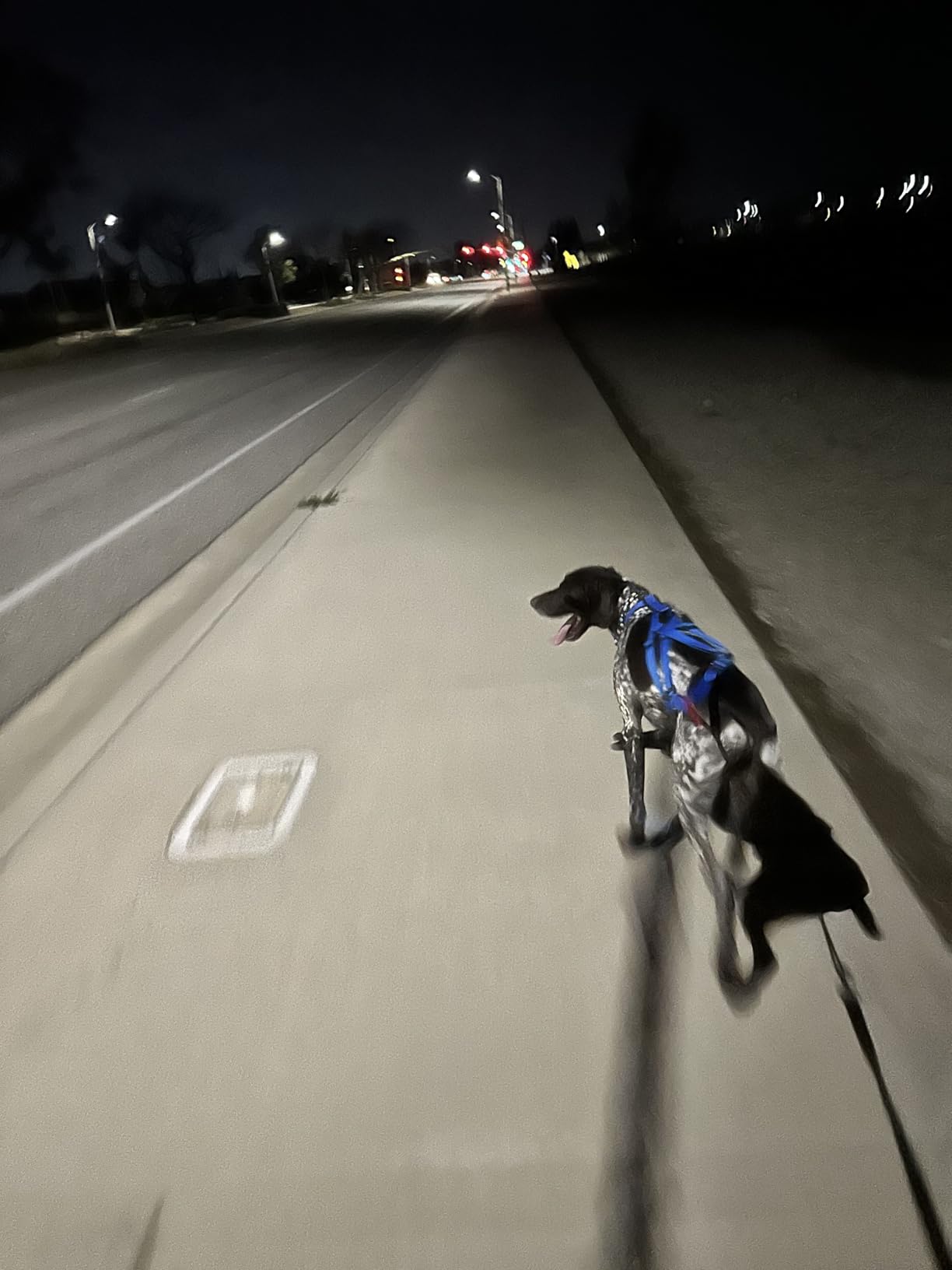
Is it suited to canicross and bikejoring?
Yes, and the X-back is the traditional answer for a dog hauling a line behind a bike or skier. The wide padded straps distribute load across the torso rather than concentrating it at the neck, which is what a long session needs. Size down if you are between sizes, because a loose pulling harness wastes the whole benefit of the X shape.
What should I watch for?
A pucker in the sternum strap stitching can rub the chest on some units, so check that seam before a long day. The rear attachment point also sits at the base of the tail, which is harder to grab quickly if you need to redirect mid-run.
7. PET ARTIST Dog Sled Harness — the best value harness for weight pulling
PET ARTIST Dog Sled Harness for Large Work Dogs, Dog Pulling Sledding Harnesses for Behaviors Training,Weight Pulling,Canicross,Ski-Joring
50mm nylon webbing
Reinforced stitching
Resistance up to 1200 lbs
Pros
- Very wide webbing spreads load
- Padded neck and chest strips
- Reinforced stitching for work dogs
- Sledding and canicross ready
- Good value at large-breed sizes
Cons
- Built for roughly a 31.5 in neck only
- Two color options in one size
- Less precise fit than multi-point X-backs
This is the plainly built one, and for a defined job that is a strength. Fifty millimeter wide nylon webbing with reinforced stitching and a stated resistance up to 1200 lbs, on an X-back frame, for dogs genuinely being asked to pull a load.
Owners of Alaskan Malamutes, Huskies, Rottweilers, Boxers and American Bullies use it for weight pulling and sledding, and the wide webbing is why they keep using it. A wider strap spreads the same force across more fabric and fewer stress points.
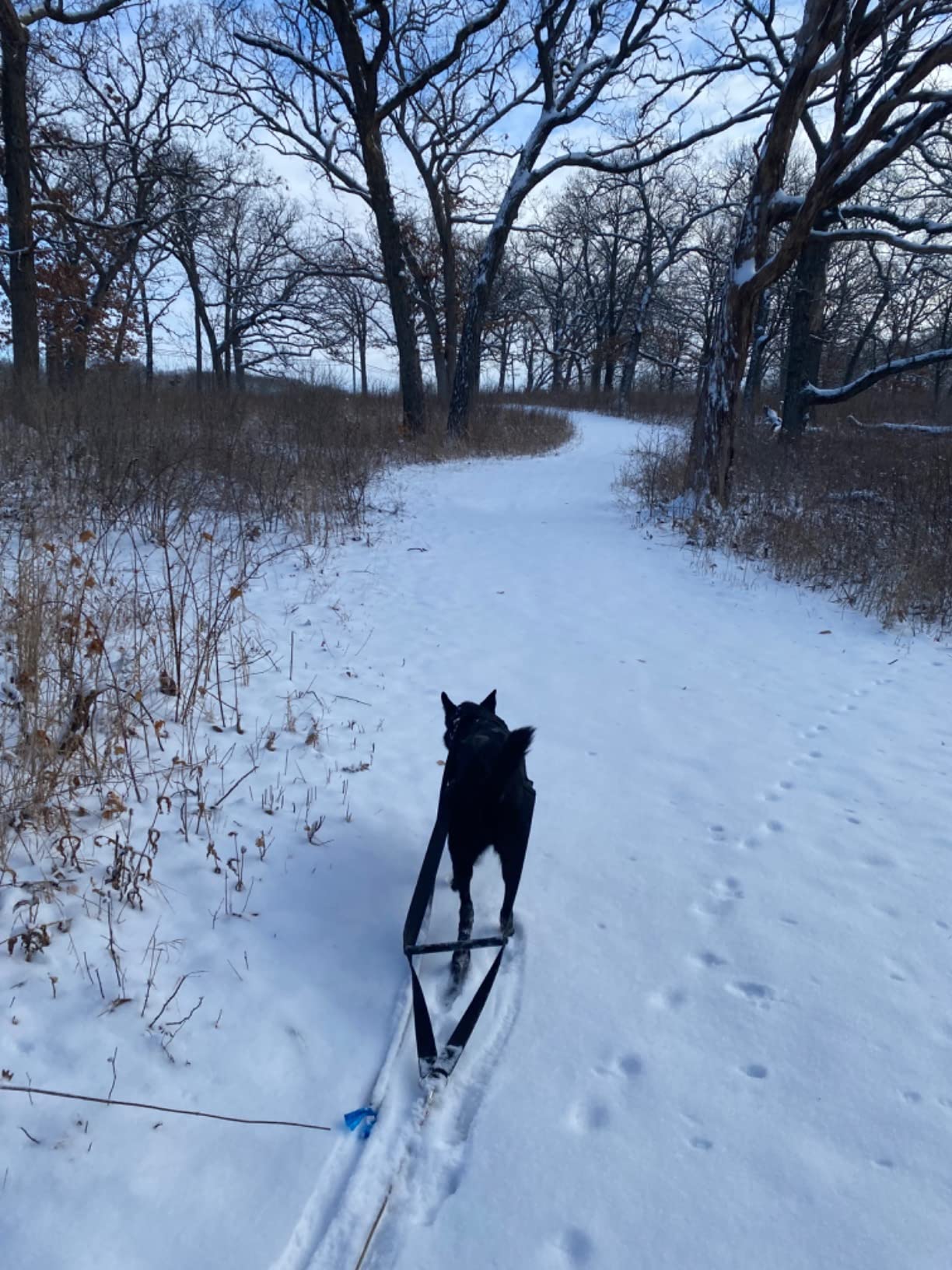
Padded neck and chest strips are soft, breathable and tear-resistant, and the harness weighs 1.32 pounds. It works for sledding, canicross, skijoring and pull training, which is a lot of use from one frame.
The limitation is sizing. It is designed around a 31.5 inch neck circumference, so it is effectively a large-dog product that will not fit medium breeds, and it comes in two colours at a single size.
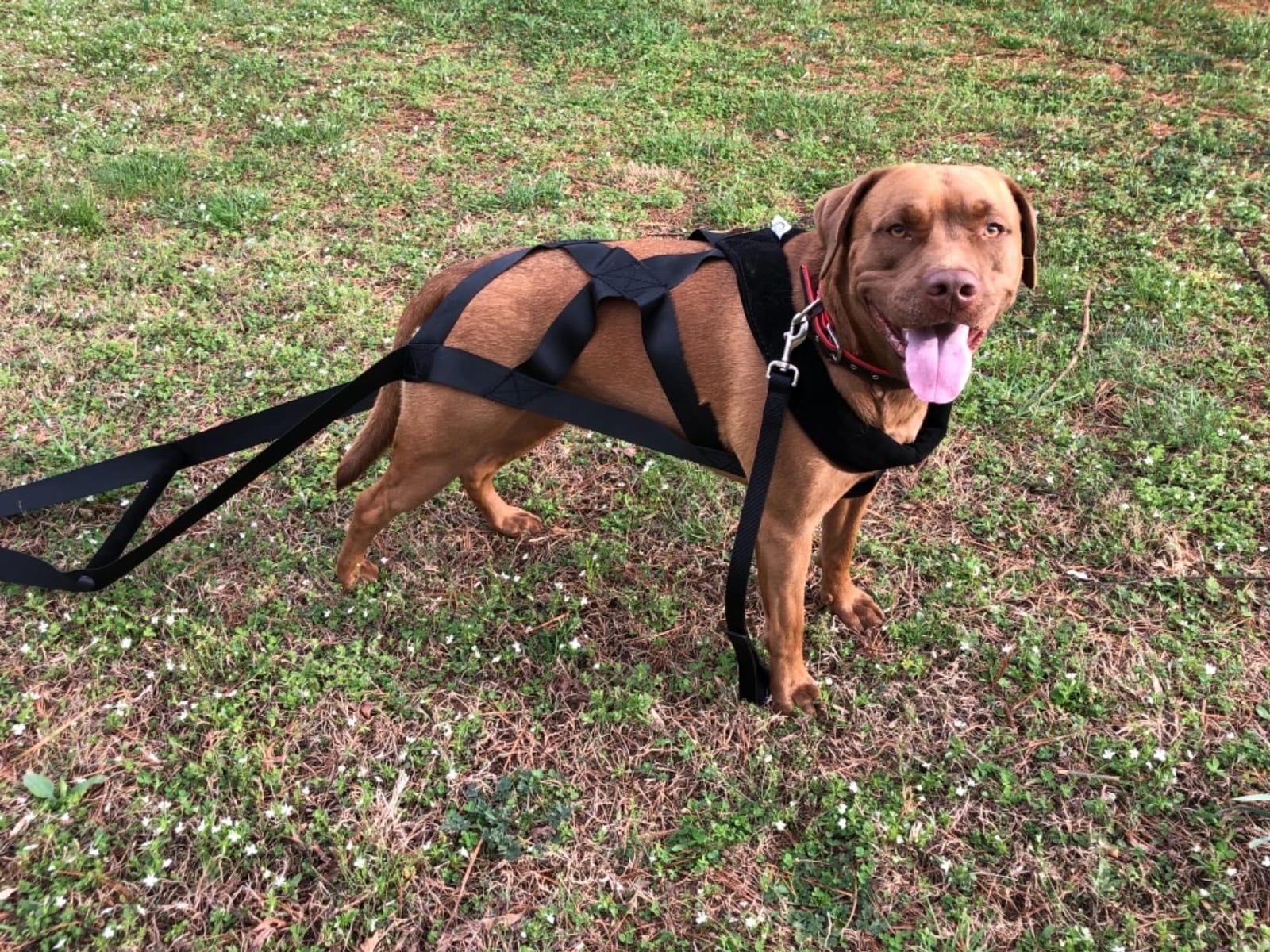
How do I know if a weight pulling harness is strong enough?
Look at three things: webbing width, the number of adjustment points, and whether stitching is reinforced at the load-bearing joins. A stated resistance figure is worth less than those three, because a harness fails at the joins long before webbing reaches its limit.
What is it like to fit?
Coarse and simple, more so than the multi-point alternatives. Measure the neck and confirm it lands near 31.5 inches before ordering, because there is no second size to fall back on. Read the resistance claim as a component rating, not a promise about a specific dog.
8. miR Sled Harness — the best narrow-shoulder harness for power sled work
MiR BHAR Sled Harness with (Optional) Sled Harness, Without Sled, Black
3 inch narrow shoulder design
Steel D rings front and back
9 foot pull strap included
Pros
- Straps sit clear of the shoulder joints
- Neoprene padding protects the ribs
- Steel rings plus included tow strap
- Rated for pulls up to 200 lbs
- Proven simple layout
Cons
- No padding across the chest or shoulders
- Two color options and no size range
- Neoprene needs hand washing and holds moisture
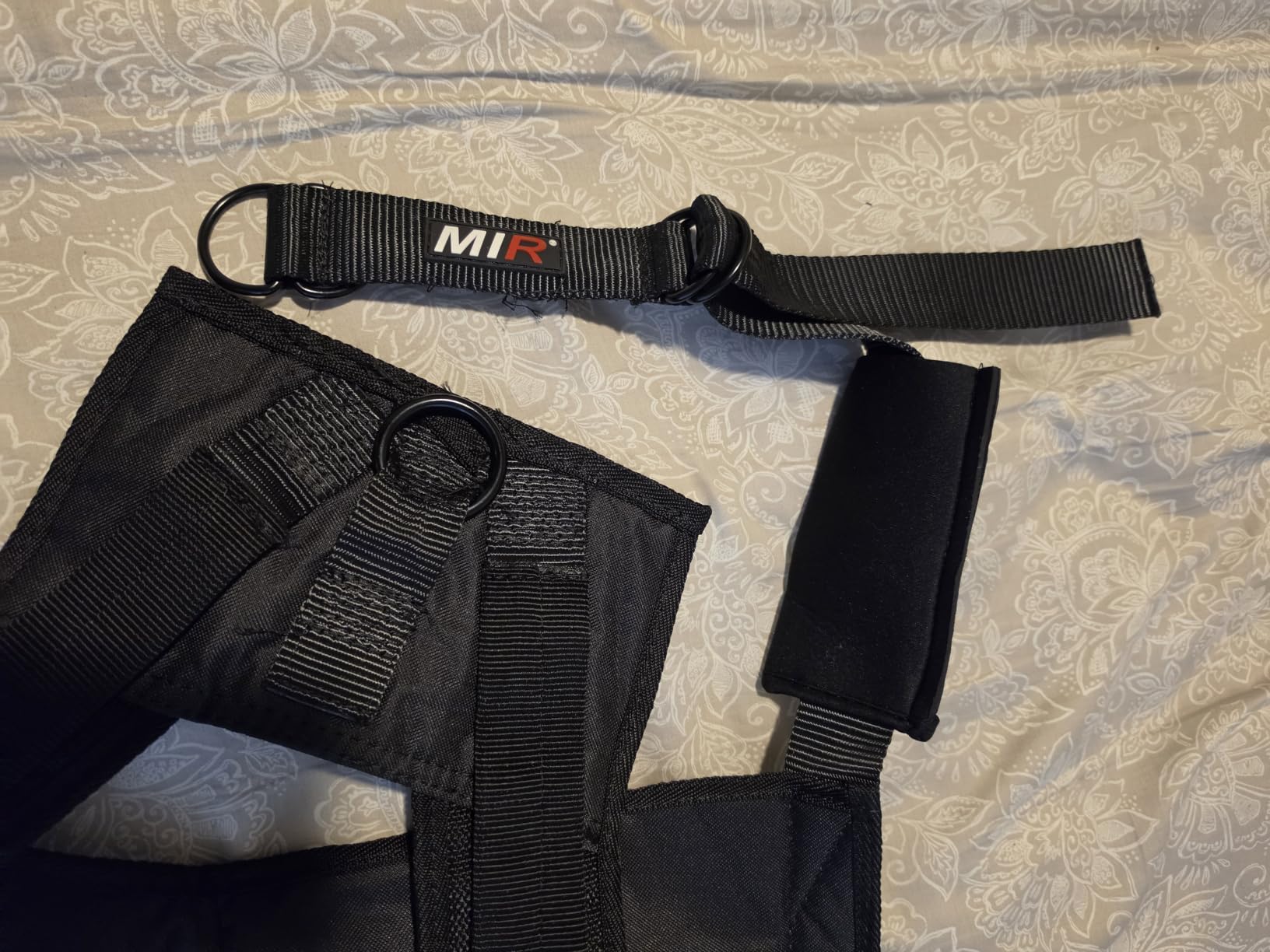
Most pulling harnesses run wide across the shoulders. This one runs narrow at 3 inches, a deliberate choice for dogs whose shoulder joints are the limiting factor. Narrow straps leave the joint free, so a dog can reach further and stride more naturally under load.
Power sled trainers like the design for that reason. Neoprene side padding protects the ribs where the harness bears against the body, and the whole unit weighs 2.8 pounds, so there is little dead weight hanging on the dog.
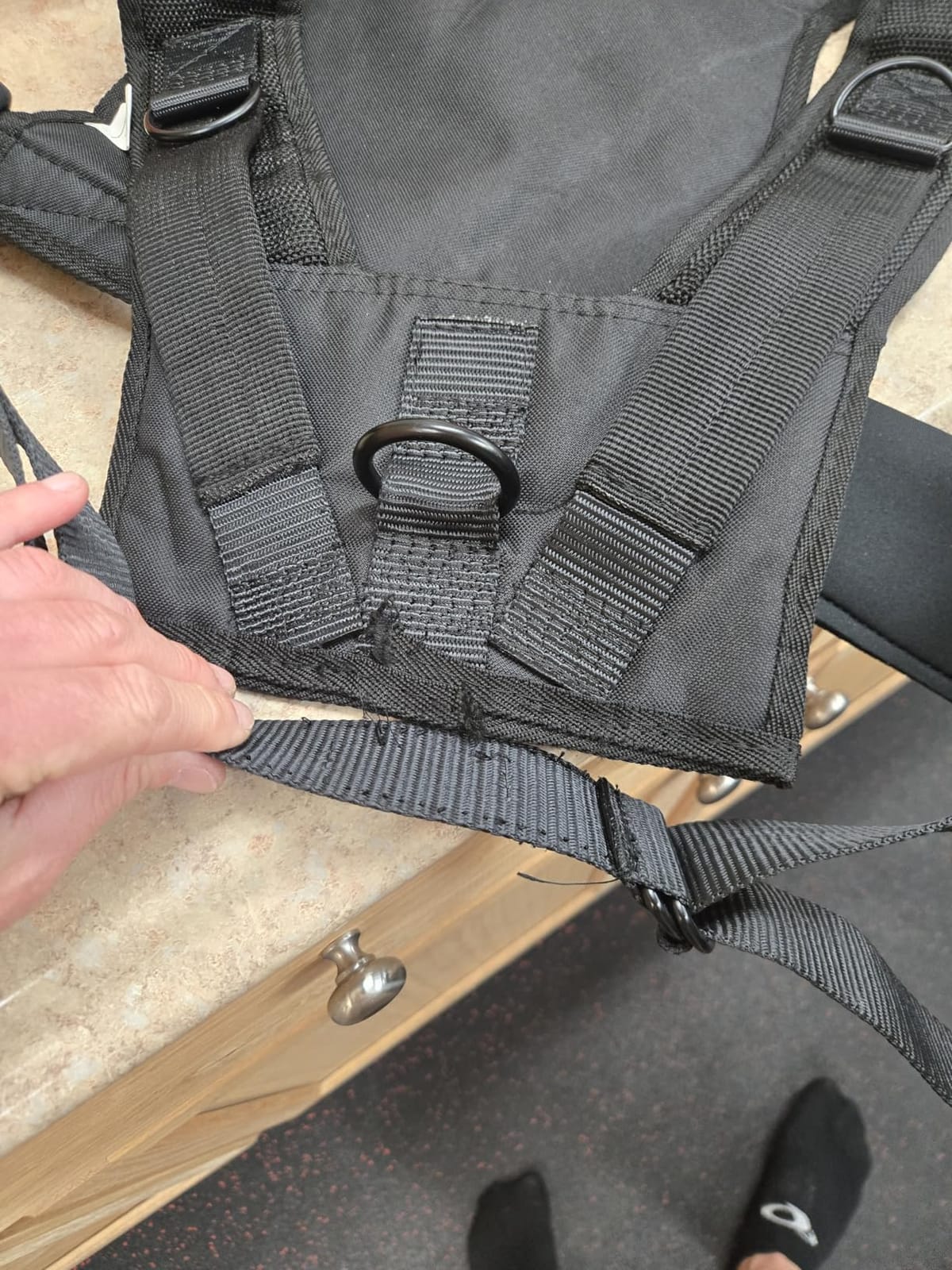
Hardware is reinforced black steel D rings at the front and back, and a 9 foot pull strap comes included, saving you working out what tow line to buy. It is rated for pulls up to 200 pounds and finished in nylon and neoprene.
It is spartan by design. There is no padding across the chest or shoulders, only rib padding, and no size range to choose from. The neoprene also needs hand washing and can hold moisture, so dry it properly after a wet session.
Is this a walking harness?
No, and treating it as one will disappoint you. The front ring here is a structural attachment point for a tow line, not a redirecting no-pull chest ring. If you want a dog to stop lunging on a walk, choose one of the walking vests in the first half of this list.
When is a narrow shoulder profile the right call?
When your dog has already shown shoulder discomfort in a wider harness, or when you are working toward maximum stride on a sled. If your dog is new to pulling, a padded X-back like the Neewa is the gentler place to start.
9. Ruffwear Front Range — the best harness for chafe-prone dogs on long walks
Ruffwear, Front Range Dog Chest Harness, Basalt Gray, Medium
Aluminum V-ring and chest clip
Closed-cell foam padding
Four adjustment points
Pros
- Dual leash clips slow a puller
- Closed-cell foam stops chafing
- Light enough that dogs accept it
- Four points fit varied shapes
- Stitching and hardware last years
Cons
- Some dogs resist the on and off
- Front attachment is webbing not a metal ring
- Strap adjustment takes practice
- Premium price versus tactical vests
Rough armpits are the most common harness complaint owners describe on long walks with strong pullers, and this one addresses it more directly than anything else here. Closed-cell foam padding sits in the chest and belly panels, and that material does not absorb water the way open fabric padding does.
The walking behaviour is quiet. Owners of everything from Chihuahuas to Leonbergers and Bernedoodles report that the stitching and hardware hold up over years of daily use, and many say it outlasted cheaper harnesses through multiple dogs.
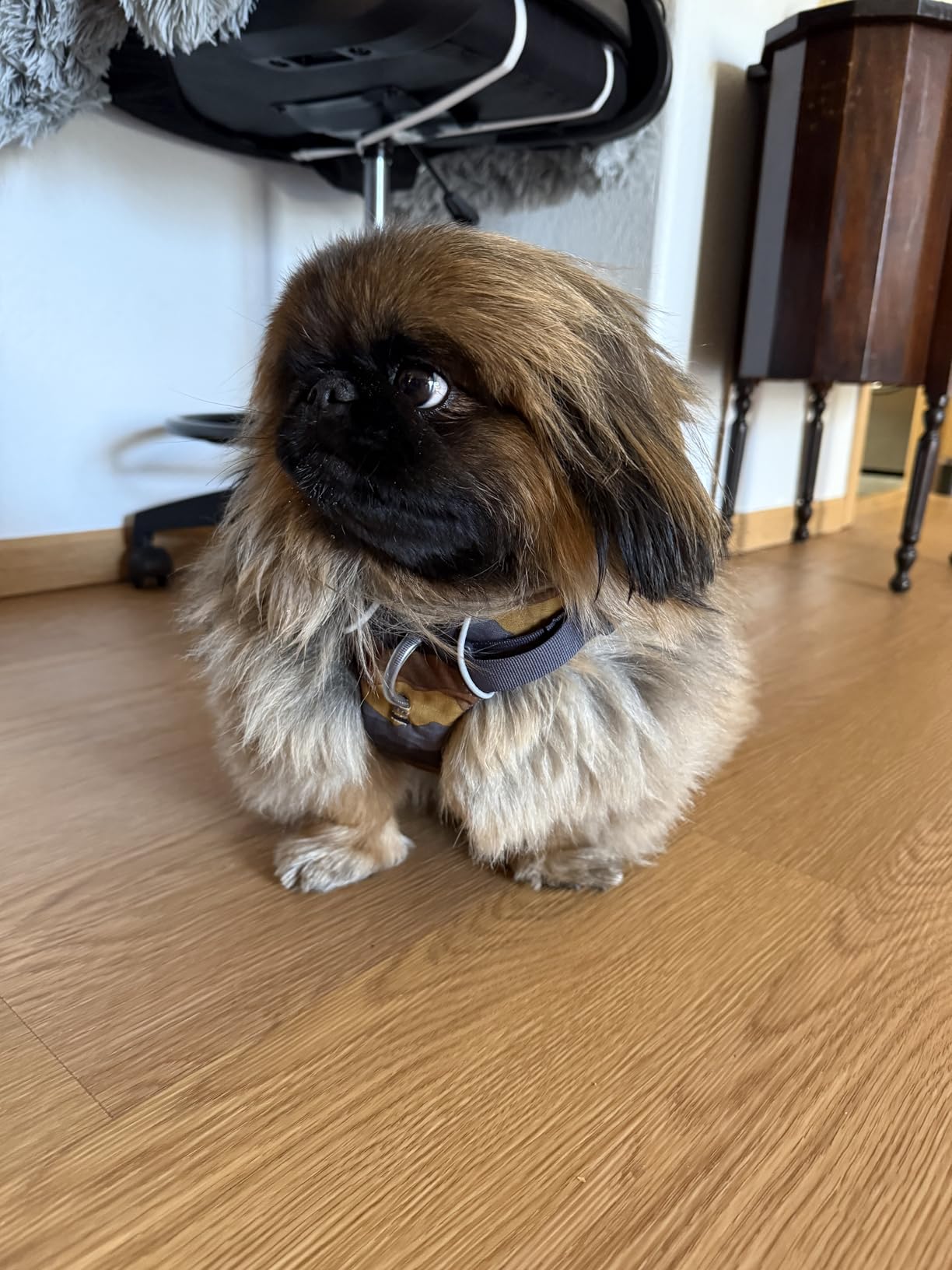
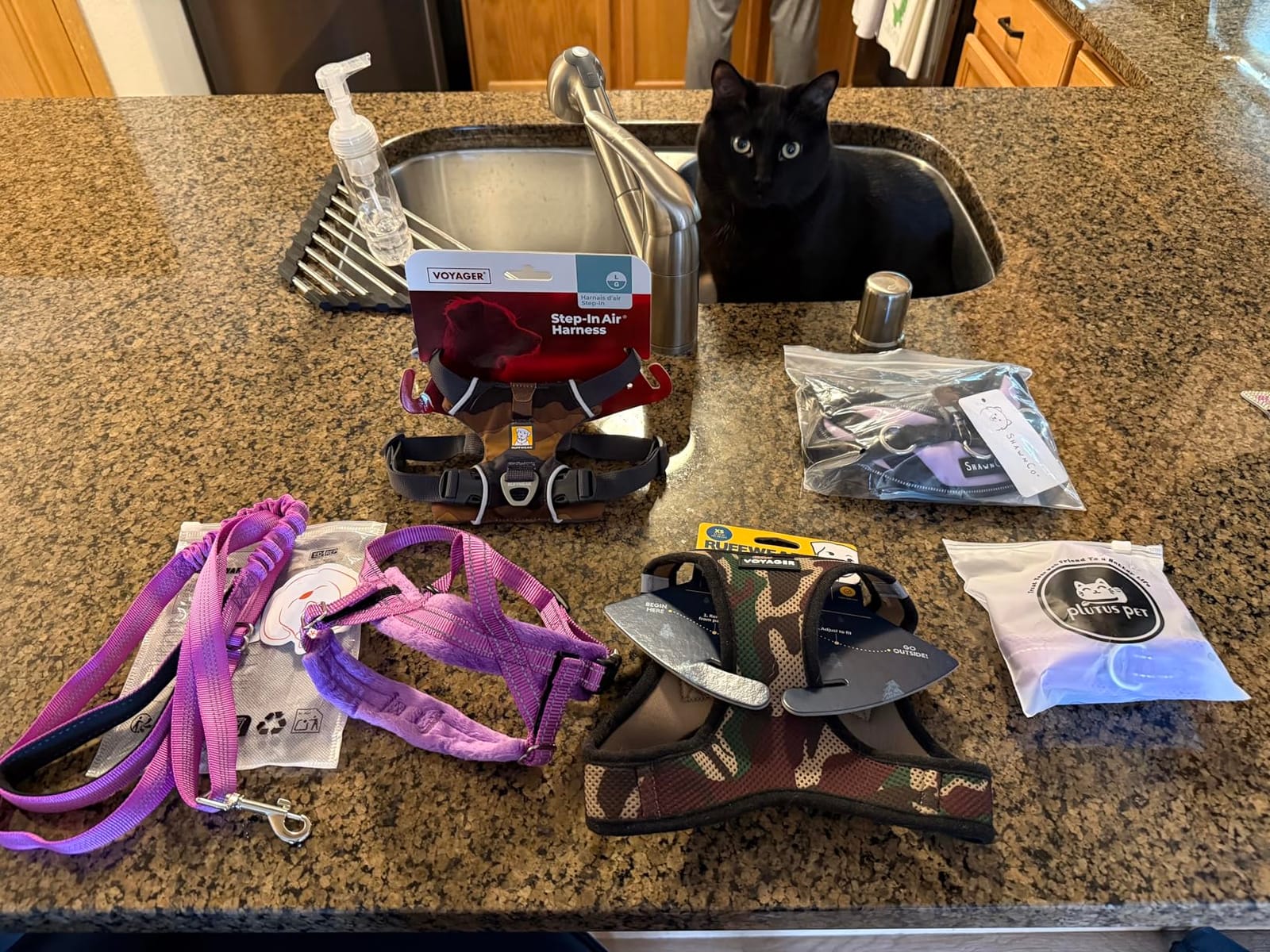
Attachment is dual: an aluminum V-ring on the back for ordinary walks and reinforced webbing at the chest for training. Four points of adjustment with durable side-release buckles let one size fit very different shapes, and reflective trim plus a loop for a safety light handle low light.
At 5.92 ounces it stays low profile enough that sensitive dogs do not object. The one consistent negative is behavioural: some dogs dislike the on and off process and need patience and treats.
Is the front clip strong enough for a hard correction?
It is reinforced webbing rather than a metal ring, and it slows a puller without choking, which is the normal use. For very hard leash corrections on a large dog, a metal front ring gives more margin, so switch attachment points according to what your dog is doing rather than committing to one.
Does the padding actually solve chafing?
Mostly, and it depends on the coat. Closed-cell foam is the right material for damp, muddy and long days because it does not hold water like quilted padding. A short-coated dog still needs a quick check under the front legs after the first few walks, and strap adjustment takes practice to get both sides even.
10. Embark No Pull Harness — the best harness for free shoulder movement
Embark No Pull Dog Harness, Reflective Adjustable Training Vest, No Choke
Straps run between the legs
Solid metal front ring
Stated pulling strength to 750 lbs
Pros
- Shoulders stay completely free
- Front ring reduces pulling painlessly
- Solid metal ring holds under load
- Lightweight Oxford does not chafe
- Manufacturer replaced a failed harness
Cons
- Plastic girth sliders loosen in motion
- Padding gets heavy when wet
- Reflective coverage is limited
- Back plate short on the largest size
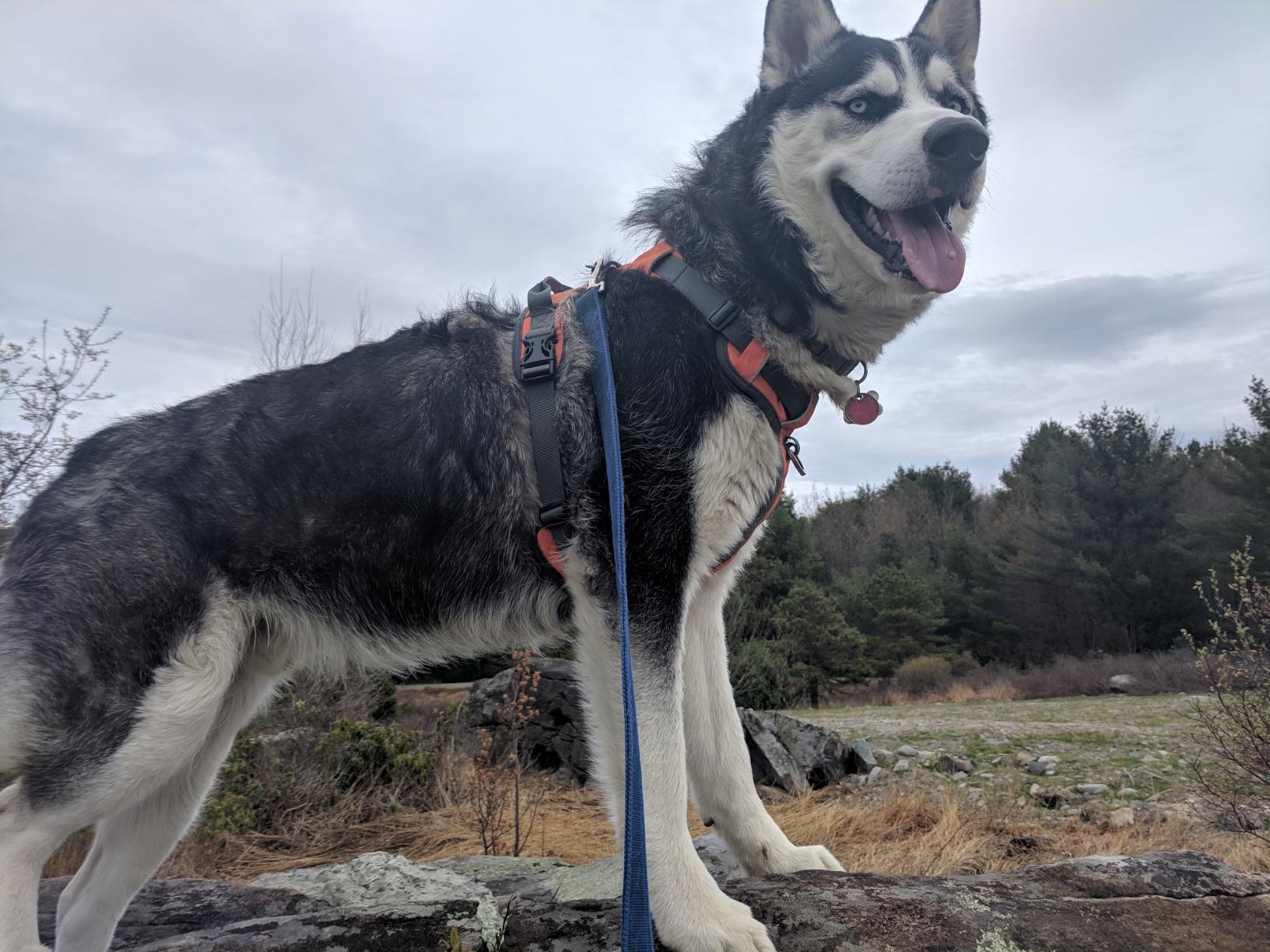
The defining detail is strap routing. The straps run between the legs so the shoulder blades stay completely free, and owners of German Shepherds, Great Danes, Huskies, Goldens and Labs report the result as an unhurried stride rather than a choppy one. Several also note the leash stops tangling in the legs.
That matters most for a pulling dog because pulling exaggerates any restriction. If a harness shortens the stride, the dog fights the harness and the handler at once.
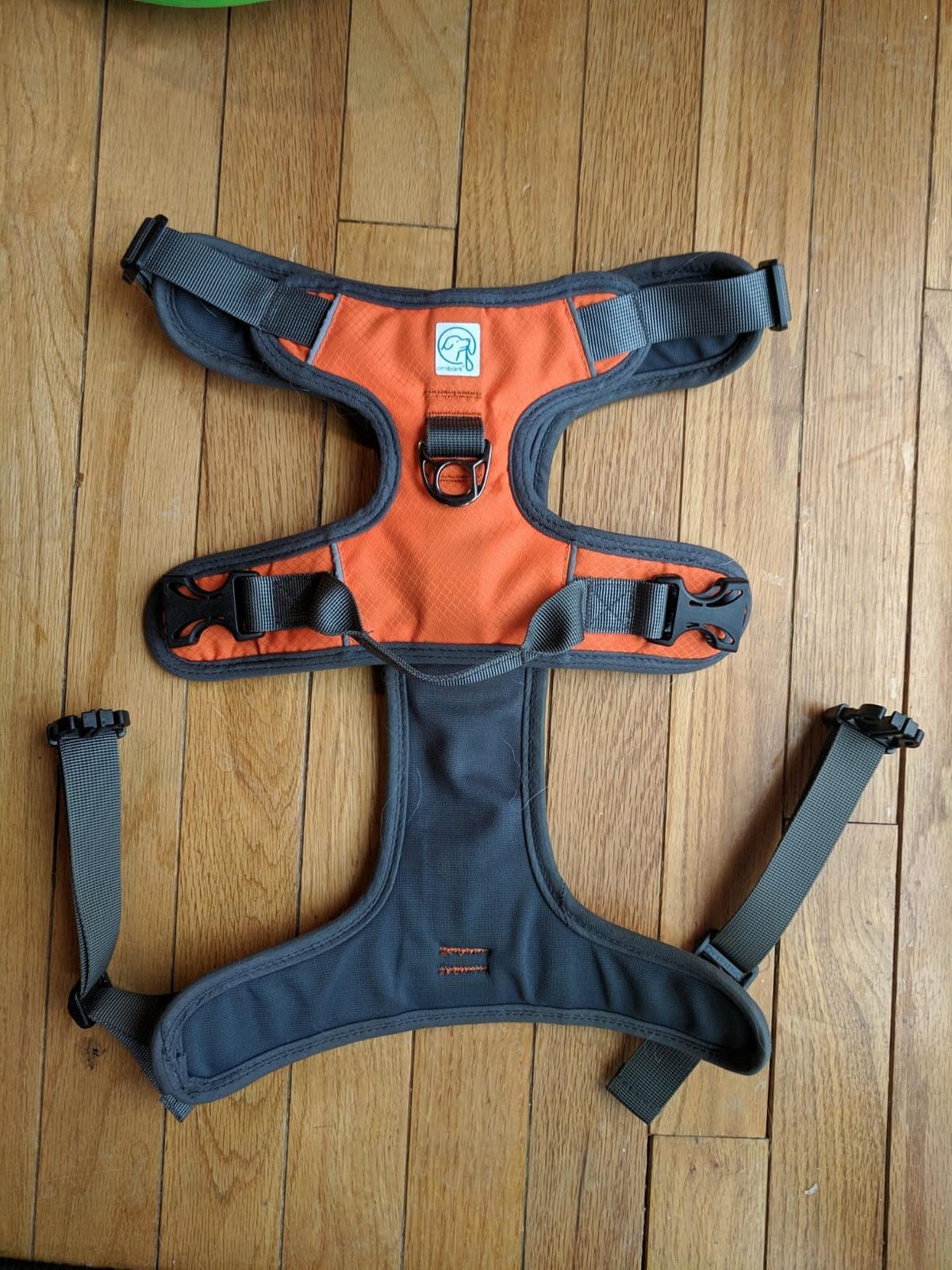
Materials are heavy duty Oxford and military grade nylon with a stated pulling strength up to 750 lbs, 360-degree reflective trim, a gel handle, and front and back leash attachments. The gel handle is soft in the hand and easy to locate without looking, which is what you want mid-street.
The recurring criticisms are adjustment hardware. Plastic girth sliders loosen while the dog is moving, padding becomes heavy once wet, and on the largest size the back plate runs short so girth straps can ride into the elbows. Large fits a 33 to 39 inch chest and 17 to 27 inch neck.
How tight should a dog harness be?
Two fingers between the strap and the body, firm enough that you cannot rotate the vest a full turn, loose enough to slide two fingers under every strap. Check with the dog standing naturally, walk ten steps and re-check, because a fit that is right standing can shift in motion. If the girth strap rides into the elbows on the largest size it is too long, not too tight.
What does manufacturer support look like?
Several owners report that a failed harness was replaced with an improved version at no charge. That matters more than it sounds, because hardware failures are common enough across this category to be a real factor in whether a harness keeps working.
11. ShawnCo Essential Harness — the best harness for getting on and off fast
ShawnCo Essential Dog Harness, No-Pull Pet Vest (Olive Green,L)
Three reinforced leash rings
Single-clip closure
Adjustable chest and belly strap
Pros
- Side hooks redirect pulling sideways
- On and off in under three seconds
- Beefy clips and metal rings for strong pullers
- Holds up over years
- Reflective chest strap and trim
Cons
- Vest can slide sideways on sudden veers
- Side ring can then press the throat
- XS runs large for the smallest dogs
- Reflective coverage limited in practice
One ring centred, two on the sides, and that side attachment is the mechanism. A dog trying to step over the leash or drag you sideways gets steered into a curve, which works well with a dog that dislikes things crossing its chest.
The closure is a single clip and owners consistently report going on and off in under three seconds. For a dog that wriggles, that is the difference between a harness you actually use and one still on the floor.
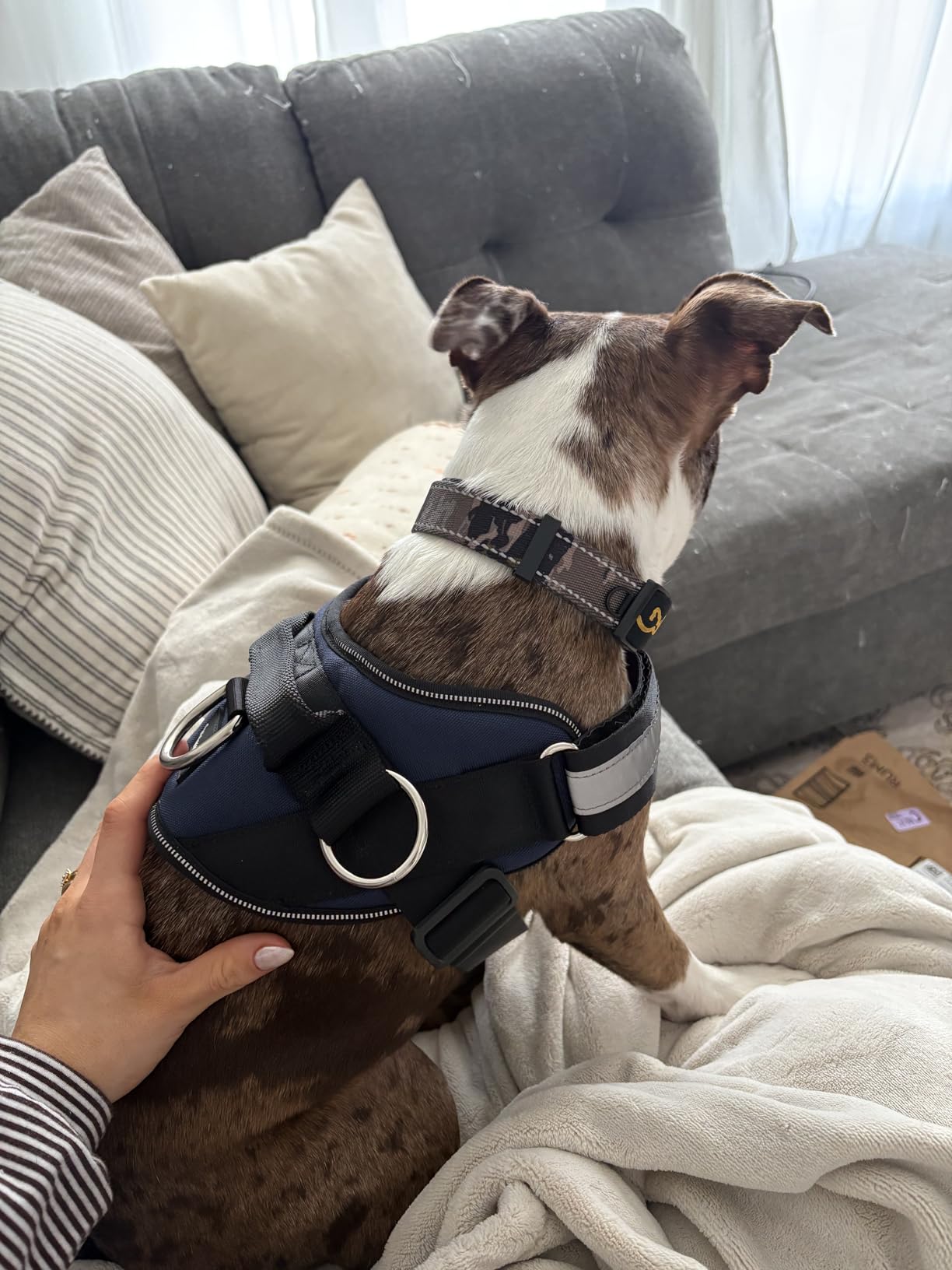
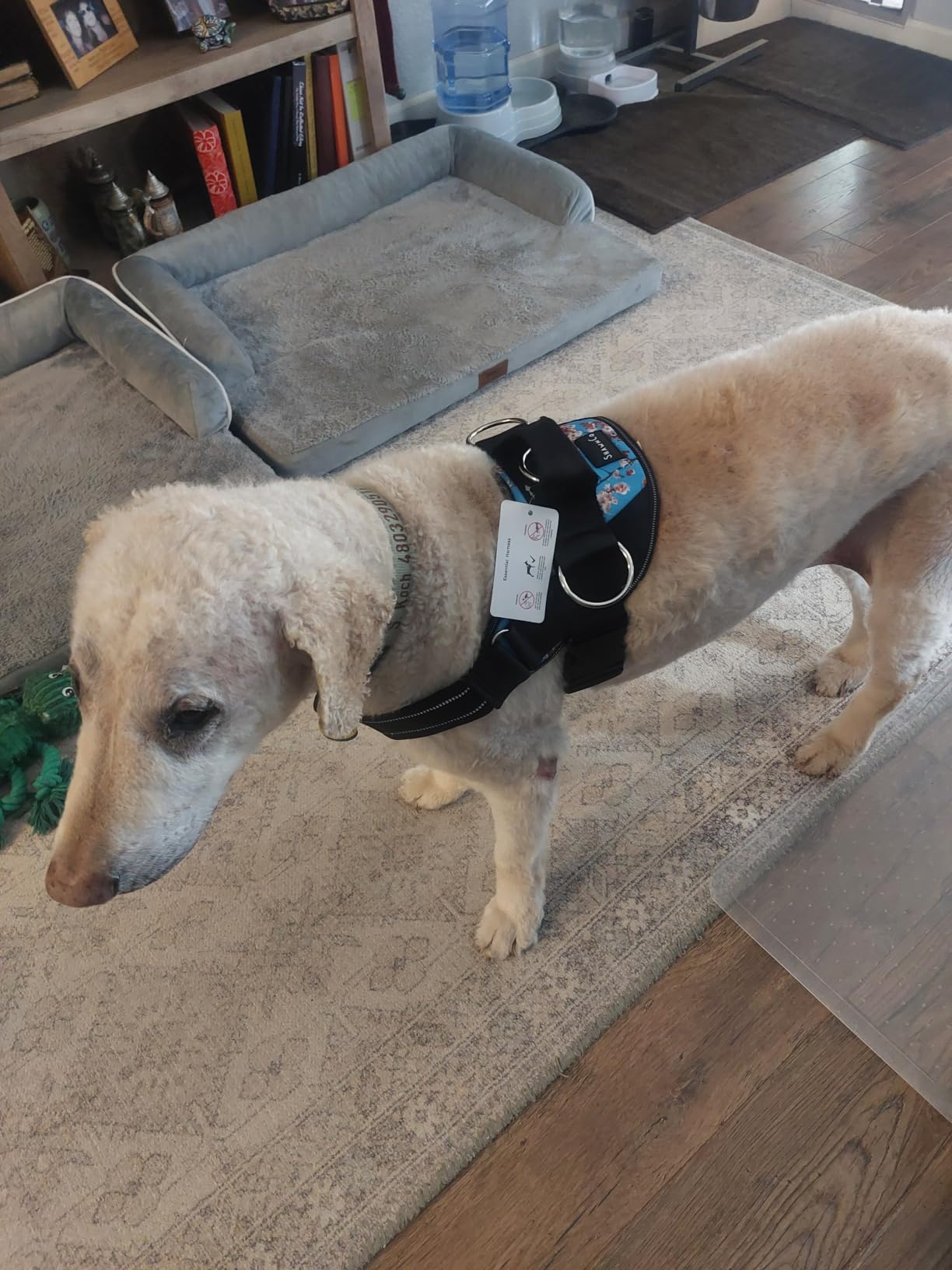
It is a nylon strap and mesh design with a soft breathable mesh underside, a nylon handle, fully adjustable chest and belly straps and a reflective chest strap. Owners of German Shepherds, Staffordshire Bull Terriers, American Bulldogs and even Chihuahuas report that it holds its shape after years of daily use.
The honest weakness is rotation. On a powerful dog that veers abruptly the vest can slide sideways, and once it does the side ring can press on the throat, which is the exact problem the harness exists to solve.
Will it stop a very strong puller?
The rings and clips are heavy and hold up well, so hardware is not the weak point. Fit stability on a dog that changes direction violently is. If your dog is a dragger rather than a veerer, a higher-chested harness sits more securely. Re-check the chest and belly straps after the first few walks.
Is it good for short-coated dogs?
Coarse-weave fabric can feel rough against very short coats, so watch the first walks closely. The extra small size also runs large for the smallest breeds, and the reflective chest strap and trim are useful at night even though the coverage is not all-around.
12. Carhartt Nylon Duck No Pull Harness — the best wet-weather harness for long-bodied breeds
Carhartt Nylon Duck No Pull Dog Harness Carhartt Brown XL
500-denier polyester duck
Martingale-style chest strap
XL fits 33-46 in chest
Pros
- Chest strap reduces pulling within days
- Canvas resists fraying and bunching
- Water-repellent finish sheds mud and hair
- One-buckle over-the-head design
- Runs true to size on long bodies
Cons
- Rotates about 45 degrees on broad dogs
- Straps only with no front breast piece
- Not padded so it is a working jacket
- Reflective stitching is limited
The control mechanism is a martingale-style chest strap rather than a front ring, and owners of pit bulls, German Shepherds, Goldens, Labs, Huskies, border collies and Shiba Inus report it visibly calms pulling within a few walks. It tightens only when the dog pulls and goes slack when the leash does.
The material is the real selling point. It is 500-denier polyester duck canvas with a water-repellent finish, which shrugs off rain, mud and hair and survives repeated washing without the webbing flattening the way lighter polyester does.
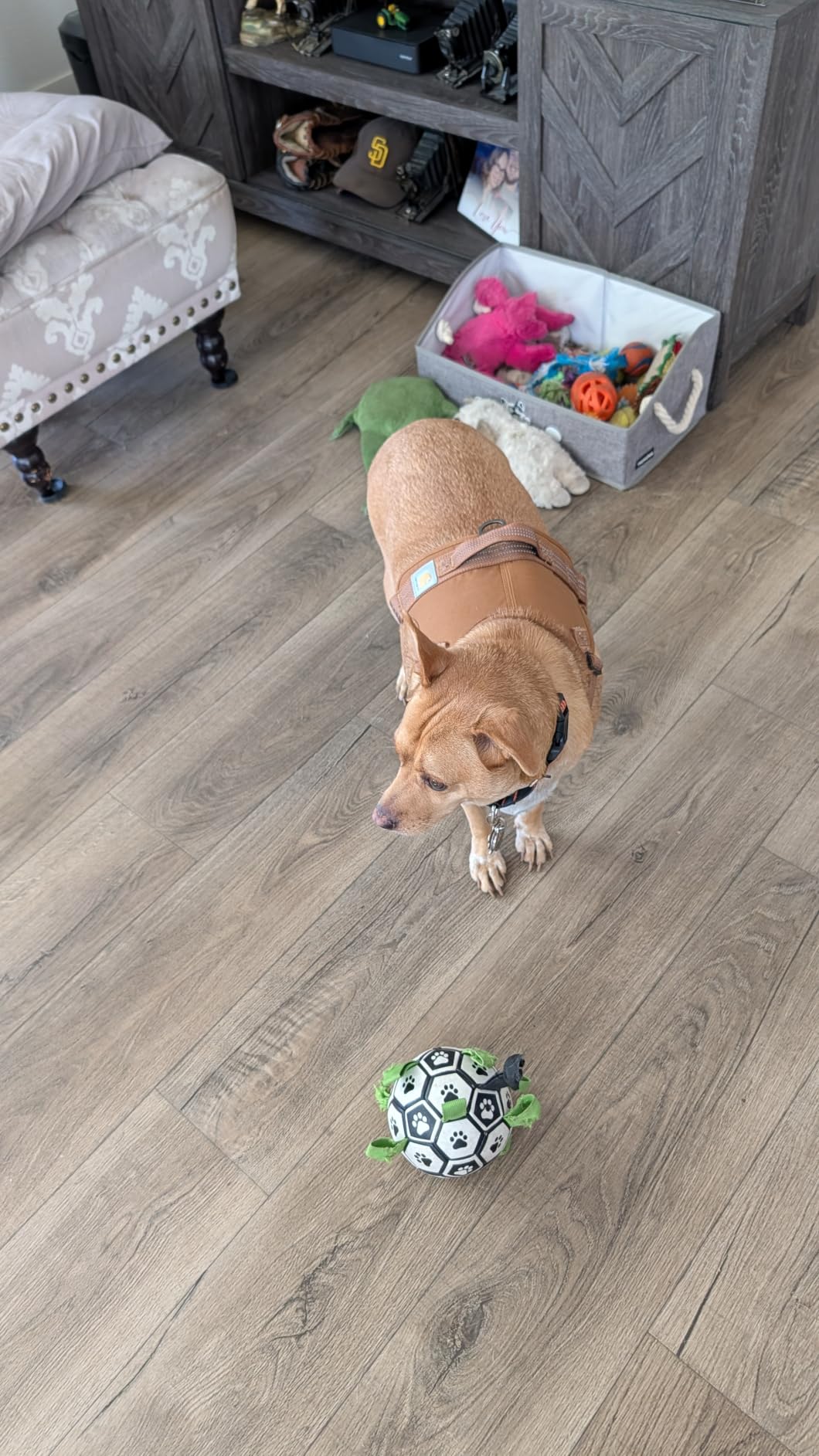
Sizing is generous and published clearly: small fits 16 to 20 inches of chest, medium 21 to 28, large 26 to 35, and extra large 33 to 46. Owners of long-bodied dogs specifically praise the proportions, which several other brands here do not accommodate.
It is not padded, so treat it as a working jacket rather than a cushioned vest. The yoke-style over-the-head design uses one buckle with adjustable chest and belly straps over spacer mesh backing, and reflective low light stitching adds some night visibility, though less than most.
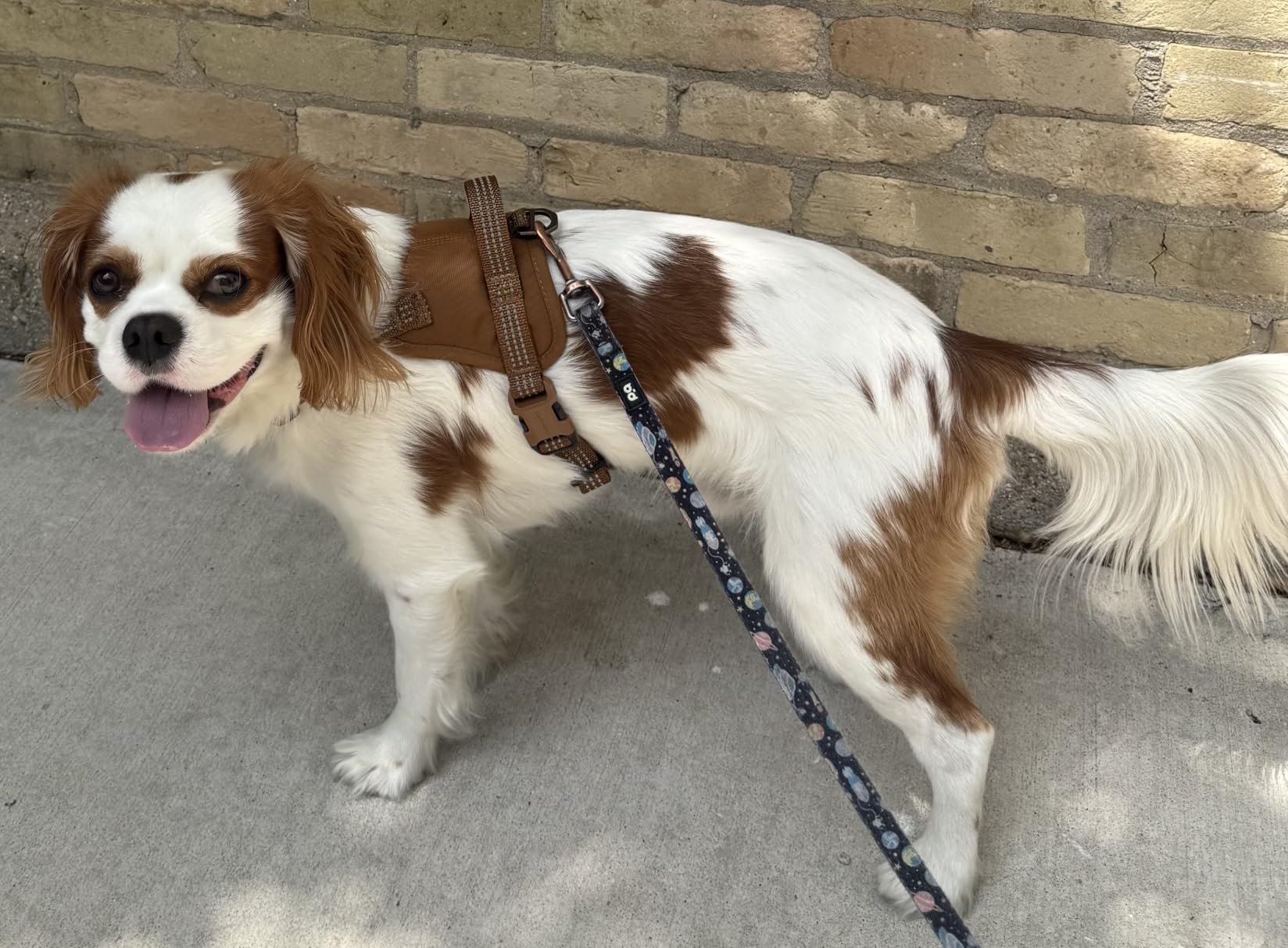
Why does the harness rotate on a broad dog?
Because it is built from straps with no front breast piece. On a broad-chested dog that veers, the assembly can turn roughly 45 degrees off centre, giving unpredictable handle position. If your dog is broad and powerful, a harness with a solid front panel is the better buy even though this one is excellent in the wet.
Is it worth choosing for a dog that swims?
Yes, that is the case this one wins. The water-repellent finish and heavy duck canvas handle conditions that leave lighter mesh vests soggy and heavy, and a single buckle means you are not wrestling with a soaked fastener at the car park.
How to Choose a Harness for a Dog That Pulls
What to check before you buy
Ten things decide whether a harness survives a pulling dog, and brand matters far less than marketing suggests. Look at webbing width and density, whether stitching is reinforced at load-bearing joins, whether buckles are metal or plastic, how many points you can adjust, how many leash attachment points there are, whether chest and belly panels are padded, whether there is a grab handle, whether the closure resists backing out, whether reflective trim is present, and how much dead weight it adds.
On that last point, the Julius-K9 harness weighs 2.4 ounces and the Ruffwear Front Range 5.92 ounces, while the AUROTH vest and the PET ARTIST sled harness come in at 1.08 pounds and 1.32 pounds. Heavier is not automatically stronger, but you carry that weight on every walk. A grab handle deserves special attention for a strong puller: it is the only feature giving real physical control in an emergency, and for a 90-pound dog grabbing the harness is far safer than grabbing the leash.
How to measure your dog in three steps
First, measure chest girth. Wrap a soft tape around the widest part of the ribcage, just behind the front legs, snug but not tight. Second, measure neck circumference at the base of the neck where a collar sits, not up near the ears. Third, compare both against the brand’s published chart rather than the size label, and pick the size where your measurements sit in the middle of the range rather than at the very top.
If your dog is between sizes, measure twice. Breed-based guessing is the single most common ordering mistake, and sizing up to grow into is worse than ordering the correct size twice.
Front clip vs back clip vs dual clip
A back clip lets your dog pull freely, which is what you want for jogging, canicross and skijoring. A front chest clip redirects a pulling dog’s trajectory back toward you, converting a straight pull into a turn, which is what you want while training. A dual-clip harness does both so you can switch as training progresses, and that is the configuration we look for in a walking harness now.
It is worth examining the claim that a Y-shaped neck is biomechanically correct. Research published in the Veterinary Record in 2019 by Lafuente, Provis and Schmalz measured shoulder range of motion in dogs wearing different harness configurations and found that harness shape alone did not deliver the restriction-free movement the marketing implies. Treat shape claims as advertising, and judge a harness by whether your dog’s stride looks normal when it trots.
Escape resistance: why dogs back out and how to stop it
Backing out is the number one safety complaint across the forums, and it happens for mechanical reasons. A dog reverses into a rear-clip harness, gets slack where there should be none, and walks out through the neck opening or around a loose strap. Fixes in order of effectiveness: tighten until you cannot rotate the vest a full turn, add a second closure or more adjustment points, and run a safety strap from the back ring to a martingale collar.
Check the front clip connection twice, because snap hardware that looks closed can be resting on the ring without being latched. And if your dog has already worked loose partway through a walk, stop, get two fingers under the chest strap and refit before moving again. Retraining on a loose harness teaches nothing.
When a harness is the wrong tool
Some trainers avoid harnesses for pulling dogs, and the objections deserve honest answers. A front clip can encourage a dog to twist out of the chest ring sideways, turning a redirect into a spin. A harness on a dog with no loose-leash training simply moves force from neck to shoulders, so a dog that learns to brace against a chest plate pulls harder, not less. And a restrictive fit can change gait over time.
Those objections land on training and fit rather than equipment. A long line, a head halter for a dog that lunges past you, and a martingale collar worn alongside the harness as backup each solve a case a harness cannot. For a fear-based or reactive puller, a head halter is often the honest answer, because it gives you a lever without a chest plate to brace against. If the puppy is the one pulling, our playpen guide for small dogs covers a controlled space where a loose-leash habit can build first.
Bungee and coupler leashes for running with a pulling dog
If your dog pulls because it is built to pull, a bungee leash or coupler absorbs the surge and returns the slack. The rule owners repeat is simple: use a bungee rather than a normal lead when the dog is doing the pulling, because a normal lead will hurt your arms and back before the dog tires. Pair it with a harness that routes force from the sides or through an X-back, and check the clip matches the ring diameter.
Weekly hardware inspection checklist
Once a week, pull hard on every strap at the buckle and look for stretching. Check stitching at the load-bearing joins where webbing meets metal. Look at D-rings for deformation and for paint flaking where metal rubs metal. Confirm each snap connector is genuinely latched by tugging it, not by looking. Check padding and lining for wear-through at the armpits, and the reflective trim before dark season. Replace anything frayed rather than waiting, because a frayed strap fails at the worst possible moment.
Frequently Asked Questions
What is the best dog harness that dogs can’t pull out of?
Among these twelve, the ICEFANG Tactical Harness and the AUROTH Tactical Vest are the hardest to back out of, because both use four or more metal adjustment points and a snug four-point fit. No harness is absolutely escape-proof. Layering a safety strap from the back ring to a martingale collar is the most reliable extra measure owners use.
What is the best harness to stop a dog from pulling?
For most pulling dogs a dual-clip walking harness with a front chest ring and reinforced webbing at the chest is the best balance of control and comfort, and the Ruffwear Front Range is the most refined example in this list. The AUROTH vest is the stronger option if the dog is a genuine dragger. A harness redirects the pull but does not teach loose-leash walking.
Are harnesses good for pulling dogs?
Yes, for walking, because a harness spreads leash force across the chest and shoulders instead of concentrating it on the throat and trachea, which matters most for brachycephalic breeds and short-necked dogs. For sport work a harness is not just good but necessary, since a Y-shaped or X-back design routes pulling force through the torso. What a harness does not do is replace training.
What kind of no-pull dog harness is recommended by veterinarians?
Most veterinary guidance points to front chest attachment as the key feature, because it removes the dog’s mechanical advantage and reduces pressure on the neck. Fit matters more than brand, and a snug fit you cannot rotate a full turn is the priority. The 2019 Veterinary Record study by Lafuente, Provis and Schmalz on shoulder range of motion found harness shape alone did not deliver the benefits marketing claims, so judge a harness by watching your dog walk and trot in it.
What is the best harness for canicross?
The Non-stop dogwear Freemotion Harness 5.0 is the strongest canicross pick here, with an ergonomic Y-shaped neck that keeps the shoulders free and routes pulling force in from the sides. The Neewa Sled Pro Harness is the alternative if you prefer a padded X-back and want eight adjustment points. Pair either with a bungee or coupler leash rather than a normal lead.
Why do dog trainers not recommend harnesses?
Three objections come up. A front clip can teach a dog to twist sideways out of the chest ring. A harness on a dog with no loose-leash training just moves force from the neck to the shoulders, so the dog braces harder. And a restrictive fit can shorten the stride over time. All three are training and fit problems rather than equipment problems, which is why a long line, a head halter for lungers, or a martingale collar backup may serve a particular dog better than any harness.
The Right Harness Depends on What Your Dog Is Doing
For a dog that lunges and drags on ordinary walks, start with the Julius-K9 IDC Powerharness for control and escape resistance, or the AUROTH Tactical Vest if your dog is genuinely strong. Add a safety strap to a martingale collar either way.
For a dog that is built to pull, the Non-stop dogwear Freemotion 5.0 covers canicross and skijoring, while the Neewa and PET ARTIST harnesses cover sled and weight-pulling work with padded X-back layouts. Add a bungee or coupler leash, and check the stitching every week.
Whatever you pick, measure before you order, fit two fingers under every strap, and keep training. That is the part of the best dog harnesses for pulling dogs equation no product can do for you, and it decides whether the harness matters.