
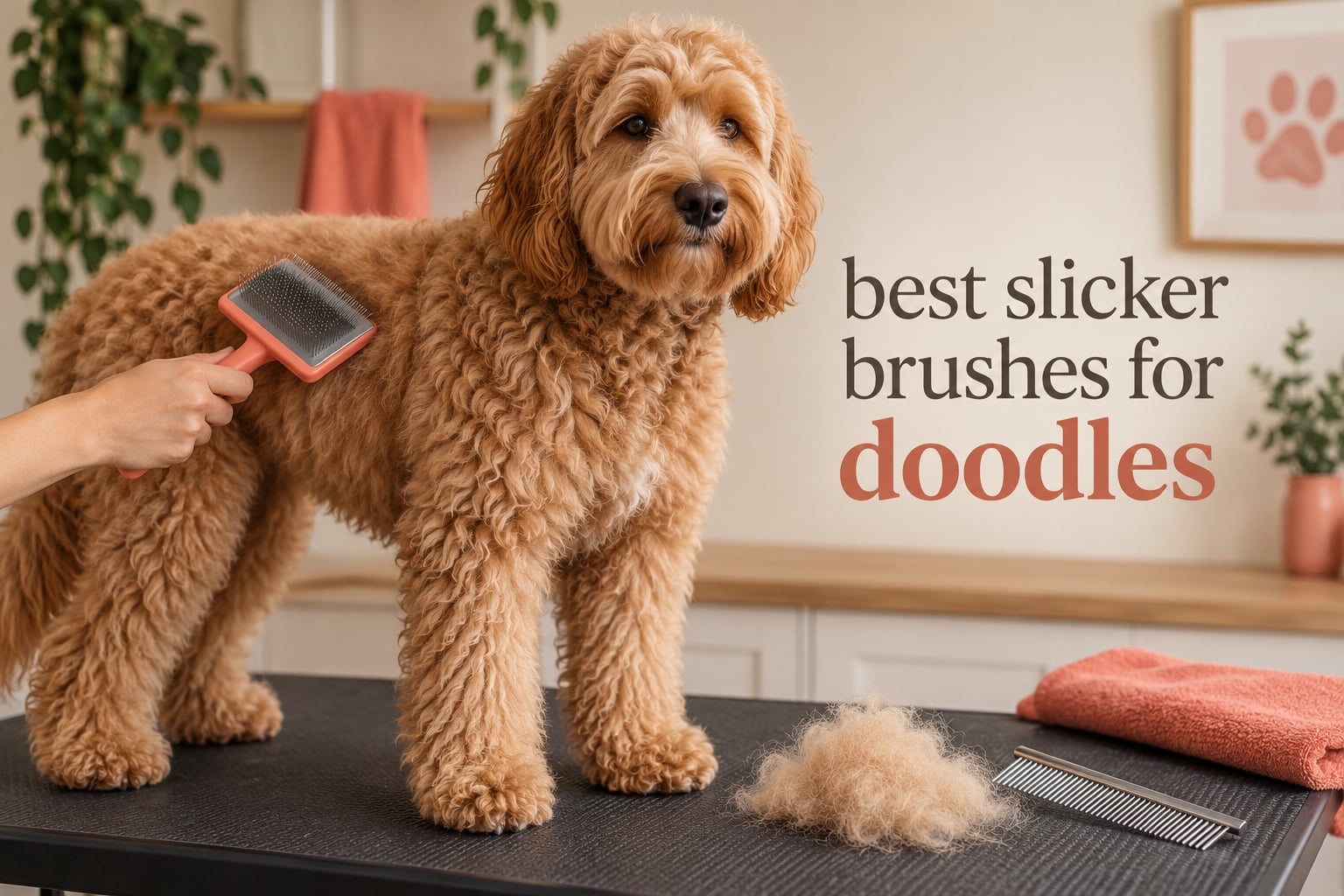
The best slicker brush for doodles is the Chris Christensen Big G. Its pins sit denser than any other brush we tested, the pad flexes against your dog’s body so the pins reach the skin instead of skimming the surface, and the curved back keeps a full-body session from wrecking your forearm. It is not a cheap tool, but it is the one we reach for first on a Goldendoodle, Labradoodle or Bernedoodle.
That recommendation matters because a doodle coat is not a normal coat. Doodle fleece is a single dense layer that sheds straight into itself, so loose hair knits into the living coat rather than falling away. A tangle that starts as a wisp behind the ear can be a skin-tight mat in under a week, and mats do not brush out. They get cut, shaved, or taken to a groomer.
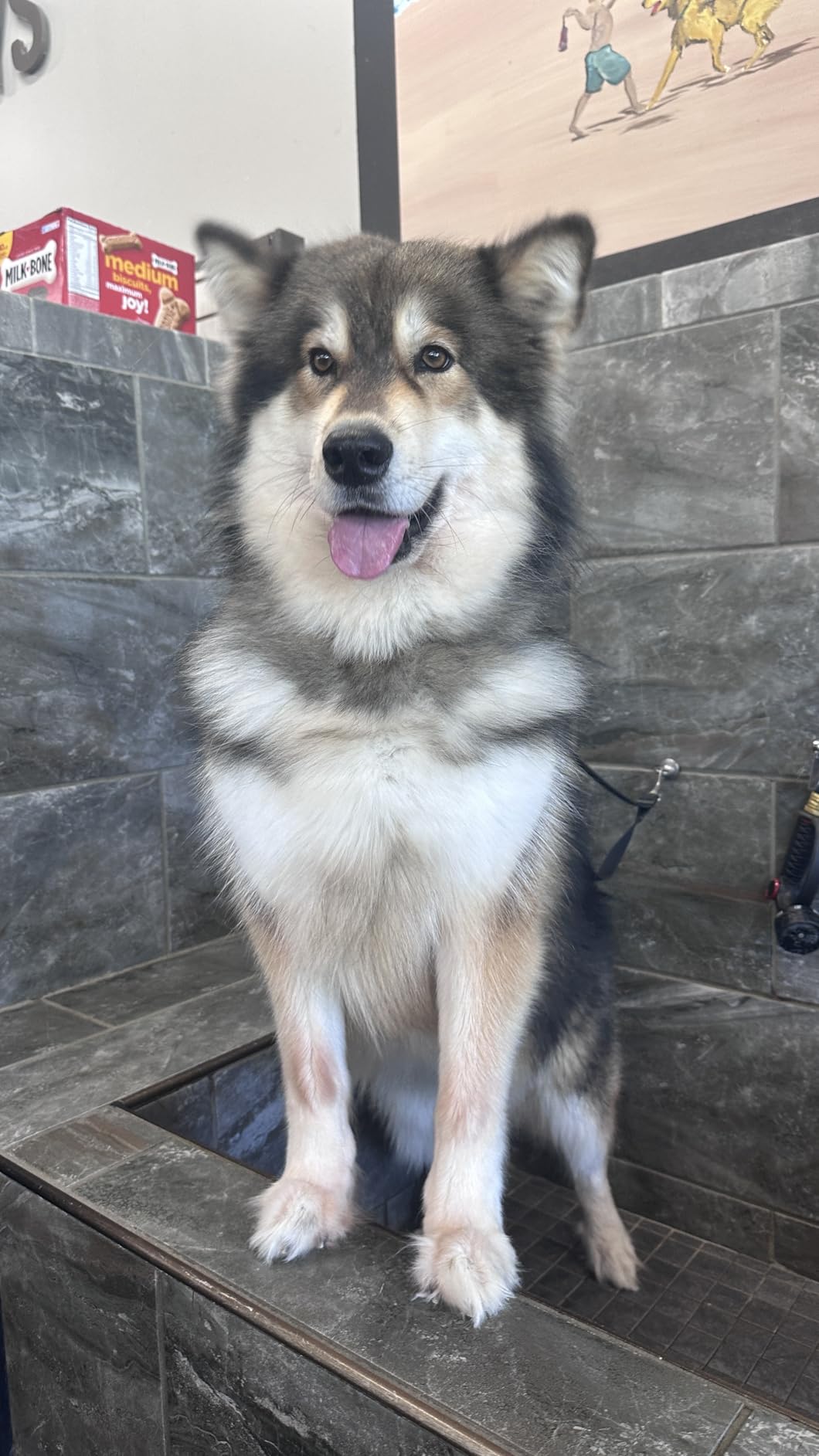
We work through doodle coats every week at the salon table, and the pattern is consistent. The dogs whose owners brush daily for three or four minutes never see us for a dematting. The dogs we see are the ones brushing the top ten percent of the coat and calling it done. Hidden mats form near the skin in predictable places: behind the ears, under the legs, around the collar and harness, at the tail, in the groin, and between the paw pads.
This guide covers the ten best slicker brushes for doodles worth a place in your grooming kit, what each one does well, where it falls short, and how to pick the right tool for your coat type and your dog’s temperament. We also cover the technique questions that decide whether brushing is a two-minute habit or a wrestling match, including the one every owner asks eventually: what to do when your dog hates the brush.
One note on how we judge these. Ratings and review counts on the product pages tell you what thousands of people thought, not whether a brush suits a doodle. Where we disagree with the crowd, we say so. We also never rely on a sticker price alone, because the price of a brush is meaningless next to how long it takes to get through a palm-sized patch of a dense coat.
Table of Contents
Top 3 Slicker Brush Picks for Doodles in 2026

Chris Christensen Big G Slicker
- 30% more pins
- Extra-long angled pins
- Flexible cushioned pad
- Non-slip grip handle
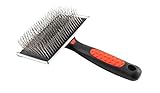
Paw Brothers Extra Long Slicker
- One inch stainless steel pins
- Ergonomic rubber grip
- Flat slicker design
- All coat types

We Love Doodles Slicker Brush
- Pins bent at 45 degrees
- Close to one inch long
- Ergonomic handle
- Doodle-specific design
All 10 Slicker Brushes Side by Side in 2026
Every brush below has enough pin length and steel construction to work on a doodle coat. What separates them is pin density, how much give the pad has, how the handle behaves on a long session, and whether your dog tolerates it. Use this table to narrow the field, then read the full review for the two or three that fit your coat.
| Product | Specifications | Action |
|---|---|---|
| Chris Christensen Big G Slicker |
|
Check Latest Price |
| Paw Brothers Extra Long Slicker |
|
Check Latest Price |
 Flying Pawfect Long Pin Slicker Flying Pawfect Long Pin Slicker |
|
Check Latest Price |
| We Love Doodles Slicker Brush |
|
Check Latest Price |
 Saccison 2-Piece Slicker Set Saccison 2-Piece Slicker Set |
|
Check Latest Price |
 LBMBAIC Long Pin Slicker Brush LBMBAIC Long Pin Slicker Brush |
|
Check Latest Price |
 Bixy Pixy Ball-Tipped Slicker Brush Bixy Pixy Ball-Tipped Slicker Brush |
|
Check Latest Price |
 The Doodle Brush Slicker Brush The Doodle Brush Slicker Brush |
|
Check Latest Price |
 POODLIE Poodle Pet Slicker Brush POODLIE Poodle Pet Slicker Brush |
|
Check Latest Price |
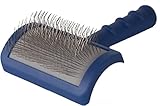 Show Tech Tuffer Than Tangles Slicker Show Tech Tuffer Than Tangles Slicker |
|
Check Latest Price |
1. Chris Christensen Big G Slicker Brush – Best Overall for Doodles
Chris Christensen Big G Dog Slicker Brush for Dogs (Goldendoodles, Labradoodles, Poodles), Groom Like a Professional, Fluff Detangle Style, Saves Time Energy, Coral, Large
30% more pins than other slickers
Extra-long angled pins
Flexible cushioned pad
Non-slip grip
Pros
- Densest pin field we tested
- Reaches the skin without grabbing the curl
- Curved back and grip handle cut arm fatigue
- Handles doodles and poodle-type coats
Cons
- Premium price point
- Too large for very small dogs
This is the brush we hand to a client who has never had a good brushing routine. It carries 30 percent more pins than a standard slicker, and on a dense doodle coat that density is the whole game. More pins means more contact points through the coat, so you remove loose undercoat in fewer passes instead of grinding at the same patch until the dog gives up.
The pad is genuinely flexible rather than nominally flexible. That matters more than most spec sheets admit, because a rigid pad keeps the pins at a fixed angle and the tips rake across the skin while the hair above stays tangled. A pad that gives lets the pin field follow the curve of your dog’s ribs and shoulders.
The pins are extra long and angled, which is what stops the over-grab problem owners describe on forums, where a brush takes five minutes to get through a palm-sized patch and leaves the coat looking harsh. Angled pins slide under the hair rather than hooking it, so the curl stays curl after the brush passes. The extreme curve on the back is a control feature, and on a restless dog moving around you, that control is the difference between a stroke and a struggle.
Reviewers consistently describe the same three things: it pulls out undercoat in fewer strokes, the handle does not make their hand hurt on a long session, and their dog puts up with it. Several mention that it is simply the more comfortable brush they have used on a curly coat. That is the benchmark every other brush on this list is measured against.
When the Big G earns its price
It earns its price the day you stop doing partial grooms. If your dog mats weekly, the Big G pays for itself in avoided dematting and shorter sessions. It is the brush to buy when a full body takes more than ten minutes with a normal slicker, because it is built to move through a dense coat quickly without leaning on pressure.
It is also the right first brush for a large or standard doodle. The paddle covers a good section of the body, so you get fewer, longer strokes. Owners of retrievers and poodles use it on the same coat, and it handles a double-coated doodle from a Labradoodle line perfectly well.
When to skip it
Skip it for a mini doodle under about fifteen pounds. The paddle is large, and on a small dog you end up working around the body instead of through it. For a toy or mini doodle, a smaller head with equally long pins is a better fit, and several of the mid-list options are built that way.
Skip it too if your budget is tight and your dog has a short, easy coat. On a coat that sheds lightly, the expensive cushion technology is solving a problem you do not have. The next two brushes give you the pin geometry without the premium.
2. Paw Brothers Extra Long Slicker Brush – Best Value for Regular Home Use
Paw Brothers Professional Grade Extra Long Slicker Brush – Ergonomic Handle, Removes Loose Undercoat and Tangles for Dogs
One inch stainless steel pins
Ergonomic rubber grip
Flat slicker design
7 x 4.5 x 1 inches
Pros
- Genuinely long stainless steel pins
- Comfortable rubber grip handle
- From a brand operating since 1959
- Handles double-coated coats
Cons
- Pins can bend under heavy daily use on large dogs
- Hair packs into the pin base
This is the brush we recommend to people who want a real tool without the salon-tool price. The pins measure about one inch, which is the length threshold you want on anything longer than a short trim, and they are stainless steel, so they hold their shape through a curly coat instead of folding around a mat.
The rubber-gripped handle is the quiet strength here. A slicker session on a doodle is a repetitive grip motion, and a hard plastic handle turns a long session into sore fingers. A rubber grip also stays controllable when your hands are damp, which matters more than you would expect after a muddy walk.
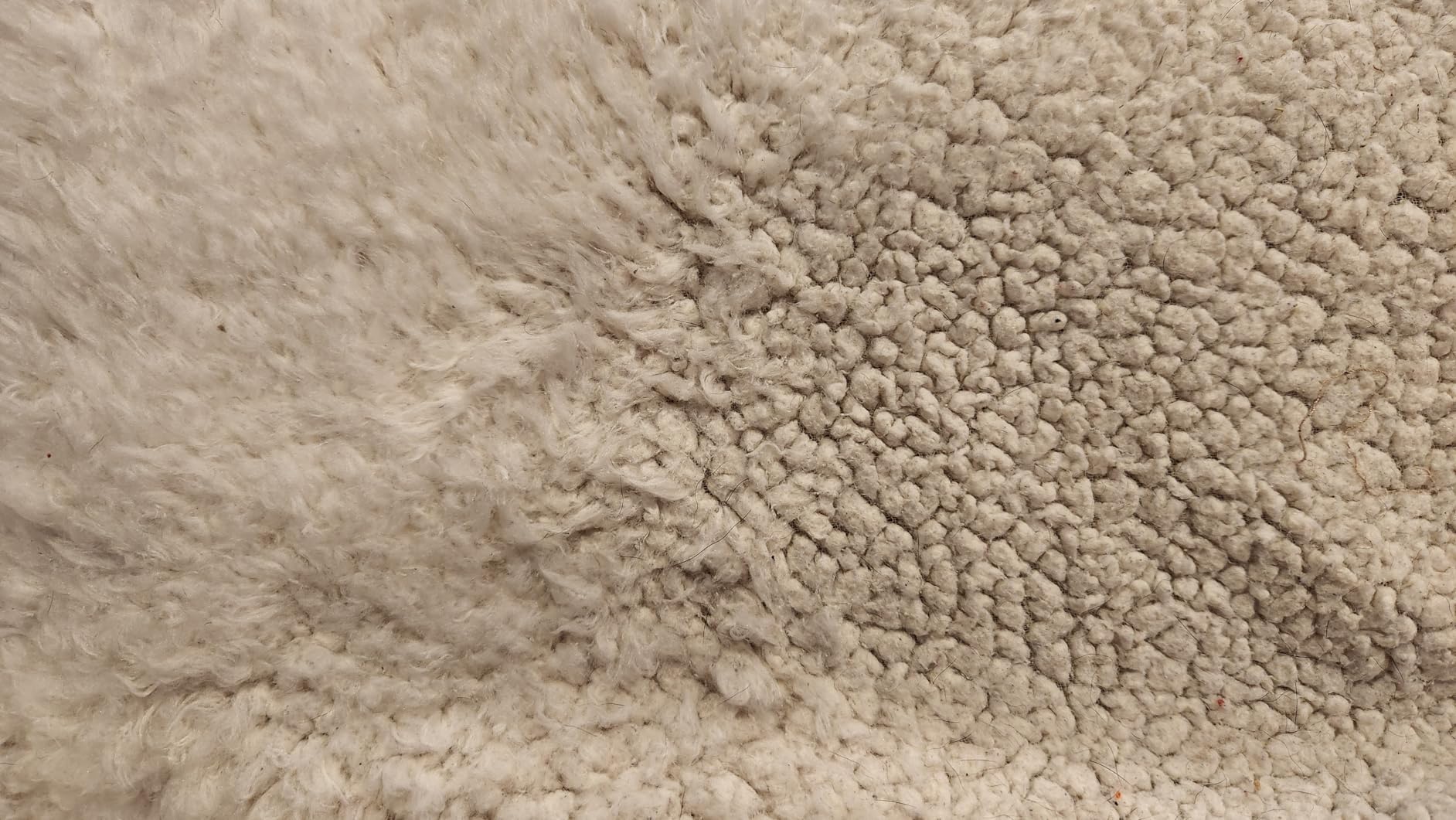
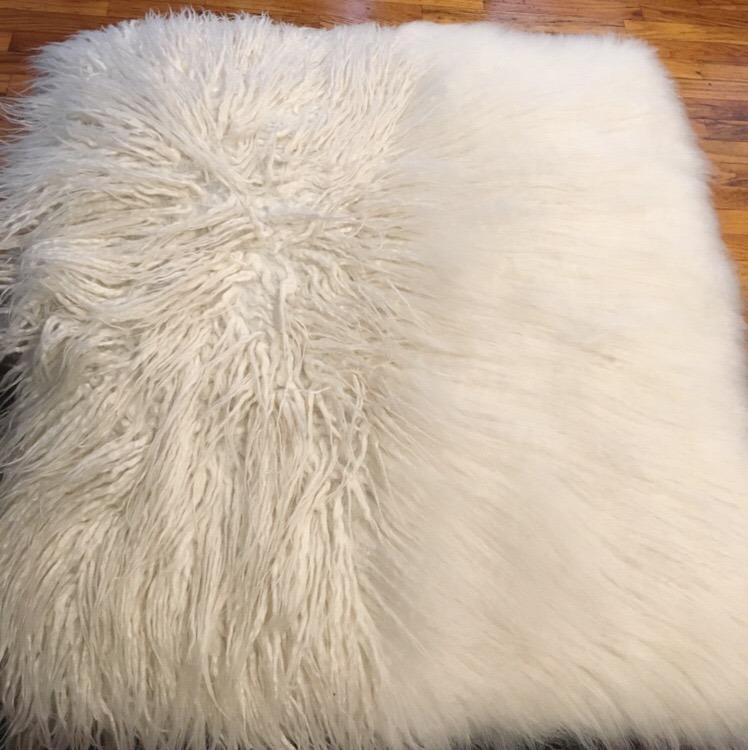
Where it differs from the Big G is pad feel. This is a flat slicker design, so there is less give than a curved cushioned pad, and on the thickest fleece coats you will work a little harder to get the pins all the way down. Owners of double-coated breeds report it holding up well, and the flat profile is actually an advantage when you are working a tight zone like the armpit or the belly.
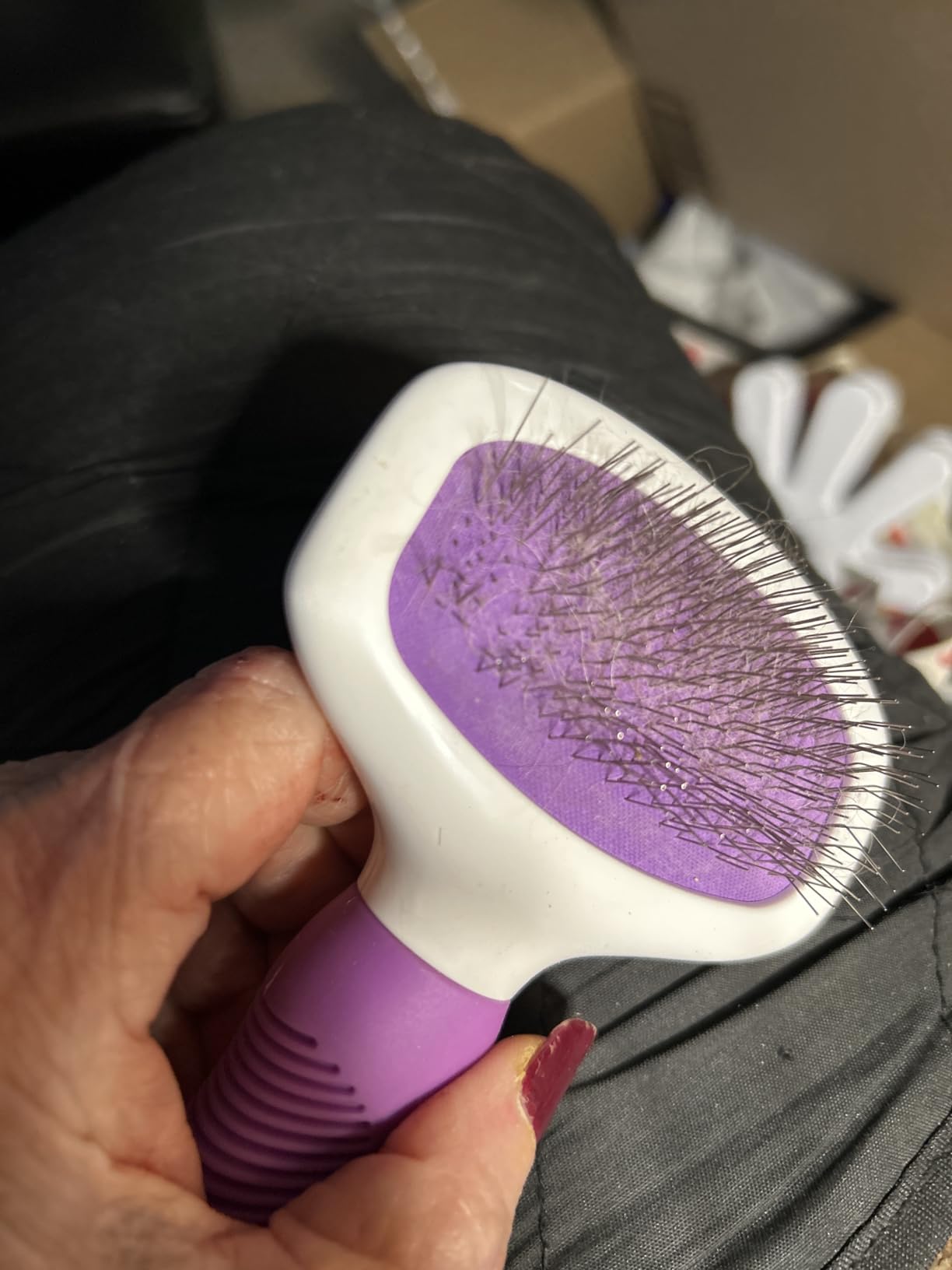
Cleaning is the one chore worth flagging. Hair collects at the pin base on any slicker, and on this brush owners report that you need a comb to get it out rather than just pulling it free by hand. That is a two-minute job once a week, not a dealbreaker, but it is a habit you have to keep.
Who this brush fits
It fits the owner who has a medium to large doodle, brushes three or four times a week, and wants a brush that will not need replacing every year. It is the brush we hand to couples who split the grooming duty, and to families where one person is doing most of the brushing and needs something comfortable to hold.
It also makes sense as a second brush. Many owners keep one near the door for quick sessions and one by the tub for post-swim work, and running two identical brushes is fine.
Where it falls short
Heavy daily use on a very large, very dense dog can bend pins over a couple of years, according to owners. If your doodle is a large Labradoodle and you do a full body every single day, look for a brush with a more reinforced pin base or a curved back.
It is also only offered in the larger size, so mini doodle owners should skip this one. And because the pad is flat, it does not quite match the Big G for reaching under a tight curl without pressing harder. You trade a little comfort for a lot less money.
3. Flying Pawfect Long Pin Slicker – Best for Double-Coated Doodles
Slicker Brush for Dogs – Long Pin for Poodles, Doodles & Long Haired Dogs, Deshedding & Dematting Tool, Slicker Dog Brushes for Grooming (Coral, Flat Large)
50% longer and softer pins
Slip-resistant ergonomic handle
3.7 x 2.4 x 8 inches
Works wet and dry
Pros
- Soft long pins suit sensitive doodle skin
- Works wet or dry
- Light and easy on the wrist
- Backed by a lifetime warranty
Cons
- Some dogs find the pins too sharp
- Durability concerns under heavy daily use
If your doodle comes from a Labradoodle or Sheepadoodle line, the coat often carries a denser undercoat than a Goldendoodle. That is the case this brush is built for. The pins are longer and softer than a standard slicker, and softness matters on a double coat because the undercoat sits close and the skin underneath is thin.
The wet and dry capability is the underrated feature. Brushing a soaked doodle is a genuinely different job, and a brush rated for it does not fight you as the coat dries. If your dog swims, gets rained on, or you brush after a bath, this is a brush that can do both passes with the same tool.
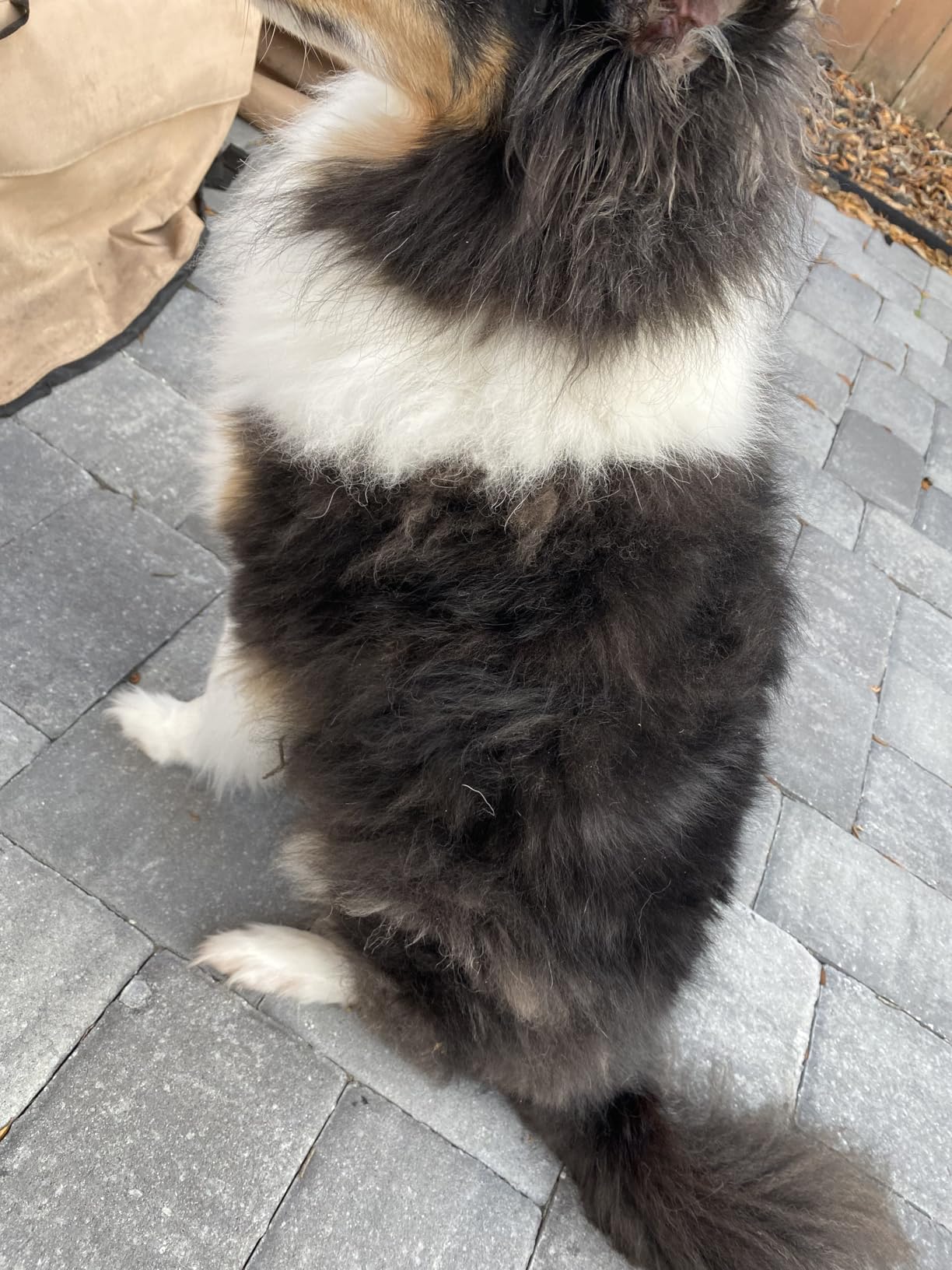
It is also light. At under five ounces with a slip-resistant handle, it is comfortable on a long session and easy to use one-handed, which helps when your other hand is holding a section of coat clear. Owners working with poodles and doodles report good results on both tight curls and looser waves, and the brand backs it with a lifetime warranty and a 30-day replacement policy.
There is a contradiction in the reviews worth reading carefully. Owners call the pins soft and gentle, and other owners report the same brush being too sharp for a sensitive dog. Both can be true, because pin feel depends on how much pressure you use and where you are working. Under the ears and in the armpits, ease up even on the brush that is supposed to be the soft one.
When to choose this brush
Choose it when your doodle has a heavy double coat, when you brush after swims or baths, or when your dog dislikes grooming and you need something that works gently on the first pass. The long soft pins make it a good partner for a coat that is already partially tangled, because they slide through rather than catching.
It is also a sensible pick for an owner who wants one brush for the whole coat-care cycle, from dry touch-up to full line brushing to post-swim blowout. Multi-use is where this one earns its place.
When to pick something else
If your dog is a heavy chewer or your household loses brushes, the durability feedback is mixed enough that you should factor in replacing it. Owners doing aggressive daily line brushing on a very dense coat report issues over time that show up as pins losing their angle.
Skip it for a mini doodle. At this size and weight, the paddle is still large relative to a toy-sized dog, and the same smaller-head reasoning applies as with the Big G.
4. We Love Doodles Slicker Brush – Best for Dogs Who Flinch at Brushing
Slicker Brush for Dogs, Pet Grooming Brushes for Doodles & Poodles, Large
Pins bent at 45 degrees
Close to one inch pins
Ergonomic handle
8.11 x 4.29 x 3.11 inches
Pros
- Angled pins reduce direct skin contact
- Close to one inch pins reach the root
- Handles dense long doodle coats
- Very large owner review base
Cons
- Too large for very small dogs
- Bulkier handle than some competitors
This brush exists to solve one specific problem, and it is the most common problem doodle owners post about: the dog knows the brush is coming and moves away. Owners describe the pain directly, saying they could tell it hurt when they used this brand on a sensitive dog. Angled pins are the answer to that, and this brush commits to them.
The pins are bent at roughly 45 degrees. That angle means the tips do not plant straight down into skin; they travel under the hair at a slant. On a dog who flinches, that difference is real. Combined with close-to-one-inch length, the pins still reach the root of a dense coat, so you are not trading effectiveness for comfort.
Another thing worth noting is scale of feedback. This brush has one of the larger owner review counts of any doodle-specific slicker, which means a lot of people have reported back on how their particular dog reacted to it. The pattern is that the dogs accept it more readily than they accept a straight-pin brush, and that the handle stays comfortable through a full session.
It handles dense and long coats well, which covers the majority of doodles. Where it is less convincing is the size of the head. At just over eight inches long and four and a half wide, it is a large brush, and small dogs end up with a lot of it hanging off the body.
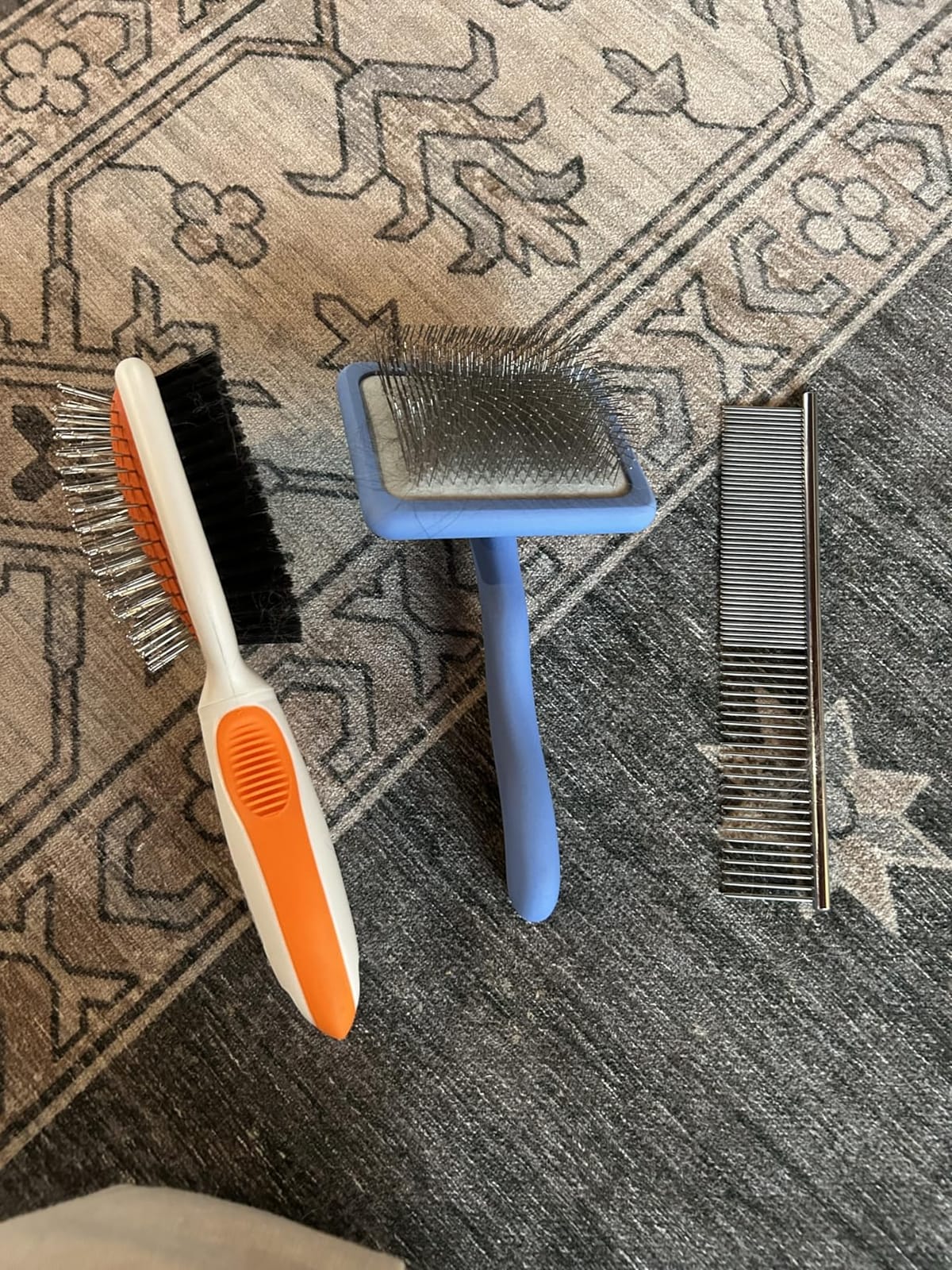
When tolerance is the deciding factor
Choose this brush when your dog is already afraid of grooming, when a previous slicker caused flinching, or when you are rebuilding a routine from zero. A brush your dog tolerates beats a marginally better brush your dog fights, every single time. That is the first thing we tell people who ask us to pick a brush for an anxious dog.
It is also a good second brush for a two-dog household where one dog tolerates brushing and the other does not. You can keep your higher-performance brush for the easy dog and this one for the nervous one.
Where it does not win
It is not the brush for a mini doodle, full stop. The head is too large and you will spend more time repositioning than brushing. It is also not the most refined build on this list, and if you are brushing a very large dog with a very dense coat every day, you will find better long-session options above.
Be honest with yourself about tolerance before buying anything. A brush that works beautifully and hurts your dog is a brush you will stop using in three weeks.
5. Saccison 2-Piece Slicker Set – Best Two-Piece Kit with a Steel Comb
2PCS Slicker Brush for Dogs & Pet Comb,Professional Dog Grooming Brush (Goldendoodles,Poodles,Labradoodles) with Extra Long Pins to Effectively Remove Tangles, Knots and Mats (Blue, Large)
Brush plus stainless steel comb
Pins about one inch at 45 degrees
Rounded comb ends
Pros
- Brush and steel comb in one kit
- Extra long angled pins for depth
- Comb catches what the brush leaves
- Two year warranty
Cons
- Newer brand with limited long term data
- Listed dimensions look like packaging size
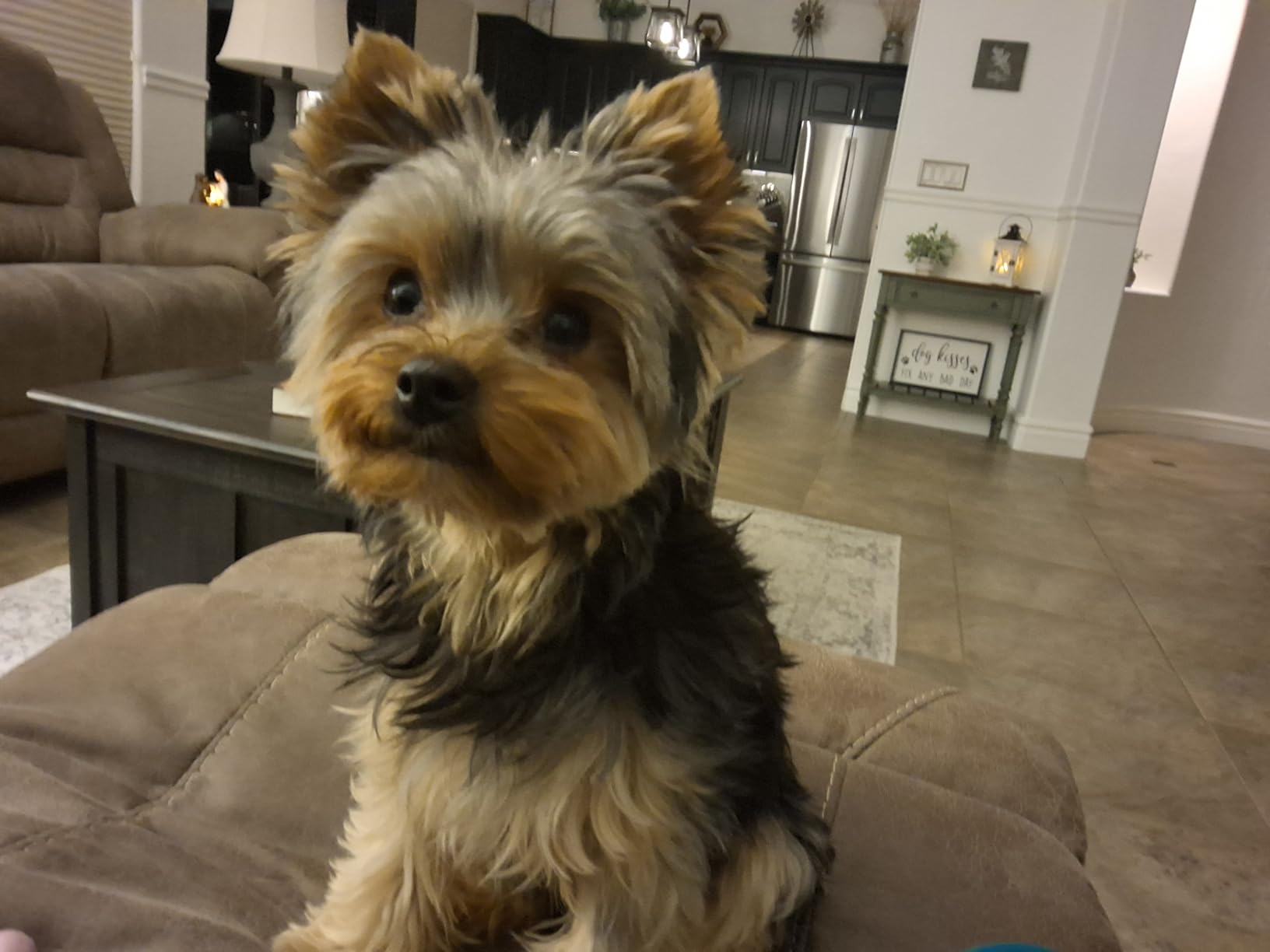
Almost every owner we talk to says the same thing: a slicker brush on its own is an incomplete kit. You brush, you find a tangle you missed, and now you need a steel comb. This set ships with both, and the comb is a proper one with rounded ends, not a token accessory.
The brush half is well specified for a doodle. Pins are close to one inch and tilted at about 45 degrees, so you get the angled-pin comfort profile and the reach for a dense coat. The comb that comes with it has rounded ends, which is what you want when you are picking out small snags the brush could not reach. For a first-time doodle owner building a kit from scratch, this removes the guesswork of picking a compatible comb separately.
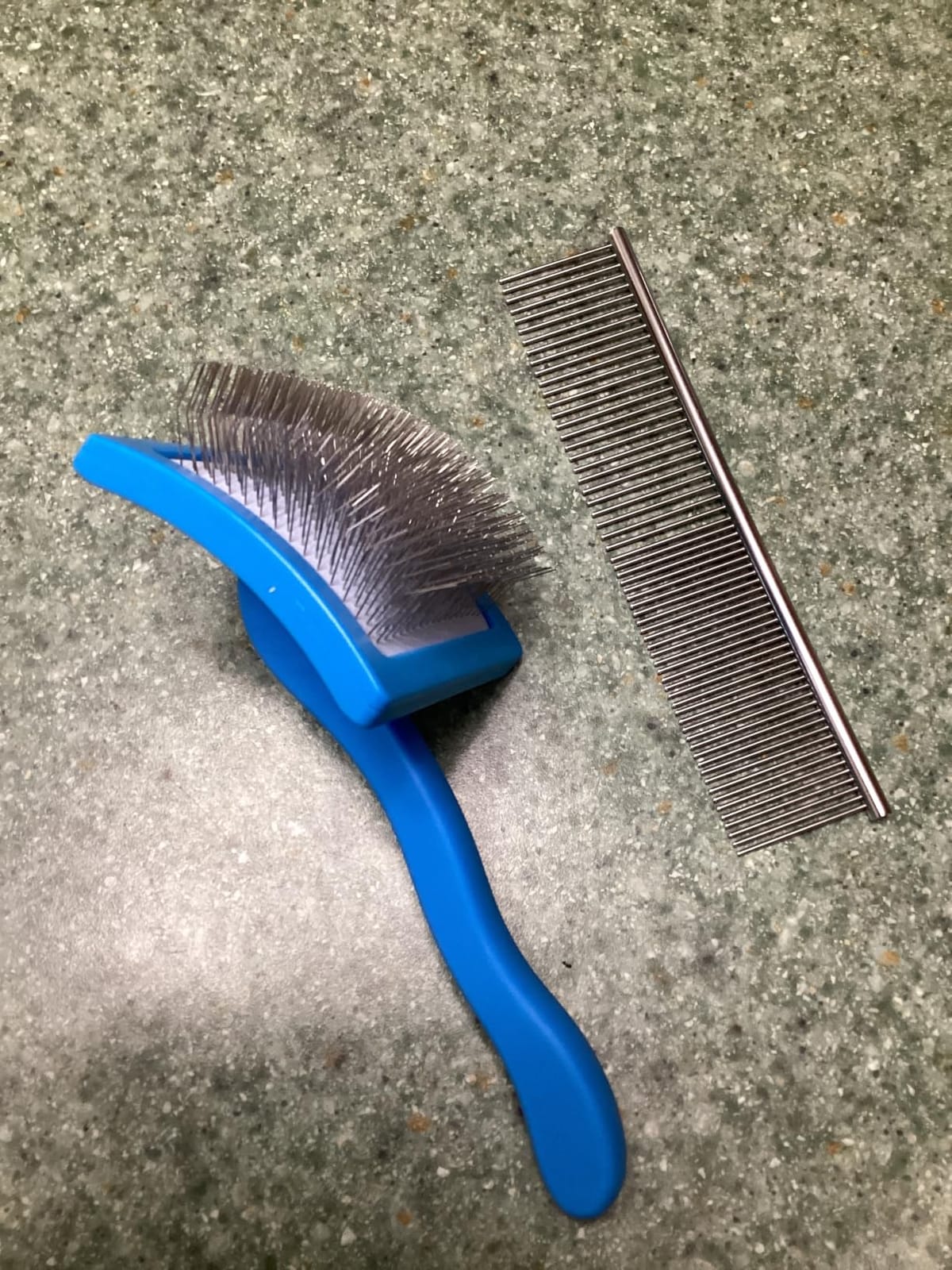
The stainless steel comb is anti-static, which is a small technical detail that matters in a double-coated doodle coat. Static is what pulls a fresh layer of loose hair up out of the coat as you comb, so an anti-static comb means less hair back on the floor immediately after you finish.
Owners report strong early satisfaction, particularly on doodles and poodles with long dense coats, and the warranty and support commitment is a plus for a newer brand. The honest caveat is that this is a newer name, so there is less long-term durability history behind it than with the established options above.
When the kit approach makes sense
Buy the kit if you own a slicker already and it is old, bent, or too small, and you do not have a steel comb. It is also the fastest way to get a new dog set up properly. We would rather see someone brush and comb consistently with a two-tool setup than own a premium brush they never use because they have no way to catch snags.
It is a good gift for someone starting out with a puppy doodle, and a sensible addition if you have a second dog and need a duplicate setup.
What to watch out for
Long-term durability is unproven for a newer brand, so treat it as a consumable and check the pins periodically. The listed product dimensions are implausibly small for a brush and comb set, which owners read as a packaging measurement rather than a tool measurement, so do not size your expectations off the spec sheet. Judge the physical size from the photos and the head-to-body fit.
It is also a large set, so it is not right for a mini doodle. The pins are right; the footprint is not.
6. LBMBAIC Long Pin Slicker Brush – Best for Puppies and Young Dogs
LBMBAIC Slicker Brush for Poodles,Goldendoodles Brush,Best Fluff Shedding.
180 plus dense soft needles
25mm longer bristles
135 degree angled pins
Curved anti-slip handle
Pros
- Buffed needle tips are gentle on young skin
- Light body suits puppy handling
- An angled pins follow the coat line
- Good value
Cons
- Pad has less give than premium brushes
- Newer brand with limited history
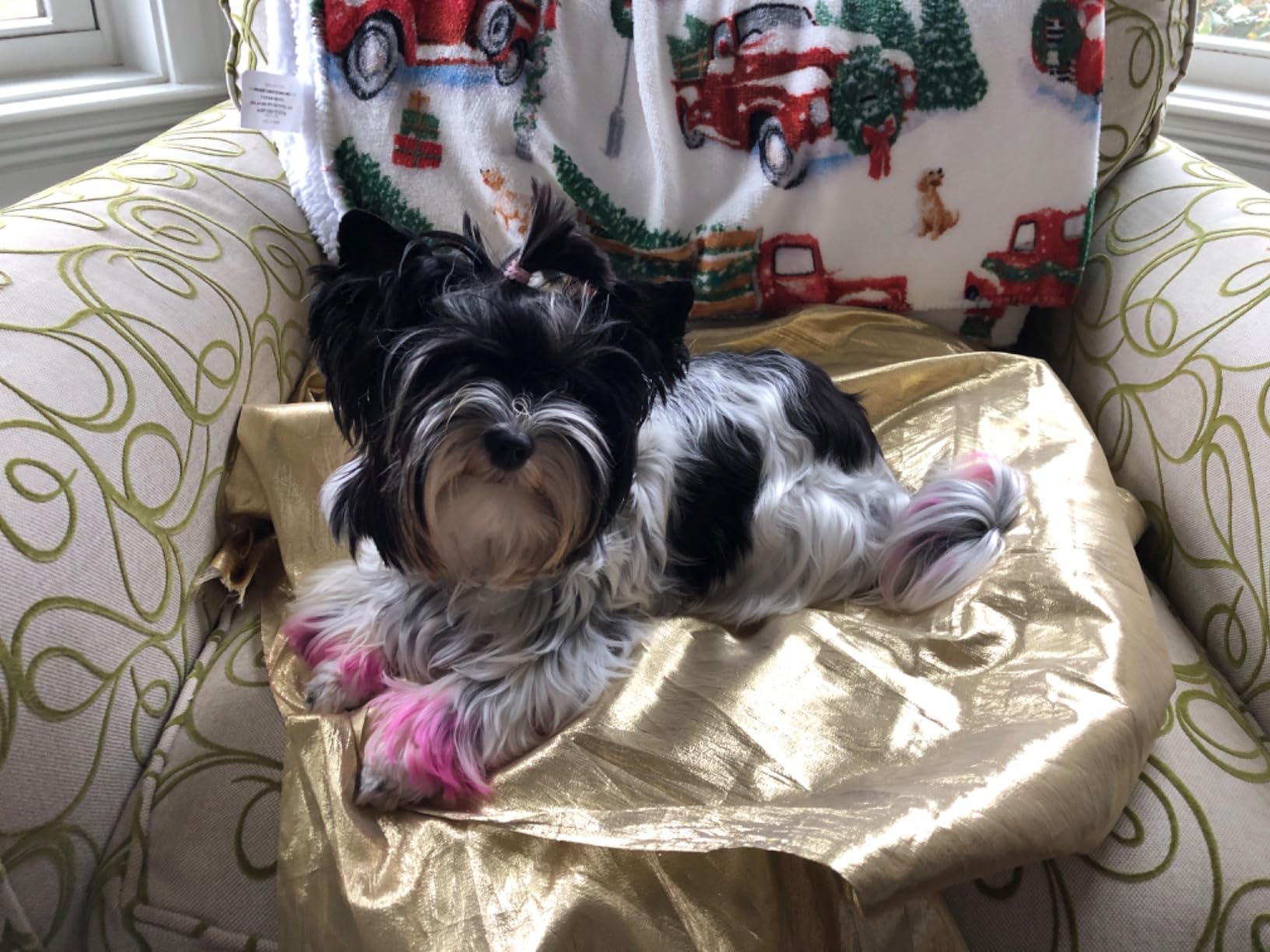
A puppy’s coat is short, soft, and attached to skin that is still developing, so the priority is not pin power. It is a brush that does not scratch, does not alarm, and teaches the dog that grooming is boring and survivable. This one fits that brief, and the soft needle buffer is the reason.
There are more than 180 needles packed into this head, each set at 135 degrees so the tips track along the coat line rather than pushing straight into skin. Owners report it being well tolerated by pets and effective on thick undercoats, which is a bit of a paradox for a brush this gentle, but the pin count is doing real work.
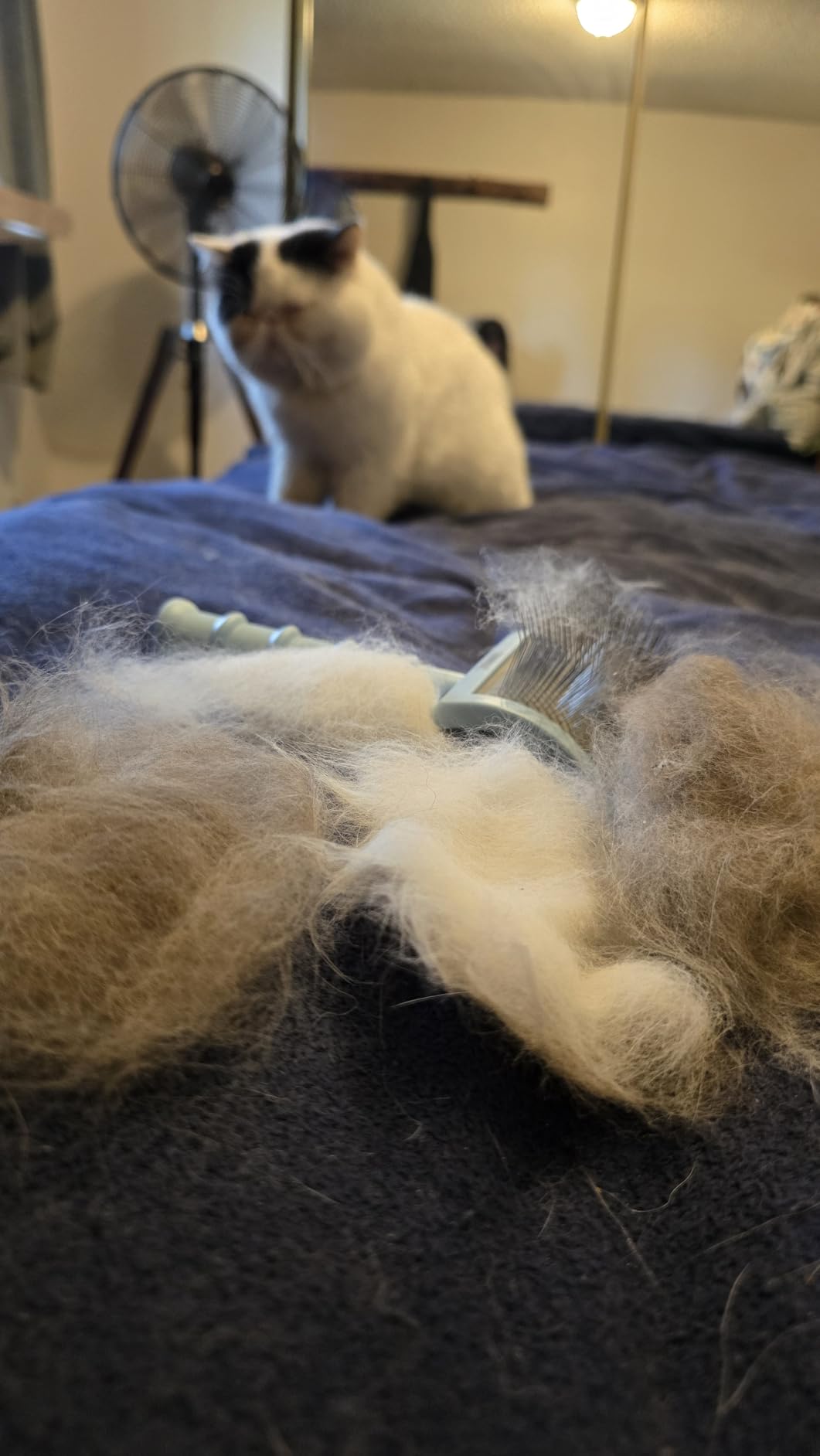
It is also light and the handle curves at 120 degrees with an anti-slip profile, so a small, wriggling puppy is easier to hold than with a straight-handled brush. The ABS handle is described as stable and resistant to cracking, which is the right material choice for a tool that gets dropped.
Honest limitations: owners say the pad does not give as much as premium brushes, and the handle will not flex the way a cushioned curved-back design does. If you are brushing an adult dense doodle coat, the softer pad on a curved brush simply works down into the coat with less pressure.
Why puppies are a separate case
Brushing decisions made in the first six months set the tone for years. A puppy who learns that a brush means handling, treats, and a minute of attention grows into a dog who tolerates a proper line brushing. A puppy who learns that a brush pulls will be difficult to groom for the rest of his life, and that resistance is the single biggest reason adult doodles end up at a groomer with mats.
So for a puppy, choose the brush that is easiest on the skin, keep sessions to about a minute, and end while the dog still wants more. The pin length does not matter much yet. Tolerance does.
When to move up to a bigger brush
Once your doodle is over a year and the coat is filling in and lengthening, move to one of the medium or large heads above. The long-pin, high-density brushes will become worth their extra coverage. This brush remains a good second tool for the face, feet, and belly, where a smaller head is easier to control.
Skip it as a primary adult brush if your dog mats regularly, because the firmer pad costs you reach in a dense coat.
7. Bixy Pixy Ball-Tipped Slicker Brush – Best for Sensitive Skin
Bixy Pixy Dog Slicker Brush – Large – Protective Ball Tipped Pins Massages Pet Skin – Professional Groomer Dog Brush for Goldendoodle – Golden Retriever Brush (Large Size)
Ball-tipped protective pins
Extra-long pin length
Soft pad base
8 x 4.8 x 1 inches
Pros
- Ball tips are a very gentle tip style
- Large head covers a lot of ground
- Soft pad base reduces pressure
- Rubber non-slip grip
Cons
- Hair is hard to clear from the centre of the head
- Handle can loosen after years of heavy use
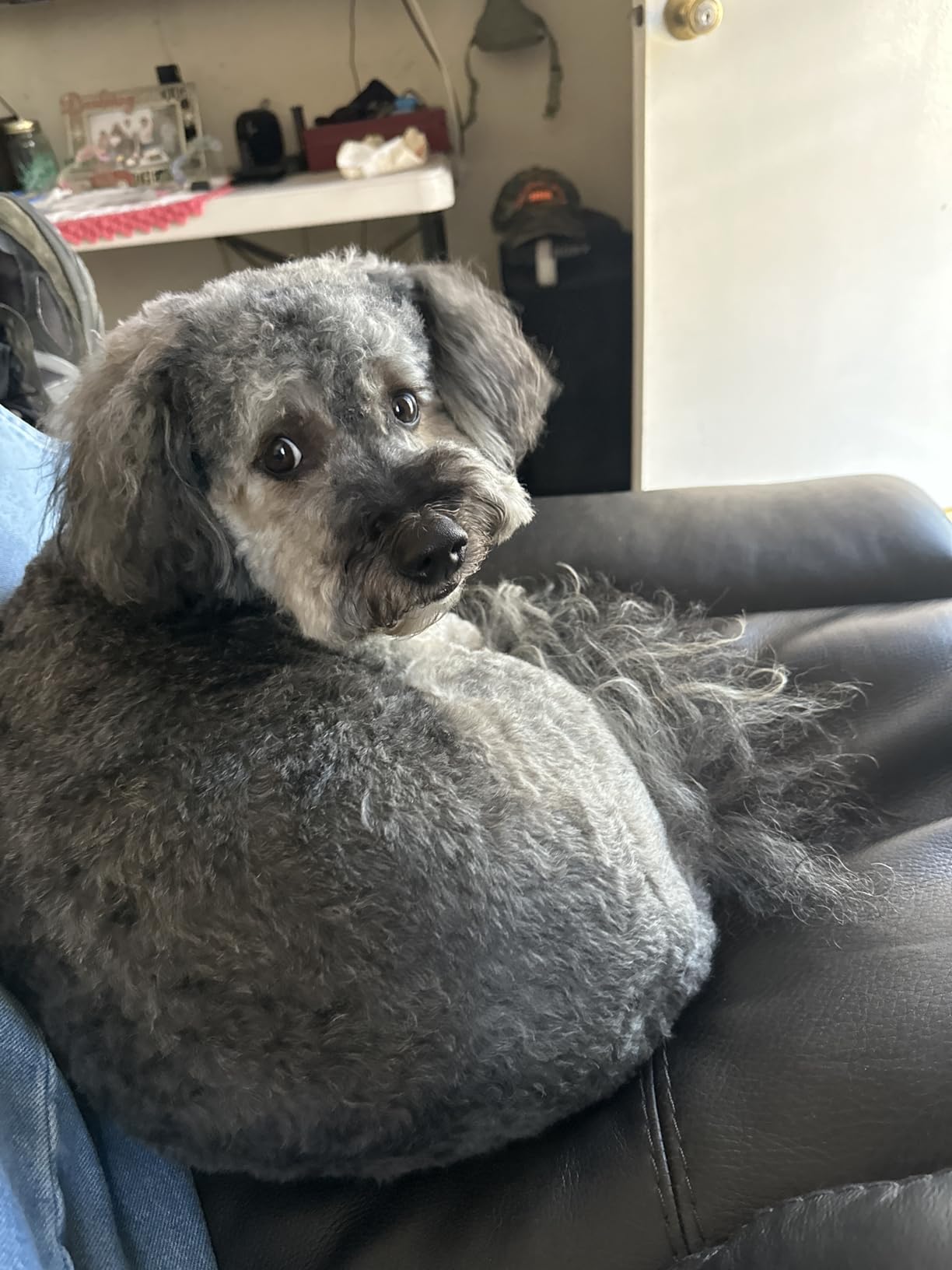
Ball tips are about the most protective pin end you can buy. Instead of a bare metal point, there is a small rounded plastic cap, so the pin meets skin as a soft dimple rather than a point. Owners report that this is the brush that gets tolerated on thin-skinned or sensitive dogs, and it is a top pick for dogs that flinch at bare steel.
It is a large brush, and that is an advantage for big dogs. The head covers a substantial section of body, so on a standard or large doodle you are doing fewer strokes to get through a full groom. Combined with a soft pad base, it means you can get coverage without leaning on pressure, which is the right strategy for a dog who is not enjoying the process.
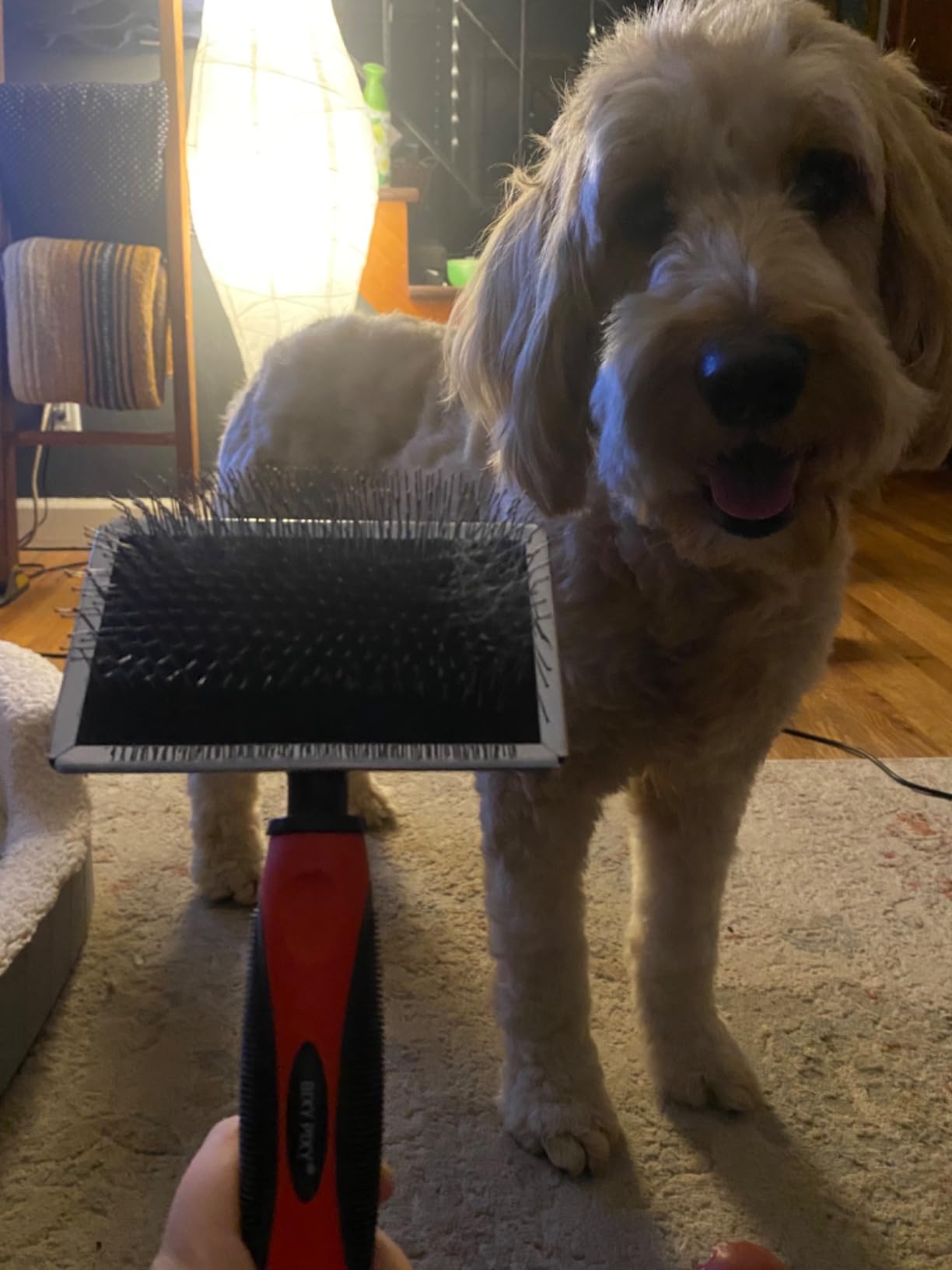
Owners in the grooming trade use this one on double-coated breeds, including doodles, and rate its durability for daily work highly. The rubber non-slip grip is solid and stays secure on a wet coat. For a dog whose skin reacts to pressure, pressure relief matters more than pin power, and this brush is built for that priority.
The weakness is cleaning. Ball-tipped pins collect hair between the caps, and owners specifically call out that hair in the centre of the brush head is hard to remove. A metal comb works, but it is a step you cannot skip, or the brush stops performing within a few sessions.
Where ball tips earn their place
Choose this for a doodle with sensitive or reactive skin, for a dog coming back from a rough patch, or for a short-coated poodle-type doodle where the skin is close to the surface. It is also a good choice for the first year of adult coat on a dog who was previously brushed with a soft puppy brush and now needs more reach.
Ball tips do have a mild trade-off. They add a small amount of bulk at each tip, so they are marginally less efficient at separating tight curls than a bare angled steel pin. If your dog has a heavy coat but an unproblematic skin, the angled-pin brushes above will move hair faster.
Durability and maintenance notes
Owners report the handle can loosen after a couple of years of heavy professional use, so for a home groomer this is likely a many-year tool. Clean it weekly, comb out the collected hair from the base, and check that the caps are still seated on the pins. If you have a dog who is chewing on brushes, keep it out of reach between sessions.
It is too large for a mini doodle, for the same reason the other big heads are. The right pick for a small dog is a small head with equally gentle tips.
8. The Doodle Brush Slicker Brush – Best for Full Groom Sessions
The Doodle Brush Slicker Brush Dog Poodle Brush Detangler, Extra Long Pin
Extra-long pins for deep mats
Ergonomic handle
Lifetime guarantee
8.27 x 3.94 x 2.36 inches
Pros
- Extra-long pins remove deep mats and knots
- Dogs report tolerating it well
- Cuts down total session length
- Backed by a lifetime guarantee
Cons
- Newer brand with limited long term data
- Too large for very small dogs
Session length is the number one complaint we hear from doodle owners, and this brush is built to attack it. The pins are extra long, and the claim owners repeat is that a full body takes noticeably less time. If a full body currently takes you a long time on a doodle and you dread it, that is the metric to judge this brush on.
Tolerance comes up just as often. Owners report their dogs being comfortable with it, which is not something you can engineer into a brush, but longer, well-finished pins with a smooth pass seem to reduce the catching sensation that makes dogs pull away. Groomers comparing it to established premium brands say it holds its own on coat with knots and mats in it.
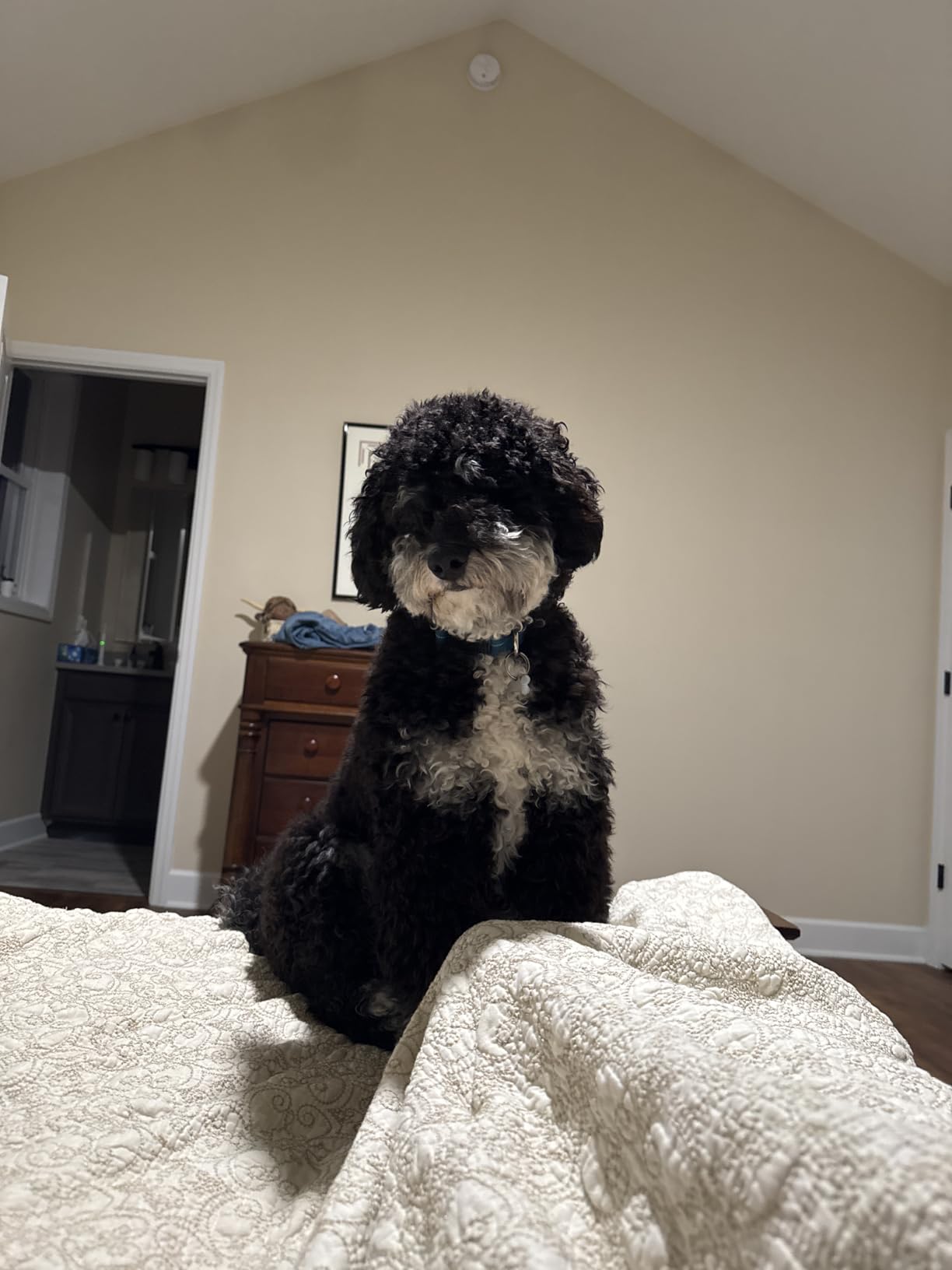
The build is heavier than most, around seven ounces, and the head is wide and tall. That weight is a feature on a long session because it resists flex and gives you steady pressure, but it is also why it does not feel as nimble on a small dog or in tight areas like the armpits.
The lifetime guarantee is unusual in this category and worth weighing honestly. It reduces the risk of a large purchase on a newer brand. It does not tell you how the pins will look after three years of daily work on a dense coat, and long-term wear data simply does not exist yet for a brand this new.
When a full-groom brush is the right buy
Choose this if you do a proper full-body brush rather than a quick top-coat pass, if your doodle is large, and if session length is what stops you from brushing often enough. A brush that cuts a long session down is the difference between brushing twice a week and brushing daily, and daily is what keeps mats from forming.
It also suits an owner between grooms, or one who has a dog who gets filthy and tangled after every outing and needs a brush that can get through a bad week without a rescue visit.
Where it falls short
It is a large brush, so it is the wrong tool for a mini doodle and clumsy in tight zones. Owners wanting a lighter-feeling brush for extended handling might prefer one of the mid-weight options. And as a newer brand, we would want to see a few more years of feedback before calling it the safest long-term choice for a dense double coat.
For pure value, the Paw Brothers above gets you most of the way for considerably less. This one is the performance pick, not the smart-money pick.
9. POODLIE Poodle Pet Slicker Brush – Best for Mini Doodles and Multi-Pet Homes
Poodle Pet Slicker Brush – For Dogs, Cats, Rabbits – Matted/Loose Fur, Knots – Suitable for Doodle/Goldendoodle Grooming and Shredding Short/Long Hair
Rounded stainless steel pin tips
Non-slip ergonomic handle
7 x 3 x 1 inches
Dogs cats and rabbits
Pros
- Compact head suits small doodles
- Rounded tips are gentle on thin skin
- Light and easy to control
- Works across several pet types
Cons
- Hard plastic handle can slip
- Too small for large dogs
- Some pets find the pins sharp
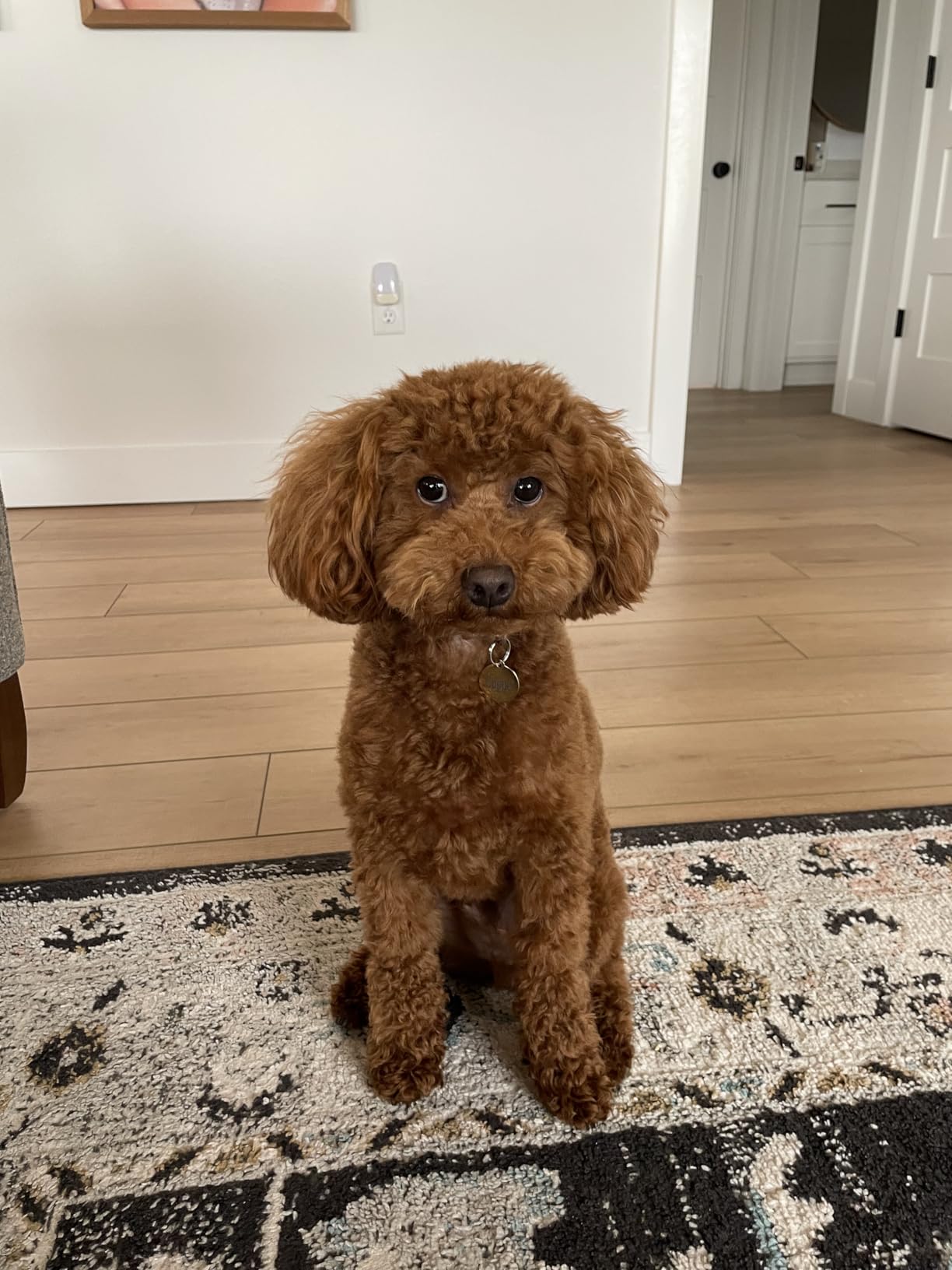
A mini doodle is not a small dog. It is a dog with a small body, a narrow back, and a head you can cover with your palm, and a large slicker on it is genuinely awkward to control. This brush is the right footprint. The head is compact enough to place precisely on a small back or a single leg, which is exactly what a mini doodle needs for a careful line brushing.
The pin tips are rounded stainless steel, which is the middle ground between a bare point and a ball cap. They are gentler than a square-cut pin and still efficient at separating hair. Owners with poodles and small doodles report it working well on the coat, and it also handles fine, short coats, which is common on poodle-type lines.
It is genuinely versatile. The same brush works on dogs, cats, and rabbits, so if your home has a doodle and a long-haired cat, one tool covers both. That versatility is the main reason this brush has such a large owner review base.
The two honest complaints are both about feel. The handle is hard plastic rather than rubberised, and owners report it can slip in a wet hand or when the dog is squirming. And while the tips are rounded, some very sensitive pets still find them sharp enough to object to, so if your mini doodle is skin-sensitive, the ball-tipped option above is the safer route even though it is bigger.
Why size is the deciding factor for small doodles
The mistake we see most often with mini doodles is buying the biggest brush available because it looks thorough. Precision beats coverage on a small dog. A compact head lets you get behind the ears, work between the toes, and brush the tight spot under the collar without knocking the dog sideways each time.
It also makes the job of a short session actually short. Three minutes with a brush you can control beats ten minutes of repositioning a large one, and on a small dog you will get more willing cooperation simply from finishing quickly.
Where it does not work
It is the wrong brush for a standard or large doodle with a heavy coat. The head is too small to cover the body efficiently, and you would be making twice the number of strokes to get the same result. Reviewers also flag the plastic handle as a fatigue factor on long sessions, which is a non-issue on a three-minute puppy job and a real problem on a forty-minute full groom.
Buy it for the mini doodle in the house, or as a face and feet tool alongside a larger brush for the body.
10. Show Tech Tuffer Than Tangles Slicker – Most Versatile
Show Tech Tuffer Than Tangles Slicker Brush for Dog Grooming with Long, Soft Pins, Medium Size, Perfect for Doodle Breeds, Angled Pins for Dematting, Remove Undercoat, Comfort Grip Handle
Long soft hooked pins
Angled pins for dematting
Comfort grip handle
Multiple pin firmnesses
Pros
- Long soft pins for a low build price
- Hooked pins fluff as well as detangle
- Lightweight for long sessions
- Several pin firmnesses to choose from
Cons
- Hard plastic handle can be slippery
- Medium head is small for large doodles
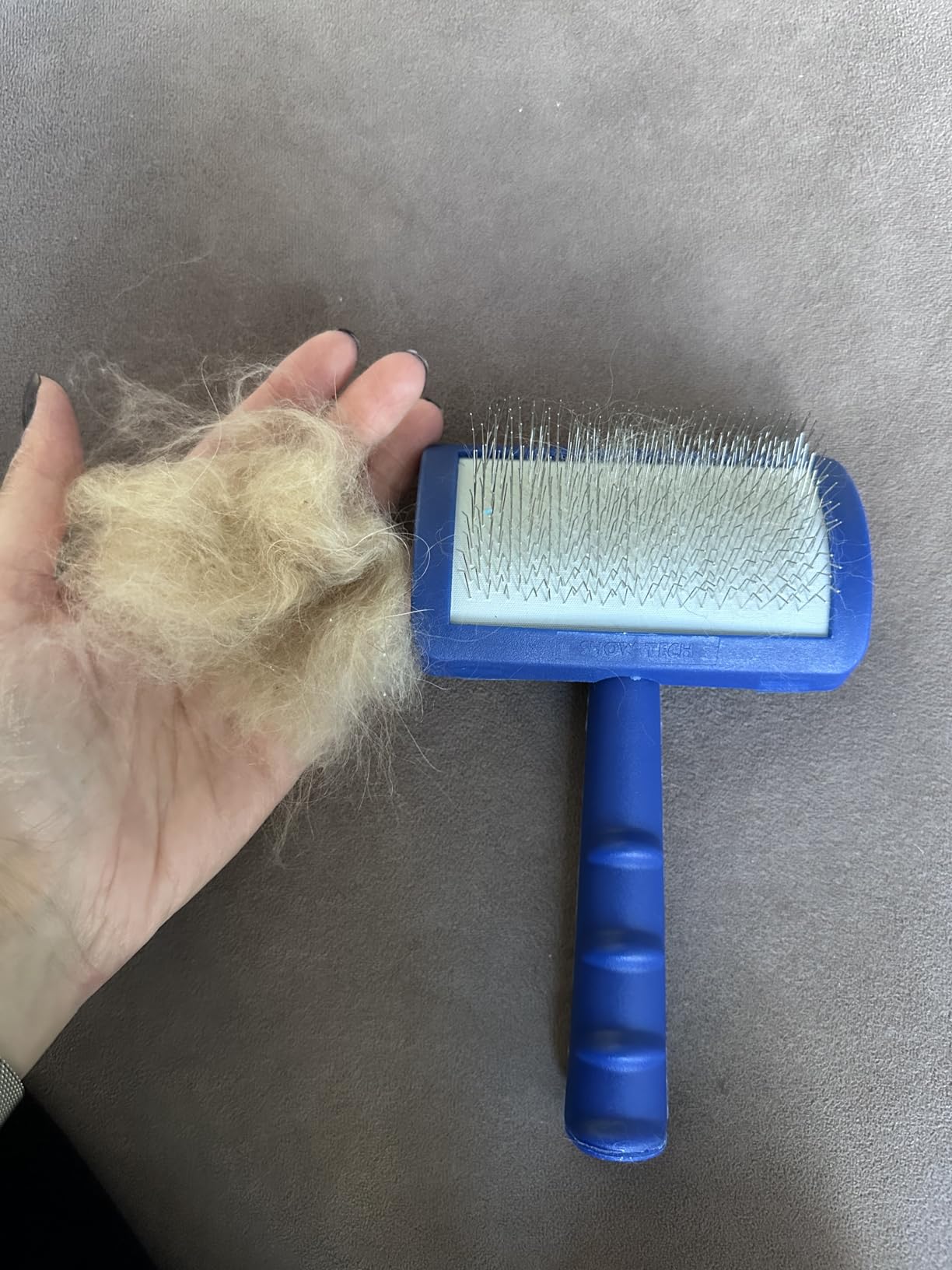
This is the brush to buy when cost is the deciding factor and you still want proper long pins. The pins here are long and soft with a hooked design, and the hook is the point: it catches and lifts loose hair out of the coat rather than just passing through, which is what makes the coat look fluffed and voluminous after a session.
The angled pins are set for dematting and undercoat removal, so you are not dealing with a brush that only smooths the surface. Owners consistently report it as a capable alternative to the well-known premium slicker, and for a dog with an easy-ish coat, the difference in daily result is small enough that most people will not notice it.
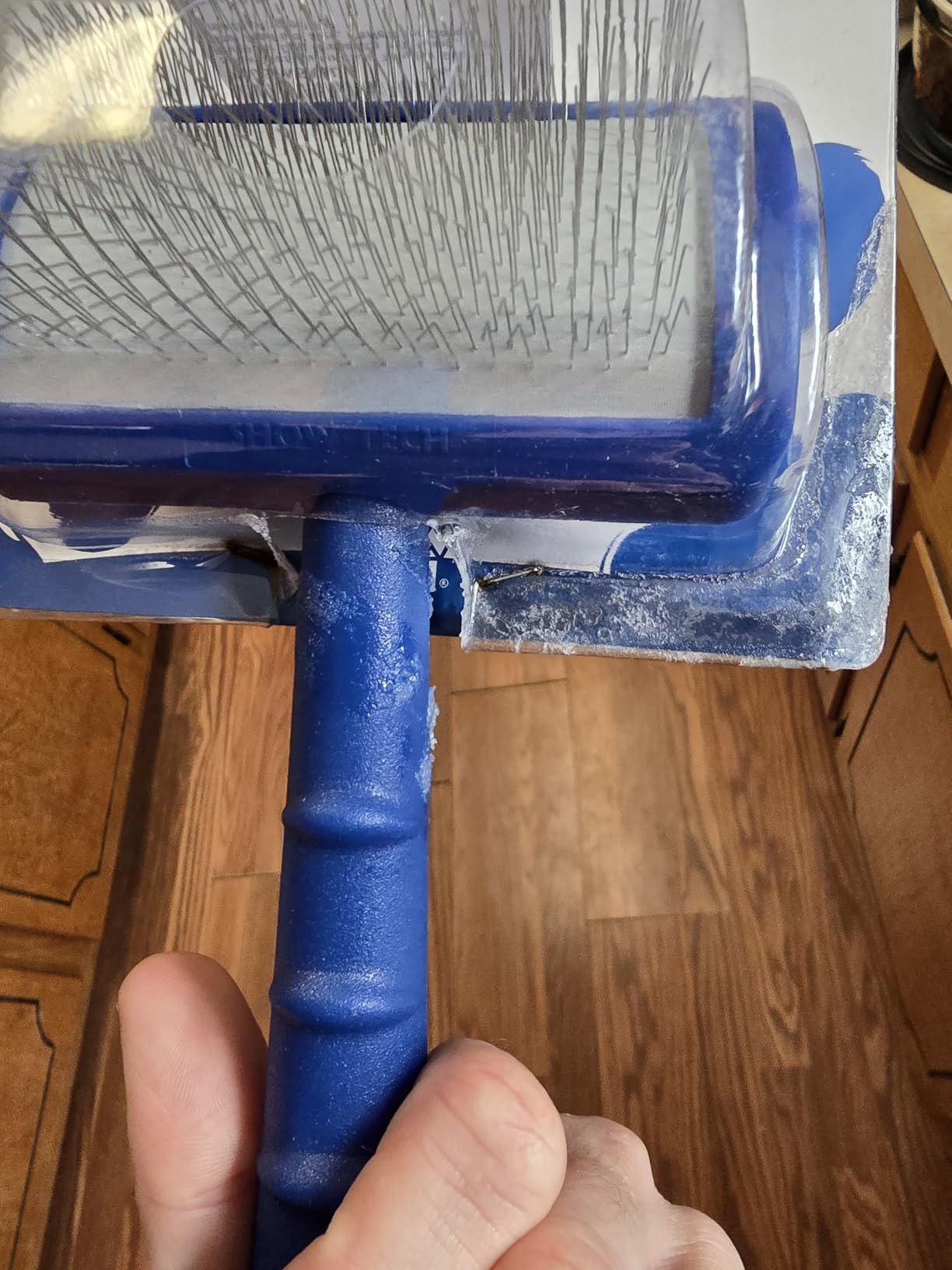
It weighs under two and a half ounces, which makes it a light brush to hold, and that is a real advantage on a long session or with a wiggly puppy. The comfort grip helps, though owners still flag that the hard plastic shell can be slippery once the handle works up a bit of oil from the coat.
What makes it flexible is the range. This brush comes in several pin firmnesses and sizes, so you can step up to firmer pins for a thick undercoat or down to softer pins for a sensitive dog without changing brands. That range is unusual at this build level.
When the budget pick is genuinely enough
Buy it if you brush a wavy or moderately curly doodle, you are not trying to rescue a badly matted coat, and you want to keep your cost down. It will handle the daily maintenance job that prevents mats, which is the job that matters most of the time.
It is also a good second brush for a household, and a sensible first brush for a young dog whose coat has not thickened yet. If you later need more reach, you can move up to one of the long-pin brushes above without having wasted anything.
Where the savings show
The head is medium sized, so on a large doodle you are covering less ground per stroke than with the big-head options. The handle is the weak point on a wet coat. And the hooked pins, while great for fluff, are not the precision tool for picking apart an existing mat, so a dog who already has tight knots needs a dedicated detangling plan rather than more brush passes.
For a mini or medium doodle, though, this brush is a genuinely good answer at a genuinely low build cost.
Slicker Brush vs Pin Brush vs Rake vs Dematting Comb
A slicker brush is not the only tool, and owning the wrong one is a common reason brushing does not work. Here is what each tool actually does and when a doodle needs it.
Slicker brush: your primary daily tool. Fine closely spaced pins on a flexible pad work down through the coat to the skin, separating strands and lifting dead undercoat. Use it for routine detangling, deshedding, and fluffing, and follow it with a comb. It is not a mat remover.
Pin brush: fewer, longer, widely spaced pins on a flat or oval pad. It covers more area per stroke and gives more styling lift, so it is good for blowing out volume and for long straight-ish coats. On a tight curly doodle coat it is less effective at separating fine tangles than a slicker, and it can rake the skin if used hard. Choose it as a finishing tool, not your only tool. If you want to see how that class of brush performs on a different hair type, our straightening brush for thick hair guide is a useful comparison.
Undercoat rake: a rake with a blade or long teeth used with a stretching grip to lift a heavy shedding undercoat. It is a shedding-season tool and a rescue tool. Used casually on a curly doodle coat, it pulls live hair along with the dead hair, so it is not a daily instrument.
Dematting comb: a metal comb with wide, sharpened teeth, sometimes with a blade. It is the tool that breaks a mat into pieces rather than pulling it out. It is a specialist tool for a specific problem, and on a tight mat you should still have a professional do it.
The decision in short: brush daily with a slicker, comb after, use a rake only when the coat is shedding heavily, and reach for a dematting comb only when a mat has formed and needs breaking down. If you find yourself needing the last two tools more than once a month, your brushing routine is the problem, not the equipment.
Which Brush Matches Your Doodle’s Coat Type
Curly fleece coat, tight curls. This is the classic doodle coat and it mats fastest. You want long pins that reach the root, angled or tipped so they do not scratch, and a flexible pad so you can work down to the skin without pressing hard. Brush daily in short sessions. Our first choice for this coat is the Chris Christensen Big G, with the We Love Doodles angled-pin brush if your dog is sensitive.
Wavy fleece coat. Waves are easier than tight curls but still hold tangles at the ends. A long-pin slicker with slightly firmer pins works well, and the Flying Pawfect is a good match because its soft long pins slide through waves without pulling the wave out of shape. Brush three to four times a week, and always comb the ends after a session.
Straight or double coat. Labradoodles and some Bernedoodles carry an undercoat that sheds in volume. Here you want pin power and a wide head for coverage, and you want a brush that can handle wet hair. The Paw Brothers and the Bixy Pixy both suit this, and an undercoat rake in shedding season is a worthwhile addition. Brush twice a week normally, more during a shed.
One dog can carry three different coat textures at once. Plenty of doodles are wavy on the back, loosely curled on the legs, and nearly straight on the ears and tail. Read the coat by zone rather than by breed, and use the gentler brush on the fine-haired areas around the ears and muzzle.
How to Choose a Slicker Brush for a Doodle
Pin length is the first thing to check, and the rule is simple. Your pins should be roughly as long as the coat is thick, and for a doodle that means long pins, close to an inch. Short pins skim the top layer, leave the undercoat in place, and let mats form at the root where you cannot see them. Long pins reach the skin, which is where the loose hair actually is.
Pin spacing comes next. Densely spaced fine pins are best on curly and wavy fleece coats, because you want many contact points to separate hair rather than few widely spaced pins that can catch and pull. A widely spaced pin brush is a styling tool; a densely spaced slicker is a coat-care tool. For a doodle, you want the latter.
Never buy plastic or wooden pins for a dense doodle coat. Plastic pins flex, bend, and eventually snap in a curly coat, and a snapped pin in a dense coat is a problem you do not want. Wooden pins dull and can splinter. Stainless steel is the only answer, and it is worth checking that the tips are rounded or capped rather than cut flat.
Cushion flexibility is the least advertised feature and one of the most important. A pad that flexes lets the pins follow the curve of your dog’s body and keeps the tips in contact with the coat instead of scraping across skin. If you press a brush hard on a rigid pad, you are using force to compensate for a design gap, and your dog will feel it.
Paddle width should match dog size. Mini and toy doodles need a compact head you can place and control precisely. Standard and large doodles want a wide head so you are covering ground in fewer strokes. The wrong size is the most common sizing mistake and it shows up as a ten-minute job that should have taken four.
Handle ergonomics decide whether you keep brushing. Look for a non-slip rubberised grip, a shape that keeps your wrist in a neutral position, and enough length that your hand is not cramped over the pad. A slicker session is dozens of repeated strokes, and a slick handle turns that into hand fatigue and a shorter session. We break down the same ergonomic criteria, applied to a different head shape, in our scalp care brush guide.
Size and care complete the list. A brush that bends or scratches should be replaced rather than tolerated, and cleaning it weekly with a comb keeps the pins working. If you like a particular brush, the same brand usually makes a smaller version for a smaller dog, so a family with a mini and a standard doodle can stay in one system. You can read more about how we think about brush feel and handle weight in our guide to investment-worthy boar bristle brushes.
How to Brush a Doodle Without Pulling Hair
The brush matters less than the technique. The same brush used two different ways will either clear a coat or leave a mess, and the difference is in how you approach the coat and how much you press.
Part to the skin and brush outward from the root in small sections. Use your free hand to separate a layer of coat and expose the skin underneath, then brush that section from the root outward. Repeat on the next section. This is line brushing, and it is the single most effective habit for preventing mats, because it puts your brush where the loose hair is instead of skimming the surface. The owners who avoid matting almost universally describe working in layers rather than over the top.
Work bottom to top. Start at the paws, then the legs, then the belly, then the sides, then the back, and finish with the neck, head, and tail. Tangles get created by the movement above them, so handling the top last means you are not undoing your own work as you go.
Follow every slicker pass with a steel comb. A comb is the snagging catcher. The slicker loosens what it can reach; the comb finds the small knots the brush could not catch, particularly in the ends and in tight zones. A steel greyhound comb is the standard choice because the fine teeth penetrate without pulling. Skipping the comb is the most common reason a finished-looking coat still has hidden snags, and it is also why brushes look like they do not work, when the hair was really there all along.
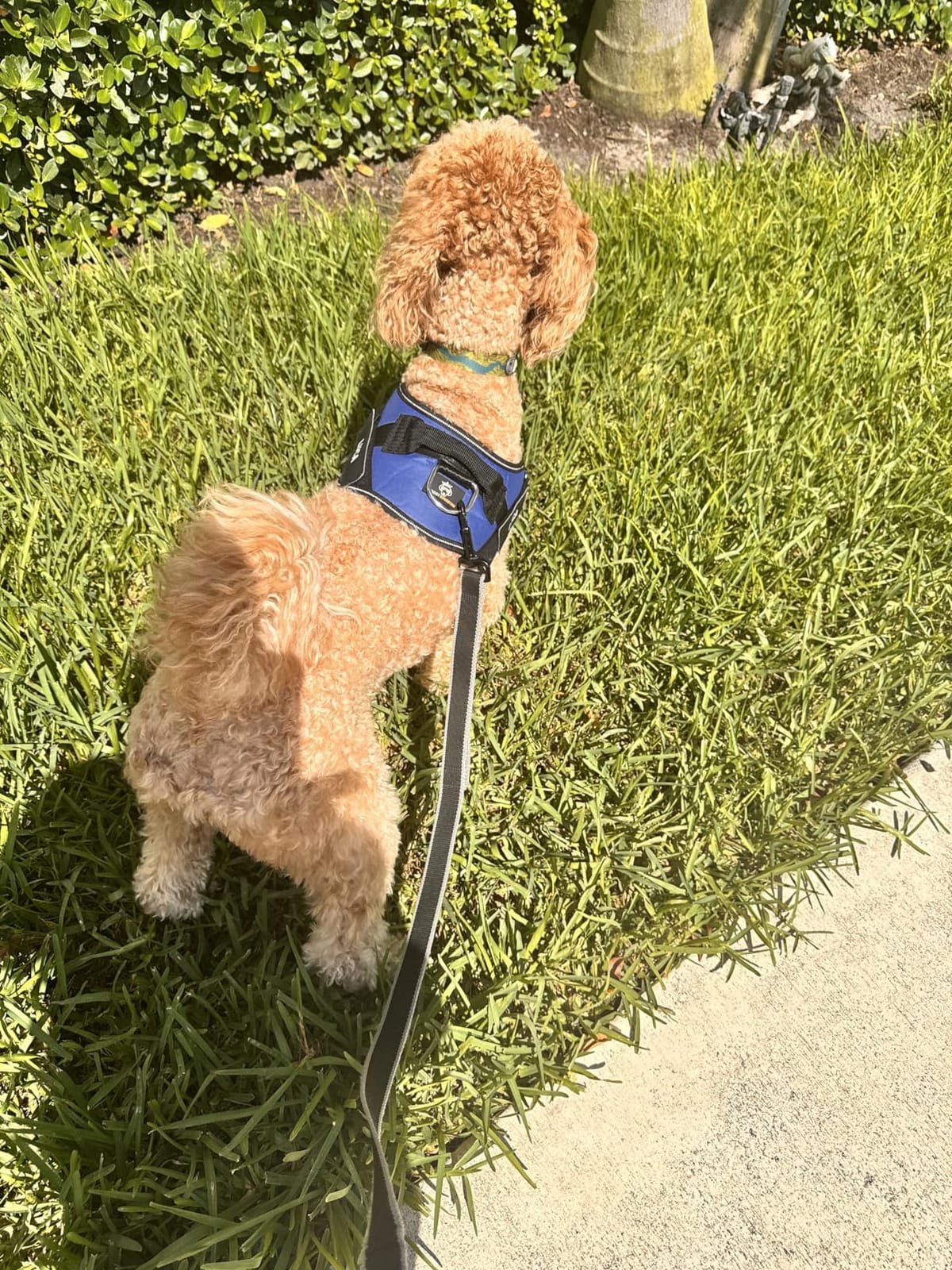
Give extra attention to friction zones. Behind the ears, under the legs, around the collar and harness area, the tail, the groin, and between the paw pads. These are the places where two surfaces rub together, where the coat is constantly disturbed, and where mats start first. A doodle that wears a harness needs the harness line brushed every single time. Five focused minutes in these zones prevents most of the emergency calls we see.
Use your fingers as a separator. When you find a knot, do not yank the brush through it. Hold the hair above the knot with one hand, brush down to the knot from the root side, and tease it apart with your fingers. Then comb through from the ends upward, working in short passes. Tension plus a slicker equals a tug that teaches your dog to hate brushing.
Keep sessions short and regular. Owners who describe success on these coats talk about three or four minutes a day, not a weekly hour. Short daily sessions beat long occasional ones, both because tangles never have time to set and because your dog stays cooperative over a short session.
Wet vs Dry Brushing: Which Is Better for a Doodle?
Both work, and the answer depends on what you are trying to do. Dry brushing is for maintenance, loose undercoat, and everyday tidying. Wet brushing is for a coat that is damp, muddy, tangled after a swim, or about to be dried.
Brush a wet doodle rather than letting it air dry tangled. Water loosens a great deal of surface tangling, and a coat that dries tangled has set that tangle permanently. A slicker rated for wet use, with long pins and a grip handle, will get through a soaked coat far better than a stiff dry-use brush. Work in sections, rinse as you go, and dry fully before detangling the ends.
Dry brushing is where you spend most of your time. A dry pass on a curly doodle pulls out the loose undercoat and keeps the coat open, and it is the most efficient time to work because the coat separates more easily when it is not weighed down.
One caution: brush damp, not soaking. A dripping wet coat over-extends a slicker and puts the whole tool under more stress than a damp coat does, and your hand slips on a soaked grip. Towel the coat down first, then brush.
What to Do If Your Doodle Hates Brushing
This is the most common problem doodle owners have, and it is not a coat problem. It is a process problem, and it responds to a desensitisation routine rather than a different brush alone. Start small and short, and be consistent.
Start with the brush in sight, not on the dog. Put the brush on the floor, let your dog investigate it, and reward curiosity. Some days that is the whole session. The goal is that the brush is a normal object in the house, not the thing that precedes bad things.
Brush one small area for five seconds. The shoulder is the usual starting point because most dogs are comfortable being touched there. Brush, then immediately deliver a treat, then stop. Do not let the session run past the point where your dog starts shifting weight or looking away. Those are your cues to end early, not to push through.
Add a few seconds per session. Over a week or two, build from five seconds to fifteen, then to a full minute on one zone. A short successful session followed by a treat teaches your dog that brushing ends well. Long sessions where the dog is trying to escape teach the opposite.
Use a friend brush first. Before the slicker, run your fingers or a soft-bristle brush over the same area. This is an association move, and it works well. It is also the reason to pick a gentler pin style for an anxious dog, since angled or ball-tipped pins reduce the sensation that starts the whole problem.
Choose the position and the tool deliberately. Many dogs object to the brush, not the contact, and a dog standing over a slippery floor while someone works above it is already losing. Sit on the floor, brush at the dog’s level, and consider brushing the dog while they are settled and sleepy after exercise. For a dog with a real fear, talk to a groomer about a conditioning plan, because this is fixable with time rather than a different product.
Brushes and tolerance are connected, and this is why the angled-pin and ball-tipped options on this list matter. But technique and timing do more work than pin design here.
When a Slicker Brush Is the Wrong Tool
A slicker is a wrong tool in a few clear situations, and knowing them saves your dog’s coat and your time.
On a mat that is already tight to the skin, stop. Pulling at a tight mat hurts your dog and rips hair out with it, and it teaches the association that brushing is something that happens to you. A groomer can shave a mat out in minutes; a home attempt can take an hour and leave a bald patch.
On very tight curl coats, aggressive slicker use can over-grab, pulling the curl straight and leaving the coat looking harsh and frizzy. If you notice that, reduce pressure, use shorter strokes, and follow with a steel comb to restore the wave. On the tightest poodle-type curls, a pin brush as a finishing tool spreads the coat back out more gently.
On a puppy, a slicker with long stiff pins is unnecessary and can scratch delicate skin. Use a softer pin style until the coat fills in.
And in the middle of a heavy shed on a double-coated doodle, a slicker on its own will not clear the undercoat. An undercoat rake used with a stretching grip is the right tool for that specific job, used carefully and not daily.
Companion Tools and Brushing Frequency
Your slicker does about half the job. A steel comb is the other half, and owners who use both report dramatically fewer snags than owners who brush alone. A steel greyhound comb has fine teeth that penetrate a curly coat without dragging the surface, which is what makes it the standard partner tool for doodle work. For finishing and smoothing the coat, a pin brush is a better fit than a slicker, and for detangling spray, a light mist before a dry pass makes a coated hair coat far more willing to separate into sections.
Add a dematting comb to the drawer for emergencies rather than for routine work, and clean out your slicker weekly with a comb so the pin base does not clog and the pins keep working. Wiping the pad and checking the pins for bends takes two minutes and extends the life of the brush.
On frequency, a curly or wavy doodle coat wants daily brushing. Even short sessions keep the undercoat moving, and that is the whole battle. A straight or double-coated doodle can manage on two to four sessions a week, with more during a shed. And any coat type benefits from a quick comb-through after a walk or a swim, which is when tangles are still easy to pick out.
Adjust for the season rather than the calendar. A double-coated dog in shed season needs more passes, and a coat drying out after winter needs a longer line-brushing session to get back to the skin. If you want a comparison of how different brush constructions feel in the hand, our blowout brush guide covers that in a different context.
Frequently Asked Questions
What are the best brushes for Goldendoodles?
A slicker brush with long stainless steel pins is the right primary tool for a Goldendoodle. Our top pick overall is the Chris Christensen Big G, whose dense pins and flexible cushion reach the skin without pulling the curl. Follow every slicker pass with a steel comb, and brush daily in short sessions to keep the undercoat moving.
What slicker brush do groomers use?
Most groomers use a long-pin slicker with a flexible cushioned pad and a non-slip handle, and they choose pin length to match coat depth. For dense doodle coats that means pins close to an inch long, densely spaced, angled or tipped so they do not scratch. The Chris Christensen Big G and the Paw Brothers Extra Long are the two we see most often on professional tables.
What type of dog brush is best for a labradoodle?
For a Labradoodle, a long-pin slicker brush with a wide head and a grippy handle is the best fit, because the coat is often heavier and double-coated. A wet-rated slicker is a bonus if your dog swims or gets muddy. The Paw Brothers Extra Long and the Bixy Pixy ball-tipped brush are both strong choices for this coat type.
What is the best slicker brush for goldendoodles?
The Chris Christensen Big G is our best slicker brush for Goldendoodles. It carries 30 percent more pins than a standard slicker, the pad flexes so the pins reach the skin rather than skimming the surface, and the curved back with a non-slip grip keeps a full body session comfortable for your hand and acceptable to your dog.
Is it better to brush a goldendoodle wet or dry?
Use both. Dry brushing is your daily maintenance pass for removing loose undercoat. Wet brushing is for a damp, muddy, or post-swim coat, because water loosens surface tangling and a coat that dries tangled keeps that tangle. Brush damp rather than soaking, work in sections, and dry the coat fully before you detangle the ends.
What is better for my dog, a slicker brush or a rake?
They do different jobs. A slicker is your everyday tool for detangling, deshedding, and fluffing, and you should use it daily. A rake lifts a heavy shedding undercoat with a stretching grip and belongs in shedding season or a rescue situation, not in a daily routine, because it can pull live hair along with the dead hair.
Will a slicker brush make my doodle coat frizzy?
It can, if you press too hard on a tight curl coat. Over-grabbing pulls the curl straight and leaves the coat looking harsh. Use angled or capped pins, keep strokes short, reduce pressure, and follow with a steel comb to restore the wave. On very tight poodle-type curls, finish with a pin brush to spread the coat back out.
How do you brush a doodle that hates brushing?
Work in very short increments. Start with the brush on the floor, then brush one small area like the shoulder for five seconds, treat, and stop. Add a few seconds each session, use your fingers first so the brush is associated with something pleasant, and always end while your dog still wants more. A gentler brush with angled or ball-tipped pins also helps a lot.
What size slicker brush do I need?
Match the head to the dog. A mini or toy doodle needs a compact head you can place precisely on the back, legs, and behind the ears. A standard or large doodle wants a wide head so you cover the body in fewer strokes. Pin length matters more than head size: you want pins close to an inch long on a full doodle coat.
How often should you brush a doodle?
A curly or wavy doodle coat wants daily brushing, even if it is only three or four minutes a day. Straight and double-coated doodles can manage on two to four sessions a week, more during a shed. Add a quick comb-through after a walk or a swim, when tangles are still easy to pick apart.
Conclusion: The Default Pick for Most Doodles
For most doodle owners the answer is simple. Buy the Chris Christensen Big G if your dog is a standard or large doodle and mats regularly, and pair it with a steel comb. It has the pin density, the pad flex, and the coverage that keep a full body session short, which is why it is our default pick in our roundup of the best slicker brushes for doodles in 2026.
Buy the We Love Doodles angled-pin brush instead if your dog is sensitive or already afraid of brushing, and buy the Paw Brothers if you want most of the performance without the premium tier. For a mini doodle, go smaller and pick the POODLIE or a puppy-appropriate soft-pin brush.
Whichever one you choose, the technique matters more than the tool. Brush to the skin in small sections, work bottom to top, comb after every pass, and give the friction zones three extra minutes. A dog brushed that way for four minutes a day never needs a rescue groom, and that is the outcome every brush on this list is trying to serve.