
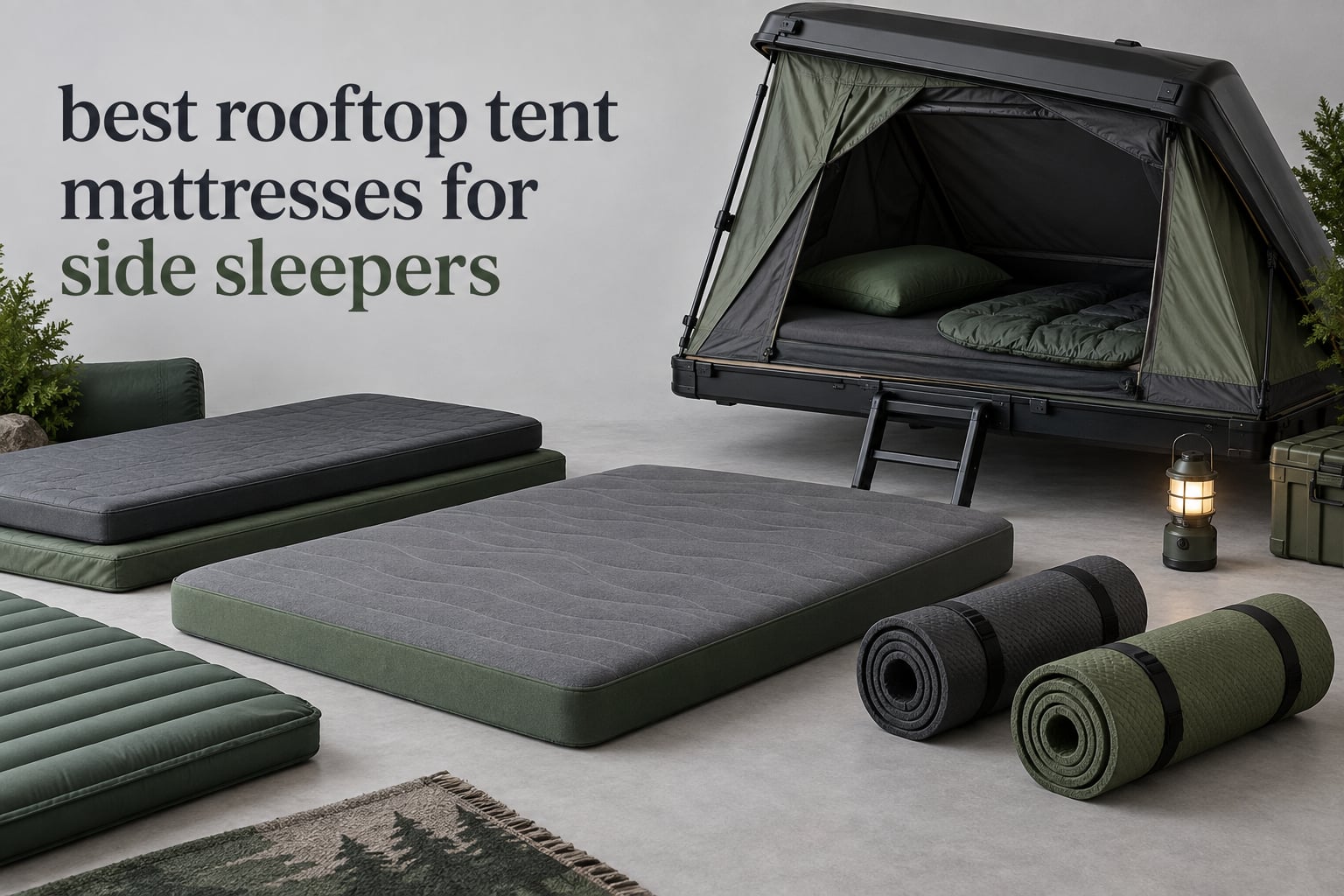
If you sleep on your side, the first thing a rooftop tent tells you about itself is how it handles your shoulder and the side of your hip. Those two contact points carry far more load than the rest of your body, and a thin factory pad puts both of them straight onto tent floor. Most owners notice it within twenty minutes of lying down, and most of them end up rearranging the same two pads in the dark. Replacing that pad is the single highest-impact change you can make to a rooftop tent setup, and this roundup covers 2026 options that actually fix it.
We compared 12 mattresses on the two numbers that decide side-sleeper comfort: how thick the pad is and how dense the foam inside it is. We also filtered every pick against the two questions that stop most orders before they happen: will a thick enough mattress still let a hardshell tent close, and does the pad fit the usable floor of your particular tent.
Every mattress here is a real product with published specifications, verified ratings and thousands of owner reviews behind it. Where a spec is a marketing number rather than a measured one, we say so. If your hip pain is coming from a bed at home rather than a tent, start with our guide to the best mattresses for side sleepers with shoulder pain before you spend roof payload on a camping pad.
Table of Contents
What Type of Mattress Is Best for a Rooftop Tent?
For a rooftop tent, a self-inflating hybrid air and foam mattress or a roll-up foam mattress, at least 3 inches thick and built from 26D or denser foam, is the right answer for side sleepers. Foam spreads the load across your shoulder and hip instead of letting either one reach the floor, and the air component lets you dial firmness down when you want it softer. R-value matters for cold ground, not for comfort.
There are five mattress families you will see in this category, and they fail or succeed in different ways.
Roll-up foam. Vacuum-packed memory foam over a support base. No pump, no air to lose, no bottoming out, but a fat roll that eats cargo space once the tent is on the roof.
Self-inflating. Open-cell foam inside a sealed air chamber. It inflates itself when you open the valve, you add air for firmness, and the foam does the work of holding you up. Best balance of comfort and packability for most buyers.
Air mattress. Air only. Light and cheap and cold, and it needs a pump every morning. We did not include a pure air mattress here because it is the wrong tool for side sleeping.
Hybrid air and foam. A foam core with an adjustable air layer above it. This is the most forgiving category for side sleepers because you can soften the top surface without giving up the foam underneath.
Topper or overlay. A 3 to 4 inch folding comfort layer you lay over a thinner pad. It solves comfort fast and it solves fit badly, because a folded home topper rarely rolls into the geometry your tent closes into.
Top 3 Rooftop Tent Mattresses for Side Sleepers (October 2026)
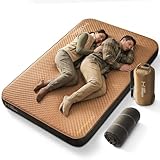
Lost Horizon Option3 4.5 inch
- 4.5 in thickness
- Adjustable air and foam core
- R-13 insulation
- 440 lb capacity

CYMULA Memory Foam 4 inch
- 4 in dual layer foam
- Non-slip waterproof cover
- Seven floor sizes
- OEKO-TEX tested

Gaialoop 3 inch Foam Mattress
- 3 in dual layer foam
- Washable plush cover
- No pump needed
- CertiPUR-US foam
1. Lost Horizon Option3 4.5 inch. The deepest cushion in this group and the one that does the most for a shoulder that hangs past a narrow pad. Four and a half inches of foam with an air layer means you can soften it when you want and stiffen it when a partner rolls onto your side.
2. CYMULA Memory Foam Camping Mattress. The best-supported foam pick here and the one with the most owner reviews of any pad we looked at. Four inches of dual-layer foam, a grippy waterproof cover and seven floor sizes covering most rooftop tent dimensions.
3. Gaialoop 3 Inch Memory Foam Mattress. The cheapest way to solve a thin factory mattress without buying a pump or a self-inflating pad. Three inches is the practical floor for side sleeping, and this one hits it with a removable washable cover.
Why the Factory Rooftop Tent Mattress Fails Side Sleepers
The pad that came with your tent was designed around folding flat inside a closed shell. It was not designed around a human body, and side sleepers feel the difference faster than anyone.
Thickness. Factory rooftop tent mattresses typically run between 1.5 and 3 inches. Below about 3 inches there is not enough material between your shoulder and the floor to spread the load.
Density. This is the number owners get wrong. A 3 inch pad in 19D foam feels like plywood, because soft foam compresses away under a concentrated hip. The same 3 inches in 26D foam or denser pushes back. Thickness and density are two separate axes, and you need both.
Sizing. Factory pads are often narrower than the space you have, and a narrow pad puts your shoulder on the edge where the foam has nothing more to give.
The cover. Most factory covers are not removable and not washable, which matters more than it sounds once condensation starts forming under you in an enclosed tent.
Condensation. Foam does not breathe like a fabric bed pad. Air that gets trapped underneath stays there, and on a cold night it can freeze against the tent floor before you wake up. Venting and a dry base layer still matter.
Rooftop tent owners on r/rooftoptents describe the same pattern repeatedly: the iKamper Comfort air and foam mattress, built much like an Exped MegaMat, is described as a must for any side sleeper, while a NEMO Roamer is the common drop-in replacement that fits the factory floor.
All 12 Rooftop Tent Mattresses Side by Side in 2026
Every mattress below is rated by the two numbers that matter most for side sleeping, plus the specs that decide whether it works in your tent.
| Product | Specifications | Action |
|---|---|---|
| Lost Horizon Option3 Self-Inflating 4.5 inch |
|
Check Latest Price |
 Gaialoop 4 Inch Dual Layer Memory Foam Gaialoop 4 Inch Dual Layer Memory Foam |
|
Check Latest Price |
 Elegear Air and Foam 4 inch with Pump Elegear Air and Foam 4 inch with Pump |
|
Check Latest Price |
| Gaialoop 3 Inch Memory Foam Mattress |
|
Check Latest Price |
 Elegear 3.15 inch Self-Inflating Pad Elegear 3.15 inch Self-Inflating Pad |
|
Check Latest Price |
 Hikenture 4 Inch Self-Inflating Pad Hikenture 4 Inch Self-Inflating Pad |
|
Check Latest Price |
 Acacia 4.3 Inch Y-Shaped Self-Inflating Pad Acacia 4.3 Inch Y-Shaped Self-Inflating Pad |
|
Check Latest Price |
 EUHAMS Double Self-Inflating Pad EUHAMS Double Self-Inflating Pad |
|
Check Latest Price |
 Kingfun 3 Inch CertiPUR-US Foam Pad Kingfun 3 Inch CertiPUR-US Foam Pad |
|
Check Latest Price |
 Homemate Memory Foam Camping Mattress Homemate Memory Foam Camping Mattress |
|
Check Latest Price |
| CYMULA Memory Foam Camping Mattress |
|
Check Latest Price |
 Novilla 4 Inch Folding Mattress Topper Novilla 4 Inch Folding Mattress Topper |
|
Check Latest Price |
1. Lost Horizon Option3 Self-Inflating Mattress 4.5 inch – Best Overall for Side Sleepers
Lost Horizon Option3 Self-Inflating Foam Camping Mattress, Full, 4.5″
4.5 in thick
Full 80 x 52 in
440 lb capacity
R-13
Air plus foam core
Pros
- Deepest cushion here keeps hip and shoulder off the floor
- Firmness adjustable by adding or bleeding air
- Silent and stable with no squeak or air shift
- R-13 held warm on near-freezing nights
- Holds inflation over several nights
Cons
- Bulky and heavy to carry
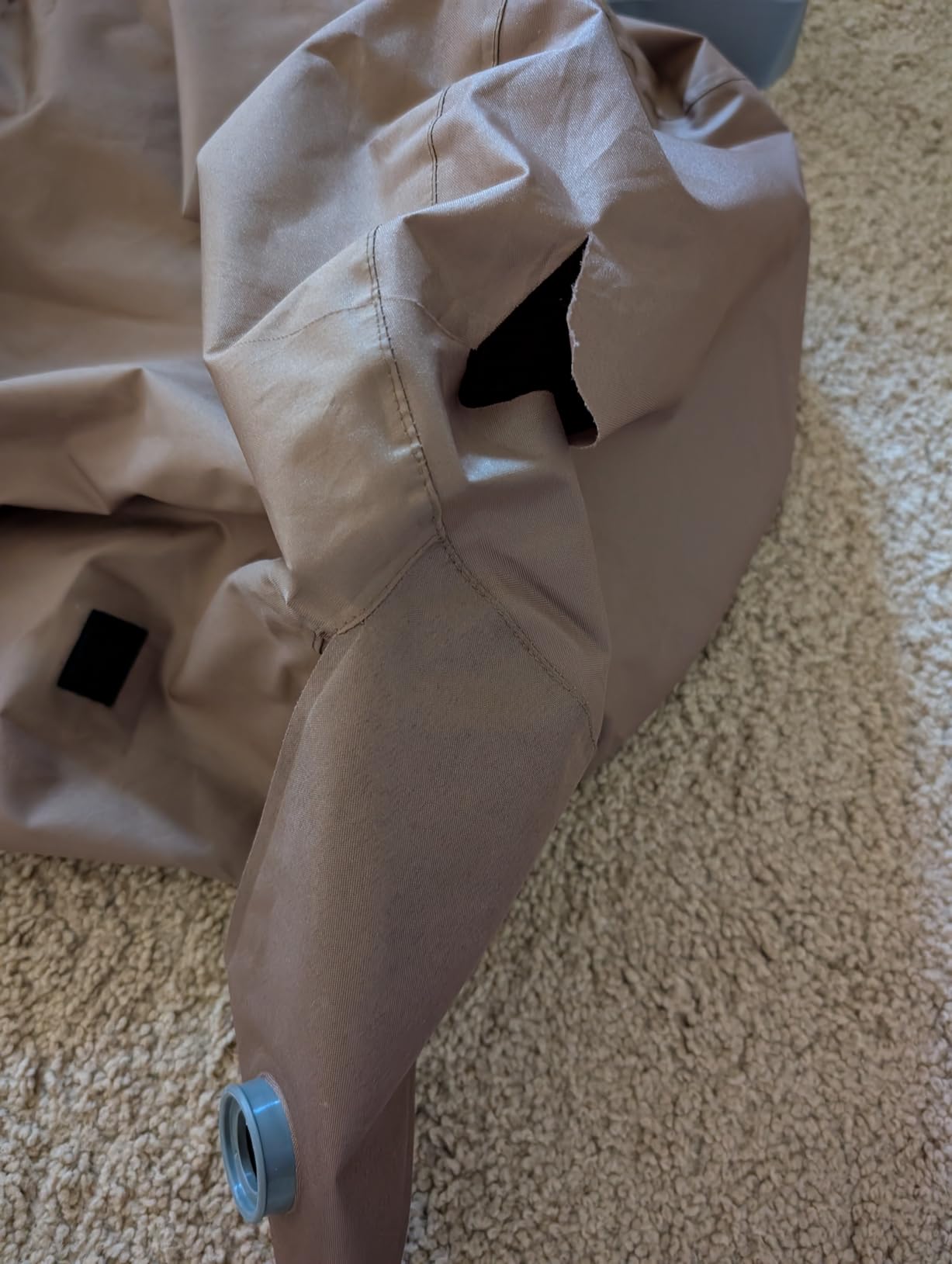
- Deflating and rerolling takes real effort
- Valve can bleed if the ring sits off-centre
Four and a half inches is the reason this pad exists in a side sleeper roundup. Your shoulder and your hip are the two points that carry the most weight when you roll onto your side, and this is one of the few pads in the group deep enough to cradle both without your shoulder sliding off the edge.
What makes it more than a thick block of foam is the air and foam hybrid construction. You open the twist valve, the open-cell core inflates itself, and then you decide how much extra air goes in on top. Firm is better for a partner beside you. Soft is better when you are alone and your hips run warm.
The 80 by 52 inch full footprint is wide enough that a shoulder stays supported rather than hanging past the edge, which is a common complaint on narrower pads. The listed capacity is 440 pounds, so the rating is not the limiting factor here.
Owner reviews consistently single out two things. First, quietness: the pad does not squeak or shift air when you move, so nobody wakes up. Second, R-13 insulation, which reviewers say kept them warm on nights near freezing. The pad holds its inflation across multiple nights without a top-up.
How the Lost Horizon Option3 handles hardshell closure and weight
Four and a half inches is a tall order for a hardshell rooftop tent that has to close around the mattress. Before you order, measure the gap between your mattress platform and the shell when it is fully closed with the factory pad still in place. If that gap is under about five inches, this pad will fight the zipper, and you should look at a 3 to 3.15 inch self-inflating model instead.
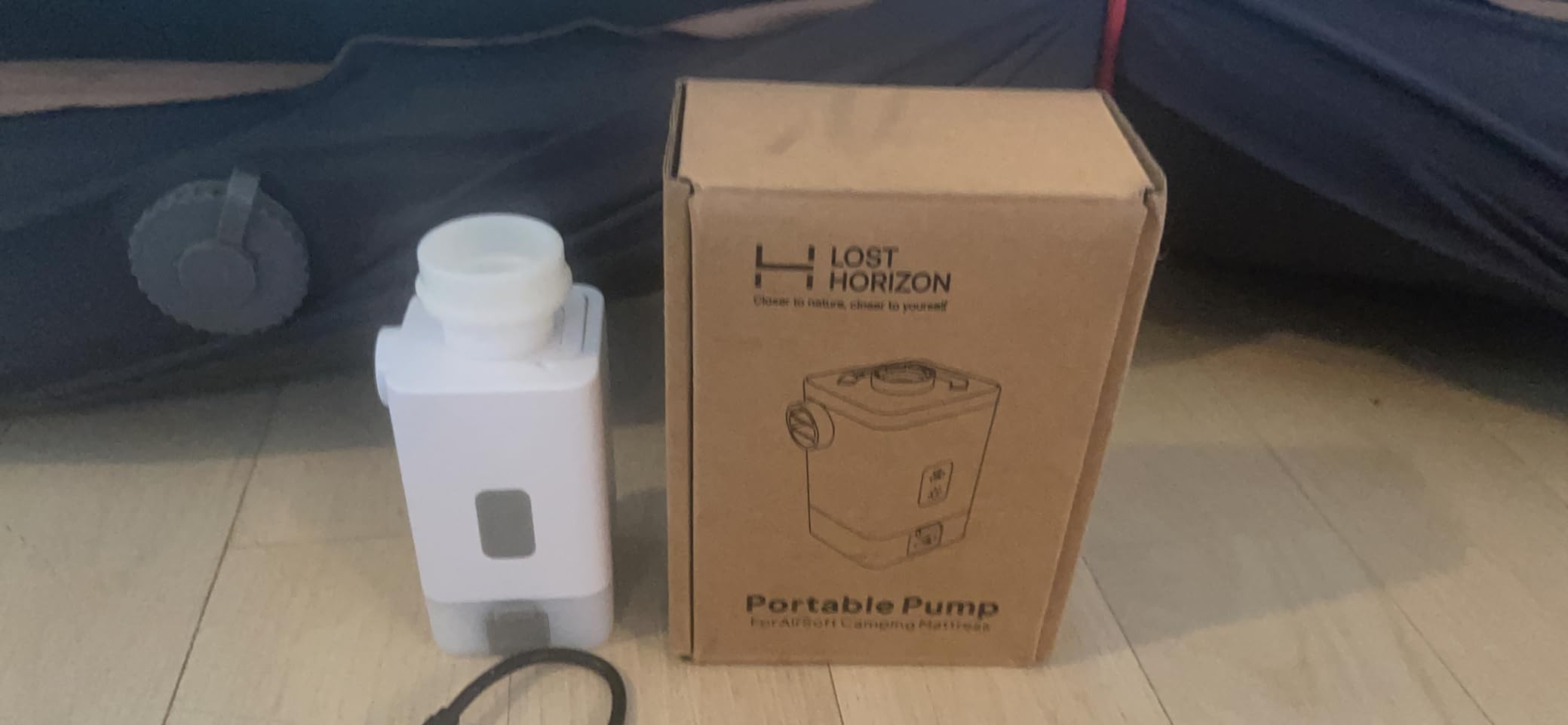
Given as 7.3 kg, this is one of the heavier carry figures of the twelve here. That is fine if the mattress stays installed on the roof, but it is a serious cargo-space decision if you have a softshell tent and have to lift it over the tent edge every camp. Electric pumps for deflation are sold separately, which is worth budgeting for.
Who should skip the Lost Horizon Option3
Skip it if cargo space is tight or your tent is a softshell you have to pack every morning. Also skip it if you are a light sleeper who likes a very soft surface, because the air core is closer to a firm mattress than a plush one and you cannot soften it below a point.
It is also a heavy object to carry into a backcountry site on foot. This is a vehicle-and-roof pad, and it works best when the trip involves driving to the trailhead rather than hiking in.
2. Gaialoop 4 Inch Dual Layer Memory Foam Mattress – Best Deep Foam Cushion
Memory Foam Camping Mattress, Extra Thick 4 Inch Pad, Full, Avocado Green
4 in thick
Full 75 x 54 in
Two foam layers
OEKO-TEX
Washable cover
Pros
- 30D support foam under 40D memory foam is a real density stack
- 54 inch width matches most tent floors
- Waterproof inner face on the cover
- Non-slip base grips uneven ground
- Two foam pillows included
Cons
- Very bulky rolled
- needs two people to roll at full size
- Carry bag straps and zipper drew complaints
- 48 to 72 hours to expand after vacuum packing
This is the most openly engineered pad in the group. It states its foam stack rather than calling itself high density: 30D support foam underneath 40D memory foam on top, OEKO-TEX certified, in a 4 inch build across 75 by 54 inches.
For a side sleeper, that construction is the whole argument. The 40D comfort layer moulds to your shoulder without the deep sinking that softer foam gives you, and the 30D base underneath is what stops your hip from hitting the floor. Two layers of real foam at real densities is what separates this from a single slab that feels great for a month and then stops working.
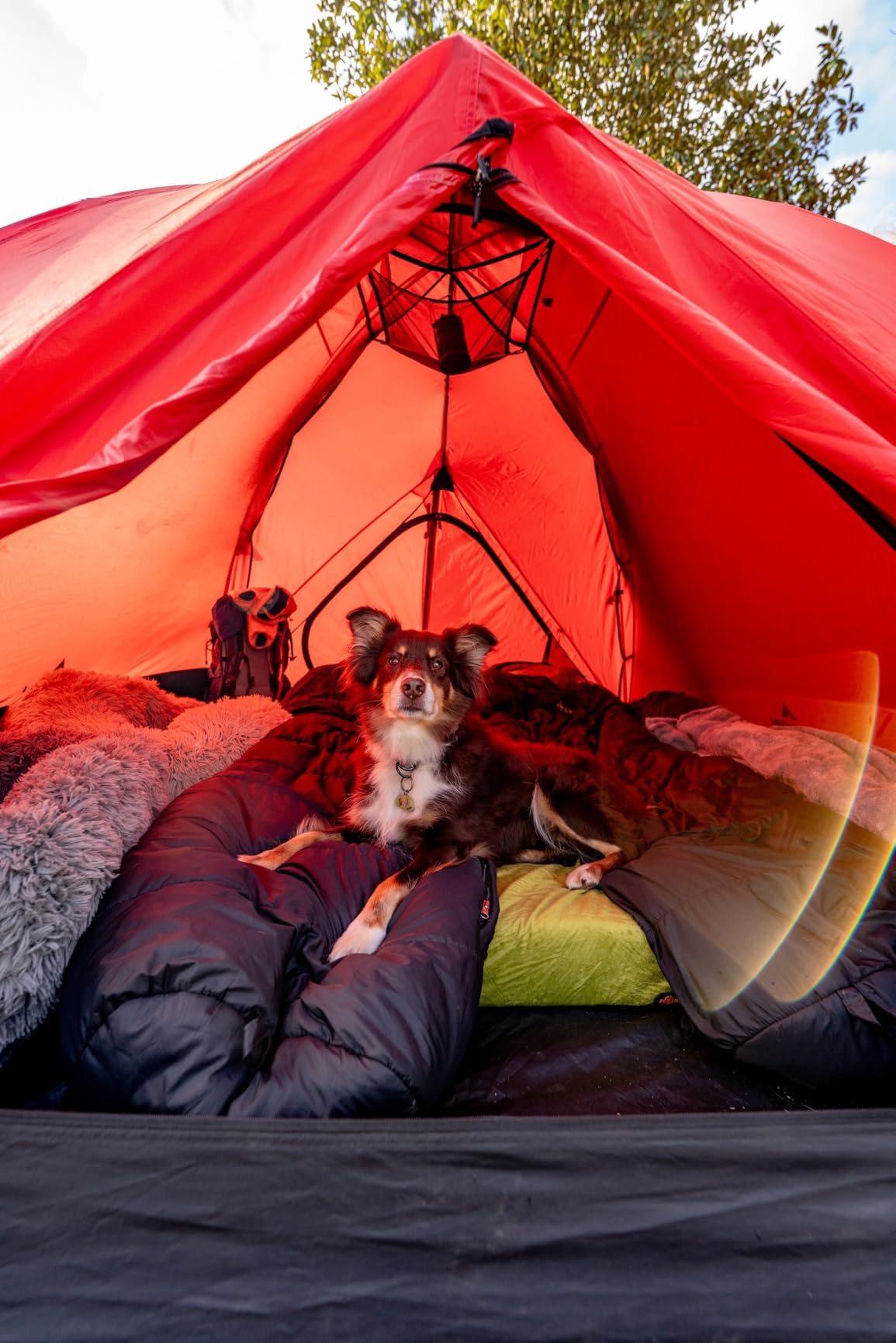
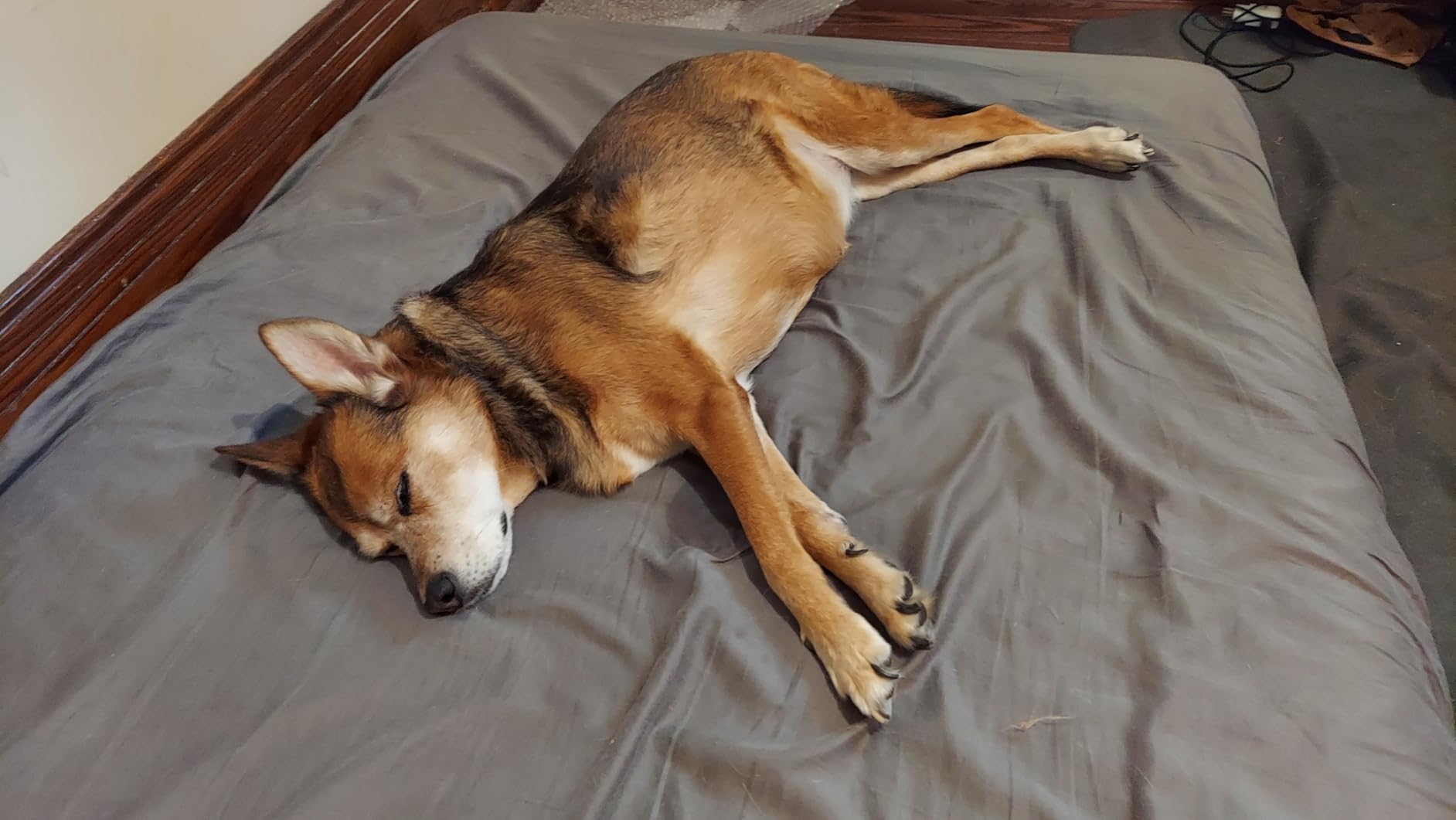
Owners report that the pad holds its shape and firmness after years of nightly use, and several use it as a spare bed at home as well as in the tent. The removable plush cover is washable and has a waterproof coating on the inner faces, which matters if you are camping on damp ground.
The 54 inch width is the practical number here. It matches the interior width of most hardshell rooftop tent floors closely enough that you are not sleeping on bare fabric at either edge.
Check your roof payload and packed bulk before ordering
Listed weight is 24 pounds, the heaviest of the twelve here. That is not a problem if the pad lives on the roof permanently, but on a truck with a modest payload rating it is worth checking before you order. Add that to your tent weight, your gear and your recovery gear, and make sure the total is still inside what your roof rack and your vehicle are rated for.
The bulk is the bigger practical issue. At full size this needs two people to roll and stuff, and owners specifically call out the carry bag straps and zipper as flimsy. If you have to move it from vehicle to tent every morning, budget time or plan on replacing the bag.
Who should skip the Gaialoop 4 Inch Dual Layer
Skip it if you camp somewhere you have to carry your sleeping gear a real distance, or if your roof payload is already tight. It is also wrong for anyone who wants to close a hardshell tent without removing the mattress, because four inches of unadjustable foam fills a lot of vertical space and cannot be compressed.
Skip it if you need to use the pad the night it arrives. Vacuum-packed foam needs 48 to 72 hours to reach full thickness, and the included pillows have drawn complaints about a strong plastic smell in an enclosed tent.
3. Elegear Air and Foam Self-Inflating Pad 4 inch – Best With a Built-In Pillow and Pump
Elegear Air & Foam Self Inflating Sleeping Pad with Electric Pump 4″ Full
4 in thick
Full 79 x 52 in
26D hollowed foam
Built-in electric pump
R-9.5
Pros
- Hollowed 26D memory foam adapts to side-sleeping curves
- Electric pump gives one-touch inflation and vacuum deflation
- Quiet surface that holds shape overnight
- Built-in pillow handles head and neck alignment
- Washable 50D knit over a waterproof TPU layer
Cons
- Pump battery life drew repeated complaints
- Pump controls are not obvious
- Measured size can undershoot the stated 4 inches
- Folded size bulkier than a plain air mattress
Four inches of hollowed 26D memory foam is a properly dense comfort layer, and hollowing the foam is how this brand gets that density into a packable pad. The built-in electric pump is the feature that changes daily life: it inflates the pad and vacuums it back down for storage without you wrestling with a valve.
For side sleepers the built-in pillow matters more than it sounds. A separate camp pillow lifts your head away from the surface and pushes your shoulder angle forward, which undoes some of what a thick mattress is doing for you. Owners rate the pillow as a genuine improvement to neck alignment.
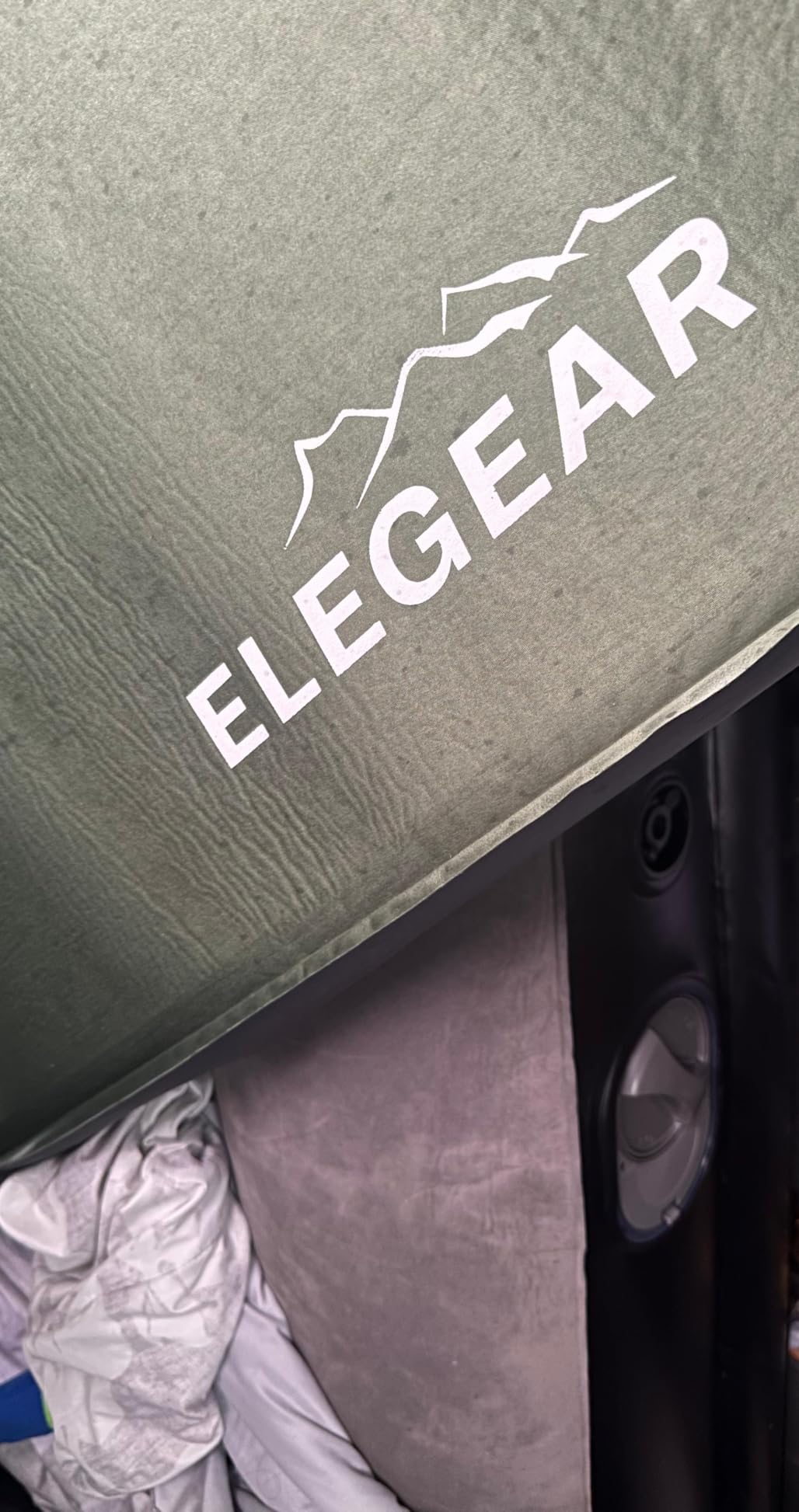
The surface is a quiet 50D stretch knit over a leak-proof TPU layer, and owners consistently report that rolling over does not shift the surface or make noise. R-9.5 insulation means this pad is usable well beyond summer without adding a separate ground layer.
Capacity is listed at 1600 pounds, though that figure is a static test result rather than a comfort rating. The number that matters for side sleepers is the foam density, and 26D is the right tier.
Judge the pump before you rely on it
The electric pump is the most praised and most criticised part of this pad in the same set of reviews. Most owners love it. The recurring complaint is battery endurance, with some units failing partway through a single inflation, and reviewers also found the switch orientation non-obvious from the manual. Treat the pump as a convenience and bring a small hand pump as backup.
There is also a measurement issue to know about. Buyers report that actual thickness and width can measure slightly under the stated 4 inches and 52 inches. If you are close to your tent clearance limit, this matters more than the specification does.
Who should skip the Elegear 4 Inch Air and Foam Pad
Skip it if you already own a decent pump and hate electronics in the field. The pump is a single point of failure, and if the battery is dead on a cold morning you are back to turning a valve by hand.
Skip it if you are buying for the lightest possible setup. Even with vacuum compression, the folded size is bulkier than a plain air mattress, and the 1600 pound capacity figure should not be read as a comfort rating for a heavy sleeper. Heavier side sleepers get a better result from an all-foam pad.
4. Gaialoop 3 Inch Memory Foam Camping Mattress – Budget Pick Roll-Up Foam
Memory Foam Camping Mattress, 3 Inch Sleeping Pad, Full, Avocado Green
3 in thick
Twin 75 x 38 in
12.8 lb
Dual layer foam
Washable cover
Pros
- Dual layer foam takes pressure off side-sleeping hips and shoulders
- Quiet and stable so movement does not wake a partner
- Removable washable plush cover with waterproof coating
- No pump
- roll it out and go
- CertiPUR-US and OEKO-TEX materials
Cons
- Very bulky rolled and awkward beyond a car camp
- Rolled end can take a day or two to flatten
- Twin width is narrow for side sleeping
This is the most direct fix for a side sleeper stuck with a thin factory mattress. Three inches of dual-layer foam, no pump, no air to lose in the middle of the night, and enough width options to cover most rooftop tent floors.
Three inches is the practical minimum for side sleeping, and this pad hits it with better materials than most of its competitors. The dual-layer construction uses a high-density support foam base under memory foam, which is the minimum stack that keeps your hip from reaching the ground.
Owners report sleeping better on this than on air mattresses, and several use it as a second bed at home, which tells you something about the durability. The removable plush cover is washable and waterproof-coated, and the whole thing is quiet when you move.
The listing we reviewed is the twin, at 75 by 38 inches and 12.8 pounds. That width works for a solo sleeper on a narrow floor. If you sleep on your side with wide shoulders or share the bed, the full and queen variants in this line are the ones to look at instead.
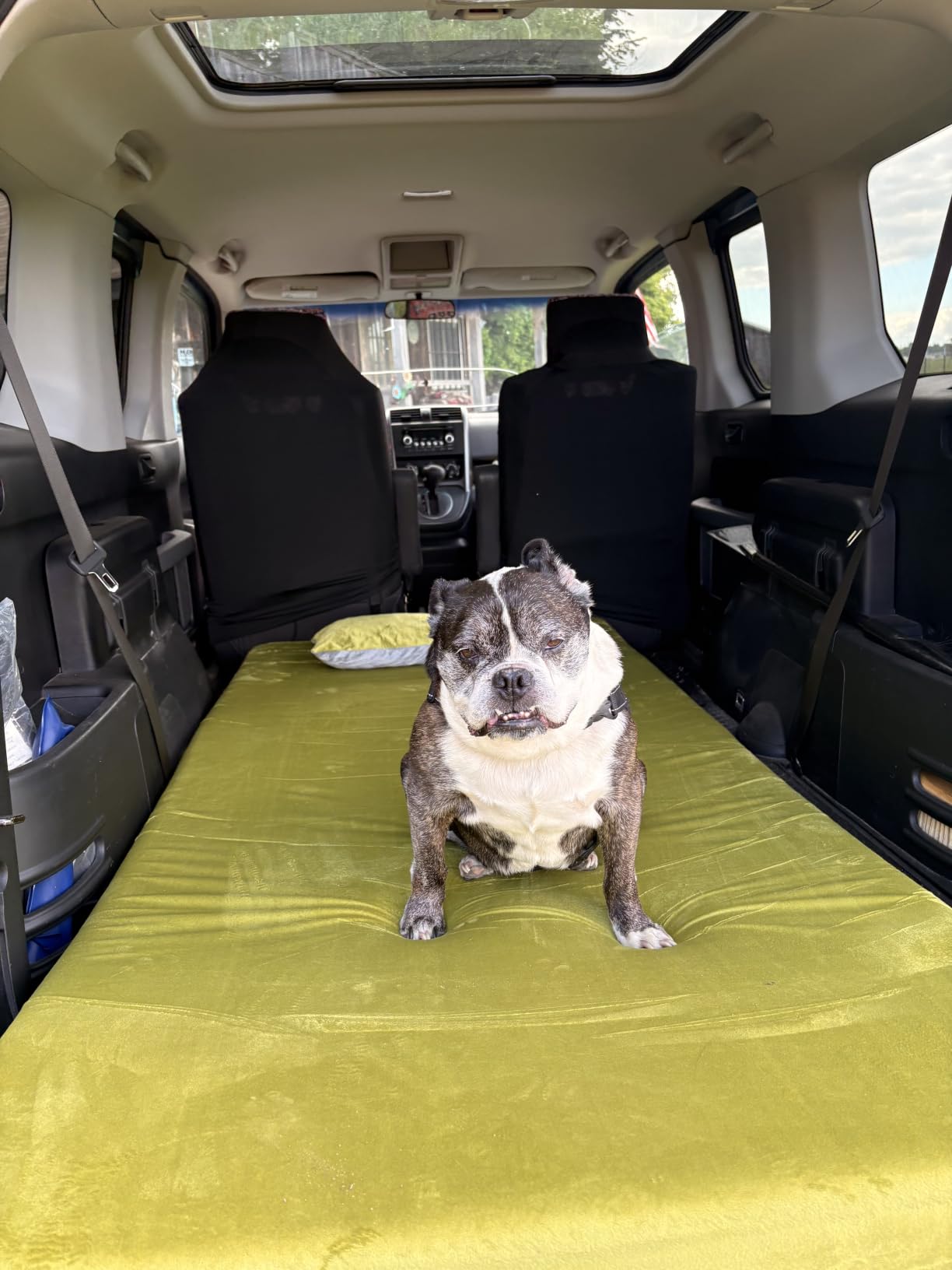
Foam thickness is not the whole answer
Three inches will fix a two-inch factory pad. It will not fix a bad foam problem on its own, because a 3 inch pad in soft foam still compresses under a hip. Check what density you are getting. Anything under about 20D and you should expect a mattress that feels fine for the first hour and then wakes you up at four in the morning.
There is a cheap upgrade path here. Adding a 3 inch memory foam topper over this pad takes you to six inches of total stack, which is more than most side sleepers need. The trade-off is closed-shell fit, since a folded topper rarely packs down small enough for a hardshell tent to close.
Who should skip the Gaialoop 3 Inch
Skip the twin size if you have broad shoulders or share the floor. At 38 inches wide, a side sleeper can end up with a shoulder hanging off the edge, which is the fastest way to lose the benefit of the foam underneath.
Skip it if your trips involve carrying gear any real distance or if you switch camps often. The rolled size is very large, and the rolled end can take a day or two to flatten out after being stored, so it is not convenient to unroll at a new campsite every morning.
5. Elegear Self-Inflating Pad 3.15 inch with Electric Pump – Best for Fast Setup
Elegear Self Inflating Sleeping Pad with Electric Pump 3.15″ Memory Foam
3.15 in thick
Full 77 x 51 in
26D memory foam
R-9.5
800 lb static test
Pros
- 26D high-resilience foam keeps hips off the floor
- Built-in pump inflates in about a minute and vacuums for storage
- Dual valves make repacking easier
- Quiet 50D stretch knit with no rustling
- R-9.5 keeps cold ground at a distance
Cons
- Bulky rolled size
- impractical for backpacking
- 20 to 30 minutes to self-inflate on first use
- Repacking takes two passes
- A minority reported seam failures
Three and a quarter inches is a slightly odd number, and it is the result of a product built around a specific goal: get a dense 26D memory foam into a full-width pad with a pump that does the work. Owners rate the foam warmth and support as excellent and say it beats cots they have owned.
26D is the specification that matters here, and the brand says plainly that it is twice the density of a typical camping pad. That is why 3.15 inches of this pad feels better than 4 inches of a soft roll-up foam, and it is the direct answer to the question of why a thicker pad can still hurt.
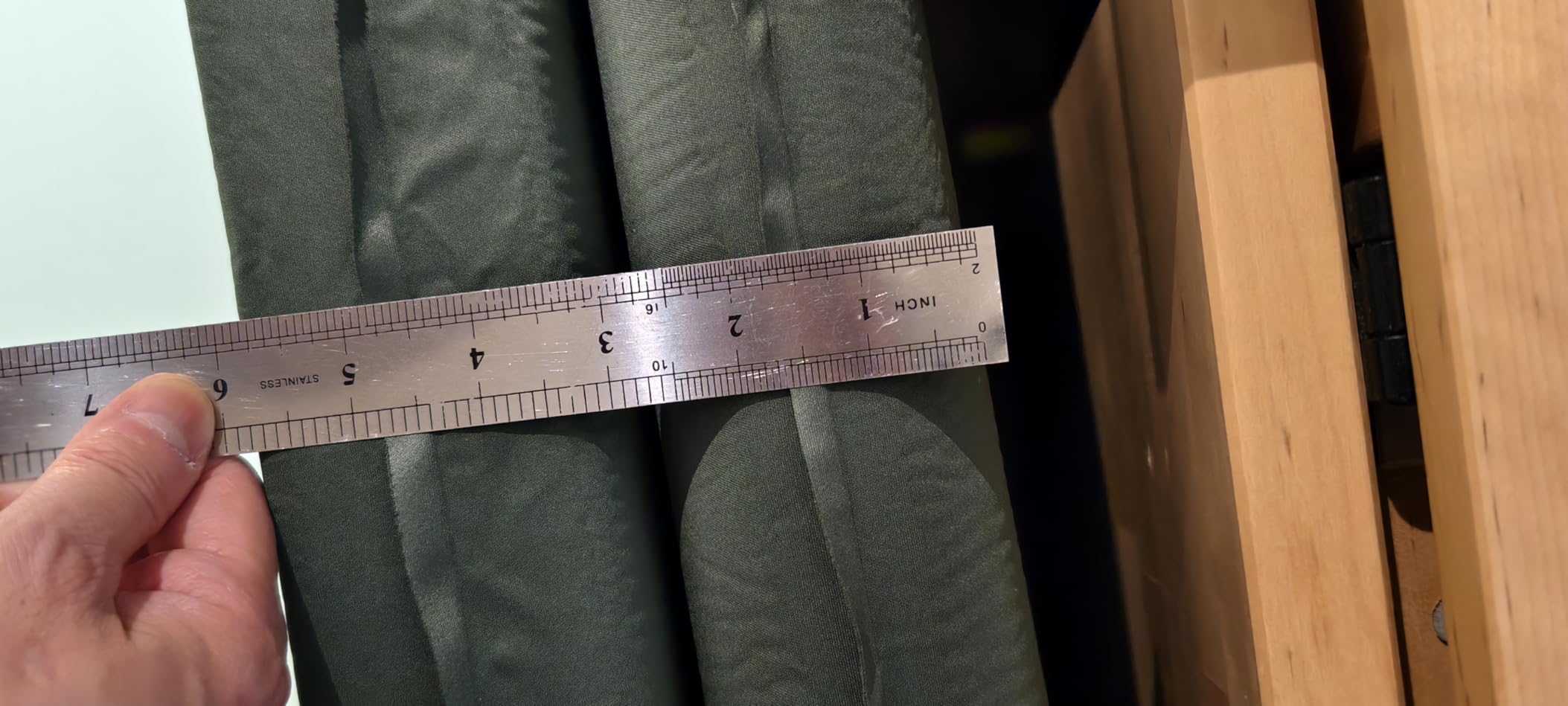
The built-in pump inflates in about a minute and vacuums the pad down for storage, which is a real time saving when your hardshell tent has to close every morning. Dual valves make putting it back in the bag less painful. The 50D stretch knit surface is quiet, with none of the rustling that wakes a partner.
R-9.5 is genuinely four-season, and owners report staying warm on cold nights. Static testing is listed at 800 pounds over 24 hours, so there is a published number rather than a vague capacity claim.
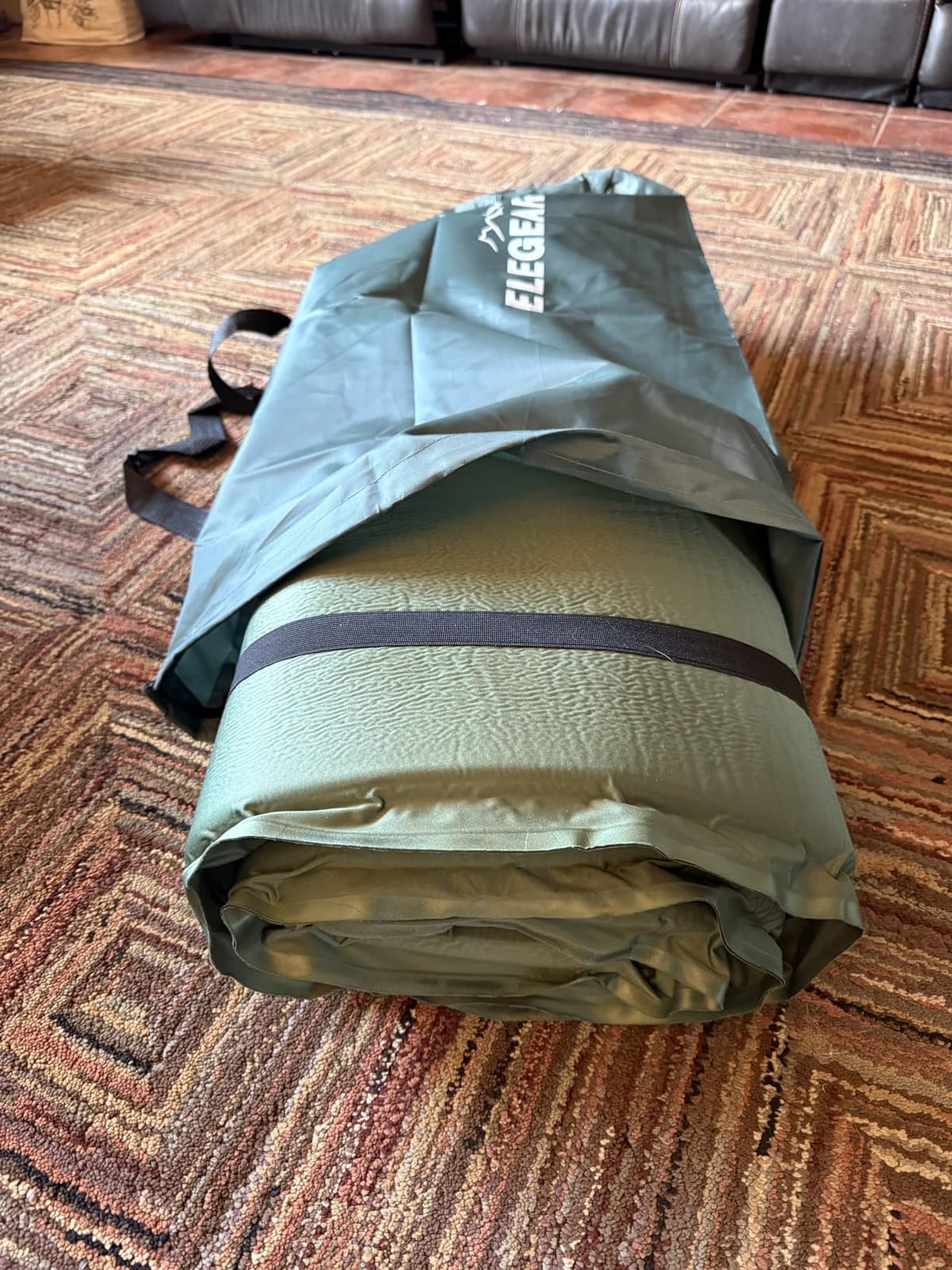
First inflation takes longer than you expect
The first self-inflation takes 20 to 30 minutes because the foam has to fully expand and the air has to distribute evenly through it. Later inflations are much faster. The practical consequence is that you should let this pad set up as soon as you arrive at camp, not as the last thing you do while building the bed.
Repacking is the other time cost. Rolling a full-width foam pad back down takes two passes for most owners, so build that into your morning routine if you are breaking camp early. The stated packed weight is 14.8 pounds after storage, so it is a roof pad rather than a carry pad.
Who should skip the Elegear 3.15 Inch
Skip it if you are a heavier side sleeper who needs maximum depth. At 3.15 inches this is a solid improvement over a factory pad, but the deepest options here give a heavier hip more material to work with. It is also worth noting that a minority of owners reported seam failures after light use.
Skip it if the bulky rolled size is a problem in your vehicle. This is the packability trade you accept to get the foam density and the electric pump, and on a small truck bed with a lot of other gear it adds up quickly.
6. Hikenture 4 Inch Self-Inflating Pad – Best Budget Hybrid With Y-Channel Foam
Hikenture 4″ Thick Self Inflating Sleeping Pad with Electric Pump, Double
4 in thick
Full 80 x 53 in
9.6 lb
R-9.5
Y-structure channels
Pros
- 4 inch foam filling resists bottoming out
- Built-in pump inflates in about 90 seconds
- Y-shaped internal channels cut bulk roughly in half
- Quiet stretch-knit surface
- R-9.5 with repair patch and carry bag
Cons
- Settled thickness can undershoot the 4 inch claim
- Air-assisted surface is less supportive than all-foam for heavier sleepers
- Compressor noise is noticeable
Four inches of foam across a full 80 by 53 inch floor at 9.6 pounds is a hard combination to argue with, and the Y-structure internal channels are the engineering trick that makes it possible. Cutting channels into the foam removes roughly half the volume while keeping the depth.
For side sleepers the appeal is straightforward: the foam filling cradles hips and shoulders and resists bottoming out, and the stretch-knit surface stays quiet when you roll over. Owners point to fast electric inflation in about 90 seconds and a surface that does not shift overnight.
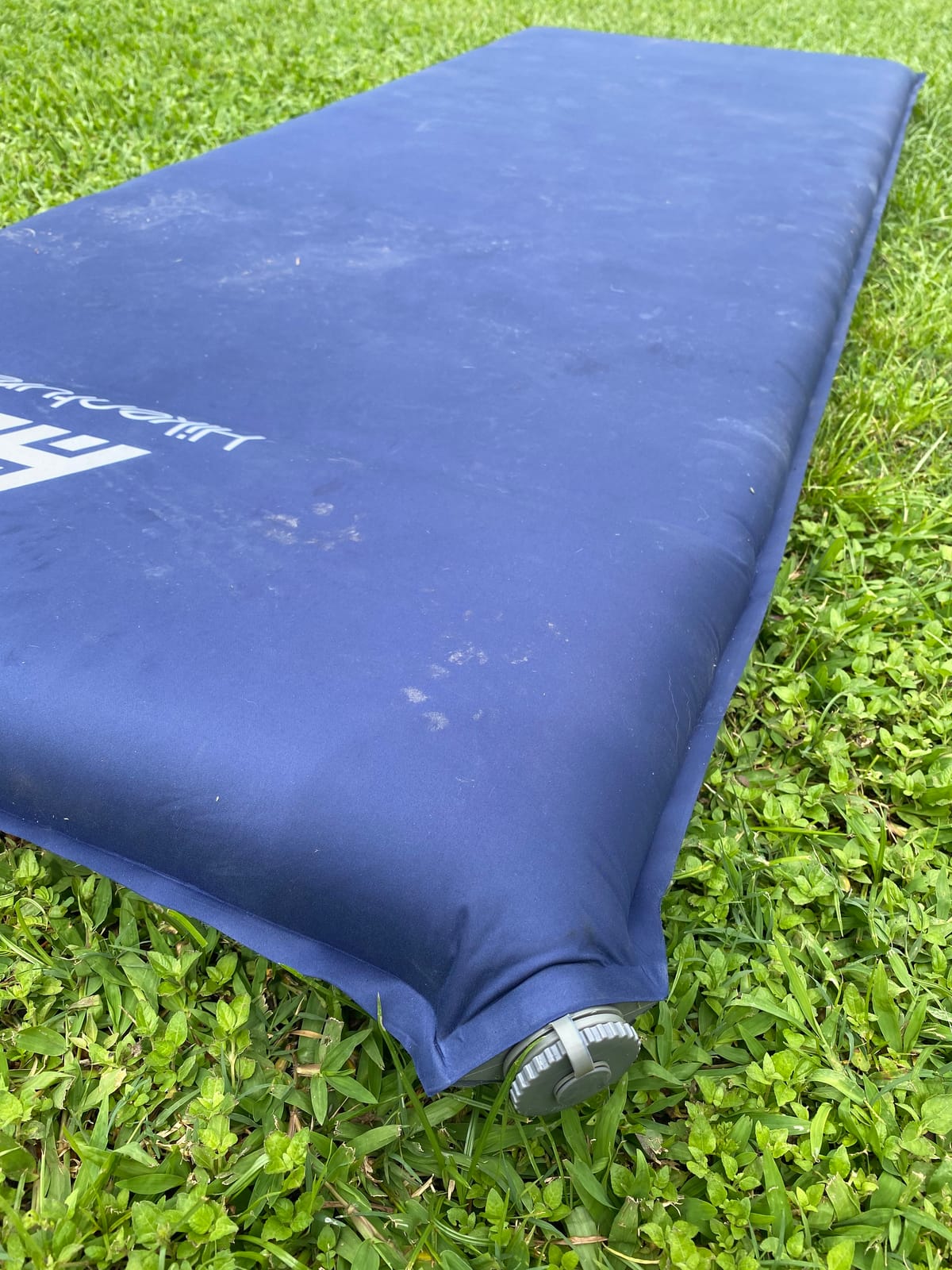
R-9.5 insulation puts it in four-season territory, and the box includes a repair patch, carry bag and pump. Water resistance is listed rather than waterproof, so it is a rooftop tent pad rather than something to put in a wet campsite.
This is one of the two pads in the group whose average rating sits below the rest, and the reason is consistent across reviews: the air-assisted surface settles softer than advertised once it is fully packed out.
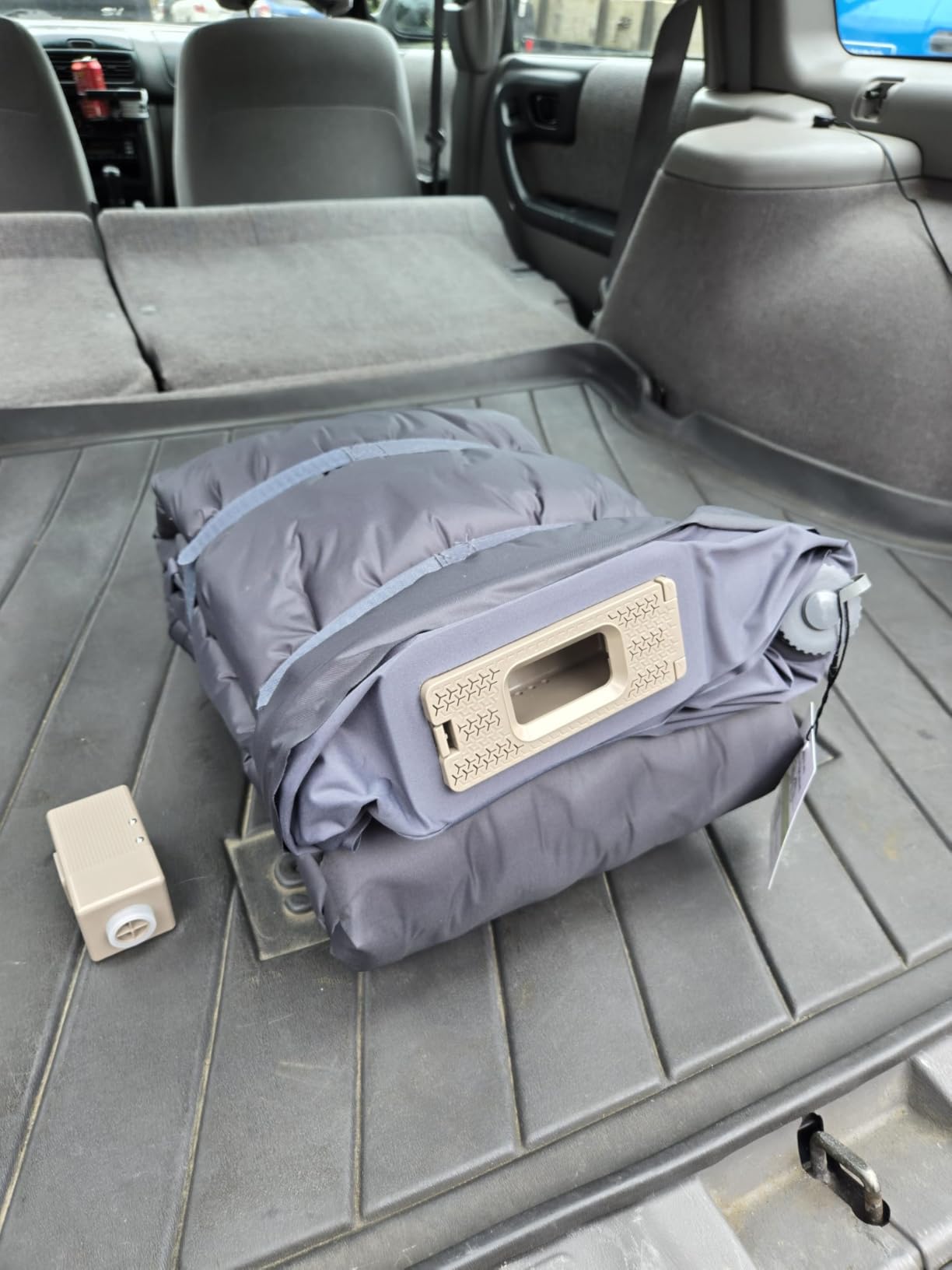
The advertised 4 inches is not always the settled 4 inches
Buyers repeatedly report that the stated thickness and fullness undershoot the 4 inch claim once the pad has fully settled. If you are sizing against hardshell clearance, measure the pad after it has been inflated and left for a full day before you commit to it.
There is a related tradeoff for heavier sleepers. A foam and air hybrid is generally less supportive than an all-foam pad under a concentrated load, because the air layer gives way before the foam does. At 4 inches this is comfortable, but if you weigh more than the middle of the range, an all-foam pad is the safer bet.
Who should skip the Hikenture 4 Inch
Skip it if you are a heavy side sleeper, for the reason above. Skip it if the compressor noise bothers you at close quarters, since that is a specific and repeated complaint from owners.
Also skip it if you need a genuinely waterproof surface. Water resistance is the listed rating here, which is fine on a rooftop tent floor and wrong for a wet campsite or a boat deck.
7. Acacia 4.3 Inch Y-Shaped Self-Inflating Pad – Best for Packing Small
Acacia 4.3″ Thick Self Inflating Sleeping Pad with Foam | Innovative Y-Shaped Telescopic Structure | Ultraportable Camping Mattress | Outdoor Compact Air Mat for Tent Car | Full
4.3 in thick
Full 80 x 53 in
10.4 lb
R-6
Y-shaped telescopic foam
Pros
- 4.3 inches of foam rated to 440 lb for side sleepers
- Telescopic foam compresses roughly 60 percent
- Quiet polyester surface with heat-molded seams
- Side buckles clip two pads together
- Two-way valve and pump sack for firmness control
Cons
- R-6 is the lowest insulation in this group
- Still bulky when deflated despite the compression
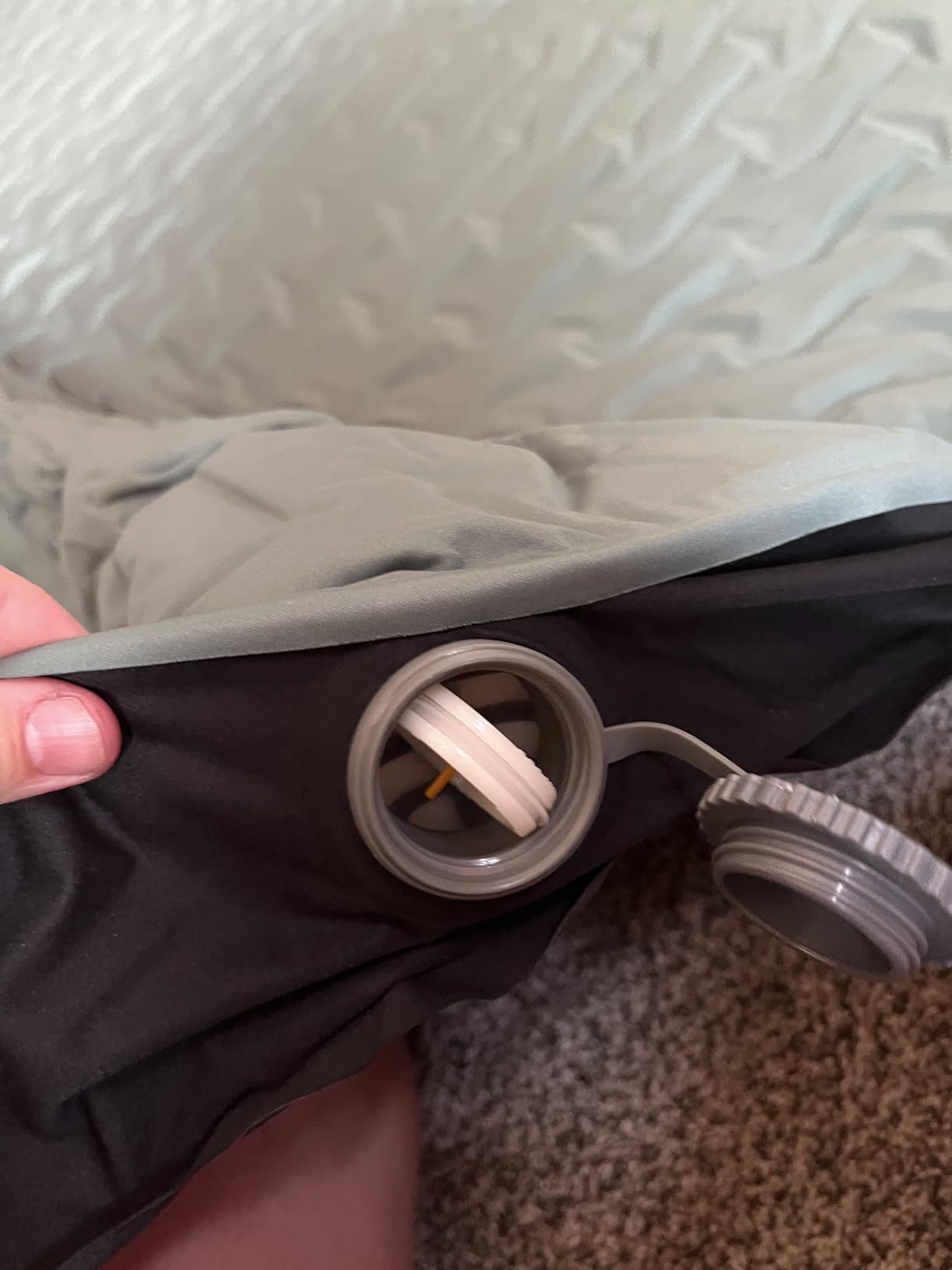
This pad solves a specific problem that most thick mattresses create: a 4.3 inch mattress that takes up a manageable amount of space when packed. The Y-shaped telescopic foam structure compresses the volume by up to 60 percent compared with a conventional foam air mattress, which is how a full-width double pad ends up at 10.4 pounds.
Side sleepers get 4.3 inches of high resilience solid foam rated to 440 pounds, with a two-way valve and a carry bag that doubles as a pump sack for fine firmness control. Side buckles let you clip two pads together into one continuous sleeping surface.
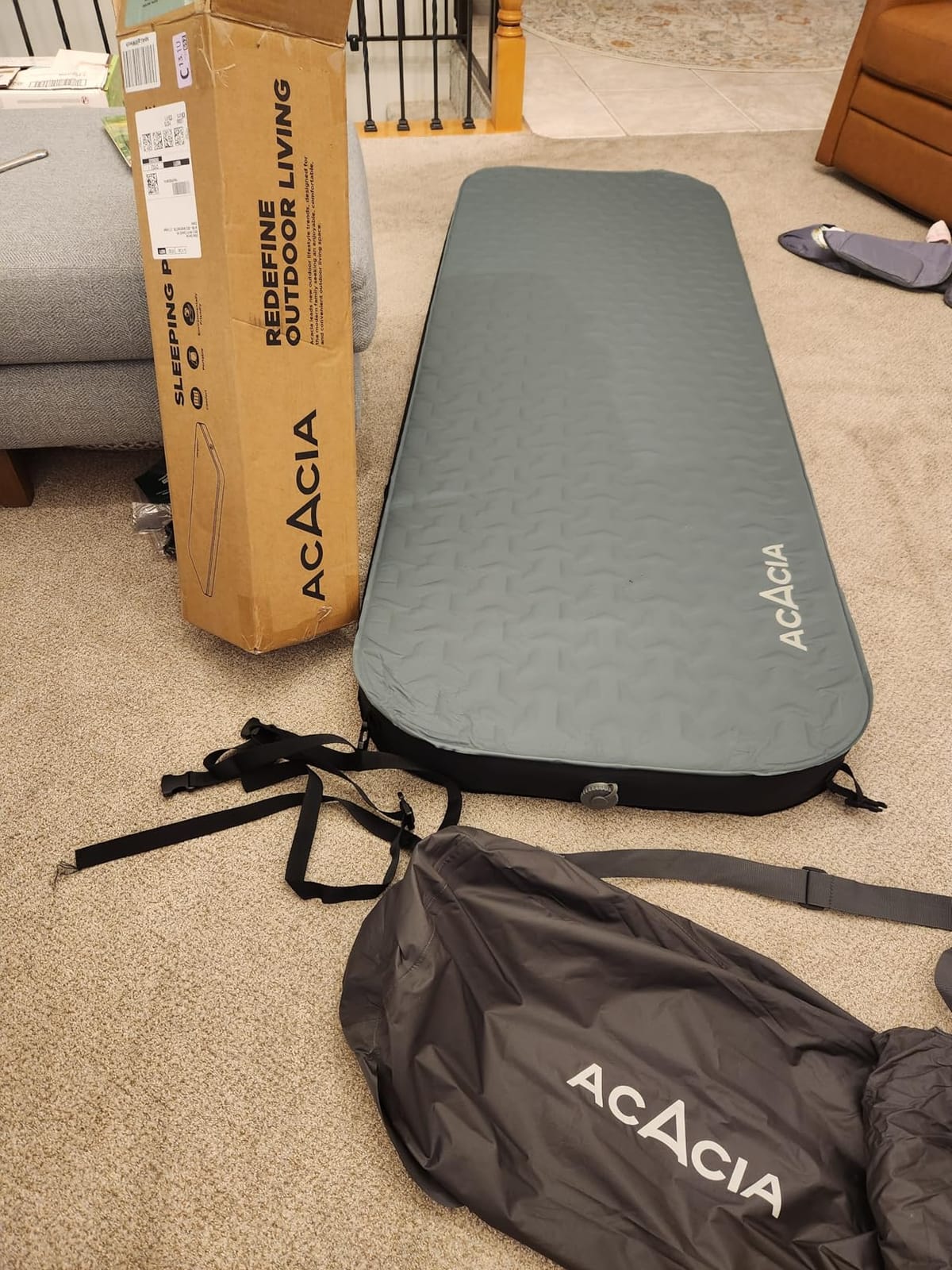
Owners rate the surface as soft and quiet, and the heat-molded seams are the detail that keeps air in over time rather than letting it creep out overnight. The polyester shell with a TPU coating handles condensation better than an untreated fabric.
The rating on this pad is 4.4, driven by comfort and packability rather than insulation. That is the honest trade to understand before you buy it.
R-6 is a warm-weather number, not a winter number
The R-value here is 6, the lowest of the twelve pads in this roundup. That is still respectable ground insulation for spring, summer and early autumn, and it will keep you off cold ground in most conditions. It is not enough on its own for genuinely cold nights, and if you camp below freezing you should plan to add a separate insulated layer underneath.
This matters more for a side sleeper than for a back sleeper, because a thicker pad does not add insulation. Thickness buys you comfort, R-value buys you warmth, and they are separate axes. Several other picks here sit at R-9.5 or higher if cold ground is your concern.
Who should skip the Acacia 4.3 Inch
Skip it if you camp in winter or shoulder-season cold without adding a separate insulated pad. The thickness and capacity are right for side sleeping, but the insulation simply is not there for freezing nights.
Also skip it if the telescoping design is not enough of a saving for you. It is still bulky when deflated, and anyone who has to reload a tent every morning will feel that volume even if it is smaller than a conventional foam mattress.
8. EUHAMS Double Self-Inflating Pad – Best for Couples on a Shared Floor
EUHAMS Double Self-Inflating Sleeping Pad for Camping with Memory Foam
2.3 in thick
78.7 x 50.7 in
8.3 lb
26D memory foam
R-9.5
Pros
- Extra-wide double format fits a rooftop tent floor for two
- 26D high-resilience foam spreads weight evenly
- Built-in foot pump self-inflates in about a minute
- Dual valves pack down to 23.6 by 13 inches
- Waterproof TPU coating with R-9.5 insulation
Cons
- Only 2.3 inches thick
- thinnest here for heavy side sleepers
- Firmness skews extra firm rather than plush
- 15 to 20 minutes to expand after vacuum packaging
Couples who both sleep on their sides run into a geometry problem that single-pad recommendations never address. Two narrow pads side by side on a 54 inch floor leaves a gap in the middle, and each person ends up drifting into it during the night. A single extra-wide double pad removes that seam entirely.
This one is 78.7 by 50.7 inches, which is the full usable width of a typical hardshell floor rather than a half-width pad. The 26D high-resilience memory foam spreads weight evenly, and the double format means neither partner is fighting for the middle of the bed.
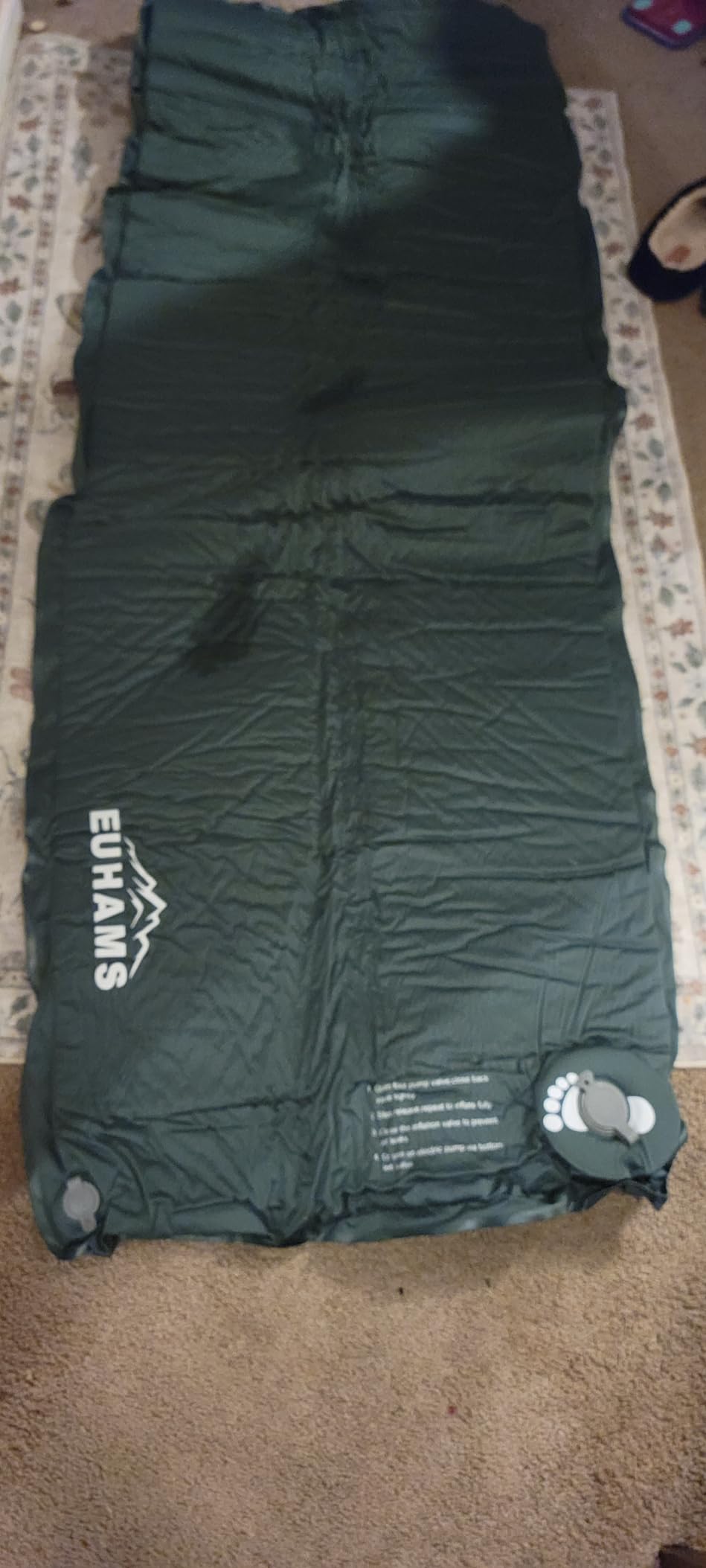
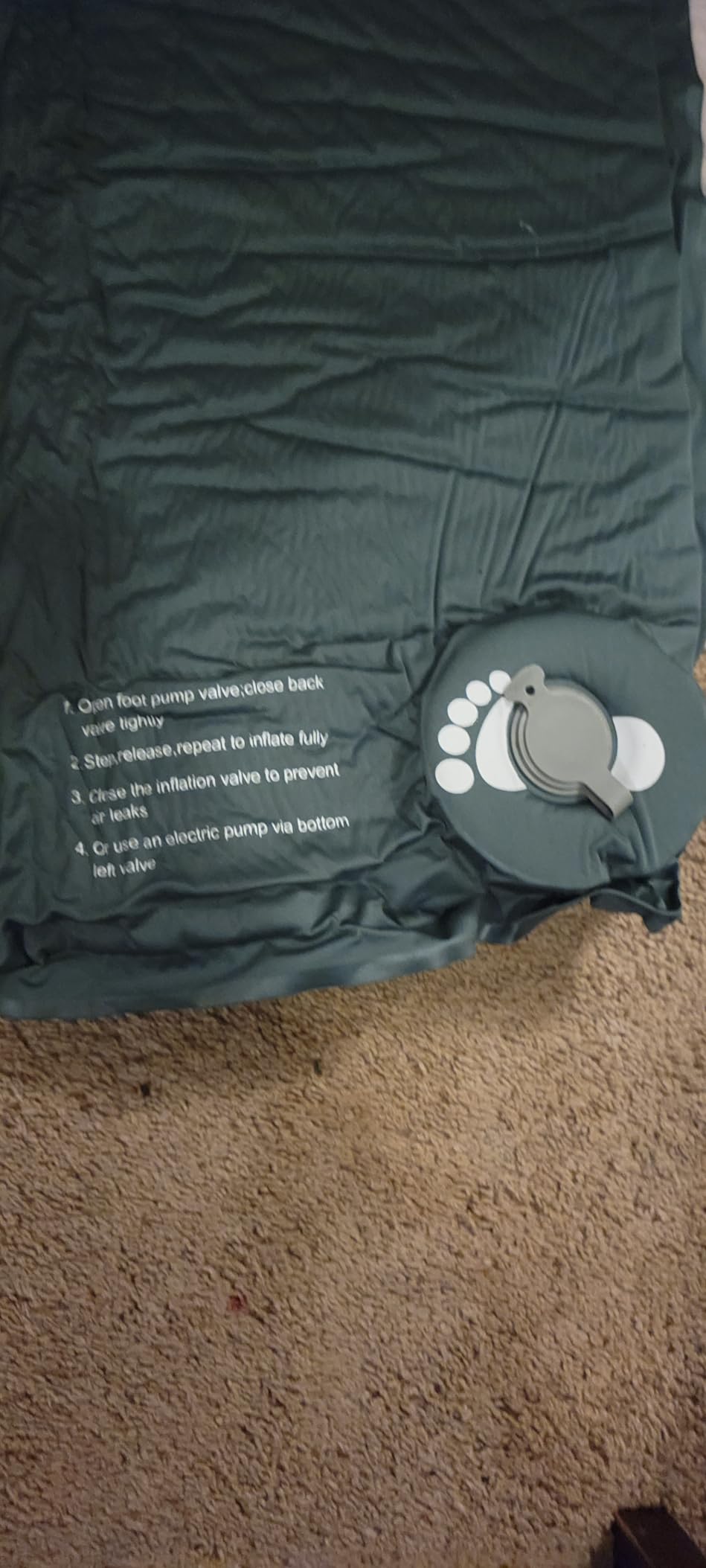
The built-in foot pump self-inflates in about a minute with firmness under your control, and dual valves deflate to a packed size of 23.6 by 13 inches. R-9.5 insulation and a waterproof TPU coating handle cold ground and condensation without a separate layer.
Owners point to the wide footprint, quick inflation and even weight distribution as the reasons it works. It sits among the highest-rated pads in this group, though the review count is the smallest of the twelve.
Two and a third inches is the compromise in this pad
This is the thinnest pad we included, and we included it for width rather than depth. Two and a third inches of firm 26D foam will take the edge off a hard tent floor for a lighter sleeper, but a heavier side sleeper is likely to feel the floor through it. If both of you are over the middle of the weight range, a deeper foam pad or two linked pads is the better answer.
There is a second compromise here: the extra-firm feel. Owners describe the surface as skewing firm rather than plush. For a partner who sleeps on their back and does not want to be disturbed, that is a feature. For someone who wants a soft cradle around the shoulder, it is not.
Who should skip the EUHAMS Double
Skip it if you are a heavy side sleeper, because 2.3 inches is not enough depth to keep a concentrated hip load off the floor. Skip it if you sleep warm and want a softer surface, because the feel is firm by design.
Also allow time after delivery. Vacuum packaging means the pad can take 15 to 20 minutes to reach full expansion, and judging it before that will give you the wrong impression of its depth.
9. Kingfun 3 Inch CertiPUR-US Memory Foam Pad – Best for Linking Two Pads Together
Kingfun 3 Inch CertiPUR-US Memory Foam Camping Mattress Pad, Waterproof Roll up Sleeping Pad, Thick Floor Sleeping Mats for Tent with Removable Travel Bag(Grey, Full)
3 in thick
75 x 54 in
9.37 kg
CertiPUR-US
Eight Velcro connectors
Pros
- High-density memory foam relieves pressure better than a bag or air pad
- Waterproof TPU-coated velboa cover is removable and washable
- Anti-slip base resists shifting on smooth floors
- Eight corner Velcro connectors build a custom double
- Full size from single through queen
Cons
- 3 inches is thinner than the 4 inch side-sleeper picks
- About 72 hours to expand after unpacking
- Water-resistant coating rather than fully submersible
Eight corner Velcro connectors is the feature that separates this pad in a rooftop tent context. Two single pads clipped together make one continuous surface with no valley in the middle, which is exactly the problem couples hit when they lay two narrow pads side by side on a wide floor.
The foam itself is CertiPUR-US certified high-density memory foam, 3 inches thick at 75 by 54 inches. That is a full-width single pad, so it also works well on its own for a solo sleeper who wants more shoulder room than a twin gives.
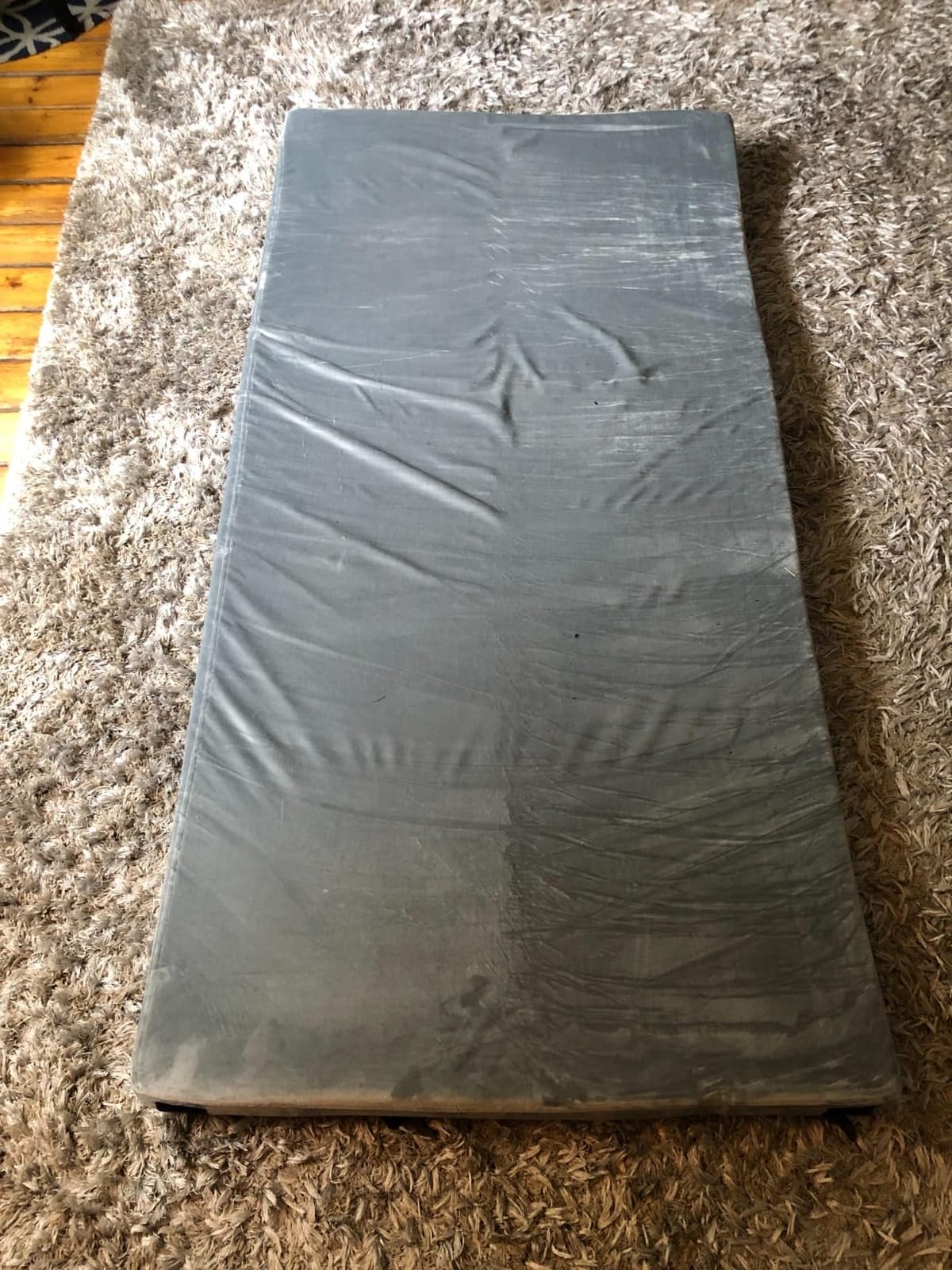
Owners cite the waterproof cover and the anti-slip base as the practical standouts. Tent floors are smooth fabric over a hard shell, and a pad that slides around during the night will undo the comfort you paid for. The velboa cover with a TPU coating is also removable and washable, which matters in an enclosed tent.
At 4.5 average across more than 1200 reviews, this is one of the best-regarded pads in the group for the money, and owners consistently describe comfort per dollar rather than absolute luxury.
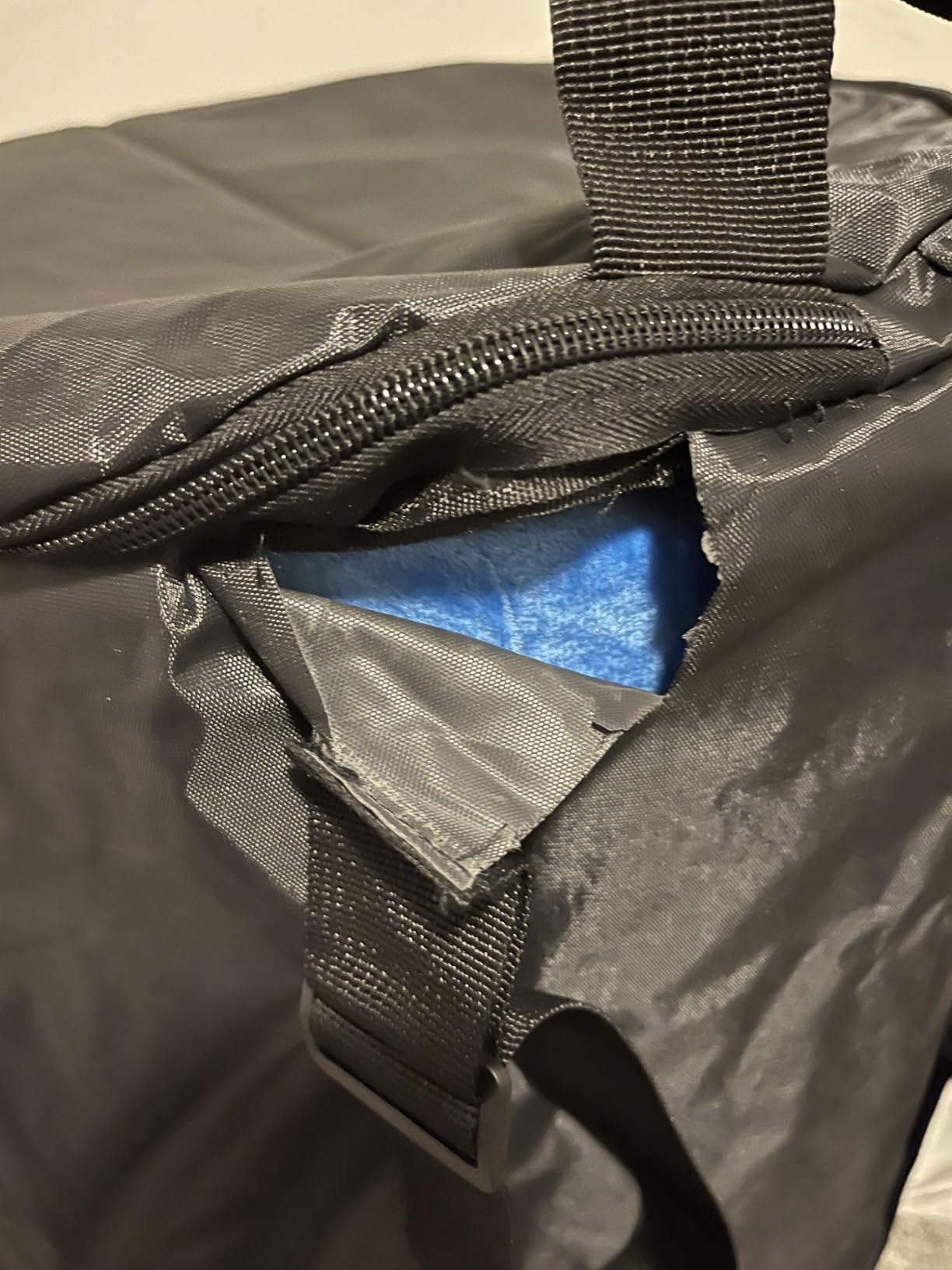
How to link two pads and why the seam still matters
Place the pads edge to edge with the Velcro corners aligned and press them together firmly before you go to bed. The connectors hold well enough that the surface behaves like one pad, but the joint is still a line across your body. Angle the two pads slightly into a shallow V if you sleep across the joint, which keeps the highest points of the seam away from your hip.
The alternative geometry is a single extra-wide double pad, which has no joint at all. Both approaches work, and which one suits you depends on whether your tent floor is wide enough to take two pads side by side without either hanging past the edge.
Who should skip the Kingfun 3 Inch
Skip it if you need more than three inches of depth. This is a well-made pad, but a heavier side sleeper pressing on a concentrated hip point will feel the floor through three inches of foam in a way they would not through four.
Skip it if you need the pad the night it arrives. Vacuum-packed foam takes roughly 72 hours to reach full thickness, and the listed weight of 9.37 kg plus the packed bulk means it is a roof pad rather than a carry pad.
10. Homemate Memory Foam Camping Mattress Pad – Best as a Guest Bed or Cot Upgrade
HomeMate 4 Inch Memory Foam Camping Mattress Pad: Portable Car Sleeping Pad
4 in roll-up build
Multiple sizes
Memory foam over support foam
Washable cover
Pros
- 4 inch roll-up pairs memory foam with high-density support foam
- Waterproof anti-slip temperature-regulating surface
- Removable washable cover with durable zipper
- Velcro connectors join two pads
- Used widely as a cot upgrade and floor bed
Cons
- Several listed sizes are 3 inches rather than 4
- Cot and kid sizes are narrow for taller sleepers
- No hold-down straps on some variants
This is the most widely repurposed pad in the group, and owners use it far beyond rooftop tents. People replace a lumpy air mattress with it, dress a hard camp cot, and use it as a floor bed for guests. A product that survives that many uses tells you something about the foam.
The construction is a memory foam comfort layer over a high-density support foam base, which is the same stack that makes the 4 inch dedicated camping pads work for side sleepers. The surface is waterproof, anti-slip and described as temperature-regulating, so it handles the damp floor of an overland trip.
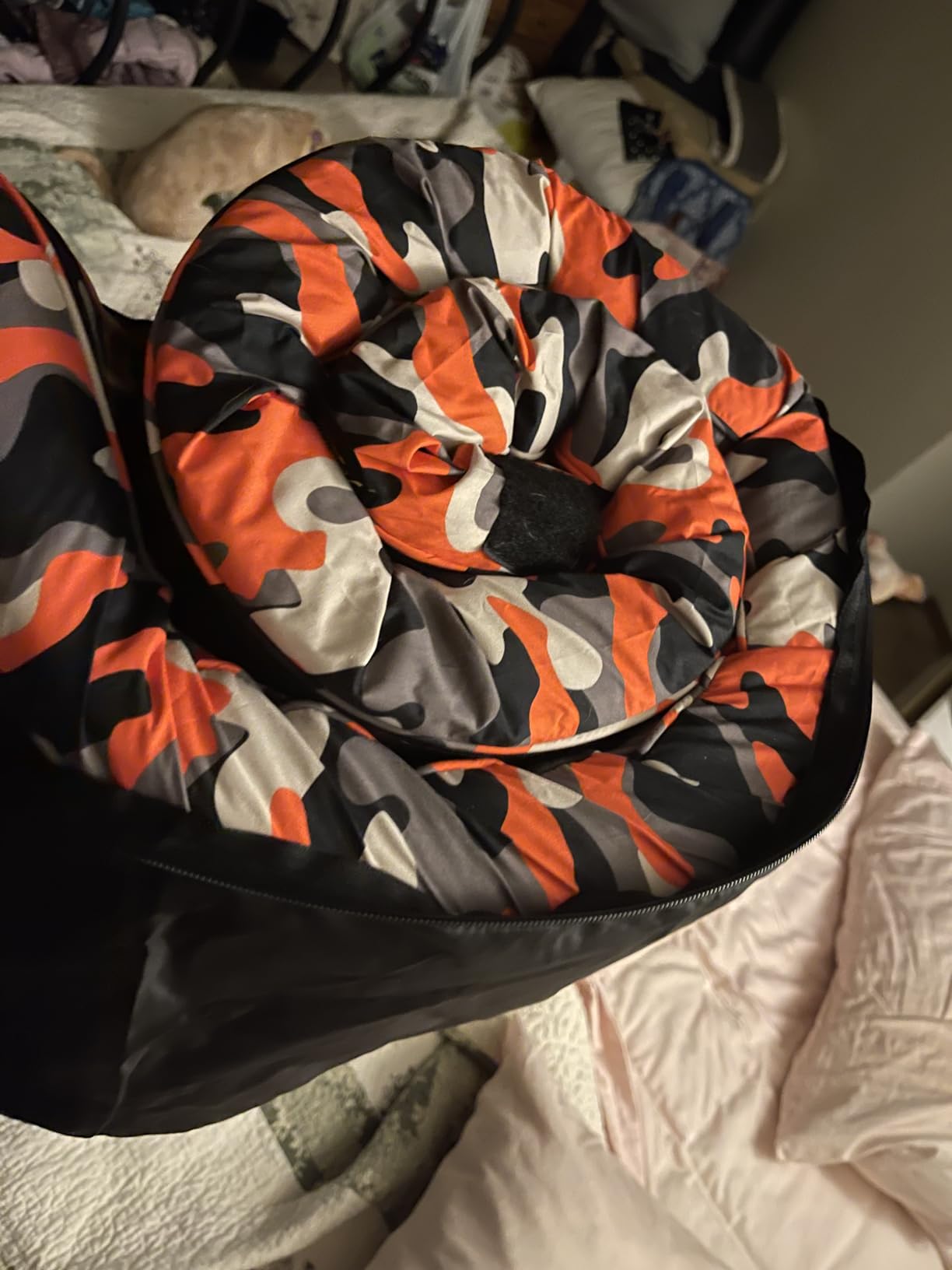
The removable washable cover with a durable zipper and a generous carry bag make packing straightforward, and the Velcro connectors let you join it with another pad. Sizes run from a kid size at 63 by 26 by 3 inches through to a twin XL at 80 by 38 by 4 inches.
That size range is the detail to pay attention to. The headline figure is 4 inches, but several listed sizes are the 3 inch version. Check the specific size you are buying rather than the product title.
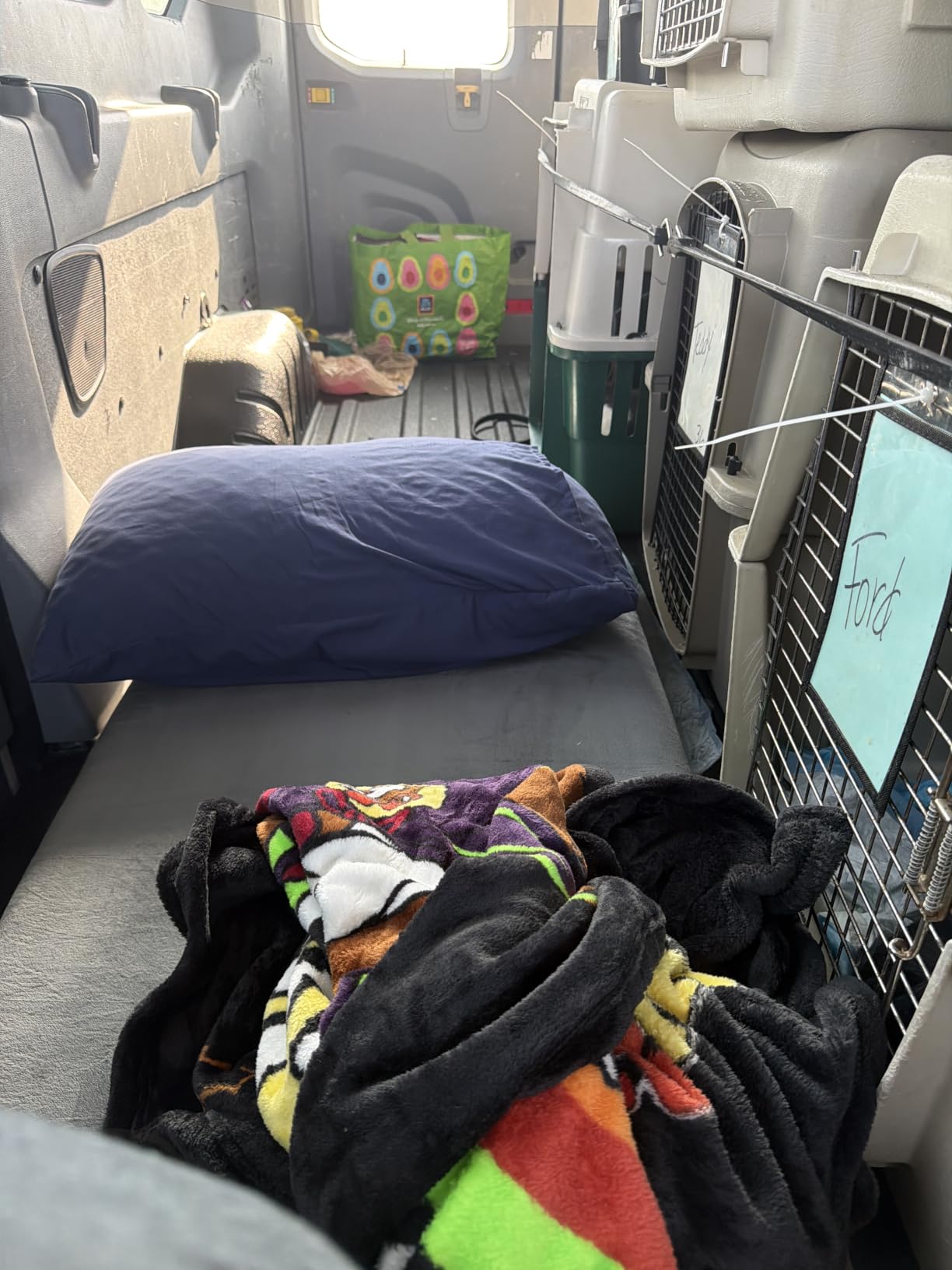
Pick the right size, not just the right thickness
A 4 inch pad in a 26 inch width is comfortable for a child and cramped for an adult. For a solo side sleeper you want a width that keeps your shoulder on foam, and for two people you need the full width plus connectors. Sizes above 50 inches wide are the ones worth a close look for side sleeping in a rooftop tent.
Two smaller warnings come from reviews. The cot and kid sizes are narrow enough that feet can hang off for taller sleepers, and some variants include corner Velcro but no hold-down straps, so the pad can shift on a cot frame where nothing anchors it.
Who should skip the Homemate
Skip it if you are shopping specifically for one tent and you can specify an exact dimension. This line covers a lot of sizes, which is useful and also makes it easy to end up with a narrower or thinner variant than you intended.
Skip it as a primary sleeping pad for a hardshell tent if your priority is a guaranteed fit. The lack of a stated model number and weight for the product as a whole means it is harder to plan around for roof payload and closure clearance than the more precisely specified pads in this roundup.
11. CYMULA Memory Foam Camping Mattress Pad – Best Supported Foam Pick Across Seven Sizes
CYMULA 4 Inch Extra Thick Memory Foam Camping Mattress Pad, CertiPUR-US Portable Picnic Mat, Hiking Sleeping Pad with Travel Bag for Tent, Car, RV
4 in thick
72 x 24 in small single
10.1 lb
2 in memory foam over 2 in support
Pros
- 2 inch plush memory foam over 2 inch support base
- OEKO-TEX tested with a fiberglass-free flame retardant layer
- Waterproof removable cover with a non-slip bottom
- Seven sizes including full and queen
- Travel bag with packing straps
Cons
- Vacuum compression leaves foam short of 4 inches for a day or two
- Wide sizes are heavy and bulky to roll
- Not intended for long-distance backpacking
This pad has the most owner reviews of anything in the roundup and ranks at the top of its category on Amazon, which is a meaningful signal when you cannot test foam in person. Four inches of dual-layer foam, seven sizes, and a build designed for exactly the ground conditions a rooftop tent sits on.
The stack is 2 inches of plush memory foam over 2 inches of high-density support foam. Splitting the four inches that way is better than a single-layer slab: the top layer moulds around your shoulder, and the bottom half is dense enough that your hip does not reach the floor.
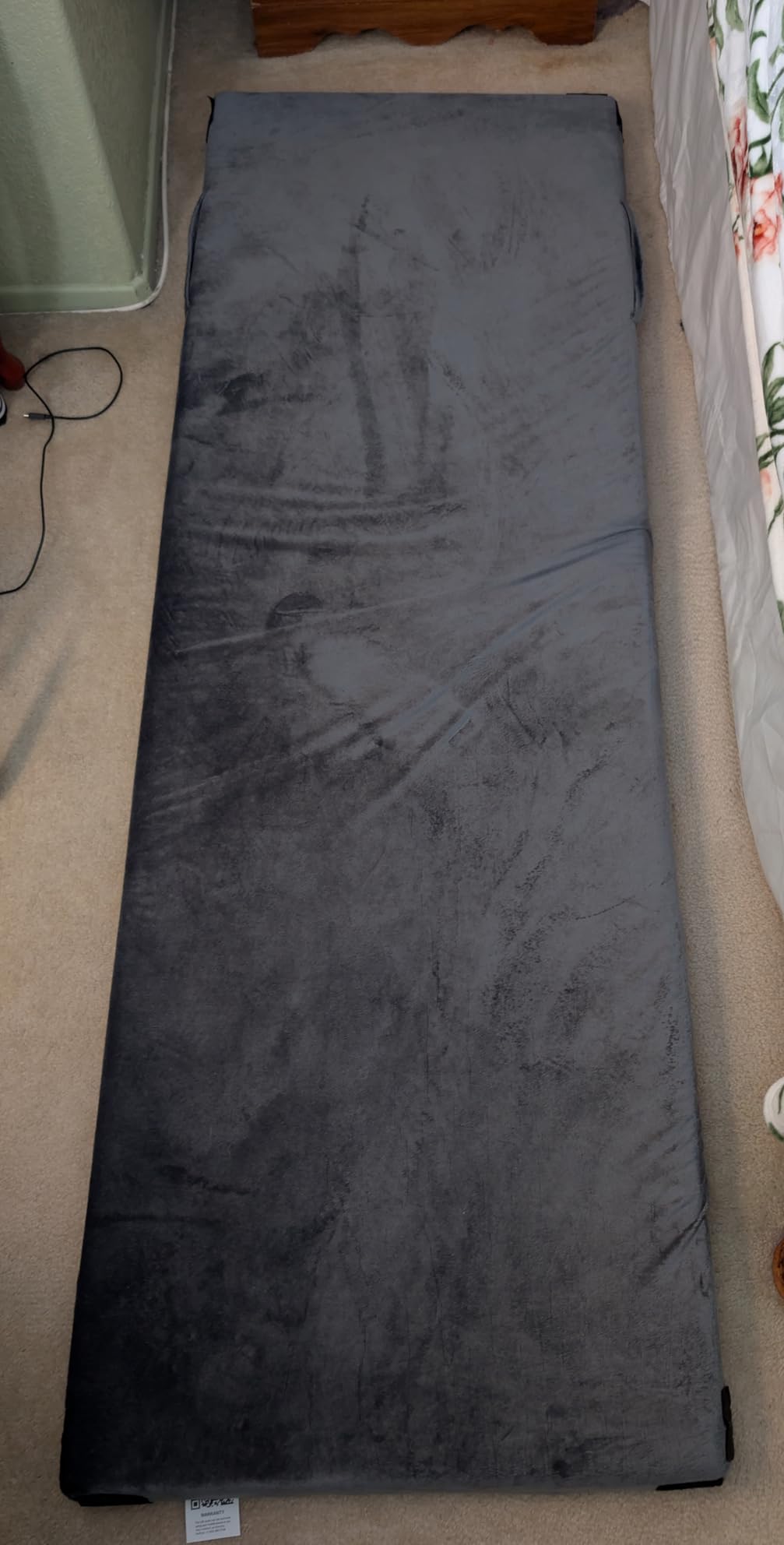
The waterproof removable plush cover has a non-slip bottom that owners specifically praise for gripping stones and roots. That grip is what keeps the pad under you instead of migrating across the floor, which is a common reason otherwise-good mattresses end up feeling wrong by midnight.
Materials are OEKO-TEX tested with a fiberglass-free flame retardant layer, which matters in an enclosed tent where ventilation is limited and the owner is the source of off-gassing.
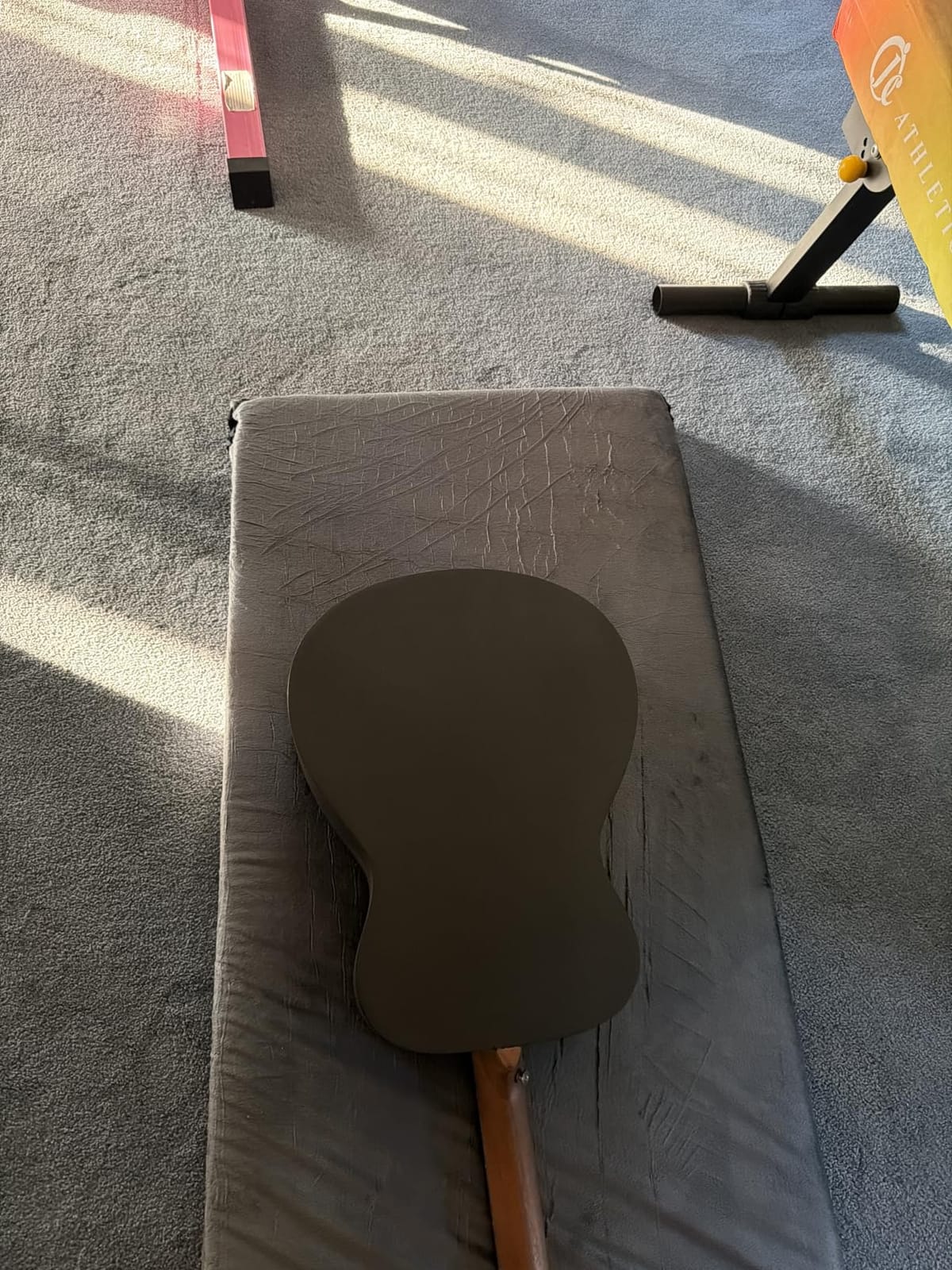
Sizing across seven versions and what changes between them
Sizes run from a kids 63 by 26 up to a queen 60 by 80, and the listing we reviewed shows the small single at 72 by 24 by 4 inches. That narrow variant is fine for a child or a back sleeper. For side sleeping, look at the full and wider versions, where a shoulder stays on foam for the whole night.
Two practical notes. Vacuum compression can leave the foam short of the full 4 inches for the first day or two, so do not judge it immediately after delivery. And the wider sizes are heavy and bulky to roll, at a listed 10.1 pounds for the small single, so roof payload is worth checking before you commit to the widest version.
Who should skip the CYMULA
Skip it if you need to use it on the night it arrives, because vacuum compression takes 24 to 72 hours to reach full rebound. Skip it if you carry your sleeping gear any significant distance; this is explicitly not built for long-distance backpacking.
Skip the small single for a side sleeper, since a 24 inch width is narrower than most adults’ shoulders. Pick a wider size in the same line instead of adding a separate topper, which keeps the total packed bulk down.
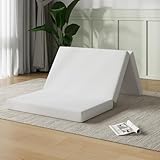
12. Novilla 4 Inch Folding Mattress Topper – Best as a Stacking Layer Over a Thin Pad
Novilla Foldable Mattress Topper, Full Size Comfort Foam Trifold Mattress with Cloud Design Cover, 4 Inch Folding Mattress for Back Pain Relief, Suitable for Camping, RV Travel, 75″x54″x4″
4 in thick
75 x 54 in
16.8 lb
Air-channel foam
CertiPUR-US and OEKO-TEX
Pros
- 4 inch air-channel foam over a high-density support base
- Washable knitted cover dissipates heat and resists odour
- Three-panel trifold folds down small for a vehicle
- Non-slip base fabric
- 54 inch width matches a typical rooftop tent floor
Cons
- Panel zippers are a repeated failure point
- Loses loft over months of daily use
- Vacuum-packed
- so 48 to 72 hours to regain shape
- A home topper repurposed rather than built for camping
This one earns its place as a layer rather than a replacement. Laid over a thin factory pad, four inches of air-channel comfort foam turns an uncomfortable 1.5 inch mattress into something close to a real bed, and the 54 inch width lines up with a typical rooftop tent floor almost exactly.
Stacking is the most effective side-sleeper fix described in rooftop tent forum threads, and this is the most practical version of it. The three-panel trifold design folds down small enough to live in a vehicle, which is where a home topper usually loses its usefulness in a camping context.
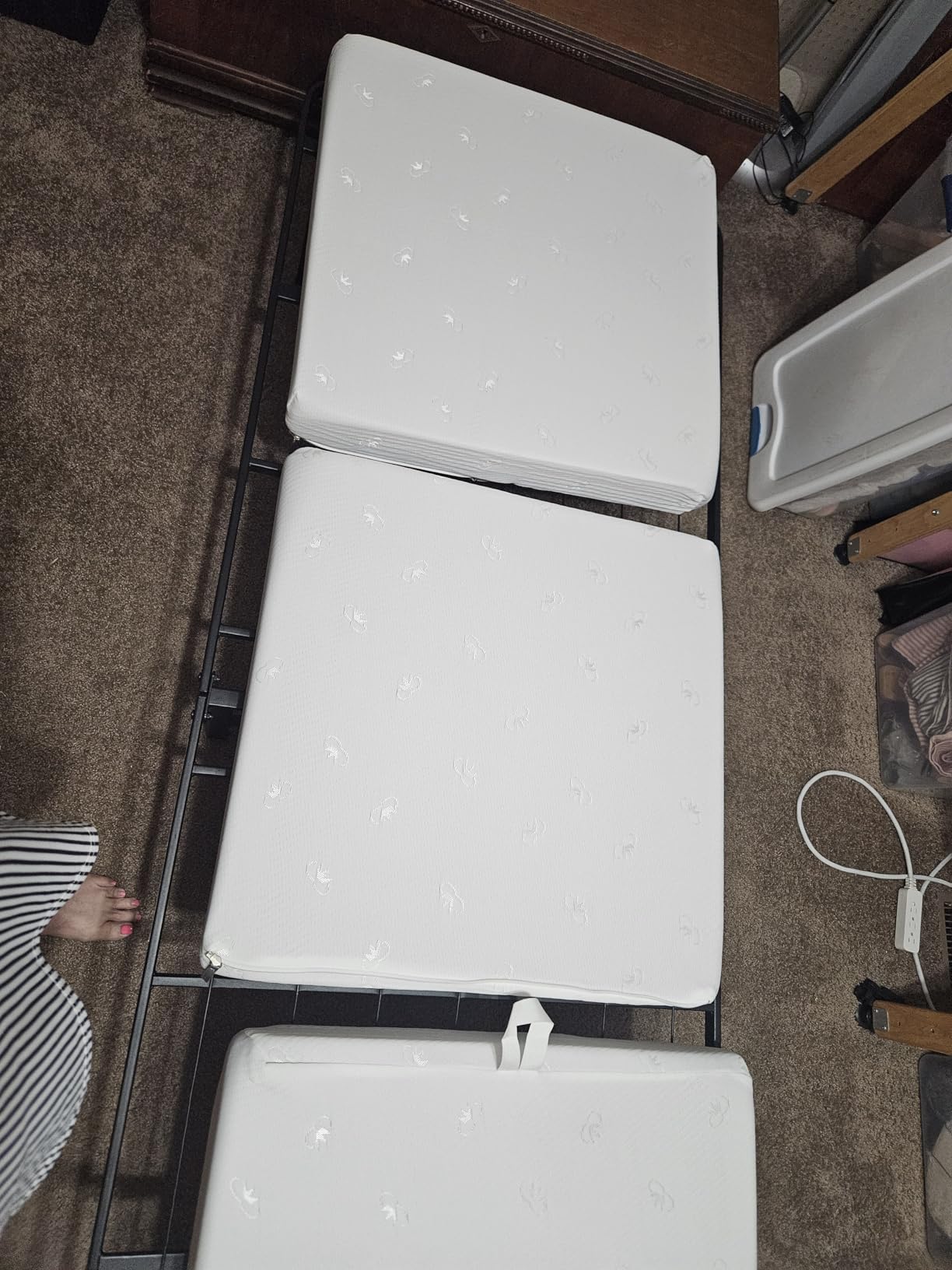
The cover is soft, washable and knitted, and owners specifically comment that it dissipates heat and resists odour. That matters more than it sounds in a closed tent in summer, where a non-breathable surface traps warmth against you all night.
Foam is CertiPUR-US and OEKO-TEX certified across two layers: a pressure-relieving top over a supportive high-density base. That is the correct stack for a side sleeper, even though this pad was not designed for outdoor use.
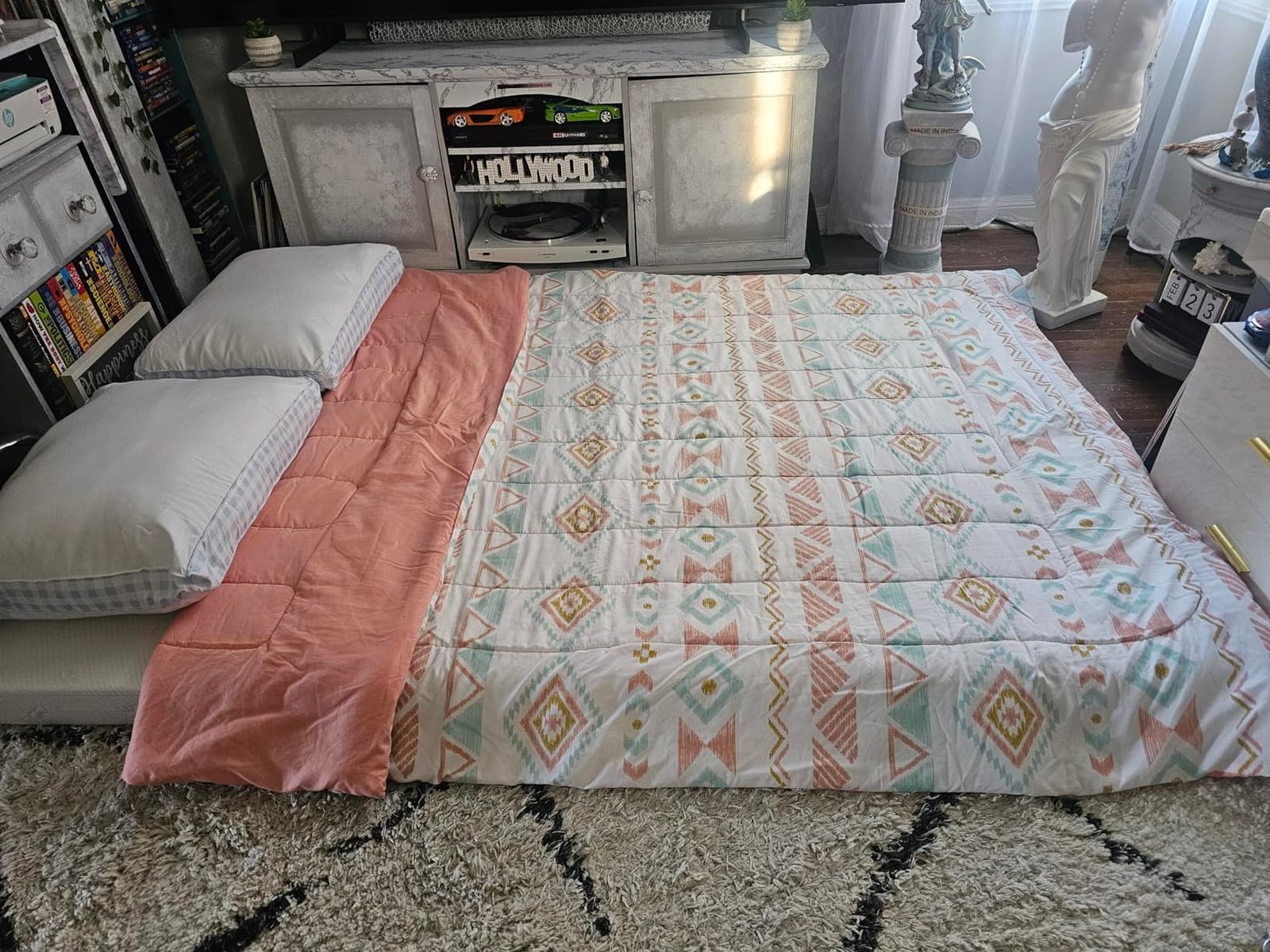
The stacking arithmetic and the closure trade-off
Layering a 4 inch topper over a 2 inch factory pad gives you a 6 inch stack, which is more than most side sleepers need and enough to end hip pain that a single pad did not fix. It also gives you almost no R-value, because comfort and insulation are separate properties. In cold conditions you still need an insulated layer underneath.
The trade-off is hardshell fit. Six inches of foam will not close inside most shells, so this combination works best in a softshell tent, in a truck bed, or in a hardshell tent where you plan to remove the pad before closing. The listed weight of 16.8 pounds also needs to fit your roof payload.
Who should skip the Novilla 4 Inch Topper
Skip it as a primary replacement mattress. It is a home topper repurposed, not a camping mattress, and the panel zippers that join the three sections are the most common failure point in reviews. Long-term daily users also report the foam losing loft within a few months.
Skip it if you need a pad that folds into a small bundle for a hardshell tent that closes with the mattress installed. A trifold topper is the wrong shape for that job, no matter how good the foam is.
How Thick Should a Rooftop Tent Mattress Be for Side Sleepers?
Three inches is the minimum that makes a real difference to a side sleeper, four inches is the comfortable answer for most adults, and four inches or more is where heavier sleepers and anyone with existing hip or shoulder pain should start.
2 inch. Barely an upgrade over a factory pad. Fine for a back sleeper in summer. A side sleeper will still feel the floor through it.
3 inch. The practical floor. Enough material to cradle a shoulder and take the edge off a hip, assuming the foam is 26D or denser.
3.5 to 4 inch. The comfort tier. This is where most side sleepers stop waking up, and where heavy sleepers stop bottoming out.
4 inch and above. Deep enough that most side sleepers stop noticing the mattress at all. It comes with a fit and packing cost, so confirm your tent closes before you commit.
To map that to your body rather than a number on a listing, match your weight to the depth you actually need.
A lighter side sleeper under roughly 130 pounds usually does fine at 3 inches with 26D foam. A mid-range sleeper between roughly 130 and 200 pounds is best served at 3.5 to 4 inches. Above 200 pounds, look for 4 inches or more and favour all-foam over air-assisted designs. Regardless of weight, aim for a pad width that keeps your shoulder fully on the foam.
Foam Density Is the Number That Explains a Bad Night
Foam density is how much foam is in a given volume, written as a D rating. 19D is soft, 26D is a solid mid-grade, 40D is dense and supportive, and 50D is closer to furniture-grade. Thickness is how deep the pad is; density is how hard it pushes back.
This is why a 4 inch pad in 19D foam can still hurt your hip. Soft foam compresses away under a concentrated load, so the effective depth under your hip drops well below the advertised figure while the pad still reads four inches on a spec sheet. The same four inches in 26D or denser keeps its shape under load.
R-value is a third number and it does a completely different job. It measures resistance to heat flow from cold ground. Thickness buys comfort, density buys support, R-value buys warmth. If your pad is R-6 and you are sleeping near freezing, add an insulated layer underneath rather than looking for a thicker pad.
One hot-weather caveat the usual roundups skip: closed-cell foam retains heat. In summer, a thick memory foam pad can feel warmer than a thin air pad because it holds the heat your body generates. A breathable cover and a topper with air channels help, and this is why a cooling sheet layer matters in a tent. Our guide to the best cooling mattresses for hot sleepers covers the same problem at home.
Will a Thicker Mattress Stop Your Hardshell Tent From Closing?
Sometimes. A hardshell rooftop tent has a fixed internal gap between the sleeping platform and the closed lid, and a thick mattress fills that gap. Measure the gap with the factory pad in place before you order anything thicker, and treat anything above about four inches as a clearance risk.
Hardshell and softshell tents are the most important distinction in this whole category, and it decides what you can buy.
Hardshell. A rigid lid closes down onto the tent body. If your mattress can stay installed, you get a much better result, because you are not hauling a full foam roll over the side of a tent every morning. Choose the thickest pad that still closes, and check the clearance before you order.
Softshell. A fabric tent folds flat, so the mattress must come out to close and stow it. Here packed bulk matters as much as comfort. Compressible self-inflating pads and telescoping foam structures win, and a vacuum-packed foam pad that stays installed is not an option.
A useful trick on a hardshell tent is a thinner self-inflating pad that you leave slightly under-inflated when closing. The air compresses, the lid closes, and the foam still supports you once you add air back in the morning.
What Size Mattress Should You Use in Your Rooftop Tent?
Measure the usable floor of your tent, which is smaller than the advertised floor width because of the tent wall angle and any hardware, then subtract an inch on each side for movement.
For a solo sleeper, a narrow pad around 25 to 30 inches wide is workable. Side sleepers should aim higher. A shoulder needs full support, and 30 inches is a better target than 25 if your tent floor allows it.
For couples, the arithmetic matters. Two 24 inch pads on a 54 inch floor leave a 6 inch gap in the middle, and that gap becomes a valley both of you drift into. Two 27 inch pads close it almost exactly. A single extra-wide double pad removes the seam entirely and is the cleanest solution if your floor is wide enough.
Most hardshell rooftop tent floors fall somewhere around 52 to 56 inches of usable width and 74 to 80 inches of length, but check your own tent rather than assuming. Measure at the narrowest point, usually near the foot of the bed where the wall tapers.
How to Make a Rooftop Tent Mattress More Comfortable Without Replacing It
Adding a topper is the fastest fix, and it is the most commonly described solution in rooftop tent forums. Fold a 3 to 4 inch memory foam topper and lay it over the factory pad, using the fold to get two layers in the areas that matter most.
Beyond the topper, four things help more than people expect. Air the factory pad out completely before you sleep on it, because a compressed pad has less effective thickness than its spec sheet suggests. Confirm the pad is fully inflated and firm before you lie down rather than adjusting it in the dark at three in the morning.
Keep a dry base layer between you and the pad so condensation wicks away instead of sitting against foam. And replace the cover if yours is not removable or washable, since trapped moisture in a non-breathable foam bed is what causes lasting discomfort.
For self-inflating pads, tune them at home before the trip rather than at camp. Let the pad inflate fully, then bleed air out slowly until your hip and shoulder sit just above the surface rather than sinking to the floor. Sleep on it overnight, note how it looks in the morning, then add air back in small increments until it feels right. Air loses pressure over a night, so the firmness that works at bedtime is rarely the firmness that gets you through to sunrise. Mark the valve position once you find it so you can repeat it quickly in the field.
If you want the sleep system around the mattress to work harder, a pillow that supports neck alignment without lifting your shoulder forward makes a measurable difference on a thick pad. We covered the shortlist in our roundup of the best body pillows for side sleepers.
Where you are still not comfortable after a topper, a dedicated topper designed for side sleepers is worth a look. Our guide to the best mattress toppers for side sleepers covers the shapes and thicknesses that actually cradle a shoulder.
Frequently Asked Questions
What type of mattress is best for a rooftop tent?
A self-inflating hybrid air and foam mattress, or a roll-up foam mattress, at least 3 inches thick and built from 26D or denser foam. Foam spreads the load across your shoulder and hip instead of letting either reach the floor, and the air layer lets you adjust firmness. R-value governs cold ground insulation, not comfort.
What firmness of mattress is best for a side sleeper?
Medium to medium-firm. A side sleeper needs enough pushback to keep the hip from compressing the pad to nothing, but enough give to let the shoulder settle. In practice that means 26D foam or denser, and if you are between pads, choose the denser one. Soft foam feels plush for twenty minutes and then stops supporting your hip.
What is the recommended mattress thickness for side sleepers?
Three inches is the practical minimum, four inches is the comfortable answer for most adults, and heavier sleepers or anyone with existing hip and shoulder pain should start at four inches or more. Thickness only helps if the foam is dense, so check the D rating as well.
Will a thick mattress stop my hardshell tent from closing?
It can. A hardshell tent has a fixed gap between the sleeping platform and the closed lid, and a thick mattress fills that gap. Measure the gap with your factory pad installed before ordering, and treat anything above about four inches as a clearance risk. A thinner self-inflating pad left slightly under-inflated at closing time is a practical workaround.
What is the best air mattress for a rooftop tent?
A self-inflating pad with a foam core rather than a pure air mattress. Pure air pads need a pump every morning, lose heat quickly on cold ground, and bottom out under a side sleeper’s hip. A self-inflating hybrid gets you air-like adjustability with foam support underneath.
What size mattress should I use in my rooftop tent?
Measure the usable floor, not the advertised width, then leave an inch on each side. A solo side sleeper should aim for 25 to 30 inches of width, with 30 preferable. For couples, two 27 inch pads cover a 54 inch floor without a gap in the middle, and a single extra-wide double pad removes the seam entirely.
What is the best mattress topper for side sleepers with shoulder and hip pain?
A 3 to 4 inch memory foam topper laid over the existing pad, folded so the double layer sits under the hip and shoulder. It converts a thin factory mattress into a usable stack within a minute. The trade-off is bulk and hardshell fit, since a folded topper rarely closes inside a rigid shell.
Do rooftop tent mattresses hold up in winter?
Foam pads hold their shape but not much warmth. R-value is the number that governs cold ground, and anything around R-9.5 or higher is usable well below freezing on its own. If your pad sits at R-6 or lower, add a separate insulated layer underneath rather than looking for a thicker mattress.
Which Rooftop Tent Mattress Is Right for You
The Lost Horizon Option3 is the best rooftop tent mattress for side sleepers overall, because 4.5 inches of foam with an adjustable air core is the deepest cushion in the group and the one most likely to end hip pain. If your tent has to close around the mattress, the Elegear 3.15 inch and the Gaialoop 3 inch both fit more easily at 3 inches of depth.
For couples, the EUHAMS double pad removes the seam in the middle that two narrow pads create. For cold ground, choose anything at R-9.5 or higher. And for a quick fix without replacing anything, a 4 inch folding topper over the factory pad is the fastest route to a better night.
Whichever one you pick, measure your tent floor and its closed clearance before you order, and give vacuum-packed foam a couple of days to reach full thickness before you judge it. That advice has not changed in 2026, and it is still where most disappointing rooftop tent mattresses go wrong.