
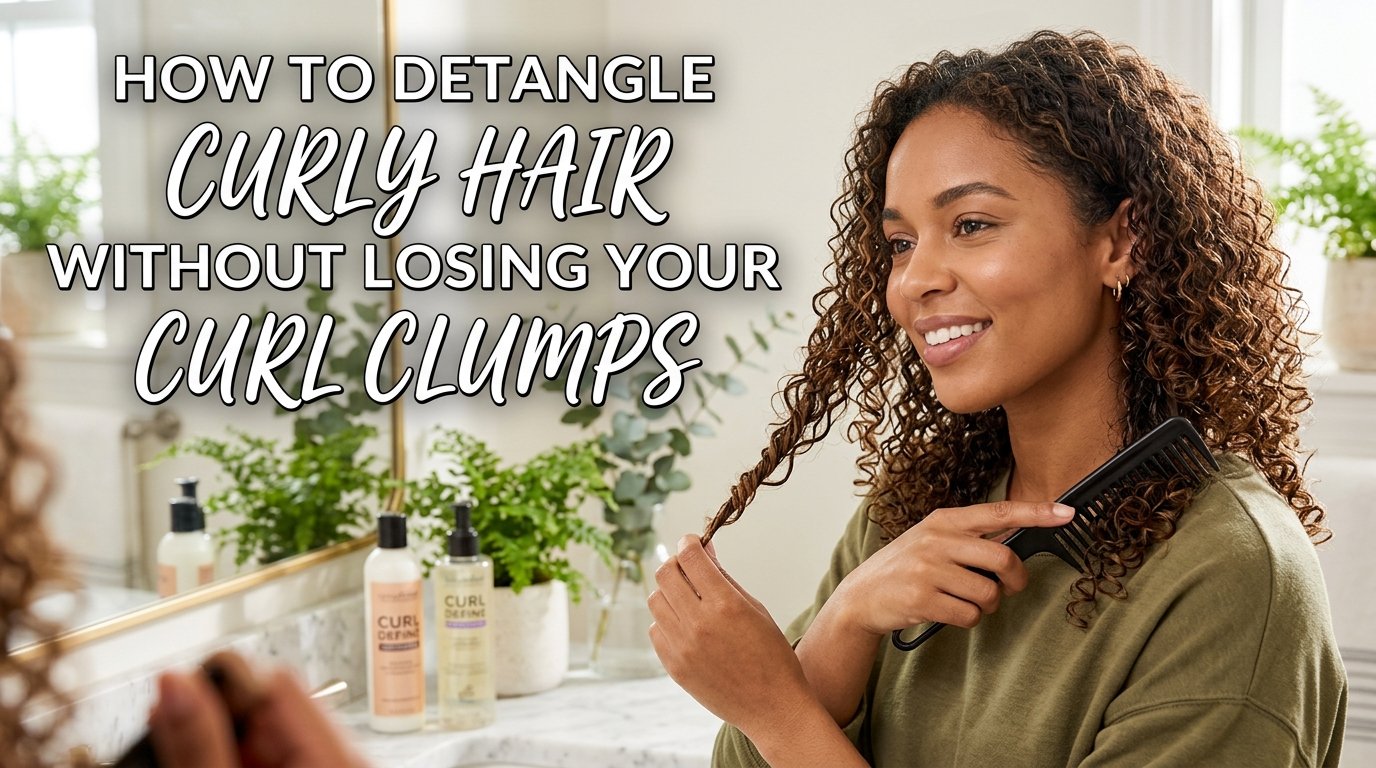
If you have curly hair, you already know the struggle. You spend wash day perfecting those beautiful, defined curl clumps — only to watch them turn into a frizzy, stringy mess the moment you run a comb through your strands. Learning how to detangle curly hair without losing your curl clumps is the difference between bouncy, defined spirals and a cloud of separation.
I have spent years working with curly-haired clients at our salon who battle this exact issue. The good news is that detangling does not have to destroy your curl pattern. With the right technique, tools, and timing, you can remove every knot while keeping your curls grouped into the clumps that give them shape and bounce.
This guide walks you through the entire process — from understanding what curl clumps actually are, to the step-by-step method that preserves them, to fixing things when detangling goes wrong. Whether you have loose waves or tight coils, these techniques will help you keep your definition intact.
Table of Contents
What Are Curl Clumps and Why Do They Matter?
Curl clumps are groups of individual hair strands that naturally gather together to form a single, defined curl unit. Instead of every strand doing its own thing, healthy curly hair forms these clumps — sometimes called “curl families” — that create the smooth, shiny, defined spirals you see on wash day.
Think of it this way. When your curls are clumped well, ten or twenty individual strands behave as one single curl. The result is shine (because the cuticle lies flat in a group), definition (because the curl pattern reads clearly), and bounce (because the clump has structural weight). When clumps break apart, those same strands separate into thin, wispy, frizzy strings that look undefined and lack movement.
This is why detangling is so risky for curly hair. Every time you pull a comb or brush through your hair, you risk separating strands from their clump families. The friction and tension can break the natural grouping that forms when wet, conditioned curls find each other and lock into place. Once those clumps separate, getting them back together is difficult without another full wash and reset.
Clump size also matters. Tighter curl patterns (type 3C to 4C) tend to form smaller, tighter clumps, while looser waves (type 2) form wider, looser groupings. Understanding your natural clump size helps you detangle in a way that works with — not against — your curl pattern.
Why You Should Never Dry Detangle Curly Hair
Dry detangling is the number one cause of lost curl clumps and breakage in curly hair. When curly hair is dry, the cuticle is raised and rough, strands have shrunk and tightened around each other, and there is zero slip to help knots release. Pulling a comb through dry curls causes friction, snapping, and immediate separation of curl clumps.
Curly hair is structurally weaker than straight hair. The bends and curves in each strand create stress points where breakage naturally occurs. When you add the tension of detangling to dry, fragile hair, you are almost guaranteed to lose strands. The shedding you see in your comb after a dry detangle is not just shed hair — it is broken hair.
Wet hair, on the other hand, has a temporarily smoothed cuticle (especially when conditioner is applied) and the water adds weight that gently stretches the curl pattern. This gives you slip — the lubrication that lets a comb or your fingers glide through tangles without catching or pulling. Slip is what makes detangling possible without destroying clumps.
The only exception is a gentle pre-poo treatment, where you apply oil or conditioner to dry hair before washing to start softening tangles. Even then, the actual detangling work should happen on wet, conditioned hair in the shower.
If health limitations make shower detangling difficult — some of our clients cannot stand long enough — try the “prayer hands” method at a sink. Lean over, wet your hair thoroughly with warm water, apply conditioner generously, and smooth sections between your palms. This gives you the moisture and slip you need without a full shower.
How to Detangle Curly Hair Without Losing Your Curl Clumps: Step by Step
Follow these six steps in order every wash day. Each step builds on the previous one to remove tangles while protecting your curl clumps.
Step 1: Start with Wet, Conditioned Hair
Get into the shower and saturate your hair completely with warm water. Apply a generous amount of conditioner — more than you think you need. The conditioner provides the slip that makes detangling possible without breaking clumps. Distribute it using the “prayer hands” method: press sections of hair between your palms and slide downward gently. This smooths the cuticle and starts grouping strands into clumps before you even begin detangling.
Step 2: Section Your Hair
Never try to detangle your entire head at once. Divide your hair into four to eight sections using your fingers or sectioning clips. Smaller sections mean more control, less pulling, and less risk of ripping through clumps. Working section by section also keeps you from missing tangles hidden underneath.
If you have very thick or long hair, eight sections is better than four. Twist each section loosely so it stays separate while you work on the others. This keeps conditioned sections from drying out and re-tangling before you get to them.
Step 3: Finger Detangle First
Before any tool touches your hair, use your fingers. Your fingers are the most gentle detangling tool because you can feel resistance and adjust pressure instantly. Starting at the ends of one section, slowly work your fingers through, gently separating knots. If you meet resistance, stop, add more conditioner, and try again with a gentler motion.
Finger detangling removes the big knots and tangles without disturbing the natural curl clump formation. It also helps you feel where your clumps are forming so you can work around them rather than through them.
Step 4: Use a Wide-Tooth Comb or Detangling Brush — From the Ends Up
After finger detangling, take a wide-tooth comb or a flexible detangling brush (like a Denman or similar) and start at the very ends of your hair. Comb through the bottom inch or two first, then move up an inch, then another. Never start at the roots and pull down — this pushes all the tangles into one massive knot at the bottom and guarantees breakage.
Work in small, gentle strokes. The goal is not to comb each section perfectly smooth — it is to remove knots while letting the curl clumps reform. If your curls start looking stringy as you comb, you are over-combing. Stop as soon as the tangles are out.
Step 5: Smooth and Encourage Clumps
Once a section is detangled, use the “squish to condish” technique to encourage clumps. Cup water in your hands, press the hair section up toward your scalp, and gently scrunch. This motion helps individual strands find their curl family and reform into clumps. Do this immediately after detangling each section so the clumps set while the hair is still wet and conditioned.
Step 6: Rinse and Style with Clumps Intact
Rinse your hair gently — do not let the water pressure hit your hair directly. Let the water flow over your head and down your back. Apply your leave-in conditioner and styling products using the same prayer hands and scrunching motion. Never rake products through with your fingers after detangling, as this separates the clumps you just worked to preserve.
Tools for Clump-Friendly Detangling
The tool you use matters as much as the technique. Here is how the three main options compare for preserving curl clumps.
Finger detangling is the gentlest method and the best for clump preservation. You can feel knots, adjust pressure, and work around natural clump formations. The downside is time — finger detangling can take 30 to 60 minutes for thick or long hair. Some of our clients with very tight curl patterns (type 4) prefer finger detangling exclusively because any tool disrupts their delicate clump structure.
Wide-tooth combs are the classic detangling tool for curly hair. The wide spacing between teeth means less friction and less clump disruption. They work well for loose to medium curl patterns (types 2 to 3B) and are affordable and easy to clean. The limitation is that they can still separate strands from their clumps if you comb too aggressively or too many times through one section.
Detangling brushes with flexible bristles (like the Denman brush or similar designs with rows of flexible nylon bristles) are popular for curly hair because they detangle and define in one motion. The bristle rows help group strands into clumps as you brush. These brushes work best on medium to loose curl patterns. For tighter patterns, the bristles may be too aggressive.
Paddle brushes with cushioned bases are sometimes recommended for very thick, dense hair. The cushion base flexes to reduce pulling. However, paddle brushes tend to separate clumps more than wide-tooth combs, so use them only for initial detangling of severely matted hair, then switch to gentler methods.
Whichever tool you choose, the key rule is: detangle only as much as needed to remove knots, then stop. Every extra pass through your hair risks separating clumps.
How to Fix Stringy or Separated Curls After Detangling
Sometimes detangling goes too far and your curls separate into thin, stringy pieces instead of defined clumps. This is a common frustration — you detangled to remove knots, and now your definition is gone. The good news: you can fix it without a full restart.
Wet your hands and re-clump. If you are still in the shower, wet your hands with warm water and gently smooth the stringy sections using the prayer hands method. Press the separated strands together and scrunch upward. The water and any remaining conditioner will help them find their clump families again.
Apply more conditioner or leave-in. Stringy curls often mean there is not enough slip for strands to group. Add a small amount of conditioner or leave-in to the separated sections, smooth downward, then scrunch. The moisture gives strands the lubrication they need to clump.
Use the roping technique. Take a separated section of hair, apply a styling cream or gel, and smooth it between your palms in a downward motion — like you are twisting a rope. This forces strands together and encourages them to form a single clump. Let it set without touching.
Diffuse on low to set clumps. If air-drying is leaving your curls stringy, try diffusing on low heat and low speed. Cup each clump in the diffuser bowl and hold for 10 to 15 seconds. The gentle heat and airflow help set the clump shape as the hair dries.
For severe separation, do a full reset wash. If your curls are completely stringy and no amount of re-clumping works, the best fix is a fresh wash. Wet your hair, apply conditioner, detangle minimally (fingers only), smooth into clumps, and apply styling product. Sometimes starting over is faster than trying to save separated curls.
Preventing Tangles Between Wash Days
The less your hair tangles between wash days, the less detangling you need to do — and the more you protect your clumps. Prevention is the best strategy for maintaining curl definition long-term.
Sleep on a silk or satin pillowcase. Cotton pillowcases create friction that roughens the cuticle, causes tangling, and separates clumps overnight. Silk and satin let your hair glide across the surface, reducing friction dramatically. This is one of the simplest and most effective changes you can make.
Wear a satin bonnet or use the pineapple method. For extra protection, gather your curls loosely at the top of your head (the “pineapple”) with a soft scrunchie, or cover your hair with a satin bonnet. This keeps your curls from rubbing against the pillow and maintains clump formation overnight.
Refresh with water and leave-in, not dry brushing. Between wash days, your curls may lose definition or develop small tangles. Refresh by misting with water, applying a small amount of leave-in conditioner, and gently smoothing with your hands. Never brush or comb dry curls to refresh — this instantly separates clumps and creates frizz.
Detangle on wash day only, not daily. Most curly hair types do best with detangling 2 to 3 times per week — on wash days. Over-detangling separates clumps and causes unnecessary manipulation. If you wash daily, detangle less. If you wash weekly, one thorough detangling session is enough.
Keep your hair moisturized. Dry hair tangles more easily because the cuticle is raised and rough. Use a deep conditioning treatment weekly, apply leave-in conditioner after every wash, and use a light oil to seal in moisture if your hair tends toward dryness. Well-moisturized hair glides past itself instead of catching and knotting.
Protect hair during workouts and windy days. Wear your hair in a loose, protective style (like a loose bun or braid) during high-movement activities. This prevents tangling from friction and wind. Use satin scrunchies, never rubber bands or tight elastics.
FAQs
How to detangle curly hair without losing curls?
To detangle curly hair without losing curls, always work on wet, conditioned hair in the shower. Section your hair, finger detangle first to remove big knots, then use a wide-tooth comb or detangling brush starting from the ends and working up. Smooth conditioner through with the prayer hands method and scrunch to encourage curl clumps to reform after detangling.
How to stop curly hair falling out in clumps?
Shedding during detangling is normal, but excessive breakage is not. To minimize hair loss, never dry detangle, always use conditioner for slip, work in small sections, start from the ends, and never rip through tangles. If you meet resistance, stop and add more conditioner. Use a silk pillowcase overnight and keep hair moisturized to prevent the dry, brittle tangles that cause breakage.
Is it normal to lose a lot of hair when detangling curly hair?
Yes, it is normal to see what looks like a lot of hair after detangling curly hair. Curly hair sheds 50 to 100 strands per day, but because curls trap shed hairs instead of letting them fall out gradually, you see them all at once during detangling. However, if you see short broken pieces rather than full-length strands with bulbs at the end, that is breakage — not normal shedding — and means your technique needs adjusting.
How to unclump curly hair?
If your curls have clumped too tightly or unevenly and you want to redistribute them, wet your hands with warm water, apply a small amount of conditioner or leave-in, and gently smooth through the clumps using the prayer hands method. Avoid combing or raking, which causes frizz. For intentionally separated, piecey curls, apply a light styling cream and twist individual sections to the size you want.
Conclusion
Detangling curly hair does not have to mean sacrificing your definition. When you understand what curl clumps are and why they form, you can detangle in a way that works with your natural curl pattern instead of against it.
The key takeaways: always detangle on wet, conditioned hair. Section your hair and work in small pieces. Finger detangle first, then use a wide-tooth comb or flexible brush from the ends up. Smooth and scrunch to encourage clumps to reform. And between wash days, protect your hair overnight and refresh with moisture, never dry brushing.
Now you know how to detangle curly hair without losing your curl clumps. Practice these techniques consistently, adjust for your specific curl pattern, and you will see stronger, more defined, longer-lasting curls every wash day.