
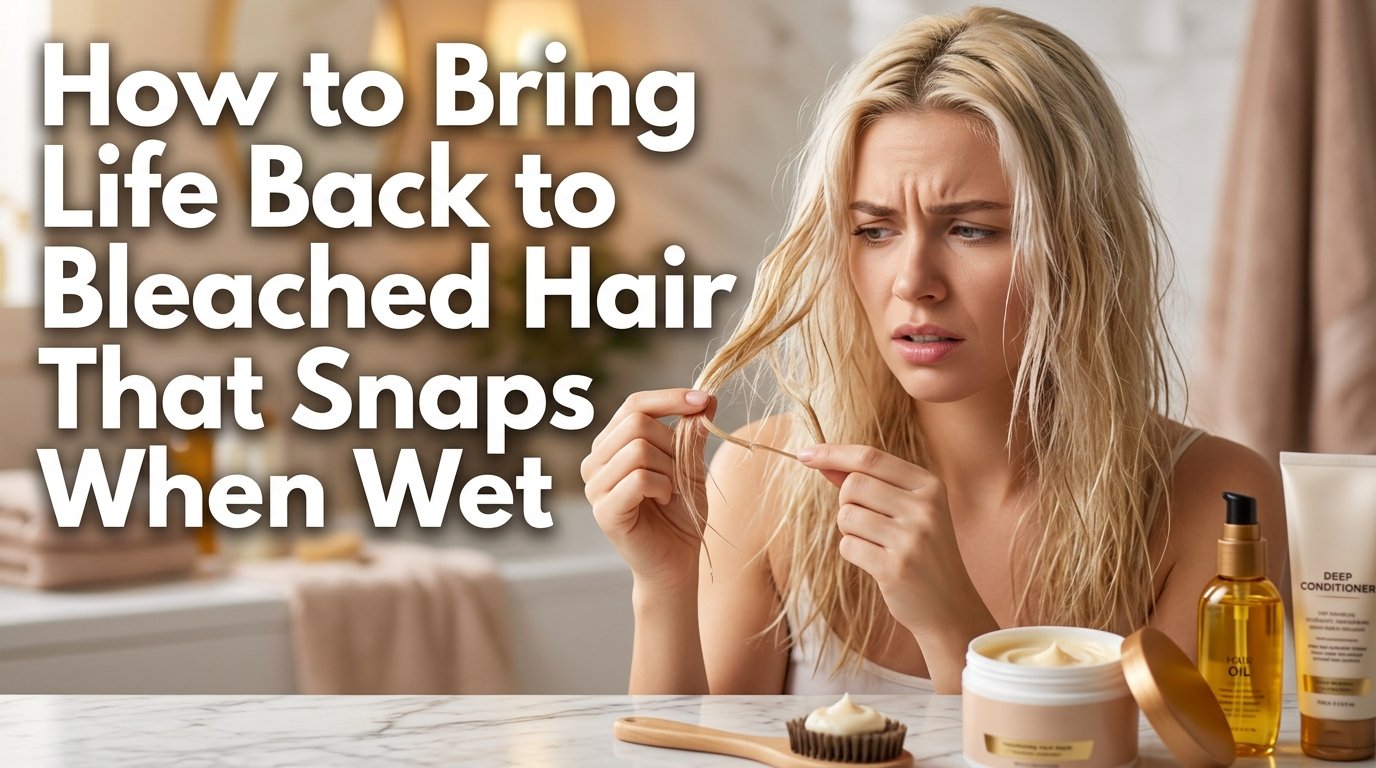
There is a particular kind of panic that sets in when you run a comb through freshly washed hair and strands simply stretch, then snap. If your bleached hair breaks when wet, feels gummy between your fingers, or comes out in small clumps during washing, you are not alone. This is one of the most common and distressing forms of chemical damage, and thousands of people deal with it every year.
The good news is that most snapping, stretchy, fragile hair can be rehabilitated. It takes patience, the right routine, and a willingness to change how you handle your hair when it is at its most vulnerable. In this guide, our team at Mercer Street Salon walks you through exactly how to bring life back to bleached hair that snaps when wet, from understanding the science of the damage to building a weekly recovery routine that actually works.
We have seen every level of bleach damage in our chairs, from mildly dry ends to hair that stretches like chewing gum and breaks off in handfuls. The recovery process is the same at every level, just with different timelines. Here is everything you need to know to stop the breakage, rebuild strength, and get your hair back to a place where it behaves like hair again.
Table of Contents
Why Does Bleached Hair Snap When Wet
To understand why bleached hair snaps when wet, you need to understand what bleach actually does to the hair shaft. Bleach works by opening the cuticle (the outer protective layer of your hair) and oxidizing the melanin inside. This is how the color lifts. But the chemical process that removes pigment also destroys structural components of the hair, including fatty acids, lipids, and the disulfide bonds that give hair its strength and elasticity.
Disulfide bonds are the internal scaffolding of each hair strand. Think of them as the steel beams inside a building. When bleach breaks these bonds, the building loses its structural integrity. The hair becomes porous, the cortex (the inner layer) gets exposed, and the strand can no longer handle stress the way healthy hair can.
So why does the snapping happen specifically when wet? Healthy hair is actually slightly more elastic when wet because water breaks the hydrogen bonds in hair temporarily. This is normal and reversible. But in bleached hair that has already lost its disulfide bonds, the temporary loss of hydrogen bonds pushes the hair past its breaking point. The strand stretches beyond what the damaged structure can handle, and it snaps.
This is also why bleached hair feels gummy or mushy when wet. That stretchy, elastic texture is the hair lacking enough internal protein structure to hold its shape. Hair should stretch a little and bounce back. If it stretches and stays stretched, or stretches and then breaks, the protein structure has been compromised. The hair is essentially holding together by moisture alone, with no protein backbone underneath.
Wet hair is also heavier. Water weight adds mechanical stress to each strand. For healthy hair, this is no problem. For hair that has been structurally weakened by bleach, that extra weight is enough to cause breakage at the mid-shaft or root. This is why so many people notice hair falling out in the shower or during combing after bleaching.
Signs Your Bleached Hair Is Severely Damaged
Not all bleach damage is the same. Understanding your damage level helps you choose the right recovery approach and set realistic expectations. Here are the key signs, from mild to severe.
Mild damage looks like dryness, slight roughness when you run your fingers down a strand, and occasional split ends. Your hair may feel a bit stiff or coarse but still functions normally. It does not snap when wet. This level responds quickly to deep conditioning and oil treatments.
Moderate damage includes noticeable texture changes, tangling more easily than before, and some breakage during detangling. Your hair may feel dry even right after conditioning. You might notice small broken hairs on your shirt or pillow. At this stage, bond repair treatments and weekly masks make a visible difference within a few weeks.
Severe damage is where the wet snapping happens. Do the stretch test: take a single wet strand and gently pull it. If it stretches like a rubber band and does not snap back, or if it stretches and then breaks, you are dealing with severe structural damage. Other signs include a gummy or mushy texture when wet, hair that dissolves or breaks off during shampooing, and strands that feel like they have nothing inside them.
The key question many people ask is whether the damage is permanent. Here is the honest answer from our salon experience: the hair that is already on your head cannot be fully repaired. Products can patch it, strengthen it, and make it behave better, but they cannot rebuild what bleach has destroyed. What you are really doing is managing the damaged hair while new, healthy hair grows in to replace it. The recovery timeline depends on how much damaged hair you are willing to live with while the healthy hair catches up.
How to Bring Life Back to Bleached Hair That Snaps When Wet
If you want to know how to bring life back to bleached hair that snaps when wet, the answer comes down to a structured routine that does three things simultaneously: stops further damage, rebuilds protein and moisture, and handles wet hair with extreme care. Here are the exact steps, in order of priority.
Stop all chemical processing immediately. No more bleach, no permanent color, no perms, no relaxers. Every chemical service adds more damage on top of what is already there. Give your hair a minimum of six months off from any chemical processing.
Start a bond repair treatment. Products containing active bond-building ingredients (like bis-aminopropyl diglycol dimaleate) work to reconnect broken disulfide bonds. These are not conditioners. They are structural repair treatments. Use them weekly and you will notice a significant reduction in snapping within two to three weeks.
Reduce washing frequency to twice a week. Every wash cycle stresses fragile hair. Water itself is the enemy right now, so the less frequently your hair gets wet, the less opportunity there is for breakage. Use a dry shampoo between washes to extend the gap.
Switch to a moisture-rich, sulfate-free routine. Sulfates strip the natural oils that are barely hanging on in bleached hair. Use a gentle, moisturizing shampoo and follow with a thick, hydrating conditioner every single wash. Never skip conditioner, even on days when you are tired.
Use a deep conditioning mask once a week. A protein-and-moisture mask applied for 20 to 30 minutes gives your hair a concentrated dose of what it is missing. Look for masks with keratin, amino acids, and natural oils. This is not optional when your hair is snapping.
Never brush wet hair. This is the single most important rule. Wet hair is at maximum stretch and minimum strength. If your hair is snapping when wet, brushing it wet guarantees more breakage. Let your hair air dry at least 70 percent before even thinking about a comb, and even then, use a wide-tooth comb starting from the ends.
Apply a leave-in treatment before drying. A leave-in conditioner or cream applied to damp hair creates a protective barrier around each strand. This reduces friction, adds slip for easier detangling later, and seals the cuticle to lock in moisture.
Seal with oil. A small amount of argan oil, coconut oil, or jojoba oil applied to mid-lengths and ends helps lock in the moisture from your conditioner and mask. Oils also reduce friction between strands, which means less tangling and less breakage throughout the day.
These eight steps are the foundation of recovery. If you do nothing else, doing these consistently for three months will dramatically change how your hair looks and behaves. The key word is consistency. One deep conditioning session will not fix months of damage, but weekly sessions over three months will.
How to Detangle Wet Hair Without Making It Worse
If you absolutely must detangle while your hair is damp, do it the right way. First, coat the hair generously with conditioner in the shower. The conditioner provides slip that reduces friction. Do not comb through yet. Let the conditioner sit for three to five minutes while the hair absorbs moisture.
Next, use your fingers to gently separate the strands, starting at the ends and working upward. Only use a wide-tooth comb, never a brush, and only on hair that has conditioner in it. Work in small sections. If you meet resistance, stop and add more conditioner. Never force a comb through a tangle because that is exactly how snapping happens.
Many people on hair care forums recommend avoiding touching wet hair entirely and waiting until it is at least 70 percent dry before detangling. We agree with this approach for severely damaged hair. The less you manipulate fragile wet hair, the more of it you will keep.
Coconut Oil and Overnight Treatments
Coconut oil is one of the few oils that actually penetrates the hair shaft rather than just sitting on the surface. This makes it particularly effective for bleached hair because it reduces protein loss from within. Applying coconut oil as an overnight mask before your wash day gives it hours to absorb deeply into the strand.
To do an overnight coconut oil treatment, apply the oil to dry hair, focusing on the mid-lengths and ends. Use enough to coat the hair but not so much that it drips. Cover with a silk or satin bonnet and sleep on it. In the morning, shampoo twice to remove the oil, then condition as normal. Do this once a week for best results.
Our team has seen overnight oil treatments make a visible difference in hair elasticity within four to six weeks. It is not a quick fix, but it is one of the most effective at-home treatments for snapping hair.
Weekly Recovery Routine for Bleach Damaged Hair
Recovery requires a consistent routine, not occasional bursts of effort. Here is a sample seven-day schedule that balances protein, moisture, and rest for damaged hair.
Day 1 (Wash Day): Shampoo with a sulfate-free formula. Apply a deep conditioning mask with protein and leave it on for 20 minutes. Rinse with cool water. Apply leave-in conditioner, then seal with a small amount of oil. Air dry.
Day 2: No washing. If roots feel oily, use a dry shampoo designed for color-treated hair. Do not add more product to the lengths.
Day 3: No washing. Apply a small amount of leave-in conditioner to the ends if they feel dry. Keep hair in a loose, low style.
Day 4 (Wash Day): Shampoo and condition with your regular moisturizing routine. Skip the mask today so you do not overload on protein. Apply a bond repair treatment after towel-drying. Air dry.
Day 5: No washing. Light oil application to ends if needed.
Day 6: Apply an overnight coconut oil treatment before bed. Cover with a satin bonnet.
Day 7 (Wash Day): Double shampoo to remove the oil treatment. Deep condition with a moisture-focused mask (no protein this time). Rinse, apply leave-in, and air dry.
This alternating pattern between protein and moisture is important. Too much protein without enough moisture makes hair stiff and brittle. Too much moisture without enough protein makes it soft and gummy. Your damaged hair needs both, applied on different days, to rebuild structure without overloading it.
What to Avoid When Your Hair Is Snapping
Recovery is as much about what you stop doing as what you start. Here are the things that will make snapping worse and extend your recovery time.
Stop heat styling entirely. Flat irons, curling wands, and hot blow dryers apply direct thermal damage to already weakened hair. If you must blow dry, use the coolest setting and a diffuser. Air drying is best while your hair is recovering.
Stop rough towel drying. Rubbing a regular cotton towel against fragile wet hair causes friction that leads directly to breakage. Instead, gently squeeze water out with a microfiber towel or even a clean cotton t-shirt. Pat, do not rub.
Stop tight hairstyles. Pulled-back ponytails, tight braids, and slick buns create tension at the root and along the hair shaft. Wear loose styles or use silk scrunchies that reduce friction. Never use rubber bands or elastic bands without a fabric covering.
Stop brushing wet. This one cannot be said enough. Wet hair is at its weakest point. Brushing wet bleached hair is guaranteed to cause more snapping. Wait until the hair is mostly dry, then use a wide-tooth comb from the ends upward.
Stop more bleaching. We know this is hard if you love being blonde, but every additional bleach session compounds the damage. If you want to maintain color, talk to your stylist about glosses, toners, or demi-permanent options that do not lift color and are far gentler on the hair.
Stop sleeping on cotton pillowcases. Cotton creates friction that pulls and tangles hair overnight. Switch to a silk or satin pillowcase, or wear a satin bonnet to bed. This one change reduces overnight breakage significantly.
How Long Does It Take to Recover
The most common question we hear is how long recovery takes. The honest answer depends entirely on how damaged your hair is and how consistent you are with treatment.
For mild to moderate damage, you can expect to see visible improvement in four to six weeks with a consistent routine. Hair will feel softer, stronger, and less prone to tangling. The snapping should reduce dramatically. At this level, you are managing existing damage while healthy new growth comes in.
For severe damage where hair is gummy, stretching, and snapping regularly, expect three to six months of dedicated treatment before the hair behaves normally. Even then, the damaged portions on your head will never be as strong as they were before bleaching. You are buying time for new growth to replace what is damaged.
For extreme damage, many people on forums report a two to three year recovery period. This sounds discouraging, but it makes sense when you consider that hair grows about half an inch per month. If your hair is shoulder length and severely damaged from root to tip, it takes two to three years for healthy new growth to reach that length.
This is why many people eventually choose to cut. A significant chop removes the most damaged portions and gives you a fresh start with healthier hair. It feels drastic, but almost everyone who has been through severe bleach damage says they wish they had cut sooner rather than spending months trying to save hair that was beyond repair.
Here is a good rule of thumb: if your hair is snapping at the root or very close to the scalp, no product in the world will rebuild that hair. Cut your losses, get a shorter style, and focus on keeping the new growth healthy as it comes in.
When to See a Professional
Home care can take you a long way, but there are times when you need professional help. As a salon team, we want to be honest about what we can do that you cannot do at home.
Professional bond repair treatments are stronger than anything available over the counter. In-salon treatments can rebuild disulfide bonds in a single session in ways that weekly at-home products cannot match. If your hair is severely damaged, booking one professional treatment can jumpstart your recovery.
A professional stylist can also assess whether your hair is worth saving or needs to be cut. This is a difficult judgment call to make on your own. We have seen people spend months and hundreds of dollars on products for hair that simply needed a good cut. We have also seen people cut hair that could have been saved. A trusted stylist gives you an honest assessment.
Finally, if you want to stay blonde while recovering, a professional can help you transition to gentler coloring methods. Glosses, glazes, and root smudges can maintain your look without adding more damage. Trying to do this at home usually results in more bleach applications and more breakage.
FAQs
How to fix bleached hair breaking off when wet?
Stop brushing wet hair immediately, switch to a bond repair treatment twice a week, reduce washing to twice weekly, and always apply a deep conditioning mask after every wash. Let hair air dry to at least 70 percent before gently detangling from the ends with a wide-tooth comb. Consistency with this routine for six to eight weeks should significantly reduce wet breakage.
How to treat snapped bleached hair?
Treat snapped bleached hair by stopping all chemical and heat processing, applying weekly protein and moisture masks, using bond repair treatments, sealing ends with penetrating oils like coconut or argan oil, and scheduling regular trims to remove the most damaged sections. Recovery takes three to six months for severe damage.
Why is my hair snapping when wet?
Hair snaps when wet because water temporarily breaks hydrogen bonds in the hair shaft, making it more elastic. In healthy hair this is reversible, but in bleached hair the disulfide bonds have already been destroyed. Without that internal protein structure, the additional stretch from water pushes the hair past its breaking point.
Why does hair snap when bleached?
Bleach opens the cuticle and oxidizes melanin, but it also breaks the disulfide bonds that give hair its structural strength. Without these bonds, hair loses elasticity and cannot withstand mechanical stress like combing, washing, or even the weight of water. The result is hair that stretches abnormally and then snaps.
Conclusion
Bringing life back to bleached hair that snaps when wet is absolutely possible, but it requires patience, consistency, and realistic expectations. Stop the chemical and heat damage, start a weekly routine of bond repair and deep conditioning, handle wet hair with extreme care, and give the process three to six months before judging results. If your hair is snapping at the root, book a consultation with a professional stylist to discuss whether a cut is the healthier path forward. Recovery is a journey, and your future hair will thank you for every good decision you make today.