
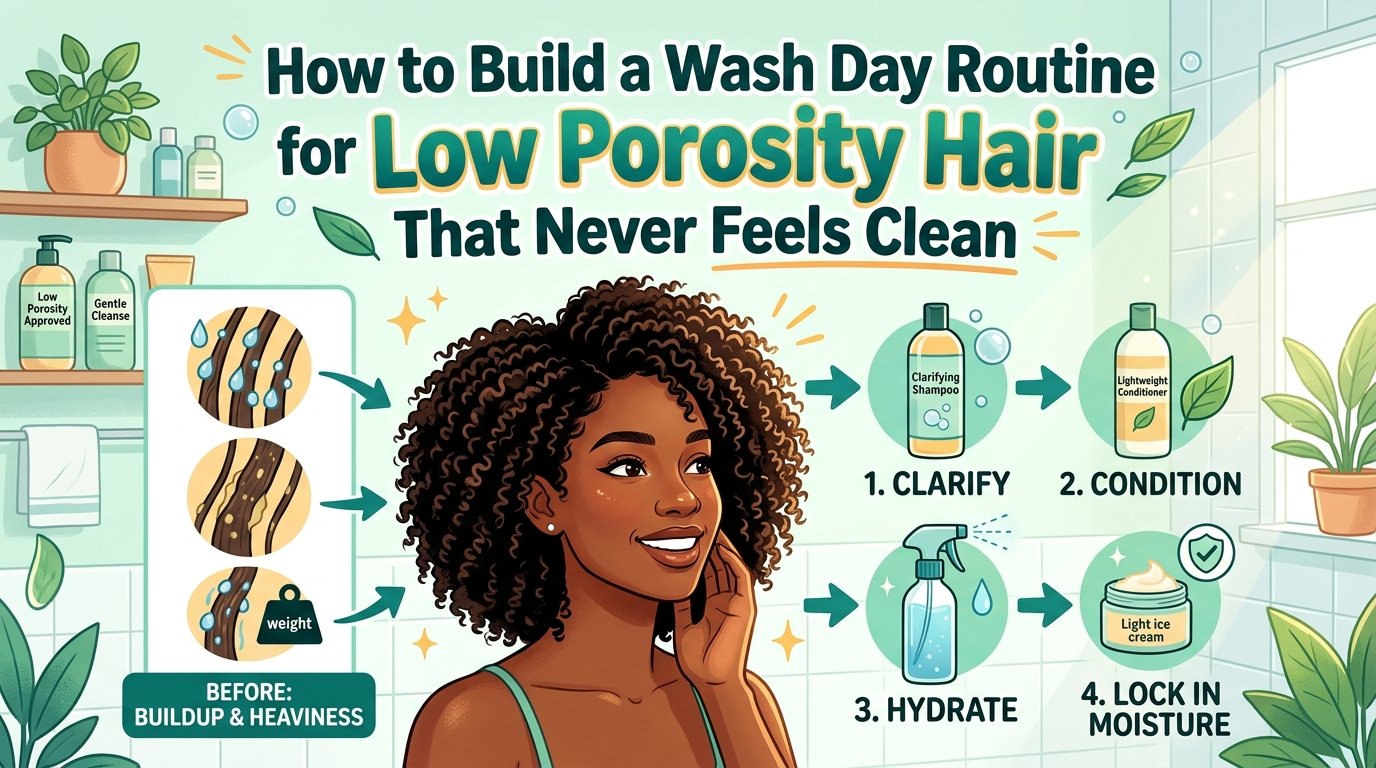
You shampoo, you condition, you deep condition, and your hair still feels like it has a coating that will not come off. If you have low porosity hair, this scenario is all too common, and the problem is not your effort. It is your cuticle structure fighting against every product you apply. Learning how to build a wash day routine for low porosity hair that never feels clean starts with understanding why your hair resists moisture in the first place.
Low porosity hair has tightly overlapping cuticle layers that act like a sealed shield. Water and products sit on top instead of penetrating the hair shaft, leaving buildup that mimics the sensation of unwashed hair. The fix is not washing more often. It is washing differently, with heat, sequencing, and product selection tailored to how your cuticle actually behaves.
In this guide, we break down a complete wash day routine for low porosity hair, step by step, plus the science behind water temperature, the mistakes that keep your hair feeling dirty, and a troubleshooting checklist for when nothing seems to work.
Table of Contents
Understanding Low Porosity Hair
Low porosity hair has a cuticle layer that lies flat and tight against the hair shaft. Think of it like roof shingles pressed down flat instead of lifted up. Because the cuticles are so compact, moisture has a hard time getting in, and once products do find their way inside, they have an equally hard time getting out.
This is the core problem behind the wash day routine low porosity hair challenge. Your hair is not actually dirty in the traditional sense. It is carrying a layer of product residue on the outside of the cuticle that never absorbed, and that residue creates a film that feels greasy, waxy, or heavy even right after washing.
Characteristics of Low Porosity Hair
If you are unsure whether you have low porosity hair, look for these common signs:
Products sit on your hair and never seem to absorb
Water beads up on your strands when you first step into the shower
Your hair takes significantly longer to get fully wet and to dry
Conditioner leaves a film that makes your hair feel coated rather than moisturized
Heavy butters and thick oils make your hair feel greasy within hours
Your hair loves heat-based treatments like steam, hot oil, and hooded dryers
Low porosity is largely genetic. It is not caused by damage, although chemical treatments and heat damage can change porosity over time. For most people with this hair type, the characteristics show up from childhood and remain consistent throughout life.
The Float Test: Confirming Your Porosity
Take a single strand of clean, dry shed hair and drop it into a glass of room temperature water. High porosity hair sinks quickly because water absorbs into the open cuticle. Low porosity hair floats for a long time because the tight cuticle resists water absorption. If your strand is still floating after five minutes, you have low porosity hair.
Why Low Porosity Hair Never Feels Clean
This is the question that frustrates so many people. You wash your hair, it feels clean for about an hour, and then the heavy, coated feeling returns. The reason comes down to two factors working together: product buildup on the cuticle surface and incomplete rinsing.
When you apply conditioner, leave-in, or styling products to low porosity hair, much of that product never penetrates the hair shaft. It sits on the outside of the cuticle, layer after layer, wash day after wash day. Regular shampooing removes some of it, but not all. The remaining residue creates a film that traps sebum and environmental dirt, producing that persistent dirty feeling.
On top of that, low porosity hair is slow to rinse clean. Because the cuticle is tight, water does not easily flush through the hair fiber. Conditioner and product residue cling to the outer layer even after a thorough rinse, and when your hair dries, that leftover film becomes more noticeable.
The solution is not to wash more frequently. Over-washing strips the small amount of moisture that does manage to enter the hair, leaving it dry underneath while still coated on top. The real fix is a targeted routine that uses heat to open the cuticle, clarifying treatments to remove buildup, and lightweight products that can actually penetrate.
How to Build a Wash Day Routine for Low Porosity Hair: Step by Step
This seven-step routine is designed specifically for low porosity hair that never feels clean. Each step addresses a specific part of the problem, from opening the cuticle to sealing in moisture without leaving residue.
Step 1: Pre-Poo with a Lightweight Oil and Heat
Pre-poo means applying a treatment before shampooing to protect the hair and prepare the cuticle. For low porosity hair, skip heavy oils like castor oil or thick butters. They will not penetrate and will add to your buildup problem. Instead, use a lightweight oil such as argan, grapeseed, sweet almond, or jojoba.
Section your dry hair and work a small amount of warmed oil through each section from mid-length to ends. Avoid the scalp unless you are dealing with a dry, flaky scalp. Cover with a plastic cap and sit under a hooded dryer or use a thermal heat cap for 15 to 20 minutes. The gentle heat opens the cuticle just enough for the oil to begin penetrating the hair shaft.
Users across Reddit communities consistently report that pre-pooing with heat is the single most effective change they made to their wash day. One user in r/Naturalhair described it as the difference between products bouncing off and products actually soaking in.
Step 2: Clarify with a Sulfate or Acidic Shampoo
This is the step most people with low porosity hair skip, and it is the main reason their hair never feels clean. A clarifying shampoo removes the buildup that regular shampoos leave behind. Use a clarifying treatment every two to four weeks, or more often if you use heavy styling products regularly.
Look for a clarifying shampoo that contains either sodium lauryl sulfate for a deep clean or an acid-based formula like apple cider vinegar or citric acid for a gentler approach. Work the shampoo into your scalp first, massaging thoroughly for two to three minutes. Let the lather run through the lengths as you rinse rather than scrubbing the ends, which can cause tangling.
Signs you need to clarify include hair that feels coated even after washing, products that suddenly stop working, curls that lose their definition, and hair that looks dull instead of shiny. If you notice any of these, a clarifying wash should be your first move, not a deep conditioning session.
Step 3: Fully Saturate and Detangle with Warm Water
Low porosity hair resists getting wet. Before you apply any conditioner, make sure your hair is completely saturated. Take your time here. Use warm water, not hot, and let it run over your hair for a full minute longer than you think necessary. You will feel the difference when water finally begins absorbing into the strands rather than beading up and rolling off.
Once your hair is saturated, apply a slippery rinse-out conditioner and detangle from the ends upward using a wide-tooth comb or your fingers. The warm water helps slightly lift the cuticle, and the conditioner provides slip that reduces breakage during detangling. Work in sections to ensure every strand gets coated.
Step 4: Condition with Steam or a Thermal Cap
Apply your conditioner generously and do not rush the processing time. For low porosity hair, conditioning without heat is almost pointless because the tight cuticle prevents penetration. Cover your conditioned hair with a plastic cap and apply heat for at least 15 minutes.
Options for heat include a hooded dryer, a thermal heat cap that you microwave, a handheld steamer, or simply sitting in a steamy bathroom after a hot shower. Steam is particularly effective because it provides both heat and moisture simultaneously, softening the cuticle and allowing the conditioner to work its way inside the hair shaft.
Rinse the conditioner out with warm water, not cool. Many guides recommend a cold water rinse to seal the cuticle, but for low porosity hair, that cold rinse happens too early and traps product residue inside the cuticle layers. Save the cool rinse for the very end of your routine, after your leave-in and sealing products are applied.
Step 5: Deep Condition Every Wash Day
For low porosity hair, deep conditioning is not optional. It is the main event of wash day. After rinsing out your regular conditioner, apply a deep conditioning treatment that is moisture-focused rather than protein-heavy. Low porosity hair is often protein-sensitive, meaning protein treatments sit on the cuticle and cause stiffness and buildup.
Look for deep conditioners with humectants like glycerin, honey, and aloe vera, which draw moisture into the hair. Apply the deep conditioner in sections, cover with a plastic cap, and sit under heat for 30 minutes. The combination of humectants and heat is what allows moisture to finally penetrate past the tight cuticle.
If your hair feels stiff, brittle, or straw-like after a treatment, you likely used a protein-based product. Switch to a purely moisturizing formula and note the difference. This is one of the most common mistakes people make with low porosity hair.
Step 6: Apply Leave-In with the LCO Method
The LCO method stands for Liquid, Cream, Oil. It is the ideal layering system for low porosity hair because it starts with water-based products that can actually penetrate and ends with a light seal.
Start with a water-based leave-in conditioner or simply water itself applied to damp hair. Follow with a lightweight cream moisturizer, focusing on the ends. Finish with a thin layer of a penetrating oil like argan, jojoba, or sweet almond to seal everything in. Avoid heavy oils and butters like shea, castor, or mineral oil, which will sit on the surface and recreate the buildup problem you just solved.
The LCO method works better than the LOC method (Liquid, Oil, Cream) for most low porosity hair because applying oil before cream creates a barrier that blocks the cream from absorbing. Always end with oil, not start with it.
Step 7: Seal and Style with Minimal Product
Less is more for low porosity hair styling. Apply your styling product sparingly and in thin layers. If you need more hold or definition, add a second thin layer rather than a thick glob. Thick application guarantees buildup.
For sealing, use a light oil mist or a water-based styling cream rather than a heavy gel or pomade. Style as usual and let your hair air dry or use a hooded dryer on low heat. Avoid touching your hair while it dries, as this can disrupt the curl pattern and cause frizz.
Once your hair is completely dry, you can do your final cool water rinse if you are refreshing, or simply seal with a small amount of oil. The cool water at this stage seals the cuticle after all products have been absorbed, locking in moisture without trapping residue.
Water Temperature Science for Low Porosity Hair
Water temperature matters more for low porosity hair than for any other hair type. The tight cuticle needs warmth to soften and open, and it needs cool temperatures to contract and seal. Using the wrong temperature at the wrong time is a primary reason products either fail to absorb or fail to stay locked in.
Here is the breakdown. Use warm water during your initial rinse, during shampooing, during conditioner application, and during conditioner rinse-out. Warm water slightly raises the cuticle, allowing cleansers and conditioners to do their work. Use cool water only at the very end of your routine, as a final rinse after your leave-in and sealing products are already in place.
The common advice to rinse conditioner out with cold water is counterproductive for low porosity hair. If you seal the cuticle before products have fully absorbed, you trap conditioner residue just beneath the cuticle layer. That trapped residue is what creates the heavy, coated, never-clean feeling. Always finish warm and seal cool at the end.
For hard water areas, consider installing a shower filter. Hard water leaves mineral deposits on the cuticle that compound the buildup problem and make it even harder for moisture to penetrate. If your hair feels worse after washing in certain locations, water quality may be the hidden culprit.
Common Mistakes That Keep Low Porosity Hair Feeling Dirty
Even with the right routine, certain habits will sabotage your results. Here are the most common mistakes people make with low porosity hair, drawn from both expert guidance and real user experiences in curl communities.
1. Using Heavy Butters and Thick Oils
Shea butter, castor oil, and heavy styling pomades are popular in natural hair care, but they are the wrong choice for low porosity hair. These ingredients cannot penetrate a tight cuticle and instead form a thick film on the surface. That film traps dirt and sebum, recreating the dirty feeling within hours of washing. Stick to lightweight, penetrating oils and water-based products.
2. Skipping Clarifying Treatments
If you never clarify, buildup accumulates with every wash day. Your regular shampoo is not strong enough to remove silicones, heavy oils, and mineral deposits. Without regular clarifying, your hair will feel worse no matter how much you moisturize. Set a schedule for clarifying every two to four weeks depending on your product usage.
3. Conditioning Before Hair Is Fully Saturated
Applying conditioner to hair that is only partially wet means the conditioner cannot distribute evenly. The dry patches grab onto product and hold it in clumps, creating areas of heavy buildup next to areas that receive no moisture at all. Always take the extra minute to fully saturate your hair before applying any conditioning product.
4. Overusing Protein Treatments
Low porosity hair is frequently protein-sensitive. Protein molecules are large and cannot penetrate a tight cuticle, so they sit on the surface and create a hard, brittle coating. If your hair feels stiff and crackly after conditioning, switch to a moisture-only formula. Save protein treatments for rare occasions or skip them entirely unless a stylist specifically recommends one.
5. Deep Conditioning Without Heat
Sitting around for 30 minutes with conditioner in your hair and no heat source is almost a waste of product for low porosity hair. Without heat, the cuticle stays tight and the conditioner cannot penetrate. The investment in a thermal heat cap or a hooded dryer pays off quickly. Steam is even better because it adds moisture directly while softening the cuticle.
6. Rinsing with Cold Water Throughout
The cold water rinse is one of the most repeated hair care tips, but for low porosity hair it does more harm than good when applied too early. Cold water seals the cuticle shut, trapping whatever is on the hair surface beneath the cuticle layers. Save cold water for the final step only, after all products are absorbed.
Troubleshooting: Why Your Hair Still Does Not Feel Clean
If you have tried a low porosity routine and your hair still feels coated, heavy, or dirty, work through this checklist to identify the problem.
Checklist for Diagnosing the Problem
Have you clarified in the last four weeks? If not, start here.
Are you using any products with silicones? Check ingredient lists for ingredients ending in -cone.
Is your deep conditioner protein-based? Switch to a moisture formula.
Are you applying heat during conditioning? If not, add a thermal cap for 30 minutes.
Are you using heavy butters or oils? Swap them for lightweight alternatives.
Do you have hard water? Test your water or try a shower filter.
Are you rinsing thoroughly enough? Take an extra two minutes to rinse out all conditioner.
Product Buildup vs Moisture Deficiency
One of the most common sources of confusion is distinguishing between buildup and dryness, because both can make hair feel unpleasant. Here is how to tell them apart.
Product buildup makes hair feel heavy, coated, and almost waxy. It looks dull, loses curl definition, and feels worse when you add more product. The solution is clarifying.
Moisture deficiency makes hair feel dry, rough, and brittle. It may look frizzy and feel stretchy when wet. Adding more conditioner improves the feeling temporarily. The solution is deep conditioning with heat and a humectant-rich formula.
If you are unsure which problem you have, clarify first. If the dirty feeling improves, it was buildup. If your hair feels even drier after clarifying, it was moisture deficiency and you should follow up immediately with a heat-based deep conditioning treatment.
How Often Should You Wash Low Porosity Hair
Low porosity hair does not need daily washing. In fact, washing too frequently strips the limited moisture that manages to penetrate the cuticle. Most people with low porosity hair do best with a wash day every seven to ten days.
If you use a lot of styling products, work out regularly, or live in a humid climate, you may need to wash every four to five days. Listen to your scalp. If it feels itchy or you notice visible flaking, it is time to wash. If your scalp feels fine but your ends feel dry, you can stretch another few days and do a water-only refresh instead.
Clarifying frequency depends on your product usage. If you use heavy gels, creams, or silicone-based products, clarify every two weeks. If you stick to lightweight, water-based products, once a month is sufficient. Adjust based on how your hair looks and feels after each wash day.
FAQs
Should low porosity hair be washed daily?
No. Low porosity hair should be washed every seven to ten days for most people. Daily washing strips the limited moisture that manages to penetrate the tight cuticle, leaving hair drier and more prone to buildup. If you exercise heavily or use many styling products, washing every four to five days is acceptable, but daily washing will make the never-feels-clean problem worse over time.
What are common mistakes with low porosity hair?
The most common mistakes include using heavy butters and thick oils that sit on the cuticle, skipping clarifying treatments, overusing protein-based products, deep conditioning without heat, rinsing with cold water too early in the routine, and applying conditioner before hair is fully saturated with water. Each of these habits contributes to the coated, heavy feeling that low porosity hair is prone to.
How should I wash my low porosity hair?
Start with a lightweight pre-poo oil and heat for 15 minutes. Clarify every two to four weeks with a sulfate or acidic shampoo. Fully saturate hair with warm water before conditioning. Apply conditioner and process under a heat cap or steamer for 15 to 30 minutes. Rinse with warm water, apply a moisture-based deep conditioner with heat, then finish with the LCO method using lightweight products. Seal the cuticle with a cool rinse only at the very end.
Why does my hair never feel clean after washing?
Your hair never feels clean because product buildup sits on the surface of your tight cuticle and is not fully removed by regular shampooing. Conditioners, leave-ins, and styling products that cannot penetrate the cuticle leave a residue that traps sebum and environmental dirt. Adding a clarifying shampoo and using heat during conditioning are the two changes that make the biggest difference.
How does low porosity hair feel?
Low porosity hair typically feels smooth and almost glassy when healthy, but it can also feel coated, heavy, or waxy when product buildup is present. It repels water initially, taking longer to get fully wet and longer to dry. Products tend to sit on the surface rather than absorbing, and the hair can feel greasy within hours of applying heavy products.
Building a Wash Day Routine That Works for You
The key to building a wash day routine for low porosity hair that never feels clean comes down to three principles: use heat to open the cuticle, clarify regularly to remove buildup, and choose lightweight products that can actually penetrate. Heavy butters and cold rinses are not your friends. Steam, thermal caps, and humectant-rich conditioners are.
Start with the seven-step routine outlined here and adjust based on how your hair responds. Clarify if things feel heavy, deep condition with heat if things feel dry, and always finish warm before sealing cool. Within two or three wash days, you should notice a real difference in how clean and moisturized your hair feels from root to tip.
Your hair is not broken or impossible to manage. It just needs a different approach, and now you have one.