
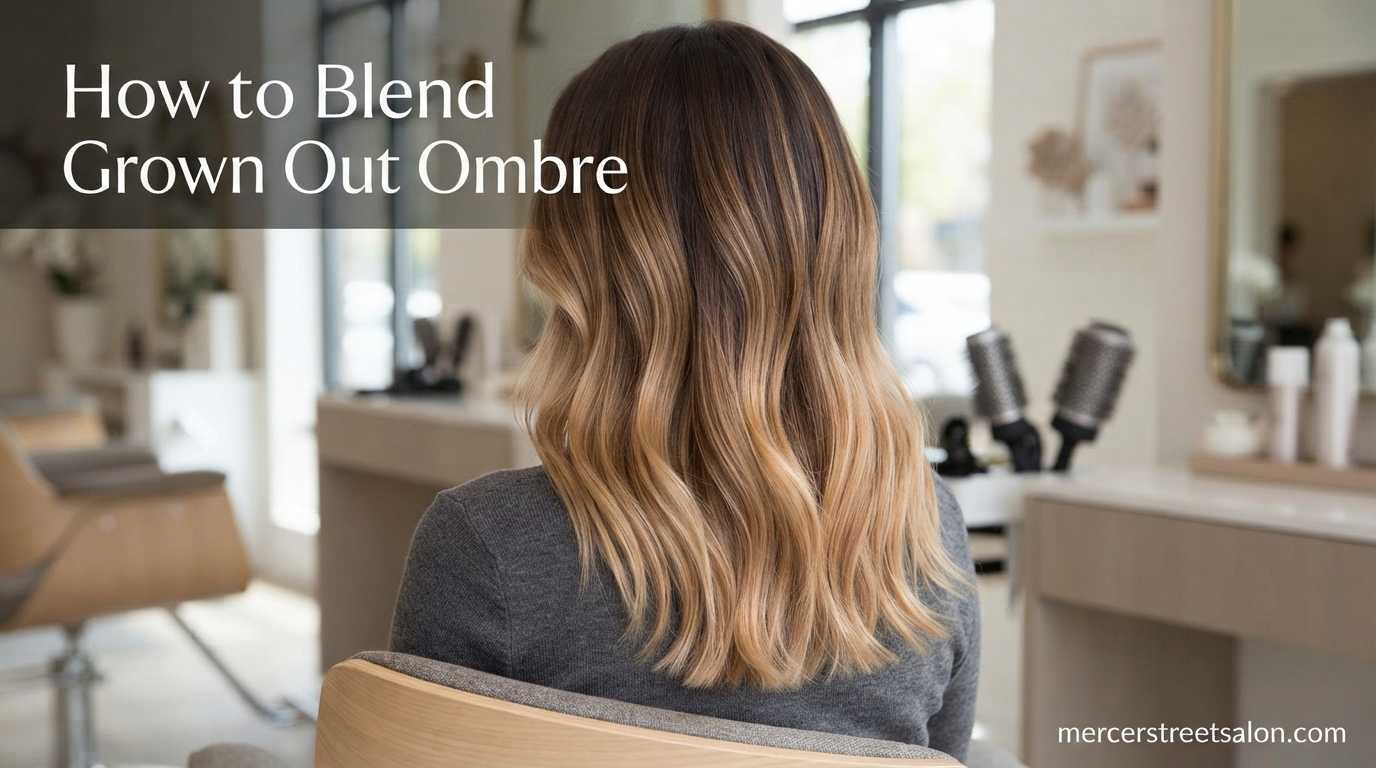
You fell in love with your ombre the day you left the salon. Six months later, there is a hard line cutting across your hair like a watermark, and you are wondering what went wrong. Nothing went wrong. Hair grows, and ombre by design creates a contrast between your natural root color and the lightened ends. The good news is that you can soften that line without starting over or booking a full color correction.
In this guide, I will walk you through how to blend a grown out ombre so the line is not so obvious, using six techniques that range from a quick salon root smudge to at-home maintenance you can do in your own bathroom. I have spent years behind the chair at Mercer Street Salon, and these are the same methods I use on clients who come in frustrated with that harsh band of regrowth.
Whether you want to stretch the time between appointments, save money on frequent color services, or simply make your grow-out look intentional, there is a technique here for your hair type, budget, and comfort level.
Table of Contents
What Is a Line of Demarcation?
A line of demarcation is the visible line where your natural regrowth meets previously colored or lightened hair. It is the boundary between two distinctly different tones, and on ombre hair it shows up as a sharp horizontal band rather than the soft gradient the style was originally designed to create.
Ombre creates this line more dramatically than other color services because the technique relies on a strong contrast. Your stylist lifted your mid-lengths and ends several levels lighter than your natural base. As weeks pass and your roots push down, that carefully placed transition zone shifts, leaving the lightest portion of the old gradient sitting right where your new growth ends.
The shorter the grow-out, the more obvious the line tends to be. Once you have two to three inches of regrowth, hair begins to grow at slightly different rates around your head, which actually helps soften the appearance. But most people notice the harsh band well before that point.
How to Blend a Grown Out Ombre So the Line Is Not So Obvious
There is no single right way to soften a grown-out ombre line. The best approach depends on how light your ends are, how dark your natural root is, whether you want to visit a salon, and how much time you want to invest between appointments. Here are six techniques that work, ranked roughly from most common to most niche.
1. Root Smudge
A root smudge is the most popular salon technique for softening ombre regrowth. Your stylist applies a demi-permanent color formula that is slightly lighter than your natural root, painting it over the first inch or two of regrowth and dragging it down to blur the line where your natural color meets the old lightened section.
The goal is not to darken your roots. It is to create a transitional shade that bridges the gap between your natural base and the lighter hair below. Because the formula sits somewhere between your root color and the previously lightened hair, your eye no longer registers a hard edge.
A root smudge typically takes 30 to 45 minutes in the salon and lasts about four to six weeks before it fades enough for the line to reappear. It is low-commitment, gentle on the hair because demi-permanent color does not lift your natural pigment, and works on virtually every hair color from blonde to brunette to red.
2. Shadow Root and Root Melt
A shadow root is similar to a root smudge but uses a deeper, richer formula to create a shadowy effect at the scalp area. The color is darker than your natural root, which adds depth and dimension while softening the contrast with the lighter lengths below.
A root melt, sometimes called color melting, takes this idea further by literally melting two or three shades together. Your stylist applies your root shade, then a mid-tone, then blends them down into your existing lightened hair so there is no discernible break between any of the colors. The result is a seamless gradient that looks intentional rather than grown-out.
Shadow roots and root melts last longer than a basic smudge, often six to eight weeks, because the deeper formula grabs more firmly onto the hair. They are ideal if you want a lived-in, low-maintenance look and you are comfortable with slightly more dimension at your roots.
3. Balayage and Highlights Over the Line
If you want to keep your hair light but eliminate the harsh band, adding freehand balayage or fine highlights through the demarcation zone is one of the most effective ways to break it up. Instead of darkening the roots, your stylist lightens strands of hair in and around the line so the contrast between root and end becomes fragmented.
This technique works especially well if your ombre was originally done with a balayage approach, because the new hand-painted pieces blend naturally with the existing pattern. The key is to keep the new highlights fine and irregular so they never form a second hard line of their own.
For clients with very dark natural hair and very light ends, I often pair this technique with lowlights. Lowlights add back depth by depositing a mid-tone shade into select strands, which restores dimension and prevents the hair from looking over-lightened. Highlights lift the line, lowlights add depth, and together they recreate the soft transition your ombre once had.
Expect a balayage or highlight refresh to last eight to twelve weeks before you notice regrowth again.
4. Demi-Permanent Color Diffusion
Demi-permanent color is the workhorse of color correction because it deposits tone without permanently altering your natural pigment. To diffuse a grown-out ombre line, your stylist can apply a demi formula in a shade that sits between your root color and your ends, then comb it through the demarcation zone so it softens the edge.
This is sometimes called a gloss or glaze treatment, and it does double duty. It blurs the harsh line and refreshes the overall tone of your hair, which often looks muddy or brassy by the time the ombre has grown out. A demi-permanent diffusion will not dramatically change your color, but it will make the transition look intentional.
The catch is longevity. Demi-permanent color gradually fades over four to eight weeks depending on how often you wash, how hot your water is, and whether you use color-safe products. Plan on refreshing every six weeks if you want the line to stay softened.
5. Backcomb and Paint
The backcomb and paint technique is a salon-level method that creates a beautifully diffused line by combining teasing with freehand color application. Your stylist takes small sections of hair at the demarcation line, backcombs each one to create a cushion of interwoven hair, then paints lightener or color onto the teased area.
The backcombing does the blending work mechanically. Because the hair within each teased section contains both your natural root color and the lighter ends, any product applied to that zone transitions across a wide band of mixed hair rather than a single hard edge. When the backcomb is smoothed out, the line is gone.
This is one of the most natural-looking techniques I use, but it does require a steady hand and experience with teasing. It is not a great DIY project. If your salon visit is the path you choose, ask specifically for backcomb and paint blending and your stylist will know exactly what you mean.
6. Dry Brushing
Dry brushing is a lighter-touch technique where color or toner is applied to dry hair using a brush with very little product on it. The stylist works in quick, sweeping motions across the demarcation line, depositing just enough pigment to soften the edge without creating a solid band of color.
Because the application is so light, dry brushing will not dramatically change your overall color. Think of it as a soft-focus filter for your demarcation line. It works best when the line is still relatively subtle and you want to stretch a few extra weeks before a fuller blending service.
Dry brushing is also one of the more forgiving at-home options if you have a steady hand and a color-depositing product you trust. Just keep the product sheer and build slowly.
Root Smudge vs Shadow Root: What’s the Difference?
This question comes up constantly, and the confusion is understandable because the two techniques look similar in photos. The short answer is that a root smudge uses a color slightly lighter than your natural root to bridge the gap, while a shadow root uses a deeper shade to create contrast and dimension at the scalp.
A root smudge softens the line by mimicking your natural color transition. A shadow root softens the line by adding depth that draws the eye away from the harsh band. Both work, but they create different finished looks. A smudge reads as a natural grow-out. A shadow root reads as a more stylized, lived-in color.
There is also the root tap, which is a quick five-to-ten minute service where toner is tapped onto the root area to refresh tone without changing the depth. It is the lightest touch of all the blending techniques and works well as a maintenance step between more involved services.
At-Home Maintenance Between Salon Visits
The work does not stop when you leave the salon. How you care for your hair between appointments plays a huge role in how long your blended line stays soft. Here is what I recommend to clients who want to stretch their salon visits.
Use a color-depositing shampoo or conditioner that matches your hair tone. These products deposit a small amount of pigment every time you wash, which helps keep the demarcation zone toned and prevents the ends from going brassy. Blondes do well with purple shampoo, brunettes with blue-tinted formulas, and reds with color-enhancing deposits. Use them once or twice a week, not every wash, to avoid build-up.
Skip the hot water. Hot water opens the cuticle and accelerates color fade, which means your carefully blended root smudge will disappear faster. Wash with lukewarm or cool water and your color will hold significantly longer.
Book a gloss or glaze treatment every four to six weeks. A clear or tinted gloss refreshes tone, adds shine, and helps maintain that softened line without a full color service. Many salons offer express gloss appointments that take under 30 minutes.
Avoid box dye between appointments. I see this constantly, and it always makes the problem worse. Box dye deposits permanent color that is difficult to lift, and it creates a new line of demarcation on top of the one you are trying to fix. If you need a quick refresh, use a demi-permanent or semi-permanent product that washes out gradually.
What to Ask Your Stylist
One of the most common frustrations I hear from new clients is that they did not know the right terminology to ask for. If you walk in and say you want your roots fixed, you may end up with a full color service you did not want.
Instead, be specific. Tell your stylist you have a grown-out ombre and you want to soften the line of demarcation without changing your overall color. Ask about a root smudge if you want to keep things natural. Ask about a shadow root or root melt if you want more dimension. Ask about adding balayage or highlights if you want to keep the hair light.
Mention how often you are willing to come back. If you want to stretch six to eight months between appointments, your stylist will choose a technique that grows out softly rather than one that needs frequent upkeep. The more information you give, the better the result.
FAQs
How to fix outgrown balayage?
To fix outgrown balayage, ask your stylist for a root smudge or root melt to blur the line where your natural color meets the old balayage. You can also add fresh balayage pieces through the demarcation zone to break up the harsh band, or use a demi-permanent color diffusion to soften the transition without changing your overall look.
How to blend hair when growing out color?
The most effective way to blend hair while growing out color is to apply a demi-permanent formula in a shade between your root and your ends, then comb it through the demarcation line to diffuse the edge. Adding lowlights or fine highlights also helps fragment the contrast so the grow-out looks intentional.
How to blend highlights growing out?
To blend highlights that are growing out, use a root smudge to soften the line between your natural roots and the highlighted sections. A shadow root or color melt adds depth at the scalp so the contrast reads as lived-in rather than grown-out. Color-depositing shampoo between appointments keeps the tone fresh.
Can you tone grown out highlights?
Toning alone will not fully eliminate a demarcation line because toner shifts tone rather than depth. It can help refresh the highlighted sections and remove brassiness, but to actually blur the line you need a technique like a root smudge, demi-permanent diffusion, or gloss that deposits pigment at the boundary between root and ends.
How to fix a demarcation line in hair?
The fastest way to fix a demarcation line is a root smudge, where a demi-permanent color slightly lighter than your natural root is painted over the regrowth and dragged down to blur the edge. For a more dramatic softening, a root melt blends multiple shades together so there is no visible break between colors.
Do balayages grow out nicely?
Balayage generally grows out more softly than traditional foiled highlights or ombre because the hand-painted placement creates an irregular, natural-looking transition. That said, any color service that lifts the hair several levels will eventually show a line of demarcation. A root smudge every six to eight weeks keeps the grow-out looking intentional.
What causes a line of demarcation in hair?
A line of demarcation is caused by the contrast between new natural hair growth and previously colored or lightened hair. When hair is lifted several shades lighter during an ombre or balayage service, the difference between the natural root and the colored section becomes visible as a distinct line once the hair grows.
Final Thoughts on Blending a Grown Out Ombre
Learning how to blend a grown out ombre so the line is not so obvious comes down to choosing the right technique for your hair, your budget, and how often you want to visit the salon. A root smudge is the most universal fix, but shadow roots, root melts, balayage refreshes, demi-permanent diffusion, backcomb and paint, and dry brushing all have their place.
The most important thing I tell clients is that you do not have to start over. Your ombre is not ruined. With the right blending service and consistent at-home maintenance, that harsh line can disappear in a single appointment and stay soft for weeks. Find a stylist you trust, use the right terminology, and be honest about how much upkeep you are willing to commit to.