
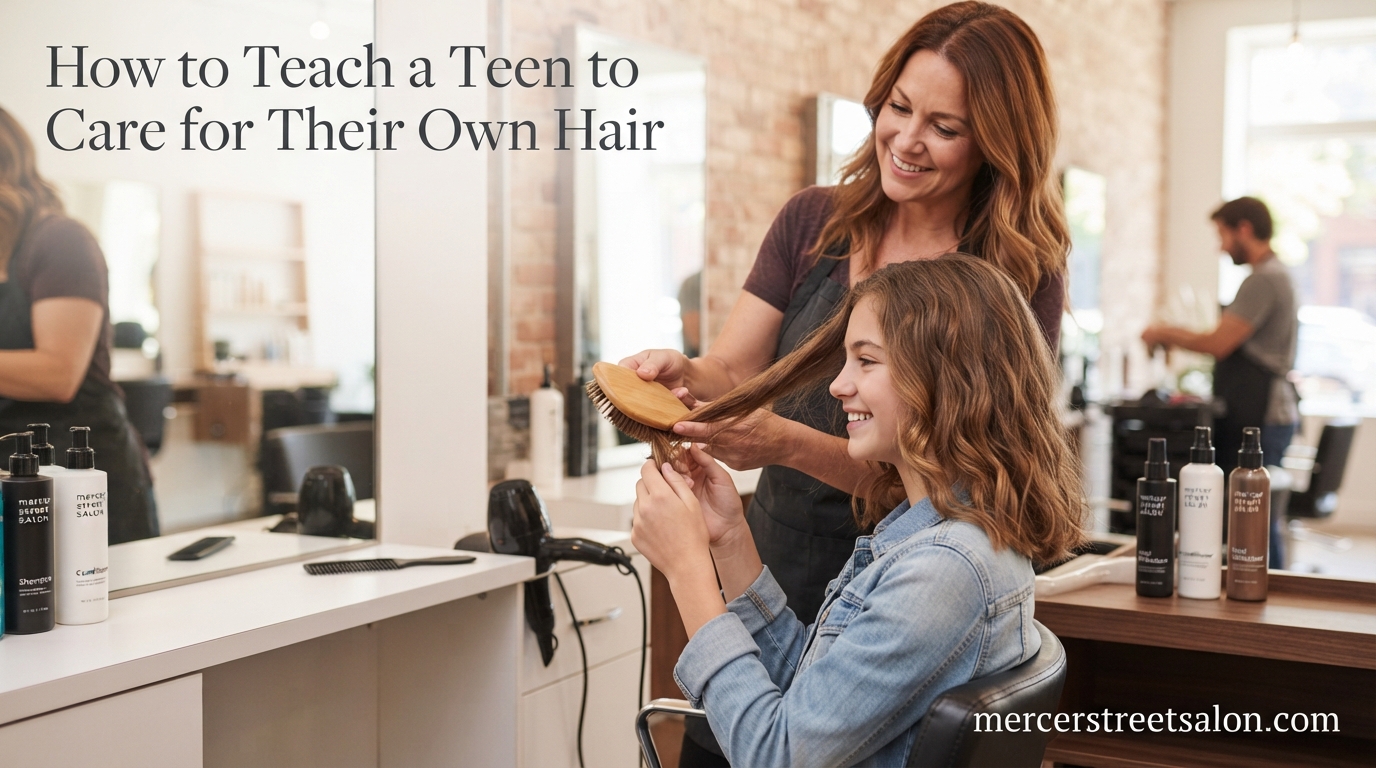
If you are reading this, you are probably standing outside a bathroom door while your teen argues with a brush. I have been there, and so have thousands of parents in forums like r/Parenting and r/Haircare. Learning how to teach a teen to care for their own hair is one of those quiet parenting milestones that nobody hands you a manual for.
The good news is that with a clear age-based plan, a few techniques borrowed from professional stylists, and some patience, your teen can take full ownership of their hair. This guide walks you through every step, from the first supervised wash day to confident solo styling, plus troubleshooting for oily scalps, tangles, and the occasional teen who simply refuses to care.
Table of Contents
Why Teen Hair Care Independence Matters
Hair changes during puberty. Hormonal shifts ramp up sebum production, which means scalps get oilier practically overnight. Curls may loosen, tighten, or appear for the first time. Hair that was once fine and easy can suddenly feel coarse, frizzy, or unmanageable.
Teaching your teen to handle these changes themselves builds more than just clean hair. It builds body confidence, daily self-discipline, and a self-care habit they will carry into adulthood. Parents on Reddit repeatedly mention that the emotional payoff is just as important as the practical one. A teen who understands their hair feels more in control of their appearance during a chaotic life stage.
When to Start Teaching Hair Independence: An Age Timeline
Most children can begin participating in their own hair care between ages 7 and 9, with full independence typically reached between 12 and 14. The exact timeline depends on hair type, maturity, and interest, not just age alone.
Here is a practical breakdown that parents in our community have found realistic:
- Ages 7 to 9: Your child helps with shampoo application, rinses with guidance, and watches you detangle. Keep it low-pressure and bath-time casual.
- Ages 10 to 11: They wash independently with you nearby for backup. Introduce conditioner and explain why it goes on the ends, not the roots. This is the perfect age to start teaching detangling technique.
- Ages 12 to 13: They handle full wash days on their own, including product selection. You step in only for thick or curly hair that needs sectioning help.
- Ages 14 to 16: Full independence. Your role shifts to budget for products, salon trips, and answering questions when something goes wrong.
One Reddit parent put it well: treat the transition like training wheels on a bike. Remove support gradually, not all at once.
How to Teach a Teen to Care for Their Own Hair: Step by Step
The most effective approach follows a gradual release model: I do, we do, you do. Here is the step-by-step process I recommend after working with families through this exact transition.
Step 1: Identify their hair type together. Sit down and actually look at their hair. Is it straight, wavy, curly, or coily? Is the scalp oily, dry, or balanced? Is the hair fine, medium, or coarse? Write it down. Teens engage more when they understand the why behind each step.
Step 2: Build a simple routine together. A teen routine does not need twelve products. Start with shampoo, conditioner, a detangling tool, and one styling or moisturizing product. Let your teen pick the scent or brand within a budget. Ownership increases follow-through.
Step 3: Do a supervised wash day side by side. Walk through the full process once while they watch, then once while they do it and you coach. Resist the urge to take over when they are slow.
Step 4: Step back to a check-in model. For the next two to four weeks, check their scalp and ends after each wash day. Offer feedback only on technique, not speed. Praise specifics, not vague compliments.
Step 5: Release full control with a safety net. Let them own it, but leave the door open for questions. Expect a rough patch around week three when novelty fades. That is normal, not a sign of failure.
Teaching Washing Basics Without the Power Struggle
Washing frequency is the most common battleground, and most parents get it wrong by insisting on daily washes. For most teens, two to three washes per week is plenty. Curly and coily hair may need washing only once a week with co-washing in between.
Oily, straight hair may require daily or every-other-day washing, especially during puberty when sebum production surges. The key is teaching your teen to read their own scalp, not following a rigid schedule.
When teaching the actual washing technique, focus the shampoo on the scalp. That is where oil builds up. Conditioner belongs on the mid-lengths and ends. One Reddit tip that gets repeated constantly: apply dry shampoo to the roots right after washing and towel-drying, not on day three when hair is already greasy. It prevents oil buildup before it starts.
If your teen resists washing, stop nagging about frequency and start teaching consequences. Let them feel what second-day oily hair looks like. Natural results teach faster than lectures.
Moisturizing and Conditioning by Hair Type
Moisturizing is where one-size-fits-all advice falls apart. Each hair type needs a different approach, and teens get frustrated fast when products do not deliver.
Straight hair: A lightweight conditioner applied from the mid-lengths down is usually enough. Skip heavy creams and oils, which weigh straight hair down and make it look greasy within hours.
Wavy hair: Use a conditioner and a light leave-in. Teach your teen to apply products to damp, not soaking wet, hair and to scrunch gently upward. Towel-rubbing destroys wave definition.
Curly hair: Moisture is non-negotiable. Teach sectioning: divide hair into four to six sections and work conditioner through each one with fingers or a wide-tooth comb. A leave-in conditioner followed by a curl cream or gel helps hold the curl pattern. Deep condition once a week.
Coily hair: The LOC method (leave-in, oil, cream) works well here. Coily hair needs the most moisture and the most frequent reapplication between wash days. Teach your teen to moisturize in sections every two to three days.
Detangling Without Tears
Detangling is the number one pain point parents mention in forums, especially for thick, wavy, or curly teen hair. The tears and arguments are usually caused by wrong technique, not bad hair.
Always detangle from the bottom up, not the top down. Start at the ends and work toward the roots in small sections. This prevents the knot-pushing that causes ripping and breakage.
Use the right tool. A wide-tooth comb or a detangling brush with flexible bristles works for most hair types. For thick or curly hair, detangle only when hair is saturated with conditioner during the shower. Dry detangling causes breakage and pain.
Teach your teen to hold the hair above the section they are combing. This reduces pulling on the scalp and makes the process far less painful. It sounds small, but this single tip changes everything for tender-headed teens.
Troubleshooting Common Teen Hair Issues
Puberty throws several specific hair problems at teens, and most parents are not prepared. Here is how to handle the most common ones.
Oily scalp: This is the most frequent teen complaint and it is entirely hormone-driven. Wash every one to two days, focus shampoo on the scalp, and avoid touching hair throughout the day. Hands transfer oil. A dry shampoo between washes absorbs excess sebum.
Dry hair and split ends: Usually caused by over-washing, hot tool damage, or skipping conditioner. Reduce wash frequency, apply conditioner religiously to the ends, and trim every eight to twelve weeks. No product repairs split ends; only a trim removes them.
Dandruff: Common during puberty and often confused with dry scalp. A zinc pyrithione or salicylic acid shampoo used twice a week usually resolves it within a month. If flaking persists or the scalp is itchy and red, see a dermatologist.
Thinning or shedding: Some shedding is normal, but if your teen notices significant hair loss, it could be stress, nutritional deficiency, or a medical issue. Take it seriously and consult a doctor rather than dismissing it.
Teen Boys and Hair Care: Don’t Forget Them
Almost every guide on this topic ignores teen boys, and that is a real gap. Boys going through puberty deal with the same oily scalp, dandruff, and texture changes. If your son has longer hair, he also faces tangles, frizz, and the need for conditioning.
Start simple. Teach boys to shampoo the scalp, condition the ends if hair is longer than a few inches, and avoid over-washing which strips natural oils and triggers rebound oiliness. For shorter styles, a good wash two to three times a week with a basic shampoo is usually enough.
One Reddit parent shared that their teenage son had long, thick, curly hair but had no idea what to do with it. The fix was a five-minute tutorial on conditioner and a wide-tooth comb. Boys often just need the information; they rarely get it anywhere else.
Building Confidence Through Hair Care
Hair care is deeply personal, especially for teens who are figuring out their identity. How you talk about their hair matters as much as the techniques you teach.
Celebrate their natural texture. If your teen has curls, waves, or coils, help them see those features as strengths, not problems to fix. Avoid comparing their hair to siblings or friends. Every head of hair has a learning curve.
Let them make low-stakes mistakes. A bad product choice or a rough wash day is a learning opportunity, not a crisis. When teens feel trusted to experiment, they engage more deeply with the process.
Quick Hair Care Do’s and Don’ts for Teens
Print this list and stick it on the bathroom mirror for quick reference.
Do: Wash based on how your scalp feels, not a rigid schedule. Apply conditioner to the ends only. Detangle from the bottom up. Use heat protectant before any hot tool. Sleep on a satin or silk pillowcase.
Don’t: Rub hair aggressively with a towel to dry it. Brush curly hair when dry. Apply conditioner to the scalp. Wash with scalding hot water. Skip trims when you see split ends.
FAQs
What is a good hair care routine for teens?
A solid teen hair care routine includes shampooing the scalp every one to three days depending on oiliness, conditioning the mid-lengths and ends each wash, detangling from the bottom up with a wide-tooth comb or detangling brush, applying a leave-in or styling product suited to their hair type, and protecting hair at night with a satin pillowcase or bonnet. Trim every eight to twelve weeks to prevent split ends.
At what age do teens learn to do their own hair?
Most children can begin helping with their own hair care around ages 7 to 9. By ages 10 to 11 they can wash independently with supervision. Full independence, including product selection and complete wash days, is typically achieved between ages 12 and 14. The timeline varies based on hair type, maturity, and the teen’s own interest.
How often should a 14-year-old wash their hair?
Most 14-year-olds should wash their hair two to three times per week. Oily, straight hair may need washing every one to two days, especially during puberty. Curly and coily hair often does best with one wash per week plus co-washing in between. Teach your teen to base frequency on how their scalp feels rather than a fixed schedule.
How do I get my resistant teen to care about hair care?
Stop nagging and start giving ownership. Let your teen choose their own products within a budget, teach them the why behind each step, and allow natural consequences when they skip care. Avoid comparing them to siblings. Sometimes resistance comes from not knowing how, so offer a no-pressure tutorial and then step back. Praise specific improvements rather than offering vague criticism.
What are 3 hair care do’s and don’ts for teens?
Do wash based on scalp feel, apply conditioner to ends only, and detangle from the bottom up. Don’t rub hair dry with a towel, brush curly hair when dry, or apply conditioner to the scalp. Bonus: always use heat protectant before any hot tool.
Final Thoughts
Learning how to teach a teen to care for their own hair takes patience, but the payoff is worth it. Start early, release control gradually, and remember that a few rough wash days are part of the process. Your teen will get there, and the confidence they gain will extend far beyond the bathroom mirror.