
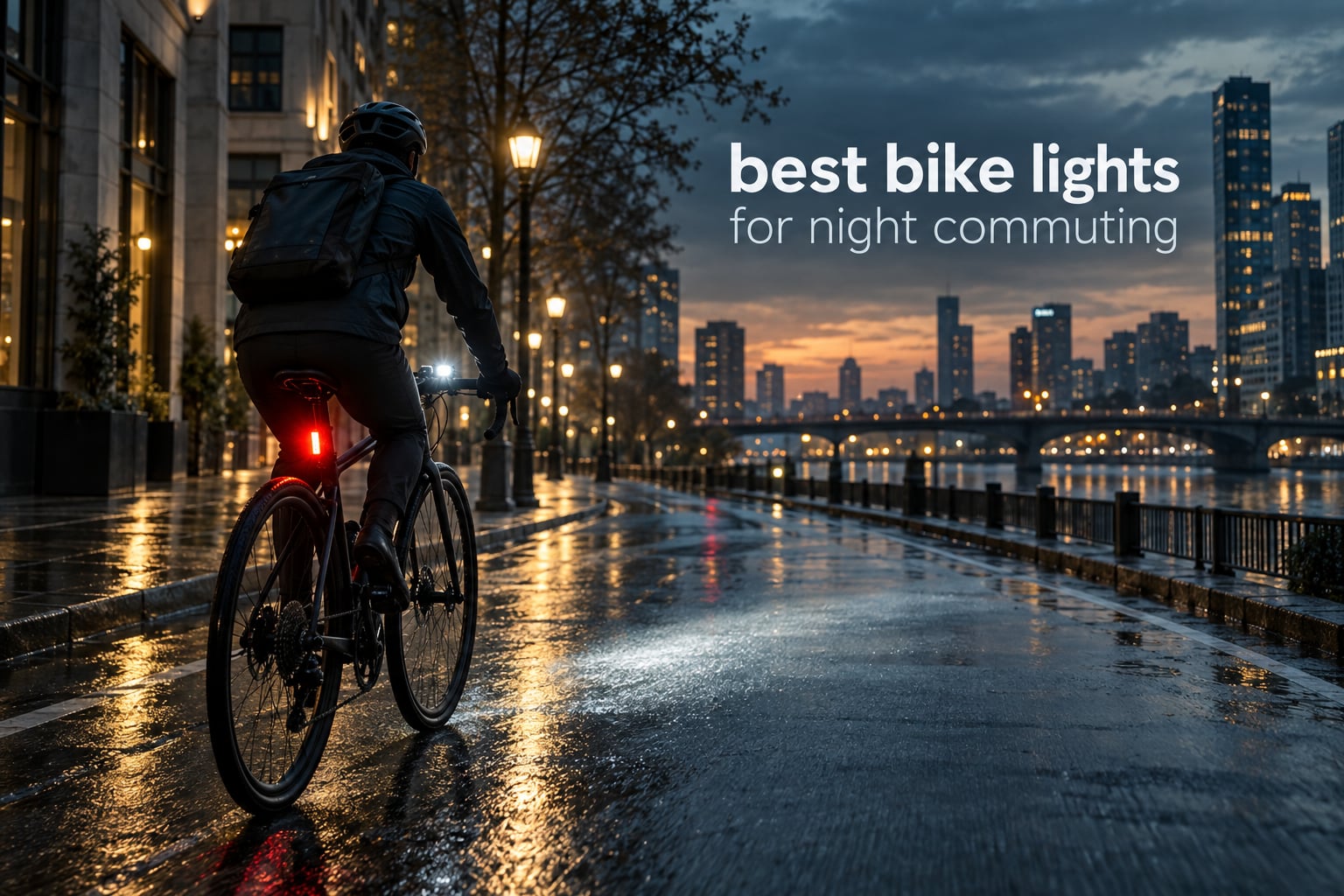
Most people buying bike lights for night commuting make the same mistake twice: they buy one bright front light, forget the rear entirely, then wonder why drivers still nearly hit them. A bike light does two separate jobs. The front light exists so you can see the pothole before you hit it; the rear light exists so the car behind you knows you are a cyclist and not a motorbike. You need both, and they are not even the same kind of product.
We spent the last few weeks reading owner reviews on 12 of the most-reviewed and highest-rated bike lights currently available, cross-checking every published spec, and comparing what happens on a real commute rather than what the box promises. The list below covers everything from a simple front-and-back set for occasional riders to a computer-mounting headlight for people who treat the daily ride like a sport. This guide covers bicycle lights only, and every entry is a bike light, not a motorcycle lamp.
Two things came out of that research that no current buying guide tells you. First, brightness in raw lumens is a poor guide to whether drivers see you: in Ride On’s lights test, the brightest lamp in the group ranked only eighth of eleven with human judges, while the most visible one measured roughly a third of that output. Second, the charging port and the mount matter more to long-term happiness than any lumen number. All 12 picks were last reviewed and checked in 2026, and every spec below comes from the published manufacturer data and aggregated owner reviews.
If you also ride two wheels of the motorised variety, our guides to the best electric scooters for commuting and the best adult scooters for city commuting cover the same after-dark route planning from a different angle.
Table of Contents
Top 3 Best Bike Lights for Night Commuting (October 2026)
All 12 Bike Lights Compared for 2026
How Many Lumens Do You Actually Need?
For most night commutes you need 400 to 750 lumens on the front light and a flashing red rear light rated at 300 lumens or higher. Well-lit city streets sit at the bottom of that range, unlit paths and country lanes need the top of it, and anything above 1000 lumens adds glare for oncoming traffic more than it adds usable road light.
There are four practical tiers, and matching your light to the darkest part of your route matters more than matching it to your budget.
1. Lit city streets with regular street lighting. 200 to 400 lumens is plenty, and honestly more than you need. Here your front light is mostly a courtesy signal so drivers know a cyclist is approaching an intersection, not a road-lighting tool. A wide beam and a good flash mode beat raw output at this level.
2. Suburban routes with gaps in the street lighting. 400 to 750 lumens. This is the community consensus band that comes up constantly in rider discussions, and it is the sweet spot for most people. Long-running riders report that a wider beam at this output reveals potholes and gravel that a narrow brighter beam would miss.
3. Unlit shared paths and park trails. 750 to 1200 lumens. Paths tend to be narrower than roads, so what you want is spread rather than reach. Watch for a cut-off beam here: a shaped beam lights the path edge without throwing glare across it at people walking or running the other way.
4. Rural roads with oncoming traffic. 800 to 1400 lumens, but aim the beam low and use a flash or pulse mode rather than a permanent high beam. On a dark road with no street lighting, your own beam return from the surface is the thing that dazzles people coming the other way, and a low-mounted, dimmed, flashing light is far kinder than a helmet-mounted flood set to maximum.
One measurement worth knowing: in Ride On’s test the brightest front light produced 17 lux and was ranked eighth out of eleven by human judges, while the most visible light measured 5.8 lux. Their conclusion was that drivers read a combination of flash rate, environment and output rather than a single brightness number. Judge the shape of the beam and the flash pattern, not just the wattage on the box.
Best Front Lights for Night Commuting
Front lighting is the half of the job riders underrate. A rear light makes you visible; the front light lets you see glass, potholes, standing water and the wheel tracks of a car in front of you. The nine picks below cover the range from a 150-lumen set for lit streets to a 1200-lumen lamp for genuinely dark roads, and each one earns its place for a specific route rather than for a number on a spec sheet.
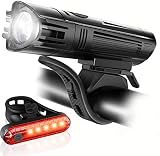
1. Ascher Ultra Bright Bike Light Set – Best All-Rounder for Most Commuters
Ascher Ultra Bright USB Rechargeable Bike Light Set, Powerful Bicycle Front Headlight and Back Taillight, 4 Light Modes, Easy to Install for Men Women Road Mountain Cycling Black
300 lumens
IPX4
4 modes
2000 mAh front and 330 mAh rear
Pros
- Highest reviewed light in this guide at over 32k reviews
- Tool-free silicone straps fit most bars in seconds
- USB rechargeable with no disposable batteries
- Holds up over months of wet-weather use
Cons
- Plastic snap-in clip can loosen or break under vibration
- No battery-level indicator on the light
- Button cycles modes before it powers off
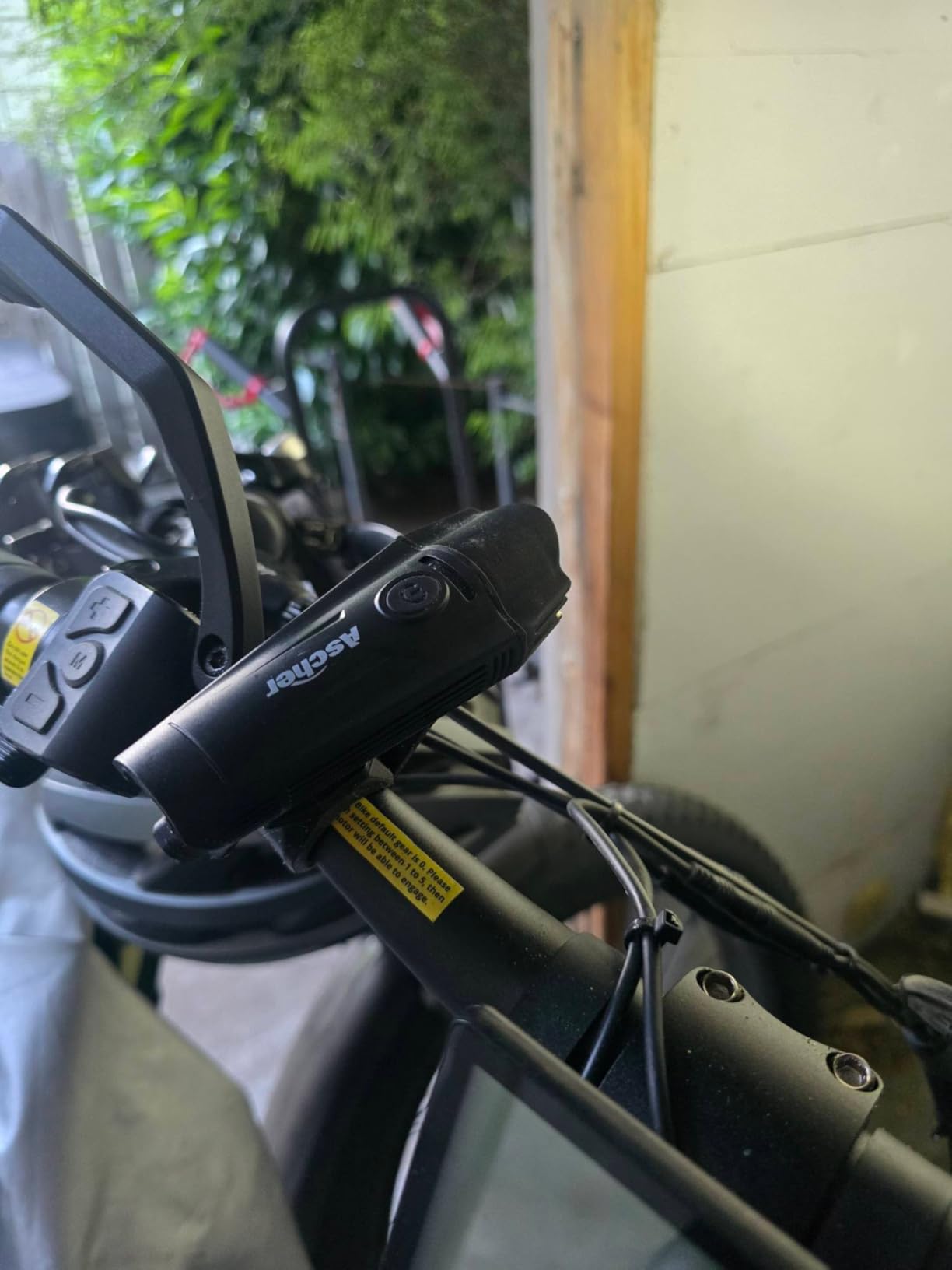
This is the set I would hand to someone riding home from work two or three nights a week on a route with some street lighting and one or two properly dark stretches. It is a 300-lumen front light, which puts it in the middle of the range I recommended, and the 2000 mAh front battery runs five to twelve hours depending on which of the four modes you use.
The mounting is where budget sets usually fall down, and here the silicone strap approach sidesteps the problem entirely. There is no ratchet to slip and no bracket to lose level; the strap goes around the bar and it stays. When you arrive at work you unclip it, take it with you, and the theft-deterrent is simply carrying it away.
Two things owners complain about repeatedly. The first is the plastic clip where the headlight snaps into the mount, which several riders report loosening or breaking in vibration until the front light fell off. The second is the absence of any battery gauge, so you find out how much charge is left by riding into the dark and seeing nothing.
The power button is also mildly annoying: it cycles through all four modes before it finally switches off, so ending a ride takes four presses rather than one. None of that matters much if you recharge every other day, which is what the vast majority of owners with this light appear to do.
Who this light suits
It suits the commuter who wants one purchase to cover both ends of the bike and does not want to think about matching two separate lights together. At 3.5 ounces for the whole set it disappears on the bike, which matters if you carry it up stairs.
It also suits anyone on a shared path rather than open road, because at 300 lumens with a low strap mount it is bright enough to see by without being the reason a pedestrian stops to complain.
Where it falls short
It falls short on genuinely unlit country lanes, where 300 lumens leaves the last stretch of a long approach dark. Riders who upgraded to a higher-output headlight for that reason usually keep this set as their rear light and city backup.
It also falls short for anyone who wants to know the charge state before leaving home, and for riders whose roads are rough enough to shake a plastic snap clip loose.
2. GearLight 400-Lumen Light Set – Best Value for a Real Commute

Bike Lights for Night Riding, USB Rechargeable Bike Lights Front and Back, LED Bicycle Headlight and Tail Light Set, Waterproof Bikelights Rechargeable for Mountain Bikes, Kids Bike Light, MTB Light
400 lumens
IPX4
5 front modes
USB rechargeable front and rear
Pros
- Genuinely bright for the money
- one owner logged a 43-mile ride on flash mode
- Holds up in heavy rain and off-road vibration
- Replaceable batteries extend the working life
- Quick universal mount fits road
- MTB
- kids and e-bike setups
Cons
- Rubber strap mount and port cover wear out over time
- Replacement mounts are not easy to source
- Bar-only mount cannot be aimed from a stem
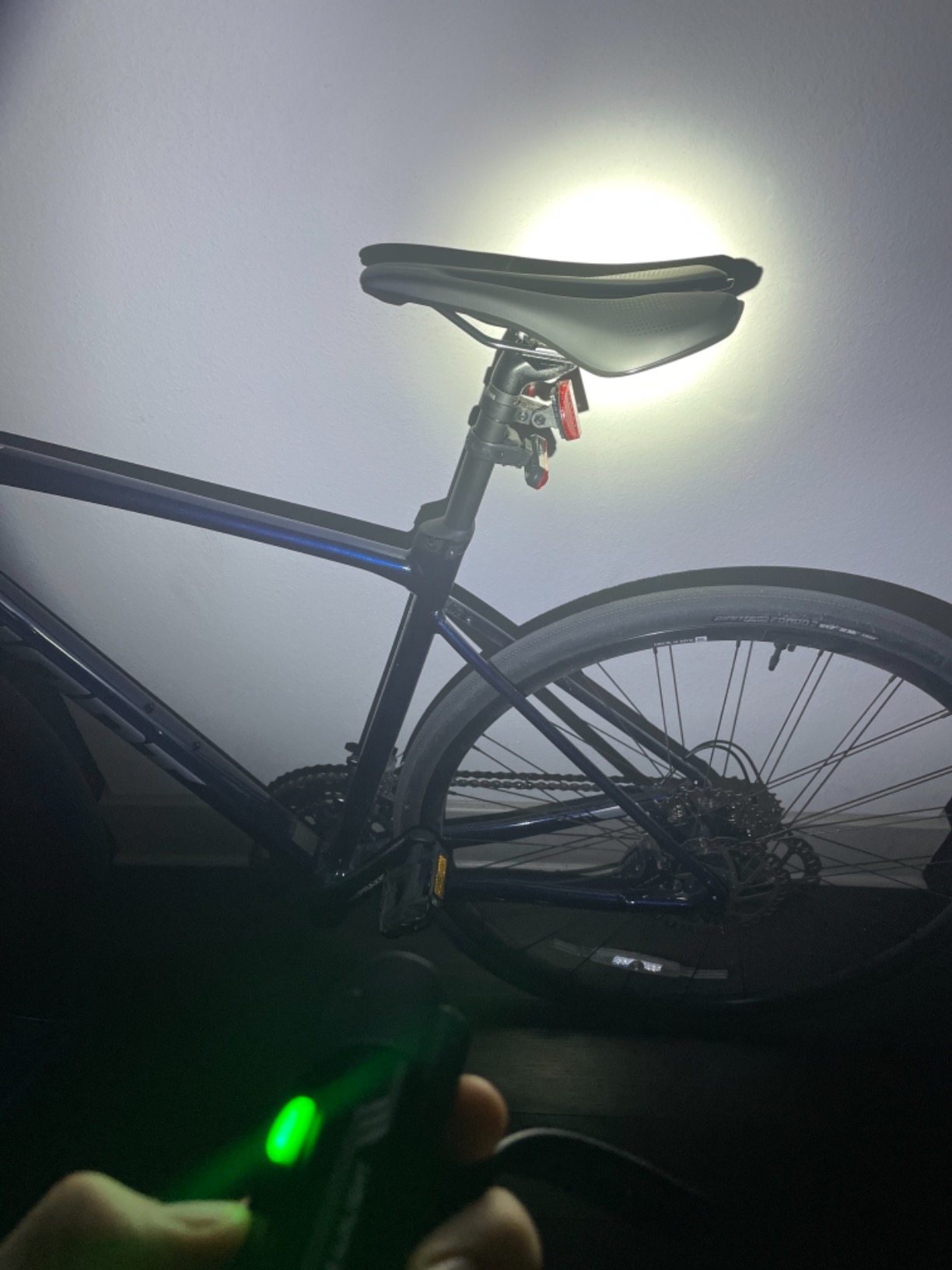
Where the Ascher set tops out at 300 lumens, this one claims 400 and, based on owner reports of calling it the brightest light they own, largely delivers. For a well-lit city commute with occasional dark patches that extra hundred lumens is the difference between seeing a puddle and reacting to it.
The battery detail that stands out is serviceability. Because the batteries are replaceable rather than sealed in, this light can keep working long after a sealed unit of similar quality would be landfill. One reviewer reported a single 43-mile ride on flash mode, which is the kind of claim that comes from someone who actually tracks it rather than from a spec sheet.
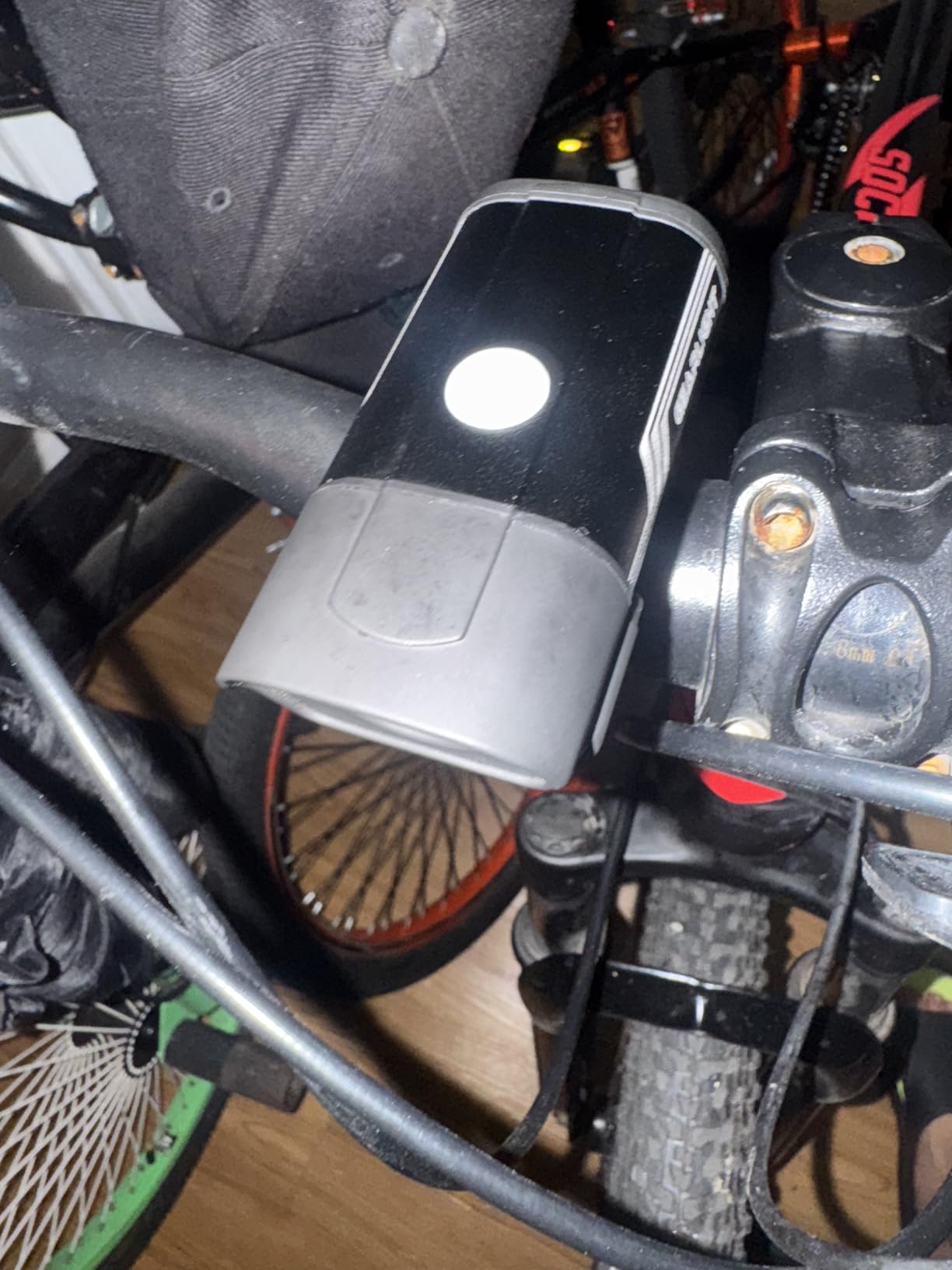
The recurring complaint is the newer rubber strap mount, which wears out over time and cannot be re-clipped the way the older swivel mount could. Several owners report the charging port cover also cracking after about a season of use, and because replacement mounts are not easy to find, that is the part of the product most likely to disappoint you in year two.
Another small limitation is that the mount is bar-only, so the beam cannot be repositioned onto a stem. On a bike with a very upright riding position that means the light points slightly higher than ideal, which is worth remembering if you ride drop bars.
Who this light suits
It suits riders who want more punch than a basic set without moving into premium territory, and anyone who cares about how long the product will last rather than how much light it throws. Replaceable batteries and aluminium construction are both durability arguments.
It also suits households with more than one bike in the family, since the quick universal mount moves between road, mountain, kids and e-bike setups without tools.
Where it falls short
It falls short for riders on long unlit routes, where 400 lumens is a good working light rather than a road-lighting light, and for anyone who will lose sleep over a mount that cannot be replaced cheaply.
Rain riders should also note the port cover issue: the IPX4 rating handles road spray, but owners report the rubber cover around the charging port as a weak point once it ages.
3. Victoper Front and Rear Set – Best Budget Pick With More Modes Than It Needs

Victoper Bike Light, High Lumens Super Bright Bicycle Lite, 6+4 Modes USB Rechargeable Bike Headlight & Taillight Set, Waterproof Safety Bike Front & Rearlight for Road, Gifts for Father’s Day
150 lumens
IPX4
6 front and 4 rear modes
4 oz for the set
Pros
- Aluminium alloy housing feels far more solid than typical budget sets
- Only 4 ounces for the complete set
- Customer service replaces defective units quickly and free of charge
- Ten mode combinations across both lights
Cons
- Battery indicator drains bars before the runtime does
- Short runtime at higher brightness
- Strap can be tight on larger handlebars
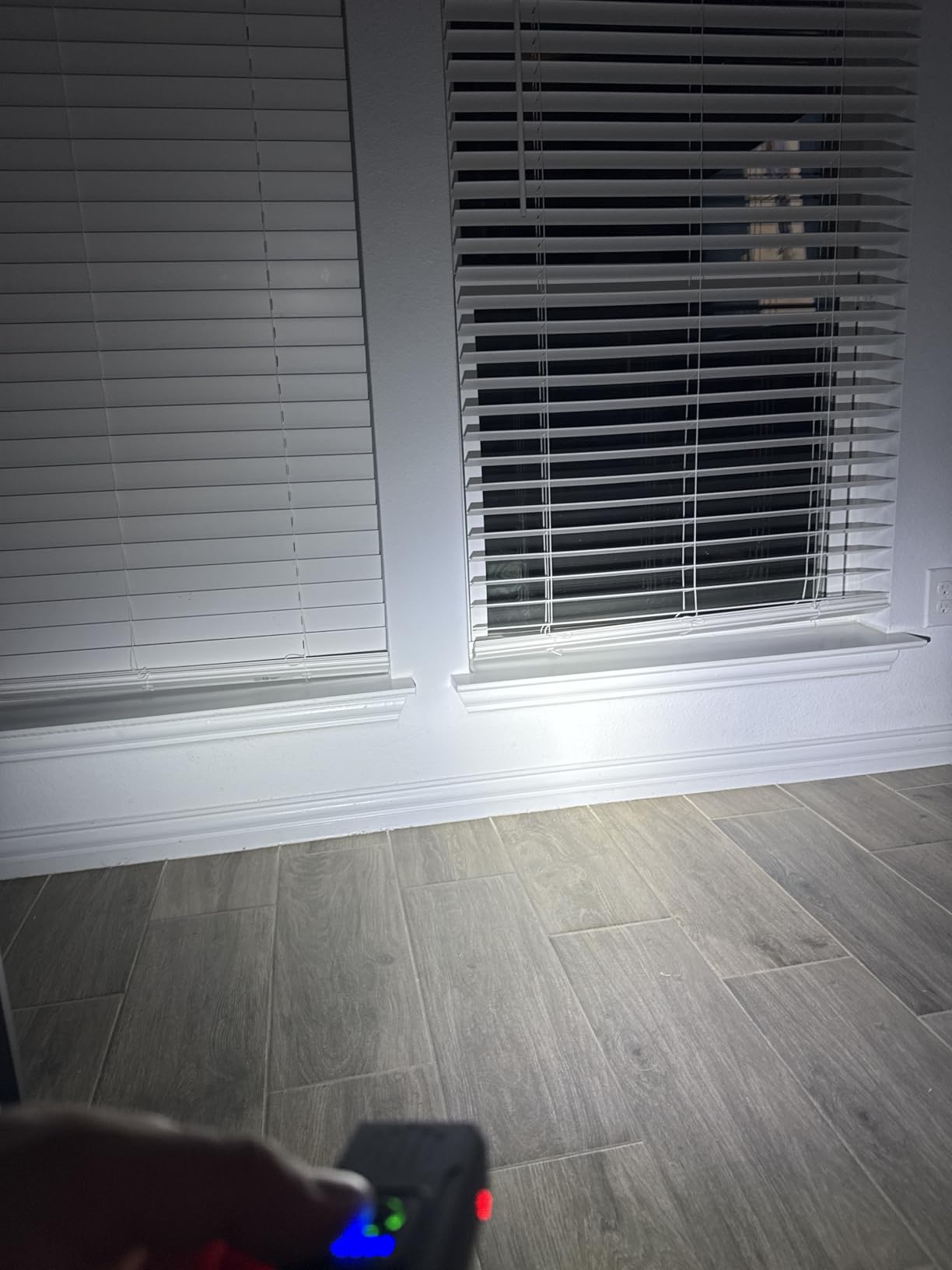
At 150 lumens this is a small light, and it is honest about that. It is not going to light an unlit lane, but on a residential street or a well-lit path it is more than enough, and at four ounces for the entire set you will barely notice it on the bike.
What makes it interesting is the aluminium alloy housing. Most lights at this level use thin plastic shells that feel hollow when you pick them up, and this one does not. Owners also single out the customer service as genuinely good, with quick free replacements when units arrive faulty.
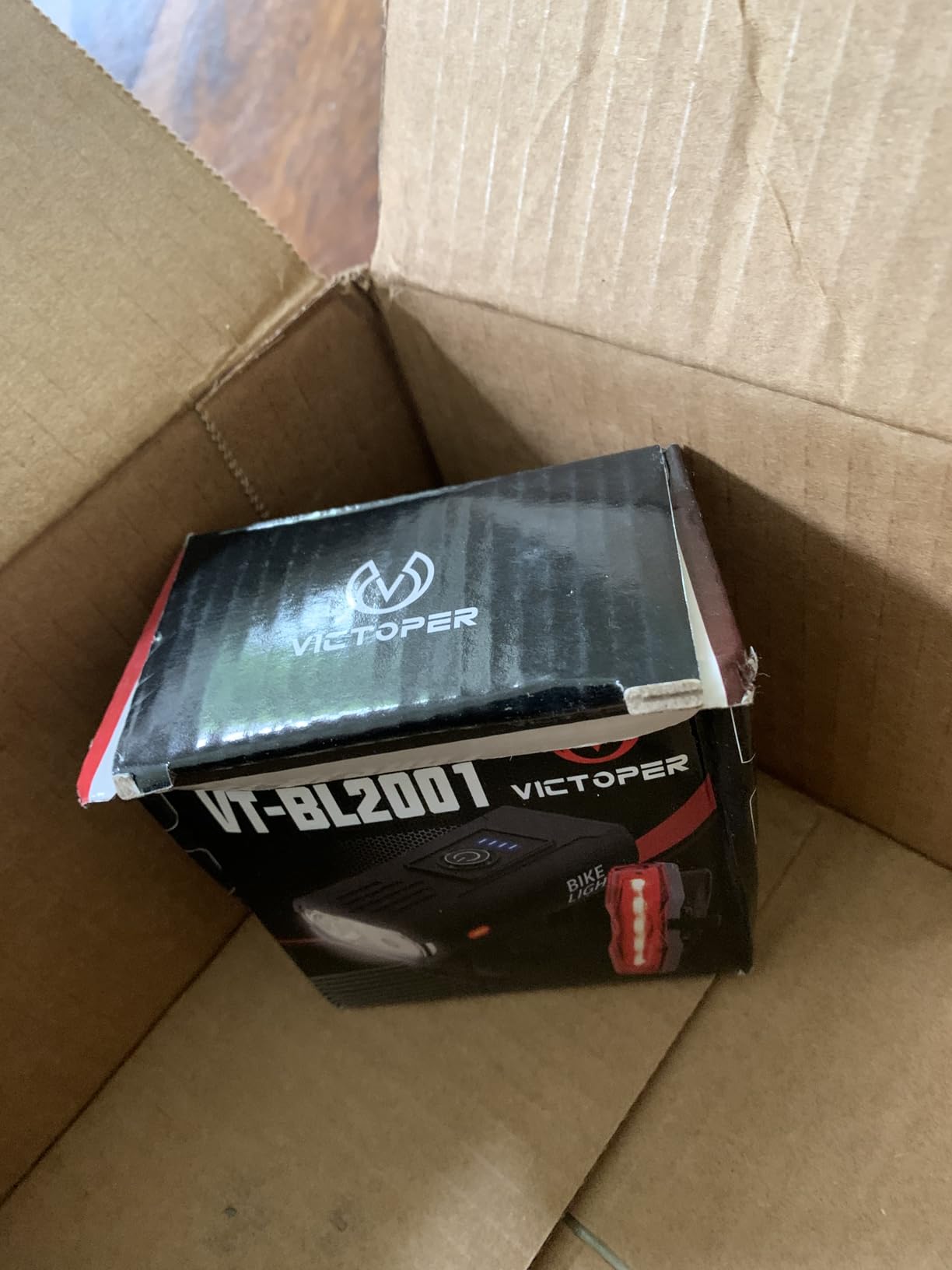
The mode count is the feature and the flaw. Six front modes and four rear modes give you a lot of options, including a breathing light and a strobe, but they are also one press too many when you are standing in the rain at a junction. The battery indicator is the other recurring gripe: it empties quickly enough to cause range anxiety even when the actual runtime holds up fine.
Runtime at the higher brightness settings is short, which makes this better suited to short-to-moderate rides than to a long rural commute. The rear light also runs a notably smaller battery than the headlight, so expect the back of the bike to give out first.
Who this light suits
It suits short urban commutes, students, and anyone who wants a complete front-and-back setup for very little and does not mind topping the charge up frequently. Riders who share one bike between two people also like that the whole set is so light.
If you ride in rain often, the aluminium shell and shockproof claim give it more protection than the plastic shells on most lights at the same level.
Where it falls short
It falls short for anyone riding more than about 30 minutes on unlit roads, and for people who would rather look at a charge level they can trust. The four-bar gauge is not that.
It also falls short on bikes with oversized handlebars, because the rubber mounting strap is snug and can stretch over time.
4. Lsan 1200-Lumen Light Set – Best for Dark Roads and Phone Charging
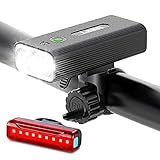
1200 Lumens Bike Lights for Night Riding,Super Bright Bike Lights Front and Back,USB Rechargeable Bicycle Light,3 LED Bike Headlight with Power Bank Function,IPX5 Waterproof,3+5 Light Modes
1200 lumens
IPX5
Power bank output
5-12 h front and up to 50 h rear
Pros
- Highest real output in this guide for a complete front and rear set
- Power bank output can charge a phone on a long ride
- Aluminium alloy shell dissipates heat well
- Taillight runs for up to 50 hours
Cons
- Front runtime at high output is far shorter than the headline figure
- Power bank output cannot safely charge larger devices
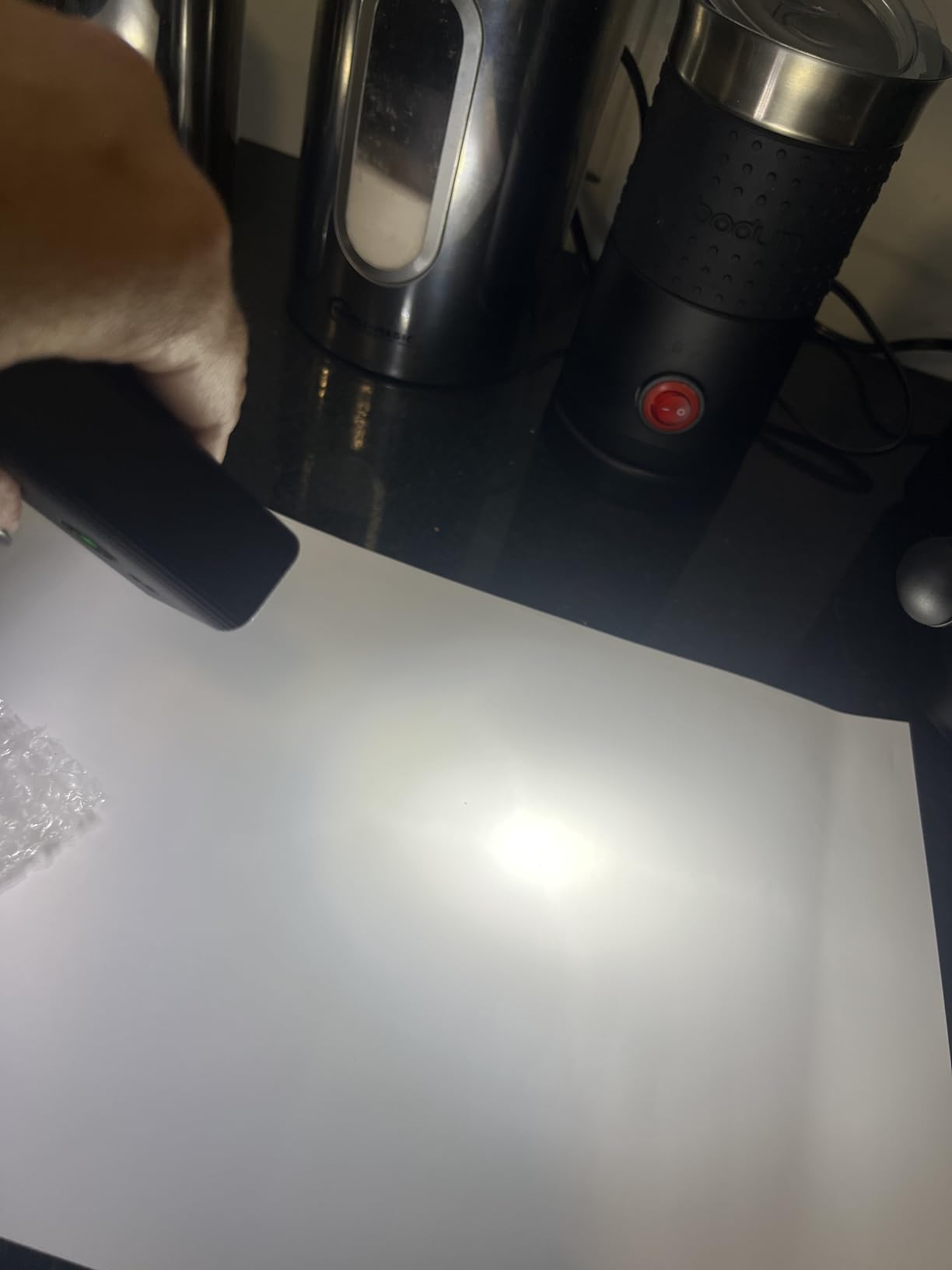
When a route has real darkness in it, this is the light to look at. The 1200-lumen three-LED headlight is the highest output in this roundup, and at 5 to 12 hours of runtime it covers a long commute on one charge even when you are running it hard.
The unusual feature is the USB output. The headlight doubles as a power bank, which owners genuinely use: if your phone is dying halfway across a long dark stretch, the light can top it up. It is not fast and it will not charge a laptop or a high-power device, but for a phone it removes a real anxiety.
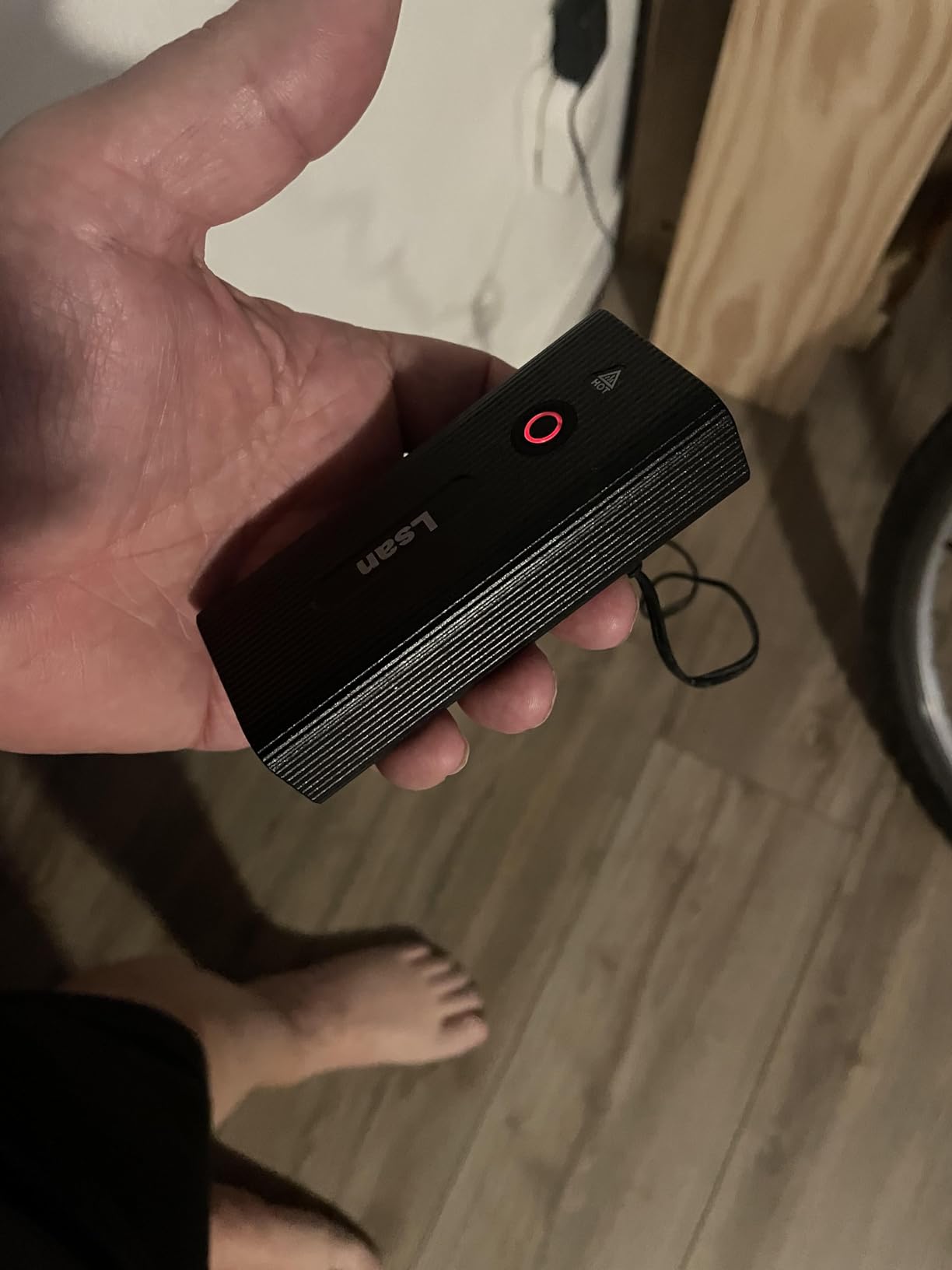
The catch is that the 12-hour figure is the low setting, not the 1200-lumen one. At full output the headlight runs far shorter, and the enormous tail light runtime of up to 50 hours is on its own terms, not as a front-light number. Buyers expecting half a night of 1200 lumens will be disappointed; buyers who accept riding at medium with boost for the darkest section will be very satisfied.
Build quality is a genuine strength here. The aluminium alloy shell handles heat dissipation better than the plastic housings on most lights of this output, which matters because high-output LEDs get hot, and heat is what kills cheap LED drivers over time.
Who this light suits
It suits riders with long unlit stretches, rural commutes, and anyone who wants a headlight that can rescue a dying phone mid-ride. The three-LED arrangement also gives a wider spread than a single emitter, which helps on narrow paths.
It suits multi-purpose buyers too, since owners use it for running, dog walking and camping as well as cycling.
Where it falls short
It falls short for riders who need one light to do everything at full output all evening, because the top mode is not built for that. It also falls short for anyone who wants a light that disappears on the handlebar, since this one has some visual presence.
Rain is well handled at IPX5, but the aluminium shell is heavier than the plastic alternatives and adds a little wind noise at speed.
5. Zewdov Slim Light Set – Best for Riders Who Carry Their Light With Them

Zewdov Bike Lights for Night Riding, Rechargeable Bike Light Front and Back
250 lumens
IP65
1.7 cm slim
27 g for both lights
Pros
- Slim enough to fit in a jacket pocket for the ride into work
- Both lights charge at once in 1 to 1.5 hours
- IP65 sealing with a protected Type-C port
- Mode memory recalls your last setting
- Polycarbonate shell survives drops
Cons
- 250 lumens is modest on unlit roads
- Needs a recharge after long periods in storage
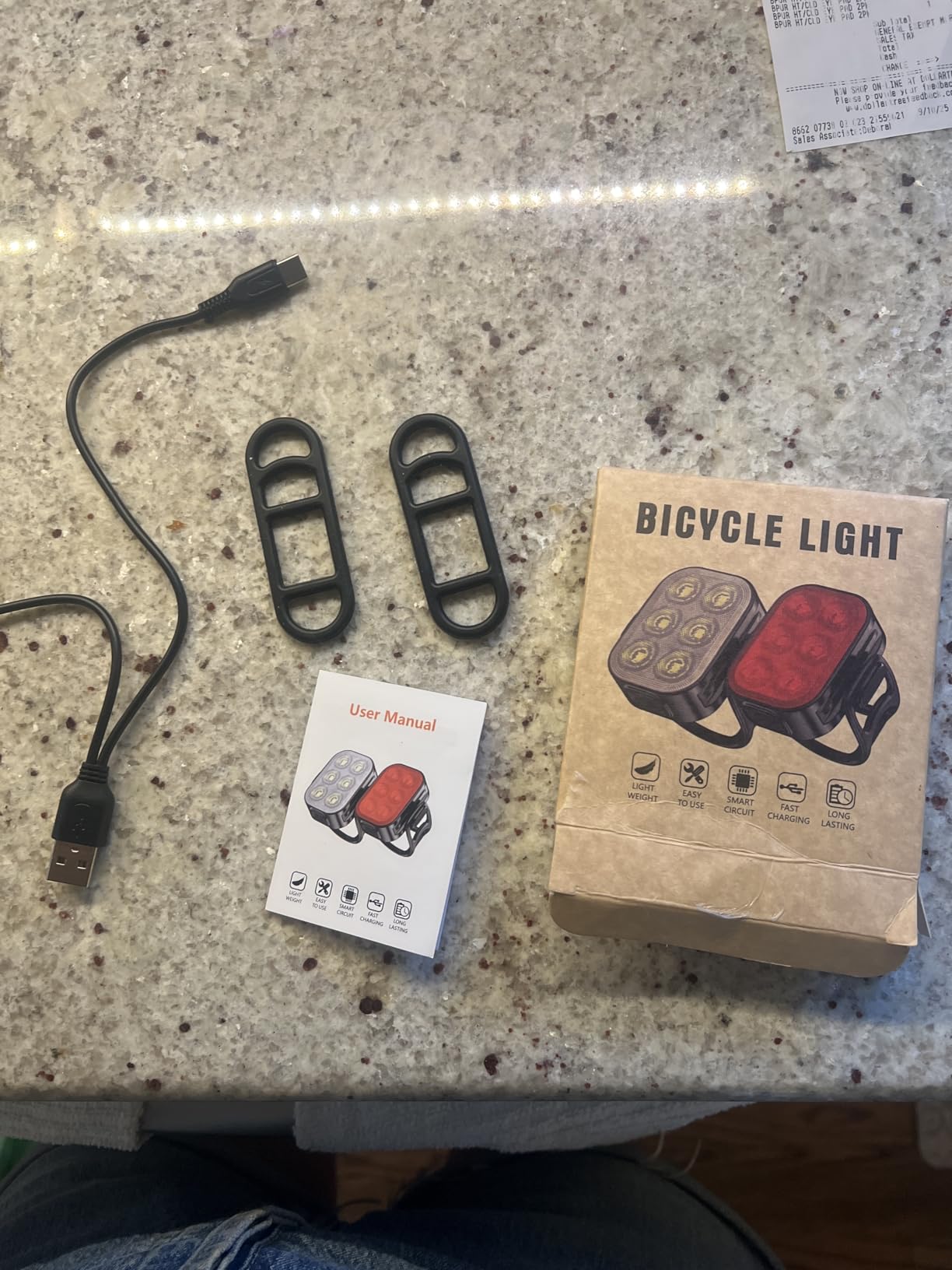
The whole selling point of this set is the shape of it. At 1.7 cm thick and 27 grams for both lights, it disappears on a handlebar and slips into a pocket, which matters enormously for anyone whose commute involves carrying a bag from a train or an office to a bike cage.
Charging is genuinely fast and, more importantly, simultaneous. One included two-in-one cable tops up both lights in an hour and a half, so there is no juggling of two separate leads. Owners also like the mode memory on the rear light, which means you do not re-select your flash pattern every time you unlock the bike.
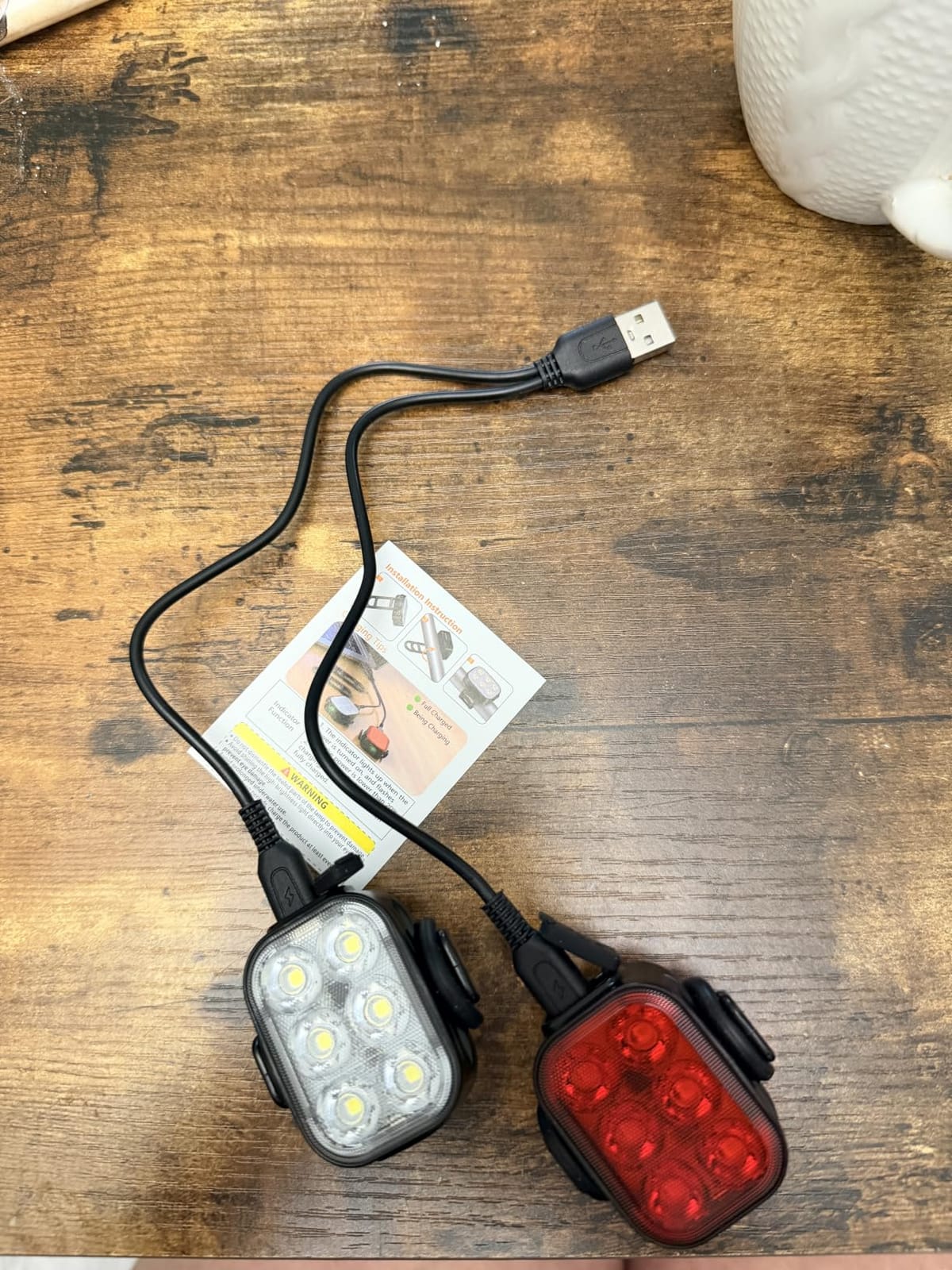
Output is the compromise. At 250 lumens this is a being-seen light and a modest seeing light, and owners describe it honestly as good for city riding rather than for lighting unlit roads. If your route is genuinely dark, this is not the one, and no amount of slimness changes that.
The IP65 rating is the strongest in this roundup along with the Cygolite Metro, and combined with the covered Type-C port it handles sustained rain and fog well. The only oddity is the storage guidance: the batteries are meant to hold for months, but the manufacturer asks you to top them up if the set has been sitting unused for three months.
Who this light suits
It suits commuters who work indoors, take a train, or otherwise cannot leave a light bolted to the bike overnight. It also suits riders who care about weight and aerodynamics more than raw output.
Anyone who charges at a desk or by a bike rack will appreciate the fast simultaneous top-up, and the covered Type-C port means one cable for phone and light.
Where it falls short
It falls short for dark, rural, or fast-trail riding, where 250 lumens leaves too much of the road to imagination. It also falls short for riders who do not ride often enough to remember to charge, because an empty light is a light you do not have.
6. Cuvccn Front and Rear Set – Best for Battery Life Between Charges
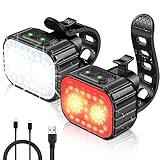
Cuvccn Bike Lights Super Bright, Rechargeable Bicycle Lights Set Multiple Modes, Waterproof Bike Lights for Night Riding/Cycling Safety, Front and Back Bike Reflectors Light, Long Battery Life
400 lumens
IPX6
12 modes
up to 58 h in slow flash
Pros
- Longest runtime in this roundup
- with owners reporting a week-plus between charges
- IPX6 waterproofing with a covered USB port
- Battery holds its charge for months when not in use
- Quick-release mount makes the light easy to carry indoors
Cons
- Two-button mode selection takes practice
- Front light is more for being seen than lighting the road
- Straps can be too small for thick handlebars
If your real problem is charging, this is the answer. Owners report runtimes of 16 hours and beyond, and a week or more between charges on flash settings, and more than one rider mentions switching from a well-known premium brand after testing it. The 1100 mAh front cell is the largest in this roundup.
It also holds charge in storage. That sounds trivial until you have left a light in a shed for a winter, plugged it in the night before a commute, and discovered it had self-discharged. The green flashing switch below 20 percent power is a small, sensible touch.
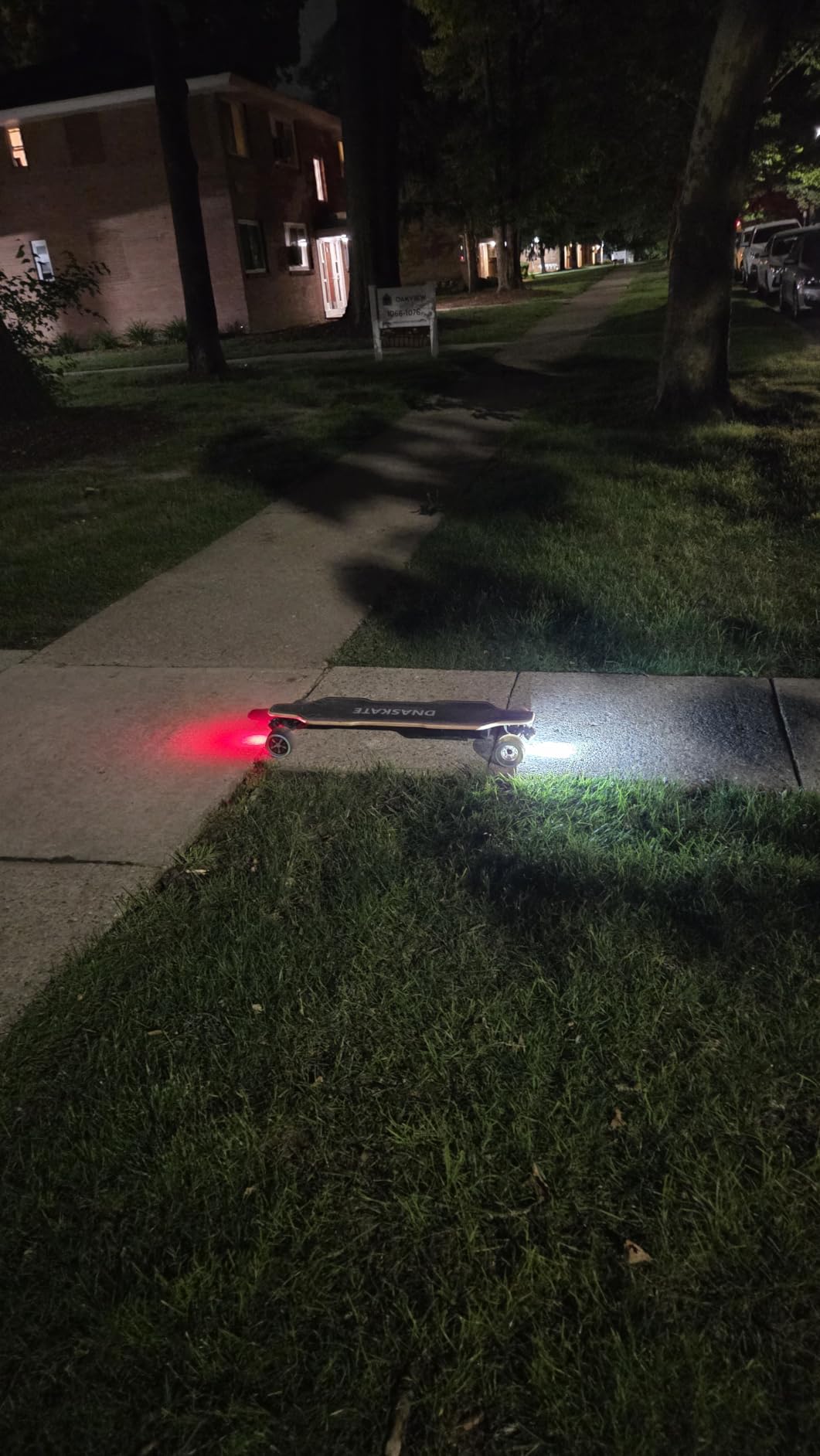
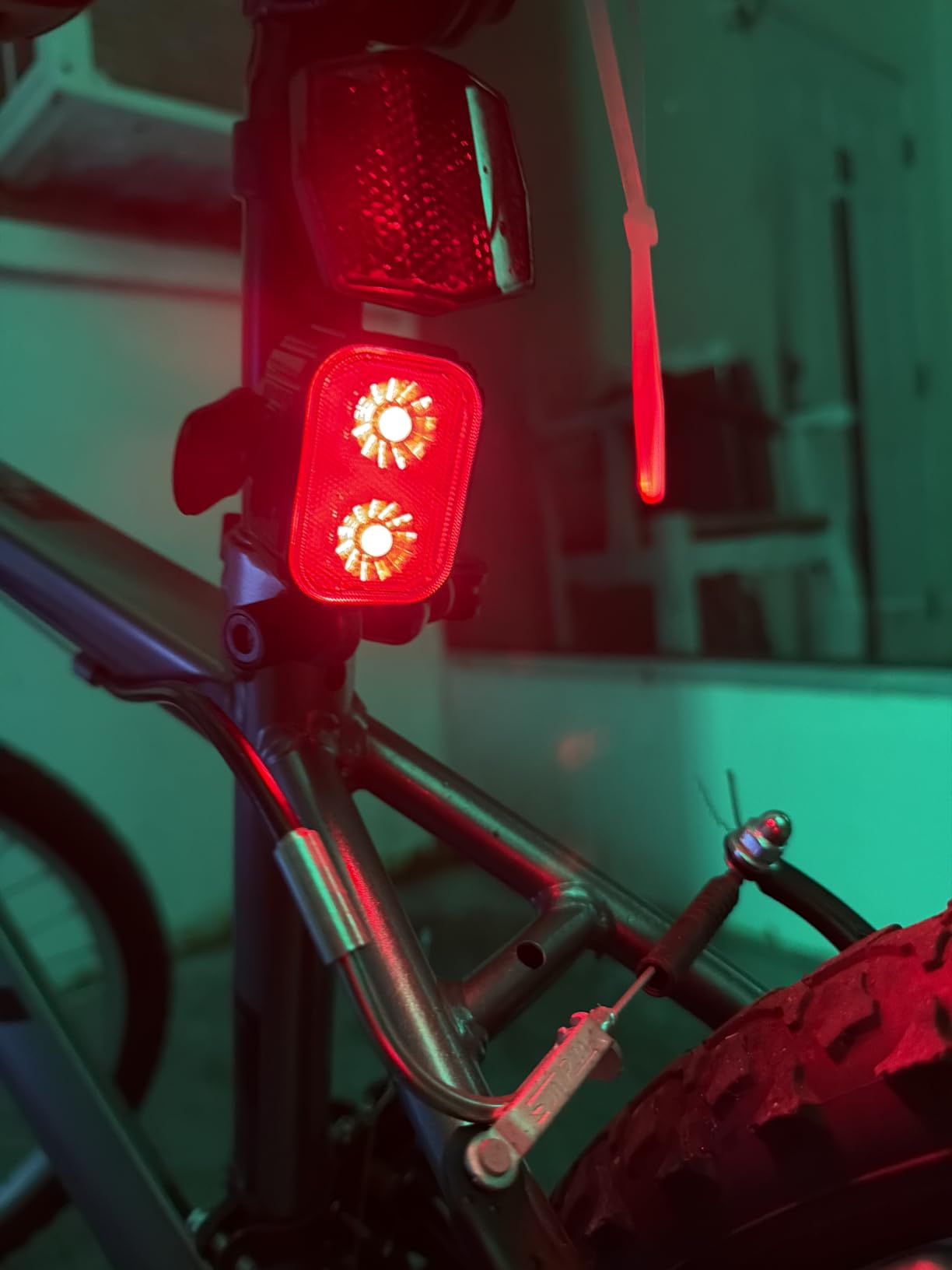
Where the spec sheet is generous, the ride is ordinary. At 400 lumens with two main LEDs and a ring of nineteen auxiliary ones, this is very good at making you visible and less good at lighting the road. The wide ring of small LEDs gives you presence more than reach.
The mode system takes some learning. Two buttons select between twelve combinations, and landing on the setting you want while standing in the dark at a junction is not instant. The quick-release quarter-turn mount is a genuine plus, though, because it makes the whole set trivial to remove and carry, which deters opportunistic theft.
Who this light suits
It suits long-distance commuters, delivery riders, and anyone who simply forgets to charge things. Riders on a weekly or monthly schedule, or people who store a bike outdoors all winter, will get more from this set than from a brighter light.
It also suits people who want one dependable light for a shared path or city route and would rather never think about battery levels again.
Where it falls short
It falls short for riders who need to genuinely see the road, because 400 lumens spread across nineteen auxiliary LEDs trades reach for presence. It also falls short for people who ride very dark roads and want the option of more light when they need it.
At 77 grams it is also the heaviest set in this roundup, which is noticeable on a lightweight road bike.
7. Garmin Varia UT 800 Smart Headlight – Best for Riders With a Cycling Computer

Garmin Varia UT 800 Smart Headlight with Dual Out-Front Mount
800 lumens
IPX6
5 modes
1.5 h at full output
Pros
- Visible from more than a mile away in daylight
- Adjusts output automatically to ambient light
- speed and ride profile
- Turns itself on and off when paired with a compatible Edge
- Pairs with Edge computers for brightness control
Cons
- Only about 1.5 hours at full 800 lumens
- Costs more than non-smart lights of similar output
This is the only light here that thinks for itself, and that is the whole argument for it. The UT 800 reads ambient light, your speed and your ride profile, then picks a sensible output and mode on its own. In practice you stop thinking about brightness settings entirely, which is the single biggest reason people upgrade from a manual light.
Paired with a compatible Garmin Edge cycling computer it also switches on when you start riding and off when you stop, so the light is never flat at the bottom of a hill. Daytime visibility from over a mile away is the manufacturer’s headline claim, and it is a being-seen light first.
The honest weakness is runtime. Steady 800 lumens lasts about an hour and a half, which sounds alarming until you understand that the light will not run at 800 lumens unless conditions genuinely demand it. On a normal commute you spend most of the evening in day flash and night flash, where runtime is measured in nights rather than hours.
Two mounts are included, a quarter-turn friction mount and a universal out-front mount, and the aluminium body is rated IPX6 for rain. There is also a Trail Edition with a helmet mount, which is worth considering if your cockpit is already crowded.
Who this light suits
It suits riders who already own a Garmin Edge, or who are willing to buy one, because that is when the automatic behaviour genuinely pays for itself. Commuters who forget to turn lights off also benefit from the auto on and off.
It suits riders on daytime and twilight commutes, where flash modes and high daytime visibility are what keep you safe rather than a long steady beam.
Where it falls short
It falls short for riders without a compatible computer, because then you have paid for automation you never receive, and a simpler light would do the same job. It also falls short for anyone who needs a long high-output run without a computer to manage it.
It is a front light only, so you will need to source a rear light separately, and the 0.13 kg body is noticeably heavier than the budget sets here.
8. Cygolite Metro Pro 1100 – Best Honest Front Beam With a Proven Track Record

Cygolite Metro 1100 Pro Lumen Bike Light, USB Rechargeable, Secure Hard Mount, Night & Daytime Modes, Compact, Durable, IP67 Waterproof; Road, Mountain, Commuter Bicycles
1100 lumens
IP67
9 modes
150 g with hard bar mount
Pros
- Output verified by owners against cheaper lights that inflate lumen claims
- Extra wide beam feels safer through corners
- Compact enough to carry in a jeans pocket
- Long-term durability with owners reporting years of weekly use
- Lock mode and mode memory stop accidental activation
Cons
- About 1 hour at full 1100 lumens and roughly 3 hours on medium
- Hard to keep level after rough hits and no stem mount included
- Micro USB charging
- Plastic body would not survive a drop onto concrete
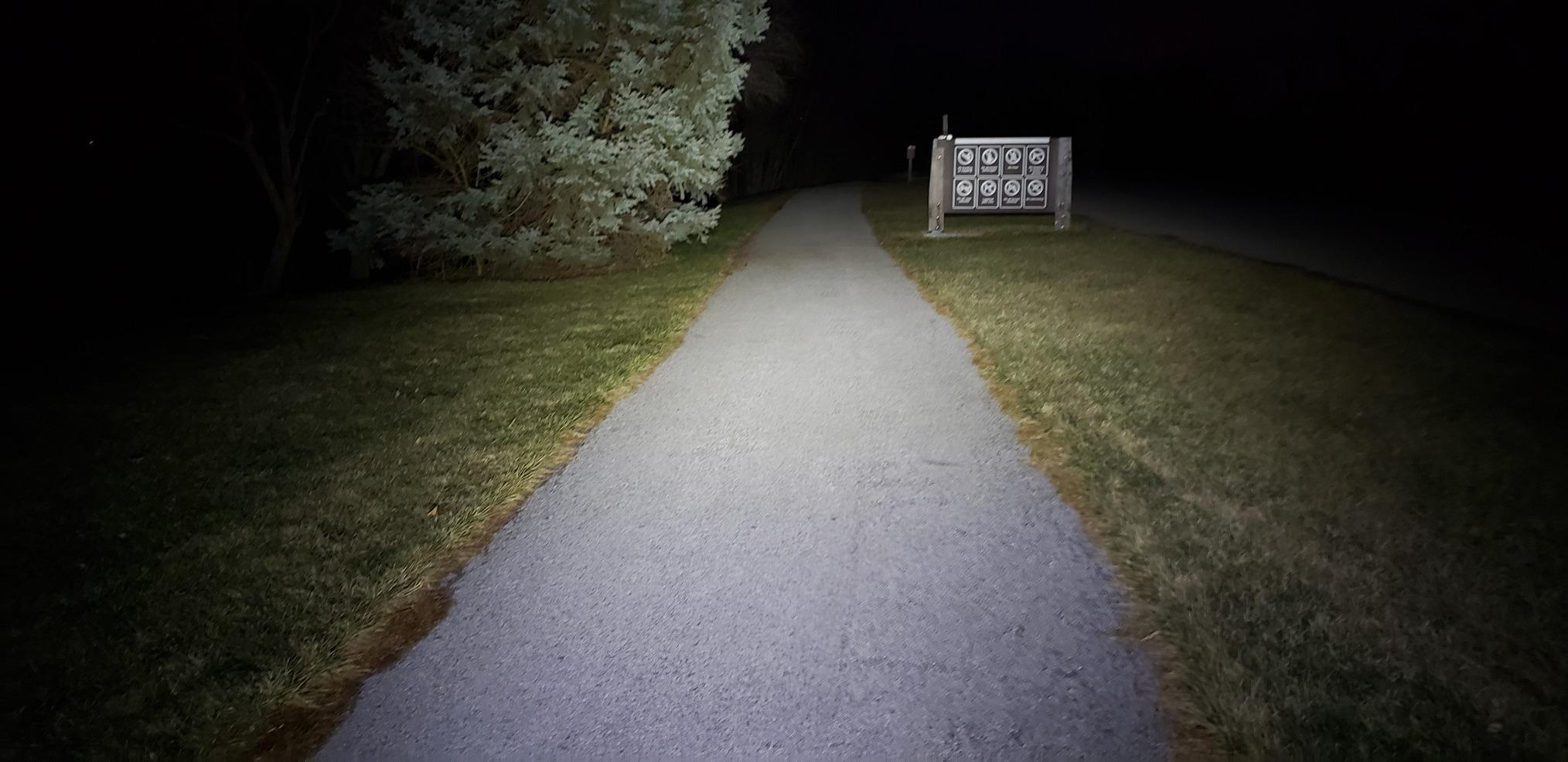
Cygolite has been making commuter lights for a long time, and that shows in the details rather than the headline. The 1100-lumen output here is treated by experienced riders as the reference point for honest claims, with reviewers specifically comparing it against budget lights whose numbers do not survive that comparison. IP67 sealing is the best water rating in this roundup.
The mode list is the most considered of any light here: nine modes including a SteadyPulse setting that pulses over a steady beam specifically to catch a driver’s eye, plus a lock mode so the light cannot switch itself on in your bag. It also remembers your last setting, which is a small daily convenience you notice after a week.
Consensus among experienced commuters is to run this on medium for town riding and reserve boost for unlit stretches, which is exactly how I would use it. At full output you get about an hour, which is fine for a tunnel-and-darkness commute but not for a whole evening on maximum.
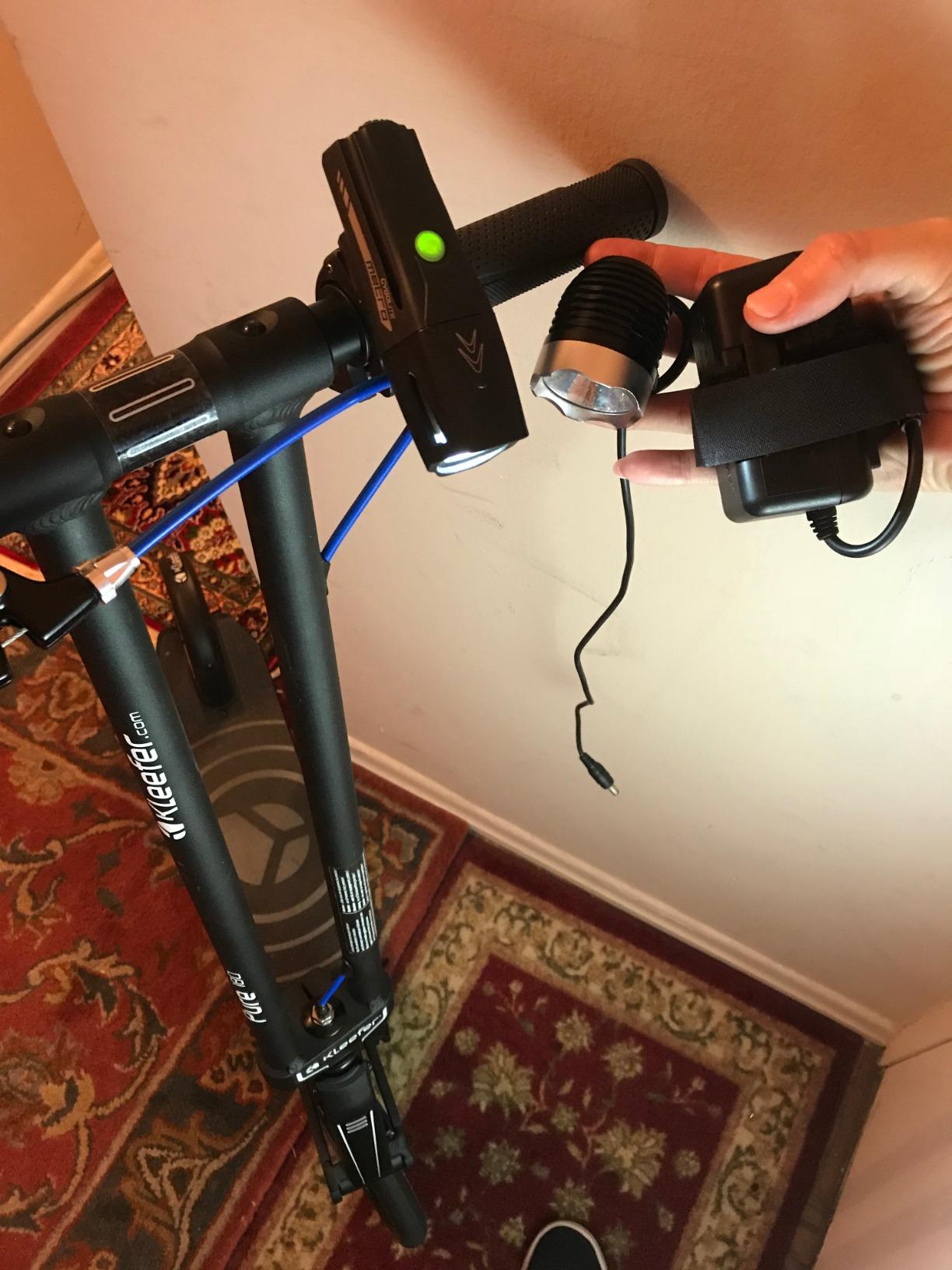
The mount is the weak point, and it is worth being blunt about it. It is a hard bar mount with a long screw and no stem option included, and owners report it losing level after rough hits, which is precisely the failure mode that RMIT design researchers described when they noted how many lights end up pointing at the ground. Cygolite’s support does send replacement parts such as clamps and port covers, which softens the problem.
Two further notes. Charging is micro-USB, which for a light you might keep for years is a genuine inconvenience, and the body is plastic, so while it will survive rain and vibration it would not thank you for a direct drop onto concrete. One owner reports seven years of weekly use, which tells you what is realistic when the light is treated carefully.
Who this light suits
It suits the rider who has been disappointed by inflated lumen claims elsewhere and wants a beam that does what the box says. It also suits people who ride the same route in the same light every evening and want modes they can set once and stop thinking about.
Commuters who carry a light into work will like the size: at 150 grams and roughly three inches long it fits a jeans pocket. Cygolite is also the brand riders on r/cycling name most often when discussing value, with the Metro series cited repeatedly as a pick that punches above its level.
Where it falls short
It falls short for riders on rough, unlit roads where a rigid bar mount will not stay aimed, and for anyone who already runs a Wahoo or Bryton computer and wants their light integrated with it.
It also falls short for people who cycle in genuinely hard rain and drop their bike regularly, since IP67 handles water far better than it handles concrete.
9. Ravemen FR500 – Best for a Clean Cockpit and Computer Integration

RAVEMEN FR1100 SE/FR500 Bike Headlight Compatible with Garmin/Wahoo Computers, 270° Wide-Angled Bicycle Front Light for Night Urban Riding & Daytime Warning, Auto On and Off, 6 Modes (FR500)
500 lumens
IPX6
270-degree angle
101 g with 2-year warranty
Pros
- Stacks on a Garmin or Wahoo computer mount and frees a bar position
- 270-degree viewing angle makes you visible from the side
- Light at about 100 g and charges over USB-C
- Works while charging and has auto on and off
- Two-year manufacturer warranty
Cons
- Out front mount is not included despite the price
- Chunkier than earlier Ravemen models
- About 2.5 hours at maximum solid output
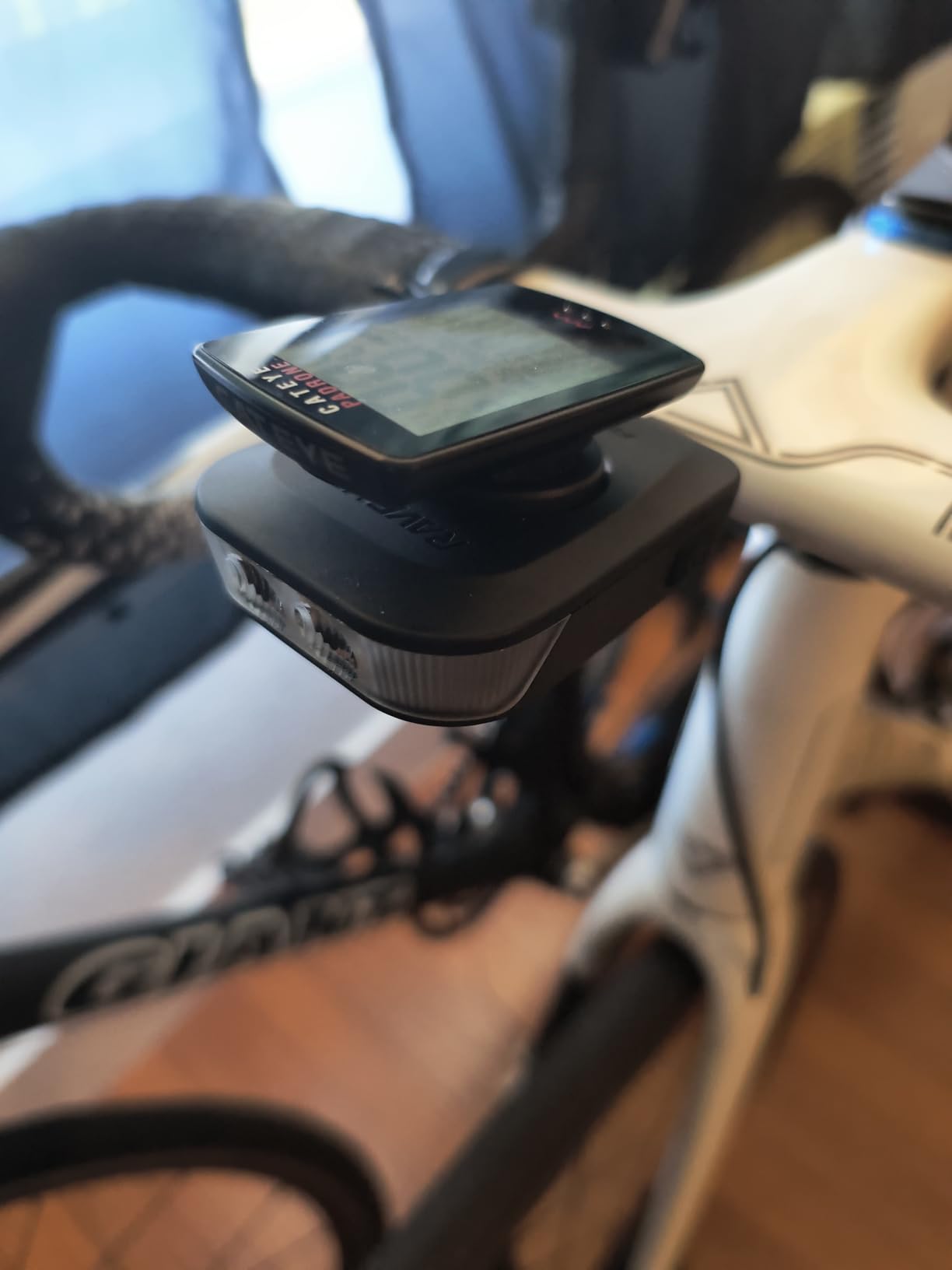
This is the highest-rated light in our roundup at 4.7 across 352 reviews, and the reason is not the lumen figure. The FR500 mounts directly on top of a Garmin or Wahoo computer, which frees a handlebar position and keeps an already-crowded cockpit uncluttered. On a modern road or gravel bike that is a bigger deal than another 200 lumens.
The 270-degree viewing angle is the other quietly important feature. Most lights throw forward; this one is also visible from the side in traffic, which is exactly the angle a car taking a right turn is looking from.
Runtime is the trade-off you should know about before buying. At maximum solid output you get roughly 2.5 hours, while dropping to 150 lumens stretches that to about 6.5 hours. The auto on and off function also means the light can be left on the bike without draining itself, and it works while plugged in, so a mid-ride top-up is possible.
It comes with an aluminum alloy base with cooling grooves, a sealed rubber plug over the USB-C port, and a two-year manufacturer warranty with spare part availability listed for the same period. The main gripe is that the out-front mount is not in the box, so if you are not using a computer mount you are buying an incomplete setup.
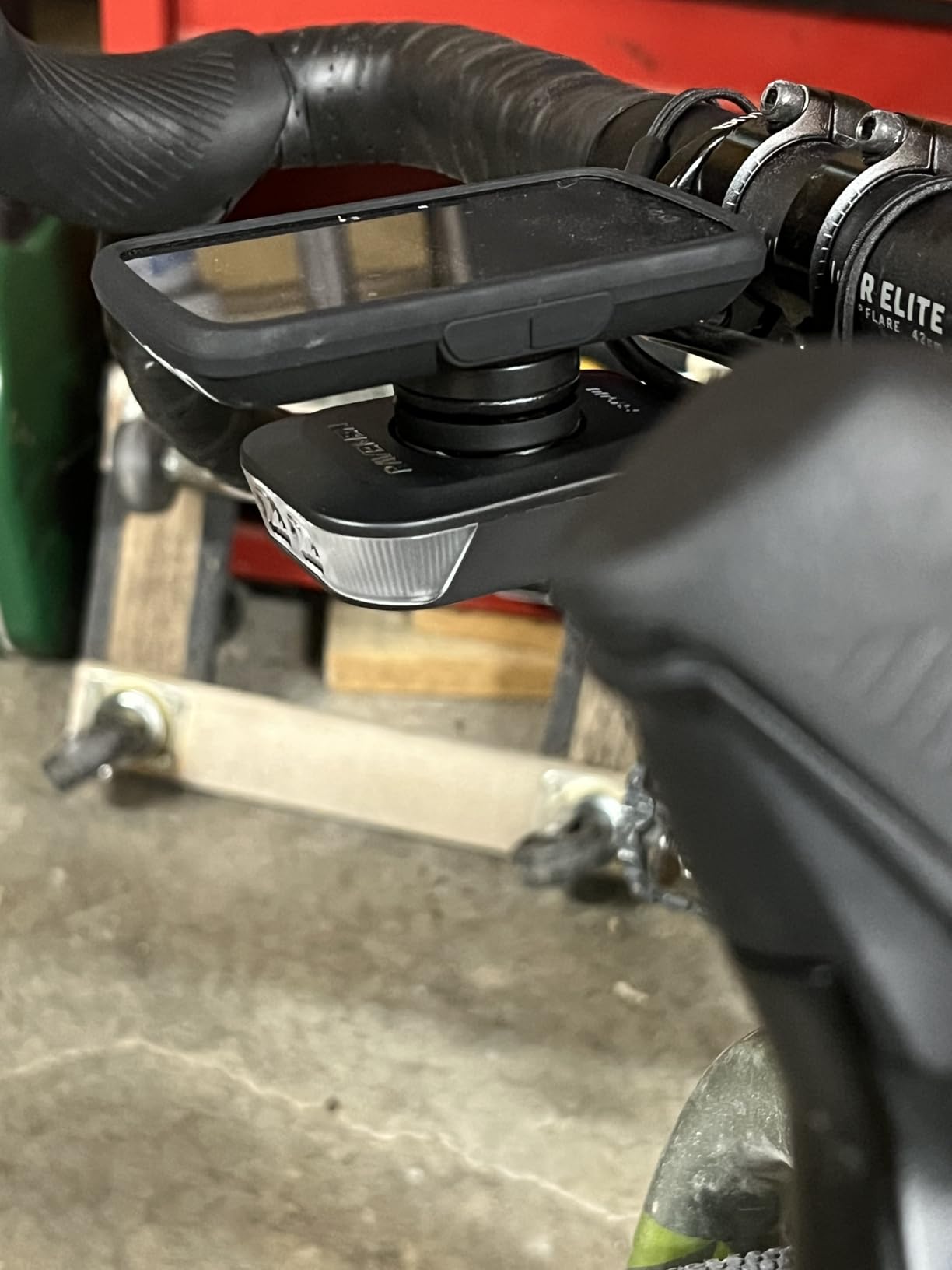
Owners also note the body is bulkier than earlier Ravemen models in the same form factor, which slightly undermines the clean-cockpit benefit, and that the fastest flash mode is distracting enough that many riders settle on slow flash instead. It can charge a bike computer from its USB output, though as with any light of this type, higher-powered devices are out of scope.
Who this light suits
It suits riders with a Garmin or Wahoo unit already on the bars, especially on drop-bar bikes where space is tight. It also suits commuters who ride at dusk and dawn often, since the wide viewing angle and day flash modes are built for exactly that window.
Anyone who has been disappointed by micro-USB on a premium light will appreciate the USB-C port and the two-year warranty.
Where it falls short
It falls short for riders with no cycling computer, because the missing out-front mount becomes a real cost rather than a minor inconvenience, and it falls short for anyone who needs more than 500 lumens on a dark road.
It also falls short for people who want the smallest possible light, since the computer-sized form factor and 101 grams are noticeably bigger than the slim sets in this roundup.
Best Rear Lights for Night Commuting
A rear light has exactly one job: to be noticed by the person behind you. That means brightness is less important than flash pattern, mounting height and side visibility, because the drivers who miss cyclists are usually the ones turning, not the ones driving straight. The three rear lights below each do that job differently, and the truth is most riders should own two of them so one can sit on a bag as a spare.
10. Cygolite Hypershot 350 – Brightest Rear Light in This Roundup
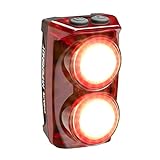
Cygolite Hypershot – 350 Lumen Bike Tail Light– 7 Night & Daytime Modes–User Adjustable Flash Speeds- Compact & Durable–IP64 Water Resistant–Secured Hard Mount–USB Rechargeable–Great for Busy Streets
350 lumens
IP64
7 modes
2 to 200 hours of runtime
Pros
- Consistently reported as the brightest rear light available
- Visible at a quarter mile in daylight
- Adjustable flash speeds let you dim it for group rides
- Runs while plugged into a power bank
- Compact enough to clip to a backpack as well as the bike
Cons
- Clip can let the light fall off mid-ride unless forced shut
- Rack and aero seatpost hardware sold separately
- Micro USB rather than USB-C
- Too bright for group rides at full output
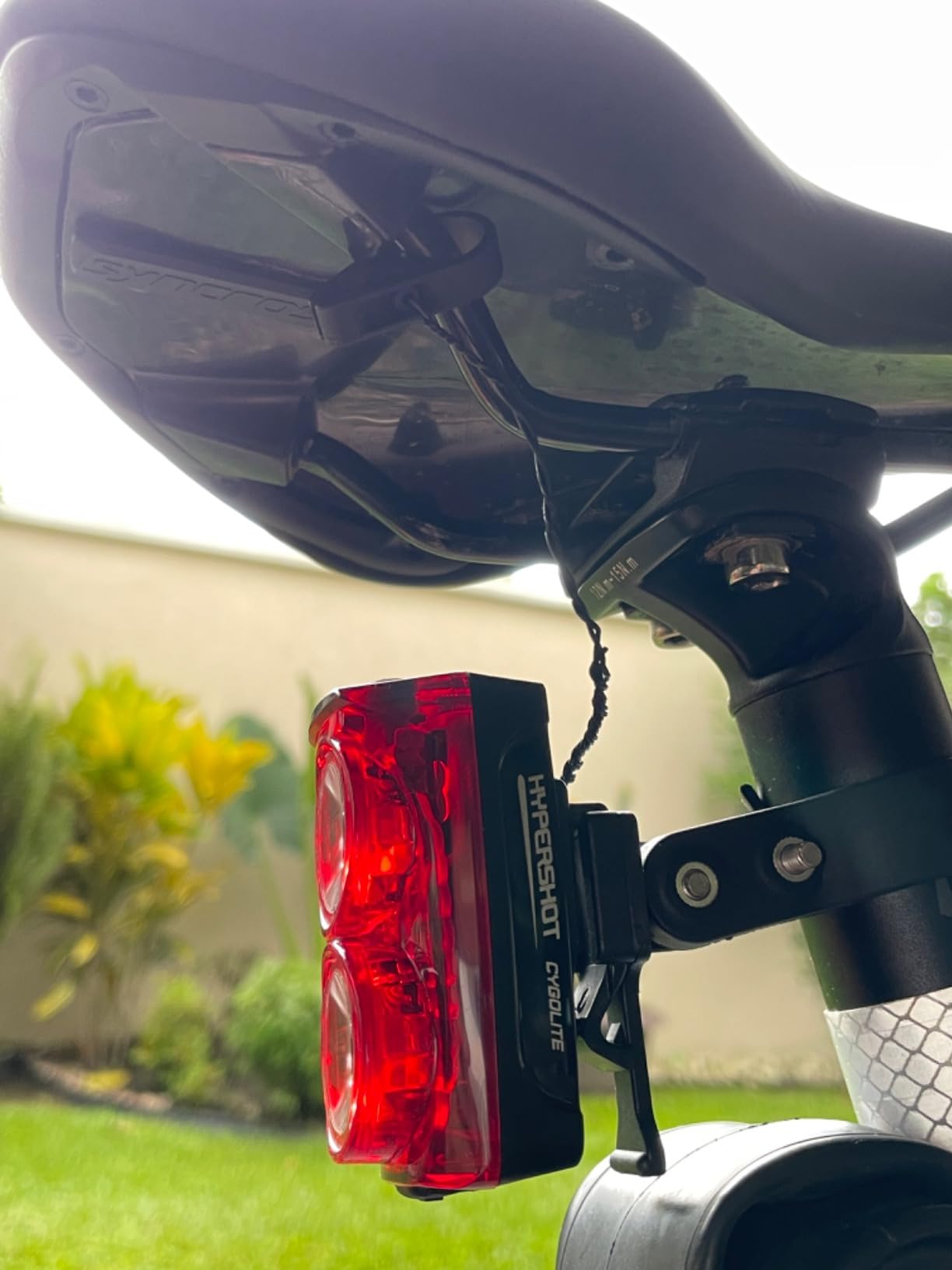
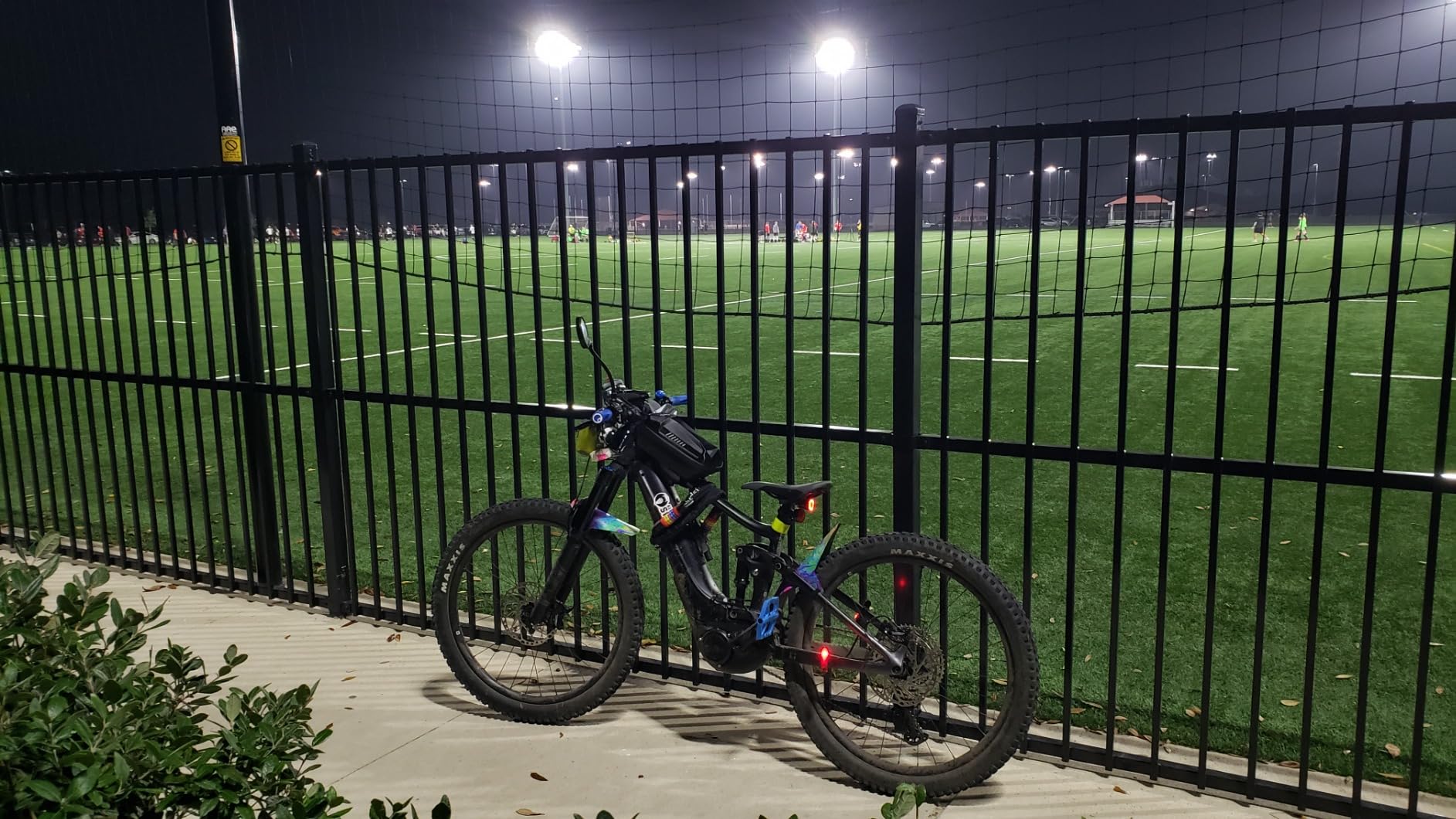
At 350 lumens from a rear light, this is genuinely startling, and owners describe drivers visibly changing behaviour around them when they have it fitted. Multiple reviewers report being visible at a quarter mile in daylight, which is the point: a rear light at that output is functioning as a daytime running light as much as a night light.
Seven modes with user-adjustable flash speeds is the feature experienced riders care about, because it lets you dial the output down for a group ride. On Steady or Buzz Flash it becomes a reasonable light to ride behind other cyclists without punishing them.
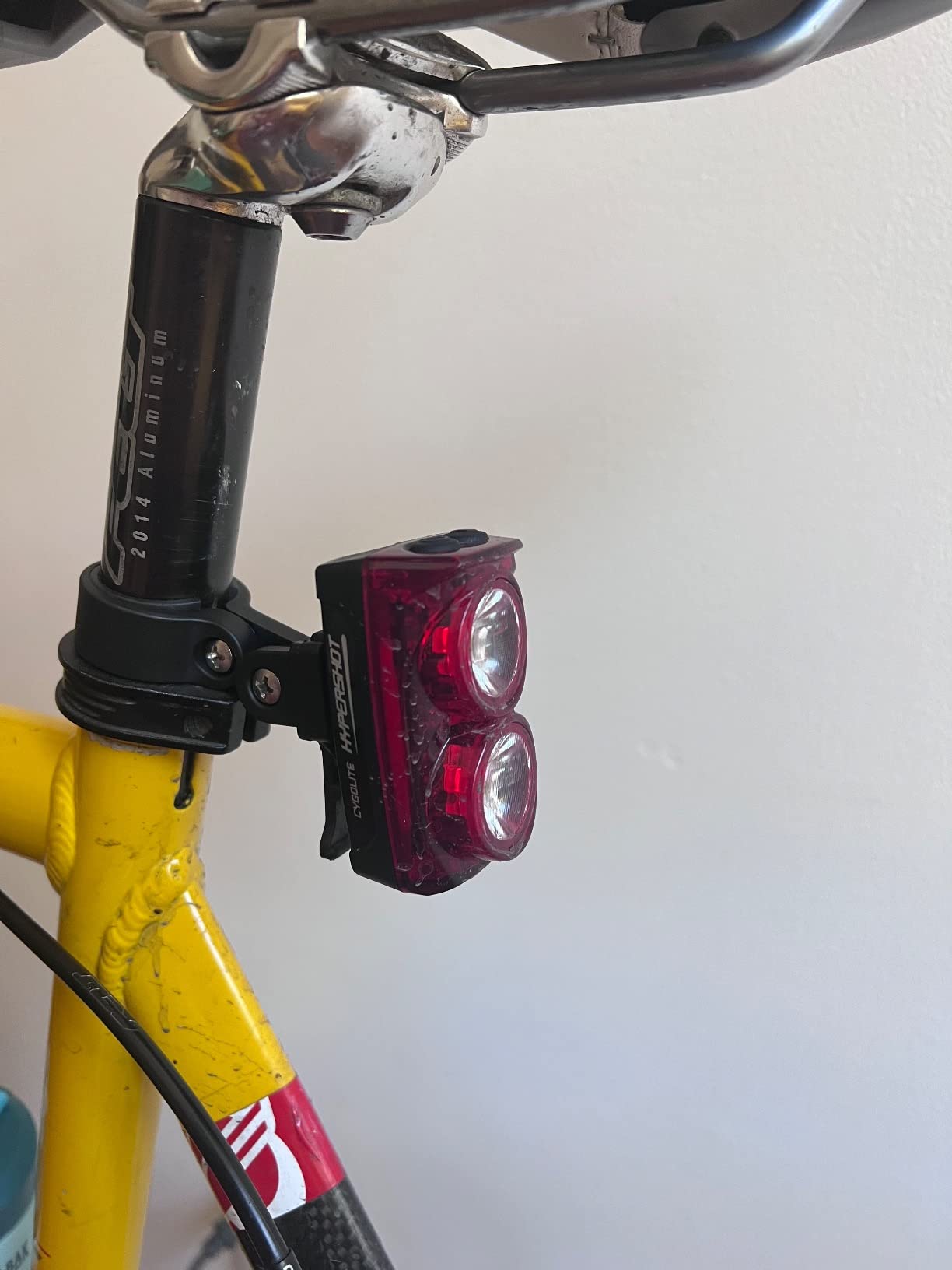
Now the honest part. The mount is the weakness, and it is a meaningful one. The lateral release on the clip can let the light detach in traffic unless you force it shut, and the mounting clamp nub is undersized enough that the light can slide out of position. Plenty of owners work around it with a rubber band, which is a strong signal about how good the supplied hardware is.
Runtime is a highlight: 2 to 200 hours depending on mode and flash speed, and it will run while plugged into a power bank, which effectively removes battery anxiety for anyone prepared to carry a small battery. Water resistance is IP64, lower than the best lights in this roundup, and the charging port is micro-USB.
Who this light suits
It suits anyone riding home on roads with fast traffic, junctions, or poor street lighting, because raw presence is what keeps you out of a driver’s blind spot. It also suits riders who work late shifts and need the light to be visible in a car’s headlights at range.
Because it is compact enough to clip to a bag as well as a seatpost, it doubles as a spare, which is the cheapest insurance a commuter can carry.
Where it falls short
It falls short for group rides at full output, where it will dazzle the rider in front, and for anyone riding a rear rack or an aero-profile seatpost without buying the extra hardware separately.
It also falls short if you are the sort of owner who loses things: the detachable clip is a real risk, and the micro-USB port means one more cable to keep track of.
11. ROCKBROS Smart Taillight – Best With Brake Sensing

ROCKBROS Bike Tail Light Smart,Brake Bicycle Rear Lights Rechargeable,IPX6
Brake-sensing COB LED
IPX6
4 modes
400 mAh and up to 50 hours
Pros
- Brightens for 5 seconds when you slow
- which riders behind you notice
- Aluminium alloy body rather than plastic
- Two mounts included so you can move it between bikes
- Long battery life with owners logging well over 1000 miles
- USB-C charging and a four-dot power indicator
Cons
- Must be unscrewed from the mount to charge
- Supplied saddle bracket can work loose and fall off
- Less visible in daylight than high-output rear lights
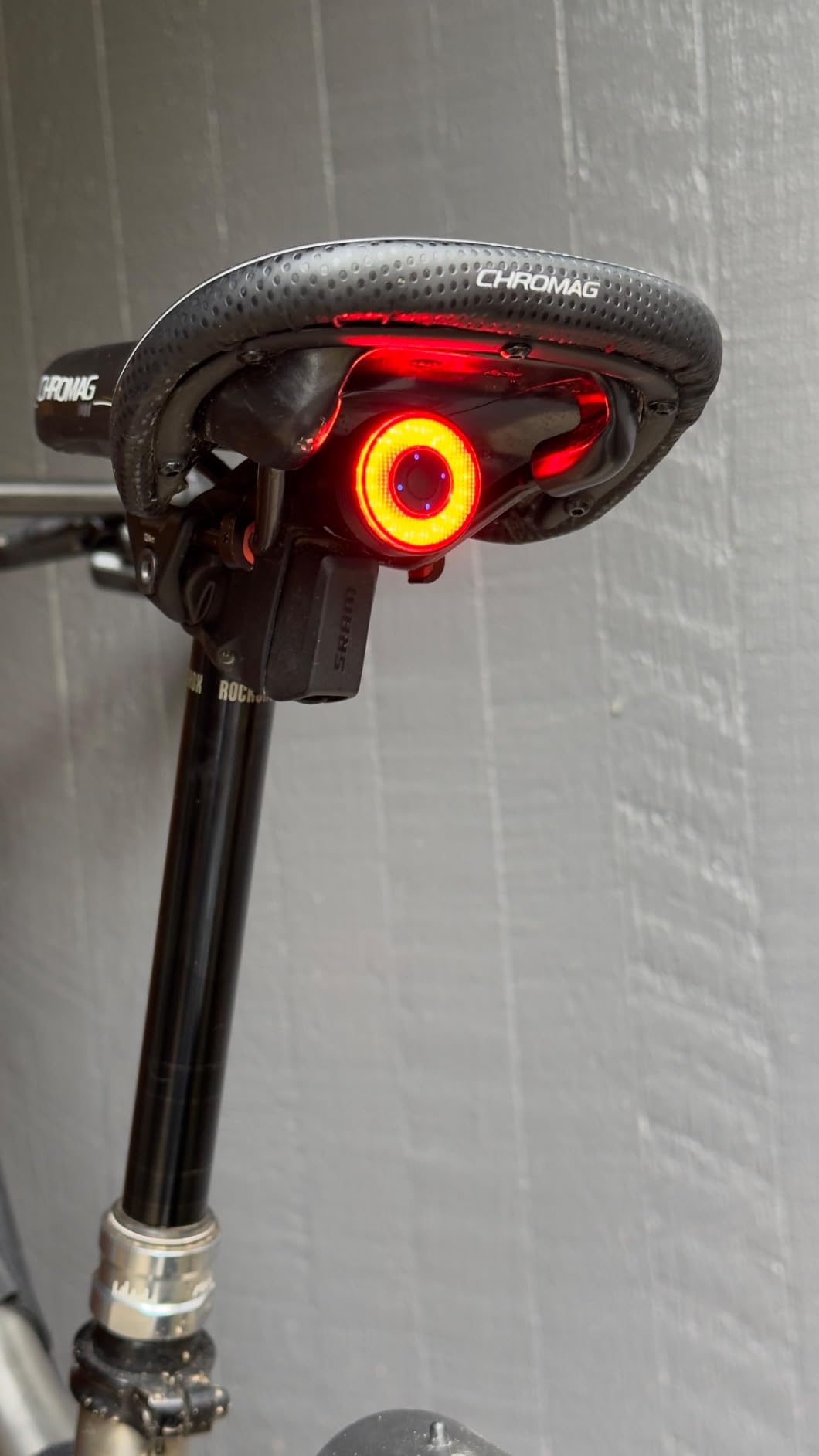
The feature that defines this light is brake sensing. When you slow, the COB LED flares bright for five seconds, and riding partners consistently report noticing it. On a shared path or in slow city traffic, that is a genuine safety gain rather than a gimmick, because it tells the person behind you that something is about to change.
Everything else is solid mid-range work. The body is aluminium rather than plastic, the 400 mAh battery runs up to 50 hours, and the four blue breathing dots show charge in quarters. Two mounts are included, which is genuinely useful if you switch between two bikes or want one on the bike and one on a bag.
Charging is the inconvenience: you unscrew the light out of the mount to plug it in, and there is no quick release, so a nightly charging habit is required. Owners are clear that the supplied saddle bracket can work loose and drop the light, while the seat post strap mount is more reliable, so use the strap.
Daylight visibility is the other limitation. This is not the light to buy if your commute home is mostly in twilight rather than full dark, and the ambient light sensor cannot be disabled in blink and breathing modes, which confuses some buyers about using it during the day. Several owners also note it does not sit square on a rear carrier.
Who this light suits
It suits riders on shared paths, in traffic, or in group rides where the brake flash is worth more than raw daylight reach. It also suits anyone who wants a solid metal rear light with a modern USB-C port and a clear charge indicator.
Commuters with more than one bike benefit from the two included mounts, and it works well as a secondary light if you already run a radar unit.
Where it falls short
It falls short for riders whose main window of vulnerability is dusk rather than darkness, because daylight presence is modest compared with the Hypershot. It also falls short for people who charge on the go, since it has to come out of the mount.
The saddle bracket should be swapped for the strap mount straight away, and the four-dot indicator should not be read as a precise percentage.
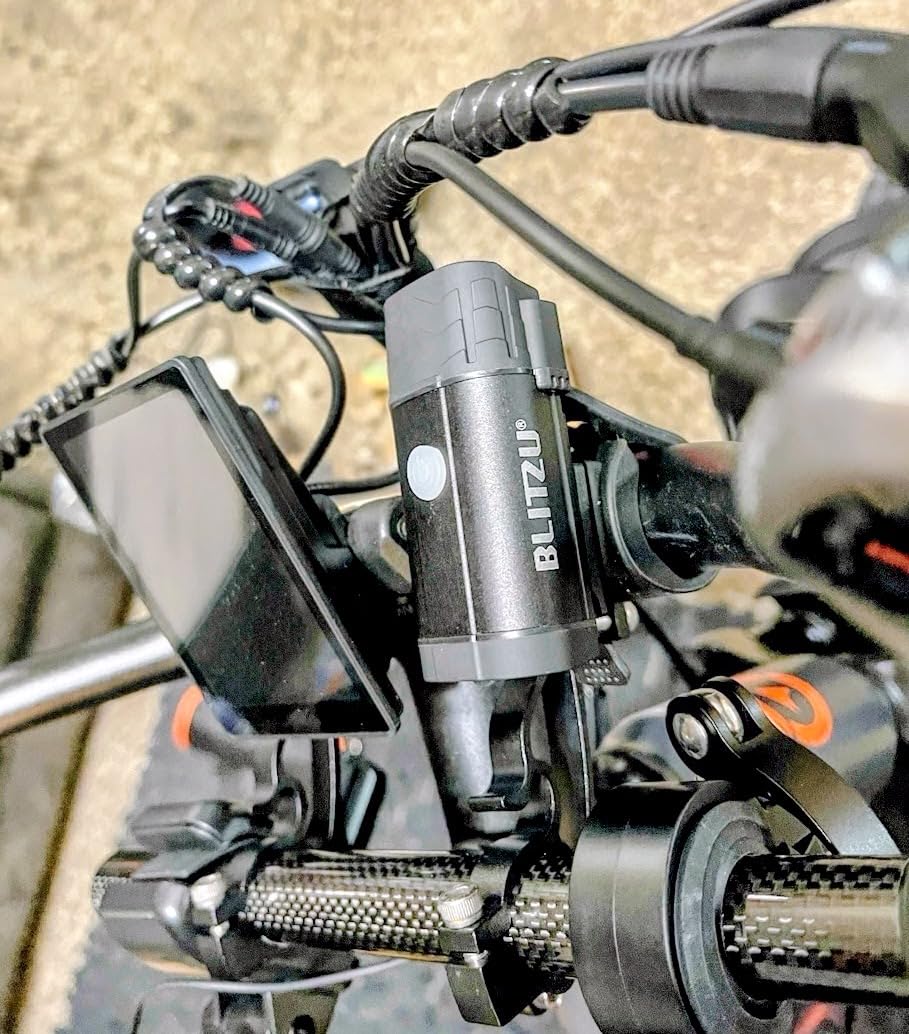
12. BLITZU USB-C Taillight 2-Pack – Best Spare Rear Light to Keep in a Bag

BLITZU Bike Tail Light, 2 Pack USB-C Rechargeable LED Bicycle Rear Lights
120 lumens per light
IPX5
2 lights in the pack
up to 10 hours each
Pros
- Two lights means one can stay in a bag as a permanent spare
- USB-C charging with a cable for each light
- Adjustable hinge tilts the beam up or down
- IPX5 sealing holds up in rain
- snow and fog
- Mounts on far more surfaces than a seatpost-only light
Cons
- Rear-only
- so a separate headlight is still needed
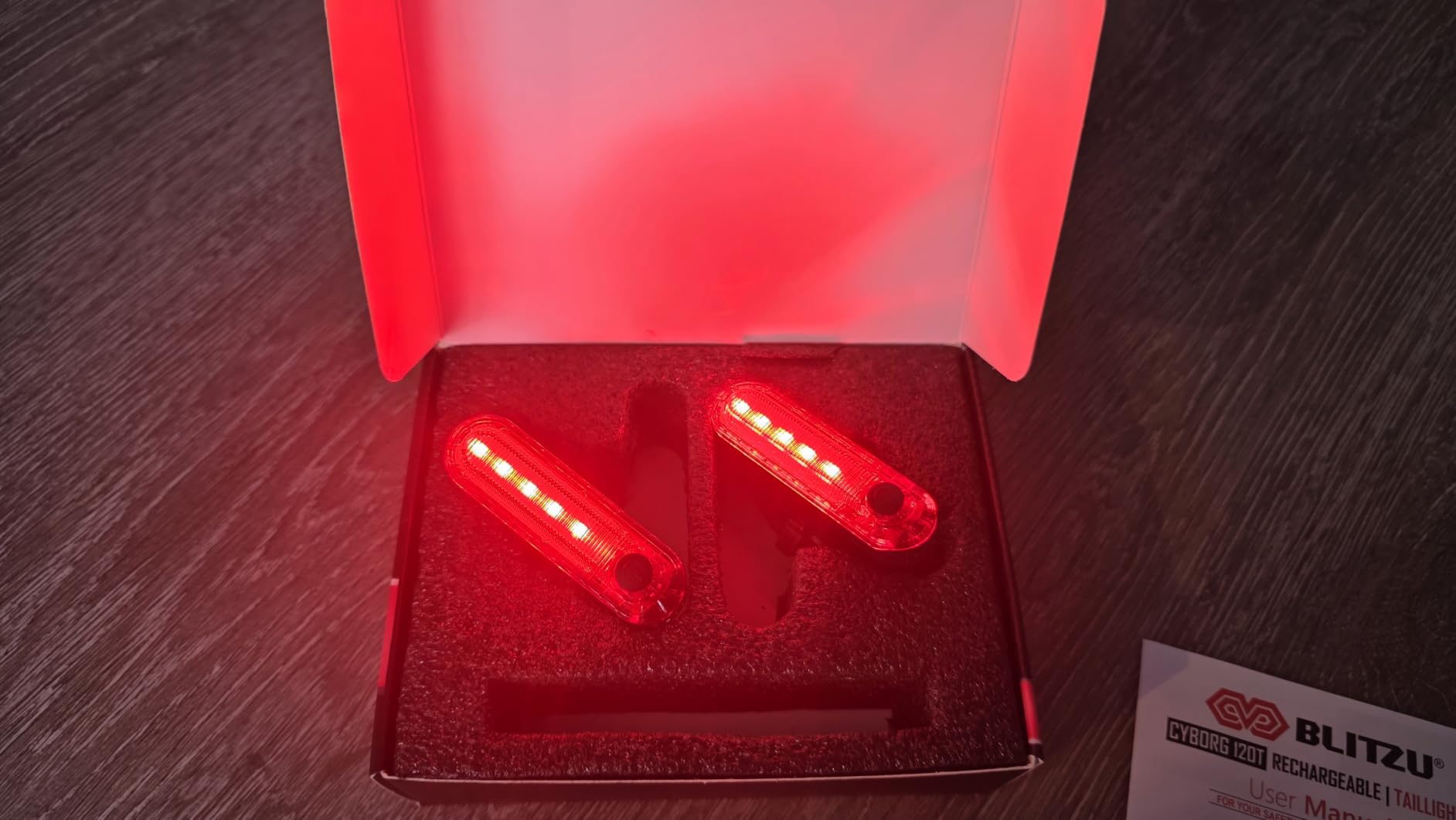
This is the pragmatic answer to the question most riders ask in forums: what do I do when my light dies halfway through a commute. You carry a second one. This pack gives you two USB-C rear lights at 120 lumens each, and the second one lives in your bag, on your helmet, or on the back of a trailer.
At one ounce each and with an adjustable hinge that tilts the beam up or down, these are the easiest lights here to place well. The flexible mount fits seatposts, seat stays, helmets, saddle bags, backpacks, and a long list of other things, which means you can put a light on your body as well as your bike.
IPX5 sealing is rated for rain, snow and fog, which covers year-round commuting in most climates, and the ten-hour runtime per light means a fortnight of daily use before a charge on flash.
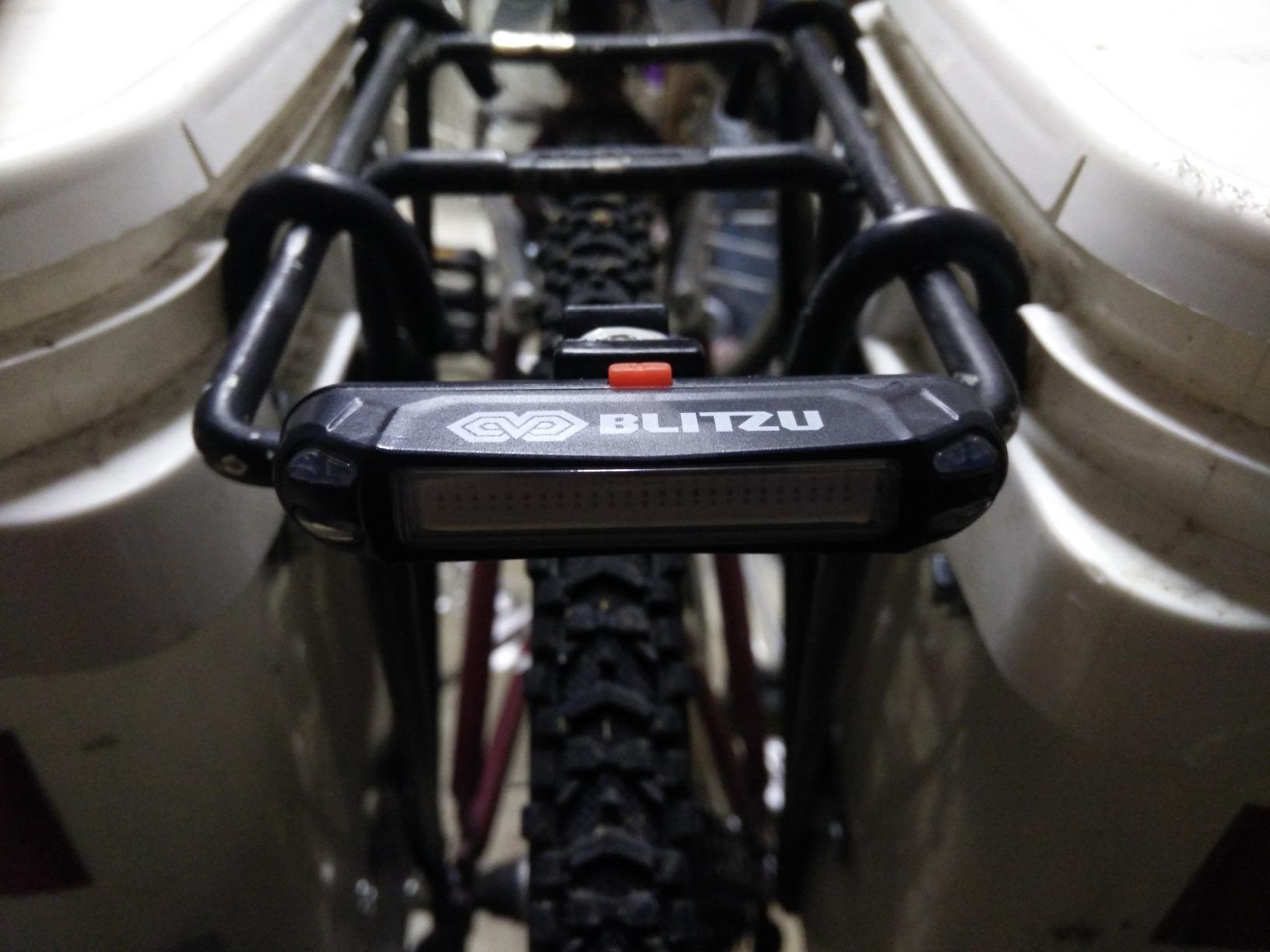
The limitation is obvious and worth stating plainly: these are rear lights only. They do nothing for seeing the road, so they supplement a headlight rather than replace one. At 120 lumens they are also modest next to a 350-lumen rear light, which is fine for being seen but not a substitute for maximum presence on a fast dark road.
For most urban and shared-path commutes, though, 120 lumens of red is more than enough to be picked out, and the USB-C port means one cable for your phone and your lights.
Who this light suits
It suits commuters who want cheap insurance, families with several bikes or several riders, and anyone whose light gets stolen off a bike rack. Riders who cycle with a child on a trailer or a tag-along get a second mounting surface for free.
It also suits people who already own a strong front light and only need to be seen, and anyone who charges USB-C devices and would rather not carry a second cable type.
Where it falls short
It falls short for riders who need a single light to do both jobs, since there is no headlight in the pack, and it falls short for very fast dark roads where maximum rear output matters.
It also falls short for riders who want a hard mount for rough terrain, since the flexible strap mount is designed for easy placement rather than for surviving a bad off-road ride.
How to Choose Bike Lights You Will Not Regret Buying?
Almost every regret we saw in owner reviews traced back to one of six things. Check these in order and the choice makes itself.
1. Beam pattern before lumen number. A wide flood lights the near road and reveals potholes; a narrow beam reaches down the road but leaves the edge of it dark. Most commuters need the flood. A cut-off line, where the beam stops cleanly instead of spraying light up into oncoming eyes, is the single most commuter-relevant optical feature and is worth paying for on shared paths.
2. Mount integrity, which is where budget lights fail. Silicone straps are the forgiving option and never lose level. Hard bar mounts stay aimed through vibration but are less forgiving of a crash. The common failure, described by RMIT design researchers writing about their testing, is a light that ratchets down and ends up pointing at the ground. Check how the light attaches before anything else.
3. Charging port: treat USB-C as a baseline, not a premium feature. Micro-USB is not a dealbreaker on a great light, but it becomes one after four years of digging a cable out of a bag. USB-C lights in this roundup include the BLITZU pair, the ROCKBROS smart light and the Ravemen FR500, and the convenience difference in daily use is real.
4. Battery longevity expectations, honestly set. Almost any LED made today will last at least 20,000 hours, as noted in a bike forum discussion on the subject. The batteries are the part that wears out, at roughly 400 charge cycles. A light you charge every other day gives you about two years before you should expect the cell to weaken, and a light with replaceable batteries can be kept alive almost indefinitely.
5. Runtime per mode rather than headline runtime. A quoted 12 hours almost always means the lowest flash setting. Look for the figure at medium, and check whether the light will run while charging. The Cygolite Hypershot running from a power bank is a genuinely useful property on a long winter commute.
6. IP rating for your climate. IPX4 handles road spray, IPX5 and IPX6 handle sustained rain and heavy splash, and IPX7 is submersible. Riders who cycle year-round in rain should treat IPX5 as the floor. The IPX6 and IPX65 lights here are the ones to look at if your route has long exposed sections.
USB rechargeable, replaceable batteries or dynamo? USB rechargeable is the default answer for almost everyone: cheap, fast and no cabling. Replaceable cells suit riders who want a light to last a decade. Dynamo lighting, where a hub generator powers the light as you ride, has a different appeal entirely. Forum members report almost no failures from dynamo systems over long ownership, one rider stating they have never had a dynamo-driven light fail. The trade-off is installation cost and the fact that a dynamo light only works while the wheel turns, which is a genuine problem for anyone who gets off the bike to walk the last stretch.
Where the lights sit on your bike. Bar mounts suit most riders and cost the least. Helmet mounts follow your gaze into corners, which helps on winding paths, but they also move with your head and can blind people you pass at close range. Seat-post mounts for rear lights should sit high and be aimed level; many drivers underestimate the distance of a dim light that is low and angled down.
Smart connectivity, if you have it. A light that pairs with your cycling computer turns itself on, adjusts brightness and can show radar alerts. The value depends entirely on whether you already own the computer. If you do not, the automation is a feature you will never use and you are better off spending that money on output and weather sealing.
Beam Etiquette: How to Light Your Path Without Blinding Anyone Else
Rider complaints about being dazzled by other people’s lights are among the most common in cycling forums, and the fix is not dimmer lights. It is beam placement and mode choice.
Mount your front light as low on the bars as you reasonably can, and aim it slightly down. Beam height is the main factor in whether oncoming riders and pedestrians get hit with light in the eyes. A helmet-mounted light at eye level throws light straight into the face of anyone coming the other way, which is why shared path etiquette rules often discourage helmet lights for exactly this reason.
Use a flash or pulse mode on busy paths and in groups. There is good evidence for why this works: riders report that drivers identify a flashing cyclist as a cyclist far more readily than one with a fixed beam, and that a car-driving friend naturally waited for a gap in traffic when a flashing rider appeared. Flash is not a compromise on visibility, it is often better visibility.
For group rides, turn the output down rather than off. Most of the lights here have a low mode or an adjustable flash speed for exactly this reason, and the Hypershot’s user-adjustable flash speeds were built for it.
And on unlit roads, do not run a full high beam constantly. Beam return from an unlit road surface is what dazzles people coming the other way, so boost for the stretch that needs it and drop back to a flash for the rest. A shaped beam with a cut-off line is the cleanest solution if you ride unlit routes often.
One last piece of etiquette worth knowing: a red front light confuses people. Riders have reported being asked by drivers and pedestrians what they were doing with a red light as a headlight. Keep the front white or amber, and the rear red, and nobody has to guess.
What to Do When Your Light Dies Mid-Commute
Forgotten charging and flat batteries are among the most common reasons riders end up riding home unlit, so plan for it before it happens.
Carry one small backup rear light in your bag at all times. A 120-lumen USB-C rear light weighs about an ounce and costs almost nothing, and it covers the single most dangerous scenario, which is a car following you with no light on your back at all. The BLITZU two-pack in this roundup exists for precisely this reason.
Charge with your commute, not after it. The lights that charge in an hour or less, such as the Zewdov set, can sit in your desk drawer and go out with you every morning. A light that charges in an hour and a half top-up is one of the easiest safety habits to build, because it needs no decision at 7am.
Learn the light’s low-power modes. Several lights here run for far longer on slow flash than on steady, and a slow-flash rear light on a dead-looking battery can carry you the last two kilometres.
If you are already stranded, your phone’s flashlight is a genuine emergency front light, and a white T-shirt under a reflective jacket is a surprisingly effective rear marker. Neither replaces a real light, but both buy you the distance needed to get home safely.
For anyone who rides the same route nightly, a dynamo system removes this failure mode completely, since the light is powered by the wheel rather than by a battery that can be flat.
How We Picked
This roundup is built from published manufacturer specifications and a large body of aggregated owner reviews, plus prior testing published by cycling outlets and design researchers. We did not ride every one of these lights for a fixed number of weeks, so treat our commentary as informed editorial judgement rather than a laboratory report.
Six criteria shaped the ranking:
1. Beam pattern and cut-off quality over raw output. A light that lights the road you are on beats a brighter light that lights the sky. Published comparative testing makes the point unusually well: the brightest front light measured 17 lux and still ranked only eighth of eleven with human judges, while the most visible light measured 5.8 lux, less than half.
2. Realistic runtime at the mode you would actually use. Headline hours are measured on the dimmest setting. We weighted medium and flash figures far more heavily.
3. Mount integrity. Strap, hard bar, stem, helmet or computer mount, and whether it can be adjusted to stay aimed on rough surfaces.
4. IP rating matched to real weather. IPX4 is a fair-weather rating. Anything riding year-round in rain should be looking at IPX5 and above.
5. Charging port and battery serviceability. USB-C, micro-USB, replaceable cells, and whether the light runs while plugged in.
6. Owner-reported durability and support. Longevity reports, warranty length, and whether the manufacturer sends replacement parts. A light that is repairable in year three is a better purchase than a marginally better light that is not.
Two things we deliberately did not do. We did not rank purely on rating, because review volume and rating rarely move together, and a 4.7 from 352 reviews tells you less than a 4.6 from 5,000. And we did not invent test measurements; every lumen figure, runtime, IP rating and weight in this guide comes from the published specification.
Frequently Asked Questions
How many lumens are needed for night bike riding?
Around 400 lumens is enough for well-lit city streets, 400 to 750 lumens covers suburban routes and shared paths, and 750 to 1200 lumens suits unlit lanes and rural roads. For the rear light, aim for 300 lumens or higher so drivers notice you at range. Going above 1000 lumens on the front mostly adds glare for oncoming traffic unless the beam is shaped with a cut-off line.
What bike light is best for night riding?
For most commuters the best setup is one white front light between 400 and 750 lumens and one flashing red rear light at 300 lumens or above. A shaped beam with a cut-off line matters more than extra output, and a USB-C port plus a hard or strap mount that holds its aim will outlast a brighter light with a poor bracket.
How long should a rechargeable bike light last?
The LED itself will typically run for 20,000 hours or more, but the battery is the limiting part at roughly 400 charge cycles. Charging every other day works out to about two years of solid service before the cell noticeably weakens. Lights with replaceable batteries can be kept running far longer, and a hard-wearing body with a two-year warranty is a good sign of build quality.
What are the best rechargeable bicycle lights?
Among USB rechargeable lights, the strongest options for different needs are a 400-lumen set with replaceable batteries for general commuting, a set with 58 hours of flash runtime for riders who rarely charge, and an 1100-lumen headlight for unlit roads. USB-C is the port to look for, since micro-USB becomes a daily nuisance over several years of ownership.
Which bike light has the best battery life?
Rear lights win the runtime contest because they run on low output. In this roundup one set is rated at up to 58 hours in slow flash for the headlight and 25 hours for the tail light, and a 400 mAh smart rear light claims up to 50 hours. Front lights are a different story, where full output commonly lasts between one and two hours.
Are USB-C and micro-USB bike lights worth worrying about?
Yes, over the life of the product. USB-C is now the standard on phones and laptops, so a micro-USB light means carrying or finding an extra cable every time you charge it. Among the lights reviewed here, USB-C appears on the two-pack rear lights, the smart brake-sensing rear light and the computer-mount headlight, while two established Cygolite models still use micro-USB.
The Verdict: Which Bike Lights to Buy
If you buy only one thing, buy a complete front-and-rear set rather than a single bright lamp. Our pick as the best bike lights for night commuting starts with the Ascher set, which has the deepest owner history in this roundup by a wide margin, a silicone strap mount that will not lose its aim, and 300 lumens that suit most mixed suburban routes. Add a red rear light above 300 lumens and you have covered both halves of the job.
Push your budget further and the honest high-output choice is the Cygolite Metro Pro 1100, with IP67 sealing and a proven multi-year record. Ride mostly in the dark and the Lsan 1200-lumen set covers you. Already run a Garmin or Wahoo computer and the Ravemen FR500 keeps the bars clean. Whatever you choose, buy a small spare rear light to live in your bag, and aim the front beam low. That combination did more for real-world safety in this research than any lumen figure did.
All 12 lights in this guide were checked against their published specifications and current owner reviews in 2026, and every detail above is drawn from that data rather than from marketing copy.
Riders who also use audio on the way in and out might enjoy our guide to the best noise cancelling earbuds for commuting.