
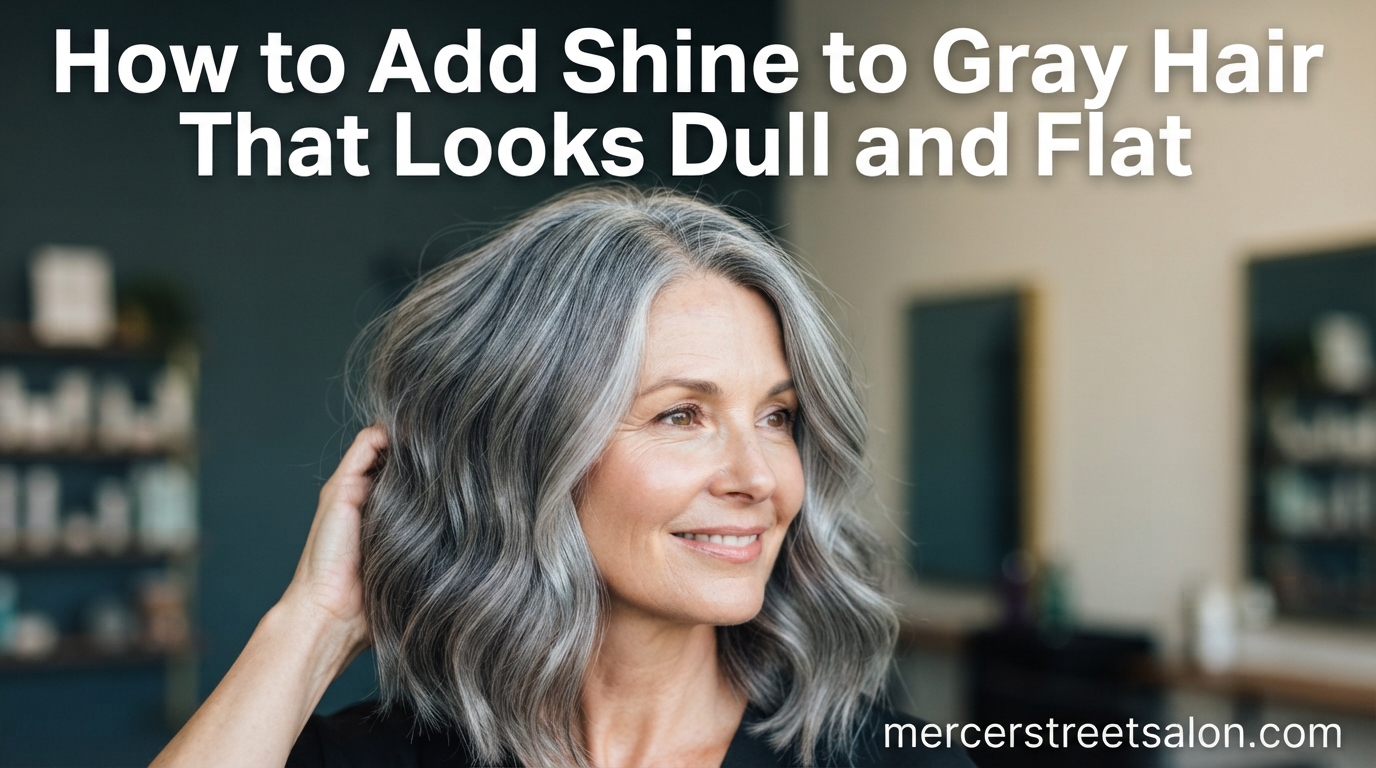
Gray hair can look stunning, but it also has a frustrating tendency to go dull, flat, and wiry faster than pigmented hair ever did. If you have been staring at your silver strands wondering why they lost their glow, you are not imagining things. The structural changes that create gray hair also strip away the natural shine you used to take for granted.
Our team has spent years working with clients transitioning to natural gray, and we have seen every variation of dullness, brassiness, and wiry texture imaginable. The good news is that almost all of it is reversible with the right routine. In this guide, we will walk you through exactly how to add shine to gray hair that looks dull and flat, covering the science behind why it happens and the techniques that actually work.
You will learn about purple shampoo, clarifying routines, deep conditioning, gloss treatments, scalp care, UV protection, hard water solutions, and DIY at-home remedies that cost almost nothing. We also cover specific advice for salt-and-pepper hair, fine versus coarse gray hair, and seasonal adjustments that most guides completely ignore.
Table of Contents
Why Gray Hair Loses Its Shine
Understanding why your gray hair looks dull is the first step to fixing it. The dullness is not random. It comes from three specific structural changes that happen as hair loses pigment.
Melanin Loss Changes How Hair Reflects Light
Pigmented hair contains melanin, which absorbs some light and reflects the rest evenly. This creates depth and dimension that reads as shine. When melanin production stops, the hair shaft becomes more translucent. Instead of reflecting light smoothly, it scatters light in multiple directions.
This scattering is why gray hair can look flat or even slightly translucent under bright light. Without pigment to anchor the reflection, light bounces unpredictably off the strand.
Cuticle Changes Increase Porosity
The cuticle is the outermost layer of each hair strand, and it acts like a series of tiny shingles. When those shingles lie flat and smooth, light bounces off evenly and you see shine. When they lift and become rough, light scatters and hair looks dull.
Gray hair tends to have a more disrupted cuticle structure than pigmented hair. The protein matrix that holds the cuticle together weakens as melanin disappears, leaving the surface rougher and more porous. Higher porosity means the hair absorbs moisture unevenly, swells, and the cuticle lifts further.
Sebum Production Drops
Your scalp produces sebum, a natural oil that travels down the hair shaft and creates a protective, light-reflective layer. This is what gives hair its natural sheen. As we age, sebum production drops significantly.
Less sebum means gray hair never gets that built-in conditioning that pigmented hair enjoyed for decades. The strands stay dry, the cuticle stays rough, and shine disappears. Many of our clients describe their gray hair as feeling like straw for this exact reason.
Environmental Factors Compound the Problem
UV exposure breaks down the already weakened protein structure in gray hair. Hard water deposits minerals like calcium and magnesium onto the strands, creating a dull film. Chlorine from pools can add a greenish or yellowish tint. Product buildup from silicones and heavy conditioning agents coats the hair and kills reflectivity.
All of these factors hit gray hair harder because it lacks the natural defenses that pigmented hair still has. One client told us her gray hair looked like a different head of hair after a week at the beach, and she was not exaggerating.
Quick Picks: Best Methods to Add Shine to Gray Hair at a Glance
Here is our ranked summary of the most effective approaches, drawn from years of salon experience and community feedback from forums like Reddit’s gray hair communities.
- Use purple shampoo weekly to neutralize yellow and brassy tones that kill brightness.
- Clarify once a week to strip product buildup and hard water minerals.
- Deep condition with a hydrating mask once or twice weekly.
- Apply leave-in conditioner to the ends after every wash.
- Use a lightweight hair serum or oil to smooth the cuticle and lock in moisture.
- Get a professional gloss treatment every 4 to 6 weeks for instant shine.
- Protect from UV and heat with an SPF mist and heat protectant.
- Stimulate the scalp to boost circulation and natural oil production.
- Try a bond-building treatment to repair structural damage.
- Install a shower filter to reduce hard water damage.
Read on for detailed instructions on each method, plus DIY alternatives and tips for specific hair types.
How to Add Shine to Gray Hair That Looks Dull and Flat: Detailed Methods
1. Use Purple Shampoo and Toning Products Correctly
Purple shampoo is the single most recommended product for gray hair, and for good reason. It contains violet pigments that sit opposite yellow on the color wheel, neutralizing brassy and yellow tones that make gray hair look muddy.
The trick is using it correctly. Most people either overuse it or underuse it. We recommend applying purple shampoo once or twice a week, depending on how brassy your hair gets. Leave it on for 2 to 5 minutes before rinsing. Anything longer risks leaving a purple or blue tint on lighter strands.
One Reddit user with 90 percent white hair reported great results alternating between a purple shampoo and a silver-specific conditioner. The combination keeps tone balanced without over-toning. If your hair starts looking slightly lavender or ashy, scale back to once a week or dilute the shampoo with your regular cleanser.
For salt-and-pepper hair, be cautious. Purple shampoo will not lighten your darker strands, but it can make the contrast between dark and silver look more pronounced. Some people love that effect, others find it harsh. Test it on a small section first.
2. Clarify Weekly to Remove Buildup
Even the best shampoos leave residue over time. Conditioning agents, silicones, styling products, and hard water minerals all accumulate on the hair shaft. This buildup creates a film that blocks light and makes gray hair look flat and lifeless.
A clarifying shampoo cuts through all of that. Use it once a week in place of your regular shampoo. Work it through the scalp and roots first, then pull it through the lengths. Follow immediately with a deep conditioning mask, because clarifying shampoos strip moisture along with buildup.
Davines recommends this exact swap in their gray hair guide, and we have seen it transform dull hair in a single wash. If you live in a hard water area, clarifying is non-negotiable. The minerals in hard water are the number one cause of brassy, dull gray hair we see in the salon.
3. Deep Condition with the Right Mask
Gray hair needs more moisture than pigmented hair ever did. A weekly deep conditioning mask restores hydration, smooths the cuticle, and creates the surface that reflects light properly.
Look for masks with hydrating ingredients like shea butter, argan oil, glycerin, and panthenol. Avoid heavy silicones that can build up over time. Apply the mask to clean, towel-dried hair, comb it through, and leave it on for 10 to 20 minutes. For deeper penetration, sit under a warm hood dryer or wrap your hair in a warm towel.
For coarse or wiry gray hair, a protein-enriched mask can help rebuild structure. For fine gray hair, stick with lightweight moisture masks to avoid weighing the hair down. One forum user described her wiry gray ends as feeling like new hair after three weeks of consistent masking.
4. Apply Leave-In Conditioner to the Ends
The ends of your hair are the oldest, driest, and most damaged part of each strand. On gray hair, they are also the dullest. A leave-in conditioner applied to the mid-lengths and ends after every wash seals the cuticle and provides ongoing hydration between washes.
Spray leave-ins work well for fine hair. Cream leave-ins are better for coarse or thick gray hair. Apply a small amount to damp hair, focusing on the last few inches. Avoid the roots and scalp to prevent greasiness.
Rossano Ferretti’s team specifically calls out leave-in application as a key step for gray hair shine. We agree. It is the single most consistent habit our clients maintain once they see the difference it makes.
5. Use Hair Serums and Lightweight Oils
A good hair serum does two things for gray hair. It smooths the cuticle for immediate shine, and it locks in moisture to prevent future dullness. The key is choosing the right product for your hair type.
For fine gray hair, look for lightweight silicone-free serums or argan oil blends. A single pump warmed between the palms and pressed over the surface of dry hair adds instant gloss without weight. For coarse or wiry gray hair, heavier oils like jojoba, sweet almond, or a blend designed for coarse textures work better.
Apply oil or serum to the ends first, then smooth whatever remains on your hands over the crown. Less is more. You can always add more, but removing excess product from fine gray hair is a hassle.
Avoid products with heavy fragrances or alcohol, which can dry out already fragile gray strands. Many users on the r/HaircareScience subreddit report that simpler formulations work better than complex multi-ingredient serums.
6. Get a Professional Gloss Treatment
A gloss treatment is a semi-permanent shine coating applied in the salon or at home. It does not change your hair color. Instead, it deposits a clear or slightly tinted layer that smooths the cuticle and boosts light reflection for 4 to 6 weeks.
For gray hair, a clear gloss is usually the best choice. It adds mirror-like shine without altering your silver tone. Some colorists add a hint of violet pigment to the gloss for double duty shine and toning.
If salon visits are not in your budget, at-home gloss kits are widely available. Results are not quite as dramatic, but they still make a noticeable difference. One of our clients described her first gloss treatment as turning her dull pewter hair into polished silver.
7. Protect From UV and Heat
UV rays break down the protein structure in gray hair faster than in pigmented hair. Over time, sun exposure yellows the strands and weakens the cuticle. A hair SPF mist applied before sun exposure creates a protective barrier.
Heat styling is equally damaging. Flat irons, curling wands, and even hot blow dryers lift the cuticle and fry already dry gray strands. Always apply a heat protectant before using any hot tool, and keep the temperature under 350 degrees Fahrenheit for fine gray hair or 400 degrees for coarse gray hair.
If you can air dry your hair even occasionally, do it. The less heat you apply, the smoother your cuticle stays, and the more shine you retain between treatments.
8. Stimulate and Care for the Scalp
A healthy scalp produces more sebum, which is the natural oil your gray hair desperately needs. Scalp stimulation boosts blood flow to the follicles, encouraging healthier hair growth and better oil production.
Use a scalp brush or your fingertips to massage the scalp in circular motions for 2 to 3 minutes before washing. You can also apply a lightweight scalp serum with ingredients like peppermint oil, rosemary extract, or niacinamide to support follicle health.
Avoid heavy scalp oils if you are prone to buildup or have fine hair. A few drops of a lightweight serum massaged into the scalp twice a week is plenty. Several users in gray hair Facebook groups swear by daily scalp massage as the single change that improved their hair texture the most.
9. Try Bond-Building Treatments
Bond-building treatments like Olaplex repair the disulfide bonds inside the hair shaft that break down over time. Gray hair, with its already compromised protein structure, benefits significantly from this kind of internal repair.
Use a bond-building treatment once every 1 to 2 weeks, either as a standalone treatment or mixed into your deep conditioning mask. Results build over time. After 4 to 6 weeks of consistent use, hair feels stronger, smoother, and more reflective.
This is especially helpful for gray hair that has been heat styled, chemically processed, or exposed to lots of sun. The internal repair creates a smoother hair shaft, which means a smoother cuticle surface and better shine.
10. Protect From Hard Water and Chlorine
Hard water is a silent killer of gray hair shine. The minerals in hard water coat each strand, creating a dull film that no amount of shampoo can fully remove without a clarifier. If you live in a hard water area, install a shower filter. It is one of the cheapest interventions with the biggest visible impact.
Chlorine from swimming pools adds a greenish or yellowish tint to gray hair. Before swimming, saturate your hair with clean water and apply a leave-in conditioner. This creates a barrier that reduces chlorine absorption. After swimming, rinse immediately and use a clarifying shampoo if you swim regularly.
One client who swims daily told us that a swim cap plus a weekly clarifying treatment kept her gray hair bright and shiny year-round. Without those two steps, her hair turned brassy within weeks.
DIY At-Home Shine Solutions for Gray Hair
You do not need expensive products to add shine to gray hair. Some of the most effective treatments come straight from your kitchen. These DIY options work well as weekly boosters between your regular product routine.
Apple Cider Vinegar Rinse
Mix one tablespoon of raw apple cider vinegar with one cup of cool water. After shampooing, pour the mixture slowly through your hair, massaging it into the scalp and lengths. Let it sit for 2 to 3 minutes, then rinse thoroughly and follow with conditioner.
The acidity of the vinegar helps close the cuticle, which smooths the hair surface and boosts shine. It also helps remove mineral buildup from hard water. Use this rinse once a week at most. Overuse can dry out the hair.
Coconut Oil Pre-Wash Treatment
Coconut oil penetrates the hair shaft more effectively than most oils, making it ideal for dry gray hair. Apply warm coconut oil from the mid-lengths to the ends, avoiding the scalp. Leave it on for at least 30 minutes, or overnight if possible, then shampoo twice to remove all residue.
This treatment adds moisture deep inside the strand, which plumps the hair and smooths the cuticle from the inside out. For fine gray hair, use a lighter oil like argan or jojoba instead, as coconut oil can be too heavy.
Aloe Vera Shine Spray
Mix two tablespoons of pure aloe vera gel with one cup of water and a few drops of argan oil in a spray bottle. Shake well before each use. Spritz onto damp or dry hair, focusing on the lengths and ends.
Aloe vera is deeply hydrating and slightly acidic, which helps smooth the cuticle. This is a great daily refresher between washes, especially in dry winter months.
Tips for Salt-and-Pepper Hair Specifically
Most gray hair advice assumes you are fully silver or white. But if you have mixed gray hair, the so-called salt-and-pepper look, your needs are different. The contrast between dark pigmented strands and white strands creates unique challenges and opportunities.
Mixed gray hair often looks textured and dimensional naturally. The challenge is that the white strands tend to be drier, coarser, and more prone to yellowing than the darker strands. This creates an uneven texture and tone that can look messy rather than intentional.
To manage this, focus your moisture and smoothing treatments on the white strands, which need it more. Use purple shampoo sparingly, as it will not affect the dark strands but can over-tone the white ones. A gloss treatment is especially effective for salt-and-pepper hair because it unifies the surface texture across both hair types, creating a cohesive shine.
A good haircut also matters more for mixed gray hair. Blunt cuts and clean lines make the salt-and-pepper pattern look deliberate and polished. Grown-out, uneven ends make the mixed texture look frizzy and unkempt.
Fine vs Coarse Gray Hair: Different Approaches
Not all gray hair is the same texture. Fine gray hair and coarse gray hair need very different shine strategies. Using the wrong approach can make fine hair greasy or leave coarse hair still feeling like wire.
Fine Gray Hair
Fine gray hair is easily weighed down. Heavy creams, oils, and butters will flatten it and make it look greasy within hours. Stick with lightweight spray leave-ins, silicone-free serums, and a single drop of argan oil at most.
Clarify more frequently, as fine hair shows buildup faster. Avoid thick deep conditioning masks in favor of lighter hydrating conditioners. Air dry when possible, and use heat tools on the lowest effective setting.
Coarse or Wiry Gray Hair
Coarse gray hair needs serious moisture. Rich butters, heavy oils, and protein-enriched masks are your friends. Layer a leave-in cream under a serum or oil to lock in maximum hydration.
Heat tools can actually help smooth the cuticle on coarse gray hair, but always use a heat protectant. A keratin treatment, done professionally, can transform wiry gray hair into smooth, shiny strands for 3 to 4 months. Multiple forum users with wiry gray texture report keratin treatments as life-changing.
Seasonal Care Tips for Gray Hair
Your gray hair routine should shift with the seasons. What works in humid summer will not work in dry winter, and vice versa.
Winter: Cold outdoor air and dry indoor heating both strip moisture from gray hair. Increase deep conditioning to twice a week. Add a humidifier to your bedroom. Switch to a richer leave-in cream, and use heavier oils on the ends. Protect hair from wool hats and coat collars, which cause friction and frizz, by wearing a silk or satin scarf underneath.
Summer: UV exposure and chlorine are the main threats. Apply a hair SPF mist every morning if you spend time outdoors. Clarify after every swim. Use purple shampoo more frequently to combat sun-induced yellowing. Consider wearing a hat during peak sun hours, especially between 10 AM and 4 PM.
Gray Hair Shine Myths Debunked
Myth: Plucking one gray hair makes three more grow back.
False. Plucking does not multiply gray hair. It can damage the follicle over time, though, so trim stray strands instead of pulling them.
Myth: Purple shampoo can be used every day.
False. Daily use leads to purple or blue buildup, especially on light strands. Once or twice a week is plenty.
Myth: Gray hair is coarser than pigmented hair.
Partially true. The hair itself is not inherently thicker, but the cuticle disruption and reduced sebum make it feel rougher and more textured.
Myth: You cannot make gray hair shiny without coloring it.
Completely false. With proper moisture, cuticle care, and toning, natural gray hair can be as shiny as any other color.
Myth: Stress causes gray hair.
Partially true. Research shows extreme stress can accelerate graying, but it is not the primary cause. Genetics and aging are the main drivers.
FAQs
How do you make dull grey hair shine?
Use a weekly purple shampoo to neutralize yellow tones, clarify once a week to remove buildup, deep condition with a hydrating mask, apply leave-in conditioner to the ends, and use a lightweight serum to smooth the cuticle. A professional gloss treatment every 4 to 6 weeks adds the most dramatic and immediate shine boost.
Why does my grey hair look so dull?
Gray hair looks dull because melanin loss changes how the strand reflects light, the cuticle becomes rougher and more porous without pigment to support its structure, and sebum production drops with age, leaving the hair dry. Environmental factors like UV exposure, hard water minerals, and product buildup compound all three issues.
How to make grey hair look stunning?
Combine regular toning with purple shampoo, consistent deep moisture, a gloss treatment for surface shine, a flattering haircut that suits your texture, and daily UV protection. Accessorize with the right tones in clothing and jewelry to complement silver hair, and keep the scalp healthy to support strong, vibrant growth.
What makes grey hair sparkle?
Sparkle comes from a smooth, flat cuticle surface that reflects light evenly. Smoothing the cuticle through moisture, acid rinses like apple cider vinegar, gloss treatments, and lightweight serums creates the mirror-like surface that produces visible sparkle and luminosity on gray strands.
Does purple shampoo make gray hair shiny?
Purple shampoo does not directly add shine, but it removes yellow and brassy tones that make gray hair look muddy and dull. By restoring a clean silver tone, it allows the natural brightness of the hair to show through. Pair it with moisturizing and cuticle-smoothing products for the full shine effect.
How often should I deep condition gray hair?
Deep condition gray hair once or twice a week depending on texture. Coarse or wiry gray hair benefits from twice weekly masking. Fine gray hair does well with once a week using a lightweight hydrating mask to avoid weighing the hair down.
Bringing It All Together
Adding shine to gray hair that looks dull and flat comes down to three core principles: tone control, moisture, and cuticle smoothing. Use purple shampoo to keep brassiness at bay. Clarify weekly to strip away what dulls the surface. Deep condition consistently and protect your strands from UV, heat, and hard water.
Start with two or three changes from this guide rather than overhauling everything at once. Give each new habit 3 to 4 weeks before judging the results. Your gray hair can absolutely look luminous, dimensional, and healthy with the right routine behind it.