
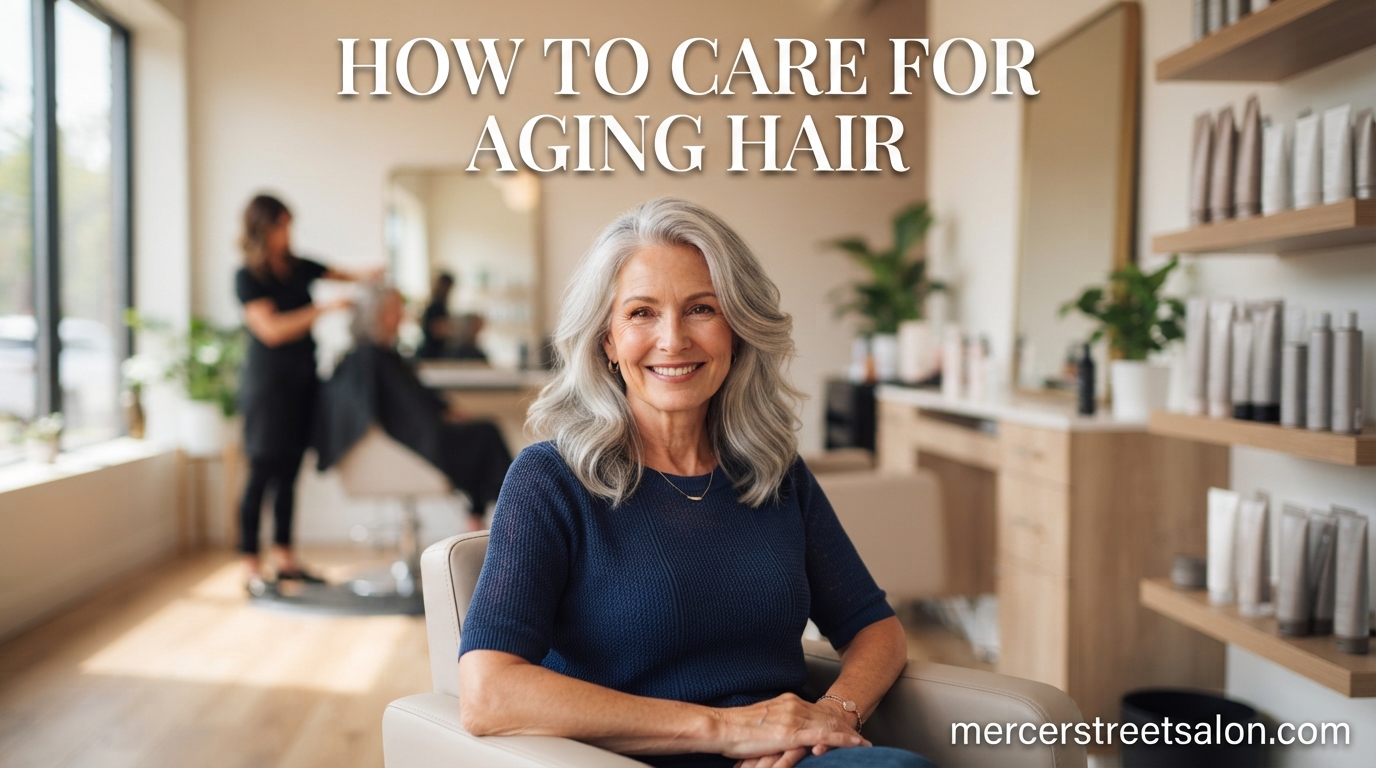
Noticing your hair is thinner than it used to be can catch you off guard. You run a hand through your ponytail and feel less fullness, or you spot more scalp in the mirror than you remember. If that sounds familiar, you are far from alone. Research shows that most people experience some degree of hair thinning as they get older, and the changes often start earlier than people expect.
Learning how to care for aging hair that is thinner than it used to be can make a real difference in how your hair looks, feels, and behaves. The right routine can slow further thinning, protect the strands you have, and even help you regain some volume. It starts with understanding what is actually happening beneath the surface.
At Mercer Street Salon, our team works with clients every day who are navigating these exact changes. We have seen firsthand how the right combination of gentle products, smart styling choices, and realistic expectations can transform thinning hair from a source of frustration into something you feel good about again. In this guide, we will walk you through everything from the science of aging hair to a practical daily routine you can start today.
Table of Contents
Why Hair Changes With Age
Aging hair is not just in your head. Your hair goes through measurable biological changes over time that affect thickness, texture, growth rate, and even color. Understanding these changes is the first step in knowing how to care for your hair effectively.
Hair Follicles Shrink Over Time
Each strand of hair grows from a follicle, a tiny pocket in your scalp that produces new hair cells. As you age, some follicles gradually shrink and produce thinner, shorter, and finer hairs. This process, called follicular miniaturization, is one of the primary reasons aging hair feels less dense. Eventually, some follicles stop producing hair altogether.
Not every follicle shrinks at the same rate. Genetics play a large role in which follicles are affected and how quickly the thinning progresses. That is why some people maintain relatively full hair into their seventies while others notice changes in their thirties or forties.
Sebum Production Drops
Your scalp produces natural oils called sebum that keep hair moisturized and flexible. As you get older, sebaceous glands become less active. The result is hair that feels drier, more brittle, and more prone to breakage. Many of our clients tell us their hair used to feel soft and bouncy but now feels rough or straw-like, and this reduction in natural oil is a big reason why.
Hormonal Shifts Play a Major Role
Hormones have a direct impact on hair growth cycles. For women, the drop in estrogen and progesterone during menopause is one of the most significant triggers for hair thinning. Estrogen helps keep hair in its growth phase longer, so when levels decline, hair spends less time growing and more time shedding.
For men, changes in androgen levels contribute to pattern hair loss over time. Thyroid imbalances, which become more common with age, can also cause noticeable thinning. If your hair change feels sudden rather than gradual, a hormone panel is worth discussing with your doctor.
Pigment Cells Decline
The cells that give your hair its color, called melanocytes, gradually die off as you age. This is why hair turns gray or white. What many people do not realize is that gray hair has a slightly different structure than pigmented hair. It tends to be coarser, drier, and less manageable, which adds another layer to caring for aging hair.
Common Causes of Hair Thinning As You Get Older
Not all hair thinning has the same root cause. Knowing which type you are dealing with helps you choose the right approach and set realistic expectations about what is reversible.
Androgenetic Alopecia (Pattern Hair Loss)
Androgenetic alopecia is the most common cause of hair thinning in both men and women. It is genetic and hormone-driven, meaning follicles gradually shrink in response to a hormone called DHT. This type of thinning follows predictable patterns, such as a widening part in women or a receding hairline in men. It tends to be progressive, meaning it worsens over time without intervention.
Telogen Effluvium
Telogen effluvium is a temporary shedding condition triggered by physical or emotional stress. Surgery, illness, rapid weight loss, severe stress, or medication changes can push large numbers of hair follicles into the resting phase all at once. Two to three months later, those hairs shed. This type of thinning is usually reversible once the underlying trigger is addressed.
Menopause-Related Thinning
Many women first notice hair changes during perimenopause and menopause. The hormonal fluctuations during this time can trigger a combination of androgenetic thinning and telogen effluvium. Research suggests that up to two-thirds of postmenopausal women experience some degree of hair thinning. The good news is that targeted care and treatments can slow this process significantly.
Medical Conditions and Medications
Thyroid disorders, iron deficiency anemia, vitamin D deficiency, and autoimmune conditions can all contribute to hair thinning. Certain medications, including blood pressure drugs, antidepressants, and some cholesterol medications, list hair loss as a potential side effect. If your thinning started after a new medication or diagnosis, that connection is worth exploring with your healthcare provider.
The key distinction is between permanent and temporary thinning. Genetic pattern loss is ongoing but manageable. Stress, nutritional deficiencies, and medication-related shedding are often reversible. A dermatologist can help you determine which type you are experiencing.
How to Care for Aging Hair That Is Thinner Than It Used to Be
Now for the part you came here for. Building the right care routine for aging, thinning hair is about working with your hair, not against it. Here are the essential practices our team recommends, in order of importance.
1. Switch to a Gentle, Sulfate-Free Shampoo
Sulfates are harsh detergents that strip natural oils from your scalp and hair. For aging hair that already produces less sebum, this can leave strands dry, brittle, and more likely to break. A sulfate-free shampoo cleanses without over-stripping, helping your hair retain what little natural moisture it has.
Look for formulas labeled gentle, moisturizing, or volumizing without sulfates. Wash two to three times per week rather than daily. Over-washing is one of the most common mistakes we see, and simply reducing wash frequency can noticeably improve hair texture within a few weeks.
2. Condition Every Time You Wash
Conditioner is not optional for aging hair. It replaces lost moisture, smooths the hair cuticle, and reduces breakage. Apply conditioner from the mid-lengths to ends, where hair is oldest and most fragile. Avoid applying heavy conditioner directly to your scalp, as this can weigh fine hair down.
If your hair feels particularly dry or coarse, add a deep conditioning treatment once per week. Hair masks with ingredients like shea butter, argan oil, or keratin can restore softness and elasticity that aging hair lacks.
3. Use a Wide-Tooth Comb on Wet Hair
Wet hair is at its most vulnerable. The hair shaft swells when wet, making it more elastic and more prone to snapping under tension. Instead of yanking a brush through tangles, use a wide-tooth comb starting from the ends and working upward.
This one simple change can dramatically reduce breakage. Many of our clients are surprised by how much less hair they see in their comb after switching from a brush to a wide-tooth comb on wash days.
4. Incorporate Regular Scalp Massage
Scalp health is directly tied to hair health. A gentle scalp massage stimulates blood flow to the follicles, which delivers oxygen and nutrients that support healthy hair growth. Use your fingertips, not your nails, and massage in small circles for three to five minutes a few times per week.
You can do this on a dry scalp or with a few drops of lightweight oil like jojoba or rosemary oil. Some small studies suggest rosemary oil may support hair growth, though more research is needed. Either way, the massage itself improves circulation and feels great.
5. Protect Hair From Heat
Hot tools like flat irons, curling wands, and blow dryers can cause serious damage to already fragile aging hair. If you do use heat, always apply a heat protectant first and keep the temperature under 350 degrees Fahrenheit.
Better yet, embrace heat-free styling whenever possible. Air-drying, foam rollers, and overnight heatless curl methods can give you body and shape without the damage. Your hair will thank you in the long run.
6. Get Regular Trims
Split ends travel upward, causing breakage that makes thin hair look even thinner. Getting a trim every eight to twelve weeks removes damaged ends before they split further. You do not need to lose much length, even a quarter inch makes a visible difference in how full and healthy your hair looks.
A skilled stylist can also cut your hair in a way that maximizes volume. Blunt ends make hair look thicker, while too much layering can make fine hair look stringy.
How to Add Volume to Thinning Hair
While you are working on the health of your hair, you also want it to look full and voluminous right now. These styling strategies can create the appearance of thickness without damaging your strands.
Choose the Right Haircut
The right cut is the single most effective way to make thin hair look thicker. Shorter styles, like chin-length bobs or pixie cuts, remove weight that drags hair down and make each strand look fuller. If you prefer longer hair, keep it above the collarbone and ask your stylist for internal layers rather than heavy face-framing ones.
Blunt cuts at the bottom create a solid line that reads as density. Razor-cut or heavily texturized ends, on the other hand, can make fine hair look wispy.
Use Volumizing Products Strategically
Volumizing mousse and root-lifting sprays add body without weight. Apply mousse to damp hair at the roots before blow-drying, or use a root lifter on dry hair for a quick boost. Avoid heavy creams, oils, and serums near your scalp, as they coat fine hair and flatten it.
Dry shampoo is another secret weapon. Even on clean hair, a light dusting of dry shampoo at the roots adds grip and texture that makes hair look fuller.
Blow-Dry Upside Down
Drying your hair with your head flipped upside down lifts the roots away from the scalp and creates natural volume. Once your hair is about eighty percent dry, flip upright and smooth the top with a round brush. This technique takes two minutes and adds noticeable body.
Try a Root Concealer
Root concealers and hair building fibers are products that temporarily fill in areas where the scalp is visible. They come in shades matched to your hair color and wash out with shampoo. For special occasions or days when you want extra confidence, they can be a game-changer.
Many of our clients in online communities like the finehair subreddit swear by these products for covering thinning spots along the part line. They are affordable, easy to use, and completely non-damaging.
Nutrition for Healthier Aging Hair
What you eat shows up in your hair. Hair cells are some of the fastest-growing cells in the body, and they need a steady supply of nutrients to function properly. While no single food will reverse genetic hair loss, addressing nutritional gaps can support healthier, stronger growth.
Protein Is the Building Block
Hair is made primarily of a protein called keratin. If you are not eating enough protein, your body prioritizes sending available protein to essential functions rather than hair growth. Aim for a serving of protein at every meal, whether that is eggs, fish, chicken, beans, Greek yogurt, or tofu.
Studies have linked protein-rich diets to improved hair growth. A good daily target is roughly 0.8 grams of protein per kilogram of body weight, though active individuals may need more.
Key Vitamins and Minerals
Several specific nutrients are closely tied to hair health:
Biotin (Vitamin B7): Biotin is probably the most well-known hair supplement, and some studies suggest supplementation can improve hair strength. Biotin deficiency is rare, but if your levels are low, correcting them can make a visible difference.
Iron: Iron deficiency is one of the most common nutritional causes of hair shedding, especially in women over forty. Ferritin, the stored form of iron, should be checked with a blood test if you are experiencing noticeable thinning. Red meat, spinach, lentils, and fortified cereals are good dietary sources.
Vitamin D: Research links low vitamin D levels to hair shedding and slowed growth. Your body produces vitamin D through sun exposure, but many adults do not get enough. A simple blood test can tell you if you need to supplement.
Zinc: Zinc supports hair tissue growth and repair. Oysters, pumpkin seeds, chickpeas, and cashews are all good sources. Zinc deficiency can cause hair shedding, though excessive zinc intake can also cause problems, so stick to recommended amounts.
Vitamin B12: B12 deficiency becomes more common with age and can contribute to hair changes. Animal products like fish, meat, eggs, and dairy are the primary sources, so vegans and vegetarians should consider a supplement.
Omega-3 Fatty Acids
Omega-3s help reduce inflammation and support scalp health. Fatty fish like salmon and sardines, walnuts, flaxseeds, and chia seeds are excellent sources. Some studies suggest omega-3 supplementation may improve hair density, though more research is needed.
A Note on Supplements
Before starting any supplement regimen, talk to your doctor. More is not always better, and excess amounts of certain vitamins like vitamin A can actually cause hair loss. Blood work is the only reliable way to identify which nutrients you actually need.
What to Avoid: Habits That Make Thinning Worse
Caring for aging hair is as much about what you stop doing as what you start. These common habits can accelerate thinning and damage, and avoiding them can make a bigger difference than any product you buy.
Skip the Tight Hairstyles
Ponytails, buns, and braids that pull tightly on the scalp can cause a type of hair loss called traction alopecia. The constant tension damages follicles over time, and in some cases the damage becomes permanent. If you wear your hair up, use soft fabric hair ties and vary your placement so the same follicles are not stressed every day.
Avoid Harsh Chemical Treatments
Permanent relaxers, aggressive bleaching, and perming treatments weaken the hair shaft. For aging hair that is already thinner and more fragile, these processes can cause significant breakage. If you color your hair, ask your stylist about gentler alternatives like demi-permanent color or balayage that minimizes scalp exposure.
Do Not Sleep on Wet Hair
Wet hair is more elastic and more prone to breakage. Tossing and turning on wet hair causes friction that can snap strands. Always dry your hair before bed, or at minimum, braid it loosely to minimize friction. A silk or satin pillowcase also reduces friction compared to cotton.
Stop Scrubbing Your Scalp Aggressively
Scrubbing your scalp hard during shampooing does not clean better. It actually causes mechanical damage and can pull out hairs that are in their resting phase. Use gentle, circular motions with your fingertips. Let the shampoo do the work.
Medical Treatment Options for Age-Related Hair Loss
If lifestyle changes and a good hair care routine are not enough, medical treatments can help. These options range from over-the-counter topical treatments to procedures performed by a dermatologist.
Minoxidil (Rogaine)
Minoxidil is the only FDA-approved over-the-counter treatment for pattern hair loss in both men and women. It works by increasing blood flow to follicles and extending the growth phase of the hair cycle. The 5 percent formulation is most commonly recommended, applied to the scalp once or twice daily.
Consistency is critical with minoxidil. It takes three to six months of daily use to see results, and stopping the treatment means any regrown hair will eventually shed. Many users in online forums report success, but it works best on follicles that are still active.
Prescription Medications
For women, spironolactone is sometimes prescribed off-label for pattern hair loss, especially when androgens are a factor. For men, finasteride is an oral medication that blocks the conversion of testosterone to DHT. Both require a prescription and ongoing monitoring by a doctor.
Platelet-Rich Plasma (PRP) Therapy
PRP therapy involves drawing your blood, separating the platelet-rich plasma, and injecting it into your scalp. The growth factors in the plasma are thought to stimulate follicle activity. Some clinical studies have shown promising results, though it requires multiple sessions and is not covered by most insurance plans.
Low-Level Laser Therapy (LLLT)
LLLT devices, including laser combs and caps, use red light therapy to stimulate hair follicles. FDA-cleared options are available for home use. Research suggests modest improvements in hair density with consistent use, though results vary from person to person.
When to See a Dermatologist
If you are experiencing any of the following, it is time to consult a professional:
Sudden, rapid hair shedding rather than gradual thinning. Bald patches or areas of complete hair loss. Scalp redness, itching, scaling, or pain accompanying the thinning. Thinning that does not improve after six months of consistent care and lifestyle changes.
A dermatologist can run blood work, perform a scalp biopsy if needed, and determine the exact cause of your hair loss. Early intervention often leads to better outcomes, so do not wait years to seek help.
FAQs
What to do about aging, thinning hair?
Start with a gentle, sulfate-free shampoo used two to three times per week, condition every wash, use a wide-tooth comb on wet hair, and protect hair from heat styling. Add regular scalp massages to boost circulation, get trims every eight to twelve weeks, and focus on a protein-rich diet with adequate iron, vitamin D, and biotin. If thinning persists, talk to a dermatologist about minoxidil or other medical treatments.
How can I thicken my thinning hair from aging?
You cannot permanently change the diameter of individual hair strands, but you can create the appearance of thickness and support healthier growth. Choose a blunt haircut at chin to shoulder length, use volumizing mousse at the roots, blow-dry upside down for lift, and try root concealers or hair building fibers for visible scalp areas. Minoxidil can help reactivate shrunken follicles, and consistent scalp care supports a healthier growth environment.
What vitamin are you lacking if your hair is thinning?
The most common nutritional deficiencies linked to hair thinning are iron, vitamin D, vitamin B12, and zinc. Biotin deficiency can also affect hair health, though it is rare. A blood test is the only reliable way to identify which nutrients you are low on, so talk to your doctor before starting any supplement, since excessive amounts of certain vitamins like vitamin A can actually worsen hair loss.
Can age-related hair thinning be reversed?
It depends on the cause. Temporary thinning from stress, nutritional deficiencies, medication changes, or telogen effluvium is often fully reversible once the trigger is addressed. Genetic pattern hair loss (androgenetic alopecia) is progressive and not fully reversible, but treatments like minoxidil, prescription medications, and PRP therapy can slow the loss and sometimes regrow hair in follicles that are still active.
Caring for Your Hair at Every Age
Learning how to care for aging hair that is thinner than it used to be is an ongoing process, not a one-time fix. The combination of gentle products, smart styling, good nutrition, and knowing when to seek professional help gives you the best chance of keeping your hair as full and healthy as possible for as long as possible.
Start with the basics: switch to a sulfate-free shampoo, reduce how often you wash, condition every time, and be gentle with wet hair. From there, layer in volume-boosting techniques, scalp care, and nutritional support. If you do not see improvement within six months of consistent care, schedule a visit with a dermatologist to explore medical options.
Your hair may not be exactly what it was at twenty-five, but with the right approach, it can still look full, healthy, and vibrant. That is what matters most.