
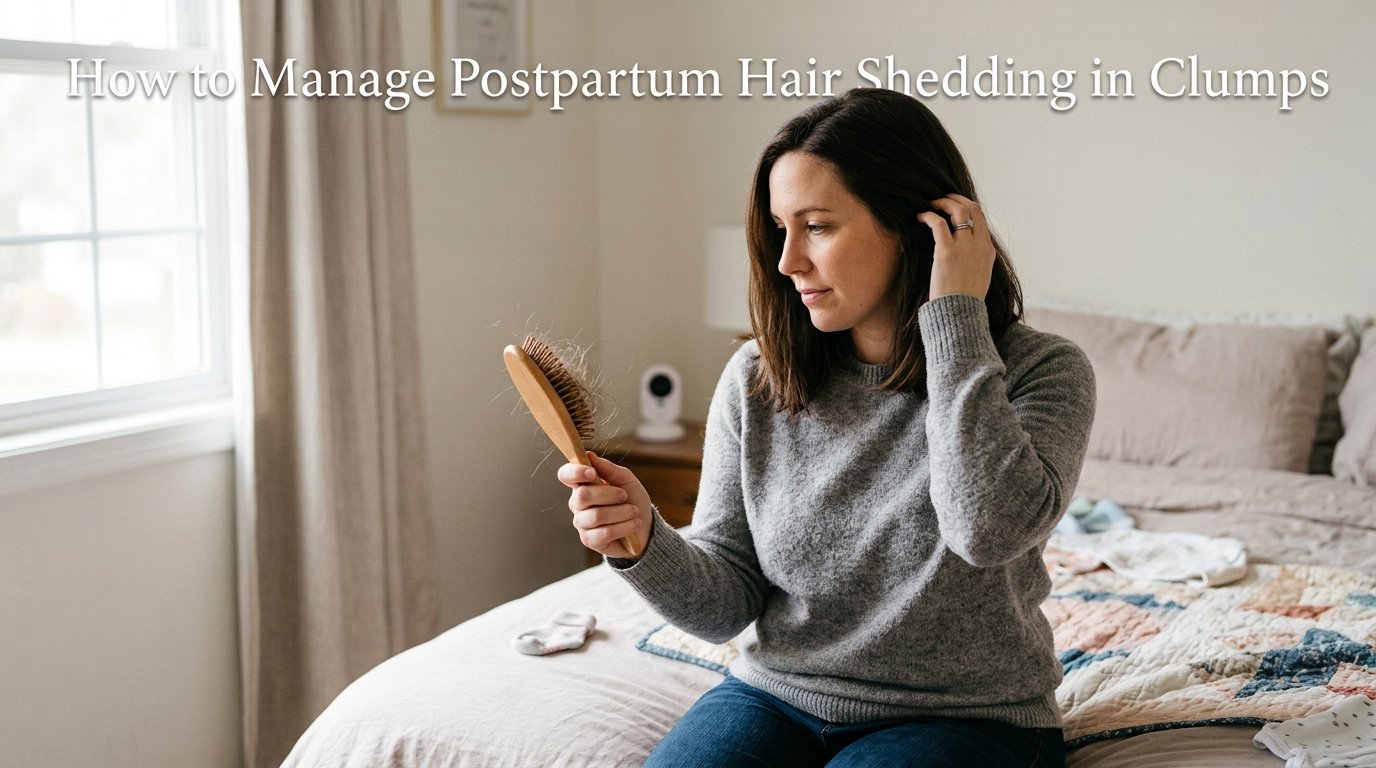
If you are standing over a shower drain full of hair wondering whether something is seriously wrong, take a breath. Seeing your hair fall out in clumps a few months after having a baby is one of the most unsettling parts of the postpartum period, and almost every new mother goes through it. The good news is that this type of shedding, called telogen effluvium, is temporary and your hair will grow back.
Learning how to deal with postpartum hair shedding that comes out in clumps starts with understanding why it happens and what you can realistically control. In this guide, we cover the hormonal cause, the typical timeline, gentle hair care strategies, scalp massage techniques, when to call your doctor, and the emotional side of watching handfuls of hair come out at once.
You are not alone in this. In forum discussions across Reddit pregnancy communities and new mother support groups, the panic around postpartum shedding is one of the most common topics brought up by moms at the three to four month mark. Let’s walk through exactly what is happening and what helps.
Table of Contents
What Is Postpartum Hair Shedding?
Postpartum hair shedding is excessive hair loss that occurs after childbirth when hormone levels shift back to normal. The medical name is telogen effluvium, and it is the same condition that can happen after major physical stress, illness, or rapid hormonal change.
On a normal day, the average person loses between 50 and 100 hairs. During pregnancy, elevated estrogen levels keep a much larger percentage of your hair in the growth phase, which is why many women notice thicker, fuller hair while pregnant. After delivery, estrogen drops, and all those hairs that were held in the growth phase enter the resting and shedding phase at roughly the same time.
That synchronized shedding is exactly why hair comes out in clumps. It is not that you are suddenly losing more hair than you would have over the last nine months. You are losing it all at once because pregnancy essentially paused the normal daily shedding.
What Causes Postpartum Hair Shedding (And Why It Comes Out in Clumps)
The primary cause of postpartum hair shedding is the sharp drop in estrogen that follows childbirth and placental delivery. Estrogen is the hormone that extended your hair’s growth phase throughout pregnancy, and once it falls, those hairs move into the telogen, or shedding, phase together.
This process is purely hormonal in most cases. It is not caused by something you did wrong, and it is not a sign that your body is failing. Breastfeeding does not directly cause the shedding, though prolactin and other postpartum hormonal shifts can influence the overall timeline for some women.
According to Johns Hopkins Medicine, postpartum hair thinning can also affect adoptive mothers and women who have undergone fertility treatments, because the trigger is the hormonal shift itself rather than the physical act of giving birth. Any rapid drop in estrogen can prompt the same response.
A few other factors can worsen shedding or make it last longer. Iron deficiency, thyroid imbalances, significant stress, and poor nutrition after delivery can all contribute. We will cover when those factors warrant a call to your provider later in this guide.
The Postpartum Hair Shedding Timeline
Understanding the timeline is one of the most reassuring things you can do for yourself right now. Forum users consistently say that knowing when the shedding will stop is the single most calming piece of information they find.
Here is what the typical postpartum hair shedding timeline looks like:
Months 0 to 2 postpartum: Shedding is usually not noticeable yet. Your estrogen levels have dropped, but the hair follicles are still transitioning into the shedding phase. You may feel like your hair is normal or slightly thinner than during pregnancy.
Months 2 to 4 postpartum: This is when shedding typically begins. You may start noticing more hair in your brush, on your pillow, or in the shower drain. The clumps usually become most visible during washing and brushing.
Months 4 to 6 postpartum: Shedding usually peaks during this window. This is the stage where new mothers describe pulling literal handfuls of hair out of the shower drain and panicking. The peak is intense, but it is also a sign that the process is working as expected.
Months 6 to 12 postpartum: Shedding gradually slows down for most women. Regrowth begins, and you may notice short new hairs along your hairline, sometimes called baby hairs or cowlicks.
By 12 to 15 months postpartum: Most women have returned to their normal hair density. If shedding has not slowed by the one year mark, it is worth talking to a healthcare provider about other potential causes.
Is My Hair Loss Normal? Comparing Typical vs. Excessive Shedding
One of the most common questions in new mother forums is how to tell the difference between normal postpartum shedding and something more concerning. The distinction matters because it determines whether you need to call your doctor.
Normal postpartum shedding looks like large amounts of hair coming out during washing, brushing, and sleeping. You may see clumps the size of a golf ball or larger in the shower, and that can feel alarming even when it is expected.
Signs that your shedding is within the typical range include hair coming out from all over the scalp rather than in distinct patches, no visible bald spots, and the shedding beginning between two and four months postpartum. You may also notice short new hairs growing in along your hairline as the regrowth phase kicks in.
Signs that warrant a call to your healthcare provider include patchy hair loss with clearly defined bald areas, shedding that continues well past twelve months postpartum, scalp irritation or redness, and shedding accompanied by fatigue, weight changes, or other symptoms of thyroid imbalance. In those cases, your provider may want to check iron levels, thyroid function, and overall nutritional status.
If You Are Panicking Right Now, Read This First
The emotional side of postpartum hair shedding deserves real attention. Across Reddit pregnancy communities and mother support groups, women describe the experience as terrifying, and many say they were completely unprepared for how much hair would come out.
If you are seeing clumps in the shower drain and feeling scared, here is what you need to hear. Your hair will grow back. Telogen effluvium is temporary by definition, and the vast majority of women return to their pre pregnancy hair density within a year. The regrowth phase starts even while shedding is still happening, which is why you may notice short new hairs coming in along your hairline.
The panic usually peaks around four months postpartum because that is when shedding is at its worst. Remind yourself that the amount of hair you are losing right now is the most you will see at any point in the process. It will start to decrease.
It is also valid to grieve the change in your appearance. Hair is tied to identity, and losing it on top of all the other physical changes of early motherhood can feel overwhelming. Talk to other mothers who have been through it, and give yourself grace while your body recovers.
How to Deal With Postpartum Hair Shedding That Comes Out in Clumps
You cannot stop postpartum shedding entirely, because it is a hormonal process that has to run its course. But there are concrete things you can do to minimize breakage, protect the hair you still have, and support healthy regrowth. Here is what actually helps.
Switch to Gentle Hair Care Products
Use a volumizing shampoo and a lightweight conditioner designed for fine hair. Avoid heavy conditioning shampoos and intensive deep conditioners, because they can weigh hair down and make thinning look more pronounced. Cleveland Clinic and BabyCenter both recommend this approach for managing the appearance of postpartum thinning.
Look for sulfate free formulas when possible, since sulfates can be harsh on already fragile hair. A leave in conditioning spray or light conditioner applied only to the ends can help with tangles without adding weight.
Detangle With a Wide Tooth Comb
Swap your brush for a wide tooth comb, especially when your hair is wet. Wet hair is more fragile and more likely to break, and a wide tooth comb glides through tangles with less pulling. Start at the ends and work your way up to reduce tension on the scalp.
Detangling while you have conditioner in the shower is one of the gentlest approaches. The slip from the conditioner helps the comb move through without snagging, which means less hair pulled out before its natural shedding time.
Avoid Tight Hairstyles
Tight ponytails, slicked back buns, and braids that pull on the hairline can cause traction alopecia, which is hair loss caused by tension. Even if your hair is already shedding, adding mechanical stress makes the thinning worse around the temples and edges.
Opt for loose styles, soft scrunchies instead of elastic bands, and silk hair ties that reduce friction. If you wear your hair up during the day, try to vary the placement so the same areas are not under constant tension.
Try Scalp Massage With Natural Oils
Johns Hopkins Medicine specifically recommends scalp massage with natural oils as a supportive measure during postpartum shedding. Massage improves blood flow to the hair follicles, which can support the regrowth phase that is already underway.
Use a small amount of coconut oil, argan oil, or jojoba oil and massage gently into the scalp with your fingertips for about five minutes. Do this two to three times per week, ideally before washing so the oil does not build up. Avoid aggressive rubbing, since that can cause further breakage at the root.
Sleep on a Silk or Satin Pillowcase
Cotton pillowcases create friction that can pull on loose hairs and cause breakage while you sleep. Silk and satin pillowcases reduce that friction, which means fewer hairs left behind on your pillow and less stress on the hair that is already fragile from hormonal changes.
This is a small change that several competitors mention as helpful, and forum users who have tried it consistently say they noticed less hair on their pillowcase within a week or two.
Focus on Nutrition for Hair Health
Your body is recovering from pregnancy and birth, and your hair needs nutrients to regrow. Prioritize protein, iron rich foods like spinach and lean meats, omega 3 fatty acids from fish or seeds, and plenty of fruits and vegetables for vitamins A, C, and E.
Continue taking your prenatal vitamin if you are breastfeeding or if your provider recommends it. Biotin supplements are sometimes suggested by dermatologists, but talk to your doctor before adding any new supplement, especially while nursing.
Be Strategic About Washing
Washing less frequently does not stop the shedding, since the hairs that would have come out in the shower will come out over the following days instead. However, washing less often can reduce the visual shock of seeing large clumps at once, which helps with the emotional side.
If washing daily feels emotionally difficult, try stretching to every other day or every two days. Use a dry shampoo between washes if needed, and remember that the hair coming out during washing was already in the shedding phase regardless of when you wash.
What to Avoid During Postpartum Shedding
Just as important as what to do is what to avoid. Some common hair practices can make shedding look worse or cause additional breakage on top of the hormonal process already underway.
Avoid heat styling tools like flat irons and curling wands on high settings, since heat damage weakens hair that is already fragile. Skip chemical treatments including perms, relaxers, and bleaching during the peak shedding months, because the chemicals can cause breakage and irritation on a sensitive scalp.
Avoid heavy oils and butters applied directly to the scalp, since they can clog follicles and weigh hair down. Light oils like argan or jojoba used in moderation during scalp massage are fine, but thick products like shea butter are better saved for the ends of the hair.
Avoid stress about the shedding itself. Easier said than done, but stress can prolong telogen effluvium in some cases. The more you understand that this is normal and temporary, the less the anxiety will compound the issue.
A Quick Safety Note: Hair Tourniquets and Your Baby
Cleveland Clinic raises an important safety point that few competitors cover. Loose hairs from postpartum shedding can wrap around a baby’s fingers, toes, or penis, cutting off circulation. This is called a hair tourniquet, and it is a medical emergency if it happens.
To prevent hair tourniquets, check your baby’s fingers and toes regularly during the peak shedding months. Inspect their clothing, socks, and mittens for stray hairs before dressing them. If you notice a hair wrapped tightly around a digit and cannot easily remove it, seek medical care immediately.
When to See a Healthcare Provider
Most postpartum shedding resolves on its own without medical treatment. However, there are situations where a conversation with your healthcare provider is warranted.
Contact your provider if your shedding has not started to slow down by twelve months postpartum, if you are losing hair in distinct patches rather than overall thinning, or if you have scalp irritation, redness, or itching. These can be signs of other conditions like alopecia areata or seborrheic dermatitis.
Also ask about blood work if you are experiencing extreme fatigue, unexplained weight changes, mood shifts beyond typical baby blues, or sensitivity to cold. These symptoms can point to thyroid dysfunction or iron deficiency anemia, both of which can cause or worsen hair loss independently of normal postpartum shedding.
Postpartum thyroiditis affects roughly 5 to 10 percent of women, and hair loss is one of its most visible symptoms. A simple blood test can rule it out, and treatment is straightforward if thyroid levels are off.
FAQs
Why is my hair falling out in clumps after pregnancy?
Your hair falls out in clumps after pregnancy because of a sharp drop in estrogen following childbirth. During pregnancy, high estrogen kept extra hair in the growth phase, and once hormone levels drop, all those hairs enter the shedding phase at the same time. This synchronized shedding is what makes the hair come out in noticeable clumps.
How long does postpartum hair shedding typically last?
Postpartum hair shedding usually begins around two to four months after delivery, peaks between months four and six, and gradually resolves by twelve to fifteen months postpartum. Most women see significant improvement by the time their baby is nine to twelve months old.
Is it better to wash hair more or less during postpartum shedding?
Washing less frequently does not stop the shedding, since the hair that would come out during washing will shed over the following days anyway. However, washing less often can reduce the visual shock of seeing clumps at once, which many mothers find helpful for emotional reasons. Aim for every other day or every two days if daily washing feels distressing.
What does normal postpartum hair shedding look like?
Normal postpartum shedding looks like large amounts of hair coming out evenly across the scalp during washing, brushing, and sleeping, with no distinct bald patches. You may see clumps the size of a golf ball in the shower drain, which feels alarming but is expected. Hair typically sheds from all over rather than in defined areas, and you will eventually notice short new hairs growing in along your hairline.
Conclusion
Knowing how to deal with postpartum hair shedding that comes out in clumps comes down to three things: understanding that the shedding is temporary and hormonal, treating your hair gently while it runs its course, and giving yourself emotional grace during a season that is already hard enough. Your hair will grow back, the clumps in the shower drain are not permanent, and the new hairs along your hairline are proof that regrowth is already happening beneath the surface.