
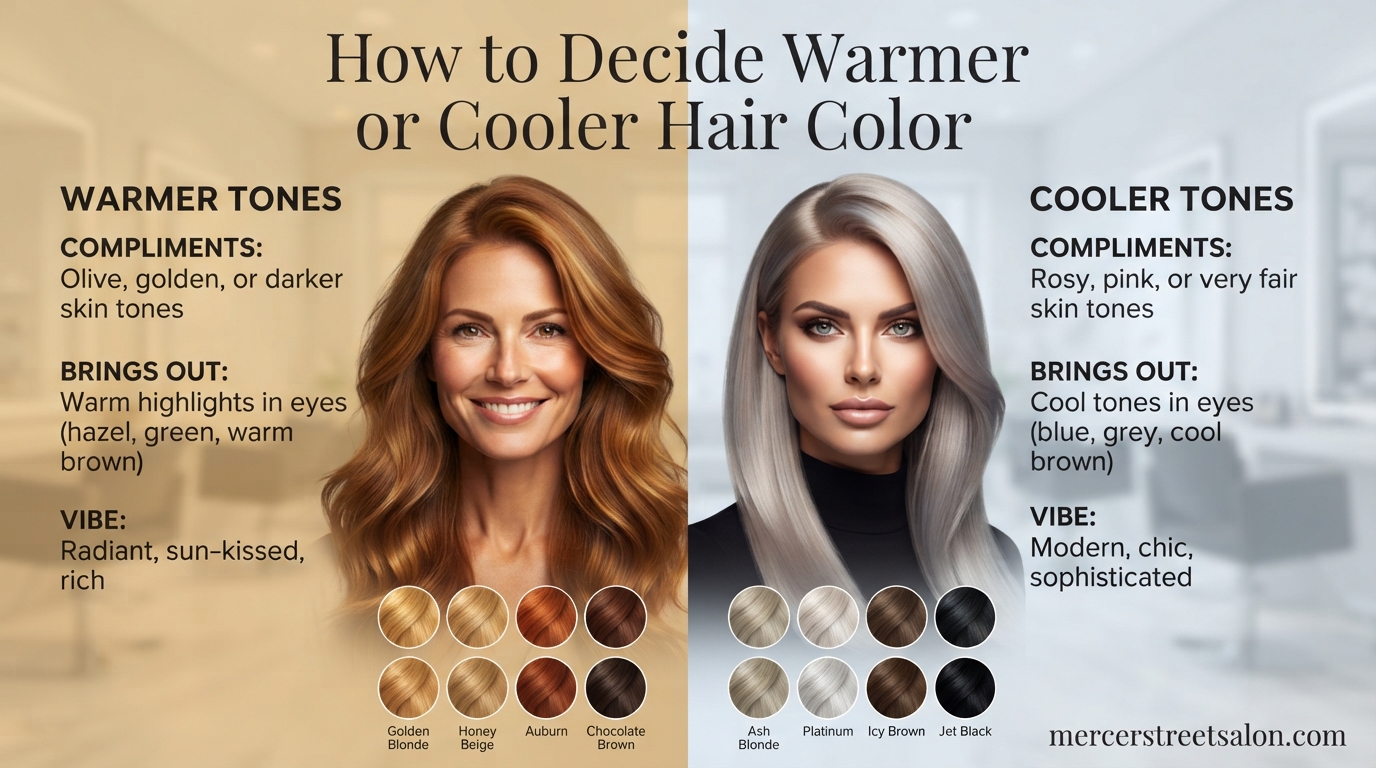
Every week at Mercer Street Salon, at least three clients sit in my chair and ask the same question: should I go warmer or cooler with my hair color? It is one of the most common dilemmas we see, and honestly, it is one of the most important decisions you will make about your hair.
Here is the short answer: warm skin tones look best with warm hair colors, and cool skin tones look best with cool hair colors. Your undertone is the hidden color beneath your skin, and matching your hair color to it creates a harmony that makes your whole face light up. Get it wrong, and you might look sallow, washed out, or simply off in a way you cannot quite name.
In this guide, I will walk you through exactly how to decide if you should go warmer or cooler with your color. We will cover what undertones actually are, six tests you can do at home to figure out yours, the best hair shades for each undertone, and what to do if you feel like an outlier. By the end, you will know exactly what to ask for at your next salon appointment.
Table of Contents
Quick Answer: How to Decide if You Should Go Warmer or Cooler With Your Color
To decide if you should go warmer or cooler with your hair color, you need to identify your skin’s undertone. Warm undertones (peachy, golden, or yellow hues beneath the skin) pair best with warm hair colors like golden blonde, copper, and chestnut. Cool undertones (pink, red, or bluish hues) pair best with cool hair colors like ash blonde, platinum, and cool brown. Neutral undertones can wear both.
You can find your undertone with three quick tests:
- Vein test: Look at the veins on your inner wrist in natural light. Green veins indicate a warm undertone. Blue or purple veins indicate a cool undertone. Hard to tell? You may be neutral.
- Jewelry test: Hold gold and silver jewelry against your skin. If gold makes your skin glow, you are warm. If silver is more flattering, you are cool. If both look good, you are neutral.
- White paper test: Hold a sheet of bright white paper next to your face in natural light. A yellowish cast means warm. A pink or bluish cast means cool.
Once you know your undertone, choosing between warm and cool hair color becomes much simpler. The rest of this guide breaks it all down in detail.
What Are Undertones? Warm, Cool, and Neutral Explained
Your undertone is the subtle color that sits beneath the surface of your skin. It is different from your skin tone, which is how light or dark your skin is. You can be fair-skinned with warm undertones, deep-skinned with cool undertones, or any combination in between. Undertone stays the same regardless of whether you tan or how much sun you get.
There are three undertone categories: warm, cool, and neutral. Understanding which one you have is the foundation for every hair color decision you will make.
Warm Undertone
Warm undertones feature golden, yellow, peachy, or sometimes slightly orange hues beneath the skin. People with warm undertones often have a natural golden glow, even in winter. Their skin tends to tan easily rather than burn.
If you have a warm undertone, warm hair colors will enhance your natural golden glow. Think golden blonde, honey, caramel, copper, auburn, and rich chestnut browns. These shades echo the warmth already present in your skin, creating a cohesive and flattering look.
Cool Undertone
Cool undertones feature pink, red, bluish, or slightly lavender hues beneath the skin. People with cool undertones may flush easily, burn before they tan, or notice a pinkish tint in their cheeks and nose. Cool undertones are common in fair and medium skin, but they appear in deeper skin tones too.
If you have a cool undertone, cool hair colors will complement your skin beautifully. Think ash blonde, platinum, cool taupe brown, espresso, and shades with violet or ashy bases. These colors prevent your skin from looking flushed or ruddy.
Neutral Undertone
Neutral undertones are a balance of warm and cool. If you are neutral, your skin has no obvious yellow or pink cast. You may see hints of both, or your undertone may be difficult to pin down even after doing multiple tests.
Neutral undertones are the most flexible when it comes to hair color. You can wear warm, cool, or a mix of both. Many stylists love working with neutral undertones because the options are wide open.
There is also a fourth category worth mentioning: olive undertones. Olive skin has a slightly greenish or sallow cast and can be tricky to categorize. It often behaves like a neutral undertone but benefits from specific color choices, which I will cover later in this guide.
How to Determine Your Undertone: 6 Tests That Actually Work
At Mercer Street Salon, we use a combination of tests to determine undertone because no single test is 100% reliable on its own. Different skin types, lighting, and even the time of year can affect results. Try as many of these six tests as you can, and look for the overall pattern.
Test 1: The Vein Test
The vein test is the most popular undertone test, and for good reason. It is quick and usually gives a clear result. Look at the inside of your wrist in natural daylight. What color do your veins appear?
If your veins look green, you likely have warm undertones. If they look blue or purple, you likely have cool undertones. If you cannot tell whether they are green or blue, or they look somewhere in between, you may have neutral undertones.
One important caveat from the salon: the vein test is less reliable for people with very fair skin or very deep skin. If your veins are hard to see, do not force a result. Move on to the other tests and let the overall pattern guide you.
Test 2: The White Paper Test
Hold a piece of bright white printer paper next to your face in natural light. Use a mirror and make sure you are not wearing foundation or colored clothing near your face that could reflect color onto your skin.
If your skin looks yellowish or golden next to the white paper, you have warm undertones. If your skin looks pink, red, or slightly bluish, you have cool undertones. If the paper makes your skin look grey or ashy, or if you see no obvious cast, you likely have neutral or olive undertones.
Test 3: The Jewelry Test
This is one of my favorite tests because it connects undertone to something you already wear every day. Find a piece of gold jewelry and a piece of silver jewelry. Hold each one against your skin, one at a time, in natural light.
If gold makes your skin look radiant and healthy, you have warm undertones. If silver is more flattering and gold makes you look slightly off or sallow, you have cool undertones. If both metals look equally good, you are probably neutral.
Many clients are surprised by this test. They have been wearing the wrong metal for years without knowing why their skin never quite looked right. The same principle applies to hair color: the wrong tone makes everything look slightly off.
Test 4: The Sun Test (Tan or Burn)
Think about how your skin reacts to the sun. Do you tan easily and develop a golden glow? That points to warm undertones. Do you burn first and struggle to tan, or does your skin turn pink before any color develops? That points to cool undertones.
This test is not definitive on its own because sun behavior depends on melanin levels, not just undertone. But combined with the other tests, it adds another data point to help you figure out where you fall.
Test 5: The Blush Test
Try a peach or coral blush on one cheek and a pink or rose blush on the other. Which one looks more natural on your skin?
If peach and coral look natural and flattering, you have warm undertones. If pink and rose look better, you have cool undertones. If both work, you are neutral. This test works because blush sits on top of your skin and either harmonizes with or fights your undertone.
Test 6: The Clothing Color Test
Hold a warm-colored piece of clothing (think orange, mustard, warm red, or camel) under your chin. Then hold a cool-colored piece (think cobalt blue, emerald, true white, or icy pink). Use a mirror in natural light.
If the warm colors make your skin look clear and bright, you are warm. If the cool colors are more flattering, you are cool. This test is especially useful because it mimics what hair color does: it frames your face and either works with or against your undertone.
After doing all six tests, tally your results. If four or more point to warm, you are warm. If four or more point to cool, you are cool. If you have a fairly even split, you are neutral.
Best Hair Colors for Warm Undertones
If you have determined that you have warm undertones, the hair color world is full of beautiful options. Warm hair colors echo the golden and peachy tones in your skin, creating a cohesive look that makes you glow. Here are the shades we recommend most often at the salon.
Golden Blonde
Golden blonde is a classic for warm undertones. It ranges from a soft buttery blonde to a deeper, richer gold. This shade brings out the natural warmth in your skin and catches light beautifully. It works on fair, medium, and deep warm skin alike.
Honey and Caramel
Honey blonde and caramel are slightly deeper than golden blonde, with rich amber and golden-brown tones. These shades are stunning for warm undertones because they add dimension while maintaining warmth. We love using caramel for balayage and face-framing highlights on warm clients.
Copper and Auburn
If you want something bolder, copper and auburn are spectacular for warm undertones. Copper is bright, warm, and attention-grabbing. Auburn is deeper and richer with warm red-brown tones. Both shades enhance the golden warmth in your skin and create a striking, cohesive look.
Chestnut and Warm Brown
For warm undertones who prefer darker hair, chestnut brown and warm chocolate brown are excellent choices. These shades have golden and reddish undertones that prevent them from looking flat or harsh against warm skin. Avoid ashy browns, which can look muddy and dull on warm undertones.
Bronze and Mahogany
Bronze is a warm metallic-toned shade that sits between brown and blonde, with golden and coppery depth. Mahogany is a deeper red-brown with warm undertones. Both are sophisticated options for warm undertones who want something a little different.
One thing to keep in mind: warm hair color fades faster than cool hair color because warm pigment molecules are larger and wash out more quickly. Use color-safe shampoo and ask your stylist about gloss treatments to keep your warm shade vibrant between appointments.
Best Hair Colors for Cool Undertones
Cool undertones shine with hair colors that have ashy, violet, or neutral bases. These shades prevent your skin from looking flushed or ruddy and create a clean, polished look. Here are the shades we reach for most often with cool-toned clients.
Ash Blonde
Ash blonde is the quintessential cool hair color. It has violet and blue undertones that neutralize brassiness and create a clean, icy finish. Ash blonde ranges from light beige to deeper mushroom tones. It is perfect for cool undertones because it prevents pink or red skin from looking more flushed.
Platinum and Icy Blonde
Platinum blonde is the boldest cool hair color you can choose. It is almost white with no warmth at all. On cool undertones, especially those with fair skin, platinum creates a striking, ethereal look. It requires significant upkeep, but the result is worth it if you want maximum impact.
Cool Brown and Espresso
Cool brown and espresso are rich, dark shades with no red or golden undertones. They are perfect for cool undertones who want depth without warmth. These shades look especially stunning on medium and deep cool skin. The key is making sure your stylist formulates with a cool base so the color does not pull warm over time.
Taupe and Mushroom Brown
Taupe and mushroom brown are trendy cool shades that sit between blonde and brunette with ashy, greyish-violet tones. They are incredibly flattering on cool undertones and offer a softer alternative to stark ash blonde. These shades work beautifully for balayage and lived-in color.
Cool Burgundy and Plum
If you want a darker, richer color with personality, cool burgundy and plum are excellent for cool undertones. These shades have violet and blue bases rather than the warm red base of traditional auburn. They enhance cool skin without adding unwanted warmth.
A tip from the salon: cool hair colors are prone to brassiness as they fade because the cool pigment molecules are smaller and wash out faster than the underlying warm pigment. Regular toning treatments and purple shampoo are essential for maintaining cool shades.
Neutral Undertones: When You Can Go Either Way
If you have done the tests and landed on neutral, congratulations. You have the most flexibility when it comes to hair color. Neutral undertones can wear warm shades, cool shades, or a blend of both. Most stylists consider neutral the easiest undertone to work with.
That said, having options can feel overwhelming. Here is how I help neutral clients decide between warm and cool hair color at the salon.
First, consider your natural hair color. If your natural color has warm tones (most people’s does), leaning into that warmth with a golden or caramel shade will look effortless and natural. If you want a bigger change, going cool can create contrast and drama.
Second, think about your eye color. Warm eyes (brown, hazel, amber) are enhanced by warm hair color. Cool eyes (blue, grey, cool green) pop against cool hair color. If your eye color is neutral or hard to categorize, you truly can go either direction.
Third, consider your lifestyle and maintenance preferences. Warm colors tend to fade to a softer, more wearable version of themselves. Cool colors require more maintenance to prevent brassiness. If you are low-maintenance, warm might be the easier choice.
For olive undertones specifically, which are a subtype of neutral, I recommend avoiding shades that are too ashy because they can make olive skin look greenish or sallow. Warm neutral shades like mocha, beige blonde, and warm chestnut tend to work best. Olive skin can also pull off rich, deep shades like burgundy and espresso beautifully.
What Happens When You Choose the Wrong Undertone
This is a topic that almost no hair color guide covers, and it is one of the most common things we help clients with at Mercer Street Salon. Choosing the wrong undertone does not just look slightly off. It can actively work against you in ways that are hard to identify until you know what to look for.
If you have cool undertones and choose a warm hair color, your skin may look flushed, ruddy, or red. The warm hair color can amplify any pinkness in your skin and make you look like you are blushing or sunburned. Some cool-toned clients describe it as looking overheated or like they have a fever.
If you have warm undertones and choose a cool hair color, your skin may look sallow, dull, or washed out. The cool hair color can drain the natural golden glow from your skin and make you look tired or greyish. Some warm-toned clients say it looks like they are fighting a cold.
The good news is that fixing a wrong undertone choice is straightforward. If your color is too warm, a toning gloss with violet or blue base can neutralize the warmth without a full color change. If your color is too cool, adding warm lowlights or a golden gloss can bring back life and dimension. Book a consultation with your stylist and they can correct the undertone in a single appointment.
Pro Tips From the Salon Chair
After years of doing color consultations, our team has learned a few things that go beyond the standard warm versus cool advice. Here are our top tips for getting it right.
Lighting matters more than you think. Hair color looks different in salon lighting, natural daylight, and fluorescent office light. Always check your color reference photos in natural daylight before bringing them to your appointment. The warm balayage you saw on Instagram under golden salon lights may look completely different in your office bathroom.
Your previous color affects your options. If you have existing color or highlights in your hair, that affects what we can do next. Cool tones over previously colored warm hair may require multiple sessions. Be honest with your stylist about your hair history so they can plan accordingly.
Outliers are real and common. Many of our clients have warm skin with cool eyes, or cool skin with naturally warm hair. You do not have to force yourself into a single category. A skilled stylist can create a custom formulation that balances both.
Consider how the color will age. Warm colors fade softer and more naturally. Cool colors fade warmer and brassy. If you cannot get to the salon every six to eight weeks, factor that into your warm versus cool decision.
FAQs
How do I know if I need warm or cool hair color?
To know if you need warm or cool hair color, determine your skin undertone first. If your veins look green, gold jewelry flatters your skin, and your skin has a golden or peachy cast, you have warm undertones and should choose warm hair colors. If your veins look blue, silver jewelry suits you better, and your skin has a pink or bluish cast, you have cool undertones and should choose cool hair colors.
How do I know if I look better in warm or cool colors?
You look better in warm colors if golden, peachy, and earthy shades make your skin glow, and you look better in cool colors if blue-based, jewel-toned, and icy shades brighten your complexion. The fastest way to tell is the jewelry test: if gold jewelry flatters your skin, lean warm. If silver looks better, lean cool.
Can you have warm hair color with cool undertones?
Yes, you can have warm hair color with cool undertones, but it requires careful formulation. A skilled stylist can add warmth in a way that balances your cool skin rather than fighting it. Many people with cool undertones wear warm balayage or caramel highlights successfully when the warmth is placed strategically and not too close to the face.
Does warm hair color make you look older?
Warm hair color does not inherently make you look older, but the wrong shade for your undertone can add unflattering warmth or sallowness to your skin. If you have cool undertones and choose a shade that is too golden, it can accentuate redness. For mature skin, slightly cooler or neutral tones often create a brighter, fresher look.
How do I fix hair color that is too warm or too cool?
If your hair color is too warm, a toning gloss with a violet or blue base can neutralize the brassiness in one salon visit. If your hair color is too cool and makes you look washed out, adding warm lowlights or a golden gloss treatment can restore life and dimension. Book a consultation with your stylist for a targeted correction.
Conclusion: Making Your Warm vs Cool Decision
Deciding whether to go warmer or cooler with your hair color comes down to one thing: knowing your undertone. Once you know whether your skin leans warm, cool, or neutral, the right hair color direction becomes clear. Warm undertones shine with golden, copper, and chestnut shades. Cool undertones glow with ash, platinum, and cool brown. Neutral undertones can play in both worlds.
Do the six tests, look for the pattern, and trust what you find. If you are still unsure, or if you feel like an outlier with a mix of warm and cool features, that is exactly what a professional consultation is for. At Mercer Street Salon, we assess undertone, eye color, lifestyle, and hair history to create a custom color formulation that works with your unique features.
Ready to find your perfect shade? Book a color consultation with our team and we will help you decide exactly how to go warmer or cooler with your color in a way that makes you feel like the best version of yourself.