
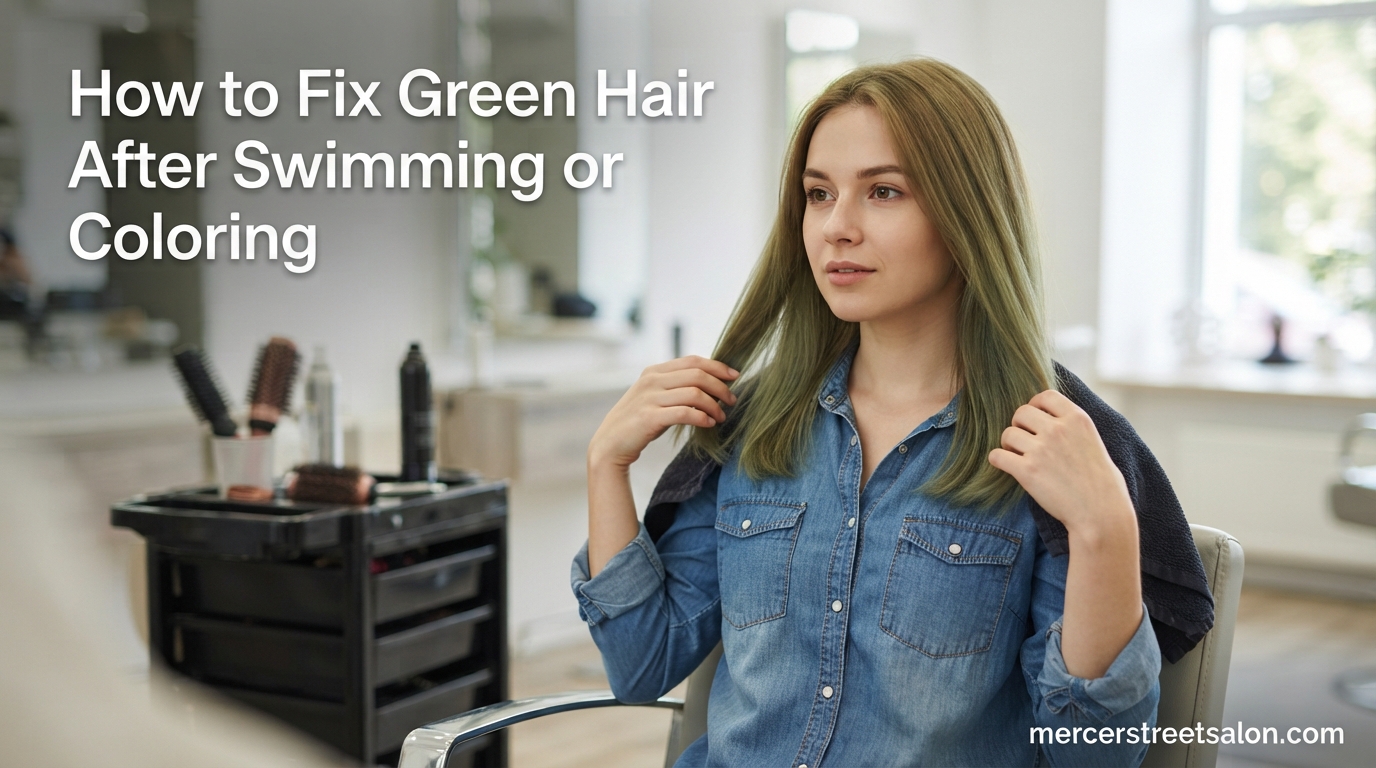
Nothing ruins a great pool day or fresh color appointment quite like looking in the mirror and discovering a green tint staring back at you. Whether you dove into a chlorinated pool or attempted a DIY dye job that went sideways, green hair is one of the most frustrating beauty mishaps out there.
The good news? It is almost always fixable, and most of the time you can handle it at home. In our salon, we have seen every variation of green hair imaginable, from subtle muddy tones on blondes to full-on swamp creature situations on freshly dyed brunettes.
This guide walks you through exactly how to fix green hair after swimming or coloring, why it happens in the first place, and how to stop it from coming back. We will cover home remedies, color theory basics, prevention strategies, and when it is time to call in a professional.
Table of Contents
Why Does Hair Turn Green After Swimming or Coloring?
Hair turns green for two entirely different reasons depending on whether you have been swimming or coloring. Understanding which one caused your issue is the first step toward fixing it.
The Real Culprit Behind Pool Hair: Copper, Not Chlorine
Here is the truth that surprises most people: chlorine does not actually turn your hair green. The real villain is copper. When chlorine sanitizes pool water, it oxidizes trace amounts of copper and other hard metals dissolved in the water. Those oxidized copper particles then bind to the protein in your hair shaft, leaving behind a greenish film.
Think of it like the Statue of Liberty. That copper exterior was originally shiny brown, and decades of oxidation turned it the green color we recognize today. The same chemical process is happening on a smaller scale right on your hair.
This is why some pools turn your hair green and others do not. It depends on the copper content in the water source and how the pool is maintained. Algae treatments, copper-based algaecides, and even some well water sources can dramatically increase copper levels in pool water.
Why Blonde and Light Hair Gets Hit Hardest
If you have blonde hair, highlights, or gray hair, you are far more likely to notice green discoloration. Lighter hair colors provide less natural pigment to mask the copper buildup. The green tint simply shows up more clearly against a pale background.
Beyond visibility, bleached and highlighted hair is more porous. When your hair cuticle has been opened through lightening, it grabs onto copper particles more aggressively. The damaged, porous strands act like a sponge for minerals in the water.
Brunettes and darker hair colors absolutely can get green from swimming too. It just tends to look more like a dull, muddy, or ashy tone rather than an obvious green. You might notice it most under bright lighting or in photographs with flash.
Green Hair from Coloring: A Different Problem
When your hair turns green after a coloring session, copper is not to blame. Color-induced green happens because of how dye pigments interact with each other. The most common scenario is applying an ash-based dye over hair that already has warm undertones.
Ash dyes contain blue and green base pigments designed to neutralize red and orange tones. If your hair was already lightened or had existing cool tones, layering more ash on top creates an overload of blue-green pigment. The result is a greenish, muddy, or gray cast.
This also happens when you try to go from a red or auburn shade to a brown or blonde without properly removing the red first. The leftover red molecules mix with the new color and produce an unwanted green tone in the mid-shaft and ends.
Pool vs Hot Tub vs Salt Water: Which Is Worse?
Hot tubs are often worse than pools for green hair because the heated water opens your cuticle more aggressively. Warm water makes hair more porous and receptive to copper deposits. If you are a regular hot tub user, you may notice green buildup faster than a pool swimmer would.
Salt water pools are not off the hook either. While they use fewer traditional chlorine chemicals, they still generate chlorine through electrolysis and can contain copper from the salt cell equipment. The copper oxidation process still occurs, just at potentially lower levels depending on the system.
How to Fix Green Hair: Quick Home Remedies
Now for the part you came here for. If you are dealing with green hair right now, here are six proven home remedies ranked roughly from gentlest to most intensive. Start with the mildest option and work your way up if needed.
1. Clarifying Shampoo Wash
A good clarifying shampoo is your first line of defense against green hair from swimming. These shampoos are formulated to strip product buildup, minerals, and chlorine from the hair shaft. Look for one specifically labeled as a swimmers shampoo or chelating shampoo.
Massage it thoroughly into wet hair, focusing on the areas with the most green. Let it sit for two to three minutes before rinsing. You may need to repeat this process two or three times for stubborn buildup. Follow with a deep conditioner, because clarifying shampoos can be drying.
On Reddit hair forums, swimmers consistently recommend clarifying shampoo as the most reliable at-home fix. Many regular pool users keep a bottle in their shower during summer months specifically for this purpose.
2. Baking Soda Paste
Baking soda is one of the most commonly suggested DIY remedies for green hair, and it works by gently lifting mineral deposits through mild abrasion and alkaline action. Mix two to three tablespoons of baking soda with enough water to form a paste.
Apply the paste to damp hair, working it through from roots to ends. Let it sit for 10 to 15 minutes, then rinse thoroughly and shampoo as normal. Some people mix baking soda directly into their clarifying shampoo for a double-action treatment.
Be aware that forum users report mixed results with baking soda. It often works on mild green tint but may not fully remove heavy copper buildup. It can also dry out your hair, so always follow with a hydrating conditioner or mask.
3. Lemon Juice Rinse
Lemon juice works as a natural clarifier thanks to its citric acid content. The acid helps break down mineral bonds and can gradually lift green discoloration. Pour fresh lemon juice over clean, damp hair and let it sit for 5 to 10 minutes before rinsing.
For extra lifting power, sit in the sun for 20 minutes with the lemon juice in your hair. The combination of acid and mild sun exposure can help fade green tones naturally. Just be cautious if your hair is already damaged or processed.
Lemon juice is best for mild cases and works particularly well on blonde hair. It can slightly lighten your hair overall, which helps disguise the green. Do not use this method more than once a week to avoid over-drying.
4. Tomato Juice or Ketchup Treatment
This one sounds weird, but there is solid science behind it. Tomatoes are naturally acidic and rich in vitamin C, both of which help break down copper deposits. More importantly, the red pigment in tomatoes helps neutralize green through basic color theory.
Coat your hair in tomato juice or ketchup, cover it with a shower cap, and let it sit for 20 to 30 minutes. Rinse thoroughly and shampoo. Many swimmers swear by this method, especially for stubborn green that has not responded to other treatments.
Some people find tomato juice more pleasant to work with than ketchup because it is less thick and easier to rinse out. Either option works, so use what you have on hand.
5. Crushed Aspirin Treatment
Aspirin contains salicylic acid, which can help break down mineral buildup in your hair. Crush six to eight uncoated aspirin tablets and dissolve them in a cup of warm water. Pour the solution over clean hair and let it sit for 15 minutes before rinsing.
This method is particularly effective for swimmers who have chronic copper buildup. The salicylic acid penetrates the cuticle and helps dissolve the oxidized metals clinging to your hair shaft. Follow with a moisturizing conditioner to counteract any dryness.
6. Vitamin C Powder Treatment
Vitamin C, or ascorbic acid, is one of the most effective mineral removers available without a salon visit. This is the active ingredient in many professional swimmers treatments for good reason. Mix vitamin C powder with a small amount of clarifying shampoo to form a paste.
Apply to damp hair, massage thoroughly, and let it process for 15 to 20 minutes under a shower cap. Rinse and follow with conditioner. This treatment can produce visible results in a single session, even on stubborn green.
Many professional swimmers and salon regulars recommend the Malibu C Swimmers Wellness Kit, which uses vitamin C as its primary active ingredient. It is widely regarded as one of the most effective over-the-counter options available.
Color Theory: What Cancels Out Green Hair?
If you remember anything from art class, it is that red and green sit opposite each other on the color wheel. Opposite colors neutralize each other, which is why red-toned products can cancel out green discoloration in your hair.
This is the same principle behind purple shampoo for blondes. Purple neutralizes yellow, and red or pink neutralizes green. If home remedies have not fully removed the green tint, a red-toned shampoo or color depositing product can mask what remains.
For blonde hair with green, look for a pink or rose-toned color depositing shampoo. Matrix So Silver and similar products are frequently recommended in hair care forums for cutting through green tones on lightened hair. Apply it like a normal shampoo, let it sit for a few minutes, and rinse.
Just be careful not to overdo it. Too much red tone can leave your hair looking pink. Start with a small amount and build up as needed. This approach works best as a finishing step after you have already removed the bulk of the copper buildup.
How to Fix Green Hair from Coloring Specifically
If your green hair came from a dye job rather than a pool, the approach needs to be different. Mineral removers will not help because the problem is not copper buildup, it is pigment overload. You need to address the color itself.
Use a Color Remover
A commercial color remover is often the most effective first step for dye-induced green. These products work by shrinking the artificial dye molecules in your hair so they can be washed away. They do not bleach your hair, so they are gentler than lightening.
Follow the package instructions carefully. Most color removers require you to apply the mixture, process for 20 to 30 minutes, and then rinse thoroughly. You may need to repeat the process if the green is particularly stubborn.
Apply a Warm Toner or Glaze
If the green is mild and you do not want to strip the color entirely, a warm-toned gloss or glaze can help. Look for products with golden, copper, or warm red bases. These counteract the ash tones causing the green and warm up your overall color.
This is the approach many salon professionals take when correcting color at the bowl. A semi-permanent warm gloss can neutralize green without permanently altering your base color. It fades over several washes, giving you time to plan your next move.
When DIY Color Correction Goes Wrong
If you attempted to fix the green yourself by layering on more dye and made things worse, stop. Layering more box dye over problem color rarely solves the issue and often creates a muddy, multi-tonal mess that is much harder to correct.
This is the scenario where a professional colorist earns their money. They can assess the underlying pigment, formulate a corrective color, and apply it strategically to different sections of your hair as needed.
How to Prevent Green Hair from Swimming
The easiest way to deal with green hair is to prevent it from happening in the first place. Here are the strategies we recommend to every client who swims regularly.
Wet Your Hair Before Swimming
This is the single most recommended prevention tip from both stylists and experienced swimmers. When you wet your hair with clean tap water before entering the pool, your hair shaft absorbs that water. Once saturated, it cannot absorb as much copper-laden pool water.
Think of your hair like a sponge. A dry sponge soaks up everything around it. A wet sponge can only absorb a small amount of additional liquid. Pre-wetting creates a simple but effective barrier.
Apply Leave-In Conditioner
Coating your hair with a leave-in conditioner before swimming adds another layer of protection. The conditioner fills in gaps in your cuticle and creates a film that makes it harder for copper particles to penetrate the hair shaft.
Apply a generous amount to damp hair before you swim, focusing on the ends where damage is typically worst. Some swimmers even use a small amount of coconut oil for extra protection on particularly porous or damaged hair.
Wear a Swim Cap
A silicone swim cap provides the most complete physical barrier between your hair and pool water. It is not stylish, but it works. For maximum protection, wet your hair, apply leave-in conditioner, and then put on the cap.
Silicone caps are more effective than latex because they create a tighter seal. They also pull less on your hair during removal. If you swim several times a week, investing in a good cap is worth it.
Rinse Immediately After Swimming
Never let pool water dry in your hair. The longer copper sits on your strands, the more it oxidizes and bonds. Rinse your hair with fresh water as soon as you get out of the pool, even if you cannot shampoo right away.
Follow up with a clarifying shampoo as soon as possible. If you swim daily, alternate between clarifying and moisturizing shampoo to avoid over-drying your hair.
When to See a Professional Stylist
Most cases of green hair can be resolved at home, but some situations call for professional help. If you have tried multiple home remedies with no improvement after two weeks, it is time to book a salon appointment.
Professional treatments like the Malibu Crystal Gel service use concentrated vitamin C and mineral-removing actives that are stronger than anything available over the counter. A stylist can apply these treatments while protecting your hair from excessive dryness.
If your green resulted from a coloring mishap rather than swimming, see a colorist sooner rather than later. Attempting to fix complex color corrections at home often makes the problem worse and more expensive to fix.
How long does green hair from chlorine take to fade naturally? Without treatment, mild cases may fade over several weeks with regular washing. Heavy buildup can persist for months and will not fully resolve without active intervention.
FAQs
What to do if your hair turns green after swimming?
Rinse immediately with fresh water, then wash with a clarifying or chelating shampoo. For stubborn green, try a home remedy like lemon juice, baking soda paste, tomato juice, or crushed aspirin. A vitamin C powder treatment is the most effective at-home option for heavy copper buildup.
What color cancels out green hair?
Red cancels out green because the two colors sit opposite each other on the color wheel. Use a red-toned or pink-toned color depositing shampoo, gloss, or glaze to neutralize green discoloration. Apply sparingly to avoid over-toning your hair pink.
How to fix hair that turned green?
The fix depends on the cause. For green from swimming, use mineral-removing treatments like clarifying shampoo, vitamin C powder, or tomato juice. For green from coloring, use a color remover or apply a warm-toned gloss to neutralize the ash pigments causing the green.
Will my hair turn green if I go swimming after dying it?
Yes, freshly colored hair is more vulnerable. The coloring process opens your cuticle, making hair more porous and likely to absorb copper from pool water. Wait at least one week after coloring before swimming, and always wet your hair and apply leave-in conditioner before entering the pool.
Is green hair from chlorine permanent?
No, green hair from chlorine and copper buildup is not permanent. With consistent use of clarifying treatments, most green discoloration can be removed within a few washes. Stubborn cases may take several weeks or require a professional vitamin C treatment.
Green hair is one of those beauty problems that feels catastrophic in the moment but is almost always fixable. Whether your green came from a chlorine pool, a hot tub, or an overly ash dye job, there is a solution that will work for you.
The key is matching the right fix to the right cause. Swimming-related green calls for mineral removal with clarifying shampoo, vitamin C treatments, or natural acids like lemon and tomato juice. Coloring-related green needs color removers or warm-toned neutralizers instead.
If you have tried the home remedies in this guide and your green is still hanging on after two weeks, do not hesitate to reach out to a professional. Some discoloration requires stronger products than you can buy over the counter, and that is completely normal.
For swimmers, remember that prevention is far easier than treatment. Wet your hair before every swim, use a leave-in conditioner, and rinse immediately afterward. A little routine care keeps copper from building up in the first place, so you can enjoy the pool without the green aftermath.
1 thought on “How to Fix Green Hair After Swimming or Coloring (2026)”