
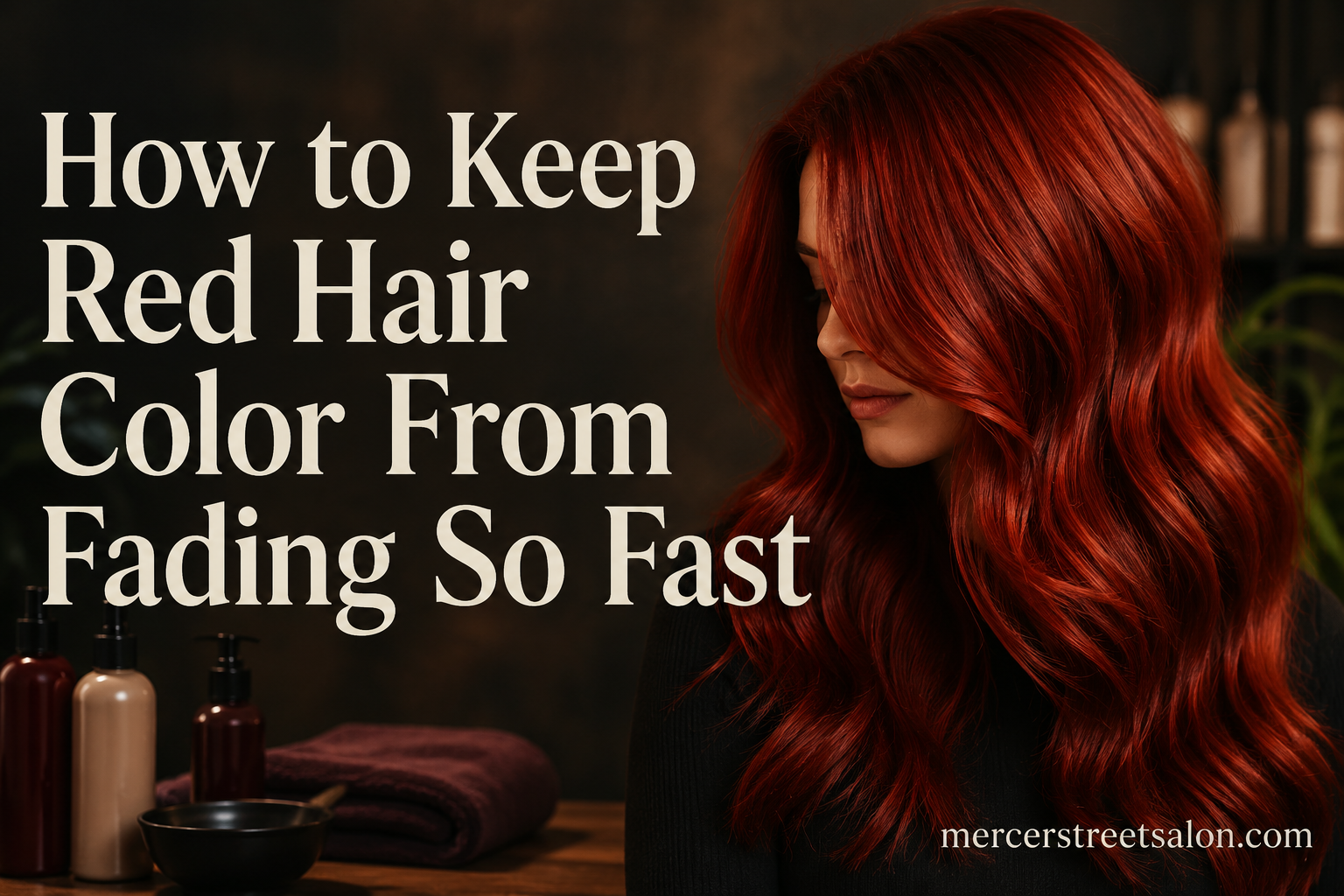
If you have ever dyed your hair red, you already know the heartbreak. That gorgeous, vibrant copper or fiery crimson you walked out of the salon with starts dulling after just one wash. Red is without question the most beautiful color you can put on your head, and it is also the most stubborn when it comes to staying put. Learning how to keep red hair color from fading so fast is something every redhead eventually has to master.
I have spent years working with color-treated hair, and I can tell you that red does not have to disappear in two weeks. With the right routine, the right products, and a basic understanding of why red behaves the way it does, you can stretch your color from a fleeting few weeks to a solid six weeks or more before you even need a refresh.
This guide breaks down the science behind why red fades, the wash-day habits that matter most, how to protect your color from heat and sun, and what to do when fading has already started. Everything here is practical, tested, and built to help you hold onto that red just a little longer.
Table of Contents
Quick Tips: How to Keep Red Hair Color From Fading
Want the short version before we get into the details? Here are the seven most effective things you can do to keep red hair color from fading:
- Wash less often. Aim for two to three times per week maximum. Every wash pulls pigment down the drain.
- Use cool or lukewarm water. Hot water opens the cuticle and lets color molecules escape.
- Switch to a sulfate-free, color-safe shampoo. Sulfates are essentially detergents that strip dye.
- Apply a heat protectant every single time you style. Heat is the second-biggest color killer after water.
- Use a UV protectant or wear a hat in the sun. Ultraviolet rays break down red pigment fast.
- Add a weekly color-depositing gloss or conditioner. This tops up the pigment between salon visits.
- Rinse with cool water after swimming. Chlorine and salt water both accelerate fading dramatically.
Do these seven things consistently and you will already see a noticeable difference in how long your red stays vivid.
Why Red Hair Fades Faster Than Other Colors
Red hair color fades faster than any other shade on the spectrum. This is not a myth or a marketing line from shampoo companies. It is pure chemistry.
The pigment molecules used to create red dye are physically larger than the molecules used for brown, blonde, or black. Larger molecules cannot penetrate as deeply into the hair cortex, so they sit closer to the surface of the hair shaft and within the cuticle layer. Because they are positioned near the outside, they are the first to wash away every time water and shampoo pass over your hair.
Think of it like this. Smaller color molecules from brown or blonde dye sink deep into the cortex like an anchor buried in sand. Red molecules are more like pebbles sitting on top of the sand. Every wave that comes in washes a few more pebbles away.
This is also why red hair tends to fade unevenly. The ends of your hair, which have been through more washes, more heat styling, and more sun exposure over their lifetime, will lose color faster than the roots. The hair near your scalp is newer, less damaged, and holds the cuticle more tightly. By the time your hair reaches the ends, the cuticle may be rougher and more open, which means pigment slips out faster there.
If you have ever wondered why the bottom half of your hair looks faded and brassy while the top still looks fresh, that is the reason. It is not your imagination, and it is not a problem with the dye. It is simply how hair structure and pigment interact over time.
Wash Day: How to Keep Red Hair Color From Fading
Washing is the single biggest factor in how fast your red hair color fades. Every time you shampoo, you are opening the cuticle slightly and allowing some color molecules to escape. This means your wash-day routine is where you have the most power to slow things down.
Step 1: Wash Less Frequently
The most effective change you can make is simply washing your hair less. If you are currently washing every day, dropping to every other day will roughly double the life of your color. If you can stretch to two or three washes per week, you will see your red stay vibrant significantly longer.
Dry shampoo is your best friend here. A good dry shampoo absorbs oil at the roots and adds volume, letting you skip a wash without your hair looking greasy. Apply it the night before so it has time to work overnight, and you will wake up with hair that still looks fresh.
Step 2: Use Cool or Lukewarm Water
Hot water is a red hair killer. Heat causes the hair cuticle to open and lift, which creates gaps where color molecules can slip out. Cool water does the opposite. It helps the cuticle lay flat and seal, trapping pigment inside where it belongs.
You do not need to take a freezing shower. Lukewarm water is fine for the main part of your wash. The key moment is your final rinse. After you have finished shampooing and conditioning, do a final rinse with the coolest water you can tolerate. This seals the cuticle and locks in whatever color remains.
Step 3: Choose a Sulfate-Free, Color-Safe Shampoo
Sulfates are the ingredients in shampoo that create that rich lather most people associate with feeling clean. The problem is that sulfates are essentially detergents, and they are excellent at stripping oil, dirt, and hair dye. If your shampoo lists sodium lauryl sulfate or sodium laureth sulfate near the top of the ingredient list, it is working against your color.
Look for shampoos specifically labeled as sulfate-free and color-safe. These formulas are gentler and designed to cleanse without aggressively pulling pigment from the hair shaft. Many color-safe shampoos also have a slightly acidic pH, which helps keep the cuticle closed and the color locked in.
Step 4: Condition Every Wash and Deep Condition Weekly
Conditioner does more than make your hair soft. A good conditioner smooths the cuticle, fills in minor damage, and creates a protective barrier around the hair shaft. Well-conditioned hair holds color better because the cuticle is smooth and less likely to leak pigment.
Once a week, swap your regular conditioner for a deep conditioning mask. Leave it on for ten to fifteen minutes, ideally with a shower cap or low heat from a warm towel. This gives the conditioning agents time to penetrate and really shore up the hair structure.
Step 5: Try a Pre-Wash Oil Treatment
One trick that experienced redheads swear by is applying a lightweight oil, such as argan or coconut oil, to the lengths and ends of your hair before you shampoo. The oil creates a temporary barrier that slows down how much water and detergent reach the hair shaft during washing. It will not stop fading entirely, but it can reduce the amount of color lost per wash.
Heat Styling: Protecting Red Hair Color From Fading
Heat styling is the second most common cause of premature color loss in red hair. Flat irons, curling wands, and even blow dryers can all cause serious damage to your color if you are not careful.
When you apply high heat to hair, the cuticle lifts and sometimes even cracks. This damage is cumulative, meaning each heat session makes the cuticle a little more porous and a little more likely to let red pigment escape. Damaged, porous hair simply cannot hold color the way healthy hair can.
The solution is not to give up heat styling entirely, although that would certainly help. The solution is to always, without exception, use a heat protectant before applying any heat tool. A heat protectant creates a barrier between the hair and the hot surface, reducing the amount of direct damage to the cuticle.
Apply your heat protectant to damp hair before blow drying, and again to dry hair before using a flat iron or curling wand. Make sure the product is evenly distributed from roots to ends. Pay special attention to the ends, since they are the most fragile part of your hair and the most prone to both heat damage and color loss.
Another effective strategy is to lower the temperature on your tools. Most hot tools do not need to be set above 350 degrees Fahrenheit for fine or medium hair. Thicker hair may need slightly more heat, but cranking your flat iron to its maximum setting is almost always unnecessary and destructive to your color.
Whenever possible, let your hair air dry instead of blow drying. Even one less heat session per week adds up over time and helps your red last longer between salon visits.
Sun and Environmental Damage: Keeping Red Hair Vibrant
Environmental factors are the third major category of color loss that redheads face. The sun, chlorine, salt water, and even hard water from your shower can all chip away at your red.
UV Protection for Hair
Ultraviolet rays from the sun break down the chemical structure of hair dye. This is the same type of radiation that fades fabric left in a sunny window and burns your skin. Red pigment is particularly vulnerable to UV damage, which is why a day at the beach can noticeably dull your color.
The simplest protection is a hat. A wide-brimmed hat blocks most UV rays from reaching your hair, and it protects your scalp and face at the same time. When you cannot wear a hat, look for a leave-in conditioner or hair mist that contains UV filters. These products are not as effective as physical coverage, but they do help reduce sun damage.
Swimming and Chlorine
Chlorine is brutal on color-treated hair. Pool chemicals strip dye and can even give faded red a greenish tint. If you swim regularly, you need a strategy.
Before getting in the pool, soak your hair with clean tap water and apply a leave-in conditioner. Hair acts like a sponge. If it is already saturated with clean water and conditioner, it will absorb less chlorinated pool water. Wear a swim cap whenever possible, and always rinse your hair with fresh water immediately after swimming.
Hard Water Concerns
If your home has hard water, mineral buildup on your hair can make red look dull and accelerate fading. A shower filter is a relatively inexpensive fix that removes chlorine, calcium, and other minerals from your water before they reach your hair. Many redheads notice an immediate improvement in color longevity after installing one.
How Hair Porosity Affects Red Color Retention
Hair porosity is a concept that almost no red hair guide talks about, but it has a huge impact on how long your color lasts. Porosity refers to how easily your hair absorbs and releases moisture, and it is determined by the condition of your cuticle.
Low porosity hair has a tightly closed cuticle. It resists absorbing moisture, which means it also resists absorbing dye. Color may take longer to process on low porosity hair, but once it is in, it tends to last longer because the closed cuticle traps the pigment.
High porosity hair has a cuticle that is lifted, damaged, or full of gaps. It absorbs moisture and dye very quickly, but it also releases them quickly. If you have high porosity hair, your red will fade faster simply because the cuticle cannot hold onto the pigment as tightly.
You can test your own porosity at home with a simple glass of water. Drop a clean strand of shed hair into the water and watch what happens. If it floats, you have low porosity hair. If it sinks quickly, you have high porosity hair. If it slowly sinks and floats in the middle, you have normal porosity.
If you discover you have high porosity hair, focus your efforts on treatments that smooth and seal the cuticle. Protein treatments, acidic rinses, and heavy moisturizing masks can all help fill in the gaps and give your hair a better surface to hold onto red pigment.
Color-Enhancing Treatments to Prevent Red Hair Fading
Beyond protecting the color you have, you can actively add pigment back into your hair between salon visits. Color-enhancing products are designed to deposit small amounts of red dye each time you use them, effectively topping up your color and keeping it fresh.
Color-depositing shampoos and conditioners are the most popular option. These products contain a small amount of semi-permanent dye that refreshes your shade with each use. They come in various red tones, from warm copper to deep burgundy, so you can match your specific color. Use them once or twice a week in place of your regular shampoo and conditioner.
Gloss treatments are another excellent option. A hair gloss is a semi-permanent treatment that adds shine and a sheer wash of color. You can get a professional gloss at a salon or use an at-home version. Glosses typically last about two to four weeks and do not damage the hair since they do not use developer or ammonia.
For a more concentrated refresh, semi-permanent deposit-only dyes can be applied at home every few weeks. These do not lighten your hair, they simply add a layer of red pigment on top of what you already have. They are especially useful for refreshing faded ends between full color appointments.
The key with all color-enhancing products is to choose a shade that matches your existing color. Going too warm or too cool will create an uneven result. When in doubt, ask your colorist which tone of color-depositing product will best match your specific red.
Seasonal Adjustments for Red Hair Color Maintenance
Your hair faces different challenges depending on the time of year, and adjusting your routine seasonally can help maintain your red all year long.
In summer, the main threats are sun, chlorine, and salt water. UV exposure peaks, and most people spend more time outdoors. This is the season to be most vigilant about UV protection, swim caps, and frequent deep conditioning. You may also want to increase your use of color-depositing products since fading accelerates in summer.
In winter, the air is drier and indoor heating pulls moisture from your hair. Dry, brittle hair loses color faster because a damaged cuticle cannot hold pigment. Focus on extra moisture in winter. Use heavier leave-in conditioners, do deep conditioning masks more frequently, and consider adding a humidifier to your bedroom to combat dry indoor air.
Schedule your salon appointments with the seasons in mind. If you know you will be outdoors a lot in summer, book a gloss treatment midway through to refresh your color. In winter, focus on bond-building and protein treatments to keep your hair strong enough to hold color.
How to Recover Already-Faded Red Hair Color
Sometimes the fading has already happened and you are staring at a color you did not ask for. The good news is that faded red is not a lost cause. There are several ways to bring it back or adjust it.
When red fades, it typically turns one of three directions. It may fade to orange, which is the most common result for warm reds and coppers. It may fade to pink, which happens with cooler or more violet-based reds. Or it may fade to a muddy brownish tone if your starting hair was dark.
If your red has faded to orange and you want it back, a color-depositing shampoo in your original shade is usually the fastest fix. Apply it to clean, damp hair and leave it on for five to ten minutes before rinsing. This deposits enough pigment to push the color back toward red without a full dye job.
If your red has gone brassy or unwanted orange tones have taken over, a blue-based toner or color-correcting shampoo can help neutralize the warmth. Blue cancels out orange in the same way purple cancels out yellow in blonde hair.
For faded red that has gone pink, a semi-permanent dye in a warmer red tone can pull it back toward a more natural-looking shade. Pink is actually one of the easier fade results to correct because the underlying pigment is still there.
If you are dealing with severely faded, uneven color, the best option may be to see a professional. A colorist can assess whether you need a color correction, a fresh all-over application, or a strategic gloss to even things out. Trying to fix major color issues at home can sometimes make things worse, especially if bleach is involved.
Frequently Asked Questions
Why won’t my hair hold red dye?
Red dye fades faster than other colors because the pigment molecules are physically larger, which prevents them from penetrating deeply into the hair cortex. They sit closer to the surface and wash out more easily. High hair porosity, frequent washing with hot water, sulfates in shampoo, and heat styling all make the problem worse.
How do I keep my red hair vibrant?
To keep red hair vibrant, wash no more than two to three times per week with a sulfate-free shampoo, rinse with cool water, always use a heat protectant before styling, apply a UV protectant in the sun, and use a color-depositing gloss or conditioner weekly to refresh the pigment.
How long does red hair color last?
Red hair color typically lasts four to six weeks before noticeable fading occurs. With proper care, including less frequent washing, cool water, and color-enhancing products, you can extend the vibrancy to six to eight weeks before needing a salon refresh.
How to seal in red hair dye?
To seal in red hair dye, wait at least 48 hours after coloring before your first wash, use cool water to keep the cuticle closed, apply a color-locking conditioner or gloss, and finish every shower with a cold rinse to flatten the cuticle and trap pigment inside the hair shaft.
What cancels out faded red hair?
If your red has faded to orange, a blue-based toner or color-correcting shampoo neutralizes the warmth. If it has faded to pink, a warmer semi-permanent red dye can pull the tone back. For muddy or uneven fading, a color-depositing gloss in your original shade is usually the simplest fix.
Keeping Your Red Hair Vibrant for the Long Haul
Knowing how to keep red hair color from fading so fast comes down to a few core principles. Wash less, use cool water, avoid sulfates, protect against heat and sun, and use color-enhancing products to top up the pigment between salon visits.
Red will always be the most demanding color to maintain. That is the trade-off for having the most striking shade on the color wheel. But it does not have to be a constant battle. Build these habits into your routine, test your hair porosity so you understand what you are working with, and do not wait until your color has completely faded to start refreshing it.
A little consistency goes a long way. Treat your red with care and it will reward you with weeks of vibrant, head-turning color that lasts far longer than you might have thought possible.