
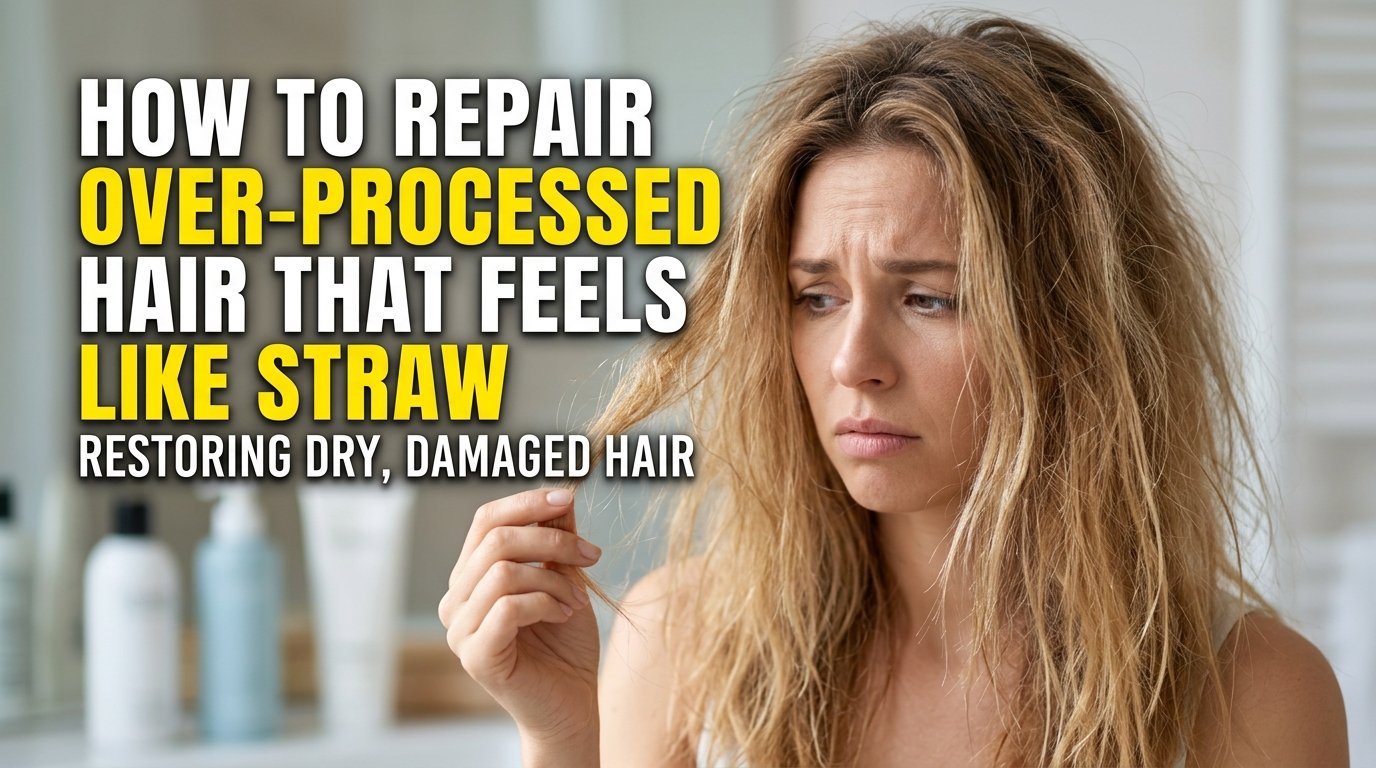
If your hair feels more like a dried corn husk than silk right now, I completely understand the panic. I have sat across from hundreds of clients at Mercer Street Salon who walked in clutching their brittle ends, convinced their hair was beyond saving. The good news is that you can absolutely repair over-processed hair enough to make it look and feel healthy again, even if the most severe damage needs time and patience.
Let me walk you through what is actually happening to your strands, the fastest way to stop the damage, and the exact routine I recommend to bring straw-like hair back to life. Here are the seven steps we will cover:
1. Stop all chemical and heat damage immediately.
2. Switch to a gentle, sulfate-free wash routine.
3. Deep condition with a rich hair mask every week.
4. Add the right protein treatment for your damage level.
5. Use bond repair on bleach or color-damaged hair.
6. Trim away the worst split ends strategically.
7. Protect your hair while you sleep and during the day.
Table of Contents
How to Repair Over-Processed Hair That Feels Like Straw
When someone asks how to repair over-processed hair that feels like straw, they usually want a product recommendation first. In my experience, the real fix starts with understanding why the hair feels that way. Once you know the cause, you stop making the damage worse and start giving your hair what it actually needs.
Over-processed hair is hair that has been pushed past its safe limit by bleach, color, perms, relaxers, keratin treatments, or aggressive heat styling. Each strand has an outer cuticle layer that protects the inner cortex. When that cuticle is lifted or cracked, moisture escapes and the strand loses flexibility. That is when hair starts to feel dry, brittle, and yes, exactly like straw.
The Difference Between Dry Hair and Damaged Hair
Dry hair is thirsty. It can usually recover with a few deep conditioning sessions and a break from heat. Over-processed hair is structurally compromised. It may feel gummy when wet, snap when stretched, tangle constantly, or refuse to hold a style.
I always run a simple elasticity test on clients. Take a wet strand and gently stretch it. Healthy hair bounces back. Over-processed hair either breaks immediately or stretches and stays stretched. That tells me whether we are dealing with dryness or deeper damage.
What Causes Over-Processed, Straw-Like Hair
Most straw-like texture comes from one or more of these culprits. Identifying your trigger helps you stop the cycle.
Bleach and Hair Color Damage
Bleach lifts the cuticle and oxidizes the melanin in your cortex. If you lift too fast or overlap bleach on previously lightened sections, the protein structure collapses. This is the number one reason clients come in with hair that feels like straw after dyeing it.
Heat Styling Without Protection
Flat irons and curling wands above 350 degrees can boil the moisture inside your hair shaft. Over time the cuticle cracks and the strand becomes porous. Daily hot tool use without heat protection is a fast track to brittle, straw-like texture.
Chemical Treatments
Perms, relaxers, and even some keratin treatments break and reform the disulfide bonds inside your hair. When these services are done too frequently or on already compromised hair, the structure weakens beyond what conditioner can fix.
Environmental Stress
Sun exposure, chlorine, salt water, and hard water all strip the hydrolipidic film that naturally protects hair. If you spend summer weekends in a pool or live somewhere with hard water, your hair may feel dry even if you rarely color or heat style it.
Harsh Products and Over-Washing
Sulfate-heavy shampoos and daily washing can strip away the natural oils that keep your cuticle sealed. If your hair feels squeaky clean but rough afterward, your cleanser may be too aggressive for damaged strands.
Step-by-Step Routine to Repair Over-Processed Hair
This is the routine I walk clients through at the salon. It is simple, realistic, and it works because it addresses both moisture loss and structural damage.
Step 1: Stop the Source of Damage
Before you buy a single mask, commit to a four-to-six week break from bleach, color, perms, relaxers, and heat styling. I know that is hard to hear if you love your styling routine, but no product can outwork ongoing chemical or thermal assault.
If you must use heat, keep tools under 300 degrees and always apply a heat protectant first. Air drying is ideal while your hair is recovering.
Step 2: Switch to a Gentle, Sulfate-Free Routine
Over-processed hair needs a cleanser that removes buildup without stripping the little moisture it has left. Look for sulfate-free shampoos with mild surfactants and moisturizing ingredients like glycerin, aloe vera, or shea butter.
Wash less often if you can. Two to three times a week is plenty for most people with damaged hair. On non-wash days, refresh with a light leave-in conditioner or dry shampoo at the roots only.
Step 3: Deep Condition Weekly
A weekly hair mask is non-negotiable when you are trying to repair over-processed hair. Choose masks rich in fatty alcohols, plant oils, and humectants like panthenol or honey. These ingredients fill gaps in the cuticle and draw moisture into the strand.
Apply the mask from mid-lengths to ends on damp, towel-dried hair. Use a shower cap or warm towel to trap heat, then rinse after 15 to 30 minutes. Your hair should feel softer immediately after the first treatment.
Step 4: Balance Protein and Moisture
This is the part most people get wrong. Damaged hair needs protein to rebuild strength, but too much protein makes hair stiff and more brittle. The key is balance.
If your hair is breaking easily or feels mushy when wet, it needs protein. Use a keratin or amino acid treatment once every two weeks. If your hair feels rough but not breaking, focus on moisture first and add protein only once a month.
Listen to your hair. If it starts to feel straw-like again after a protein treatment, you have used too much. Switch back to moisture until the stiffness passes.
Step 5: Try a Bond Repair Treatment
Bond repair treatments target the disulfide bonds inside the cortex. They are especially helpful for bleach-damaged or color-treated hair. These treatments do not replace conditioning, but they can make hair feel noticeably stronger over time.
Use a bond builder once a week for the first month, then drop to once or twice a month for maintenance. Pair it with your regular deep conditioning mask to keep the cuticle smooth.
Step 6: Trim the Worst Damage Strategically
Here is the honest truth no one wants to hear. You cannot fully fix split ends once they form. A split end will keep splitting up the shaft until it is cut off. That said, you do not have to chop everything off at once.
I recommend a small trim every eight to ten weeks while you are repairing. Remove only the frazzled ends, then focus on growing out healthy hair. This preserves length while preventing the damage from traveling upward.
Step 7: Protect Your Hair Day and Night
Friction from cotton pillowcases and rough towel drying creates tiny cuticle breaks that add up fast. Switch to a silk or satin pillowcase and use a microfiber towel or an old cotton t-shirt to blot water from your hair.
At night, loosely braid or pineapple long hair to prevent tangling. Tangled hair leads to breakage, and breakage makes damaged hair look even thinner and more straw-like.
Best Ingredients for Over-Processed Hair
When you shop for products, look for these ingredients on the label. They are backed by stylists and hair science for repairing dry, brittle strands.
Hydrating ingredients: shea butter, glycerin, aloe vera, panthenol, honey, and plant oils like argan, jojoba, and avocado oil.
Strengthening ingredients: hydrolyzed keratin, amino acids, rice protein, and silk protein.
Bond repair ingredients: bis-aminopropyl diglycol dimaleate and similar patented bond-building molecules.
Ingredients to avoid: sulfates, drying alcohols like SD alcohol 40, and heavy silicones that build up without nourishing the strand. A little silicone in a heat protectant is fine, but avoid silicone-heavy styling products if your hair already feels coated.
Realistic Timeline: How Long Repair Takes
One of the biggest content gaps I see online is an honest timeline. Let me give it to you straight.
You should notice your hair feeling softer and more manageable within two to four weeks of starting this routine. Reduced breakage and tangles usually show up around week six. New healthy growth will take three to six months to become visible because hair grows about half an inch per month.
However, the damaged portion of the hair shaft cannot be permanently healed. Products can patch, smooth, and strengthen it, but the only true repair for severely compromised ends is trimming them off as healthy hair grows in.
Can You Repair Damaged Hair Without Cutting It?
Yes and no. If the damage is mild to moderate, you can absolutely improve the look and feel of your hair without a dramatic cut. Regular trims, deep conditioning, protein-moisture balance, and bond repair can take hair from straw-like to soft and shiny.
If your ends are white, see-through, or snapping off with gentle tension, they need to go. Holding onto damaged ends will make your hair look thinner and can prevent the healthy hair above from thriving. A trim is not giving up. It is a reset.
When to See a Professional Stylist
Sometimes the damage is too advanced for an at-home routine. I recommend booking a salon appointment if your hair is breaking off in clumps, if large sections feel stretchy or gummy when wet, or if you are unsure whether you need protein or moisture.
A stylist can assess your texture in person, remove the worst damage safely, and build a treatment plan tailored to your hair type and lifestyle. At Mercer Street Salon, we often combine a bond-building treatment with a hydrating mask and a dusting trim to give clients a fresh start.
How to Prevent Over-Processing in the Future
Once your hair starts feeling better, protect it so you do not end up back at square one.
Space out chemical services by at least eight to twelve weeks. Never bleach over previously lightened hair unless a professional is monitoring the overlap. Always use a heat protectant before hot tools, and keep the temperature moderate.
Get regular trims, wear a hat or UV protectant in the sun, and rinse chlorine or salt water out of your hair as soon as possible. Prevention is always easier than repair.
Frequently Asked Questions
Can you truly repair damaged hair or only manage it?
Truly damaged hair, especially the hair shaft, cannot be permanently healed. You can manage and improve the look and feel with deep conditioning, protein treatments, and bond repair, but severely damaged ends need to be trimmed as healthy hair grows in.
How long does it take to fix over-processed hair?
You should notice softer, more manageable hair within two to four weeks. Reduced breakage and tangling usually appear around six weeks. Visible new healthy growth takes three to six months since hair grows about half an inch per month.
Is coconut oil good for straw-like hair?
Coconut oil can help because it reduces protein loss and adds softness. It works best as a pre-wash treatment or overnight mask on hair that tolerates it well. Some fine or protein-sensitive hair types may feel stiff with coconut oil, so patch test first.
Should I cut my over-processed hair?
If your ends are split, see-through, white, or snapping easily, trimming them is the healthiest choice. You do not need a dramatic cut. Small trims every eight to ten weeks preserve length while removing damage before it travels up the hair shaft.
What deficiency causes straw-like hair?
Low levels of iron, zinc, biotin, omega-3 fatty acids, and vitamin D can contribute to dry, brittle hair. Protein deficiency also matters because hair is made of protein. If your diet is limited or your hair changes suddenly, a blood test can rule out nutritional causes.
Final Thoughts on Repairing Over-Processed Hair
Learning how to repair over-processed hair that feels like straw is not about finding one miracle product. It is about stopping the damage, giving your hair consistent moisture and strength, and being honest about when a trim is the best next step.
Start with the seven-step routine above. Be patient. Take progress photos every few weeks. And remember, even severely damaged hair can look and feel dramatically better with the right care. If you are unsure where to begin, a consultation with a stylist can help you build a plan that fits your hair and your goals.