
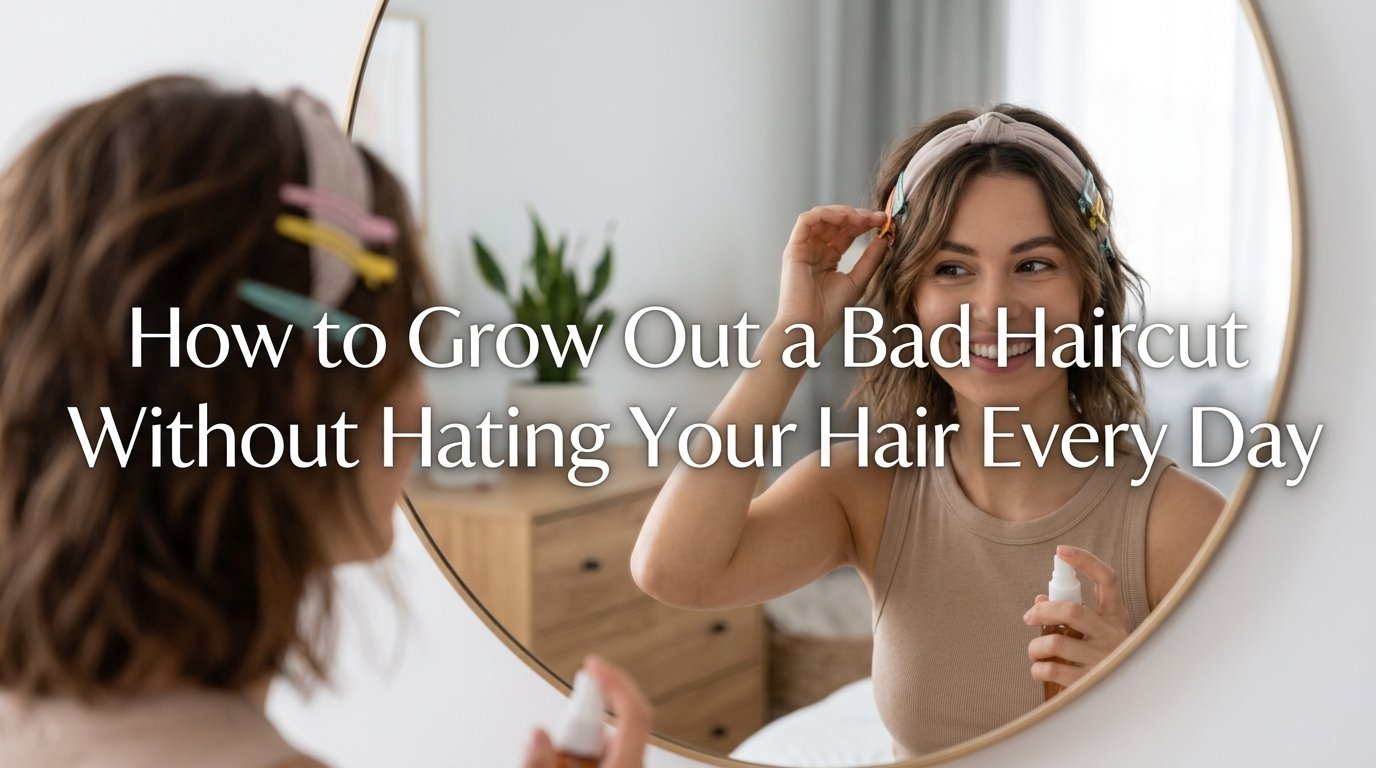
Every single person who has ever sat in a salon chair has experienced that moment where the mirror reveals something other than what you asked for. The panic. The forced smile. The drive home where you avoid every reflective surface. If that is where you are right now, you are not alone, and learning how to grow out a bad haircut without hating your hair every day is absolutely possible.
I have been there more times than I can count. So has nearly every stylist I have worked with at Mercer Street Salon. The good news is that the awkward stage is temporary, and there are concrete things you can do starting today to make the process bearable and even a little fun.
This guide walks through the mindset shifts, styling tricks, hair care changes, and timeline expectations that will carry you from haircut regret to a style you actually like. No gimmicks, no expensive treatments, just practical advice from people who have lived it and helped hundreds of clients through the same journey.
Table of Contents
What You Can Do Right Now
Before we get into the detailed plan, here are five things you can do in the next hour to feel better about your hair:
Stop reaching for the scissors. Every trim resets the clock. Resist the urge to fix it yourself or book another appointment to change it again.
Switch to a silk or satin pillowcase tonight. It reduces friction and breakage while you sleep, which means your hair actually retains the length it grows.
Grab bobby pins, a headband, or a claw clip. Accessories are your best friends right now. They hide uneven layers and give you instant style without commitment.
Book a shaping appointment for two weeks out. Not a restyle. A light texturizing and neckline cleanup can make a growing cut look intentional.
Give yourself grace for 21 days. Research shows it takes about three weeks for your brain to adjust to a new visual of yourself in the mirror. The shock will fade.
How to Grow Out a Bad Haircut Step by Step
Surviving a bad haircut is not about waiting passively. It is about taking deliberate actions that protect your hair, manage the awkward lengths, and keep your confidence intact. Here is the step-by-step process we recommend to every client walking into our salon with haircut regret.
Step 1: Put the Scissors Down and Accept the Awkward Stage
The absolute first thing you need to do is stop trying to fix the cut. I know the urge is overwhelming. You see uneven layers and your brain screams to even them out. But every time you trim, cut, or reshape, you are starting the growth clock over again.
This is the most common mistake people make. Our forum research confirmed it repeatedly. Users across Reddit’s beauty and hair communities report that getting multiple corrective haircuts actually prolongs the problem. The people who recover fastest are the ones who accept the current state and commit to leaving it alone.
Acceptance does not mean liking it. It means acknowledging where your hair is right now without panicking. Your hair is not ruined. It is just shorter than you wanted, or shaped differently than you imagined. Both of those things are temporary.
Here is something that helps: take a photo today. Do not post it, do not analyze it. Just save it. In three months you will look back and realize how much progress you made, and that photo will be your proof that growth is happening even when it does not feel like it.
Step 2: Set Realistic Hair Growth Expectations
Hair grows at an average rate of about half an inch per month. That is roughly six inches per year. Some people grow slightly faster, some slightly slower, and genetics play the biggest role. No shampoo, supplement, or treatment will dramatically change that rate.
What you can control is whether the hair you grow actually stays. Breakage from heat styling, rough brushing, and chemical damage can eat up the half inch you grew this month, making it look like nothing is happening. More on that in Step 3.
Here is a realistic timeline of what to expect as you grow out a bad haircut:
Week 1: Pure shock. This is the hardest part. Your brain has not adjusted to the new look yet and every mirror feels like a gut punch. This is completely normal.
Week 2 to 3: The shock starts fading. You are getting used to the shape. Styling becomes slightly more intuitive as you learn what works with the current length.
Month 1: About half an inch of growth. It sounds small, but on a short cut, half an inch is noticeable. The cut starts looking softer and less sharp around the edges.
Month 3: An inch and a half of new growth. If you started with a botched pixie, you are now in short bob territory. If you started with bad layers, the unevenness is starting to blend. This is where styling gets fun again.
Month 6: Three inches of growth. You have cleared the worst of the awkward stage for most cut types. The hair is long enough to pull back, braid, or style in ways that hide any remaining issues.
Month 9 to 12: For most people, this is full recovery territory. Four to six inches of growth means your hair has moved well past the bad cut. Depending on how short the original cut was, you may have reached your desired length or be very close.
Hair type also affects how the grow-out looks and feels. Fine hair tends to show growth faster because individual strands are lighter and fall more naturally. Thick or curly hair may look bulkier during the transition and benefit from strategic thinning or shaping. Coily hair has its own rhythm, and shrinkage can make it look like less progress is happening even when growth is right on track.
Step 3: Protect Your Hair From Breakage
Here is the part most guides gloss over: breakage is the reason people think their hair is not growing. Your hair is almost certainly growing at its normal rate. But if the ends are breaking off at the same speed, you will never see length gain.
Think of it like filling a bucket with a hole in the bottom. You can pour more water in, but if the hole is just as big, the bucket never fills. Hair growth works the same way. Seal the hole and the length will come.
Here is how to minimize breakage during your grow-out:
Swap your pillowcase. Cotton creates friction that tugs at your hair all night. Silk or satin pillowcases let your hair glide, which means fewer tangles, less pulling, and reduced breakage. This is the single easiest change you can make.
Rethink how you brush. Start from the bottom and work upward in small sections. Use a wide-tooth comb on wet hair, never a brush. Wet hair is at its most fragile state, and aggressive brushing snaps strands that are already stressed.
Cut back on heat styling. Every pass of a flat iron or curling wand at 400 degrees is doing damage. If you must use heat, apply a heat protectant first and keep the temperature under 350 degrees. Air dry when you can.
Add a weekly deep conditioning treatment. A hair mask once a week replenishes moisture that daily washing and environmental exposure strip away. Look for masks with argan oil, shea butter, or keratin. Apply to damp hair, leave on for 15 to 30 minutes, then rinse.
Be gentle when wet. Do not towel-rub your hair dry. Squeeze gently with a microfiber towel or cotton t-shirt. Avoid elastic bands that snap and pull. Use silk scrunchies or spiral ties that hold without snagging.
Trim only split ends. This sounds counterintuitive when you are trying to grow, but split ends travel upward and cause more breakage. A micro-trim of a quarter inch every 10 to 12 weeks removes damaged ends without sacrificing meaningful length.
Step 4: Use Styling Tricks to Hide the Bad Cut
This is where the daily frustration turns into daily creativity. The awkward length stage is not something you have to endure. It is something you can style around, and there are dozens of techniques that make a growing cut look intentional.
Here are the styling solutions that real people in hair forums recommend most often, organized by what you are dealing with:
Growing out a pixie or very short cut: Embrace the textured crop. Work a small amount of styling cream or pomade through damp hair and rough-dry with your hands for a piecey, undone look. Once the top reaches about two inches, start sweeping it to one side for a side-swept style. When the back and sides get fluffy, that is your signal to book a neckline cleanup.
Growing out a bob: The bob-to-lob transition is actually one of the easier grow-outs. Tuck the front pieces behind your ears to show off the length. Add waves with a large-barrel curling iron or overnight braids to give the blunt ends some movement. Once it hits your collarbone, it becomes a lob, andlobs are universally flattering.
Growing out bad layers: Layers that are too short or unevenly cut look choppy. Soften them with beach waves using sea salt spray on damp hair, scrunch, and air dry. The texture breaks up the harsh lines and makes uneven lengths look like a deliberate, tousled style.
Growing out a mullet or shag gone wrong: French braids are your best friend here. They pull the shorter layers into the braid and hide the mismatched lengths. A slicked-back bun with gel or pomade also works. For an everyday option, half-up styles with a claw clip gather the messy middle section while letting the longer pieces fall naturally.
Universal accessory tricks: Bobby pins can pin back any piece that is driving you crazy. Headbands push hair off your face and add instant polish. Bandanas and scarves tied as headbands look stylish and hide regrowth at the hairline. Hats buy you a no-effort day when you just cannot deal. A claw clip is the MVP of the grow-out phase because it holds hair at literally any length.
Spend a weekend experimenting with braids, buns, and accessory placements. Take selfies of the ones you like. Build a rotation of three to five go-to styles so you never stand in front of the mirror at 7 AM with nothing to try.
Step 5: Book Strategic Maintenance Appointments
You should absolutely still see a stylist during the grow-out. But you need to be very specific about what you are asking for. The wrong appointment can set you back weeks.
Here is exactly what to ask for and what to avoid:
Do ask for a neckline cleanup. The back of the neck is the first place a grow-out starts looking messy. A quick neckline shave or trim keeps you looking polished from the front even while the sides and top are growing.
Do ask for interior texturizing. If your hair is getting bulky or pyramid-shaped as it grows, a stylist can thin the interior without touching the perimeter length. This reshapes the silhouette so the cut looks intentional.
Do ask for face-framing adjustments. Short face-framing pieces can be blended into longer layers so they do not stick out awkwardly. This is a surface-level adjustment that does not remove overall length.
Do not ask them to fix the original cut. If you describe what went wrong and ask for it to be corrected, the stylist will likely cut more to even things out. Instead, describe the look you are growing toward and ask how to maintain it during the transition.
Do not let anyone take length off the bottom. Be explicit about this. Say you are growing it out and only want the perimeter touched if there are split ends. Even an inch of trimming resets your timeline by two months.
A skilled stylist will understand. At our salon, we do these transition appointments all the time. Bring reference photos of where you are headed, not where you are now. That helps the stylist work toward the goal rather than reacting to the current state.
Step 6: Take Care of the Mental Side
This might be the most important section in this entire guide. A bad haircut is not just a hair problem. It is an identity problem. Your hair frames your face every single day, and when it does not look like you, it shakes something deeper than vanity.
The psychological research backs this up. It takes about 21 days for your brain to form new neural pathways and adjust to a changed appearance. During those first three weeks, every mirror encounter triggers a mild stress response because your brain is comparing what it sees to what it expects. This is why week one feels so awful. It is literally neurological, not just emotional.
Here are strategies to protect your mental health during the grow-out:
Limit mirror time. Stop scrutinizing your hair from every angle. Check it once in the morning, style it, and walk away. No more standing two inches from the bathroom mirror inspecting individual layers.
Write an affirmation list. Write down five things you like about your appearance that are not your hair. Read it when the mirror gets you down. It sounds cheesy, but redirecting your attention to what you do like genuinely helps.
Prepare responses for comments. People will say things. Some are genuinely curious, some are thoughtless. Have a go-to response ready. Something light and confident like, “Growing it out, trying something new.” You do not owe anyone an explanation or a confession that you hate it.
Avoid the comparison trap. Do not scroll through Pinterest or Instagram looking at hairstyles you cannot currently achieve. That only deepens the frustration. Save those images for later when your hair is where you want it.
Document the journey. Take a photo every two weeks in the same lighting and angle. Looking at the photos side by side shows progress you cannot see day to day. Many people in hair forums say this was the single most helpful thing they did.
Talk to your stylist about how you feel. A good stylist is part technical professional and part counselor. If you are genuinely upset, say so. We can adjust your maintenance plan, suggest styles you have not tried, and remind you that this is temporary because we have seen it a hundred times.
What to Use During the Grow-Out Phase
You do not need a bathroom full of products to get through the awkward stage. But a few targeted additions to your routine can make a massive difference in both how your hair looks day to day and how healthy it stays as it grows.
Texturizing spray. This is the MVP of grow-out styling. It adds grit and volume to clean hair, making it easier to pin, braid, and shape. Spray it on damp or dry hair and scrunch. It softens blunt cut lines and makes uneven layers look intentional. Look for one with sea salt or rice starch as the base ingredient.
Dry shampoo. Freshly washed hair is slippery and hard to style. Dry shampoo gives you the texture and hold you need for updos, braids, and pinned styles. Spray it at the roots on day two hair and your accessories will grip so much better.
Deep conditioning mask. Use this weekly to keep the ends of your hair healthy and prevent the breakage that makes growth invisible. Look for masks with hydrating oils like argan, jojoba, or coconut. If your hair is color-treated or heat-damaged, a protein-based mask with keratin will help rebuild structure.
Lightweight hair oil or serum. A few drops smoothed over the ends of damp hair seals the cuticle and prevents flyaways. This is especially helpful if your growing layers are creating different textures across your head. Use sparingly to avoid weighing fine hair down.
Heat protectant. If you are using any hot tools, this is non-negotiable. A heat protectant spray or cream creates a barrier between your hair and the iron, reducing breakage dramatically. Look for one rated for temperatures up to 450 degrees.
Silk pillowcase. Not a styling product, but it does more for your grow-out than almost anything else. Silk reduces overnight friction by up to 43 percent compared to cotton, which means less breakage, fewer tangles, and better length retention over time.
Quality accessories. Invest in a pack of good bobby pins that actually match your hair color. Get two or three claw clips in different sizes. Pick up a few headbands and a silk scarf. These are the tools that turn a frustrating hair day into a styled hair day in under two minutes.
You do not need all of these at once. Start with a texturizing spray, a weekly mask, and a silk pillowcase. Those three changes alone will transform how your hair looks and feels within a month.
FAQs
How to grow out a horrible haircut?
Start by leaving it alone and resisting the urge to trim or reshape. Hair grows about half an inch per month, so focus on protecting that growth with moisture, gentle brushing, and reduced heat styling. Use accessories like bobby pins, headbands, and claw clips to style around the awkward lengths. Book a shaping appointment for neckline cleanup without taking length off the perimeter.
What is the 7 day haircut rule?
The 7 day haircut rule suggests waiting at least one week after getting a bad cut before making any decisions. The initial shock is often neurological rather than rational, and hair settles into its natural shape after a few washes. Most stylists recommend giving a new cut 7 to 14 days before deciding you hate it or booking a corrective appointment.
What is the 3 2 1 rule for haircuts?
The 3 2 1 rule is a communication guideline for salon appointments: bring 3 reference photos, ask 2 clarifying questions, and give 1 clear description of your lifestyle and styling routine. This helps your stylist understand exactly what you want and reduces the chance of a disappointing cut.
How to cope with an awful haircut?
Coping starts with accepting that the shock is temporary and neurological. Limit mirror time, write a list of features you like about yourself, and prepare a casual response for comments. Focus on styling tricks like braids, buns, and accessories. Take progress photos every two weeks and remind yourself that hair grows at about half an inch per month.
You Can Grow Out a Bad Haircut Without the Daily Frustration
Learning how to grow out a bad haircut without hating your hair every day comes down to three things: patience, protection, and creativity. Accept that the awkward stage is real but temporary. Protect the hair you are growing by reducing breakage. Get creative with styling so you feel good walking out the door each morning.
Your hair grows about half an inch every single month whether you stress about it or not. So stop stressing, start styling, and give yourself the grace to look a little messy while you get to where you want to be. We promise the other side of the awkward stage is worth the wait.