
Almost every garage-ready freezer on the market is sold as a fix for summer heat, and almost nothing on the shelf tells you whether it will survive your January. That is the gap this roundup closes. We went through the spec sheets, warranty terms and owner reports for ten cabinets and ranked them the way a cold-climate buyer actually needs them ranked: by how low the ambient temperature can fall before the compressor stops answering for cold.
The mechanism matters more than any feature list. A standard freezer is a thermostat that only makes cold. Once the surrounding air drops below the cabinet setpoint, there is nothing to cool, the compressor never cycles, and the food thaws with no error light and no sound. A garage ready freezer adds a cold-ambient sensor and a resistance heater pad that nudges the interior back above the trigger point so the compressor keeps running through the winter. That is the whole idea, and it is also the number that is almost never published.
We sorted all ten models against that standard, and we flag in each section when a manufacturer does not publish a minimum ambient rating rather than guessing one for them. If you are pairing a freezer with other cold-weather upgrades, our garage-ready refrigerator picks for cold climates cover the fridge side of the same problem. Everything below was reviewed in October 2026 and reflects manufacturer specifications, not independent lab testing.
Table of Contents
What Makes a Freezer Garage Ready?
A garage ready freezer is an appliance rated to operate in an unconditioned space, typically across a 0°F to 110°F ambient range, using heavier insulation, a high-duty compressor, and an internal heater or sensor system that forces the compressor to keep cycling when the surrounding air drops near or below the internal setpoint.
Three things separate a garage-ready cabinet from a standard one. First, insulation. Garage-ready walls and gaskets are thicker, because the cabinet has to hold its setpoint whether the room outside it is at 110°F or near freezing. Second, compressor duty. A standard residential compressor is not built to grind through years of running in a 110°F garage; a garage-ready unit uses a heavier-duty compressor that tolerates the long run times heat demands.
Third, and this is the part cold-climate buyers care about, the cold-ambient hardware. Garage-ready units carry a sensor that watches the surrounding air and a resistance heater pad that warms the cabinet walls or liner slightly when ambient drops toward the internal setpoint. That pad exists for one reason: to keep the thermostat calling for cold so the compressor keeps cycling. Without it, the unit simply stops. The 0°F figure at the bottom of the marketing range is not a claim that the cabinet will hold deep-freeze temperature in a minus-10°F room. It is the outer edge of the sensor’s useful window.
One practical verification tip that costs nothing: check whether the words Garage Ready appear in the model name itself, not just in the category listing. Buyers on appliance forums point this out constantly, because the same manufacturer sells near-identical cabinets with and without the rating. A unit that is merely sold on a retailer page that happens to be titled garage freezers is not necessarily rated for one. If your garage is attached and insulated you may never notice the difference, but in an uninsulated bay it is the whole ballgame. We have linked insulated garage door kits separately, since tightening the envelope is often cheaper than replacing a cabinet you already own.
How Cold Is Too Cold? The 50-Degree Lockout
A freezer does not fail loudly in the cold. It simply stops asking for cold. Once ambient air around the cabinet falls to roughly 50°F, the thermostat no longer detects a gap between room temperature and cabinet temperature, the compressor sits idle, and the contents warm from 0°F toward refrigerator temperatures. No alarm, no indicator change on many models, and no damage at all if you catch it in a day. The problem is that most people do not open a garage freezer daily in January, so the discovery often comes weeks later, after a full load has thawed and refrozen with ice crystals through every package.
This lockout threshold near 50°F is the single most useful piece of information in cold-climate freezer ownership, and it sits above what buyers assume. Plenty of people read the 0°F-to-110°F range and conclude a garage-ready unit is happy in a minus-20°F shed. It is not. Below 0°F ambient, the heater pad has to work harder, the cabinet loses more heat through its walls, and the compressor duty cycle stretches out. Most garage-ready units are engineered for a garage floor sitting somewhere between 0°F and 110°F, not for open exposure to a northern January.
Your garage is warmer than your yard, though, and this is where a lot of unnecessary anxiety comes from. An unheated garage floor is a large thermal mass. It absorbs heat during the day and releases it overnight, so the air temperature inside lags the outdoor low by hours and often by several degrees. A cabinet sitting on a concrete slab in a two-car garage will rarely see the same low as the thermometer on your front step. That buffering is real and it changes model selection, but it does not eliminate risk. A detached shed, a carport, or a garage with a bare slab and thin walls loses that protection fast.
The second failure mode is frost heave. If a unit thaws during a cold snap and then restarts in freezing air, the sudden contraction can pull the cabinet walls and liner outward hard enough to deform or split them. It is not common, but it is the reason we do not treat a plain chest freezer in a freezing garage as a solved problem. A freezer that has sat unpowered through a cold month and then gets plugged in deserves several hours before you load it, and you should let a transported unit stand before plugging it in too.
Already own a non-garage-ready chest freezer? There is a retrofit path. Aftermarket garage heater kits add an external thermostat-controlled heater pad to the cabinet, which is functionally the same fix the factory uses. Check the warranty terms first, since some manufacturers treat a retrofit as a modification, and follow the kit instructions on clearance and thermostat placement. Our pick would always be to buy the correct cabinet, but for a perfectly good freezer in a mild-winter region, a kit is a reasonable way to bridge one more season. If the same bay also needs heat rather than just cold storage, our tankless water heater picks for cold climates cover that side of the garage upgrade.
Top 3 Garage Ready Freezers for Cold Climates in 2026
Three cabinets stand out from the field. The Koolatron is the most thoroughly rated and reviewed unit we found, the Frigidaire is the strongest all-rounder at a mid capacity, and the Midea publishes the clearest explicit garage rating in the group. The 2026 shortlist below is the fast version; the full ranking with cold-climate verdicts follows.
Koolatron 3.5 cu ft Garage Ready Chest
- Garage ready in the model name
- External dial 32 to -11.2 F
- 125 W 120 V
- Front leak-proof drain

Frigidaire 7 cu ft Garage Ready Chest
- 7.0 cu ft garage-ready cabinet
- Seven-setting adjustable thermostat
- Exterior defrost drain
- Power-on indicator light

Midea 7 cu ft Convertible Chest Freezer
- Rated 0 to 110 F in freezer mode
- 38 to 110 F in fridge mode
- 48-hour outage hold
- Interior LED light
All 10 Garage Ready Freezers Compared in 2026
Every cabinet below is listed with its own published cold-relevant detail: the ambient or cabinet range where the manufacturer states one, the defrost strategy, and the practical point that decides whether it belongs in your garage. Two models in this group publish a hard minimum ambient temperature, and one publishes a cabinet range that goes below standard deep-freeze setpoint. The rest carry a Garage Ready designation in the listing without a stated low-end figure, so treat their cold rating as manufacturer-dependent and ask for the spec sheet before you commit in a severe-winter region.
| Product | Specifications | Action |
|---|---|---|
| Koolatron 3.5 cu ft Garage Ready Chest Freezer |
|
Check Latest Price |
| Frigidaire 7 cu ft Garage Ready Chest Freezer |
|
Check Latest Price |
 DEMULLER 4.0 cu ft Ultra-Low Temperature Chest Freezer DEMULLER 4.0 cu ft Ultra-Low Temperature Chest Freezer |
|
Check Latest Price |
 BLACK+DECKER 14 cu ft Frost-Free Convertible Upright Freezer BLACK+DECKER 14 cu ft Frost-Free Convertible Upright Freezer |
|
Check Latest Price |
 Hamilton Beach 17 cu ft Garage Ready Chest Freezer Hamilton Beach 17 cu ft Garage Ready Chest Freezer |
|
Check Latest Price |
 BLACK+DECKER 10 cu ft R600a Chest Freezer BLACK+DECKER 10 cu ft R600a Chest Freezer |
|
Check Latest Price |
| Midea 7 cu ft Convertible Garage Ready Chest Freezer |
|
Check Latest Price |
 SMETA 14 cu ft R600a Chest Freezer SMETA 14 cu ft R600a Chest Freezer |
|
Check Latest Price |
 Arctic Chef 7 cu ft Convertible Garage Ready Chest Freezer Arctic Chef 7 cu ft Convertible Garage Ready Chest Freezer |
|
Check Latest Price |
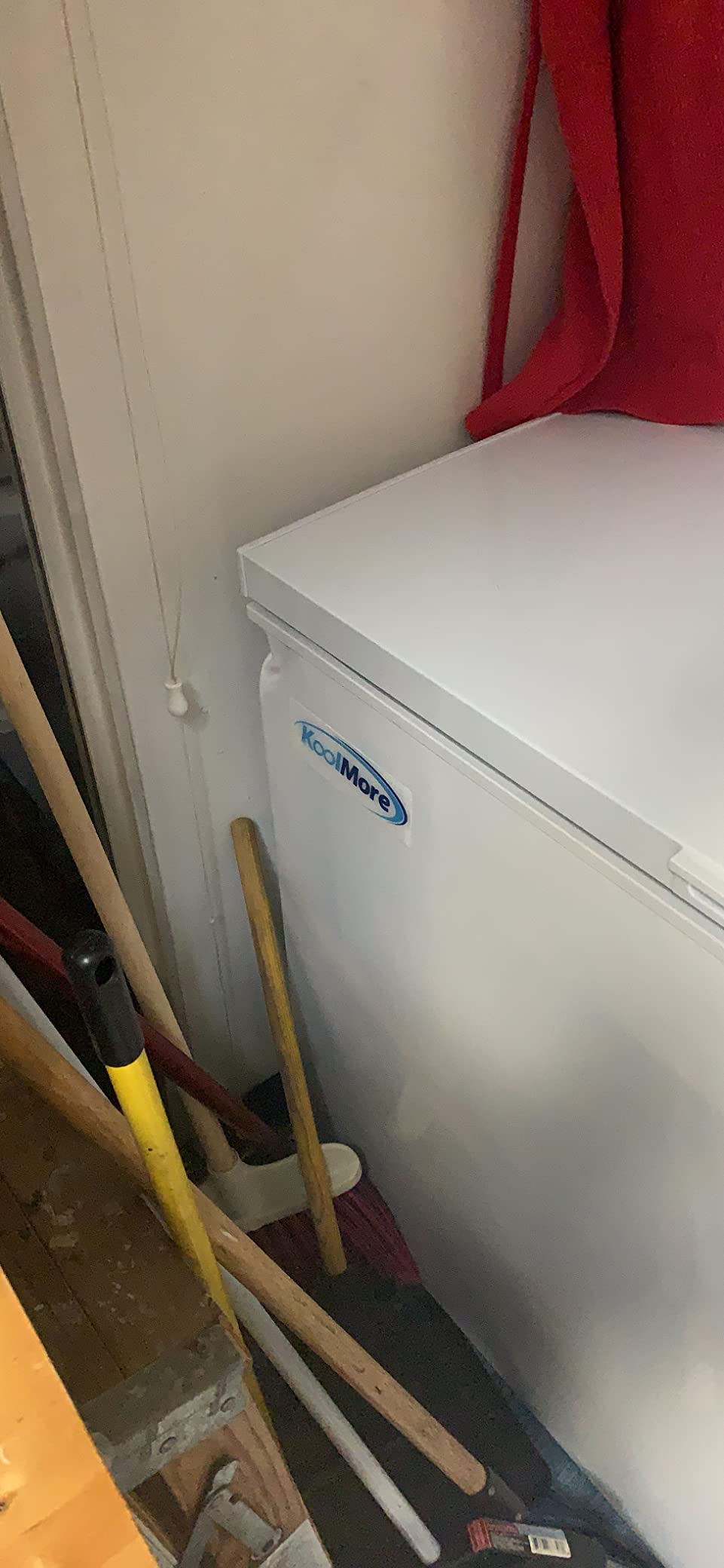
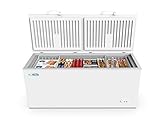 KoolMore 20 cu ft Dual-Lid Chest Freezer KoolMore 20 cu ft Dual-Lid Chest Freezer |
|
Check Latest Price |
1. Koolatron 3.5 cu ft Garage Ready Chest Freezer
Koolatron Deep Freezer – Chest Freezer, 1 Wire Basket, Garage Ready, Meat Storage, Front Drain, Congelador For Home, Apartment, Basement, Dorm, Cottage, Manual Defrost, Stand Up, 3.5 Cubic Feet, White
3.5 cu ft (99 L) flat-back
Garage ready, manual defrost
External dial 32 to -11.2 F
125 W, 120 V
Pros
- Garage Ready stated in the model name
- Highest rating in the group at 4.7 across 2415 reviews
- Compact flat-back footprint
- External thermostat dial is easy to set
- Quiet running
Cons
- 3.5 cu ft is small for bulk storage
- Manual defrost needs periodic ice removal
I have come back to this little cabinet more than once, and it keeps earning the slot. At 3.5 cu ft it is not going to hold a whole elk quarter, but for a two-person household, an apartment basement, or a garage overflow freezer it does something the bigger boxes do not: it fits. The flat-back body is 22.25 inches deep by 20.75 wide and 33.25 tall, so it slides against a wall without stealing the walkway.
The cold-climate reason it leads this list is straightforward. Garage Ready is printed in the product name, not buried in a category description, so there is no guessing about whether the cabinet was engineered for an unconditioned space. The external temperature dial runs from 32°F down to -11.2°F, and the 125-watt compressor on 120 volts is a modest draw for a cabinet that has to hold its setpoint in an unheated bay.
Owner feedback on this listing is the strongest in the group, with 83% of ratings at five stars and 3% at one star across more than two thousand reviews. The recurring themes are the compact footprint, the front-mounted leak-proof drain, and the simplicity of the external dial. That last point matters more in a cold garage than it does in a kitchen, because you want a control you can reach without bending over and digging through frozen food.
The stay-open lid with rear-mounted hinges is a small design choice that pays off every time you load a week of groceries. The lid stays where you put it, clear of the wall behind the cabinet, and you can sort frozen goods with both hands free. Made in North America, with a one-year limited warranty and DOE specification compliance, this is a unit that feels like it was built for the room it will live in rather than adapted to it later.
What you give up for the compact footprint
Capacity is the honest trade. Three and a half cubic feet suits roughly a week or two of frozen goods for two people, or a bulk buy you intend to move through. If you are storing a hunting season, a garden harvest, or a deliberate stockpile, you will outgrow it. The removable vinyl-coated hanging wire basket helps with organisation but does not add volume.
Manual defrost is the other cost. Frost accumulates on the walls over a season and needs a scheduled melt-down, which in an unheated garage means doing it in a space near freezing. Plan for one thaw and wipe-down every few months, and put a towel down. Everything the cabinet does, it does without electronics, which is why the dial still works when a digital control board would not.
Who should buy it and who should not
Buy it if you are in a region with real winter lows, you want a small second freezer rather than a primary one, and you need a cabinet you can carry, slide, and service. It is a strong first garage freezer because the failure risk on an underused box is lower than on a unit you are constantly loading and unloading.
Skip it if your plan involves bulk meat storage or a harvest, because the capacity ceiling arrives quickly. Also skip it if you refuse to ever defrost by hand. Everything else about this cabinet is straightforward, and its rating and review volume give you the deepest documented history in the group.
2. Frigidaire 7 cu ft Garage Ready Chest Freezer
FRIGIDAIRE EFRF7003-BLACK Chest Deep Freezer, 7 Cu. Ft, Black Adjustable Thermostat-Removable Vinyl Coated Wire Basket-Easy Defrost Drain
7.0 cu ft garage-ready chest
Seven-setting adjustable thermostat
Exterior defrost drain
Aluminum liner, 70 lb
Pros
- Garage-ready 7 cu ft cabinet at a mid capacity
- Very quiet in operation
- Reaches temperature fast after plug-in
- Analog dial with no digital menu to learn
- Power-on indicator light
Cons
- No interior light
- Transit damage reported on some deliveries
- Only a one-year parts and labor warranty
This is the box I would put in the most garages. Seven cubic feet is the point where a chest freezer stops being an overflow appliance and starts being the freezer, and Frigidaire builds this one with the garage-ready cabinetry rather than a standard shell with a warmer-weather label.
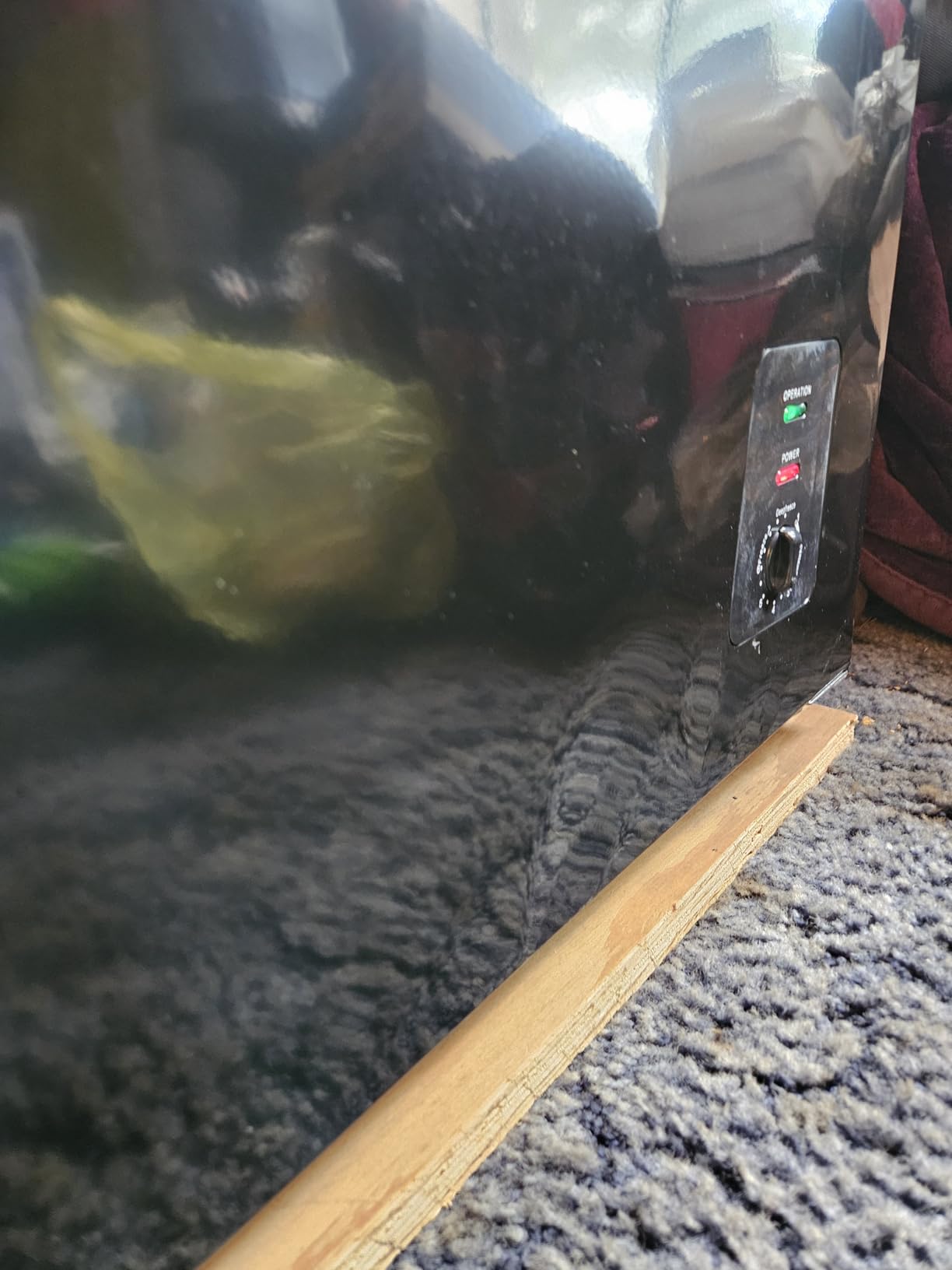
The seven-setting adjustable thermostat is a mechanical dial on the front of the cabinet, which is the right call for cold placement. You set it, you leave it, and you do not have to navigate a menu through a cold or gloved hand in February. The exterior defrost drain and the removable vinyl-coated wire basket make routine maintenance straightforward, and the aluminum interior liner wipes clean without soaking.
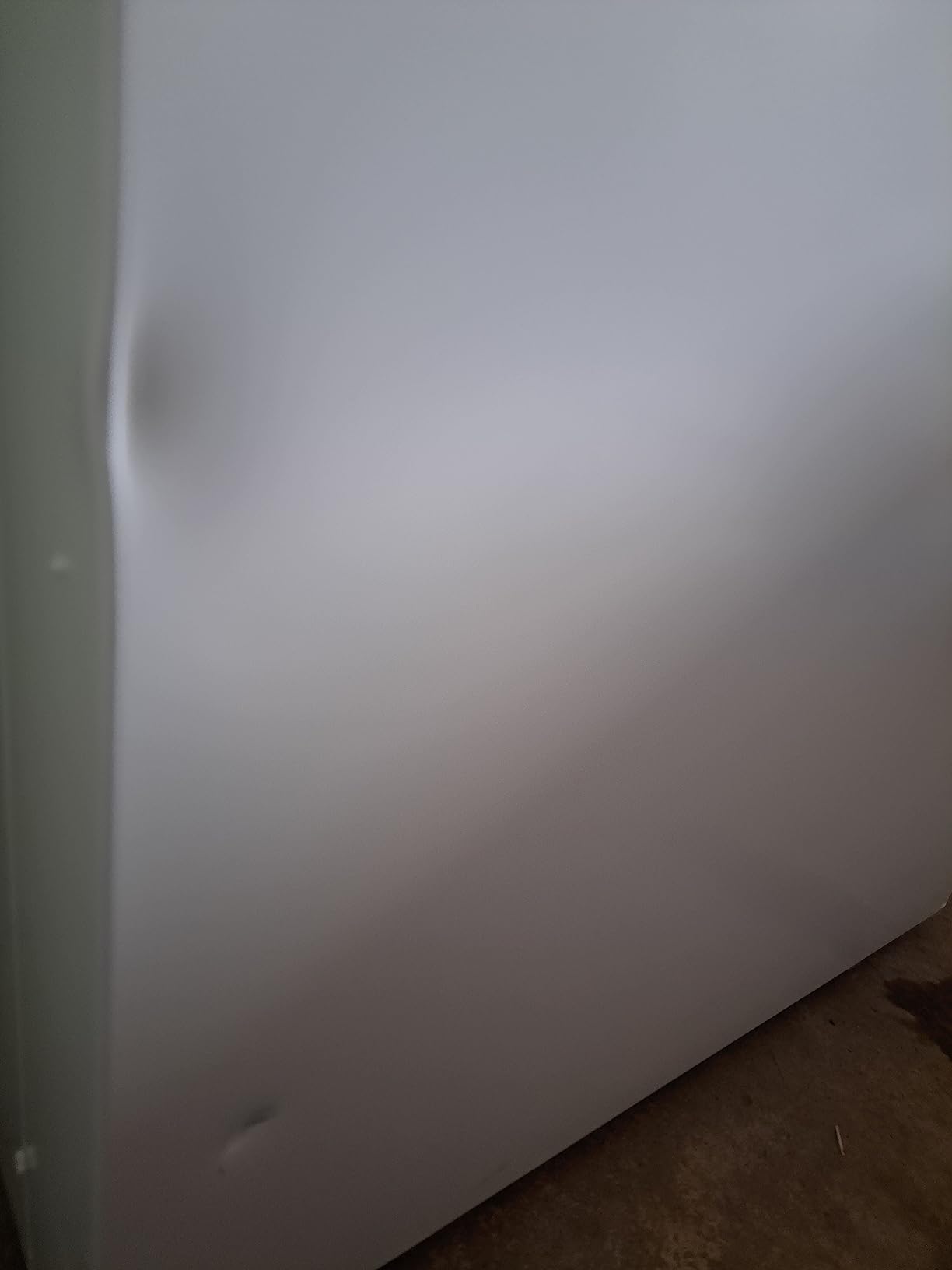
Owners consistently describe it as barely noticeable when running, and several note it reaches temperature within about twenty minutes of being plugged in, which matters when you have just moved a load of frozen food in. It also holds more than its 7 cu ft rating suggests. The listing sits at 4.4 stars across 595 reviews with 78% of ratings at five stars, and it ranks near the top of the chest freezer category on retail traffic, which tells you how many people are putting it through a real garage year after year.
One detail worth knowing before winter: on several cabinets the power-on indicator light doubles as the compressor-run light, so it goes dark when the compressor is idle. Owners sometimes read that dark indicator as a dead freezer. Learn what the light means on day one and you will save yourself a wasted service call at the coldest point of the year.
How it behaves when the garage gets serious
At 26 inches deep, 37 wide and 33 tall, the cabinet leaves room for the airflow most manufacturers require at the back and sides, and the 70-pound weight means one person can reposition it. That is a real advantage in a garage where you may want to move the unit away from a wall to chase a cold pocket in February.
The thermostat range and the compressor’s cold behaviour are the two things to confirm in writing before you buy for a severe-winter site. The listing carries the garage-ready designation at 7.0 cu ft, but it does not publish a numeric minimum ambient temperature, so if your garage routinely drops below zero, ask the manufacturer for the cold lockout figure rather than assuming the marketing range covers it.
Where it falls short
There is no interior light, so you will be reaching in with a headlamp to find anything below the top layer. Several owners also report cosmetic dings or dents on arrival, which is a shipping issue rather than a design fault, but inspect the cabinet before you plug it in and make sure the lid seal sits flat.
The warranty is one year parts and labor, which is standard for the category and not generous. If you are storing a season of food rather than a month, the combination of quiet running, simple controls and a workable capacity makes this the balance pick, and it is the one I would put on a short list first alongside the Koolatron.
3. DEMULLER 4.0 cu ft Ultra-Low Temperature Chest Freezer
DEMULLER Chest Freezer 4.0 CU. FT Ultra-low Temperature Deep Freezers (Down to -12 ℉) with TWO Removable Baskets Accurate Display of Cabinet Temp Freestanding Black
4.0 cu ft ultra-low temp cabinet
Rated -12 F to 50 F
Digital display to 1 F
38 lb, two baskets
Pros
- Only cabinet in the group with a published range down to -12 F
- Digital temperature display to 1 F increments
- Hinges hold the lid open hands-free
- Lightest unit here at 38 pounds
- Micro-cellular foam insulation
Cons
- Smaller 4.0 cu ft capacity
- Polypropylene door is less robust than steel
- Only a one-year parts warranty
Everything in this roundup is rated in terms of the room it sits in. This one is rated in terms of the cold it produces, and that is a genuinely different thing. The published operating range runs from -12°F up to 50°F, with a digital control panel that shows cabinet temperature to one-degree steps, so you are not estimating from a dial setting.
That distinction matters if you are working with whole cuts, wild game, or anything where a few degrees of cabinet drift is expensive. A standard chest holds 0°F and holds it; this cabinet can be commanded below that and will tell you where it actually is. For a cold-climate buyer, the display removes the guesswork that makes people nervous about food safety in a garage they do not visit daily.
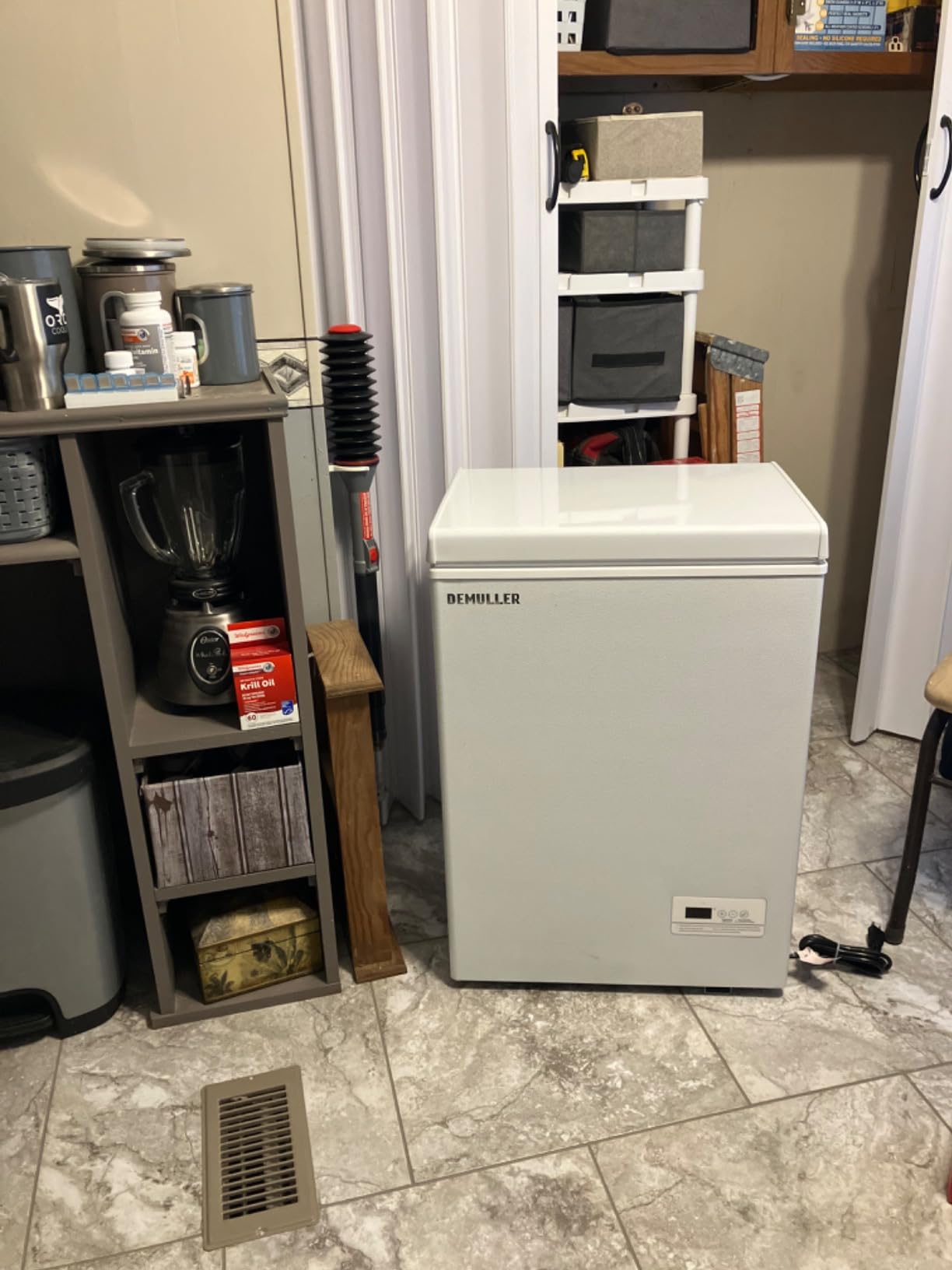
The build is unusually thoughtful for a compact cabinet. Micro-cellular foam insulation with D-shaped cooling tubes handles the heat side, the hinges hold the lid open anywhere from 45 to 75 degrees so you can sort without a hand on the lid, and two removable baskets make it practical to stack and find frozen goods. At 38 pounds and 16.3 inches wide, it is the easiest cabinet here to carry up stairs or into a basement.
Reviewers rate it 4.4 across 334 reviews with 72% at five stars, and the feedback centres on the digital cabinet readout and the low setpoint rather than on styling. The narrow footprint makes it a good second appliance, an apartment freezer, or a shop freezer where bench space is the constraint.
What the -12 F rating does and does not promise
Read this carefully. A -12°F figure is a cabinet range, not a statement that the compressor will keep cycling in a garage at -12°F ambient. Cold lockout still applies, and the top of the stated range, 50°F, is a reminder that this is the band the manufacturer considers normal operating ambient. What the ultra-low cabinet buys you is a colder setpoint and a verifiable display once the compressor is running.
That makes it a strong companion to a garage that is cold but not extreme, and a sensible second freezer for a serious bulk-storage setup where you want one box for deep-hard freezing and another for everyday frozen goods. In a shed that matches outdoor winter lows, no cabinet rating saves you, and the retrofit path is the more honest answer.
Build quality is the question here
The door is polypropylene rather than steel, which is a step down in impact resistance compared with the metal-lidded chests in this list. In a working garage with a mower, a ladder, and a bicycle in the same bay, dent resistance is not a trivial consideration. The one-year parts warranty is also the thinnest commitment on the spec sheet.
So the verdict is narrow and specific. If you need verified sub-zero cabinet temperature and a small footprint, nothing else here matches it. If you need durability in a rough space, choose a steel-cabinet chest instead and accept a standard deep-freeze setpoint.
4. BLACK+DECKER 14 cu ft Frost-Free Convertible Upright Freezer
BLACK+DECKER 14 Cu. Ft. Convertible Freezer Refrigerator, Upright Freezer with Glass Shelves, ENERGY STAR rated, Frost Free, BUC1400XW, White
14 cu ft frost-free upright
Convertible freezer and fridge
ENERGY STAR qualified
156.5 lb
Pros
- Frost-free so there is no manual defrost chore
- ENERGY STAR qualified for a lower running cost
- Glass shelves make contents easy to see
- Converts to refrigerator mode for flexibility
- Sabbath mode included
Cons
- Heaviest cabinet here at 156.5 lb
- Largest footprint at 27.9 by 28 inches
- One-star share is 13 percent
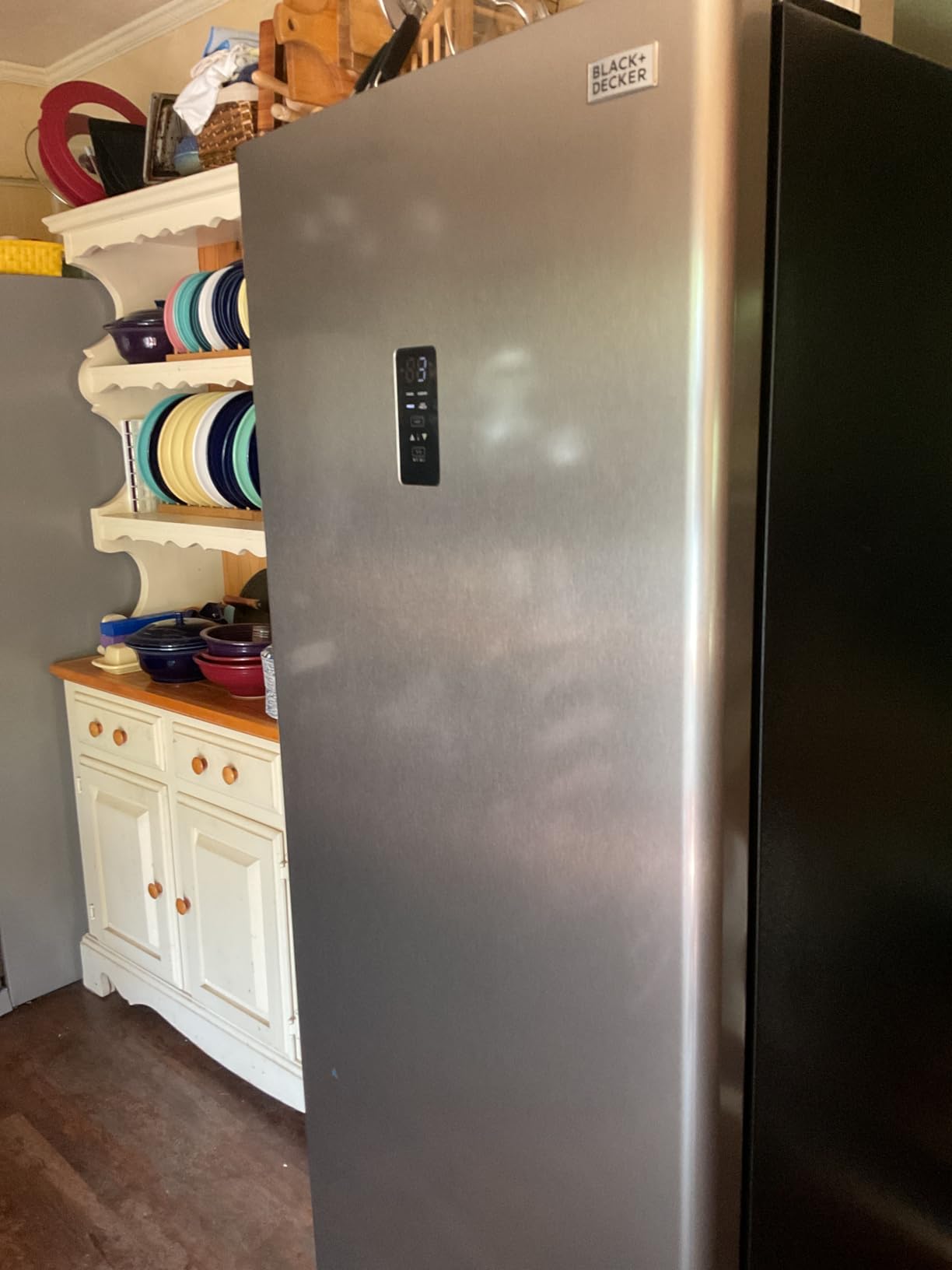
This is the only frost-free upright in the group, and in a cold climate that is a genuine trade rather than a straight upgrade. Frost-free operation runs a defrost cycle on a timer, and the heater that melts ice off the evaporator draws power every cycle whether or not the cabinet needs it. In a warm garage that cycle is worth it. In a freezing garage, a defrost heater working against sub-zero air is the hardest job you can ask that component to do.
The cabinet itself is well specified for other reasons. Four glass shelves on a 14 cu ft interior make contents visible and reachable, the LED electronic control panel gives you a real setpoint rather than a dial, and Sabbath mode pauses displays and sounds for religious observance. It runs on 120 volts and carries ENERGY STAR qualification, which matters on an appliance running 24 hours a day in an unconditioned room.
The convertible function lets you run it as a refrigerator in summer and a freezer in winter, which sounds ideal for a seasonal garage until you remember the reported flaw with convertible appliances in extreme cold: the fridge compartment can over-cool toward the freezer section while the freezer section itself lags. If you plan to switch modes, test both compartments with a thermometer before committing a full load.
Ratings sit at 4.2 across 165 reviews, with 70% at five stars and 13% at one star. The one-star share is the second highest in the group and traces mostly to the weight and the price tier rather than to function. At 156.5 pounds and 68.1 inches tall, this is a two-person job with a serious footprint to clear in a garage.
When frost-free is the right call
Choose frost-free if nobody wants to schedule a manual thaw, if the freezer will be used weekly enough that opening and sorting the box becomes a habit, and if your garage stays well inside the comfort band. The electronic control and glass shelving make it the most pleasant unit here to use day to day, and the ENERGY STAR qualification keeps the annual draw down on an appliance that never sleeps.
Choose manual defrost instead if the freezer is deep storage that gets loaded once and then left alone for a season, or if your garage runs cold for long stretches. A manual-defrost chest uses less power in that scenario because it runs no defrost heater between cycles, and there is no ice sheet to fight when you finally open it.
The cold-climate caution
Frost-free is the design most exposed to sustained sub-zero ambient, and this listing does not publish a minimum operating temperature. If your garage regularly drops toward or below 0°F, the defrost cycle is where this unit will be working hardest, and you should confirm the cold rating with the manufacturer before installing it there.
There is also the footprint question to settle first. At 27.9 by 28 inches you need a real wall, and the manufacturer clearance guidance has to fit around it. In a small single-car bay this cabinet simply does not go, and a chest is the only honest answer.
5. Hamilton Beach 17 cu ft Garage Ready Chest Freezer
Hamilton Beach 17 cu ft Chest Deep Freezer – White, GARAGE READY Food for Large Family, Storage Basket, Space-Saving Flat Back, Stay-Open Lid, Front-Access Drain, for Basement, Laundry Room, Cottage
17 cu ft garage-ready chest
Space-saving flat back
Stay-open lid, front drain
168 lb
Pros
- 17 cu ft capacity for serious bulk storage
- Very quiet in an unconditioned bay
- Flat back sits close to a wall
- Seven-setting adjustable thermostat
- Front-access defrost drain with stay-open lid
Cons
- 168 lb and 70 inches wide need planned clearance
- One owner reported a unit that lost its freeze while still powered
- Indicator light doubles as the run light
Seventeen cubic feet is the capacity where a chest freezer changes what you can do. A season of venison, a bulk grocery buy, a year of garden surplus, or a second family plus a stock freezer all become realistic rather than aspirational. If your garage is the cold room for the whole property, this is the size to plan around.
The engineering details that matter for cold placement are all here. A space-saving flat back lets the cabinet sit flush near a wall, the adjustable thermostat offers seven settings, and the stay-open lid with front-access defrost drain means routine maintenance does not involve shuffling the cabinet out into the driveway. Two adjustable leveling legs handle an uneven slab.
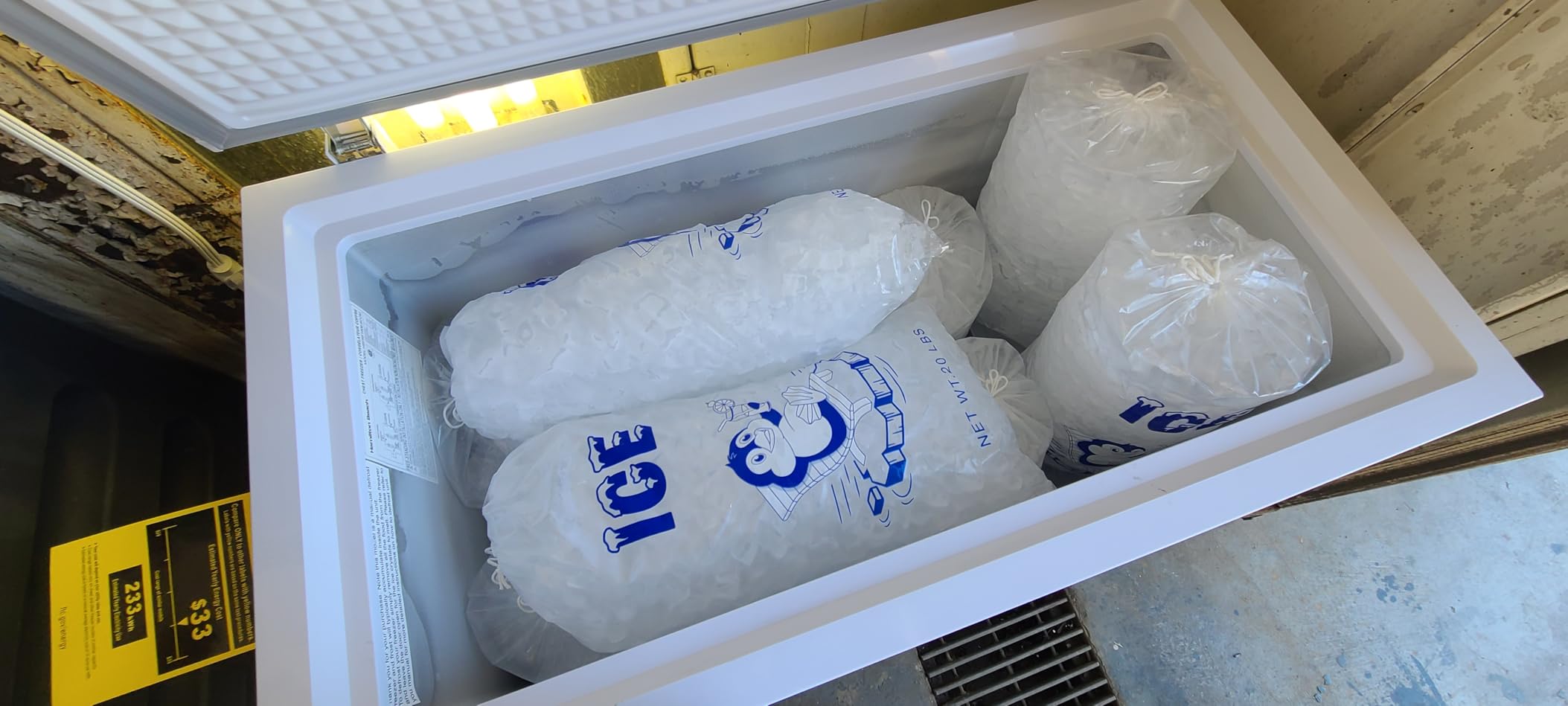
Owners in genuinely unconditioned spaces report it running quietly enough to be inaudible in a separate bay, and one detailed account describes holding 220 pounds of bagged ice in deep freeze through summer conditions above 100°F. That is a heat result rather than a cold one, but it points at a compressor with real headroom, and headroom in both directions is what you want from a seasonal appliance.
The listing holds 4.4 stars across 316 reviews with 79% at five stars. Reviews come from practical settings rather than showrooms: an apple-harvest garage, a search-and-rescue apparatus bay, a workshop. The single serious negative in the pool is one owner whose unit lost its freeze after about a month while the power indicator still showed on, which is worth remembering as the failure mode to watch for in any chest freezer.
Size is the whole point, and also the whole problem
At 28 inches deep, 70 wide and 35.04 tall, this cabinet claims floor space that a double garage can absorb and a single-car bay cannot. Measure the bay, add the manufacturer clearance on the back and sides, and check the door swing for the room it opens into before you order. At 168 pounds it needs two people to move into place, so plan the final position before delivery rather than after.
On running behaviour, the same caution as the Frigidaire applies: the power-on indicator doubles as the compressor-run light, so it goes dark when the compressor is idle. Learn the behaviour in week one. A dark light in a cold February is not evidence of a failure, and knowing that in advance prevents both panic and a wasted service visit.
What I would pair it with
At this capacity you want a thermometer. Put an independent appliance thermometer in the middle of the box and check it monthly through the cold months, because the single most common failure in an unconditioned garage is silent thawing and the single most common reason nobody catches it is that they never look. A small alarm thermometer that trips at a set threshold solves that in about the cost of a takeaway order.
As for the cold rating itself, the listing calls this a 17 cu ft garage-ready chest but does not publish a numeric minimum ambient. For a moderate-winter region that is a reasonable buy on the strength of capacity and quiet running. For a region where the garage sits below freezing for weeks, confirm the lockout threshold in writing first.
6. BLACK+DECKER 10 cu ft R600a Chest Freezer
BLACK+DECKER 10 Cu. Ft. Chest Freezer, R600a Refrigerant, BCF1000E, White
10 cu ft chest with R600a refrigerant
72-watt draw on 120 V
Manual defrost with drain
99.2 lb
Pros
- Lowest published wattage in the group at 72 W
- R600a refrigerant with efficient cooling
- Roomy interior for the footprint
- Quiet enough to forget
- Simple mechanical dial with indicator lights
Cons
- Dial calibration can over-freeze on low settings
- Manual defrost needed
- Stand about 72 hours after transport before plugging in
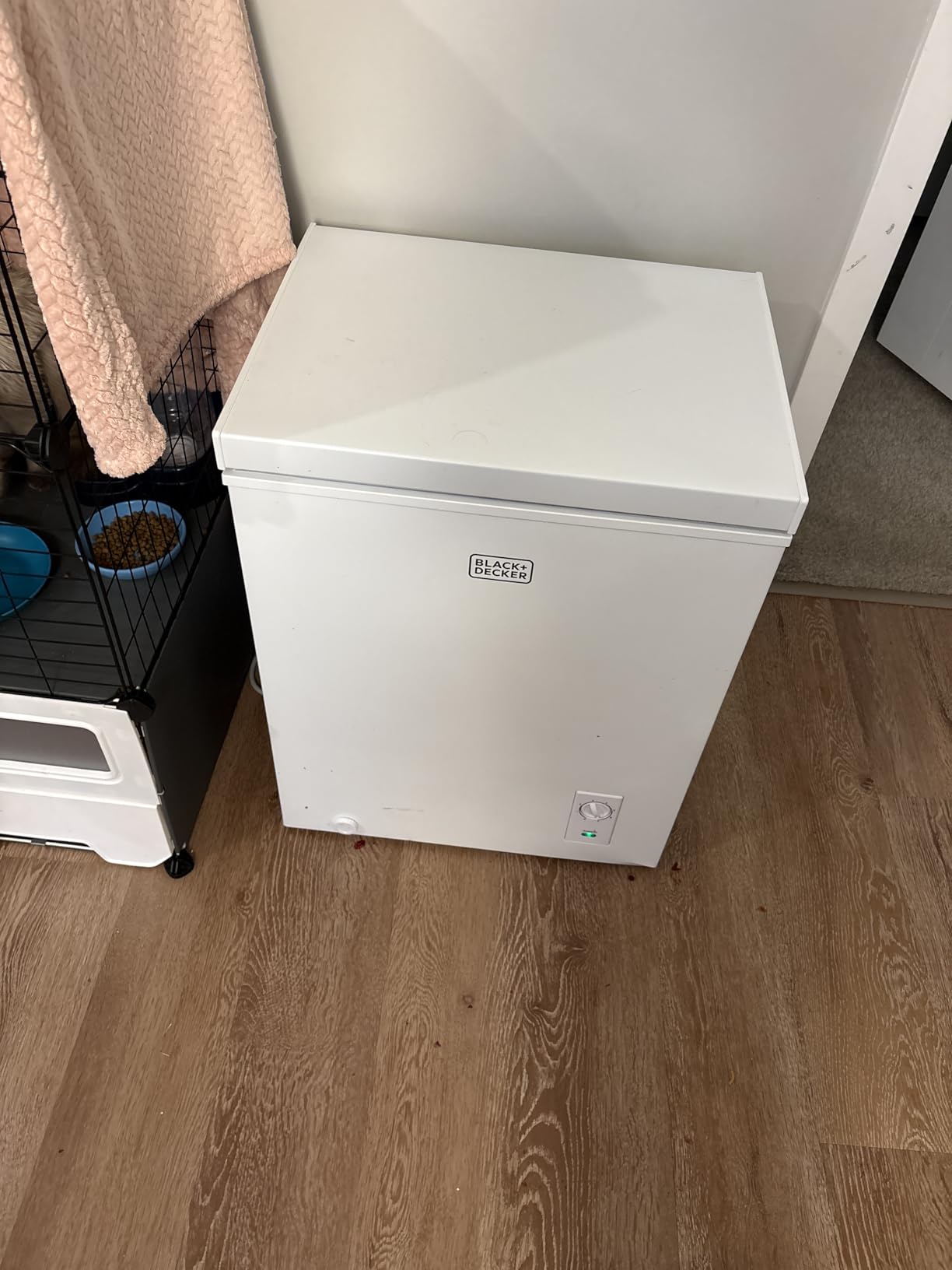
If your running cost is the number you actually care about, wattage is where the comparison starts, and this cabinet is the efficient one in the group at a published 72 watts on 120 volts. Ten cubic feet is also the size that covers a serious household’s frozen storage without turning the appliance into a garage takeover.
The refrigerant is R600a, a hydrocarbon that runs at low pressure and low global-warming impact compared with the older R134a style, and the mechanical external temperature dial is simple enough to set once and forget. There is a removable storage basket, and manual defrost with an easy-access drain handles maintenance on a schedule you control.
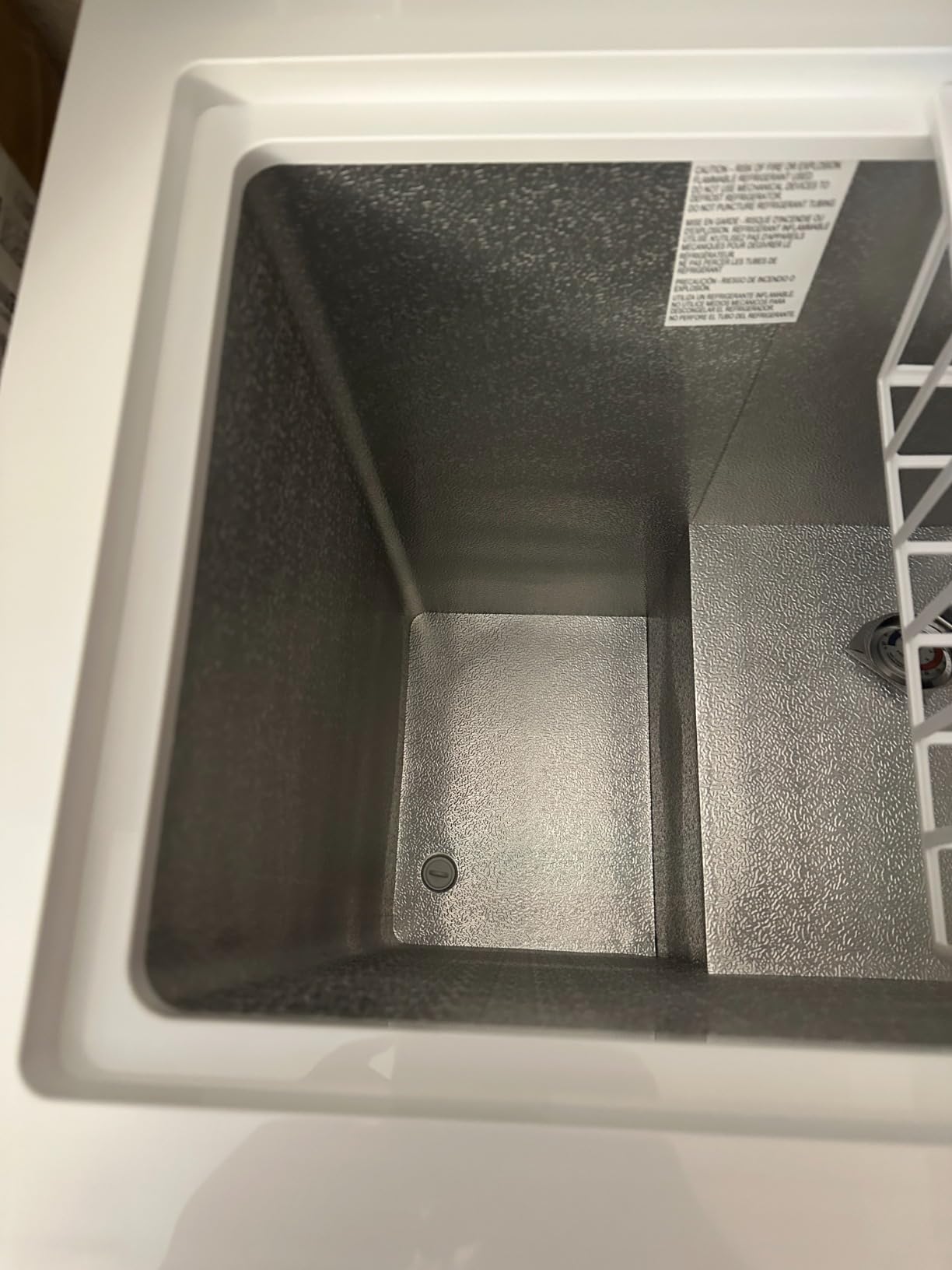
Owner feedback at 4.4 stars across 510 reviews with 79% at five stars centres on quiet, cold performance for an entry-tier cabinet. The roomy interior relative to the 40.7-inch width comes up often, which matches what you see when you check the external dimensions against the internal volume.
Two practical notes from the reviews are worth repeating. Some owners report over-freezing on a low-to-medium dial setting, so if you find the contents rock-hard in the first weeks, move the dial one step rather than assuming the cabinet is faulty. And the unit should be left standing roughly 72 hours after transport before it is plugged in, which is good practice for any compressor appliance and prevents exactly the kind of early damage that shows up as a noise complaint later.
Why the power number changes the math
Running cost is a straight multiplication. Take the rated wattage, add roughly the compressor duty cycle for a well-filled cabinet in a cool room, and apply that to your own utility rate and your own hours. A 72-watt compressor running a meaningful share of the day costs noticeably less over a full year than a higher-wattage cabinet of similar size, and since a garage freezer never gets a day off, that difference compounds quietly in the background for as long as you own the appliance.
The manual-defrost layout helps here too. With no defrost heater cycling on a timer, the compressor is the only significant load in the cabinet, which is part of why the wattage figure is a fair comparison point rather than a marketing number.
What the rating does not tell you
There is no published minimum ambient temperature on this listing, and the model name does not carry a Garage Ready designation. That does not make it a bad appliance, but it does mean you are buying it on capacity and efficiency rather than on a documented cold rating. In a moderate climate, that is a reasonable position. In a region with severe winters, treat it as a standard unit and verify the lockout threshold with the manufacturer.
At 99.2 pounds and 29.5 by 40.7 by 33.5 inches, it is heavy but manageable for two people, and it wants real clearance behind and beside it. A gasket test on delivery is worthwhile, because a chest freezer that is not sealing will work harder and hold less.
7. Midea 7 cu ft Convertible Garage Ready Chest Freezer
Midea 7.0 Cu.ft Chest Freezer, Fridge Freezer Convertible with LED Light
7 cu ft convertible chest
Garage ready 0 to 110 F freezer mode
38 to 110 F fridge mode
48-hour outage hold
Pros
- Publishes an explicit 0 to 110 F freezer-mode garage rating
- Also rated 38 to 110 F in fridge mode
- 48-hour power outage hold claim
- Interior LED light
- Convertible for seasonal flexibility
Cons
- Side vent needs clearance on the right
- Deep interior makes lower contents hard to reach
- No auto defrost so frost builds up
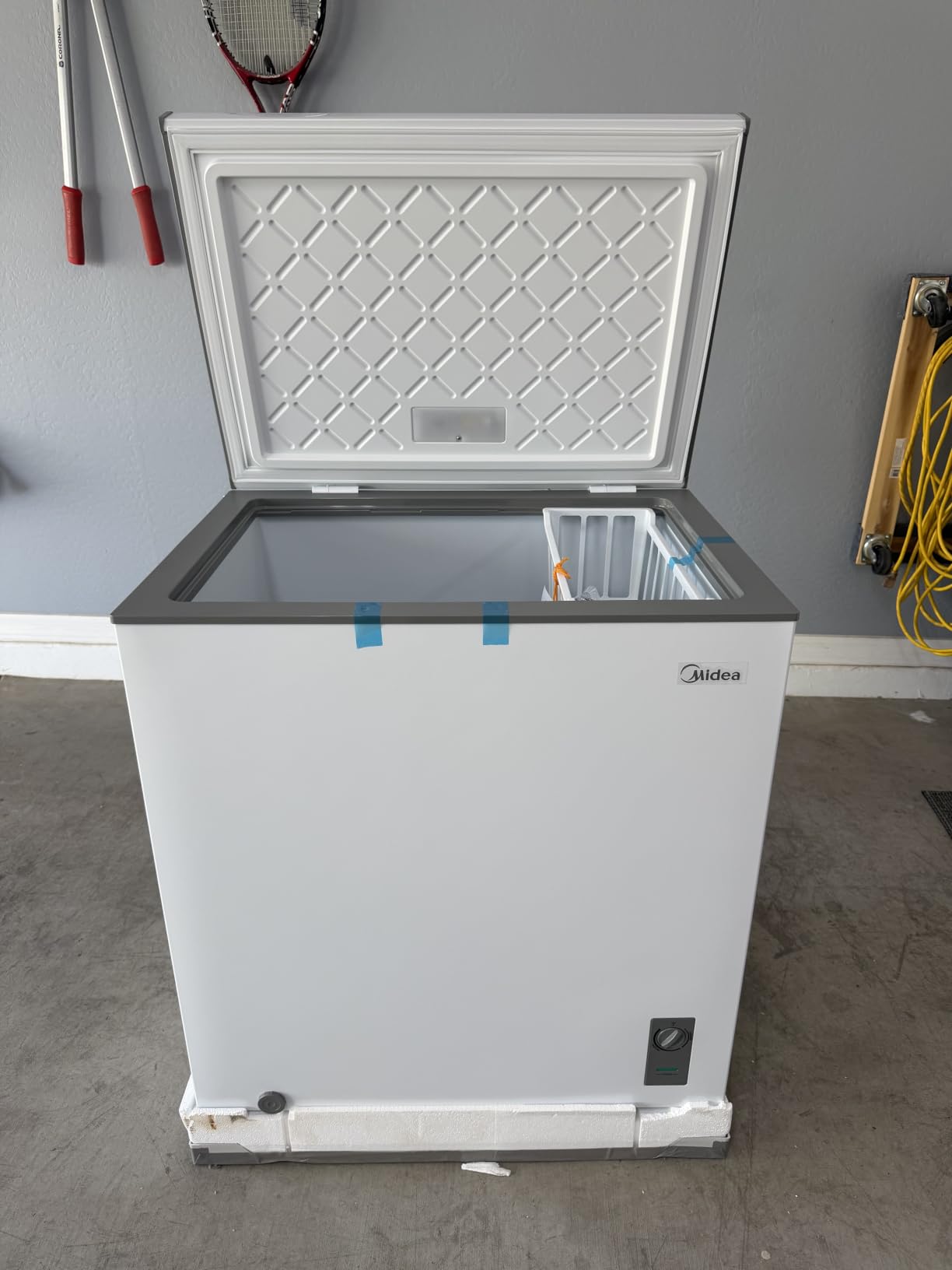
This is the listing with the clearest published garage rating in the entire group, and for a cold-climate buyer that is worth more than any feature. The spec states the cabinet is tested for 0°F to 110°F in freezer mode, and 38°F to 110°F in fridge mode, with the garage-ready designation attached to the model rather than inferred from a category page.
That clarity is the reason this earns a place despite sitting eighth in our ranking for cold climates. The 0°F floor is still a cold-ambient window, not a guarantee against a minus-20°F shed, but it is a documented number you can check against your local winter extreme, and very few listings in any roundup offer one.
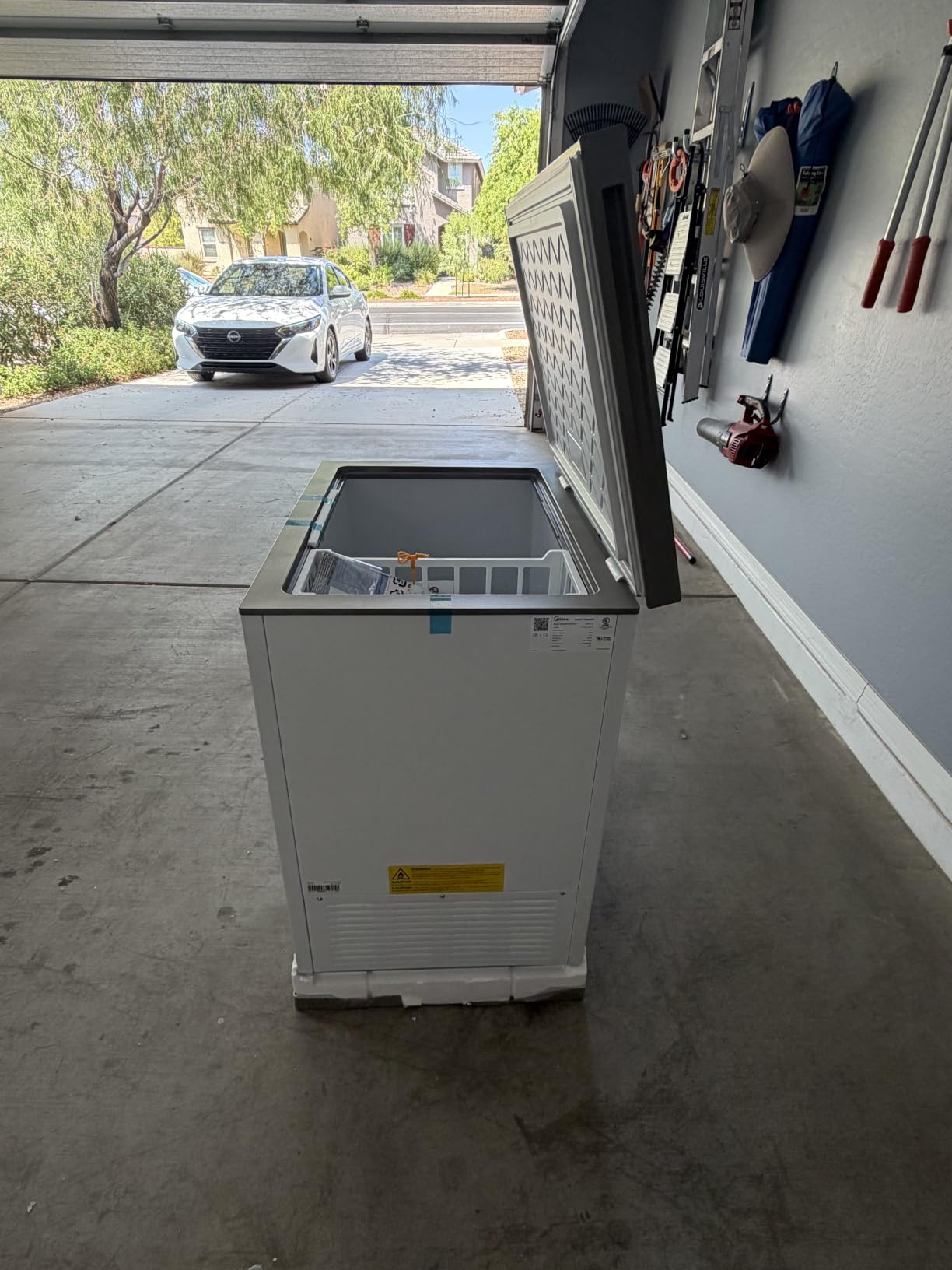
The rest of the appliance is well made. It holds frozen contents for up to 48 hours after a power outage, which is a manufacturer claim rather than a tested guarantee but a reasonable one for a 7 cu ft cabinet with a full load. The interior LED light is a real quality-of-life feature in a garage where you are digging for a bag of peas in February, and the removable plastic basket and adjustable legs make the unit adaptable to a sloping slab.
With 802 reviews, this has the largest review pool among the mid-size convertibles, sitting at 4.3 stars with 73% at five stars. Garage owners in hot climates report dependable deep freeze through summer heat and outages, and the recurring complaints are about the shape of the box rather than its performance: a deep interior where the bottom layer is awkward, and occasional vibration.
Reading the convertible rating correctly
The 38°F to 110°F figure applies to fridge mode, and the 0°F to 110°F figure applies to freezer mode. Those are different operating bands for a reason. A fridge compressor has a much smaller pull-down requirement than a freezer, so its cold lockout sits higher. If you plan to run this cabinet as a refrigerator through the summer and a freezer through the winter, the freezer-mode figure is the one that governs your risk.
Convertible units of this type also carry a known cold-regime behaviour worth knowing: in extreme cold the fridge compartment can over-cool while the freezer compartment lags. A thermometer in each zone during the first cold month is cheap insurance, and it is how you catch a problem before a load of food is affected.
Clearance and the shape of the box
The side vent on the right-hand side needs clearance, which matters in a tight garage where you are already pushing the wall on the other side. Measure the right side before you commit, and leave the space the manufacturer specifies. The deep interior is efficient but reaches badly without a second basket, so add one if you load the bottom layer regularly.
Frost builds up over time because there is no auto defrost, and the tight lid seal can occasionally need extra force to open. In an unheated garage, schedule a thaw-and-wipe every few months and keep the gasket clean. It is the most clearly rated cold-climate unit here, and for a buyer in a hard-winter region who wants documentation rather than inference, that is a strong argument for putting it near the top of a shortlist.
8. SMETA 14 cu ft R600a Chest Freezer
SMETA Chest Freezer 14 Cu. Ft, Deep Freezer Chest with Removable Basket, 4 Wheels, Adjustable Thermostat, Energy Efficient, Low Noise, Fast Freezing Ideal for Garage, Kitchen, Office, Basement
14 cu ft chest with R600a compressor
Thermostat 10.4 F to -4 F
43 dB or lower
Four castor wheels
Pros
- Four castor wheels move a 14 cu ft cabinet easily
- Quiet at 43 dB or lower
- 3D circulating airflow limits freezer burn
- Three removable baskets
- High-efficiency R600a compressor
Cons
- Thermostat floor of -4 F is shallower than the digital unit
- Only 131 reviews in the pool
- One-star share of 9 percent
The castor wheels are the feature that changes how a garage freezer gets used. A 14 cu ft cabinet on wheels can be rolled out to sweep behind it, rolled to follow a cold pocket in the slab, or repositioned when you find the circuit is on an overloaded shared outlet. That flexibility is worth more in a working garage than it would be in a kitchen.
The 3D circulating cooling technology is aimed at a real problem for anyone storing food long-term: uneven cold distribution causes freezer burn on the contents nearest the walls. Owners single that out as the reason their food holds quality, and it is a sensible design choice for bulk storage where packages sit for months.
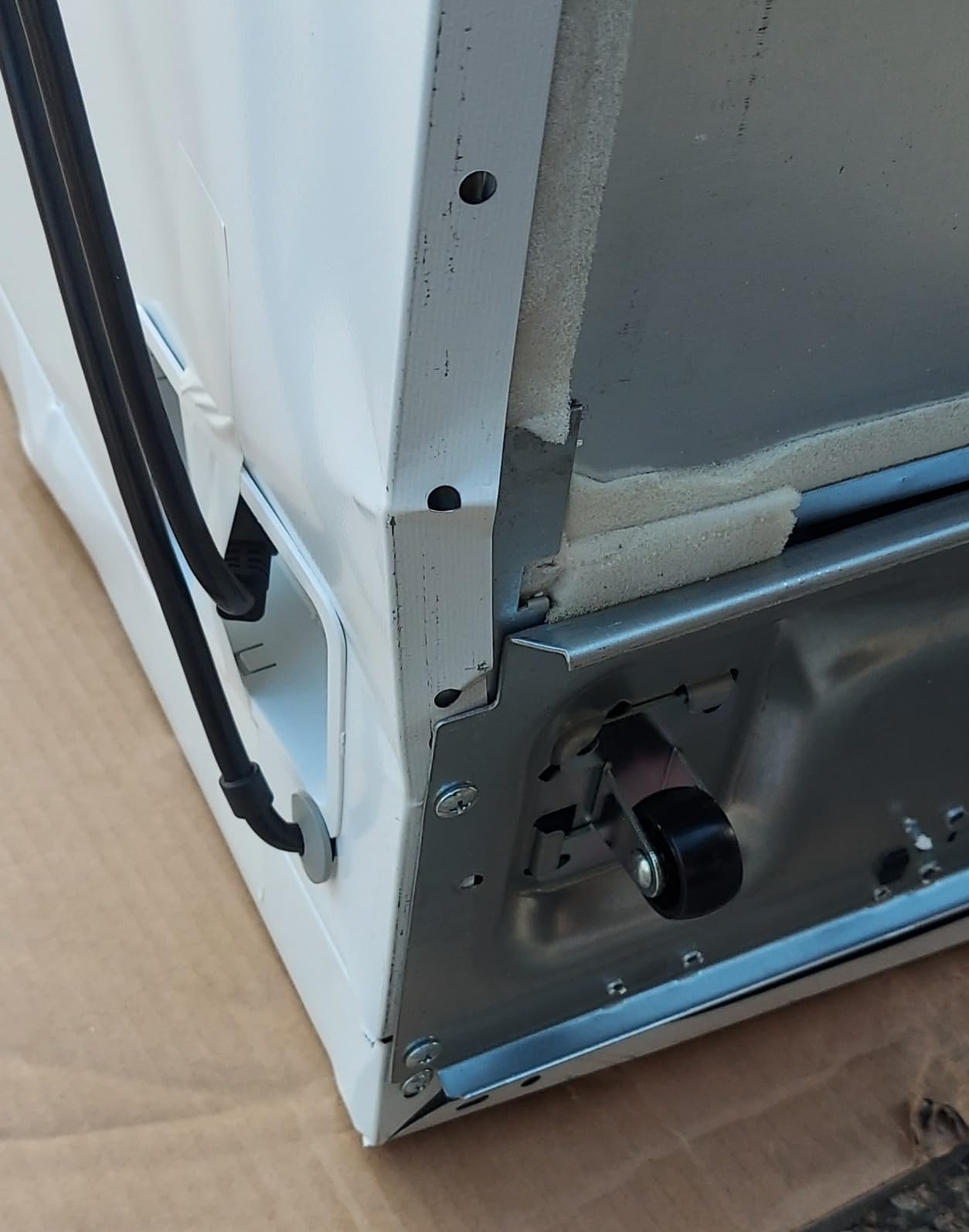
Noise is quoted at 43 dB or less, which makes this a reasonable choice next to a workshop bench where you need to hear a radio. The adjustable thermostat runs from 10.4°F down to -4°F, and the top-hinged lid opens from 45 to 90 degrees hands-free, so you can sort contents without holding the lid with one hand.
Ratings are 4.3 across 131 reviews with 74% at five stars. That is the thinnest review pool in the roundup, and it matters: with fewer long-term owners, there is less documented evidence about how the cabinet ages through several winters. The features are well matched to garage use, but the durability record is shorter than the other picks here.
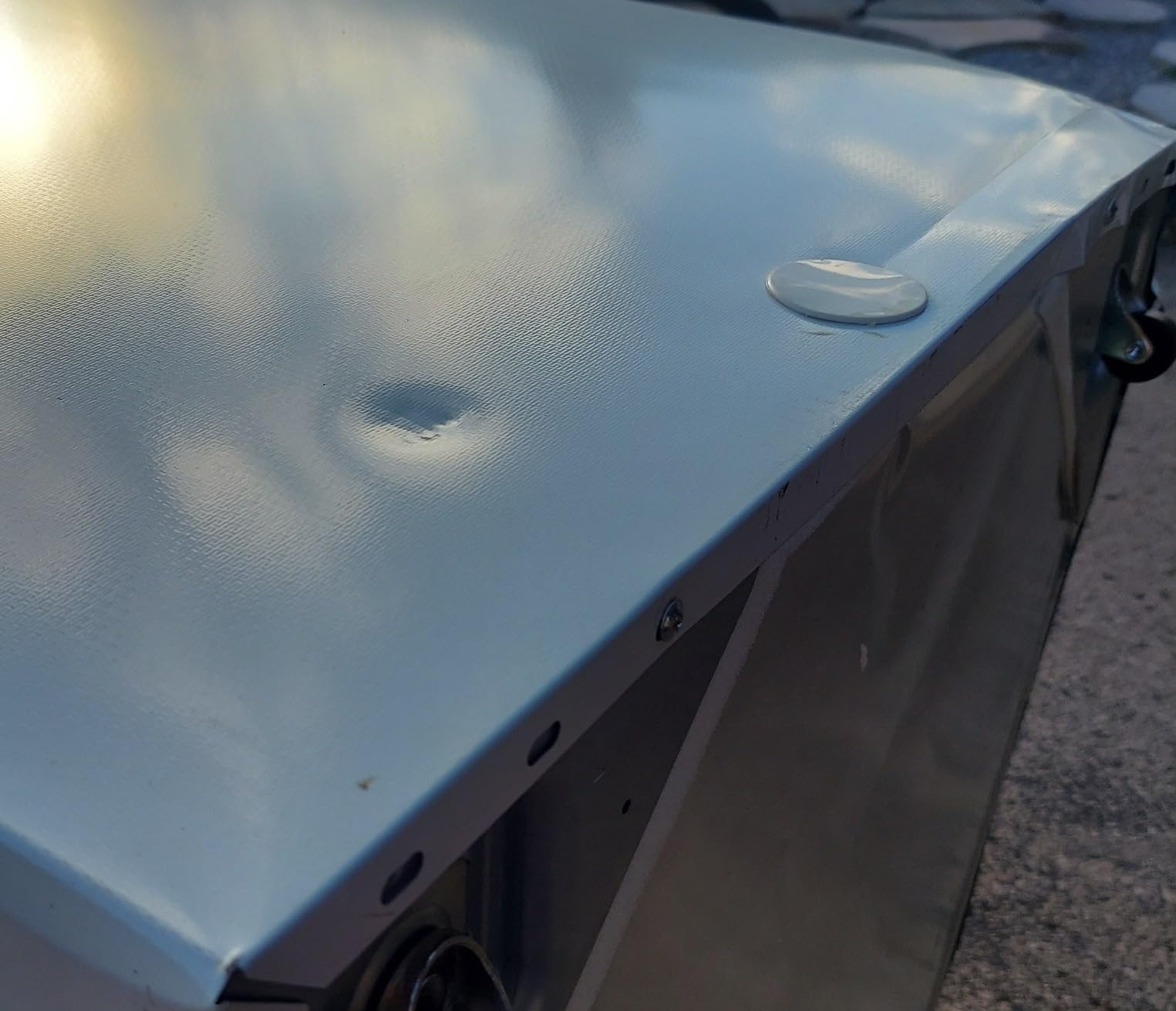
Cold-climate suitability in this cabinet
The thermostat floor of -4°F tells you this is a standard deep-freeze cabinet, not an ultra-low one. It will hold food safely at 0°F, but it will not be commanded below that. For a garage in a region that sits near freezing for stretches, that is entirely adequate, and for a shed exposed to true sub-zero lows, it is not the cabinet you want.
There is no published minimum ambient temperature here either, and the listing does not carry a Garage Ready designation in the model name. Treat it as a capable standard chest that is well suited to garage placement, and verify the cold rating directly if your winters are severe. The R600a compressor is efficient, which helps in both directions, since efficient cooling is what you are paying for in an unconditioned space.
Physical planning for a 14 cu ft chest
At 26 inches deep, 45 wide and 34 tall, and 62 pounds, it is smaller and lighter than its capacity suggests, and the castors handle the rest. Leave the manufacturer clearance on the back and sides, and remember that a chest needs room above the lid to open it. In a bay shared with a vehicle, plan the door swing before delivery.
Three removable baskets organise a load that most households buy in bulk, and the wide thermostat range gives finer control at the top end than a simple five-position dial. With the smallest review count in this group, I would want to see the warranty terms and a serviceable parts path in your region before committing, and I would run it with a thermometer through the first winter.
9. Arctic Chef 7 cu ft Convertible Garage Ready Chest Freezer
Arctic Chef, 7 Cu. Ft. Convertible Chest Freezer, Garage Ready Freezer or Refrigerator, Manual Defrost Chest Freezer with External Temperature Control, Removable Basket, Defrost Drain, Power Indicator
7 cu ft convertible garage-ready chest
Front external thermostat controls
Holds about 135 lb of frozen food
Power-on indicator, wire basket
Pros
- Garage-ready designation with convertible modes
- Light enough at 77 lb for one person to carry
- Quiet once settled after transport
- Power indicator and front controls
- Good frozen load capacity for the size
Cons
- Transit damage reported on corners and lid seal
- No interior light
- Compressor noise for about 30 seconds at start-up
- Manual defrost required
At 7.0 cu ft with a stated frozen load of roughly 135 pounds, this is a well-proportioned garage freezer, and the convertible function means the same cabinet can hold produce and drinks through the summer and frozen goods through the winter. The front external thermostat and the power-on indicator are both reachable without opening the lid, which is exactly what you want in a cold room.
Weight is a genuine advantage here. At 77 pounds it is light enough for one person to carry up a set of stairs, which is the difference between installing a basement freezer and needing a second person on a Saturday. It includes a wire storage basket and an easy-access defrost drain.
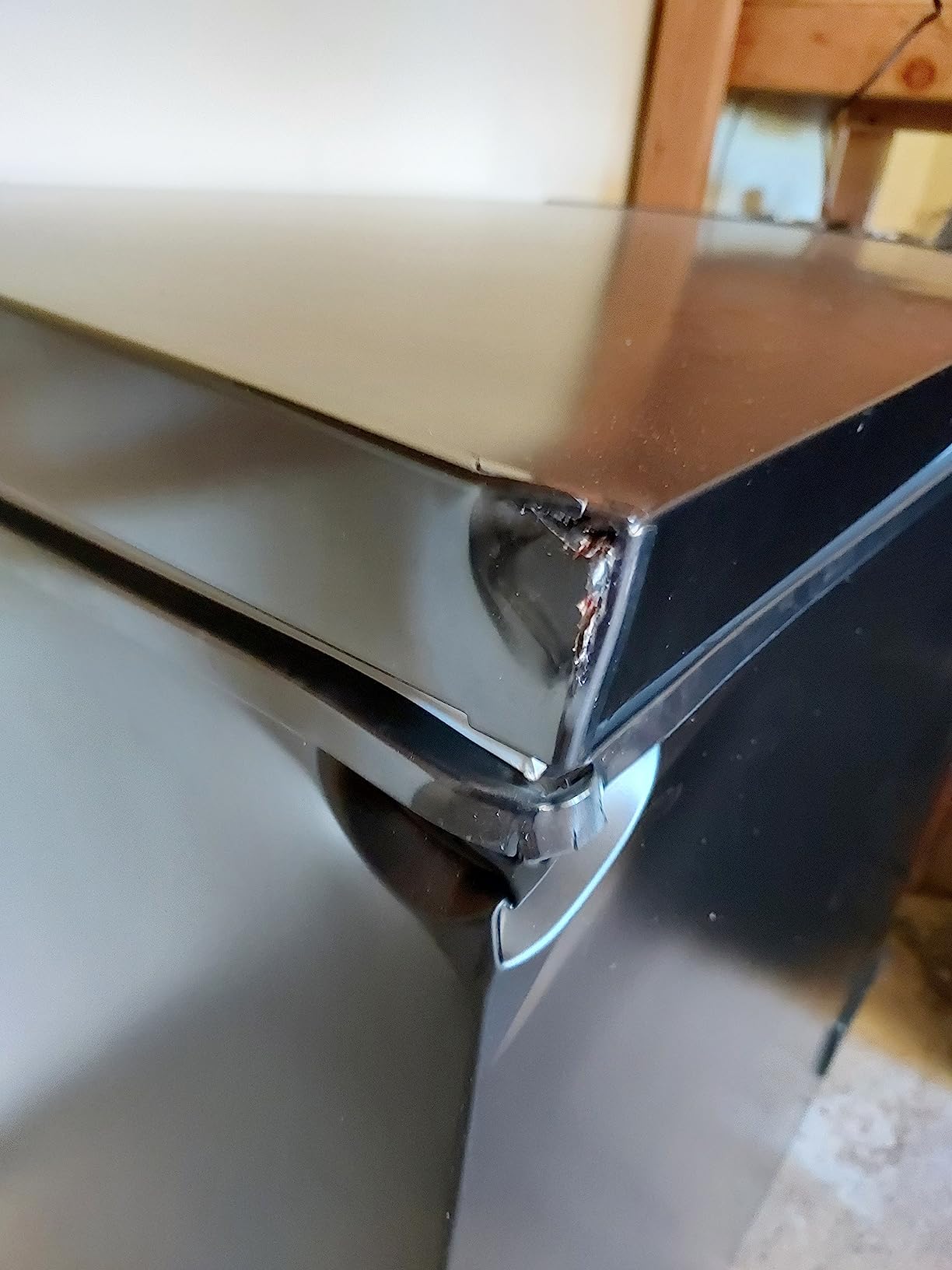
Ratings sit at 4.2 across 581 reviews with 70% at five stars and 9% at one star. Value is the dominant theme in the feedback, along with reports that it keeps food very cold and holds more than its size suggests. Several noise complaints turn out to trace back to plugging the cabinet in too soon after delivery rather than to a defect, which is the same transport-settling issue we flagged earlier.
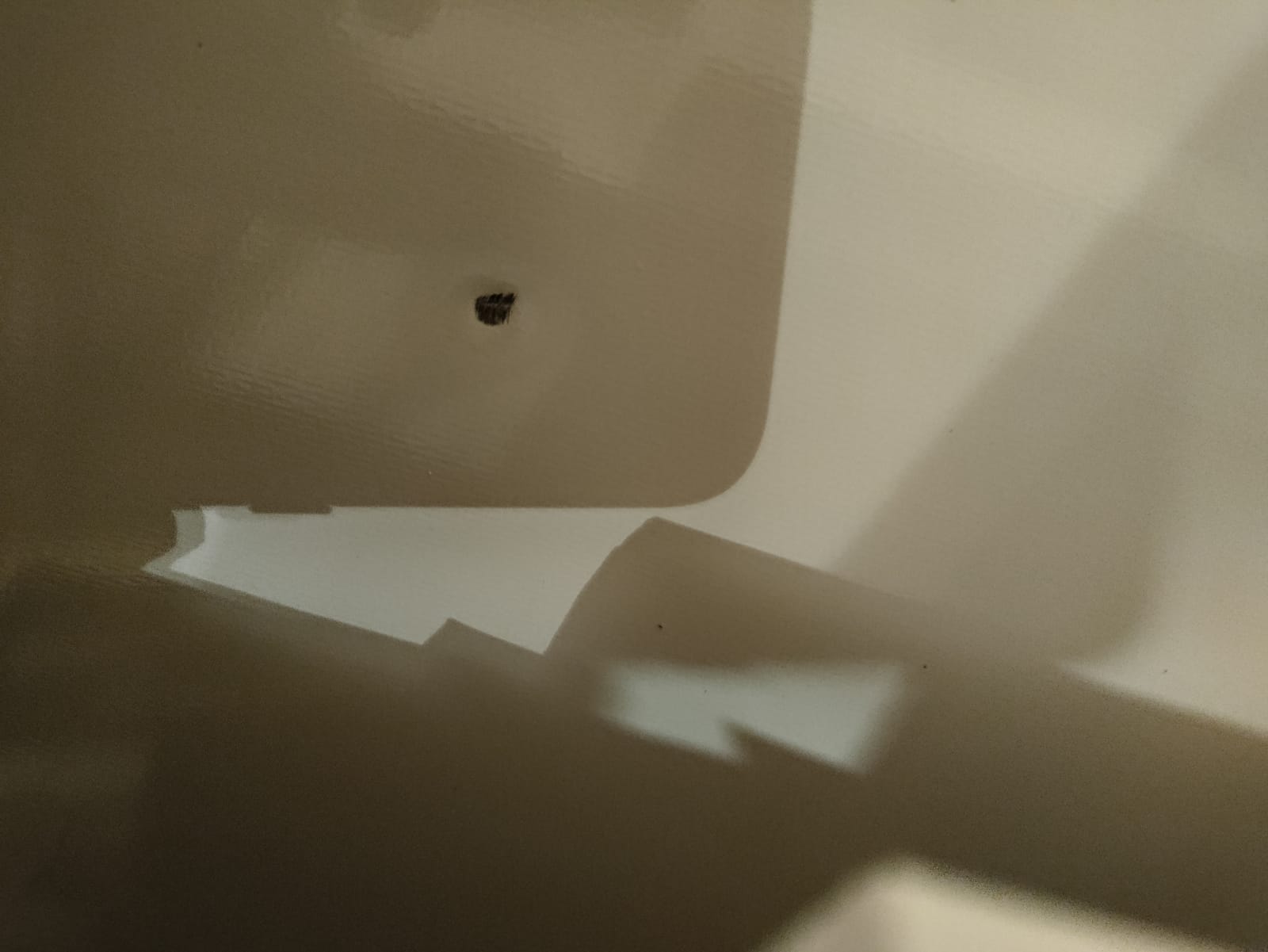
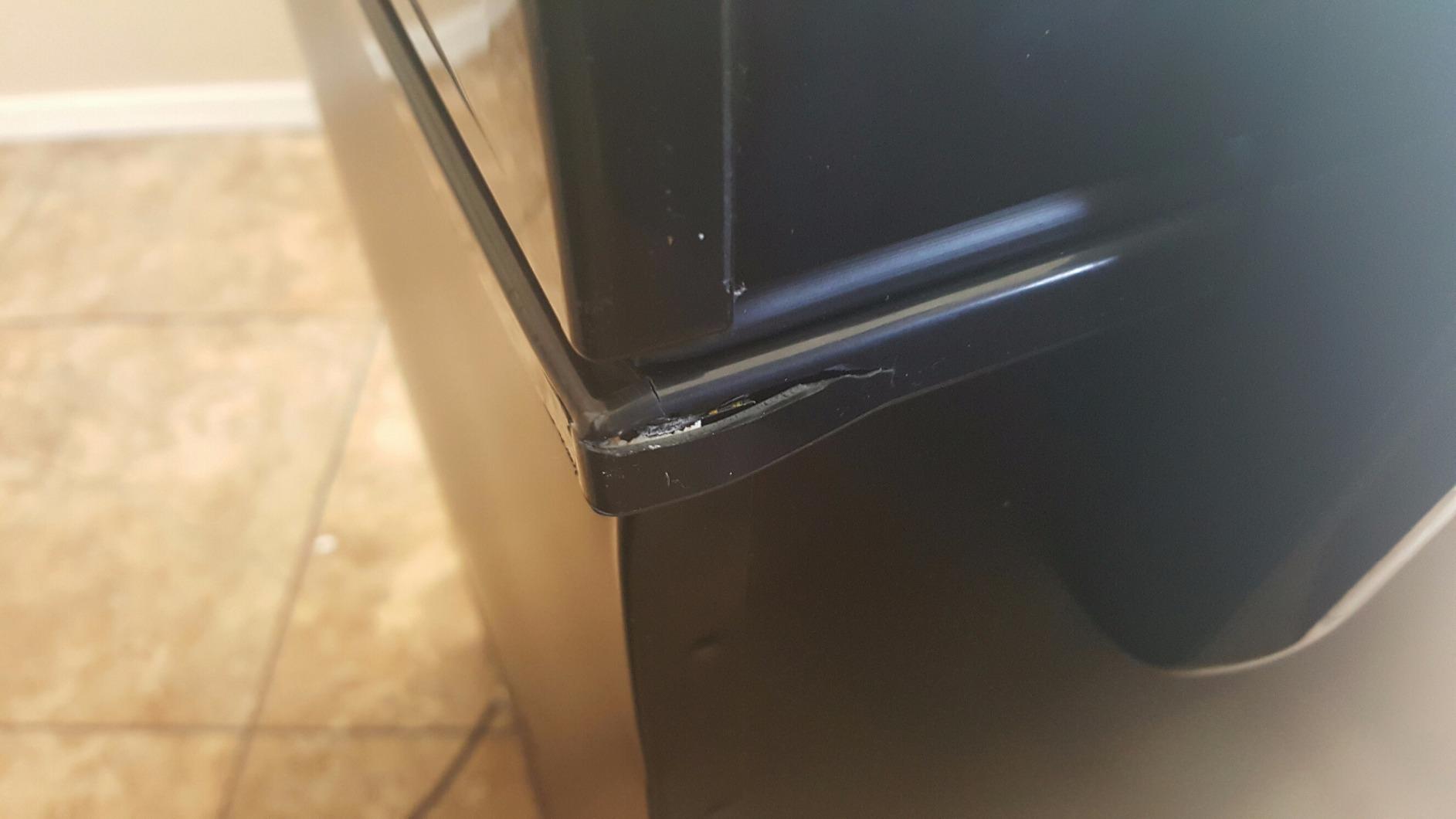
The recurring negative is transit damage. Owners report dents and cracked corners on arrival, and a cracked corner is not cosmetic because it can affect the lid seal that keeps the cabinet cold. Inspect the box the moment it arrives, photograph any damage, and check the gasket before you load it.
Cold-climate considerations for a convertible chest
The listing describes this as a convertible garage-ready chest, which is a meaningful designation, but it publishes no numeric minimum ambient temperature. The compressor is rated at 300 watts on 110 volts, and the 15 amp rating means it wants a dedicated outlet rather than a shared one with a freezer already on the circuit.
Convertible chests of this type have a documented cold-weather behaviour: in extreme cold the fridge compartment can drift toward freezer temperature while the freezer compartment lags behind. If you run it as a refrigerator for part of the year, check both compartments with a thermometer during the first cold month rather than assuming the mode change behaved.
What to weigh before buying
There is no interior light, and manual defrost means scheduled ice removal in a cold room, both of which are real recurring inconveniences in a garage setting. The one-year warranty is standard for the category, and the 300-watt draw is the highest published figure among the compact chests here, which will show up over a full year of continuous running.
At 22.83 by 38.58 by 35.04 inches, the footprint suits most single and double bays without heroics. For a buyer on a budget who wants the garage-ready designation in the name, this cabinet delivers on the basics with a documented 135-pound load, and it is the one I would point to when someone asks for a small first garage freezer rather than a bulk-storage machine.
10. KoolMore 20 cu ft Dual-Lid Chest Freezer
KoolMore SCF-20C Chest Freezer, 20 cu. Ft, White
20 cu ft dual-lid chest
1/5 hp compressor holds 0 to -8 F
R600a refrigerant
Lockable keyed lids, 165.3 lb
Pros
- Largest capacity in the group at 20 cu ft with two lids
- Lockable keyed lids protect a shared-garage load
- Caster wheels move a 165 lb cabinet
- ETL certified to NSF 7 sanitation standards
- 1/5 hp compressor with R600a
Cons
- Weakest rating here at 4.0 with a 19 percent one-star share
- 76-inch width needs a full wall
- Heavy at 165.3 lb
- Dual lids mean more seals to maintain
This is the capacity outlier in the group, and the only one built for a scenario the others are not: a shared garage where more than one person needs access. Two independently opening lids mean you can pull a basket of frozen goods from one end without hoisting the whole load, and the heavy-duty keyed lock on each lid is the detail that makes it practical in a space other people walk through.
The mechanicals are commercial-leaning. A 1/5 hp compressor using R600a refrigerant holds cabinet temperatures between 0°F and -8°F, the cabinet is ETL certified to NSF 7 sanitation standards, and smooth-rolling casters let a 165.3-pound cabinet be moved when the garage layout changes.
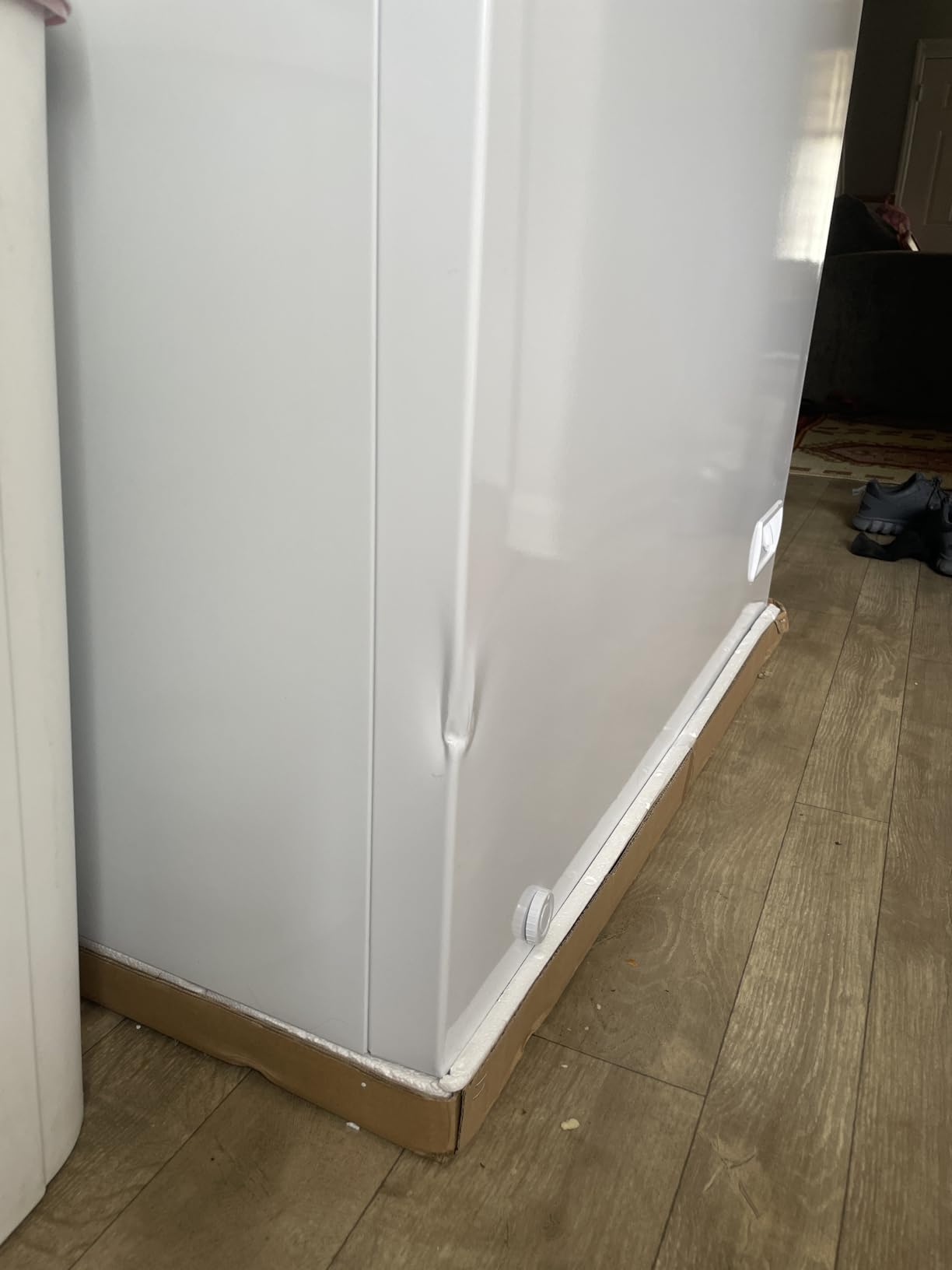
The rating tells the honest part of the story. At 4.0 stars across 144 reviews, with 65% at five stars and a 19% one-star share, this is the weakest satisfaction distribution in the roundup, and we are not going to talk around it. The capacity, the locks, and the sanitation certification are what buyers are paying for; a substantial share of owners are not thrilled with the result.
It ranks tenth here for that reason and for its physical demands, not for a cold-climate fault. The listed cabinet range down to -8°F is a normal deep-freeze figure, and the listing does not publish a minimum ambient temperature. In a mild-winter garage that is acceptable; in a severe one, confirm the rating first.
Who this cabinet is actually for
Think bulk operations, not household overflow. A hunting camp, a small food operation, or a garage shared by two households that each need locked access to their own stock are the situations the two-lid design serves. The NSF 7 sanitation certification is meaningful for anyone storing food commercially, and the keyed lids are the reason it earns its place on a list otherwise made up of domestic cabinets.
The 76-inch width is the constraint that will decide it for most people. That is a full wall of garage, and you still need manufacturer clearance behind and at the sides, plus room to stand at the front and open a lid. If your bay is shared with a vehicle, this does not fit and no amount of rearranging changes that.
Long-term ownership questions
Two seals means two gaskets to keep clean and two hinges to inspect, and gaskets are the wear item that decides whether a chest still holds temperature after a few seasons. Add a quarterly gasket check to your maintenance routine, and be honest with yourself that a 19% one-star share across 144 reviews is a thin evidence base either way.
At 165.3 pounds the casters are not a luxury, they are the only practical way to move it. Plan the final position with the electrical outlet in reach, leave the clearance the manufacturer requires, and run an independent thermometer through the first winter. If you need this much capacity and you need shared access, nothing else in the group does the job; if you do not, a 14 to 17 cu ft chest is a more comfortable fit for a normal garage.
How to Choose a Garage Ready Freezer for Winter
Start with the number no competitor publishes: the minimum ambient temperature at which the compressor will keep cycling. The industry lockout threshold sits near 50°F, and garage-ready units add a heater pad to work below it, down toward the 0°F end of the marketing range. Ask the manufacturer for the figure in writing before you buy for a region with real winter lows. If a listing does not carry Garage Ready in the model name, treat it as a standard unit regardless of the category it is sold in.
Second, check your garage against that number rather than your yard. The concrete slab and the attached walls buffer outdoor lows, and the air inside typically lags the outdoor minimum by hours. A cabinet in an attached, insulated two-car garage will almost never see what a thermometer outdoors reports. A shed, a carport, or a garage with thin walls over a bare slab will, and it should be sized against the worse of those two numbers.
Third, decide between manual defrost and frost-free on how the cabinet will be used, not on convenience alone. A manual-defrost chest draws no power for defrosting between cycles, which makes it the efficient and durable choice for a freezer that gets loaded once and left alone through the season. A frost-free upright runs a defrost heater on a timer, which is easier to live with day to day and harder on the components when the surrounding air is already freezing. In a cold garage, we lean manual defrost for seasonal bulk storage and frost-free for weekly use in a moderately cold space.
Chest versus upright comes down to the same physics from a different angle. A chest loses cold more slowly because cold air sinks and stays inside a closed box, which is why most serious cold-storage setups in unheated spaces use chests. An upright gives you shelves, a door you can work with one hand, and no bending to dig, at the cost of more heat loss through a taller cabinet and a door seal that opens more often. If your garage is genuinely cold, a chest is the better physics. If you are in a milder region and want weekly convenience, an upright is fine.
On capacity, the number that matters is usable cubic feet against your real load, not the advertised figure. Buyers routinely report that a chest holds more than its rating suggests once the baskets and wall thickness are accounted for, and less when the load is stacked to the lid. A 7 cu ft cabinet is a couple of weeks of frozen food for two people; a 14 to 17 cu ft cabinet covers bulk buying or a harvest; 20 cu ft is a shared or semi-commercial operation. Measure your bay’s external dimensions before you fall for a capacity figure, and leave the airflow clearance the manufacturer specifies behind and beside the cabinet.
For running cost, do the multiplication with your own rate. Take the rated wattage, apply a realistic compressor duty cycle for a full cabinet in a cool room, and multiply by your hours and your utility rate. A low-wattage cabinet such as the 72-watt model in this roundup costs noticeably less per year than a 300-watt one of similar size, and an appliance that never gets a day off rewards efficiency quietly for its whole life. Manual-defrost cabinets also avoid the standing defrost-heater load that a frost-free unit carries.
If you already own a standard chest freezer, the retrofit path is real. Aftermarket garage heater kits add a thermostat-controlled heater pad to the cabinet, which is the same fix the factory uses, and for a mild-winter region they are a reasonable way to bridge a season. Read the warranty terms first, since some manufacturers treat a retrofit as a modification, and follow the kit instructions on clearance and thermostat placement. If your winters are severe, replace the cabinet rather than retrofitting it.
Two things we deliberately did not do. We did not rank any cabinet on the strength of an ambient rating the manufacturer does not publish, and where the data was missing we said so in the product’s own section rather than inferring a number. We also did not recommend off-brand and second-hand cabinets, where the cold-climate spec is often absent entirely and parts support is regional at best. If you are weighing a secondhand unit, the deciding questions are whether the compressor cycles in a cold room and whether a local technician will still open it.
Frequently Asked Questions
How cold can a garage ready freezer handle?
Most garage-ready freezers are rated from 0 F to 110 F ambient, but the practical floor is the compressor lockout point near 50 F. Below that a standard unit stops calling for cold entirely. Garage-ready models add a heater pad to keep the compressor cycling toward the 0 F end of the range, so always verify the specific minimum on the model’s spec sheet.
Can a garage be too cold for a freezer?
Yes. A standard freezer stops cycling when ambient drops to roughly 50 F and thaws silently with no alarm. Even a garage-ready unit can be overwhelmed in an uninsulated shed that matches outdoor lows, so compare your garage’s winter minimum against the rated minimum ambient temperature before you buy.
Which garage-ready freezer is the most reliable?
Among the ten units we reviewed, the Koolatron 3.5 cu ft chest stands out for consistency, with a 4.7 rating across 2415 reviews, a Garage Ready designation in the model name, and a one-year limited warranty. Reliability is best judged by review volume and documented ownership history rather than by feature count, so look for a unit with hundreds or thousands of long-term owner reports.
Are all chest freezers garage ready?
No. Check whether the words Garage Ready appear in the model name or on the spec sheet, because the same manufacturer sells near-identical chests with and without the rating. A unit listed only on a retailer’s garage freezer category page is not necessarily rated for an unconditioned space.
What freezer brand to stay away from?
We do not recommend on brand alone. Instead, avoid any cabinet that publishes no minimum ambient temperature, that is sold without a Garage Ready designation in the model name, or that has no serviceable parts path in your region. Those gaps, not the badge on the door, are what cause cold-climate failures and expensive service calls.
Is it safe to keep my freezer in the garage in cold weather?
It is safe only if the unit is rated for your garage’s winter minimum or has a functioning garage heater kit. The risk is silent thawing, followed by frost heave when a thawed cabinet restarts in freezing air and the liner contracts hard enough to deform or crack. An alarm thermometer set to your target temperature catches the problem within hours.
Is it okay to put a freezer in an unheated garage?
Yes, with a garage-rated cabinet and adequate clearance on the back and sides. A concrete slab and attached walls buffer outdoor lows so the garage rarely matches the yard temperature, but a shed or a bay with thin walls over a bare slab loses that protection quickly and should be sized against the lower number.
Does a garage ready freezer have to go in the garage?
No. A garage-ready unit runs perfectly well indoors, since its heavier insulation and high-duty compressor handle conditioned space without difficulty. The rating is a capability rather than a placement requirement, so the same cabinet works in a basement, a mudroom, or a conditioned shop if that is where you need it.
Final Verdict
Our pick for the best garage ready freezers for cold climates is the Koolatron 3.5 cu ft chest: the highest rating in the group, the deepest review history, a Garage Ready designation in the model name, and an external dial that runs down to -11.2°F. For a mid-size all-rounder, the Frigidaire 7 cu ft is the balance pick. For a buyer who wants a documented cold number rather than an implied one, the Midea 7 cu ft is the only listing here that publishes an explicit 0°F to 110°F freezer-mode garage rating.
The decision rule is short. Confirm the minimum ambient temperature against your garage’s actual winter low, confirm the words Garage Ready appear in the model name, and leave the airflow clearance the manufacturer requires. Do that, and the 2026 roundup above gives you a cabinet for any size of cold-storage job from a week of groceries to a shared bulk operation.