
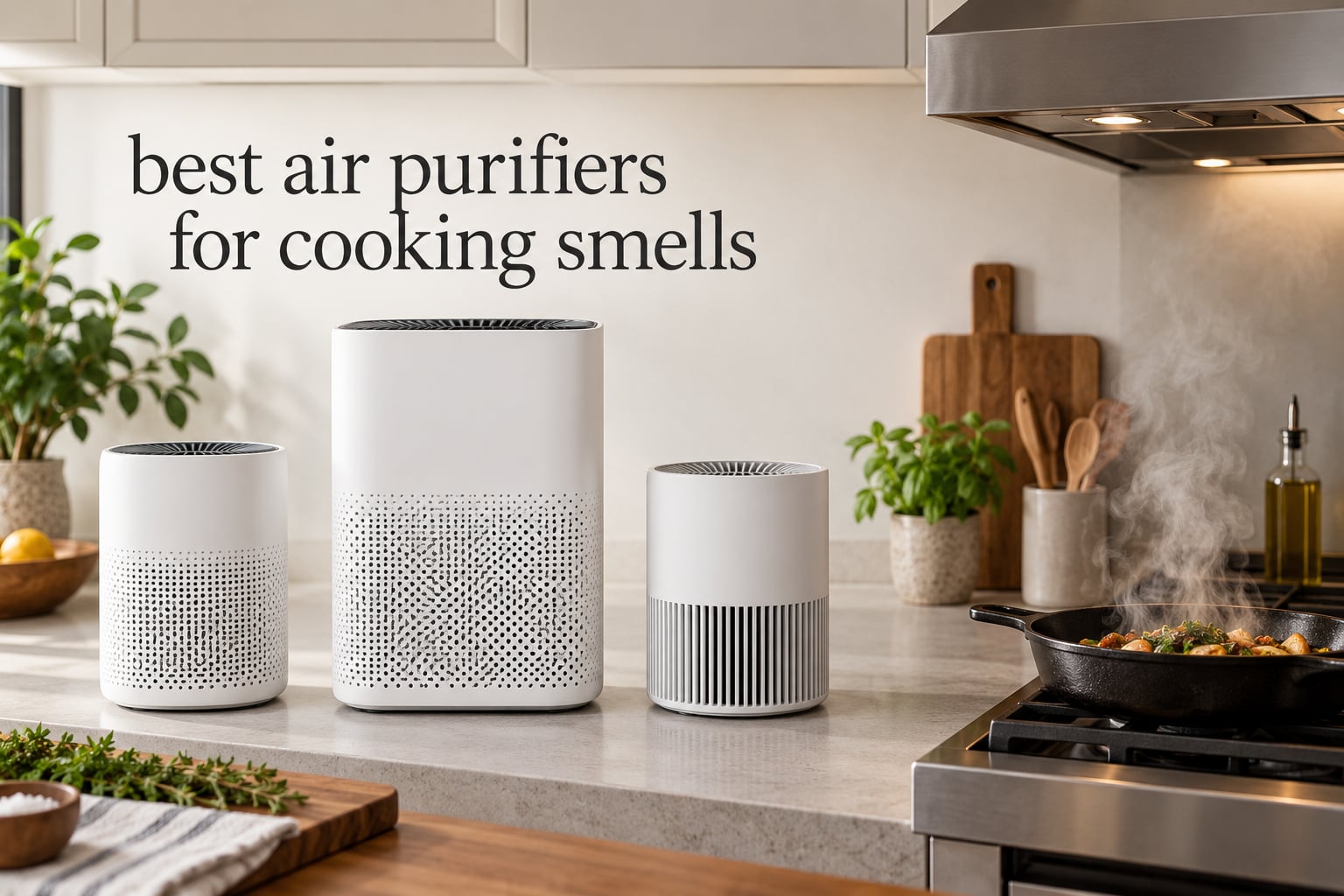
Yes, but only if it has a serious activated carbon stage. A HEPA filter traps grease and smoke particles, and it does absolutely nothing for the smell itself. Odor is a gas-phase problem, and the only part of a purifier that solves gas is carbon. If a unit has a token carbon sheet and a big particle filter, it will clear the haze and leave the smell sitting in the room.
That answer matters because the loudest objection on the r/AirPurifiers thread for this exact question is blunt: air purifiers will not help much with cooking smells, and you need a really big one with lots of carbon. That is mostly right, and this guide is built on the same premise. Every pick below earns its place on carbon quantity and honest specification, not on brand reputation.
We compared the eight air purifiers most often recommended for kitchens and sorted them by what they can realistically do about cooking odors, from a 140 sq ft bedroom unit to a 3235 sq ft open-plan machine. No first-party lab testing is claimed here. Everything comes from published AHAM-verified figures, manufacturer specifications, and what owners report back after living with the units. Where a number is marketing rather than certified, we say so.
If your main problem is a neighbor’s cooking or the unit below you, start with our guide to air purifiers for apartments, because placement and noise matter more than brand there. If you are covering a large open space, see air purifiers for large rooms for the CADR math in more detail.
Table of Contents
Do Air Purifiers Actually Get Rid of Cooking Smells?
The honest answer is yes, with two conditions: enough activated carbon, and enough clean air delivery rate to actually sweep the kitchen volume. Without those, no.
Cooking releases two very different kinds of pollution. The visible smoke and grease is particulate matter, and a HEPA filter or an electrostatic filter handles that very well. The smell is made of volatile organic compounds and aldehydes released when oils and sugars are heated past their smoke point, and those are molecules too small to be filtered out of the air stream by a fiber filter.
Activated carbon works by adsorption. Molecules lodge on the surface of the carbon’s pore structure and stay there, which is why a loaded carbon filter eventually gives up. Saturation is the single biggest reason a purifier that worked in month one stops working in month six, and grease kitchens reach that point faster than bedrooms because grease coats the carbon’s surface and blocks the pores.
So a purifier is the odor cleanup step, not the odor prevention step. A range hood running on high, a lid on the pan, and a window open do more for a cooking smell than any machine on the market. We will say that again in the buying guide, because the alternative is selling you a fan.
Top 3 Picks for Cooking Smells in 2026

Coway Mighty AP-1512HH
- 1748 sq ft in 60 minutes
- 4-stage with deodorization filter
- 99.97% at 0.3 microns
- 3-year warranty

Winix 5520
- 1882 sq ft coverage
- True HEPA plus odor carbon filter
- 23.5 dB on low
- AHAM verified

Levoit Core 200S
- 140 sq ft at 4.8 air changes per hour
- Activated carbon layer
- 27 dB on low
- App and voice control
Quick Comparison of the 8 Best Air Purifiers for Cooking Smells
Every unit below was chosen for what it can do about cooking odors, not for its spec sheet in general. Carbon type and CADR are the two columns that matter most.
| Product | Specifications | Action |
|---|---|---|
| Coway Mighty AP-1512HH |
|
Check Latest Price |
| Winix 5520 |
|
Check Latest Price |
| Levoit Core 200S |
|
Check Latest Price |
 Levoit Vital 200S-P Levoit Vital 200S-P |
|
Check Latest Price |
 PuroAir 240 PuroAir 240 |
|
Check Latest Price |
 MOOKA KJ190H MOOKA KJ190H |
|
Check Latest Price |
 Blueair Blue Pure 211i Max Blueair Blue Pure 211i Max |
|
Check Latest Price |
 Shark NeverChange HP152 Shark NeverChange HP152 |
|
Check Latest Price |
Coway Mighty AP-1512HH is the default answer. Four filtration stages including a dedicated deodorization filter, a stated 1748 sq ft clean in one hour, and 29k owners who have left reviews. The deodorization stage is the reason it beats similarly priced machines.
Winix 5520 is the value pick and the most cooking-focused unit here. An advanced odor control carbon filter, AHAM verification, and one of the lowest published noise figures in the group. Owners say the carbon clears cooking smells within minutes on high.
Levoit Core 200S is the small-kitchen answer, and it is also the single most recommended name in forum threads for this question. Rated for 140 sq ft, so it is a bedroom and galley-kitchen unit, not an open-plan one.
Levoit Vital 200S-P has the highest average rating in this group at 4.7 and the only fully published CADR triple. It is built for allergies and large rooms, and its documentation is thinner on a dedicated carbon stage.
PuroAir 240 is a slim tower that owners use specifically for pet and musty household odor. A good fit for apartments where floor or counter space is tight, with a filter interval that runs short.
MOOKA KJ190H is the only unit here with a live PM2.5 readout, which makes it the best choice if you want to watch a cooking smoke spike happen and see it pulled down.
Blueair Blue Pure 211i Max is the biggest machine and the right pick for an open-concept kitchen. AHAM certified at 435 cfm smoke, and owners report the sensors ramp up within a minute of steam appearing.
Shark NeverChange HP152 wins on ownership economics rather than power. Its long-life filter design and low 26-watt draw reduce running costs, though the odor cartridge is a separate consumable.
1. Coway Mighty AP-1512HH: Best Overall for Cooking Odors
COWAY Air Purifier for Home Up to 1,748ft², HEPA Filter for Smoke, Allergies, Pet Dander, Odor, Air Quality Monitor, Auto&Eco Mode, Timer, Filter Indicator, 3yr Warranty, Mighty AP-1512HH(W), White
Coverage to 1748 sq ft in 60 min
4-stage with deodorization filter
99.97% at 0.3 microns
3-year warranty
Pros
- Cleans up to 1748 sq ft in one hour
- Four-stage filtration with a dedicated deodorization stage
- Auto mode driven by a real air quality sensor
- Filter alerts plus a washable pre-filter
- Dimmable LED for bedrooms
- Three-year warranty
Cons
- Bipolar ionization stage is not for people avoiding ionizers
- Replacement filters add up over multi-year ownership
- Boxy design next to slimmer units
- No app or voice control
The Coway Mighty AP-1512HH is the best air purifier for cooking smells in an ordinary home because it is the rare unit that pairs a real particle stage with a named deodorization stage and enough CADR to matter. It has been on sale since 2015 and has accumulated 29k reviews, so the long-run reliability record is unusually well documented.
What sets it apart for kitchens is the stage list: washable pre-filter, deodorization filter, bipolar device, HEPA filter. The deodorization filter is the carbon-bearing element, and Coway rates the unit at 99.97 percent removal of 0.3 micron particles across 1748 sq ft in 60 minutes. That is headroom enough for a normal kitchen and most open plans.
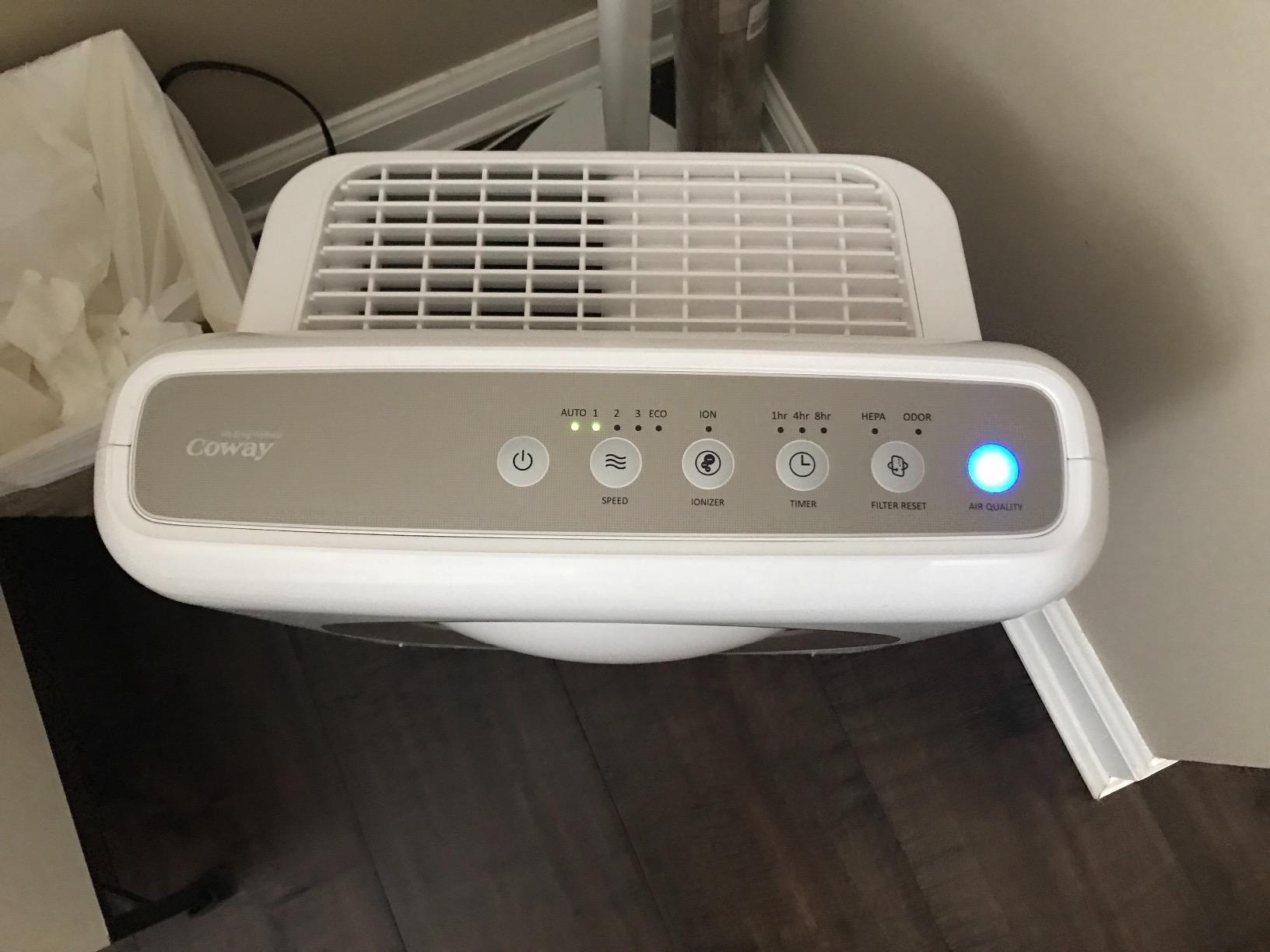
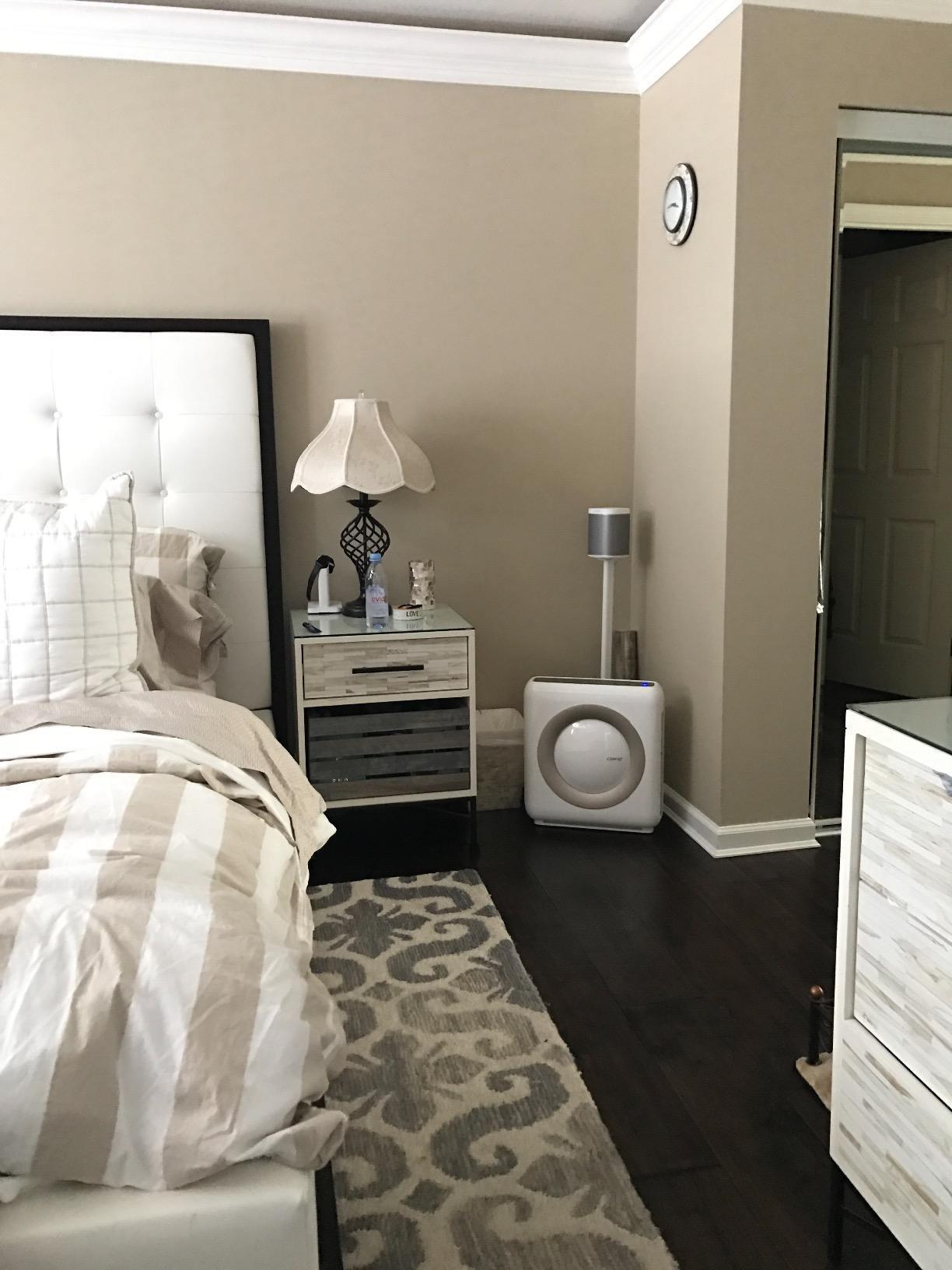
Owners consistently report strong odor and smoke removal, and the auto mode adjusting fan speed without being asked. The LED indicator dims to off for sleeping, and filter alerts plus the washable pre-filter take most of the maintenance guesswork out of ownership. The 3-year warranty is among the longest on this list.
Two things work against it. The bipolar ionization stage puts off a tiny amount of ozone as a byproduct, which matters if anyone in the house is sensitive to it. And there is no app, so scheduling means pressing a button on the unit itself, which is a real annoyance in an open kitchen where you are not walking past it.
What you give up by choosing the Coway
You lose the smart controls that forum users actually reach for. In threads about cooking purifiers, the most-repeated recommendation is a Levoit with app control precisely because you can change the mode without touching a unit with greasy hands. The Coway has no equivalent, and its button panel is on the top of the box.
You also accept a fairly utilitarian footprint at 9.6 by 16.8 by 18.3 inches and 12.5 pounds. It will not blend into a kitchen the way the fabric-sided Blueair does. Filter cost is the third consideration, and owners rank replacement filters among the recurring complaints, so budget for two sets a year in a grease-heavy kitchen.
Where it fits best in a real home
For a closed kitchen or a medium open plan where the cooking area and living area share air, it is the most complete all-rounder here. Set it in auto mode, leave it running on high during a fry, and let the deodorization stage do the work. The dimmable indicator means it stays usable at night without lighting up the room.
If you cook rarely and your real problem is one neighbor’s Saturday wok habit, this is still the right purchase, but place it in the room where you sit rather than in the kitchen. Odor travels, and a unit in the living space pulls the whole apartment volume rather than just the cooking zone. See the apartment guide for placement detail.
2. Winix 5520: Best Value for Heavy Cooking
WINIX 5520 Air Purifier for Home Large Room Up to 1882 Ft² in 1 Hr With Air Quality Monitor, True HEPA, High Deodorization Carbon Filter and Auto Mode, Captures Pet Allergies, Smoke, Dust.
Coverage to 1882 sq ft in 1 hour
AHAM verified at 392 sq ft
True HEPA plus odor carbon filter
23.5 dB on lowest speed
Pros
- Carbon filter clears cooking smells quickly
- 1882 sq ft claimed coverage at a mid-range budget
- Auto mode reacts to cooking odor spikes
- Quiet at 23.5 dB on low and sleep
- Smart app with scheduling and filter tracking
- AHAM verified and UL certified
Cons
- Smart app can lag or drop out
- PlasmaWave ionizer divides opinion
- Turbo mode is noticeably louder
- 120V power only
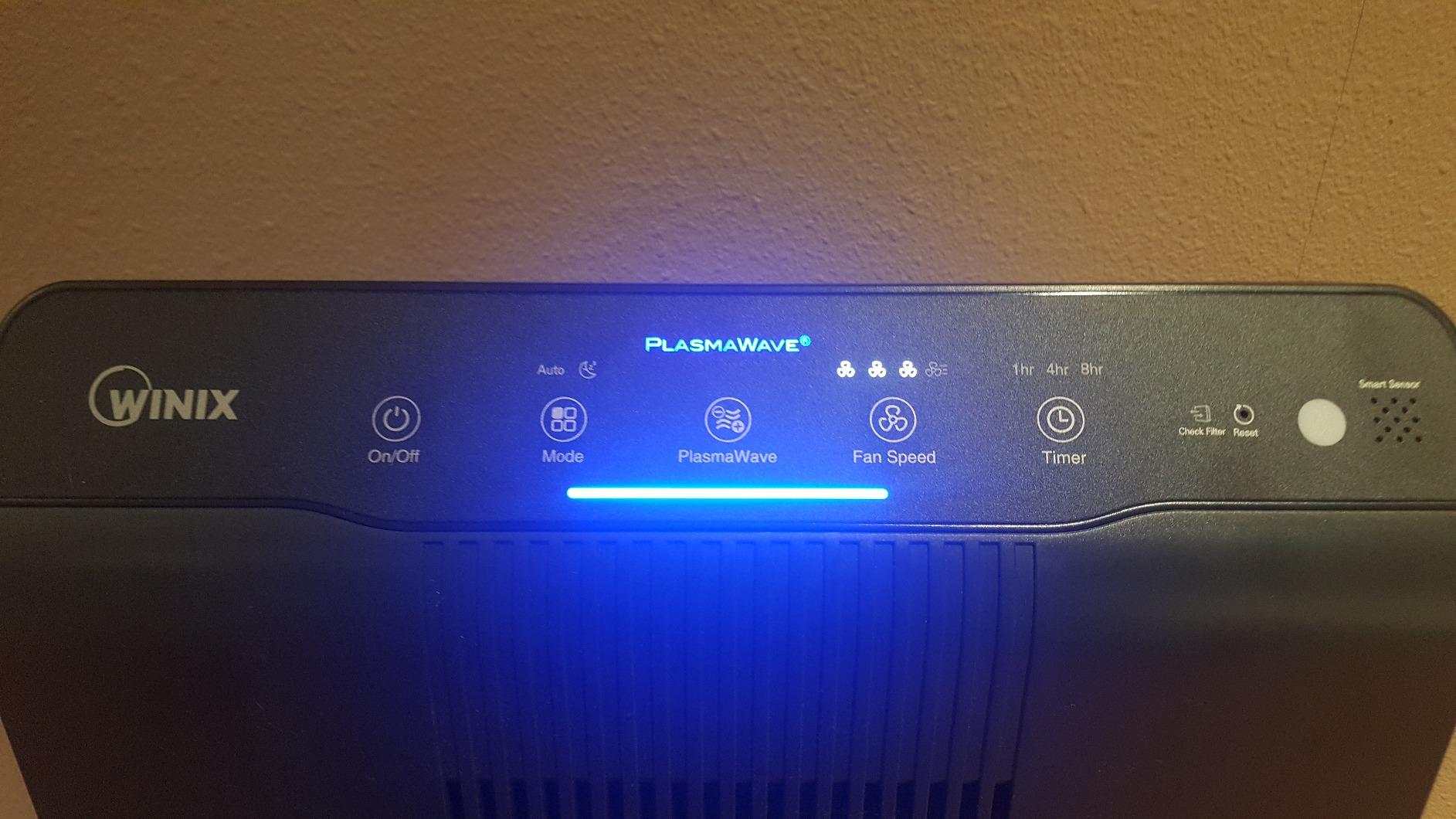
The Winix 5520 is the best value pick for cooking odors, and the most cooking-focused machine in the group. Its carbon filter is named as an odor control stage for cooking, pet and smoke odors in the manufacturer’s own specification, which is more honesty than most competitors manage.
The filtration chain is a washable fine mesh pre-filter, the advanced odor control carbon filter, True HEPA capturing 99.99 percent of allergens down to 0.01 microns, and PlasmaWave ionization. Winix rates it for 1882 sq ft in one hour and 941 sq ft in 30 minutes, and it is AHAM verified at 392 sq ft. Quiet at 23.5 dB on the slowest speed, with a light-activated sleep mode.
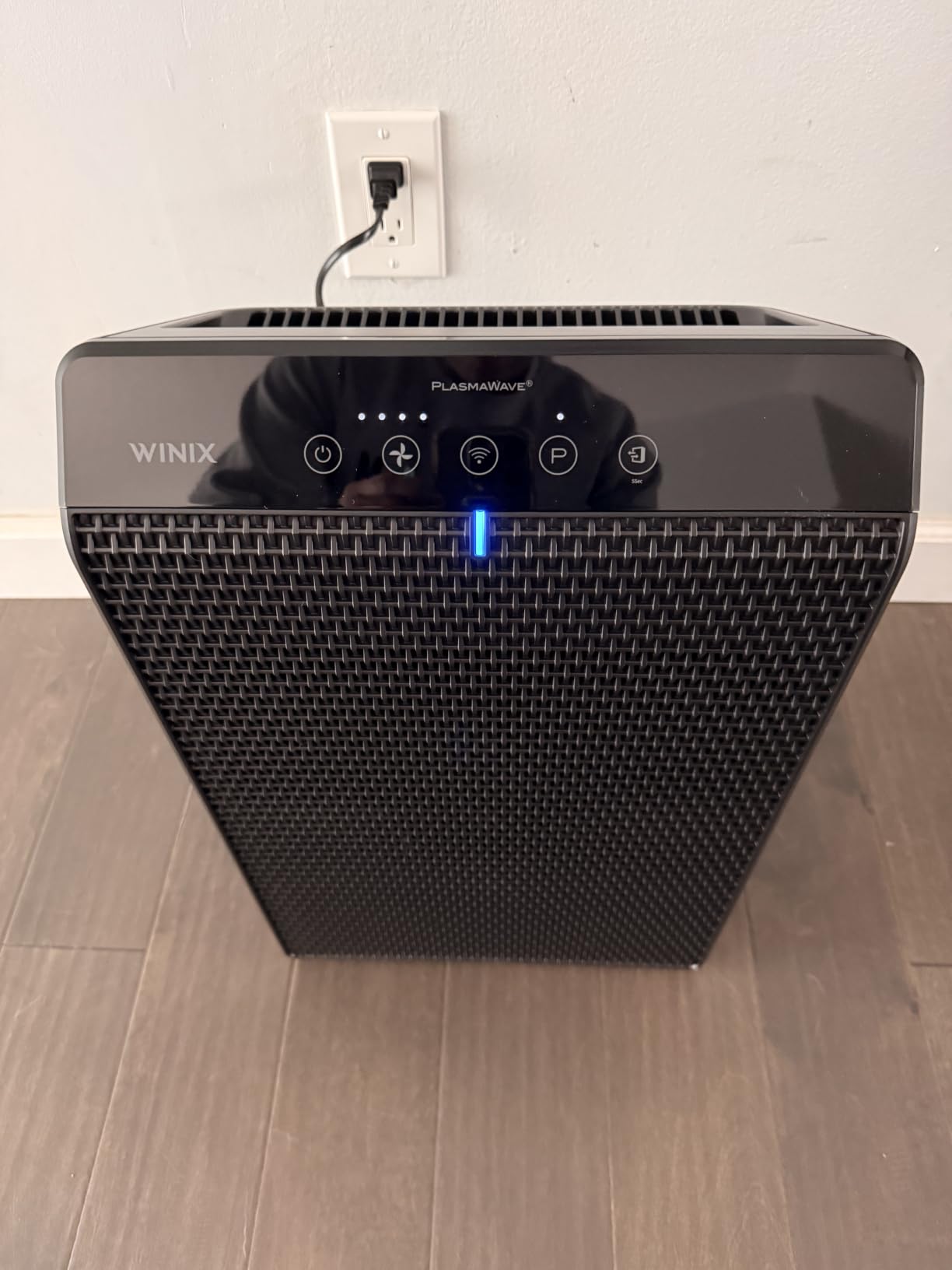
What stands out in the owner feedback is how specifically this unit is described as a cooking machine. People run it on high during cooking and report the carbon clearing cooking smells within minutes, with the smart sensor auto-detecting the odor spike. Durability is the other repeated theme, with several owners reporting three to five-plus years of continuous daily use.
The filter life of roughly 12 months keeps running costs down, and the Winix Smart App handles scheduling and filter monitoring. If you want to know what is happening in your kitchen air while you cook, this is the version of that idea with a proper carbon stage behind it.
What you give up by choosing the Winix
The PlasmaWave ionizer is a dealbreaker for some people, and owners are split on it. If anyone in the house reacts to ozone, look at the Shark instead. The turbo mode is noticeably louder, which matters because that is the speed you will want during a fry, and the app is the least reliable in this group with reports of lag and intermittent unresponsiveness.
It is also a 120V unit, which rules it out for 220-240V markets without a converter. That is a real limitation for anyone outside North America or Japan, and it is worth checking before you commit.
Where it fits best in a real home
This is the one we would put in a kitchen that sees daily cooking rather than occasional cooking. The combination of a named odor carbon stage, an AHAM-verified smoke figure, and auto mode makes it a safe pick for households that fry several times a week.
It also covers larger rooms than the specification suggests, so it works as a living-area unit if your kitchen is open. Our notes on large-room purifiers apply, though this unit is compact enough at 8.3 by 13.6 by 22.7 inches to tuck against a wall out of the way.
3. Levoit Core 200S: Best for Small Kitchens
Levoit Air Purifier for Home Pets Bedroom Dorm Room, Smart & Voice Control
Rated for 140 sq ft at 4.8 air changes
Nylon pre-filter, activated carbon, HEPA
27 dB on low
App and voice control
Pros
- Compact square footprint that fits a counter
- Activated carbon layer for pet and cooking odors
- Quiet at 27 dB with the display off
- App scheduling plus filter life tracking
- Filters are easy and inexpensive to change
- AHAM VERIFIDE certified
Cons
- 140 sq ft rating is small for open kitchens
- High speed is loud
- A faint whine on the lowest setting
- 110V power only
The Levoit Core 200S is the best air purifier for cooking smells in a galley kitchen or a small closed kitchen, and it is the name that comes up most often when people ask each other which purifier to buy for this problem. It carries the most reviews of anything on this list.
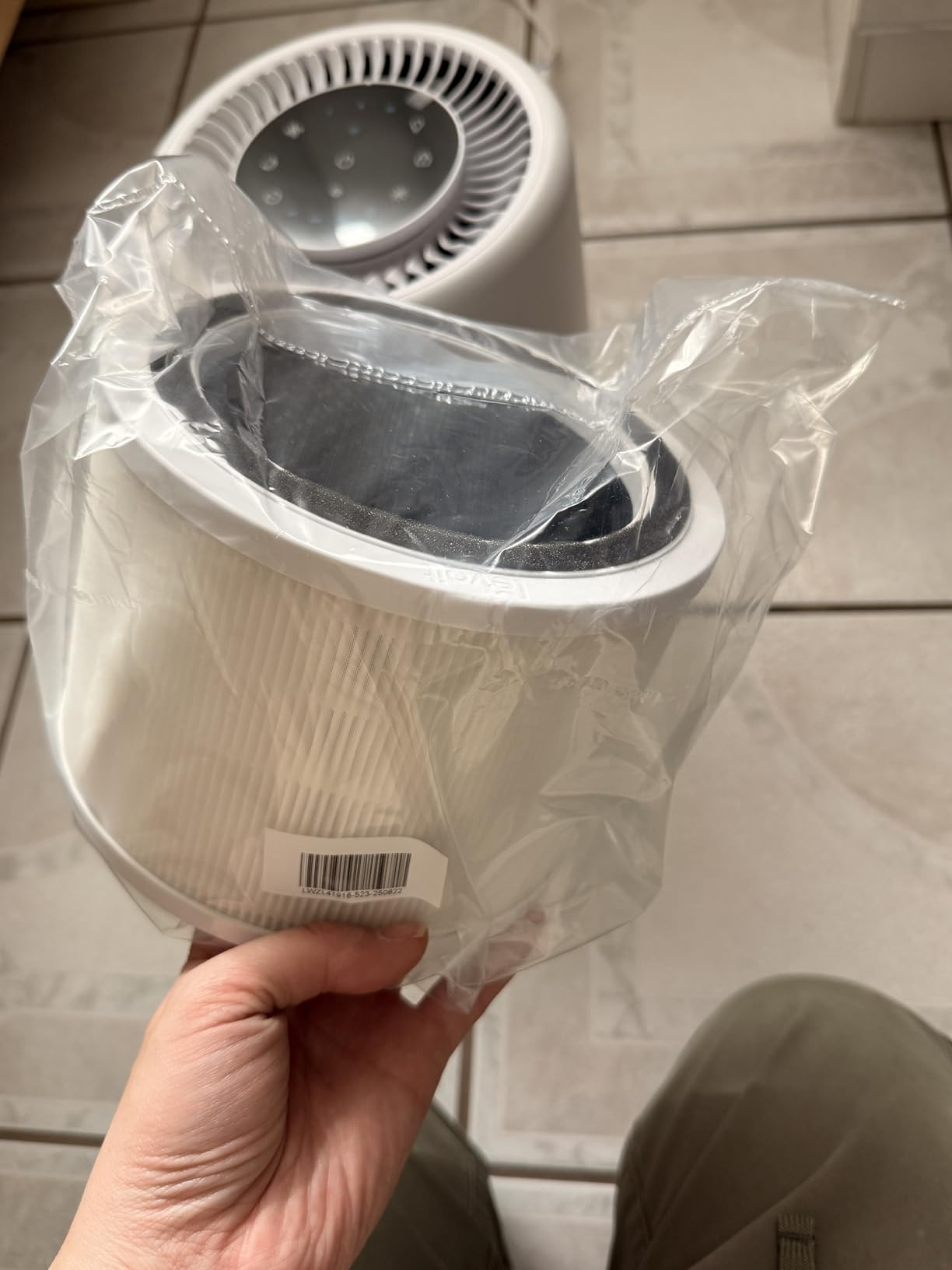
The filtration is a nylon pre-filter, a high-efficiency activated carbon filter, and a main HEPA filter, rated at 140 sq ft with 4.8 air changes per hour and 99.97 percent removal of dust, pollen and dander between 0.1 and 0.3 microns. At 8.07 inches square and 6.6 pounds it is the easiest unit here to place on a counter near the stove.
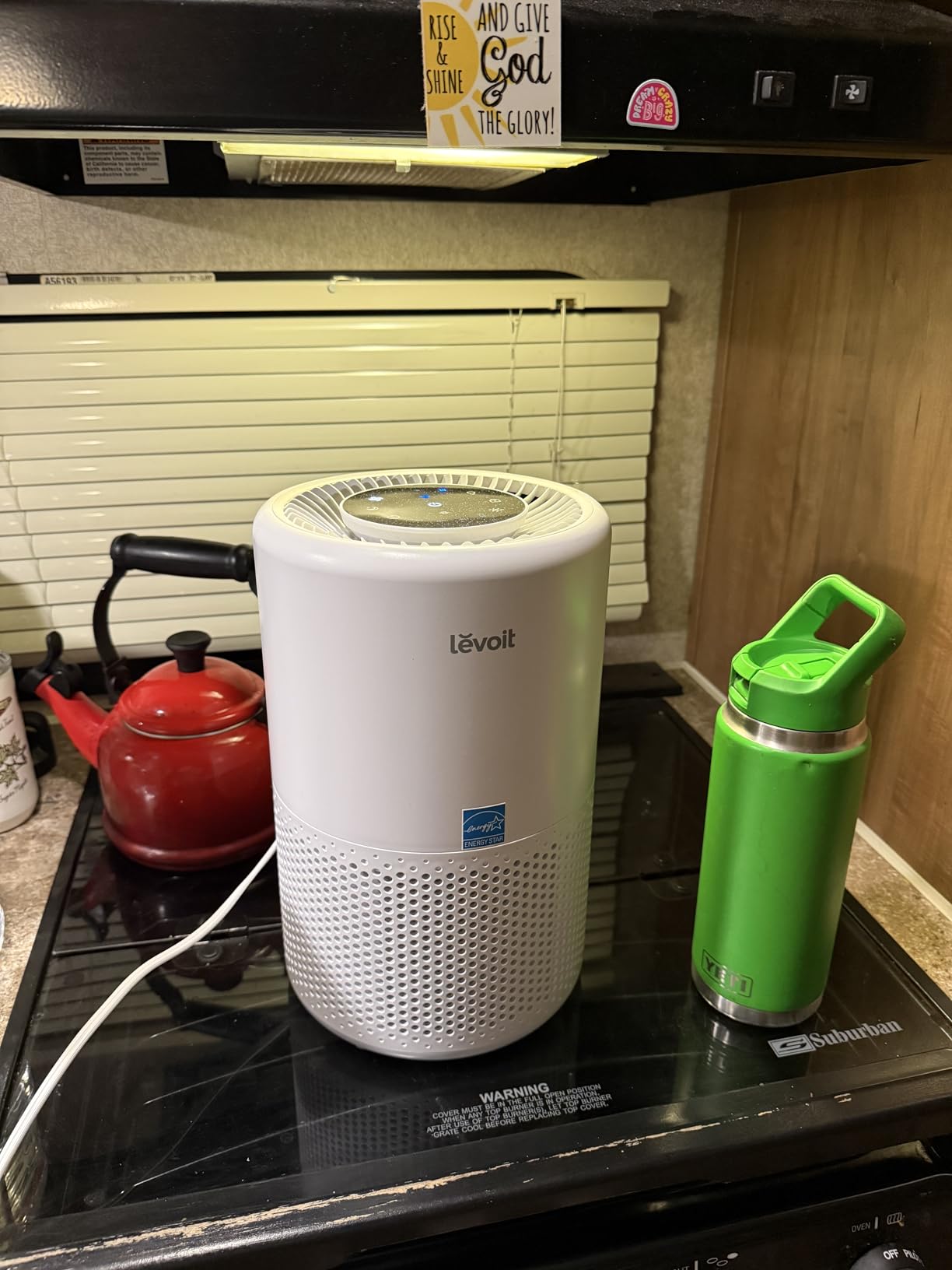
Owners praise the size, the quietness on low and sleep settings, and the app working as a remote with scheduling and filter life tracking. The carbon layer handles pet and household odors well, and replacement filters are cheap and simple to fit, which matters a lot when you are replacing every four to six months in a greasy kitchen.
The voice control and display off button make it usable in a bedroom or a small apartment kitchen where noise and light are dealbreakers. It is also the pick in our bedroom purifier guide, which tells you how its priorities are ordered.
What you give up by choosing the Levoit Core 200S
Capacity, plainly. At 140 sq ft it is a bedroom and dorm-class unit, and reviewers repeatedly advise a larger model for living rooms or open-plan kitchens. In a 400 sq ft open kitchen, 4.8 air changes per hour is not enough to sweep a cooking plume before it reaches the living space.
High speed is noticeably loud, and there is a faint high-pitched whine some owners notice on the lowest setting. The filter packaging has to be fully removed before first use or airflow is blocked, which trips up new owners. It is also 110V only.
Where it fits best in a real home
A galley kitchen with a door, a studio apartment, a rental where you cannot change anything, or a second bedroom next to the kitchen. In any of those, the small footprint and app control solve the exact problem forum users complain about, which is not wanting to touch a machine mid-cook with greasy hands.
It also works well as a second unit in a two-bedroom home, one in the kitchen and one in the sleeping area, because the carbon stage handles odors in a smaller volume far faster than a big unit would.
4. Levoit Vital 200S-P: Best for Allergy Sufferers in Open Plans
LEVOIT Smart Air Purifier for Home Large Room up to 1875 Ft² Vital 200S-P
Rooms to 1875 sq ft
AHAM verified 250 CFM smoke
Dual inlets for pet hair and odors
Smart app control
Pros
- Highest average rating in this group at 4.7
- AHAM verified CADR figures you can check independently
- Certified coverage up to 1875 sq ft
- Dual air inlets trap pet hair without clogging
- Allergy-focused design suited to open plans
Cons
- Bullets do not name a dedicated carbon stage
- Bulky at 13.2 pounds
- Proprietary filters raise ownership cost
- Higher noise draw than bedroom units
The Levoit Vital 200S-P is the best air purifier for cooking smells in an open-plan home where someone in the house has allergies. It has the highest average rating in this roundup at 4.7, with 85 percent five-star reviews, and it publishes a full certified CADR set that you can check independently.
Those figures are 250 CFM smoke, 254 CFM dust and 289 CFM pollen, with coverage up to 1875 sq ft. A high air intake plus an additional U-shaped inlet is designed to trap pet hair and odors without clogging, and the app gives remote control. It is 13.2 pounds at 14.96 by 8.66 by 19.69 inches.
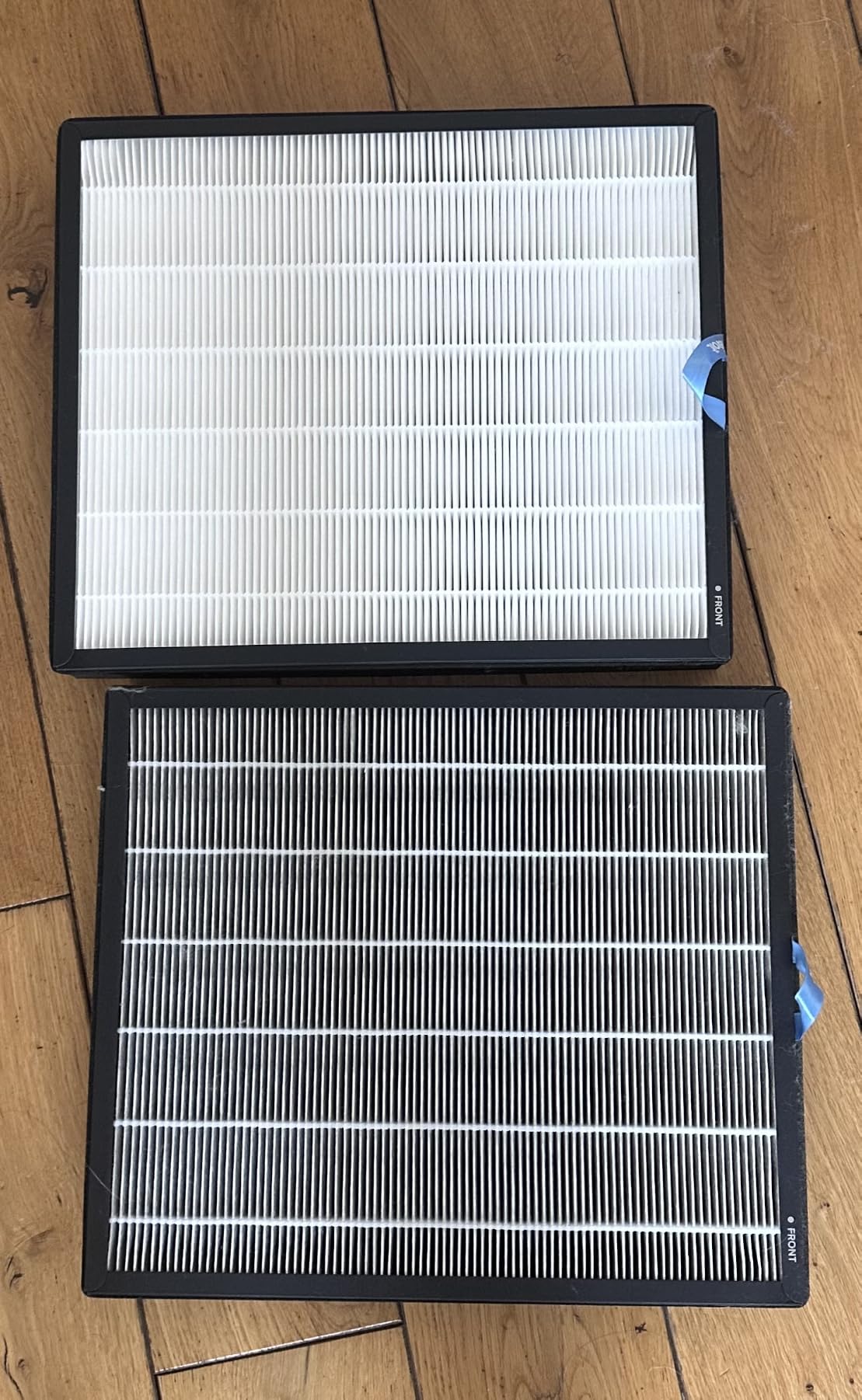
Buyers highlight measurable allergy relief in open-plan homes and the twin intakes that keep pet hair from loading the filter. For cooking specifically, the high smoke CADR means the particulate side of the problem is genuinely well covered, which matters when the kitchen is part of the living space.
This is the pick for anyone whose cooking concern is actually respiratory. PM2.5 from searing and frying is the fraction that reaches deep into the lungs, and a 250 CFM verified smoke figure is real headroom for a large room.
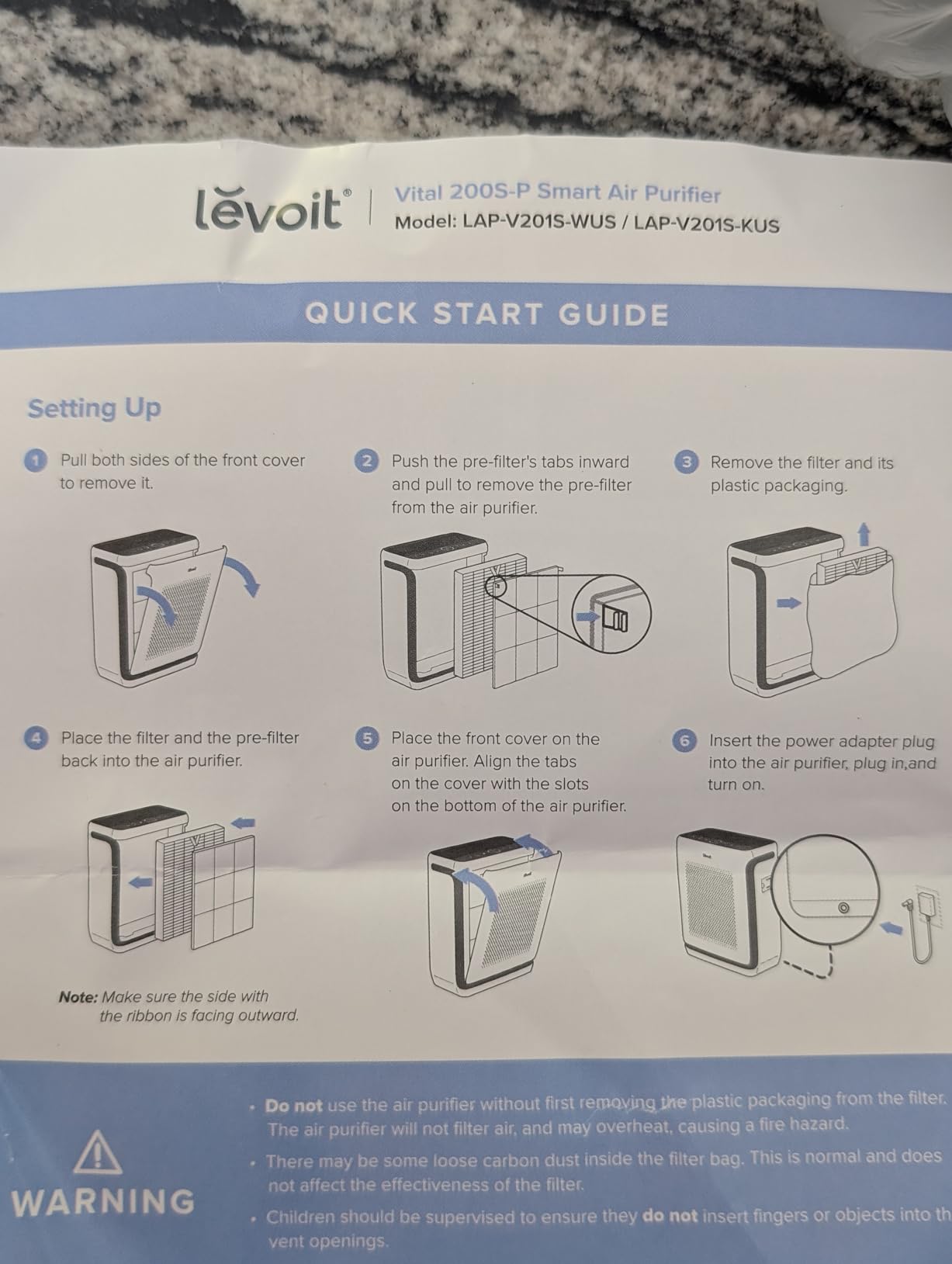
What you give up by choosing the Vital 200S-P
The honest gap is carbon documentation. The specification and the buyer-facing bullet points do not explicitly call out a dedicated activated carbon stage for gas-phase cooking odors, and owners report less documentation on odor performance than they do for the Winix and Coway units. If smell is your primary complaint rather than particles, this is a weaker bet.
It is also larger and heavier than the compact units, it draws more power and makes more noise, and replacement filters are proprietary, which adds to two-year ownership cost. Our budget-tier guide covers what that running cost looks like across brands.
Where it fits best in a real home
Open-concept homes with allergies in the family, especially where a pet adds dander to the load alongside cooking fumes. Park it in the open living volume rather than the kitchen, at floor level, where the tall intake can pull from across the whole space.
It also suits finished basements and large bedrooms in homes where a single unit has to do double duty. Just set expectations correctly: this is a particle and allergy machine with good clear air delivery, and the smell work depends on how much carbon is behind the filter.
5. PuroAir 240: Best for Apartments and Odors You Did Not Make
PuroAir 240 HEPA Air Purifiers for Home Pets Bedroom – 1,000 Ft²
1000 sq ft coverage
Slim tower at 28 inches
CARB, ETL, ISO and UL certified
2-year warranty
Pros
- Owners confirm pet and musty odors clear in days
- Quiet enough to run beside a bed
- Slim tower shape takes little floor space
- Multi-pack options for covering several rooms
- Filters are reasonably priced and easy to change
Cons
- Little help with visible floating hair
- Filter life of roughly 3 months in heavy-use rooms
- Filters hard to source outside the US
- 110V power only
The PuroAir 240 is the best air purifier for cooking smells you do not control, which is exactly the apartment and downstairs-neighbor problem. Odor elimination is the standout benefit in owner feedback, with pet smells and musty house odors disappearing within days of running the unit continuously.
It covers 1000 sq ft, is certified by CARB, ETL, ISO and UL, and carries a 2-year warranty. The form is a slim tower at 10.63 by 10.63 by 28 inches and 7.3 pounds, with top-mounted controls, a light indicator and a timer. In a rental, a 28-inch tower in a corner is an easier sell than a wide floor unit.
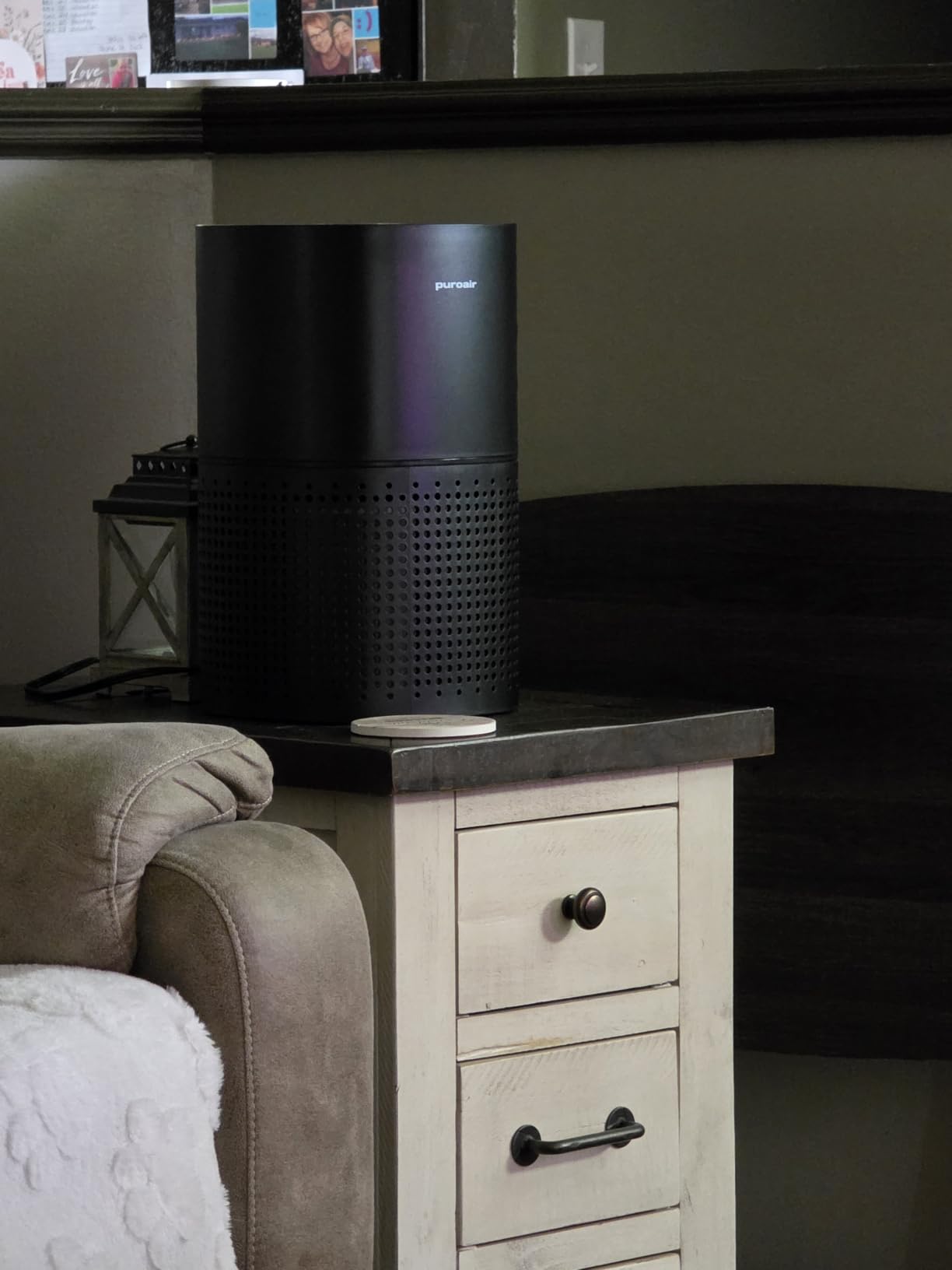
Quietness is the other repeated theme, since owners run it beside a bed without complaint. Setup is simple, and multi-packs let you cover a living room and a bedroom at once. Filters are reasonably priced and easy to change, which matters more here because the interval is short.
One owner described watching the air clear after a cooking session and reported that a persistent musty smell in the apartment disappeared within a few days of continuous running. That is the honest use case for this machine: persistent background odor, not a heavy fry.
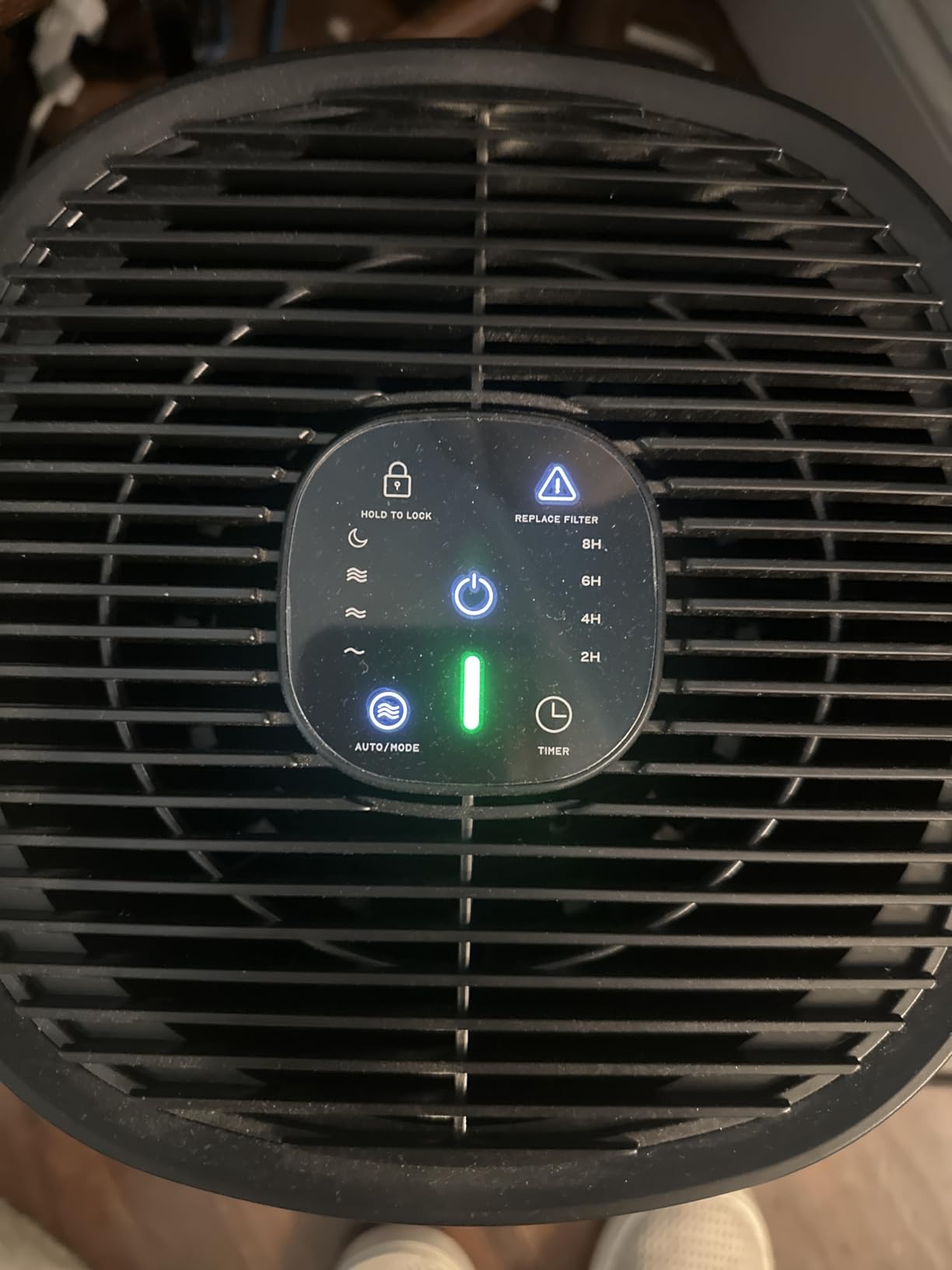
What you give up by choosing the PuroAir 240
Filter life of roughly three months in heavy-use rooms is the most aggressive replacement interval on this list. Greasy kitchens load a carbon stage fast, and three-month intervals turn a cheap filter into a significant annual expense. If your cooking is heavy, budget for four sets a year.
It also does little to capture visible floating hair, replacement HEPA filters are not widely stocked outside the US, and it is 110V only. One owner also reported the unit cutting out after a short period of use, which is a small sample but worth knowing.
Where it fits best in a real home
Renters, studio apartments, and any home where the odor is arriving from outside your unit rather than from your own stove. A neighbor’s cooking travels down a stairwell and under a door, and by the time it reaches you it is diluted but persistent, which is exactly the kind of low-level load a continuously running carbon stage handles well.
Place it in the room where you spend time rather than near the door, and run it continuously rather than in auto bursts. For the neighbor scenario specifically, pair it with the placement and noise guidance in our apartment purifier guide.
6. MOOKA KJ190H: Best for Watching a Smoke Spike Happen
MOOKA Air Purifier for Home Bedroom Large Room 2200 Ft², HEPA Filter, White
Coverage to 2200 sq ft
3-stage with activated carbon pellets
Live PM2.5 AQI display
20 dB sleep mode
No ozone, no UV
Pros
- Live PM2.5 readout jumps visibly while you cook
- Auto mode ramps on smoke and odor detection
- 20 dB sleep mode with lights off
- Light 6.7 pound body with a compact footprint
- Child lock with no ozone and no UV
Cons
- Aromatherapy pad throws no noticeable scent
- Certification claims are weaker than AHAM verified rivals
- Filter arrives in a bag that must be removed
- Brand-only replacement filters
- 120V power only
The MOOKA KJ190H is the best air purifier for cooking smells if you want proof that something is happening, because it is the only unit here with a live PM2.5 air quality index display rather than a vague colored light. One owner watched the number jump from 8 to 132 while searing in olive oil as the unit ramped up.
Filtration is 3-stage with a washable pre-filter, a HEPA filter and activated carbon pellets, and the manufacturer rates it for up to 2200 sq ft. A high and wider dual-side air intake with a larger front inlet is aimed at pet hair and odors, four fan speeds, and timers at two, four, six or eight hours.

Auto mode detects cooking smoke and household odors and speeds up on its own, and the quietest sleep mode figure in this group is 20 dB with lights off. It weighs 6.7 pounds, among the lightest bodies here, and it has a child lock and no ozone or UV, which makes it comfortable in a family kitchen.
The 0.63 kWh daily consumption at max speed over 24 hours is genuinely low, and the filter reminder fires after 2000 hours of use. That combination of readout, auto response and light running cost makes this the most instrumented option for a grease-heavy cook.
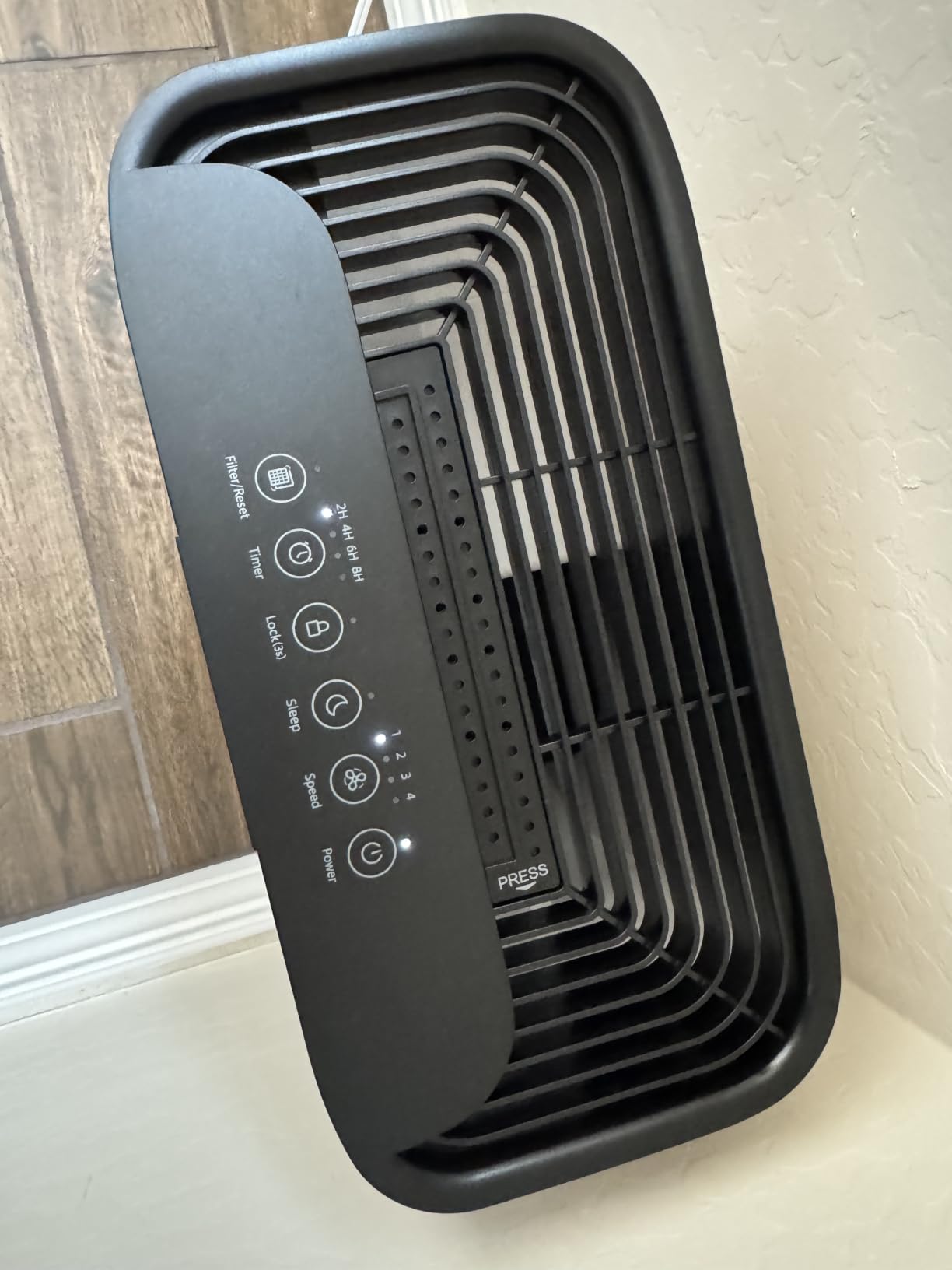
What you give up by choosing the MOOKA
The certification is weaker than the AHAM-verified rivals here. It is CARB, ETL and DOE certified rather than AHAM verified, and it publishes no CADR numbers, so the 2200 sq ft figure is a claim rather than a certified measurement. Treat it as marketing until you see it work in your own kitchen.
The aromatherapy pad emits no noticeable scent, which is fine if you were not interested, but it is listed as a feature and does not deliver. Filters are brand-only, the protective bag has to be removed from the filter before first use, and it is 120V only.
Where it fits best in a real home
Anyone who likes evidence. If you have wondered whether your purifier does anything during a fry, put this one on the counter and watch the readout climb and fall. It is also a good fit for a kitchen where someone has asthma and you want to see whether cooking is triggering particulate spikes.
For heavy Indian cooking and masala-heavy wok work, the combination of pellet carbon, high side intake and auto ramp is well suited to fast odor events, provided you replace the filter on schedule rather than waiting for the reminder.
7. Blueair Blue Pure 211i Max: Best for Open-Concept Kitchens
BLUEAIR Air Purifiers for Home Large Room up to 3,235 Ft², Blue 211i Max
3235 sq ft in one hour
AHAM certified 435 cfm smoke
Activated carbon filtration
23 dB
Three-year warranty
Pros
- Widest coverage here for open plans and living areas
- Sensors ramp within a minute or two of cooking smoke
- Owners report cooking odors clearing effectively
- Near silent on auto mode with dimmable lights
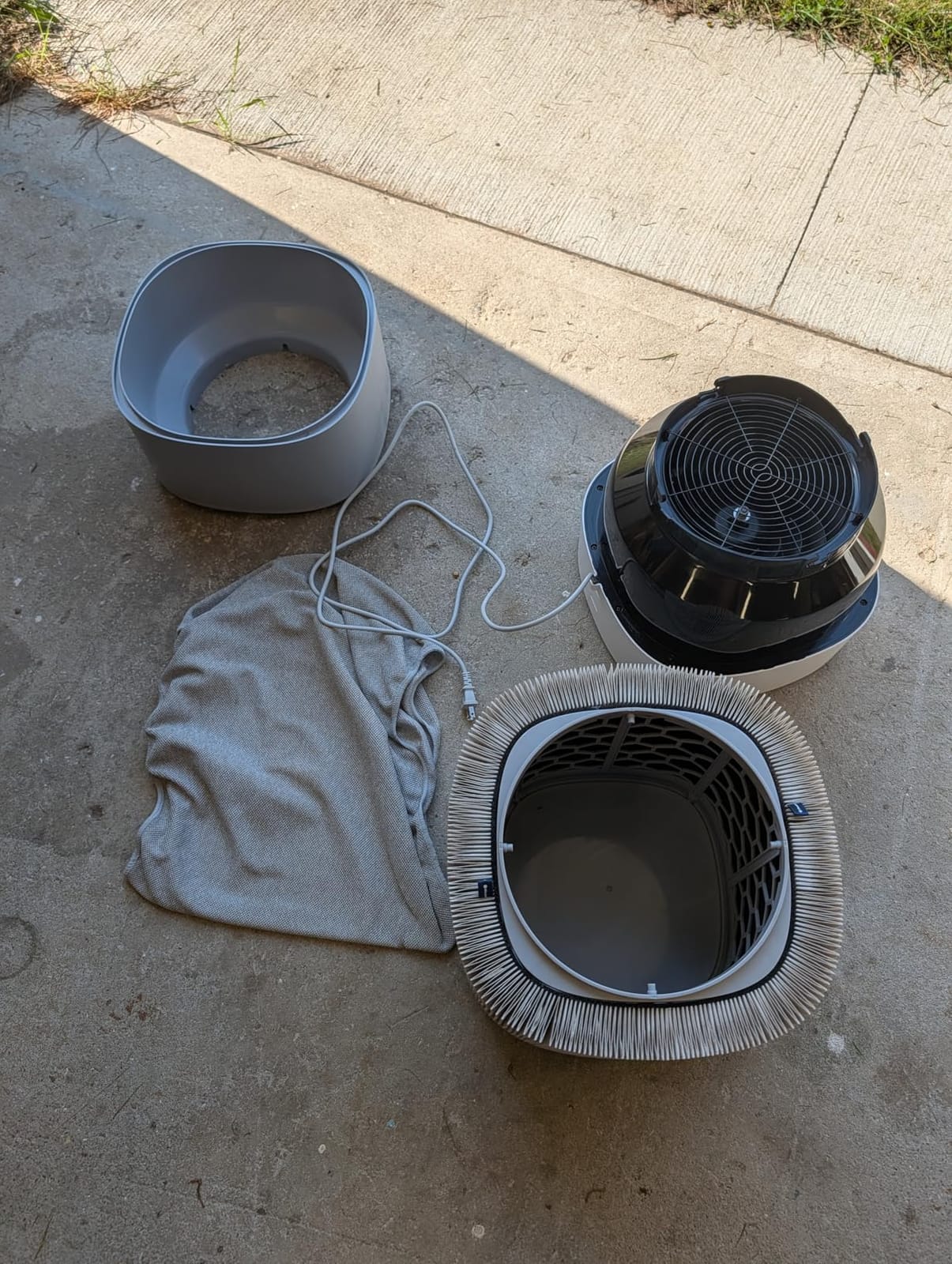
- Washable fabric pre-filter extends filter life
Cons
- Proprietary filters are costly with no aftermarket option
- High and turbo settings are loud
- Heavy at 16 pounds
- Wi-Fi setup needs manual password entry
The Blueair Blue Pure 211i Max is the best air purifier for cooking smells in an open-concept home, and it has the widest coverage of anything we evaluated at 3235 sq ft in one hour. That headroom matters when the kitchen, dining area and living room are one volume of air.
The filtration is HEPASilent with an activated carbon layer, capturing down to 0.1 micron, and the AHAM certification publishes the numbers that smaller brands leave out: 450 cfm pollen, 452 cfm dust and 435 cfm tobacco smoke at 674 sq ft. Built-in sensors adjust fan speed as pollution rises, the app tracks filter life, and it works with Alexa.
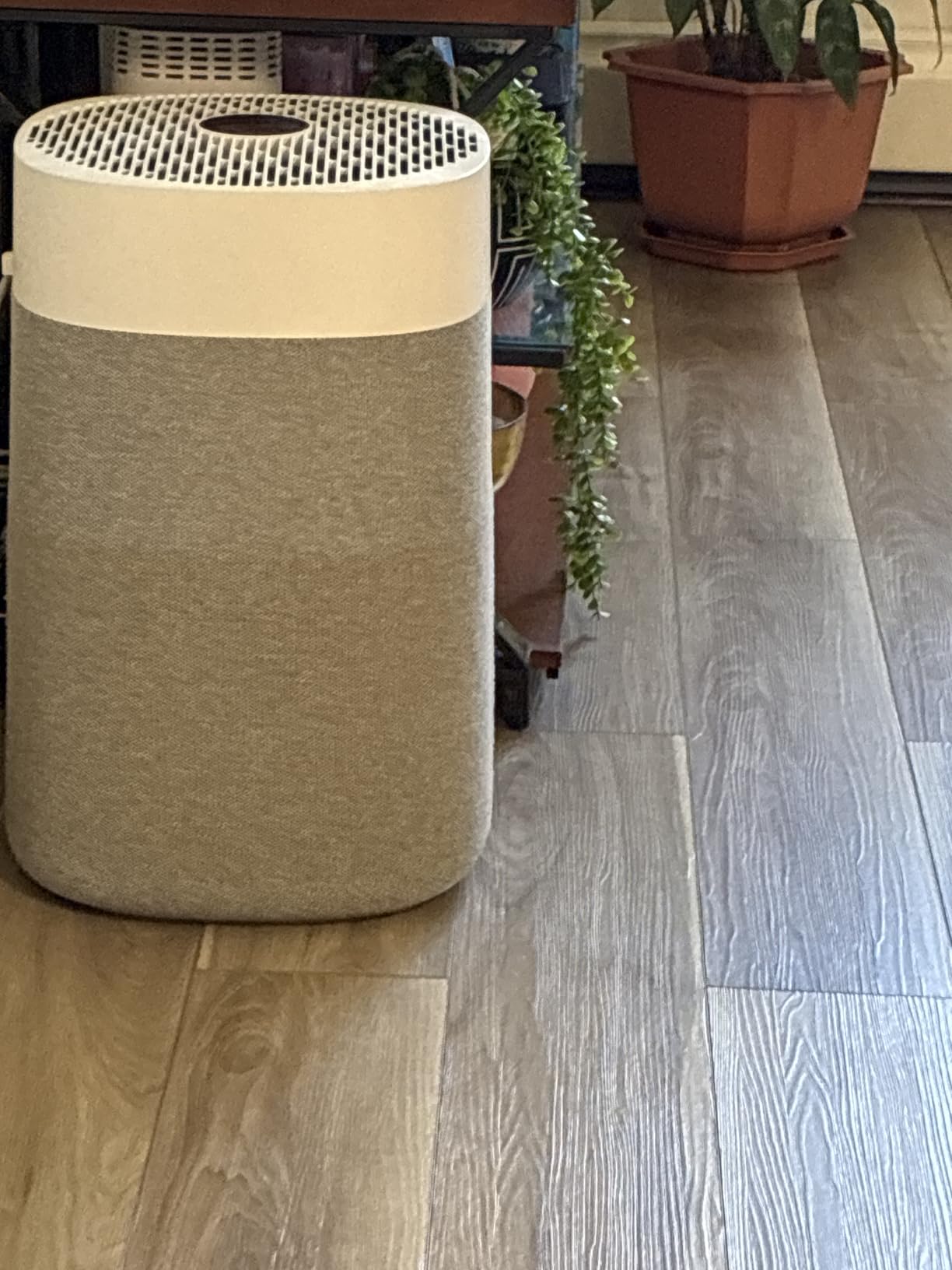
Owners describe the sensors ramping to turbo within a minute or two of steam or a burning-pan smell appearing, then dropping back to near silence once the air clears. One owner reported a recurring smoke alarm nuisance in the kitchen ending entirely with the unit running. The washable fabric pre-filter extends main filter life, and the three-year warranty extends on registration.
It also runs from 23 dB with dimmable lights and a nighttime setting, and the fabric-sided design reads as furniture rather than an appliance. In a renovated kitchen you have to look at, that is not a trivial detail.
What you give up by choosing the Blueair
Filter cost is the dealbreaker for most households. The replacement filters are expensive with no widely available aftermarket alternative, which pushes the two-year ownership total well above what the alternatives here cost. If filter budget is the constraint, this is the wrong machine.
It is also 16 pounds, which is awkward to move between rooms, and the high and turbo settings are loud. Wi-Fi setup requires typing the network password manually with no pairing option, one owner reported the auto-mode set point never escalating to high, and customer service and product registration are widely criticized.
Where it fits best in a real home
Large open kitchens and great-room layouts where the cooking zone and the seating area are connected. A 435 cfm smoke figure means four air changes per hour across roughly 675 sq ft, and the sensor response is fast enough to catch the start of a plume rather than cleaning up after it.
It is also a good pick for winter cooking with the windows shut, where there is no ventilation option and the only lever is filtration volume. Pair it with a working hood on high, and treat the purifier as the second half of a two-part system.
8. Shark NeverChange HP152: Best for Lower Long-Run Filter Costs
Shark NeverChange Air Purifier, HP152, Charcoal
650 sq ft in one hour
NanoSeal HEPA-exceeding filter
Odor Neutralizer cartridge
CleanSense IQ display
26 watts
AHAM Certified
Pros
- NeverChange filter design cuts long-run filter spending
- CleanSense IQ shows real particle percentages
- Odor Neutralizer cartridge targets gas-phase smells
- Low 26 watt draw
- Compact 7.3 pound body
Cons
- Odor cartridge is a second consumable
- 650 sq ft coverage is mid-pack
- Cartridge scent release is not adjustable
- Lowest review volume in this group
The Shark NeverChange HP152 is the best air purifier for cooking smells if your filter budget is the main constraint. It is differentiated by ownership economics rather than raw power, and its CleanSense IQ display gives one of the more concrete air quality readouts in this group.
Filtration runs through an Anti-Allergen NanoSeal HEPA-exceeding filter that captures 99.98 percent of particles at 0.1 to 0.2 microns, a Debris Defense washable filter, and an Odor Neutralizer Technology cartridge. It is AHAM Certified for 650 sq ft in one hour, draws 26 watts, and runs at 7.3 pounds.
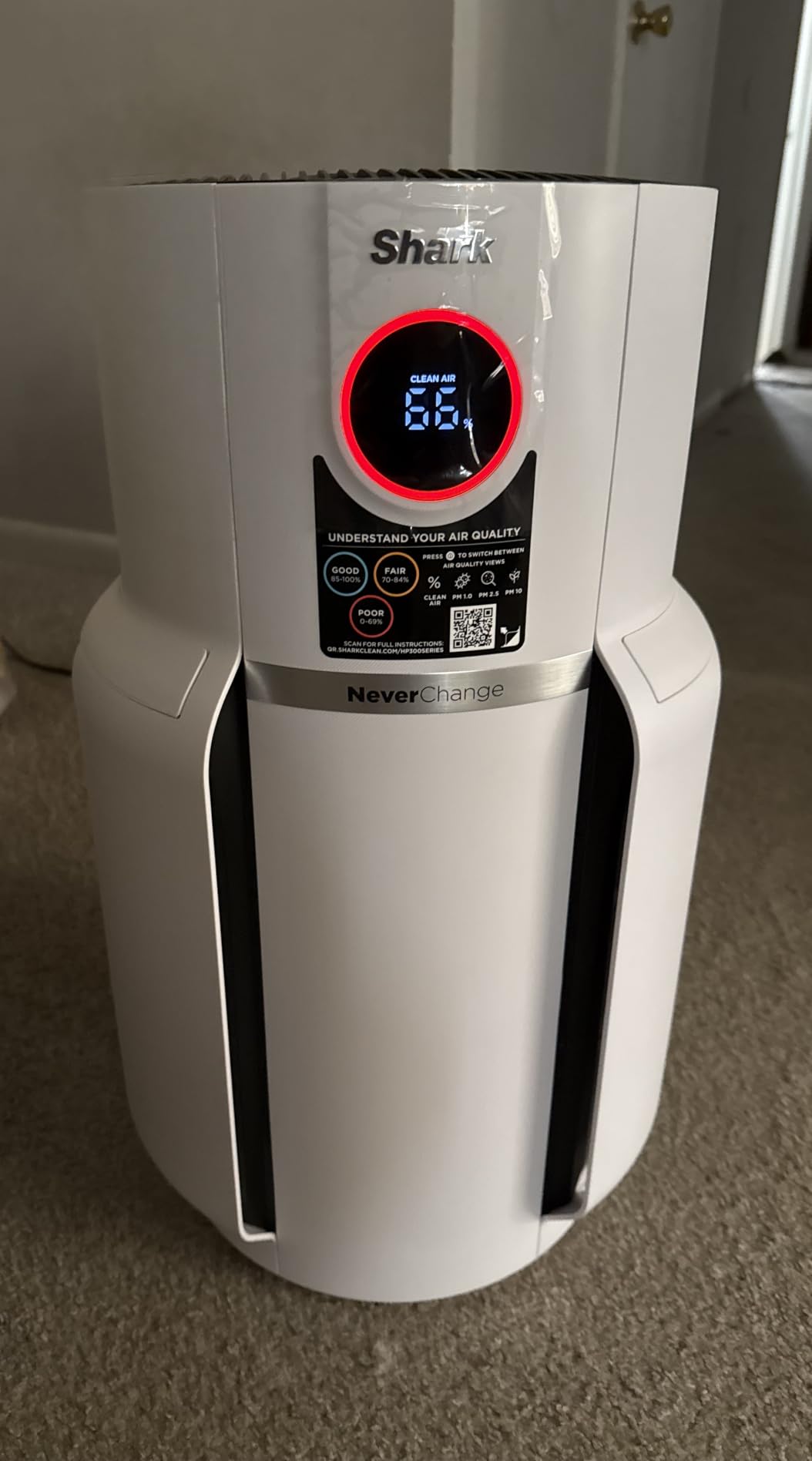
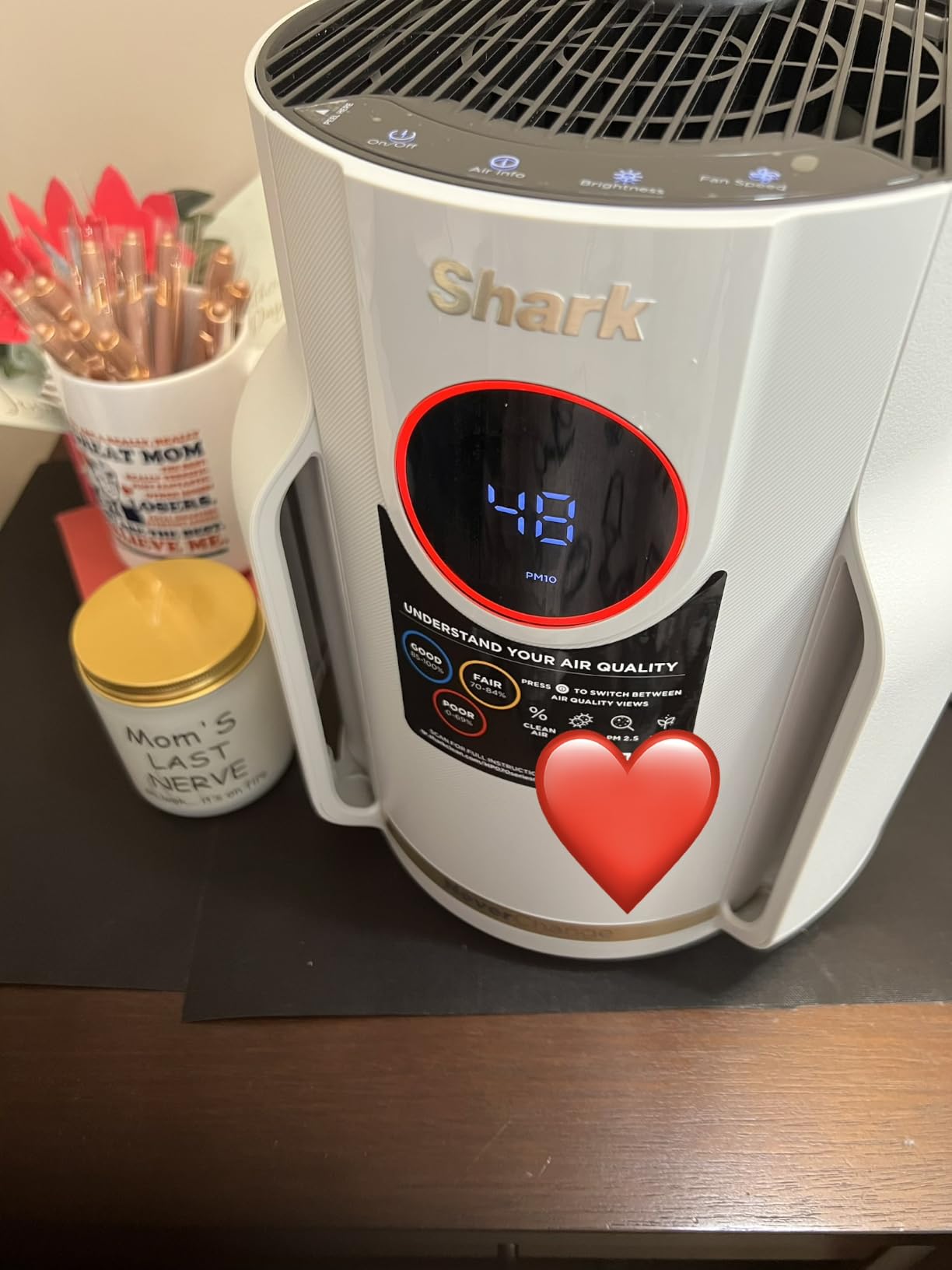
The NeverChange filter is positioned to save substantially on filter spending over five years compared with standard replacement schedules, which is one reason this unit made the list at all. The Debris Defense screens vacuum, wipe or rinse clean in seconds, and the CleanSense IQ display shows real-time particle concentration across PM 1.0 to 10 as a percentage.
The Odor Neutralizer cartridge is a genuine gas-phase addition aimed squarely at cooking smells, and it is why this unit earns a place on a list about odors. Lights are dimmable and operation is described as ultra-quiet.
What you give up by choosing the Shark
The odor cartridge is a separate consumable. You are not buying one filter set, you are buying a HEPA filter and a deodorizing cartridge, so factor both into any running cost comparison, including in the two-year math.
Coverage of 650 sq ft is mid-pack, below the larger units here and well below an open-plan kitchen. The cartridge also releases a pleasant scent that is not adjustable, which sensitive users may not want near food. Review volume is the lowest in this group at 1563, and 1-star reviews run proportionally higher at 9 percent, so treat the long-term durability record as thinner than the others.
Where it fits best in a real home
A medium kitchen and living area in a home where someone cooks most days and the filter budget is real. The 650 sq ft certification suits a closed kitchen plus dining room, and the washable pre-filter is a genuine saving in a grease environment where screens would need cleaning often.
It is also the option for anyone who wants an honest air quality number without a subscription or app learning curve. If you are building a cost model over several years rather than optimizing for the first month, the NeverChange design changes the answer.
What We Looked For in an Air Purifier for Cooking Smells
We built this list on six criteria, and carbon came first every time. If you disagree with one of our calls, these are the criteria we used.
1. A named carbon stage. Either an activated carbon or deodorization filter with a stated purpose, or a pellet or cartridge format. Marketing language that says only advanced filtration counts for nothing.
2. A real particle stage. True HEPA or an equivalent electrostatic design with a published capture figure. We ignored capture claims without a number attached.
3. Certified CADR or an honest coverage claim. AHAM verified figures let you check the claim independently. Where only a coverage number exists, we say so rather than treating it as equivalent.
4. An onboard sensor with auto mode. Hands-busy cooking means nobody is reaching for controls. Forum users list the lack of auto mode as a dealbreaker for exactly this reason.
5. Realistic filter cost and interval. Marketing says six to twelve months. In a grease-heavy kitchen, plan on four to six months, and multiply by the number of filters the unit actually consumes.
6. Noise at the speed you will really use. Any unit is quiet on low. What matters is the decibel figure at the speed that clears a cooking plume.
How Much Activated Carbon Does an Air Purifier Need?
Enough that the carbon bed has real surface area, and the format matters more than the marketing. Here is the distinction that helps most buyers.
Pelletized activated carbon is loose media with a large exposed surface area. It is the format forum users converge on independently, with commenters noting that pellet type carbon filters last longer than other types in an open-concept kitchen. It holds the most capacity per unit of volume.
Carbon-impregnated foam coats foam in carbon rather than filling it. It is compact and handles bulk odor reasonably, but it saturates faster and needs replacement sooner.
Thin carbon fabric sheets are the ones to be skeptical of. They look like filtration on a spec sheet, they handle a faint background smell, and they do almost nothing for a hot wok session or a burnt pan. If a unit offers nothing else, that is the one to skip.
The Coway, Winix, MOOKA, and Blueair units here all use carbon formats beyond a fabric sheet, and the Shark adds a dedicated odor cartridge. The Levoit Vital is the least documented on this point, which is the main reason it did not win this roundup despite the highest rating.
One more lever, mentioned repeatedly on r/AirPurifiers: oxidation media as an alternative or complement to carbon. Some owners prefer it for persistent odor, though it is a niche path and we have not tested the units available in it.
How Big Should Your Kitchen Air Purifier Be?
Size by CADR, not by coverage number. Coverage claims are marketing multipliers; the smoke CADR figure is the one you can do arithmetic with.
Use the formula: required smoke CADR equals room square feet multiplied by ceiling height, then divided by 60 times your target air changes per hour. For a cooking space, four air changes per hour is a sensible floor and five is better during heavy cooking.
Worked examples at eight-foot ceilings and four air changes per hour: a 100 sq ft kitchen needs roughly 55 CFM, a 200 sq ft kitchen needs about 110 CFM, a 300 sq ft kitchen needs around 160 CFM, and a 500 sq ft open kitchen needs roughly 265 CFM. A 675 sq ft open plan at five air changes per hour needs closer to 340 CFM, which is where the Blueair sits with its 435 cfm smoke figure.
Check the number against your actual kitchen, and if the closest unit comes in well under the requirement, it will keep up with ordinary cooking and fall behind during a fry. Buyers also ask whether a bigger unit near the stove beats a small one next to it. Volume wins, as long as it can actually reach the cooking zone, which is why placement matters as much as size.
Air Purifiers We Skipped, and Why
Two categories get recommended constantly and are worth avoiding in kitchens.
Ionizer-dependent designs that market themselves as filterless. When the primary particle mechanism is ionization rather than a mechanical or electrostatic filter with a stated capture figure, the odor story is usually a thin carbon sheet plus scent release. That combination smells better for the first month and then saturates.
Units with no carbon stage at all and a strong smoke rating. High CADR on particles is exactly what these machines are built for, and it does nothing for gas-phase cooking odor. Always check for a named carbon or deodorization filter before anything else.
Also worth knowing: units whose coverage claims are not backed by AHAM verification, and any purifier where the odor story depends on a scented cartridge with no adjustable output. Our budget tier guide covers where certification is usually worth paying for.
Air Purifier vs Range Hood: Which Removes Cooking Smells Better?
The range hood, by a wide margin. A purifier cleans air that has already spread. A hood captures it before it spreads. That is source control, and it is the single most effective thing in any kitchen.
Here is the order that actually works, if you want to get rid of cooking smells in your house.
1. Run the hood on high before you start cooking, not after the smell appears. Capturing at the source beats cleaning afterward by an enormous margin.
2. Put a lid on pans. Steam and aerosolized oil are the biggest short-term contributor, and a lid stops most of it.
3. Ventilate. Open a window, or run the hood on high for twenty minutes after cooking to clear what escaped.
4. Use the purifier as the capture step for what got past the hood, especially in an open plan where the smell has already migrated to the living area.
With all four in place, a mid-size purifier keeps a kitchen comfortable all year. With only one, two and three, you are relying on open windows, which stops being an option in winter. For the winter cooking season with the windows shut, a purifier is not a luxury.
On air fresheners, the distinction is simple: they mask odor by adding scent and do nothing to remove anything. For a gas stove or heavy frying, that is not a solution at any level of spending.
Frequently Asked Questions
Does an air purifier take away cooking smells?
Yes, but only if it has a substantial activated carbon stage. HEPA filters capture smoke and grease particles and do nothing for odor, which is a gas-phase problem. Carbon adsorbs the odor molecules onto its surface until it saturates. A range hood running on high still prevents more odor than any purifier can clean up.
Can air purifiers get rid of cooking smells in an open kitchen?
They can, if you size the unit to the whole open volume rather than the kitchen alone. Use the smoke CADR figure and target four to five air changes per hour across the combined space. A unit rated only for a closed bedroom will clear the kitchen but not the smell that has already reached the living area.
How much activated carbon does an air purifier need?
Enough that the media is a real bed rather than a thin sheet. Pelletized carbon holds the most capacity per unit of volume and is the format most owners prefer for kitchens. Carbon-impregnated foam is a reasonable compromise. A thin carbon fabric sheet handles a faint background smell and nothing more, so avoid units that offer only that.
Why does my air purifier go crazy when I cook?
Its particle sensor detects the spike in fine particulate from smoke and steam and ramps the fan up on its own. On units with a numeric display you can watch the reading climb during a fry. That response is exactly what you want, since catching a cooking plume early is far easier than cleaning it up afterwards.
Can an air purifier replace a range hood?
No. A hood captures grease and odor at the source before it spreads into the room, and a purifier only cleans air that has already mixed with everything else. The two work best as a pair: hood on high during cooking, purifier running afterward to clear what escaped. Without a hood at all, no purifier fully substitutes.
Which air purifier do owners recommend most for cooking odors?
On forum threads the most repeated name is Levoit with app control, largely because smart control means changing the mode without touching a unit mid-cook. Owners also independently favour pellet-type carbon over fabric because it lasts longer in an open kitchen. Praise for specific cooking performance shows up most often for Winix and Coway models.
Final Verdict: Which Air Purifier Wins for Cooking Smells?
The Coway Mighty AP-1512HH is our best air purifier for cooking smells overall, and it wins because a dedicated deodorization stage, 1748 sq ft of coverage in one hour, and a deep record of long-run ownership add up to a complete package. The Winix 5520 is the value pick and the most explicitly cooking-focused unit, with the clearest named odor carbon stage in the group.
Match the rest to your room instead of the room to the machine. Small galley kitchen or studio, take the Levoit Core 200S. Open-concept living space, the Blueair Blue Pure 211i Max. Odor from a neighbor rather than your own stove, the PuroAir 240. Allergy-driven concern in a large room, the Levoit Vital 200S-P. Proof that the unit is working, the MOOKA. Lower filter costs over five years, the Shark NeverChange HP152.
One last thing, and it matters more than the model. Run the hood, keep a lid on the pan, and open a window when you can. The purifier is the cleanup step, and it works far better as step four in a system than as step one. Our 2026 kitchen guide will be updated as these filters and prices shift.