
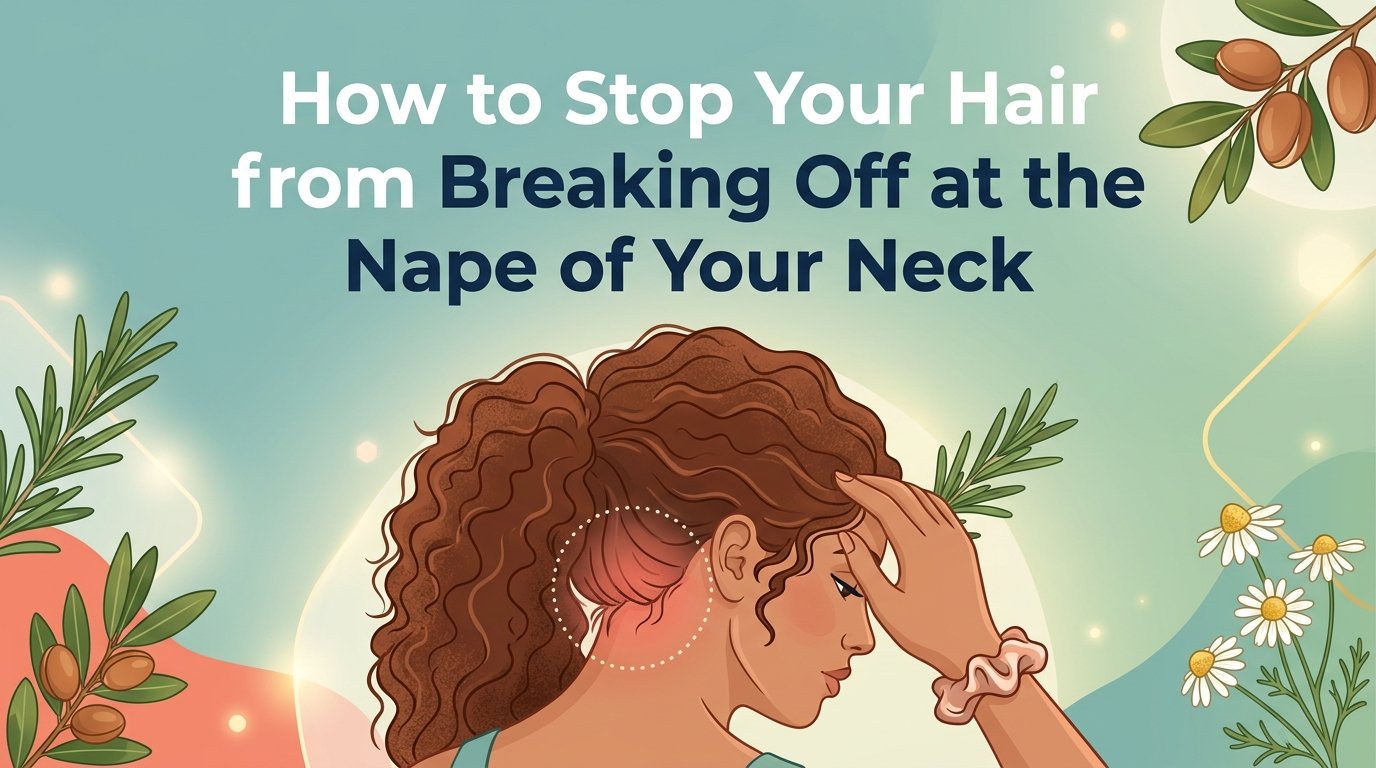
If you have ever run your hand along the back of your neck and felt short, broken stubs where there should be longer hair, you are dealing with nape breakage. It is one of the most frustrating hair problems to fix because the area keeps taking damage from everyday things you barely notice. The good news is that once you understand what is causing it, nape hair can recover and grow back strong.
In this guide, I will walk you through exactly how to stop your hair from breaking off at the nape of your neck. We will cover why this area is so vulnerable, the habits that quietly wreck it, and the changes that actually help. By the end, you will have a clear routine you can start tonight.
This advice pulls together what stylists recommend, what the science of hair structure tells us, and what real people in hair care communities have found works after months of trial and error. No fluff, just practical steps.
Table of Contents
What Causes Hair to Break at the Nape of Your Neck
Nape hair breaks for a mix of reasons, and most people have more than one working against them at the same time. Understanding your specific triggers is the first step to stopping the damage.
Friction from Clothing and Accessories
Every time you turn your head, your nape hair rubs against your shirt collar, jacket, scarf, or necklace. That constant friction wears down the cuticle layer of the hair shaft. Over weeks and months, the hair weakens until it snaps.
This is why nape breakage often gets worse in winter. Heavy coats, wool scarves, and turtleneck collars create more friction than a light summer t-shirt. People who wear lanyards or headphones with a band across the back of the neck also see breakage in that exact spot.
Tension from Hairstyles
Tight ponytails, slick buns, and braids pulled taut at the back of the head put constant stress on the nape hair. The hair is literally being pulled against its growth direction every hour you wear that style. Over time, the tension causes the hair to snap at the point where it leaves the scalp or where the hair tie sits.
Pineapple styles, high ponytails, and even headbands that grip the nape area can all contribute. If you wear the same style every day, the same hairs take the stress every day.
Moisture Deficit
The nape area tends to be drier than the rest of your scalp. Sebaceous glands concentrated at the crown and front of the head produce oils that travel down the hair shaft, but they rarely make it all the way to the nape. That leaves the hair at the back of your neck undernourished and brittle.
Curly and coily hair types have it worst here. The natural oils have a harder time traveling along a curved hair shaft, so the nape ends up doubly dry. Without enough moisture, the hair loses elasticity and snaps under the slightest tension.
Heat and Chemical Damage
Flat irons, curling wands, and hot combs often get pressed close to the nape to smooth the back of the hair. That direct heat damages the protein structure of the hair shaft. Relaxers, bleaches, and permanent dyes weaken the hair from the inside out, and the nape hair, already fragile, breaks first.
If you have overlapping chemical processes, like a relaxer touched up too close to a coloring appointment, the nape is usually where you see the breakage show up first.
Why Nape Hair Is Naturally More Fragile
Here is something most guides skip: nape hair is structurally different from the hair on the rest of your head. For many people, the hair follicles at the nape produce a finer strand with a smaller diameter. The cuticle layers are often thinner too, which means less natural protection against damage.
This is why some people notice their nape hair has a different texture entirely, sometimes finer, sometimes coarser, than the rest of their head. That structural difference makes it more vulnerable to every single cause of breakage listed above.
Signs Your Nape Hair Is Breaking (Not Shedding)
Before you treat breakage, make sure that is actually what you are dealing with. Shedding and breakage look similar but have different causes and different fixes.
Shed hair has a small white bulb at the root end. That bulb means the hair fell out naturally from the follicle as part of the normal hair growth cycle. Losing 50 to 100 shed hairs a day is normal.
Broken hair has no bulb. It is a short piece that snapped somewhere along the shaft. If you see lots of short, uneven pieces at your nape with no white tip, that is breakage. You might also notice the nape area looks thinner, shorter, or more frizzy than the rest of your hair, even when the rest of your head looks healthy.
Another sign: tiny hair fragments on your shirt collar, on your pillowcase, or in your comb that are too short to be full shed strands. Those are broken pieces.
How to Stop Your Hair from Breaking Off at the Nape of Your Neck
This is the section you came for. Here are seven steps that work together to stop nape breakage and let the hair grow back strong.
1. Moisturize your nape more than the rest of your hair. Apply a water-based leave-in conditioner or moisturizing cream to your nape area every day, even twice a day if your hair is very dry. Follow with a sealing oil like jojoba or castor oil to lock that moisture in. The nape needs extra hydration because it gets less natural oil from your scalp.
2. Switch to low-tension styles. Stop pulling your hair into tight ponies or slick buns at the back of your head. If you need your hair up, use a loose style that does not grip the nape area. Try a loose claw clip, a low loose bun secured with a silk scrunchie, or simply wearing your hair down more often. Give the nape hair a break from tension.
3. Protect your nape at night. Cotton pillowcases grab and pull at your hair while you sleep, and the nape takes the brunt of that friction. Switch to a silk or satin pillowcase, and wear a satin bonnet or wrap a silk scarf around your hairline and nape before bed. This single change makes a huge difference for most people within a few weeks.
4. Be mindful of clothing friction. Pay attention to what touches the back of your neck during the day. Zip-up hoodies, rough wool coats, beaded necklaces, and tight collars all cause friction. Wear your hair up inside a high collar or tuck it inside your jacket when you can. Some people keep a small silk scarf at the back of the neck under winter coats specifically to cut down on rubbing.
5. Detangle gently and only when damp. Never rip a comb through dry nape hair. Detangle only when the hair has moisture and slip from a conditioner, working from the ends upward with a wide-tooth comb or your fingers. Start at the nape since that is the most tangled area, but do it slowly and patiently. Ripping through knots is a major cause of mechanical breakage.
6. Lay off the direct heat on your nape. When you flat iron or curl your hair, you do not need to press the iron flat against the very back of your neck. Use lower heat settings near the nape, and always apply a heat protectant first. If you are recovering from serious nape breakage, consider skipping heat entirely on that area for a couple of months.
7. Get regular trims and cut off the damaged ends. Once a hair is split or badly damaged, no product will fuse it back together. Trimming the broken, frayed ends stops the split from traveling further up the shaft. For the nape specifically, ask your stylist to dust the area every 6 to 8 weeks until the damaged hair grows out and is replaced with healthy new growth.
Best Protective Styles for Nape Hair
Protective styles can help your nape recover, but only if they actually protect rather than cause more damage. The wrong style will make breakage worse.
Good options for nape recovery: Loose twists, chunky two-strand twists that are not pulled tight at the root, braid-outs, flexi rod sets, bantu knots, low loose buns with a silk scrunchie, and simply wearing the hair loose and tucked inside a silk scarf during the day.
Styles to avoid while your nape recovers: Tight cornrows that pull the nape hair upward, slicked-back high ponies, micro braids that add weight to already fragile strands, tight buns secured with elastic bands, and any style that grips the nape area firmly for hours.
The key test: if you feel pulling or tension at the back of your neck when you put the style in, it is too tight. Loosen it or try something else. Protective styles only work if they are truly low-manipulation and low-tension.
Nighttime Protection for Your Nape
What you do at night matters as much as what you do during the day. You spend 6 to 8 hours with your head pressed against a surface, and that is a lot of friction for fragile nape hair.
Silk vs satin vs cotton: Cotton is the roughest against your hair. It absorbs moisture from your strands and creates friction as you move in your sleep. Satin is much smoother and a budget-friendly upgrade. Silk is the smoothest and most gentle, but also the most expensive. Either satin or silk is a massive improvement over cotton.
You have two options: switch your pillowcase to satin or silk, or wear a satin or silk bonnet at night. The best approach is to do both. The pillowcase protects any hair that escapes the bonnet, and the bonnet keeps your hair contained so it is not rubbing against the pillowcase at all.
If you wear a scarf, fold it so the silk or satin side faces your hair, and make sure it covers your entire nape area. Tie it snug but not tight enough to cause its own tension headache.
Nutrition for Stronger Nape Hair
Hair is built from the inside, and what you eat affects how strong each new strand is when it grows out of the follicle. If your body is short on key nutrients, the new hair grown at your nape will be weaker and more prone to breaking.
Key nutrients for hair strength: Iron helps deliver oxygen to hair follicles. Low iron is one of the most common nutritional causes of hair weakness, especially in women. Protein makes up the bulk of the hair shaft, so adequate protein intake matters. Biotin supports keratin production. Vitamin D, zinc, and omega-3 fatty acids all play a role in healthy hair growth.
You do not necessarily need supplements. A balanced diet with lean proteins, leafy greens, eggs, nuts, fish, and whole grains usually covers the bases. But if you suspect a deficiency, a simple blood test from your doctor can confirm it and a supplement can help close the gap.
One note: biotin supplements get a lot of marketing hype, but most people get plenty from diet alone. High-dose biotin can also interfere with certain lab tests, so talk to your doctor before starting a supplement.
When Nape Breakage Might Be Something More
Sometimes what looks like breakage is actually hair loss, and the two need different treatment. If your nape hair is thinning at the root, the scalp looks red or inflamed, you see small bald patches, or you have itching and flaking that does not respond to normal care, see a dermatologist.
Conditions like traction alopecia (hair loss from chronic tension), CCCA (central centrifugal cicatricial alopecia, which can affect the nape area in some cases), and scalp infections can all show up at the back of the neck. These need medical treatment, not just a new hair routine.
Also worth noting: if you have tried the steps in this guide for 3 to 4 months and your nape breakage has not improved at all, it is time to get a professional opinion. A dermatologist can examine your scalp and hair under magnification and tell you exactly what you are dealing with.
FAQs
How to fix nape hair breakage?
To fix nape hair breakage, moisturize the area daily with a water-based leave-in followed by a sealing oil, switch to low-tension hairstyles, protect your nape with a silk or satin scarf or bonnet at night, detangle gently only when the hair is damp, avoid direct heat on the area, and trim off damaged ends regularly. Most people see improvement within 6 to 8 weeks of consistent care.
Why is my hair breaking off at the back of my neck?
Your hair is likely breaking at the back of your neck due to a combination of friction from clothing and collars, tension from tight hairstyles, lack of moisture in this naturally drier area, heat or chemical damage, and the fact that nape hair is structurally finer and more fragile than the rest of your hair.
How to stop hair loss at nape of neck female?
If you are experiencing true hair loss rather than breakage, the causes can include traction alopecia from chronic tension, hormonal changes, nutritional deficiencies like low iron, or scalp conditions. Stop all tight styles immediately, address any deficiencies with your doctor, and see a dermatologist if the thinning persists. If the hair is breaking rather than falling from the root, the moisture and protection routine in this guide will help.
What vitamin are you lacking for hair breakage?
The most common nutritional deficiencies linked to hair breakage are iron, protein, biotin, vitamin D, and zinc. Iron deficiency is especially common in women and is a frequent culprit behind weak hair. A simple blood test from your doctor can identify any shortfalls, and most can be corrected with dietary changes or a targeted supplement.
Final Thoughts
Learning how to stop your hair from breaking off at the nape of your neck comes down to three things: more moisture, less tension, and better protection. The nape area starts out more fragile than the rest of your hair, so it needs extra care, not the same routine you use everywhere else.
Pick two or three changes from this guide to start with tonight. Most people see improvement in about 6 to 8 weeks once they stay consistent. Your nape hair can recover and grow back stronger, it just needs you to stop the things that are breaking it and give it the conditions to thrive.