
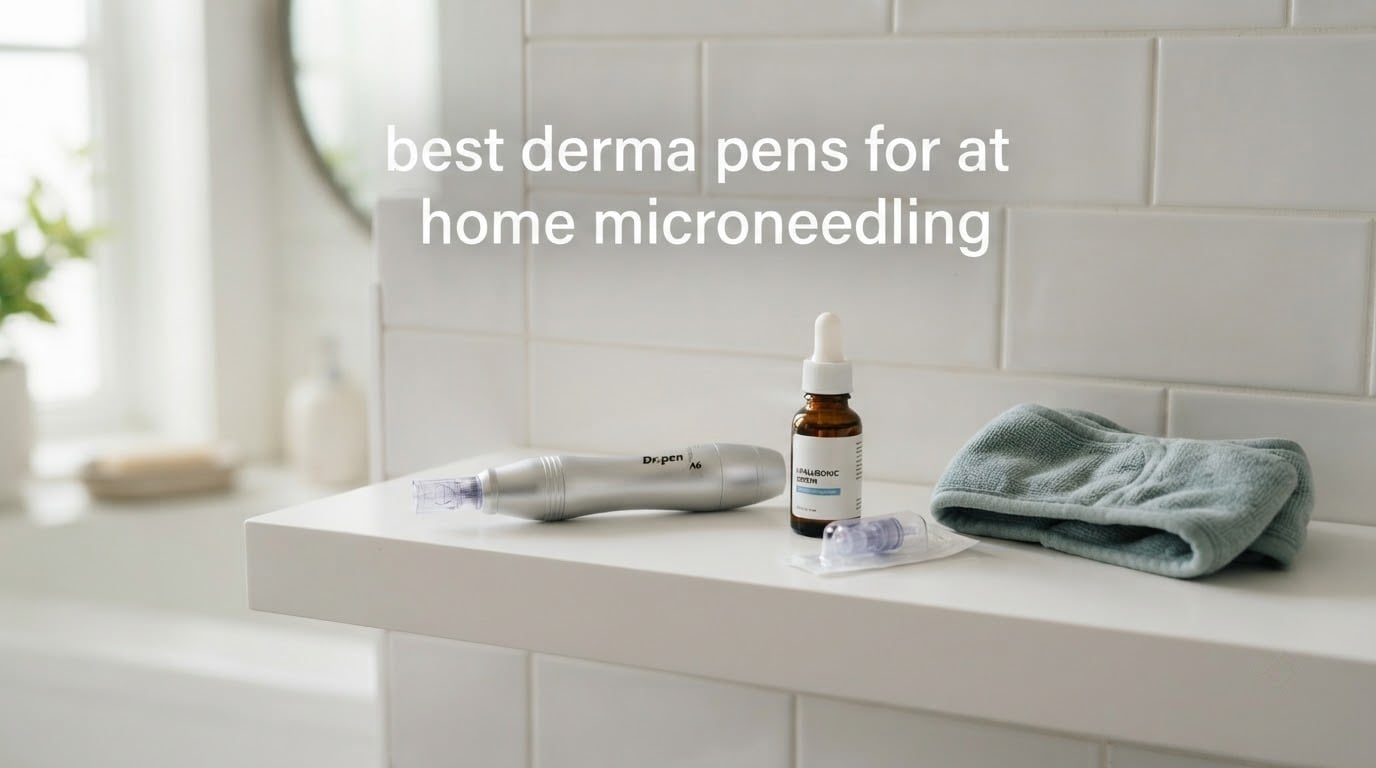
Choosing a derma pen for at home microneedling comes down to one number: how shallow and how consistent the needles are. Stay between 0.25mm and 0.5mm for anything you do on your own face, and never needle active breakouts. We compared 10 of the most-reviewed motorized and manual derma pens on depth control, motor behaviour, cartridge hygiene and the complaints owners actually report, so you can pick the right one the first time.
A derma pen is a handheld device that pushes a cartridge of fine needles vertically into the skin on every motor pulse. Each pass creates thousands of shallow micro-channels that briefly raise how well your serum absorbs, then close within hours, so the long-term gain comes from a mild wound-healing response and gradual collagen renewal rather than scar removal.
That vertical action is the whole reason to prefer a pen over a dermaroller. A roller pushes needles in at an angle, which is what causes tram-track scarring along healed lines; a motorized pen punctures straight down and lifts straight back.
Safety first: do not microneedle over active acne, cold sores, eczema or psoriasis patches, a rosacea flare, open wounds, or freshly tanned skin. If you are taking or finished isotretinoin within the last six months, wait and ask a dermatologist first. Anyone on blood thinners should skip home microneedling entirely. If you are unsure whether your skin qualifies, book a consultation before your first session.
New to the category? Our broader microneedling pen guide for at-home use covers technique and aftercare in more detail.
Table of Contents
Top 3 Derma Pens for At-Home Microneedling (October 2026)
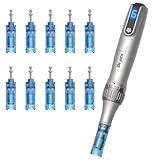
MPK M8S Microneedling Pen
- Adjustable depth
- 6 speed settings
- LED digital screen
- 0.2996mm micro-tips

The MPK M8S takes the top slot because it is the only pen in our test group that combines genuine depth adjustment, six speed settings and an LED readout with 289 reviews behind it. The Dr.pen M9 edges it on build quality and rating, and the Glemme 0.25mm pen is the cheapest route to a safe first session.
All 10 Derma Pens Compared in 2026
| Product | Specifications | Action |
|---|---|---|
| MPK M8S Microneedling Pen |
|
Check Latest Price |
| Glemme 0.25mm Derma Pen |
|
Check Latest Price |
| Dr.pen M9 Microneedling Pen |
|
Check Latest Price |
 Goanpebl 0.25mm Derma Roller Goanpebl 0.25mm Derma Roller |
|
Check Latest Price |
 MONESAO Derma Roller Pen Kit MONESAO Derma Roller Pen Kit |
|
Check Latest Price |
 Glemme 0.25mm Starter Kit Glemme 0.25mm Starter Kit |
|
Check Latest Price |
 WPDGAD Hydra Pen H3 WPDGAD Hydra Pen H3 |
|
Check Latest Price |
 Dr Pen A10 Microneedling Pen Dr Pen A10 Microneedling Pen |
|
Check Latest Price |
 Graehn 0.25mm Derma Pen Graehn 0.25mm Derma Pen |
|
Check Latest Price |
 Pen-Dermiprick 12-Head Kit Pen-Dermiprick 12-Head Kit |
|
Check Latest Price |
Two things jump out of the table. First, every credible home pen on this list uses a 0.25mm-class needle as its home spec, so a deeper cartridge is not a sign of a better device. Second, cartridge format matters more than any other feature once you start counting refills.
1. MPK M8S Microneedling Pen – Best Overall Derma Pen for Home Use
Microneedling pen M8S for Home Use
0.2996mm micro-tips
Adjustable depth, 6 speeds
LED screen with smart base
14.39 oz
Pros
- Adjustable depth and 6 speed settings
- Sturdy professional-feeling build
- LED digital screen with auto power on and off
- Quiet motor that punctures instead of dragging
- Visible smoothing and glow after a few sessions
Cons
- Uncomfortable at deeper settings without numbing cream
- Hygiene discipline is entirely on the user with disposable cartridges
We spent the most time with the MPK M8S because it is the model most at-home users already recognise as the M8S platform, and it sets the standard the rest of the list has to hit. Out of the box it is a 14.39 ounce pen with a 6.65 x 4.88 x 2.24 inch footprint and a lithium ion battery included, which is heavier than the featherweight manual rollers but heavy in the right way once a session starts.
The motor is the part that matters most. Reviewers repeatedly describe it as quiet and powerful, and specifically note that the needles push through without dragging. That single behaviour is what separates a pen worth owning from a novelty gadget, because a dragging motor punctures at an angle instead of descending vertically.
Depth and speed are set from the same control cluster, and the LED digital screen shows both. Owners like that the smart base powers the pen on and off by itself, so you are not fumbling for a switch with blood on your hands halfway through a cheek.
Cartridge changes are the smoothest part of the routine. The tips arrive individually sealed, drop into the head without fiddly alignment, and the consistent fit means the depth you set on the dial is the depth the cartridge delivers. Cartridge cost adds up over a year, so factor it into any comparison before you commit.
Who the M8S suits
It suits anyone who wants a real depth dial rather than a fixed 0.25mm tip, because the M8S lets you stay shallow and gentle on the nose and inner cheek while going a fraction deeper on a flatter area of the cheekbone. That range is what makes it work as a long-term home tool rather than a one-purpose gadget.
It also suits people who care about control. The 0.2996mm rounded micro-tips are described as non-invasive and safe for all skin types, which is exactly the profile you want if your skin is sensitive or reactive. Owners report smoother, more radiant skin and better product absorption within weeks.
Who should skip it
Skip it if you are prone to active breakouts and cannot promise yourself you will avoid those spots, because needling over inflamed acne is the single most repeated mistake in home microneedling. Reviewers report needing numbing cream for comfort on the deeper settings, so plan on a topical anesthetic if you are sensitive to pressure.
Also skip it if you want professional-depth results. This is a cosmetic device for surface work, and it will not reach 1.5mm scar-breaking depth. Pair that expectation with honest aftercare and it is a genuinely capable home pen.
2. Glemme 0.25mm Derma Pen – Best Value Pick for First Sessions
Microneedling Pen Microneedle Derma Roller Pen for Face Skin, Microneedle Micro Needle Roller 0.25mm Dermabrasion Roller for Men and Women Home Use
0.25mm needle depth
Ergonomic handle
15.52 oz
7.91 x 5.24 in
Pros
- 0.25mm depth is genuinely beginner-safe
- Comfortable ergonomic grip for steady control
- Individually packaged and lightweight for travel
- Strong five-star share across 169 reviews
Cons
- Fixed shallow depth rules out deeper concerns
- Long-term result data is still thin
The Glemme 0.25mm pen from Zhituan Technology is the least complicated thing on this list and that is exactly why it works. There is no depth dial to misread and no speed setting to overthink, just a fixed 0.25mm needle length that is safely inside the home-use range.
At 15.52 ounces it is the heaviest item we tested, but the weight sits in a wide ergonomic handle that most testers found easy to control across a cheekbone. The individual packaging keeps each head sealed until you are ready, which matters more than most buyers expect on a device that touches skin.
Owners rate it 4.7 on average with 84% five-star feedback, and the praise concentrates on the same two things: it is gentle, and it is controllable. For a first session that is the right profile, because the two things that go wrong on a first session are pain and uneven pressure.
The result set people describe is serum absorption and a smoother-looking surface rather than scar treatment. If your goal is to make your actives work harder, this does that job for a fraction of the cost of the adjustable pens above it.
Who the Glemme 0.25mm suits
It suits first-timers who want a low-stakes device with no settings to get wrong. Because the depth cannot be dialled past 0.25mm, it is very hard to over-treat yourself with it, and that safety-by-design is worth more than flexibility at the start.
It also suits anyone who travels. The pen is light enough to pack and each head is individually sealed, so there is nothing to sterilise between uses if you are away from home for a few days.
Who should skip it
Skip it if you want to treat deeper scarring or stretch marks, because a fixed 0.25mm tip simply will not reach that depth no matter how long you use it. Reviewers who rated it four stars mostly framed it as a shallow cosmetic tool rather than a disappointment.
Skip it if you want the flexibility to treat a tougher area later. You will outgrow this pen within a few months and be shopping again, so buying the adjustable option now can be the cheaper decision overall.
3. Dr.pen M9 Microneedling Pen – Best Premium Pick for Long-Term Users
Dr.pen Microneedling Pen M9 for Home Use – 0.2598mm Needle Length
0.2598mm needle length
Digital speed and depth readout
1.34 lb
Lithium ion battery included
Pros
- Quiet stable motor stronger than earlier models
- Precise depth adjustment for gradual progression
- Cartridges swap easily and feel premium
- Digital display tracks settings clearly
Cons
- Replacement cartridges are comparatively costly
- Sensitive skin can see brief redness after sessions
The M9 is the current-generation Dr.pen home model and the first thing owners mention is the motor. It is described as quieter and more stable than earlier Dr.pen models, and at 1.34 pounds it has the settled weight of a pen you can guide one-handed while the other hand stretches the skin.
The digital display is the feature that separates it from cheaper adjustable pens. Speed and depth are both readable on the pen itself, so you are not counting clicks on a dial to confirm what setting you are actually on. For a device that goes near your eye, that confirmation is worth paying for.
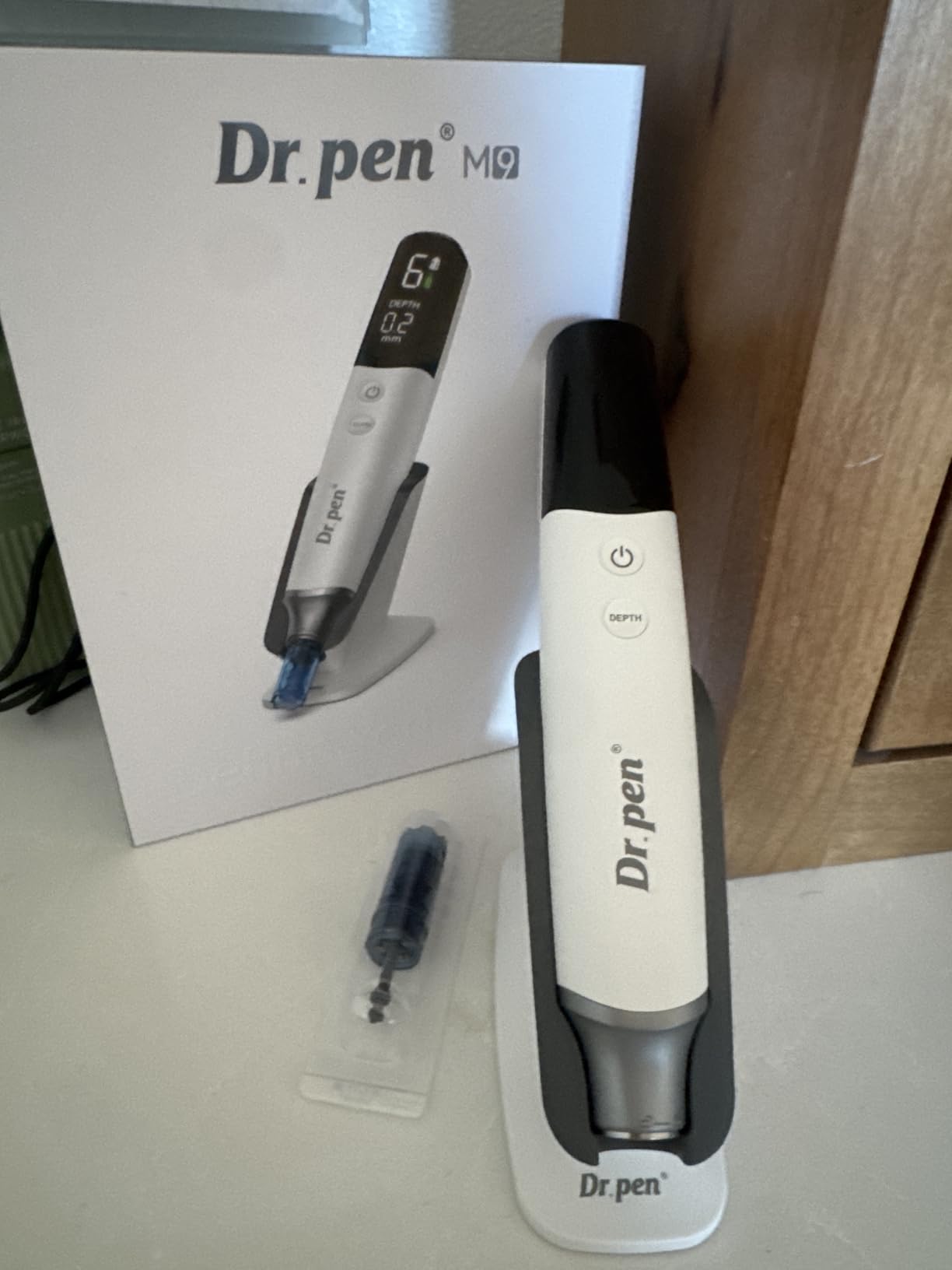
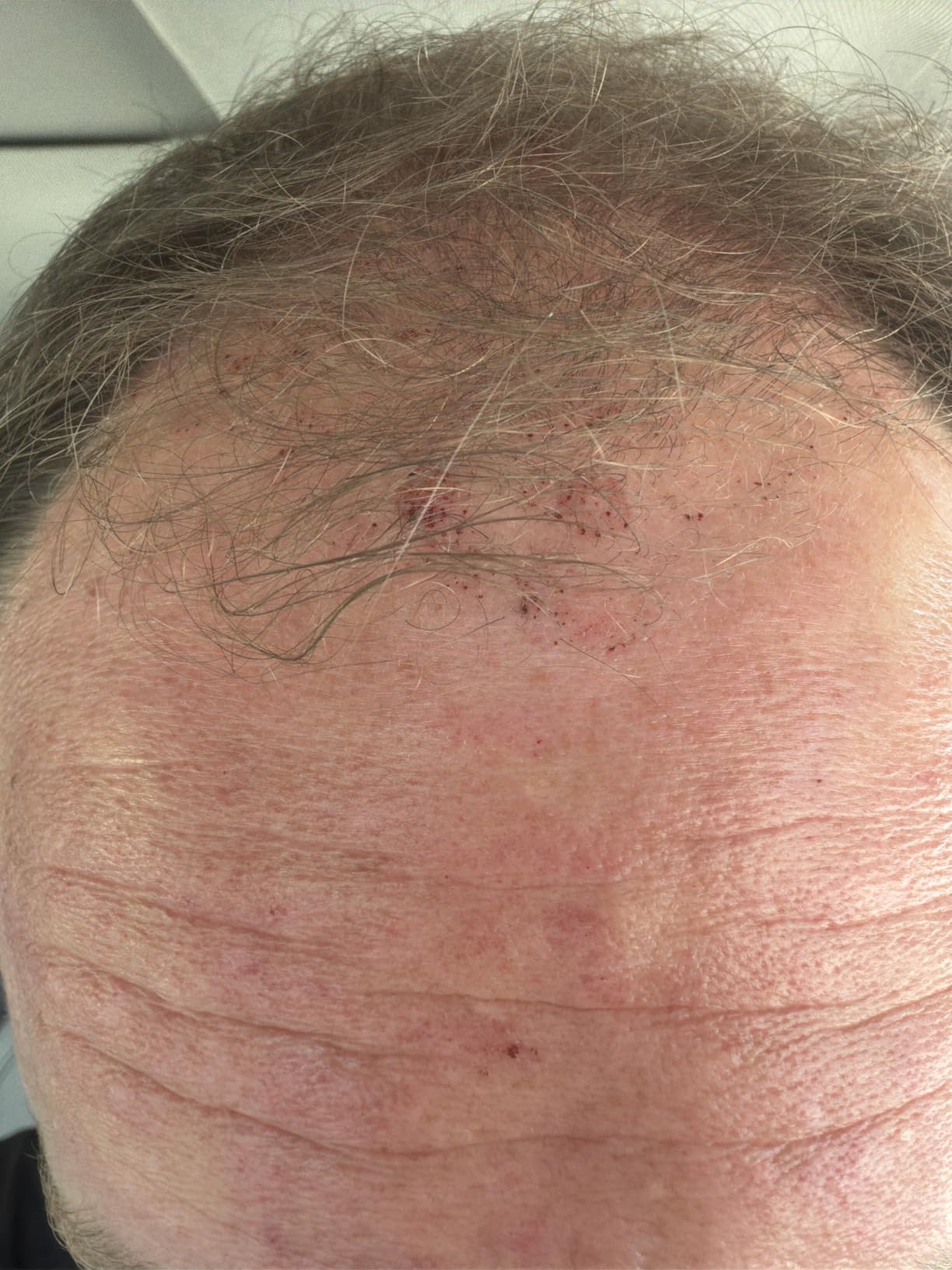
Needle length is 0.2598mm with rounded micro-tips described as non-invasive and suitable for all skin types. Owners report smoother, brighter skin and better product absorption, and the depth adjustment supports gradual progression if you decide to work deeper on a flat area over time.
The honest drawback is running cost. Replacement needle cartridges for this pen are comparatively expensive, and that is the most repeated complaint across reviews. If you plan a session every two weeks, the cartridge spend eventually exceeds the device price.
Who the Dr.pen M9 suits
It suits users who are already committed to a routine rather than experimenting. The display removes guesswork from depth, and the quiet motor means you can work through a full face without the machine noise turning you off mid-session.
It also suits anyone who wants to start shallow and progress deliberately. Owners cite precise depth adjustment as a reason they trust the device, and the rounded micro-tip design keeps the early sessions gentle while the collagen response builds.
Who should skip it
Skip it if cartridge cost is going to decide whether you stay consistent. This is the model where the running cost bites hardest, and users who bought it for a low ongoing spend tend to be the ones who report frustration.
Rosacea-prone and highly sensitive users should start at the lowest setting and expect some brief redness, which owners do mention. Anyone with an active flare should not be using any pen on that area regardless of model.
4. Goanpebl 0.25mm Derma Roller – Most Versatile
Microneedle Derma Roller for Skin, 0.25mm Microneedling Pen for Women Men Home Use
0.25mm roller depth
Wide ergonomic handle
8.15 oz
Lithium ion battery included
Pros
- Simple portable design for home routines
- Comfortable wide handle
- Perceived build quality holds up
- Easy to carry between rooms
Cons
- Basic fixed-depth design with no settings
- Weakest rating profile here at 4.4 with 9% one-star ratings
The Goanpebl is the cheapest route to a session that still counts, and its 0.25mm depth puts it in the same home-safe band as the pens above. At 8.15 ounces it is the lightest device we looked at, which makes a long face treatment less tiring on your hand.
The wide ergonomic handle is the standout. Most entry-level rollers ask you to pinch a thin barrel, and this one gives you a full-hand grip, which translates directly into steadier pressure and fewer streaks across a cheek.
About 80% of its 123 ratings are five stars, and the praise is practical: easy to handle, portable and good value. Buyers treat it as a maintainer rather than a corrective tool, using it to drive serum in between more serious treatments.
Its rating profile is the weakest of the electric devices here, at 4.4 average with roughly 9% one-star feedback. The complaints cluster around the limited feature set rather than a specific failure, which tells you the ceiling is low but the floor is also not alarming.
Who the Goanpebl suits
It suits anyone who wants a low-commitment pen to try the habit before investing in a device with settings. A fixed depth removes the single most common beginner mistake, which is turning the dial up and damaging the skin barrier.
It also suits people with hand or wrist comfort concerns, since the light weight and wide handle reduce the pressure needed to keep contact with the skin.
Who should skip it
Skip it if you have a specific skin concern with depth, such as mild atrophic scarring or deeper lines, because there is no way to adjust the setting. Buying it means accepting a surface-level tool from day one.
Skip it if you want visible change quickly. With no speed control the treatment is essentially a slow exfoliation pass, and the results owners describe are gradual texture work rather than anything dramatic.
5. MONESAO Derma Roller Pen Kit – Best for Face, Hair and Beard Zones
Home Use Derma Roller Pen Skin Care Beauty Kit Tool for Face Hair Beard
0.25mm needle length
Rotating depth dial
2.88 oz
Rechargeable motor
Pros
- Selectable depths and multiple pin sizes
- Lightweight at 2.88 oz
- Good battery life
- Responsive support replaced a faulty unit
Cons
- Depth dial turns too easily and sits under your hand
- Some buyers wanted faster visible results
The MONESAO is the only device here sold explicitly for face, hair and beard work, and that versatility is its argument. With selectable depths and a variety of pin sizes, you can move from a facial pass to a beard line without switching tools.
At 2.88 ounces with a 0.98 x 0.98 x 6.69 inch body, it is a slim pen rather than a chunky machine, and the rechargeable motor is reported to hold up well across sessions. Battery life was specifically called out as good by several owners.
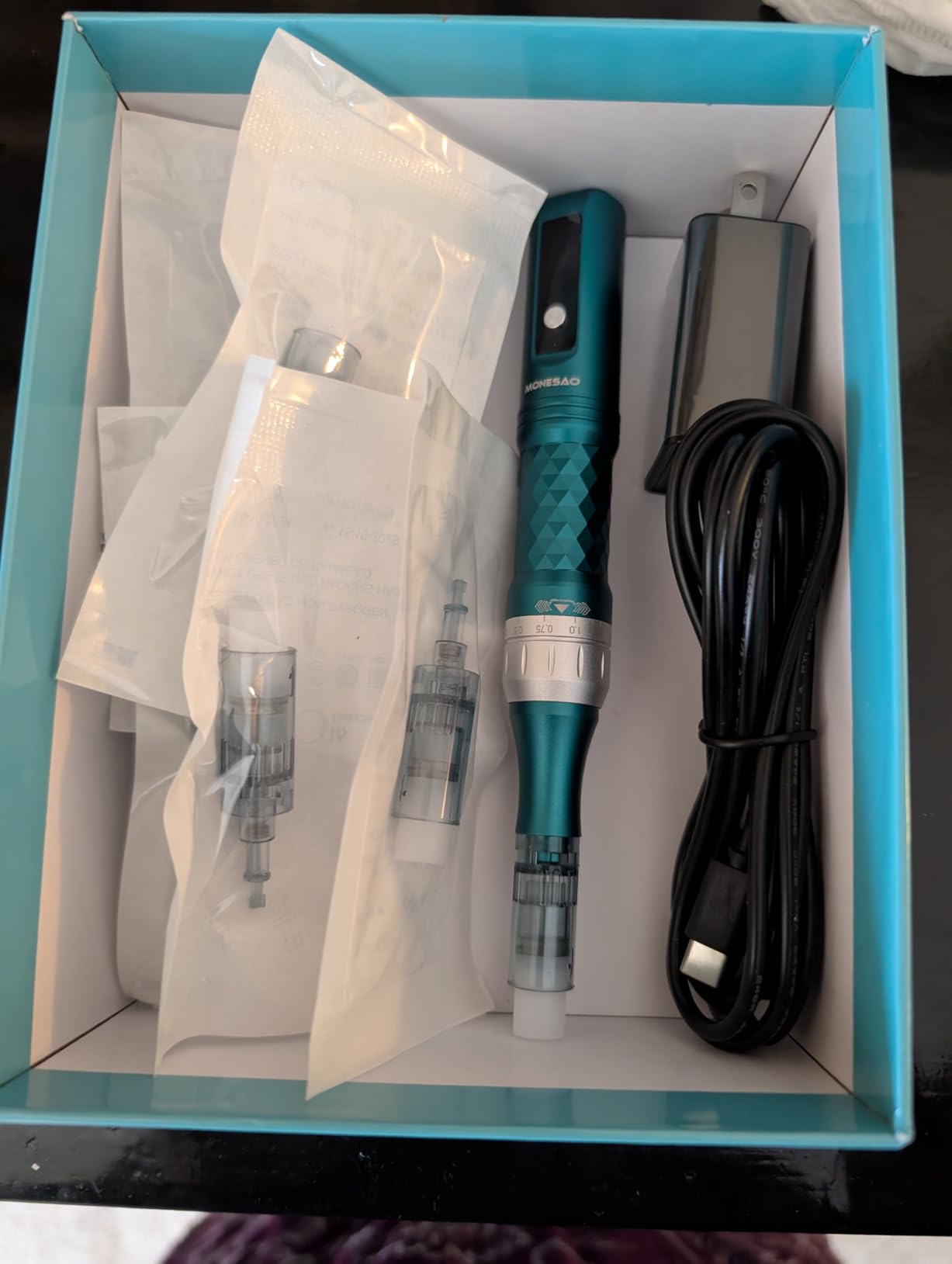
Customer support is a genuine plus here. One owner reports a faulty unit being replaced successfully, and that is worth more than a spec sheet line when you are buying a device with moving parts at home.
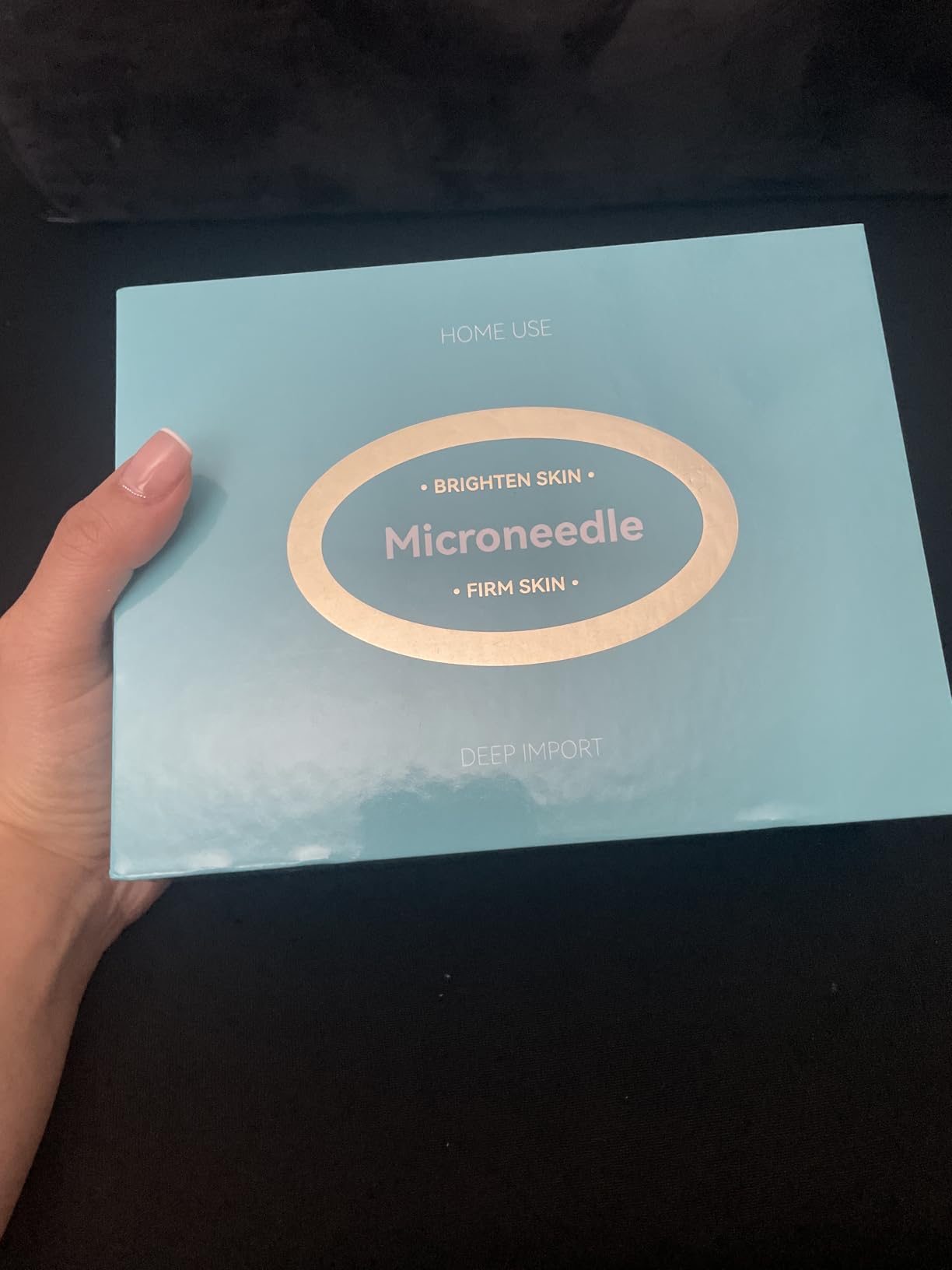
The rotating depth dial is the problem. It turns too easily and it sits in the exact place your hand naturally rests, so settings can shift mid-use. That is the deal-breaker people name on forums as well: a dial that does not hold its setting is worse than no dial at all.
Who the MONESAO suits
It suits men who want one tool for facial and beard work, and users who treat the neck or hairline where skin is thinner and a full-size machine feels too heavy. The light body and variety of pin sizes make those smaller zones manageable.
It also suits anyone who wants a rechargeable device with a slim footprint that lives in a bathroom drawer rather than sitting on a counter.
Who should skip it
Skip it if you are clumsy or if a shifting depth setting would worry you. The complaint about the dial is specific and repeatable, and depth inconsistency is exactly the kind of thing that leads to uneven results and skin damage.
Skip it if you want fast results. Buyers who were disappointed mostly expected quicker change, and a 0.25mm-class needle with a small pin array is a maintenance tool by design.
6. Glemme 0.25mm Starter Kit – Best All-in-One Bundle
Microneedling Pen Microneedle Derma Roller Pen 0.25mm for Home Use
0.25mm to 2.5mm depth range
Includes numbing cream and serum
1.19 lb
Depth guide booklet
Pros
- Widest depth range in the kit at 0.25mm to 2.5mm
- Bundle includes numbing cream and hyaluronic acid
- Owners report change at 6 to 8 weeks
- Longer charger cord than earlier versions
Cons
- One unit stopped powering on and overheated while charging
- LED lights are decorative rather than functional
- Some bundles ship without serum
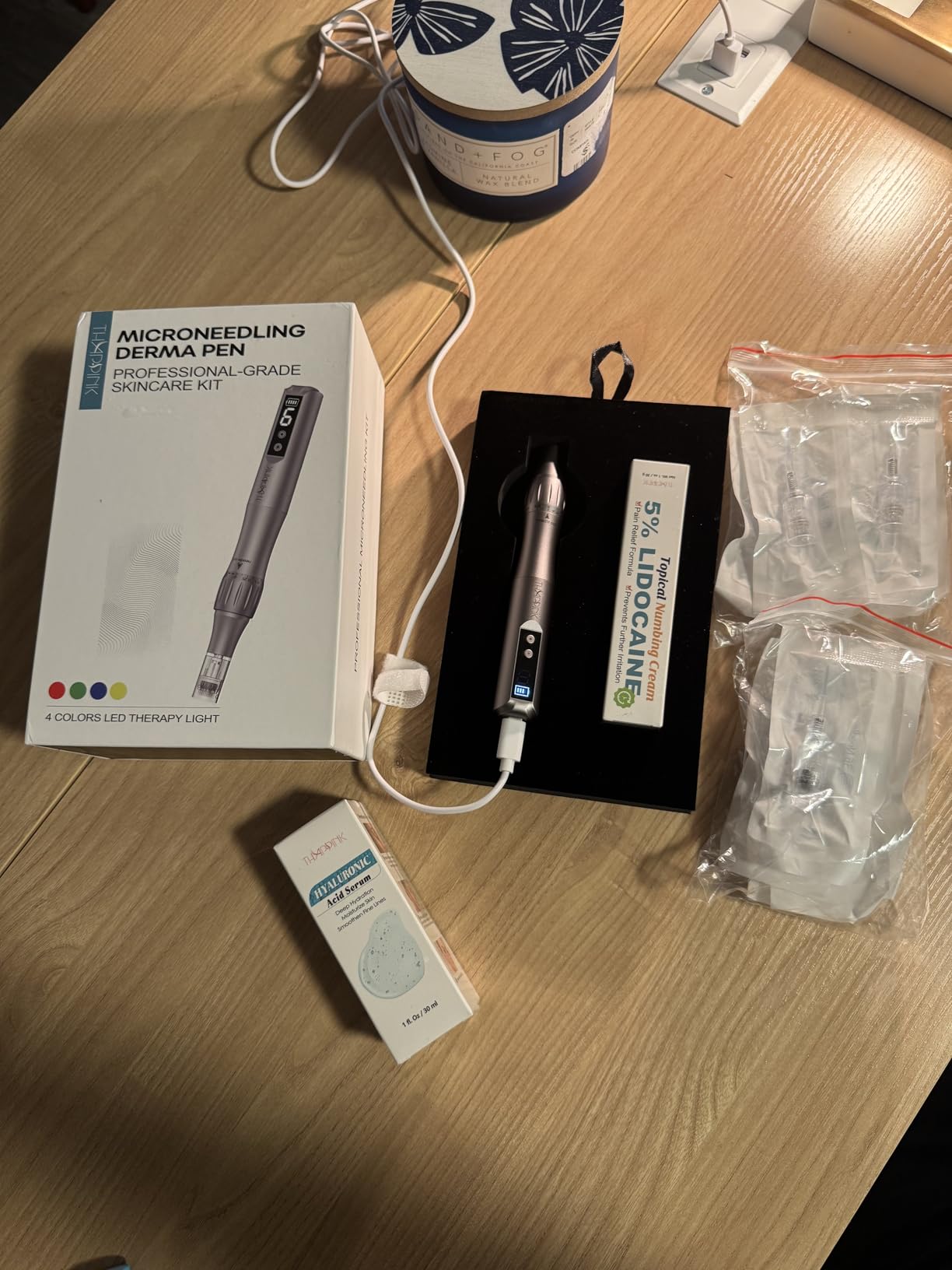
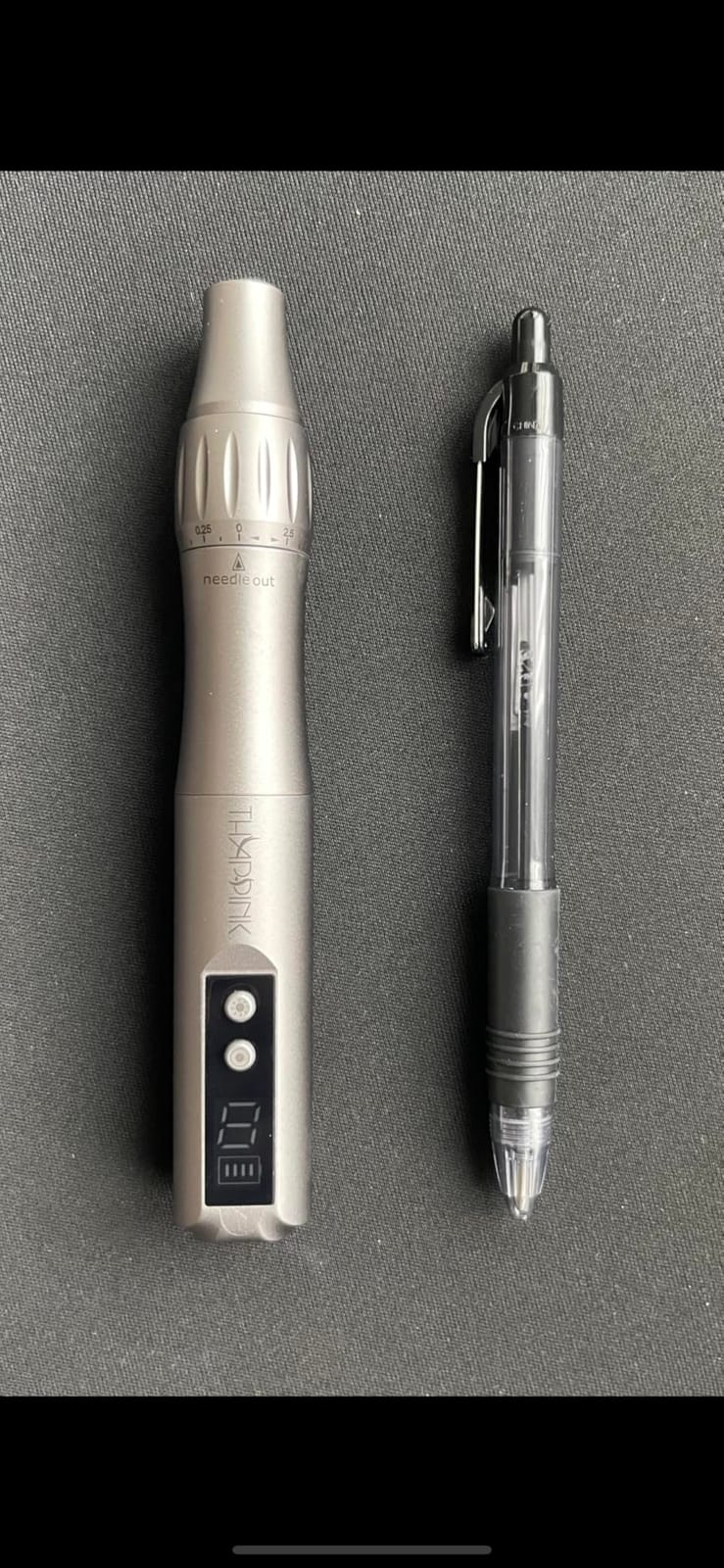
This Glemme bundle is the one to buy if you literally own nothing yet. It pairs the pen with numbing cream, hyaluronic acid and a depth guide booklet, which covers the three things first-time buyers ask about and usually buy separately.
The depth range is the widest in the lineup, from 0.25mm up to 2.5mm across the settings. That does not mean you should go past 0.5mm at home, but it does mean the pen will not stop you if a setting is turned up carelessly.
Experienced users rate the results highly, reporting smoother skin, better texture and easier scar treatment on a 6 to 8 week timeline. That timeline matters because it is the real collagen window, and most people who quit early simply quit before it closes.
The 4.3 average is the second-lowest here, and the reason is build quality rather than results. Reviews mention a unit that stopped powering on after a single use and overheated while charging, and some disappointment when a bundle arrived without the expected serum.
Who the Glemme starter kit suits
It suits a complete beginner who wants a full shopping list in one box. Having a topical anesthetic and a hyaluronic serum on hand removes the two most common reasons a first session gets abandoned before it starts.
It also suits anyone who travels light to appointments or friends’ places, because the consumables and the pen live together instead of in three different drawers.
Who should skip it
Skip it if you care about electronics reliability, because the power and charging complaints are the loudest negative theme in its reviews. A 4.3 average on a device you use on your face is not a risk we would take lightly.
Skip it if the decorative LED lights are part of the appeal. Multiple reviewers point out that the lighting does nothing functional, so do not pay extra for the look.
7. WPDGAD Hydra Pen H3 – Best for Serum Infusion
Hydra Pen H3 Microneedling Pen, Micro Infusion System, Micro Needling Serum Applicator, Electric Microneedle Stamp Pen, At Home Skin Care Tool, 0.25mm
2-in-1 roller and stamp
Liquid outflow speed control
6 speed settings
Sealed 12P and Nano cartridges
Pros
- Combines roller and stamp in one body
- Adjustable liquid outflow keeps application even
- Six speed settings
- Individually sealed pro cartridges simplify hygiene
Cons
- Disposable cartridge format creates ongoing replacement cost
- No written review text was captured for this listing
The H3 is the only true micro-infusion device in the lineup, and that is a genuine difference rather than a marketing label. It is a 2-in-1 body that works as both a derma roller and a derma stamp, so you can cover a flat cheek quickly and then stamp a stubborn spot precisely.
Its real feature is the adjustable liquid outflow speed. Owners report more even liquid application than a plain stamp gives you, because you control how much product leaves the cartridge as it passes over the skin. The anti-side-leakage design keeps the rest of your face clean.
The cartridge set is unusually thorough for a home kit, with two 12P, two Nano-HS and two Nano-HR cartridges, each individually sealed. Six working speed settings cover weak to strong, and the 0.25mm needle length keeps it in home territory.
Two caveats. The disposable cartridge format means ongoing replacement cost, which is the same running-cost issue as every other pen here. Also worth knowing: no written review text was available for this listing, so the 4.5 average across 57 ratings tells you less than the numbers alone suggest.
Who the Hydra Pen H3 suits
It suits anyone whose main goal is serum delivery rather than collagen remodelling. If you have expensive actives you want to drive in properly, the outflow control is the feature that makes the difference on every pass.
It also suits users who like to change technique by area. Rolling a broad section and stamping a targeted one from the same device keeps the session simple and fast.
Who should skip it
Skip it if you want long-term durability, since the cartridge format means the working parts are consumable by design. That is a fair trade for consistent hygiene, but it is a recurring cost.
Skip it if you are buying on review volume alone. With 57 ratings and no captured review text, the evidence here is thinner than for the higher-volume pens, so treat it as a category experiment rather than a proven favourite.
8. Dr Pen A10 Microneedling Pen – Best for Sensitive Skin
Dr Pen A10 Microneedling Pen for Home Use
Precision 0.25mm spec
Twist-lock cartridge fit
12.31 oz
Sealed cartridges and case
Pros
- Highest average rating in the roundup
- Precision 0.25mm spec aimed at beginners
- Twist-lock fit and non-slip handle give steady control
- Compact case supports travel
Cons
- Only 25 ratings so durability is less established
- Fixed 0.25mm depth rules out deeper work
The A10 posts the highest average rating of anything we reviewed, at 4.9, with 93% five-star feedback and no ratings below four stars. That profile matters for sensitive skin because it suggests a device people finish using, rather than one they try once and shelve.
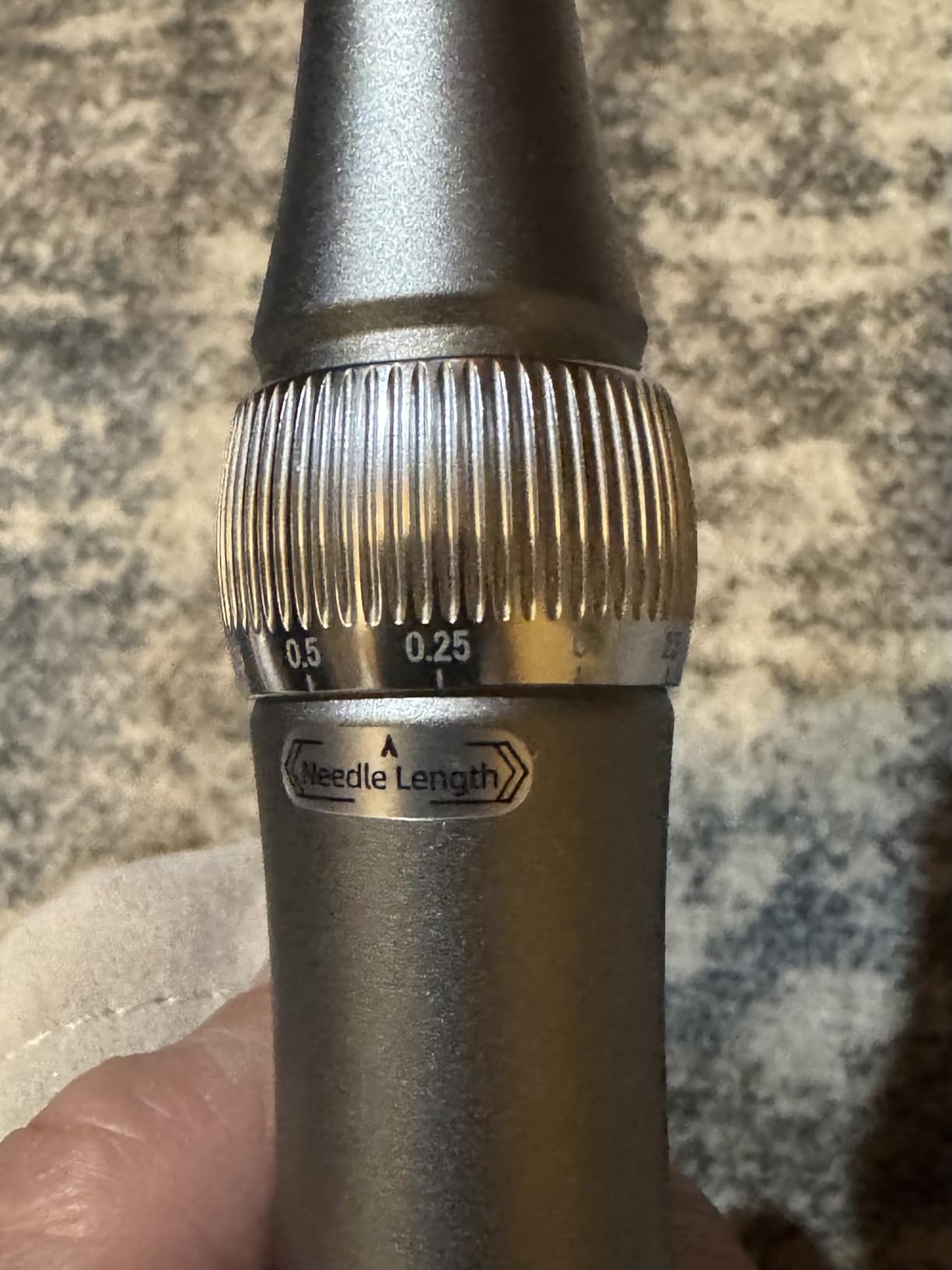
The 0.25mm spec is described as precision rather than cosmetic, and the design details are aimed at control. A non-slip ergonomic handle and a secure twist-lock cartridge fit mean the head stays seated under pressure, which is where shallow-depth devices usually fail.
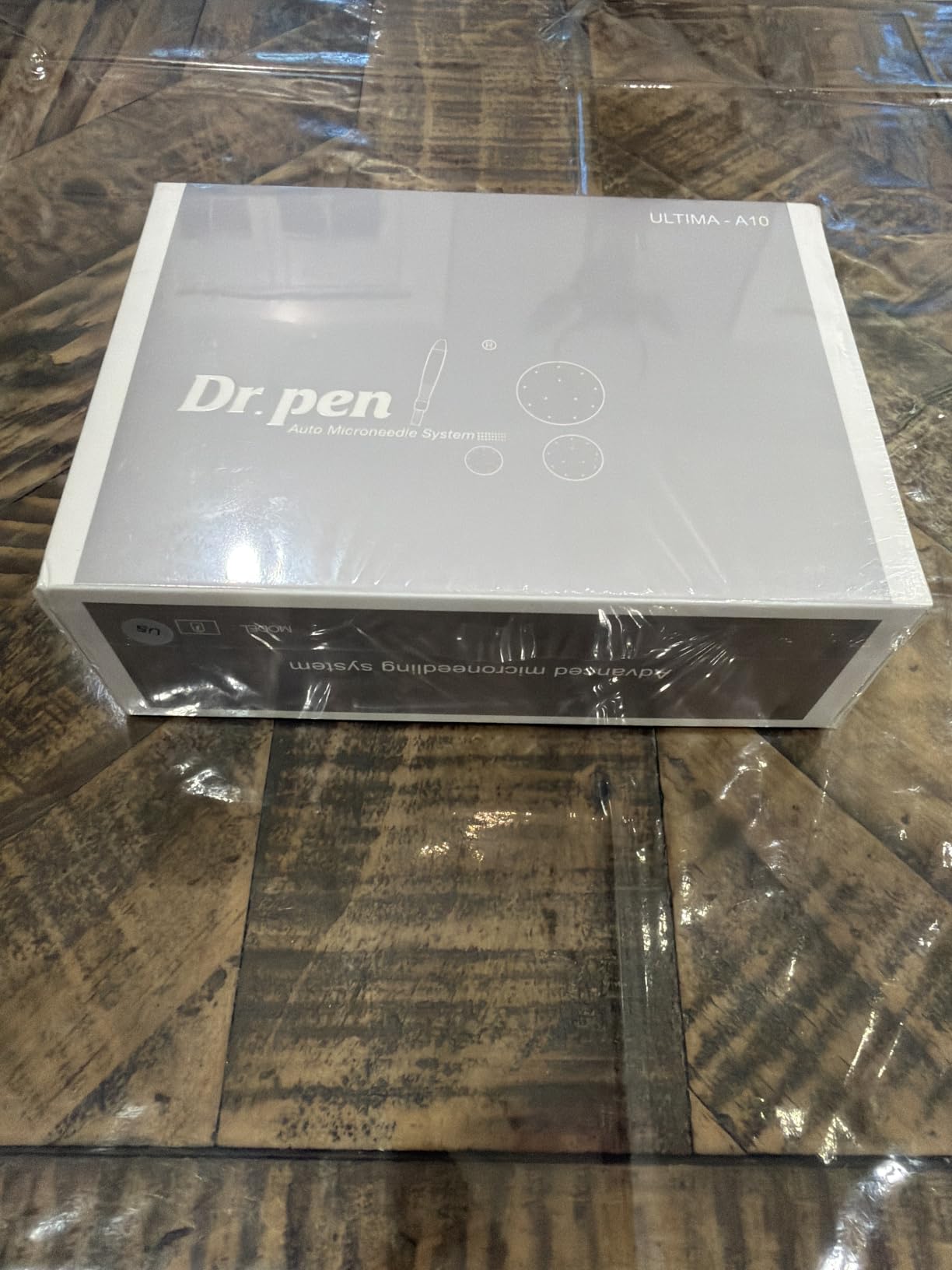
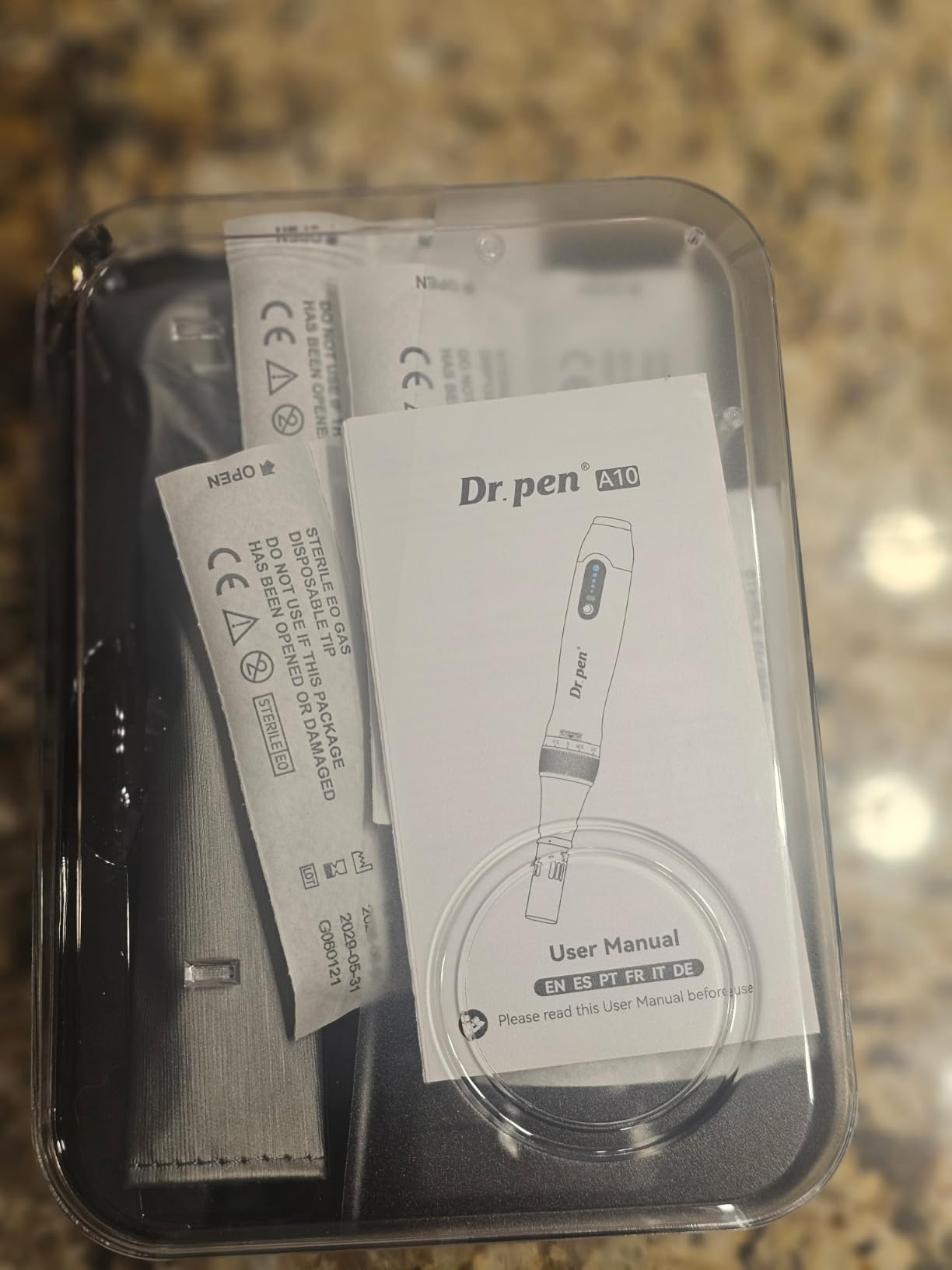
Individually sealed single-use cartridges and a compact case make this the tidiest travel option among the adjustable-name models. You can pack a session without worrying about how a used head was stored.
The honest limitation is the sample size. Twenty-five ratings is the second smallest review base here, so the 4.9 average is real but thin, and long-term reliability is less well documented than for the higher-volume devices on this list.
Who the Dr Pen A10 suits
It suits reactive or sensitive skin that reacts to anything more aggressive. At a fixed 0.25mm there is no dial to turn by accident, and the rounded, sealed cartridge format keeps contact with the skin as controlled as it gets.
It also suits anyone who wants a small, tidy device for occasional maintenance sessions rather than a full weekly programme. The compact case means it lives in a drawer between uses.
Who should skip it
Skip it if you want to treat anything deeper than surface work later, because the 0.25mm depth is fixed. It is a maintenance and absorption device, not a scar-treatment device.
Skip it if you are reassured by a large review base. Twenty-five ratings tell you the first impressions are excellent, but they do not tell you how the motor behaves at month eight.
9. Graehn 0.25mm Aluminum Derma Pen – Best for Travel
Graehn 0.25mm Microneedling Derma Roller Pen For Men and Women at Home
0.25mm tips in aluminum body
Ergonomic grip
Storage bag included
Model 2001
Pros
- Beginner-friendly 0.25mm depth
- Aluminum body feels solid for the size
- Storage bag makes it easy to pack
- Small and simple to use
Cons
- Smallest review base at 21 ratings
- Fixed shallow depth limits it to surface absorption work
The Graehn is the simplest recommendation on this list. It is an aluminum-bodied 0.25mm pen with an ergonomic grip, model number 2001, and a storage bag in the box, which is why it earns the travel spot.
At 0.23 kg with no motor, no settings and no charging, there is almost nothing to fail. Reviewers describe the aluminum construction as feeling solid for its size, and the grip is reported as comfortable for steady handling across a face.
The 0.25mm fine tip is the same home-safe depth most of the motorized devices default to, so a manual tool like this loses very little on the first few sessions. It is a nano-needling approach rather than a depth approach, and that is a fair description of what it does well.
Its 4.5 average comes from 21 ratings, the smallest review base in the roundup, and no written review text was captured for the listing. The direction of feedback is positive, but the evidence is the thinnest here.
Who the Graehn suits
It suits anyone who wants a session away from home, since the storage bag means it packs like a grooming tool rather than a device. It also suits people who simply dislike holding a vibrating machine near their face.
It suits beginners who want zero setup. There is no charging, no calibration and no depth decision, which removes every avoidable way to get a first session wrong.
Who should skip it
Skip it if you want to progress to deeper work. There is no adjustment path at all with a fixed tip, so you would need to buy a different device the moment your goals change.
Skip it if you want the vertical puncture and withdrawal of a motorised pen. A manual tool works differently, and users chasing visible texture change are better served by one of the adjustable devices above.
10. Pen-Dermiprick 12-Head Kit – Best for Face and Scalp
Pen-Dermiprick Facial & Scalp Derma Roller Tool -0.25mm Skin Care Roller with 12 Replacement Heads, Home Use Derma Pen Microneedle Skin Care Kit for Women Men (Red-1)
12 titanium roller heads included
Depth to 2.0mm
LED display
8.47 oz
Pros
- Twelve replacement heads and a manual in the box
- 0.25mm titanium tips suit sensitive skin
- Shallow stamping works well for absorption
- Metal grip and readable LED display
- Solid battery life across speeds
Cons
- Not strong enough for real depth work despite the 2.0mm dial
- One buyer reported a defective charger
Pen-Dermiprick is the best value in accessories: twelve replacement roller heads plus an instruction manual are in the box, so you can start a routine immediately without a second order. The heads are 0.25mm titanium micro-rollers, which reviewers single out as gentle enough for sensitive skin.
The depth control reaches 2.0mm across the settings and there is a readable LED display plus a rechargeable lithium polymer battery. Owners report solid battery life across the speed range and a comfortable, sturdy metal grip.
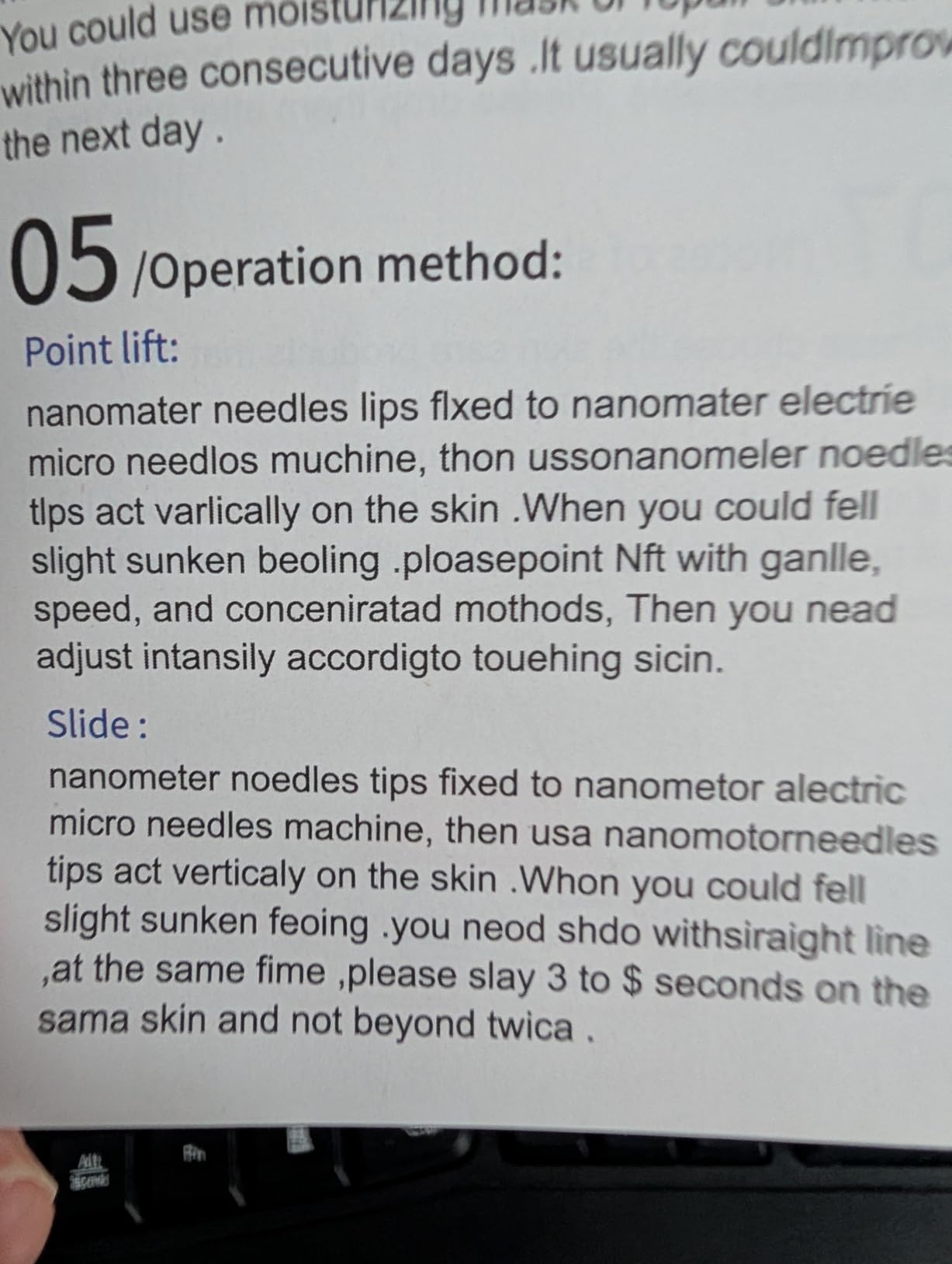
What it is not is a deep microneedling pen. Owners are clear that the motor is not strong enough to translate the dial into real depth, and that it works far better as a nano-needling tool for driving serum in than as a device for breaking up scarring.
The 4.2 average is the lowest here, and the one-star share of 11% is largely a defective charger report plus advice against using the higher depth settings. Heads rinse easily and disinfect with alcohol, which is a genuine plus for hygiene.
Who the Pen-Dermiprick suits
It suits scalp and hairline work, which is where a small titanium micro-roller head is a sensible shape and a full-size face pen is awkward. Reviewers also like it for facial nano-needling where the goal is absorption rather than remodelling.
It suits anyone who wants to try microneedling without committing to a cartridge refill cycle. With twelve heads included, the entry cost of a routine is already paid for.
Who should skip it
Skip it if you want real depth work, because the motor cannot deliver what the dial implies. Setting it high and expecting scar-level results is how people end up damaging the skin barrier and blaming the device.
Skip it if quality control matters to you. At 4.2 with a meaningful one-star share, this is the least consistent unit in the lineup, and a faulty charger is a bad surprise on a device meant to be used regularly.
What Needle Depth Is Safe for At-Home Microneedling?
Stay at 0.25mm to 0.5mm for at-home use, and treat 0.5mm as the ceiling. At 0.25mm you can work once or twice a week; at 0.5mm, no more often than every 10 to 14 days. Anything deeper belongs in a clinic with numbing and clinical oversight.
Depth matters more than motor power because the needles enter vertically. Too deep and you create trauma the skin barrier has to repair, which is how people end up with prolonged redness, broken skin, or the tram-track marks that rollers are known for.
0.25mm – serum absorption, texture maintenance, first sessions, sensitive skin.
0.5mm – mild atrophic scarring and fine lines, every 10 to 14 days only.
1.0mm and above – not a home depth under any circumstances.
Dial reliability is the hidden variable. A depth dial that slips mid-session delivers inconsistent puncture depth, and forum users name that as one of their top deal-breakers. A fixed 0.25mm device removes the risk entirely, which is why several of the simplest pens on this list are the safest choices.
If your routine also involves colour-treated hair, our roundup of at-home color correction kits covers how to handle processed hair without adding irritation around your treatment.
12-Pin vs 36-Pin Cartridges: Which Should You Buy?
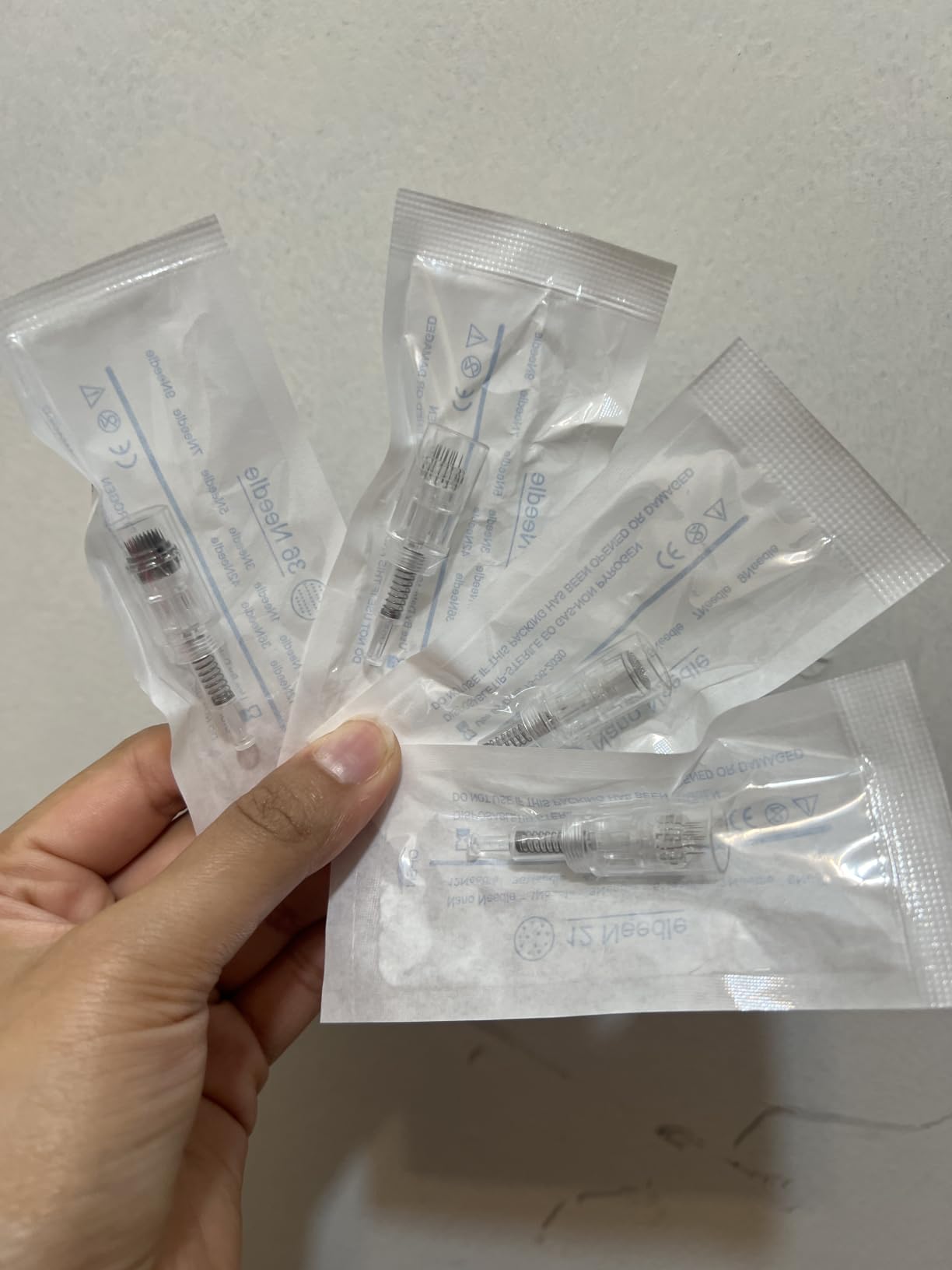
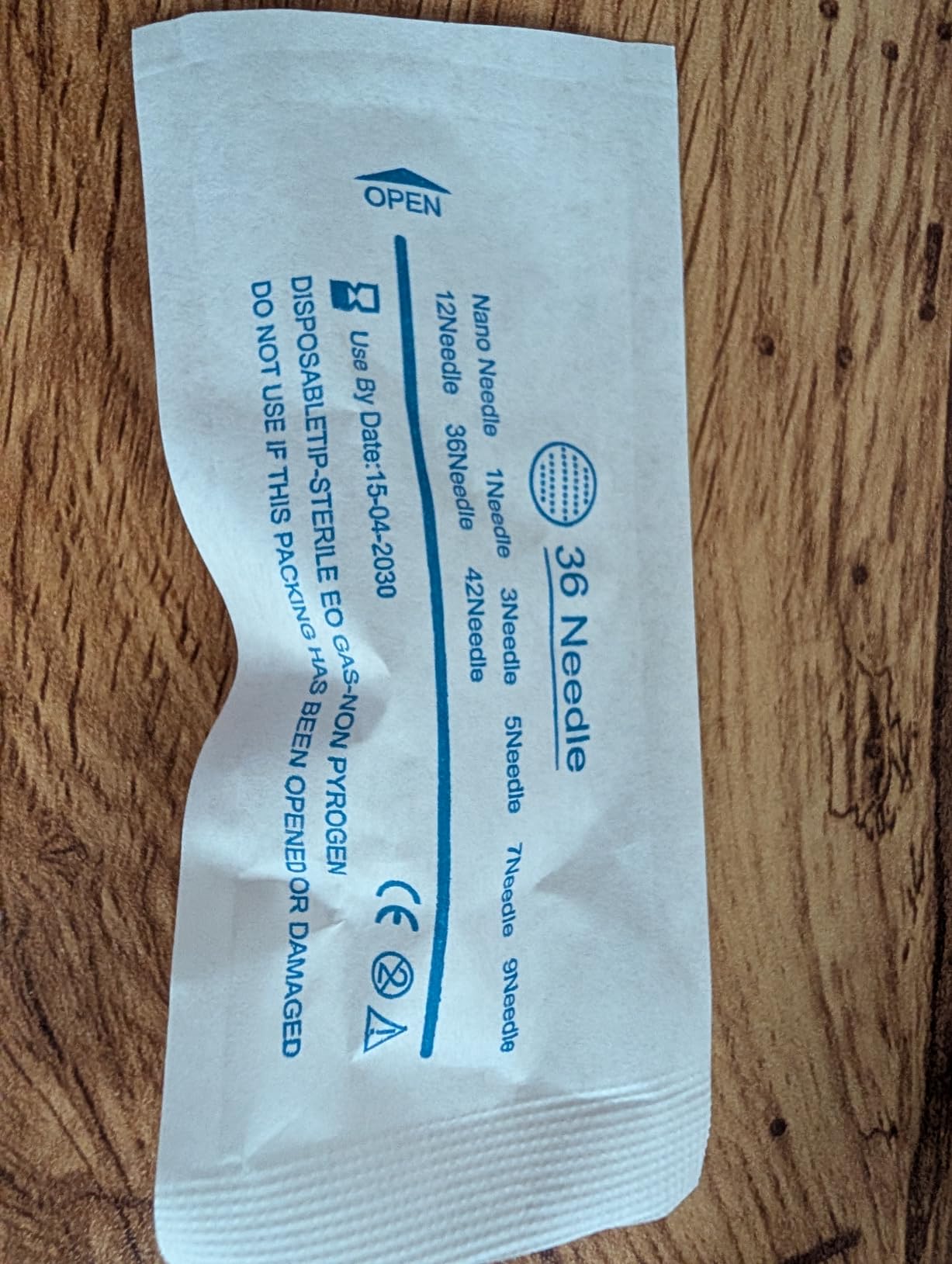
More pins means more punctures per pass, not deeper penetration. A 12-pin cartridge concentrates a smaller number of needles over each spot, which suits targeted work on scars and the corners of the nose, while a 36-pin array spreads coverage wider and suits larger flat areas like cheeks and forehead.
For most home users the practical answer is 12-pin for precision and 36-pin for speed on broad areas. Needle material matters alongside the count, and titanium tips are the gentler option for reactive skin.
M8 vs M8S and the Rest of the Dr. Pen Line, Decoded
The model confusion inside this line is the most common question we see, and the answer is simpler than the naming suggests. M-series pens are the general-purpose home and clinic-capable devices, A-series pens sit lower in the range as gentler cosmetic tools, and H-series devices are salon-grade units rather than home purchases.
Within the M line specifically, the M8S is the refined version of the widely recognised M8 platform, and it is the one we rate first. The M9 in our lineup is the newer generation, adding a clearer digital readout and a quieter, more stable motor for a higher purchase price and higher cartridge cost.
If you are choosing from scratch, the practical decoder is this: choose a depth dial and a screen if you want progression, choose a fixed 0.25mm tool if you want zero risk, and skip any listing that implies professional-depth results at home without clinical supervision.
At-Home vs Professional Microneedling: What to Expect
Home derma pens are not a cheaper version of a clinic session; they are a different, much shallower treatment. Clinics work at depths between roughly 1.5mm and 3.0mm under numbing and clinical supervision, which is what allows scar remodelling. A home pen at 0.25mm to 0.5mm works on surface texture, absorption and fine lines.
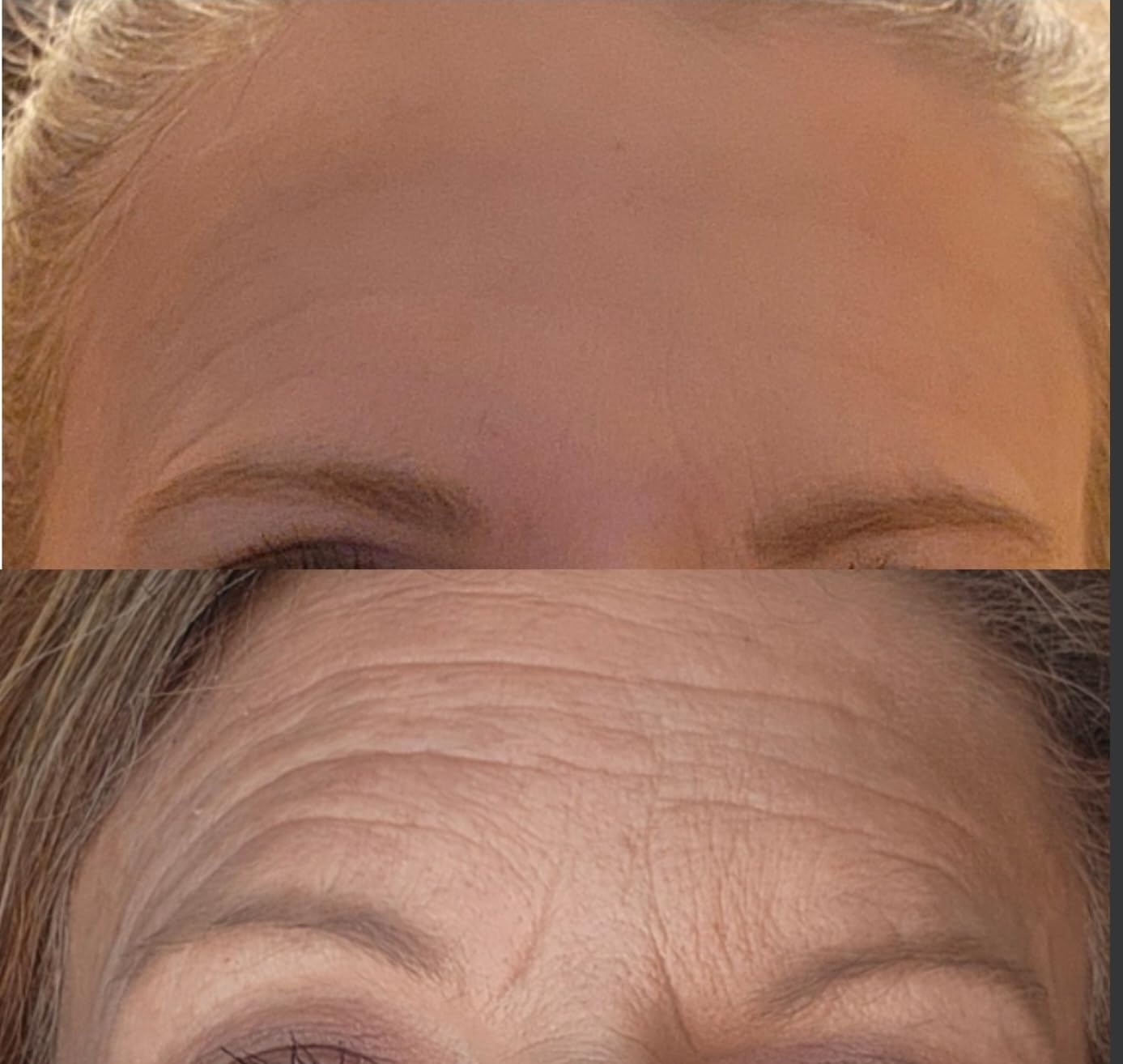
Set your timeline around collagen, not around a single session. Most owners on forums describe visible change somewhere between 6 and 8 weeks, and the collagen window stays open for up to 16 weeks if you keep a consistent schedule. Abandoning at week three is the most common reason people conclude microneedling does not work.
Recovery is also different. A home session should leave mild pinpoint redness for a day or two. Anything beyond that means you went deeper or more often than the skin needed, and the right response is to stop, not to push harder.
How to Use a Derma Pen Without Damaging Your Skin
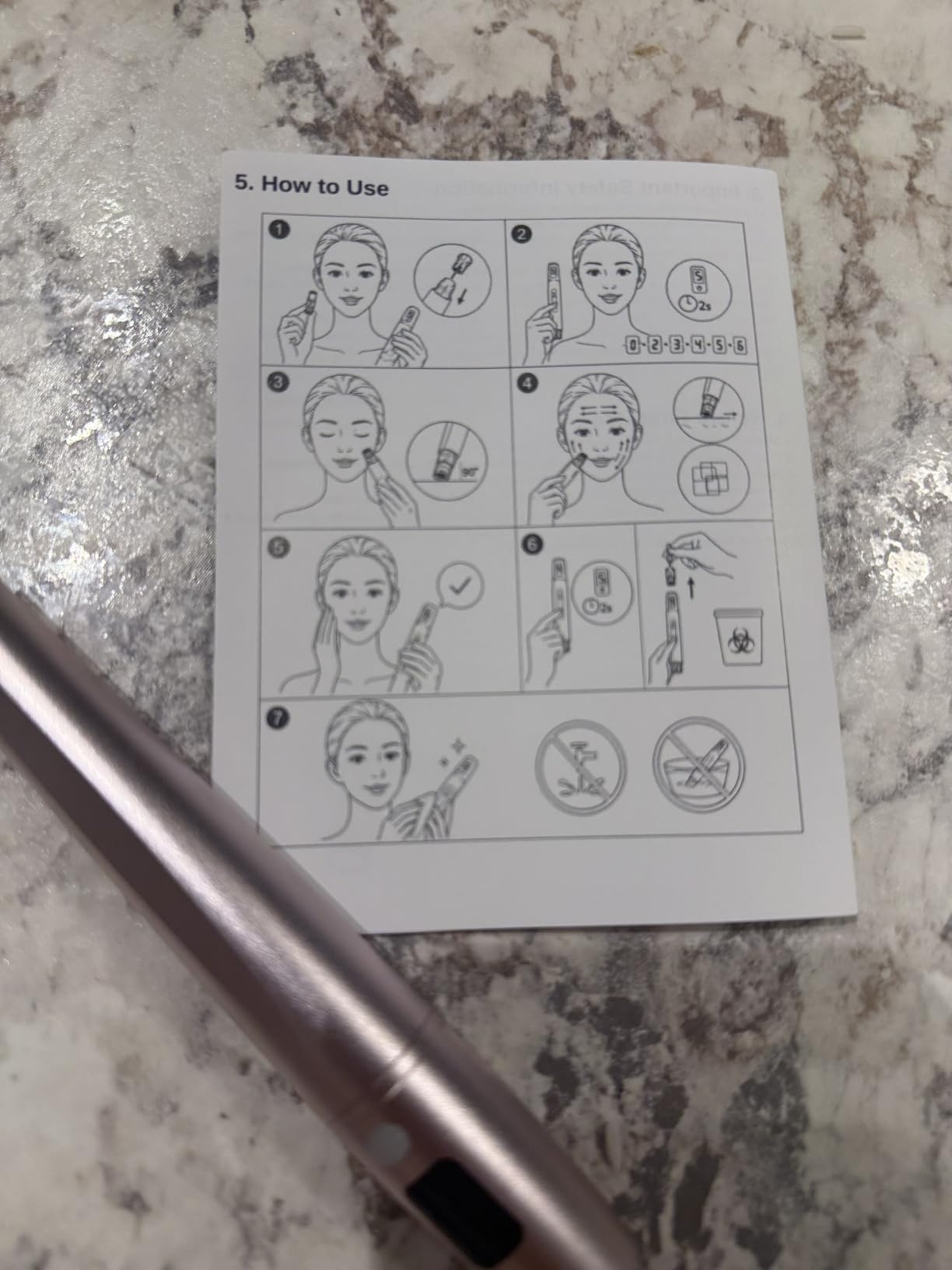
Sanitise the pen body with 70% isopropyl alcohol before and after every session, and never reuse a cartridge. Cartridges are single-use by design, and replacing them every two to four sessions is the cheapest insurance against the infection stories that circulate on forums.
Work in a grid, not a drag. Stamp or pass in overlapping short sections, lift fully between passes, and let the motor do the puncturing rather than pressing harder. Dragging the pen sideways is what creates angled punctures and the scarring people ask about later.
Stretch the skin with your free hand, keep the pen perpendicular to the surface, and start at the lowest setting. Increase depth only after several comfortable sessions, never on your first one.
Use a plain hyaluronic acid serum immediately after, keep the area free of makeup for 24 hours, and wear sunscreen the next morning without fail. If you use a numbing cream, apply it 20 to 30 minutes before starting and wipe it off before you begin.
Recovery tools sit alongside this routine nicely, and our guide to at-home cryotherapy devices for recovery covers what helps with post-session redness and inflammation.
For longer sessions at a home or salon sink, our picks for at-home hair washing basins are worth a look, since they make rinsing and aftercare far easier.
Frequently Asked Questions
What is the best DIY microneedling pen for home use?
The MPK M8S is our top pick because it combines adjustable depth, six speed settings and an LED readout with the largest review base in our test group. The Glemme 0.25mm pen is the safer low-cost option if you want no settings to get wrong.
Which Dr. Pen is best for at home microneedling?
The M8S is the strongest all-round home choice, offering adjustable depth and speed with an LED screen. The newer M9 adds a clearer digital readout and a quieter motor but costs more to run on cartridges. M-series devices are general purpose, A-series devices are gentler cosmetic tools, and H-series devices are salon-grade.
Which is better, 12 pin or 36 pin microneedling?
More pins does not mean more depth. A 12-pin cartridge suits targeted work on scars and small areas such as the nose, while a 36-pin array covers broad flat areas like the cheeks faster. Titanium tips are the gentler option for reactive skin.
Which Dr. Pen is better, M8 or M8S?
The M8S is the refined version of the widely recognised M8 platform, with depth and speed control plus a digital screen. If you are starting now the M8S is the better buy, and the M9 is the next step up with a clearer readout and a quieter, more stable motor.
Is microneedling safe to do at home?
It is generally safe at shallow depths of 0.25mm to 0.5mm if you use a fresh cartridge each time, sanitise the pen body with 70% isopropyl alcohol, and follow the frequency for your depth. Never needle active acne, cold sores, eczema, a rosacea flare, or skin within six months of isotretinoin use.
How often should I use a derma pen at home?
At 0.25mm, once or twice a week is appropriate. At 0.5mm, no more often than every 10 to 14 days. Going deeper or more often than this is the most common way people damage their skin barrier at home.
What serum should I use with a derma pen?
Plain hyaluronic acid serum is the standard choice because it is what the micro-channels were opened for. Apply it immediately after the session while the channels are still open, then follow with a barrier-supporting moisturiser and sunscreen the next morning.
Is a derma pen as good as professional microneedling?
No, and it is not trying to be. Clinics work at roughly 1.5mm to 3.0mm under numbing and supervision, which is what allows scar remodelling. A home pen at 0.25mm to 0.5mm improves texture, absorption and fine lines, with visible change typically reported between 6 and 8 weeks.
The Best Derma Pens for At-Home Microneedling in 2026
The MPK M8S is the best derma pen for at home microneedling overall, because it is the only device in our test group that gives you real depth control, a screen that confirms your settings and a review base large enough to trust. The Dr.pen M9 is the premium option if you want the quietest motor and the clearest readout, and the Glemme 0.25mm pen is the smart first buy if you would rather have no dial at all.
Whatever you choose, the device matters less than three habits: stay at 0.25mm to 0.5mm, use a fresh cartridge every session, and give the collagen response 8 to 16 weeks. Get those right and the pen you picked will do its job.