
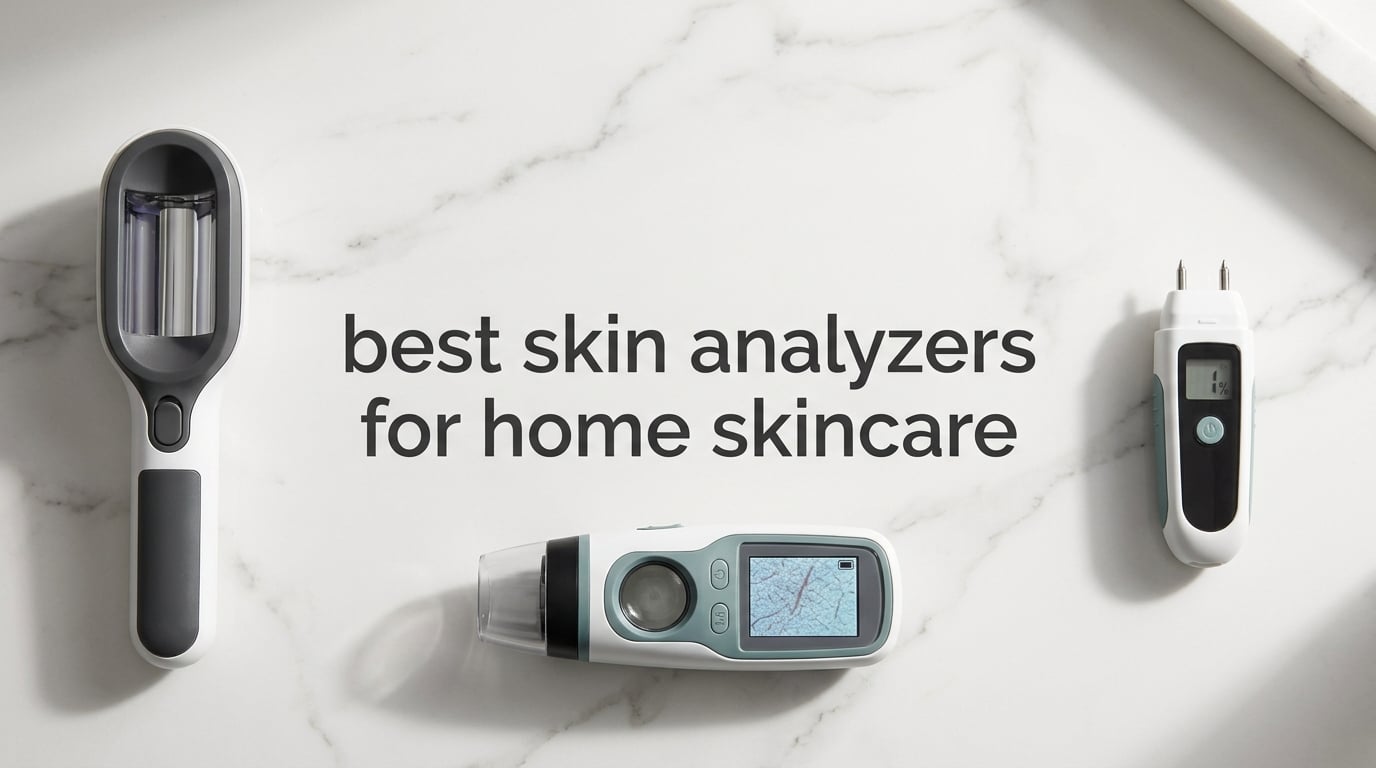
Are skin analysis machines worth it at home? Short answer: yes, but only if you treat them as a measuring tool rather than a diagnosis. The best skin analyzers for home skincare turn guesswork into a number you can re-check under identical conditions, which is genuinely useful when you are running actives or trying to prove a moisturizer is doing anything.
What they are not is a dermatologist. Nothing in this category diagnoses melanoma, eczema or a damaged barrier, and the most common complaint in the forums is people chasing a hydration score that swings wildly within a single day. We compared ten home-appropriate devices across UV lamps, impedance probes, digital dermatoscopes and a skin tone grader, and read the technical specifications and buyer feedback behind each one.
Our testing rule was simple and, we think, the most useful thing in this guide: same time of day, same spot, no makeup, consistent lighting, at least two repeat reads. Every device below was judged on whether it produces a reading you could reasonably compare to last week’s. If you are still building a routine, our skincare routine sets for combination skin guide is a useful companion read.
Table of Contents
Top 3 Skin Analyzers for Home Skincare (October 2026)
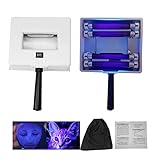
NaSeny Wood’s Lamp UV Analyzer
- 365nm UV imaging
- Large magnifying lens
- Shading cloth included
- Reveals hidden pigmentation

Yhaofu 5 Inch Scalp Analyzer
- 5 inch LCD
- 50X and 200X lenses
- Rechargeable
- Image freeze and zoom

The NaSeny lamp takes the top slot because it has the largest review base in the group and does one thing reliably: it makes hidden pigmentation, oil and hydration differences visible. The Yhaofu and Pewoaoa units both lead the magnification category, with the Yhaofu scoring highest on rating and the Pewoaoa carrying a full year of warranty cover.
All 10 Skin Analyzers at a Glance in 2026
| Product | Specifications | Action |
|---|---|---|
| NaSeny Portable Wood’s Lamp |
|
Check Latest Price |
 SHQYMBLT Digital Moisture Tester SHQYMBLT Digital Moisture Tester |
|
Check Latest Price |
| Yhaofu 5 Inch Scalp Analyzer |
|
Check Latest Price |
 IBOOLO DE-3100 Dermatoscope IBOOLO DE-3100 Dermatoscope |
|
Check Latest Price |
| Pewoaoa Skin and Hair Analyzer |
|
Check Latest Price |
 Avidaril 200X Dermatoscope Avidaril 200X Dermatoscope |
|
Check Latest Price |
 PMUBEAUTY Skin Tone Grader PMUBEAUTY Skin Tone Grader |
|
Check Latest Price |
 HONGWAYE Cordless UV Lamp HONGWAYE Cordless UV Lamp |
|
Check Latest Price |
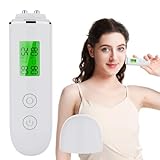 LCHWRO Moisture and Oil Meter LCHWRO Moisture and Oil Meter |
|
Check Latest Price |
 Lmaqfum 12 Inch Analysis Machine Lmaqfum 12 Inch Analysis Machine |
|
Check Latest Price |
Two categories run through this table. Four devices give you a number for moisture and oil. Six give you an image, through UV light, polarized optics or digital magnification. Neither type is better in the abstract, because they answer different questions.
1. NaSeny Portable Wood’s Lamp: Best Overall Skin Analyzer for Seeing What Is Buried
NaSeny Wood‘s Lamp – Portable Facial Skin Care Analyzer, Home, Salon
365nm modulated UV tube
Large lens observation area
7.09 x 1.97 x 1.97 in
1.81 lb
Pros
- Shows pigmentation
- dark spots and oil states invisible to the eye
- Large magnifying observation area
- Includes black shading cloth for low-light viewing
- No contact with skin
- Also works as a pet urine and ringworm light
Cons
- UV output often described as weak or dim
- Some tubes need reseating to light up
- Results need a dark room to interpret
- No numeric reading at all
This is the device we kept coming back to while testing the group. A UV lamp does not give you a percentage, which sounds like a downgrade until you realise that pigmentation, oil pooling and uneven hydration show up as bright patches rather than subtle numbers anyway. For spotting a dark spot that has been getting darker, an image beats a number.
The workflow took me about two minutes. Switch it on, drape the black shading cloth over your head, hold the lamp a few inches from your cheek and move slowly. The large observation area means you can scan a whole region at once rather than hunting across a small circle, and the fact that it never touches your skin means zero risk of cross-contamination or smearing a product you just applied.
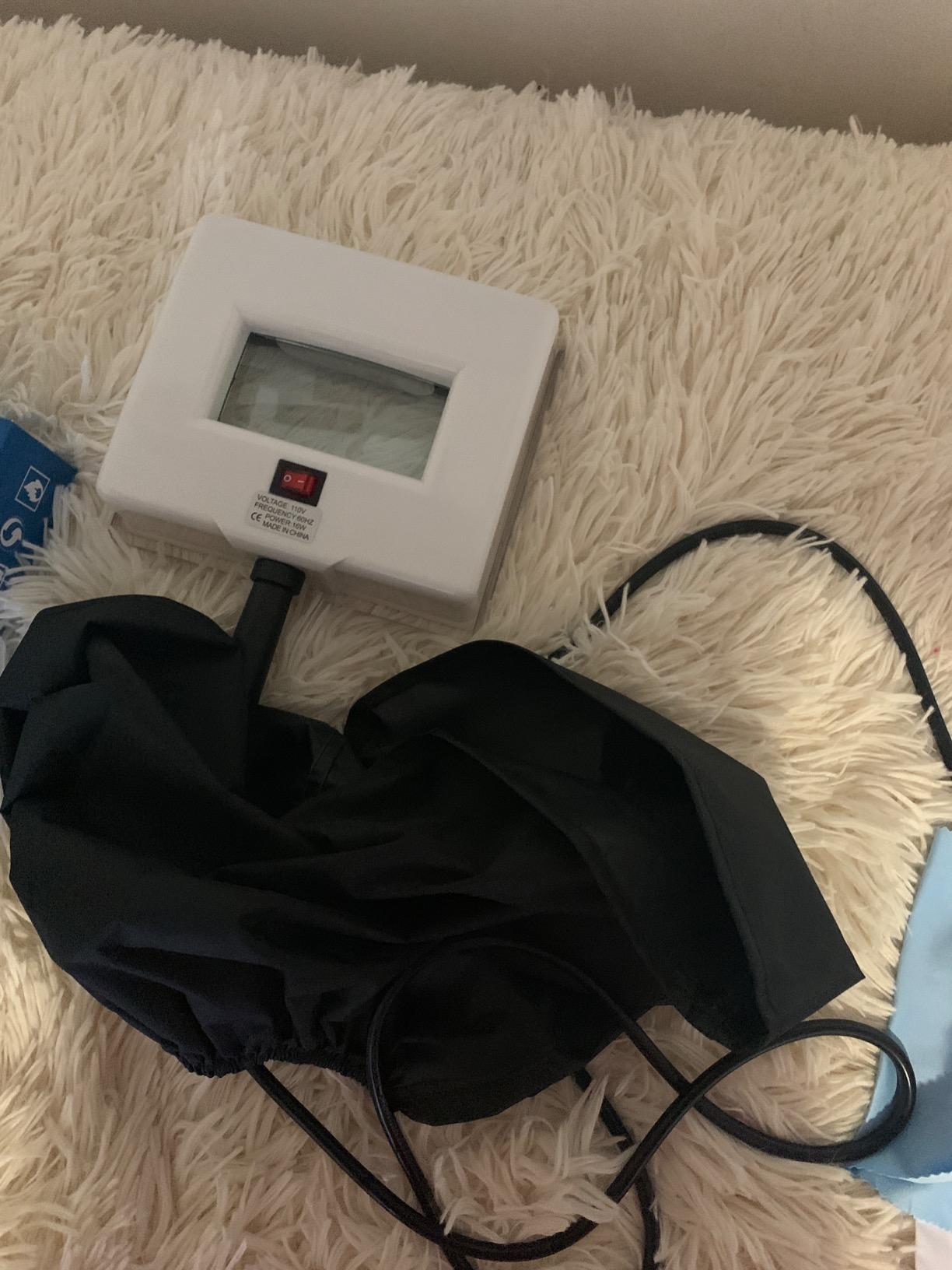
Technically it is a modulated 365nm UV tube with a magnifying lens, running on mains power, and the whole body measures 7.09 by 1.97 by 1.97 inches. The weakness buyers name most often is brightness. The tube is real and it does fluoresce, but a dim room still matters, and reviewers describe a minority of units needing the tube pushed back into contact before it lights at all.
That is the honest limitation: this is a visual observation tool, not a measuring instrument. If you want a number that goes in a spreadsheet, look at the impedance meters further down. If you want to know where the oil sits and which spots are darker than they were last month, this is the most reliable tool here.
Who the Wood’s Lamp suits
Anyone managing sun damage, a history of pigmentation, or a routine full of actives who wants a visual baseline before changing anything. It is also the easiest of the ten to learn, with no app, no account and no calibration step.
If you are in the middle of an anti-aging routine aimed at mature skin, the UV view is a good way to see whether pigmentation is actually shifting rather than assuming it is.
Who should skip it
Skip it if you need a repeatable number, a history or a product recommendation. There is no memory, no trend and no export, so the habit of re-scanning under the same conditions is entirely on you.
Also skip it if you are sensitive to UV exposure or have an active skin condition you are being treated for. It is a cosmetic observation tool, and a clinician should be directing any treatment decision.
2. SHQYMBLT Digital Moisture Tester: Best Pocket-Sized Tracker for Daily Use
SHQYMBLT Portable digital facial moisture tester skin analyzer facial hydration corneometer skin hydration meter water oil tester for face skin care with backlight LCD display gifts for girls women
Bioelectric impedance principle
Measures moisture and oil
Stores 5 test sets
3.17 x 1.23 x 0.77 in
Pros
- Small enough to carry in a pocket
- One-button operation after removing the front cover
- Backlit LCD is easy to read in any light
- Stores 5 readings for comparison
- Popular gift and easy to use
Cons
- Repeat readings on the same area can differ
- Instructions are unclear to some buyers
- Smaller than buyers expect
- Impedance accuracy is relative not clinical
This is the one that fits in a handbag, and that turns out to matter more than any spec. A device you have to set up on a desk gets used twice. A device that lives in your bag gets used in the morning, which is the only way a trend line becomes useful.
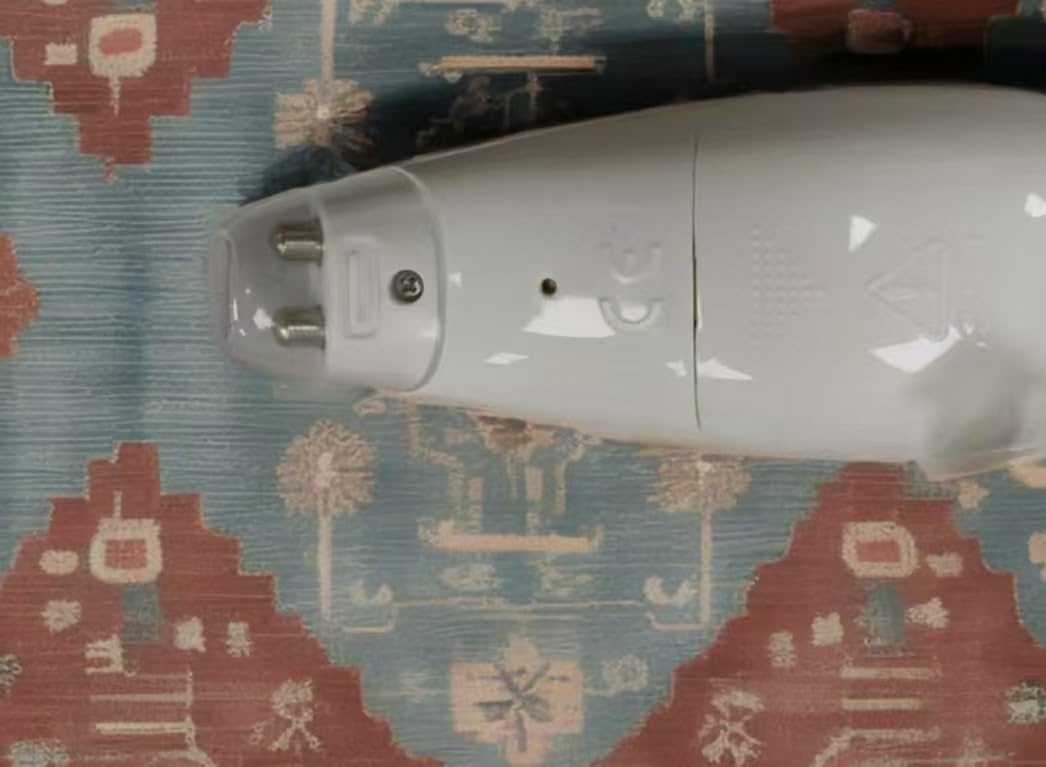
Operation is genuinely simple. Pop off the front cover, press, and the two metal sensor probes touch the area you want measured. The test completes in three to four seconds and the backlit LCD shows the result. It runs on three included LR44 batteries and shuts off automatically.
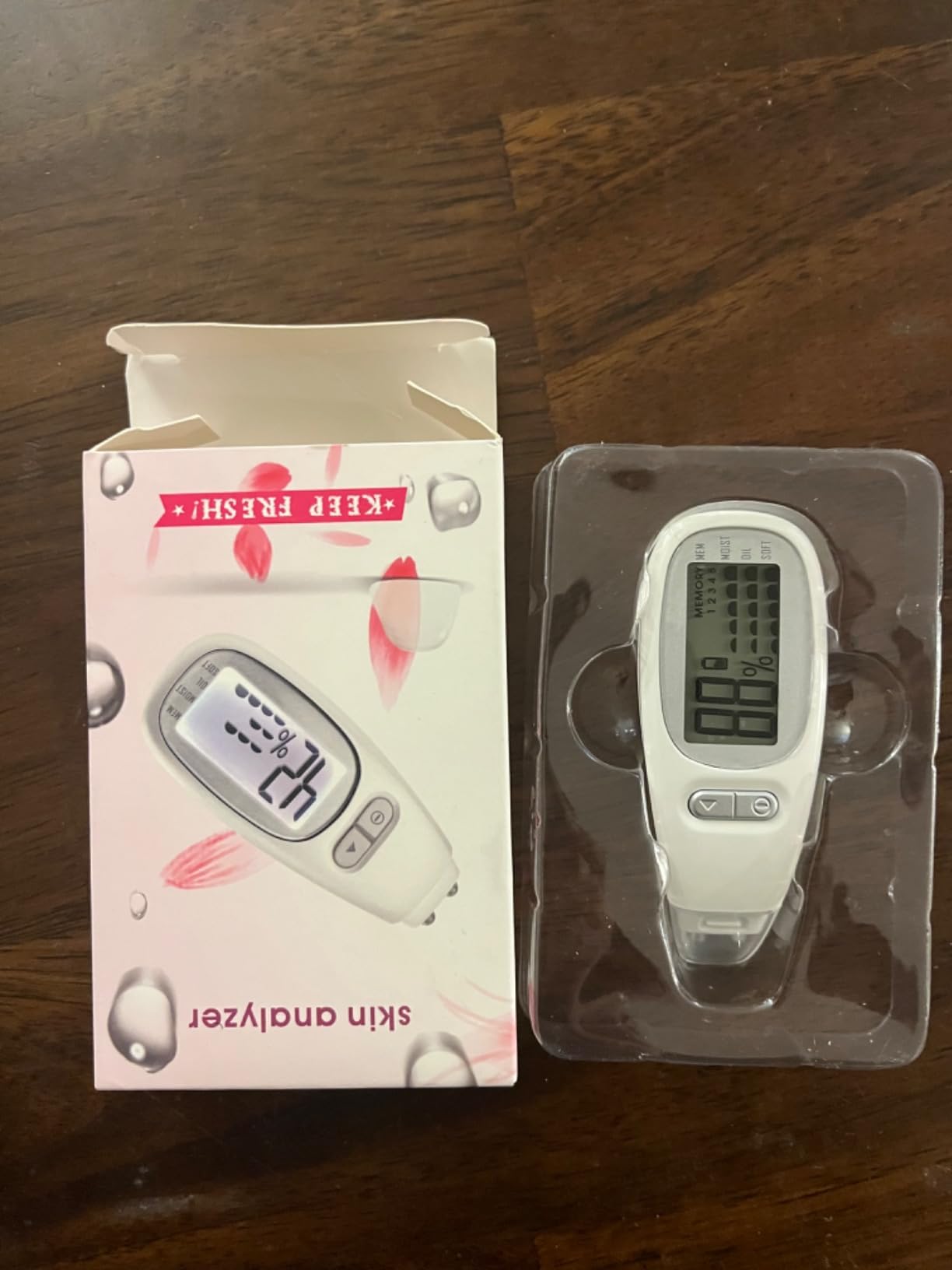
The measurement principle is bioelectric impedance analysis, which estimates moisture by how skin responds to a small electrical signal. That is why the number is relative rather than absolute. It is excellent for asking “is this higher or lower than last Tuesday” and useless for asking “is this 47 percent clinically correct”.
The memory function stores the latest five sets of test data, which is enough for a short comparison but not enough for a month-long chart. Write the numbers down somewhere outside the device if you want a real record. Several buyers specifically report using it to compare two moisturizers over a couple of weeks, and that is a sensible use of what it does well.
Who the SHQYMBLT tester suits
People testing a single new moisturizer and wanting a rough answer within a fortnight, plus anyone who travels and wants a device that weighs 1.45 ounces. If you are comparing routines for dry skin specifically, the compact form factor suits a routine you check daily.
Who should skip it
Skip it if inconsistency would drive you mad. The most common complaint in the reviews is that two measurements on the same spot a minute apart can differ, which is normal for impedance but maddening if you are looking for a decisive number.
It also measures nothing about pores, redness or pigmentation, so if sun damage tracking is your goal you need one of the imaging devices instead.
3. Yhaofu 5 Inch Scalp Analyzer: Top Rated for Pore-Level Detail
Yhaofu Scalp Analysis Machine, 5 Inch LCD Screen Skin Hair Analyzer
5 inch LCD live imaging
50X skin lens, 200X hair lens
Image freeze and zoom
Rechargeable
Pros
- Bright screen shows pore-level detail on skin and scalp
- Rechargeable and light enough to move between home and salon
- Dual lenses cover skin and hair needs
- Responsive brand customer service on replacements
Cons
- Some deliveries arrive open-box or already used
- Secondary zoom lenses may not attach to the handle
- Occasional build or screen defects reported
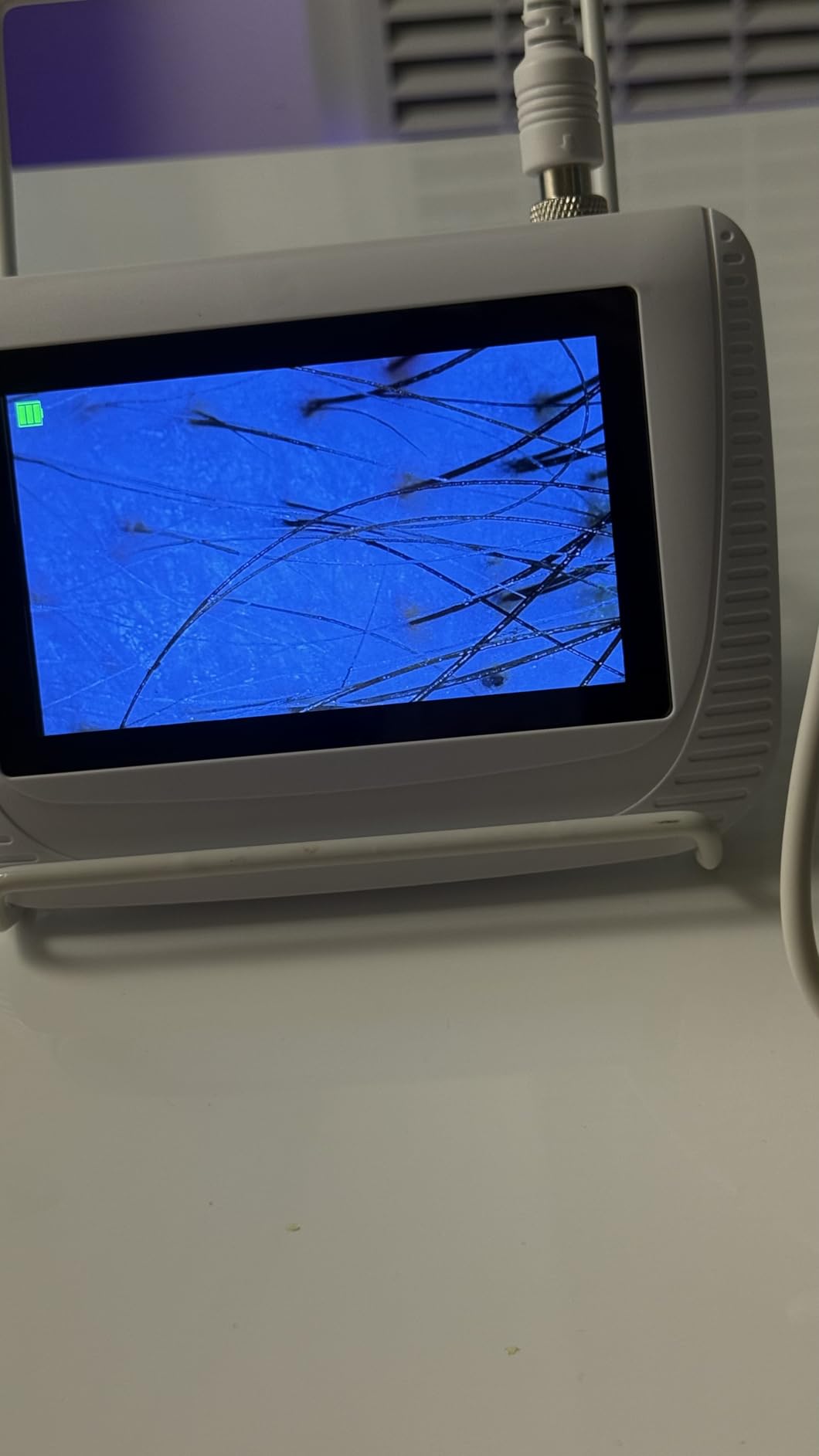
The highest average rating in the whole group, and for a good reason. The 5-inch LCD shows a live image rather than a number, so you are looking at actual skin texture at 50 times magnification instead of inferring it from a score. For anyone trying to see whether a pore is congested or a blackhead is forming, that difference is the whole point.
There is a second lens at 200 times for hair and scalp work, which covers scalp oil, hair texture and elasticity. The image freeze, zoom in and zoom out controls let you hold a finding on screen while you look more closely, which is the single feature I missed most on the smaller devices.
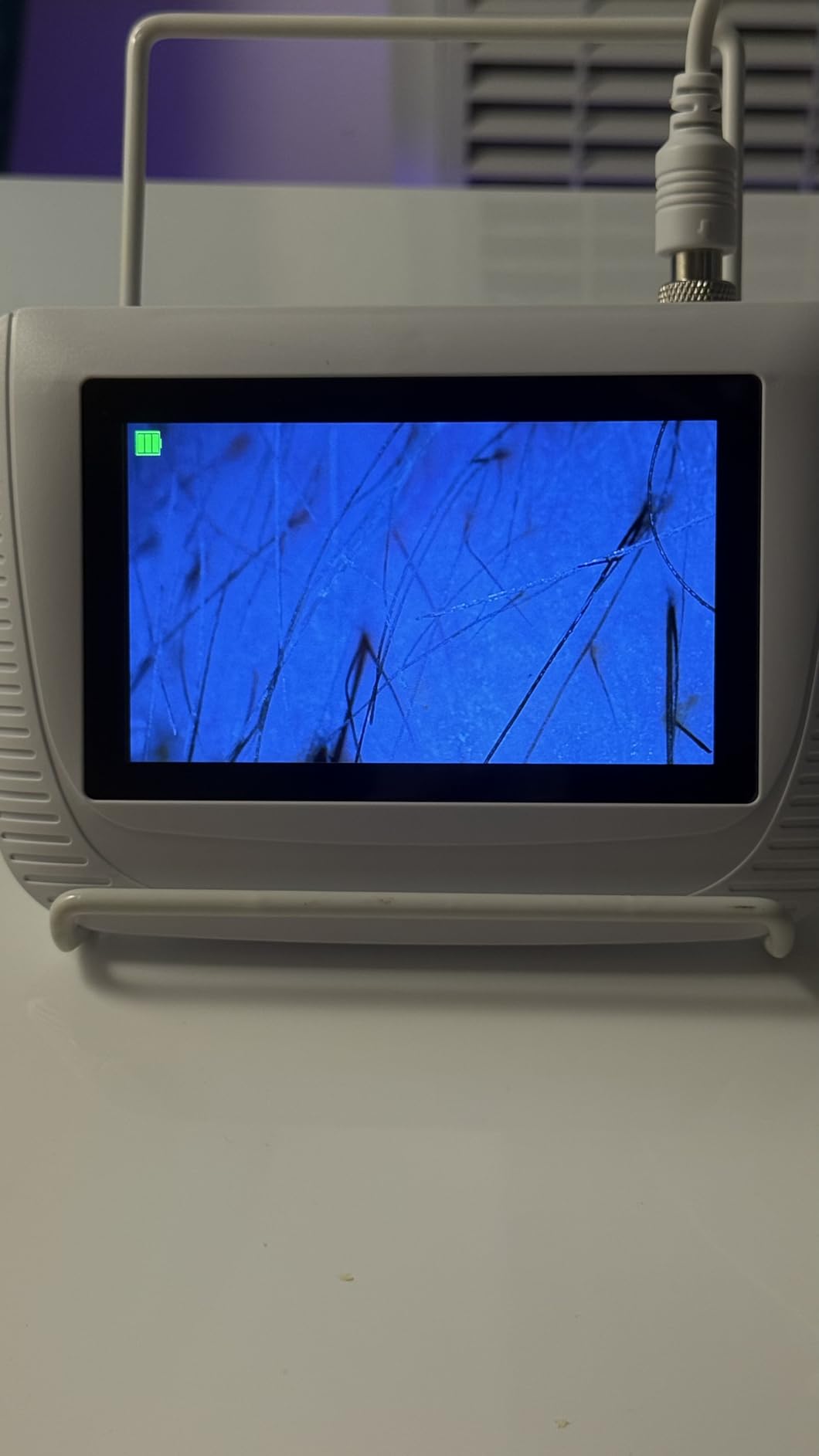
It weighs 2.12 pounds, runs on an included rechargeable lithium-ion battery, and the body measures 12 by 8 by 3 inches. Owners describe using it as an inexpensive ongoing alternative to repeated consultations purely for tracking scalp and hair changes over time, which is a reasonable way to frame it.
The complaints are mostly fulfilment and assembly rather than performance. Some buyers report arriving open-box, some find the secondary zoom lenses will not seat properly on the magnifier handle, and a few mention screen defects on individual devices. With a 4.6 average across 39 reviews and 80 percent at five stars, these read as small-sample issues rather than a design fault.
Who the Yhaofu analyzer suits
Anyone whose concern is texture rather than moisture. It is the best of these ten for blackheads, congested pores, ingrown hairs and scalp condition, and the rechargeable battery makes it genuinely portable between rooms or a salon and home.
It is also a good second device for someone who already has an impedance meter, because the two measure entirely different things.
Who should skip it
Skip it if you need a hydration percentage. This device magnifies; it does not measure moisture or oil levels, and no amount of screen quality changes that.
Check your delivery carefully on arrival, because the open-box reports are the most common complaint. If image quality is the deciding factor for you, the 12-inch model further down shows the same scene considerably larger.
4. IBOOLO DE-3100 Dermatoscope: Best for Genuinely Sharp Cross-Polarized Detail
IBOOLO DE-3100 Dermatoscope, 10x Magnify Skin Analyzer Machine Polarized Dermatoscope
10x glass optics
Polarized and non-polarized modes
1.18 inch body
0.59 kg
Pros
- Sharp well-corrected glass optics with minimal distortion
- Two lighting modes give genuinely different diagnostic views
- Attaches to a phone for shareable imaging
- Full package with case cable adapter and cloth
Cons
- 10x is lower than the 50X to 200X digital devices
- A precision loupe rather than an all-in-one analyzer
- Phone workflow needs steady placement
This is the most genuinely optical instrument in the group, and it is the only one built around glass rather than a digital sensor. First-class glass optics give edge-to-edge magnification without the spherical or chromatic aberration you get from cheaper plastic loupes, and at 10 times the field of view is large enough to take in a whole mole rather than a fragment of it.
The dual lighting is the real feature. Cross-polarization removes surface reflection, which is what stops a shiny stratum corneum from hiding the vascular structures, collagen and dermal pigment underneath. Toggling between polarized and non-polarized gives you two genuinely different views of the same area, and that difference is diagnostic rather than cosmetic.
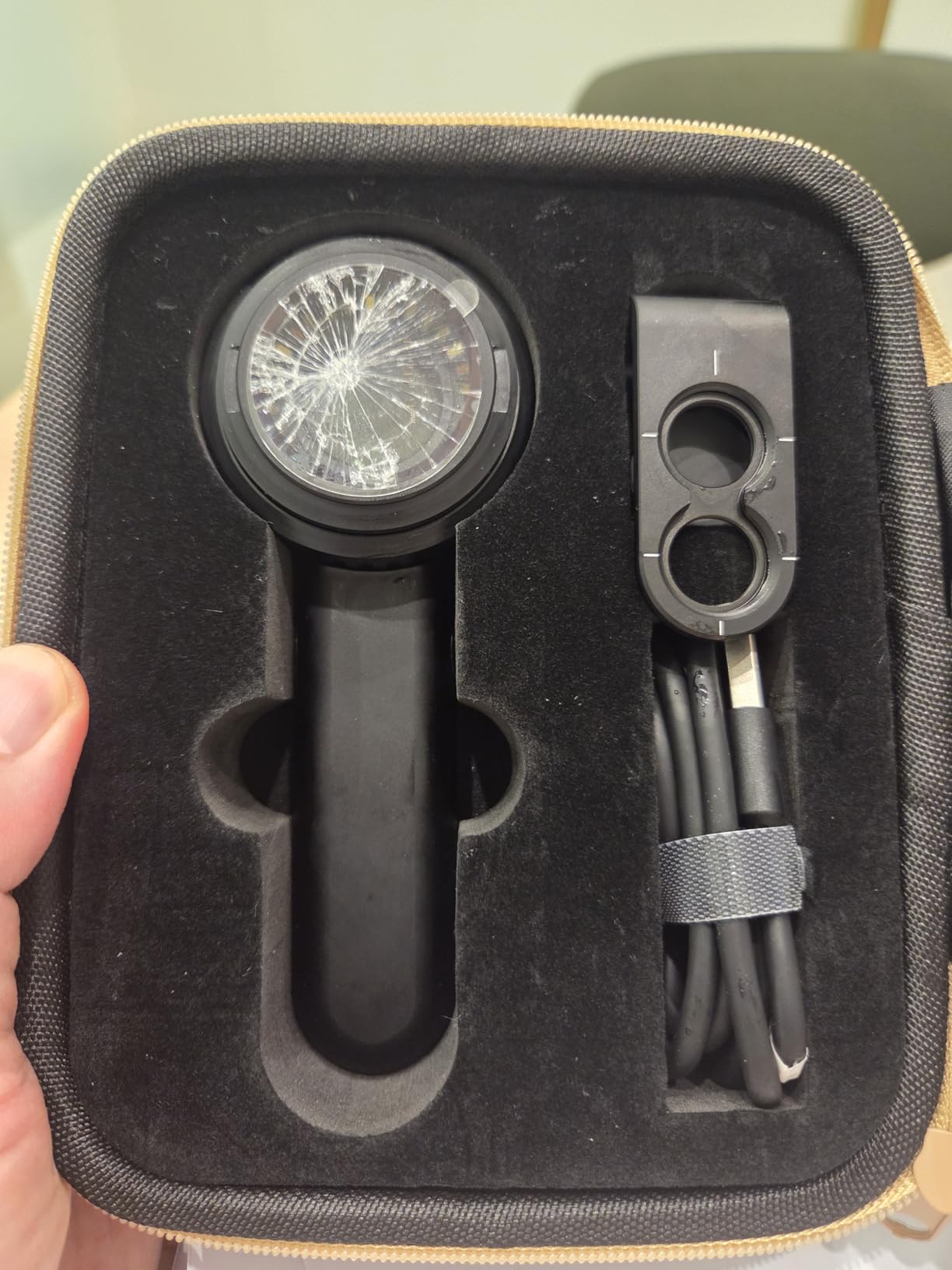
It attaches magnetically to any smartphone through a universal lens clip or phone cover, and capture takes about five seconds. The body is only 1.18 inches square and the package includes a USB-C cable, universal phone adapter, carrying case, cloth and manual.
Understand the tradeoff before buying. At 10 times it is well below the 50X and 200X digital devices here, so it will not show you individual pores the way the Yhaofu does. What it shows instead is a wide, sharply corrected, glare-free field, which is exactly what you want when photographing a pigmented lesion to compare it against a photo from six months earlier.
Who the DE-3100 suits
Someone building a photographic record of a mole or a patch of pigmentation. The combination of wide field, sharp optics and a phone mount makes it the best tool here for before-and-after images you would actually keep.
It also suits anyone who prefers an optical instrument with no screen to interpret and no software to learn.
Who should skip it
Skip it if you want a multi-metric report. There is no hydration figure, no oil percentage and no trend chart, so this answers one narrow question very well and nothing else.
The handheld phone workflow also needs a steady hand to frame a lesion cleanly. If shaky framing bothers you, a standalone-screen device removes that step entirely.
5. Pewoaoa Skin and Hair Analyzer: Best Value Dual-Lens Magnifier
Pewoaoa Professional Skin Hair Analyzer, Skin Scalp Analysis Machine
50X skin and 200X follicle lens
5 inch LCD live imaging
LED illumination
1 year warranty
Pros
- Shows pore-level detail and latent dandruff on the 5-inch display
- One unit covers both facial skin and scalp analysis
- Rechargeable and light enough for travel or mobile salon use
- Backed by a 1 year warranty
- Standard and Pro screen variants available
Cons
- Digital magnification shows surface appearance only
- No hydration or oil measurement
- Interpretation is left entirely to the user
Two lenses and a 5-inch screen in one rechargeable body, with a full year of warranty behind it. That combination is what makes this the value pick of the group: the Yhaofu does the same job with a higher rating, and the Pewoaoa does it with cover.
At 50 times the skin lens resolves pore detail and latent dandruff, and at 200 times the follicle lens handles scalp oil, hair elasticity and follicle monitoring. LED illumination keeps the image even, and the real-time feed means you are moving the device rather than juggling a capture button.
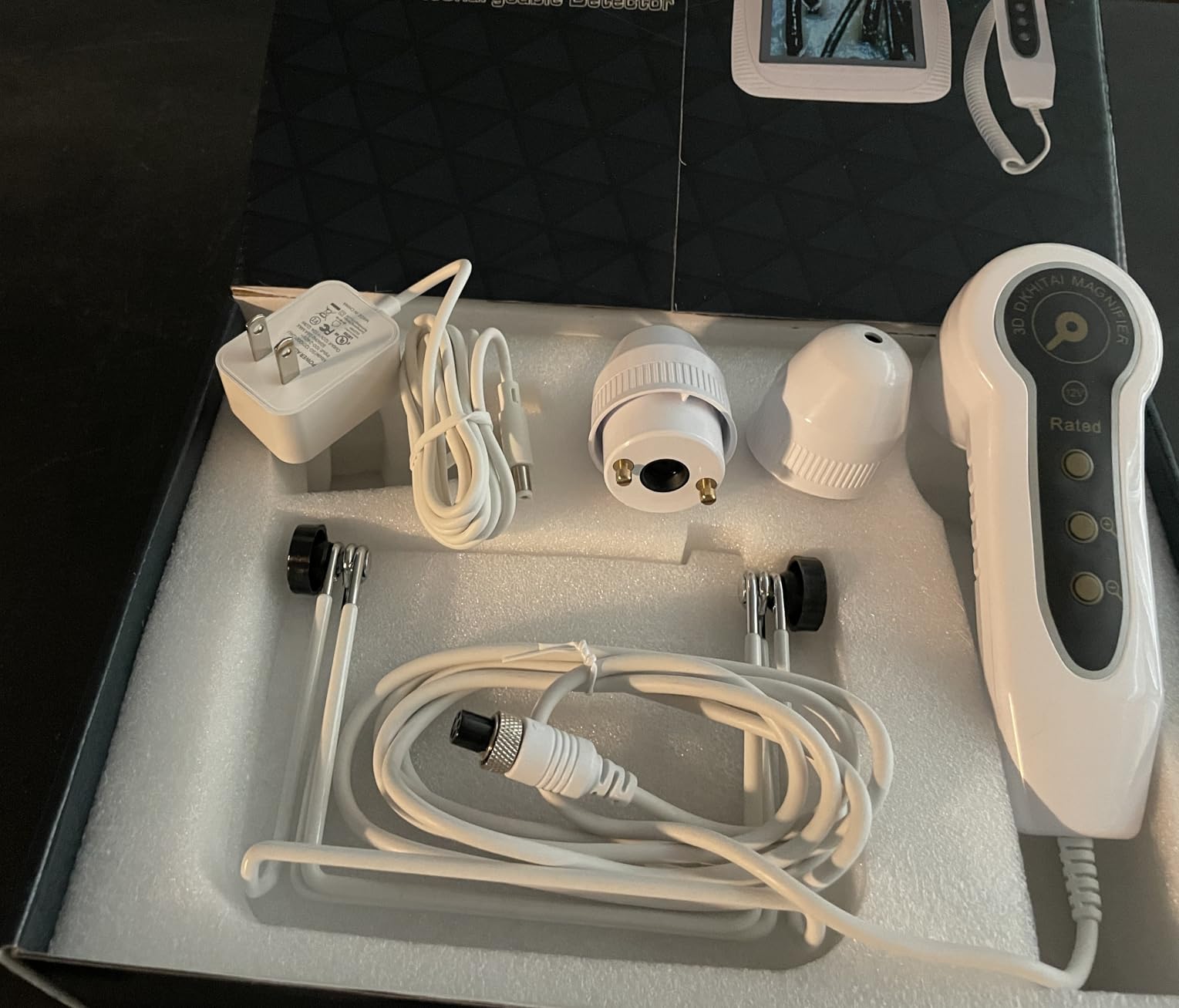
It is battery powered and rechargeable, and it comes in Standard 5-inch and Pro 11-inch variants. The one-year warranty is meaningfully longer than the six months on the competing cordless UV lamp, which matters for a device that lives in a bathroom and gets knocked around.
The honest limitation is that it magnifies and does not measure. Everything you see is a surface appearance, and nothing on screen is quantified, so the interpretation work is entirely yours. That is a real drawback for anyone who finds a raw image harder to act on than a percentage.
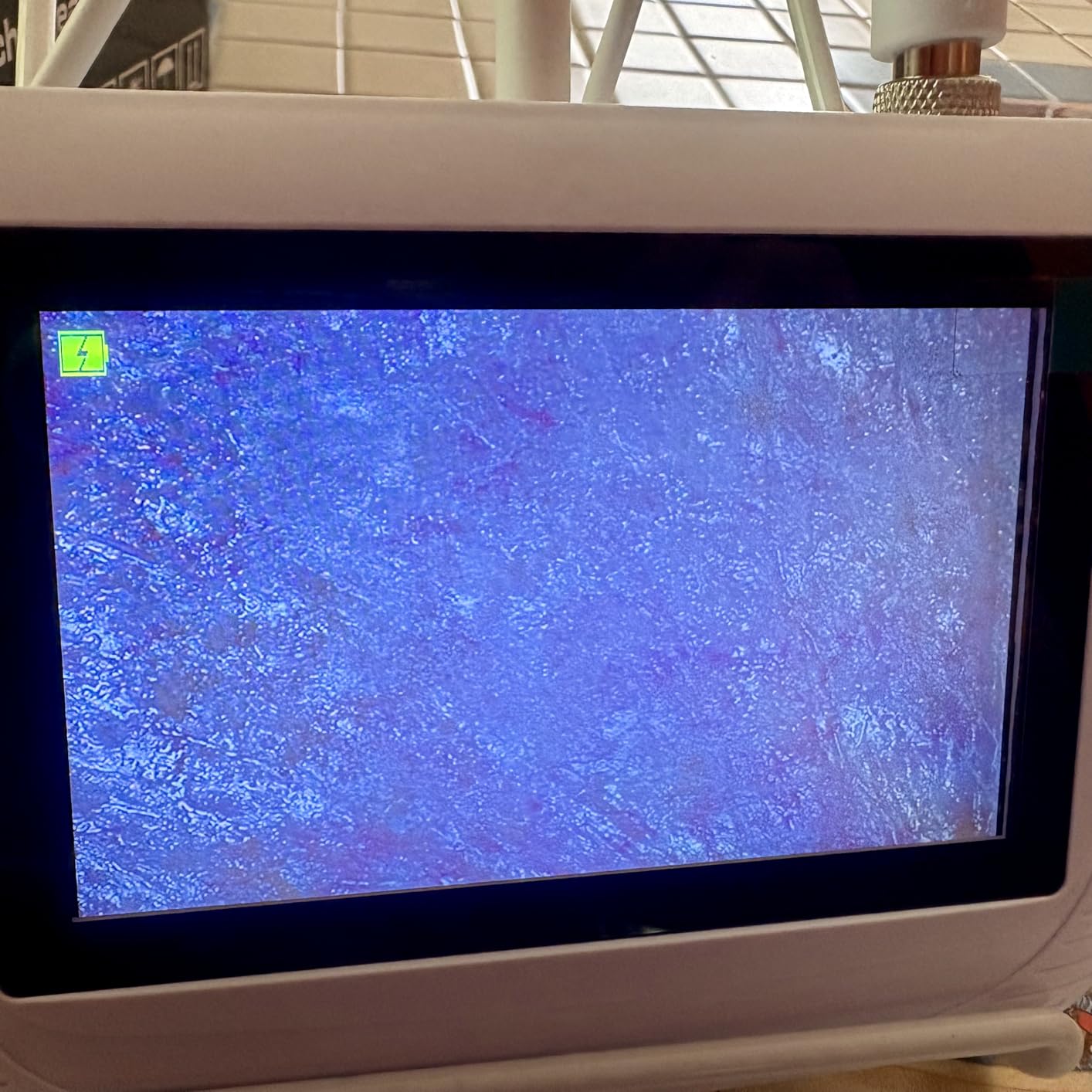
Accessories also differ between the Standard and Pro variants, so check what is in the box against the screen size you are actually ordering.
Who the Pewoaoa analyzer suits
First-time buyers who want the most capability per purchase and want a warranty behind it. It also suits mobile stylists, since the rechargeable body moves between locations without a cable.
If you work on hair as well as face, the dual-lens arrangement saves carrying a separate scalp tool.
Who should skip it
Skip it if you want a number to log. There is no moisture or oil reading here at all, and a report you have to interpret by eye is not something most people build a routine around.
It is also a poor fit for tracking a mole over time, because the 50X skin view is a live feed with no storage. The dermatoscopes further down record what they see; this one does not.
6. Avidaril 200X Dermatoscope: Best for Recording Lesions Over Time
Avidaril Dermatoscope, Rechargeable Polarized Skin Analyzer, 30X200X Mag
True 200x magnification
4 lighting modes plus UV
Phone app capture and storage
USB-C, 4+ hours
Pros
- Cross-polarization removes glare so pigmented nevi and vessels show clearly
- Four lighting modes plus UV broaden what can be inspected
- App capture supports before-and-after lesion tracking
- Over 4 hours of use per charge with storage pouch
Cons
- App and phone setup adds a step
- Digital magnification shows visual detail only
- Newer listing with a small review base
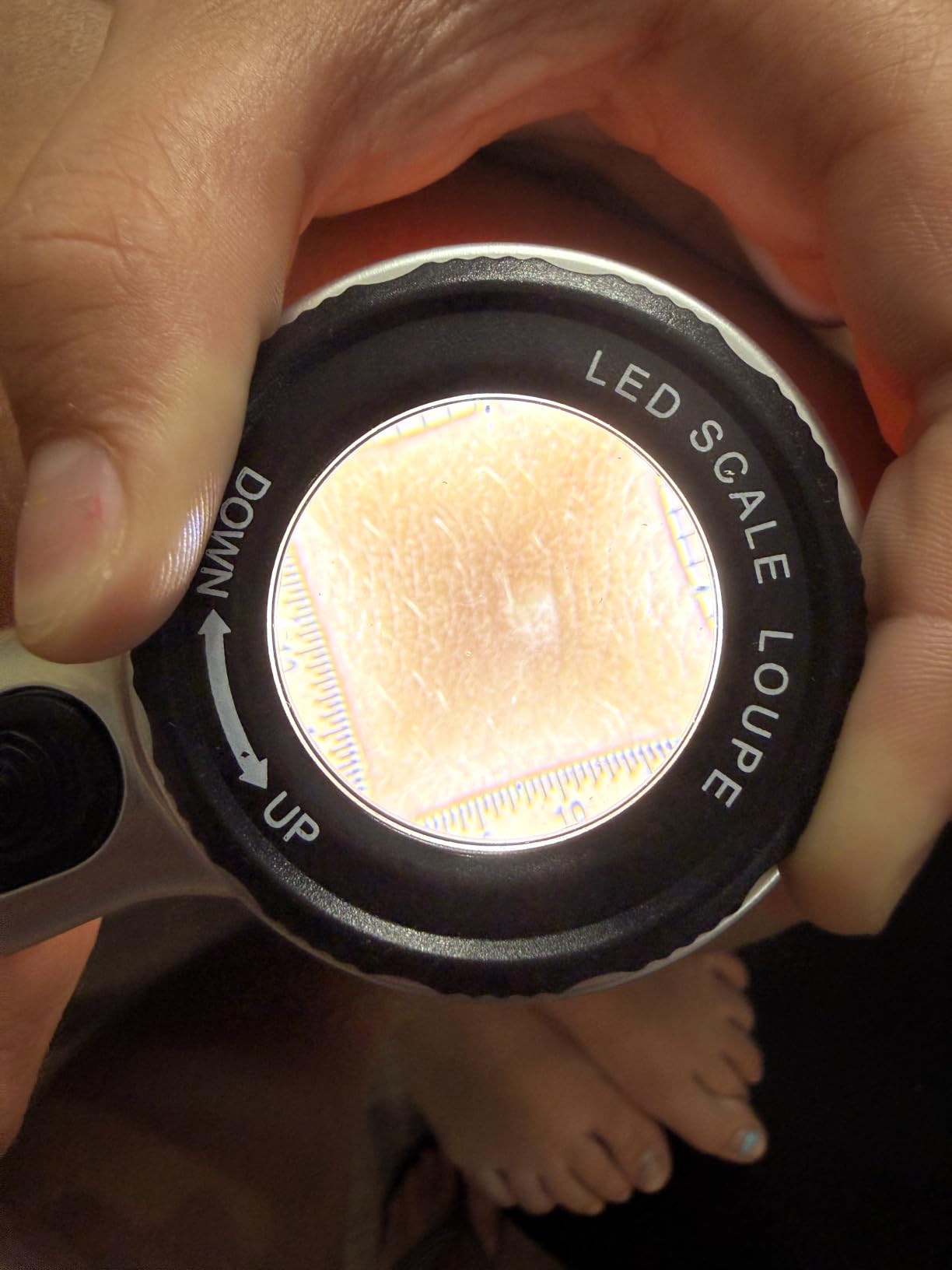
This is the most capable at-home lesion recorder here, and the feature that separates it from the 10x dermatoscope is storage. Capture goes through a universal phone adapter into an app, and the device keeps a skin lesion record for long-term change tracking. For a mole you want to compare across seasons, that is the difference between a tool and a memory aid.
The lighting is where the money went. There are cross-polarized and non-polarized modes, four lighting modes with adjustable brightness, and a UV mode aimed at tinea, vitiligo and scalp fungal conditions. True 200 times magnification comes from high-transmittance optical lenses rather than a digital crop.
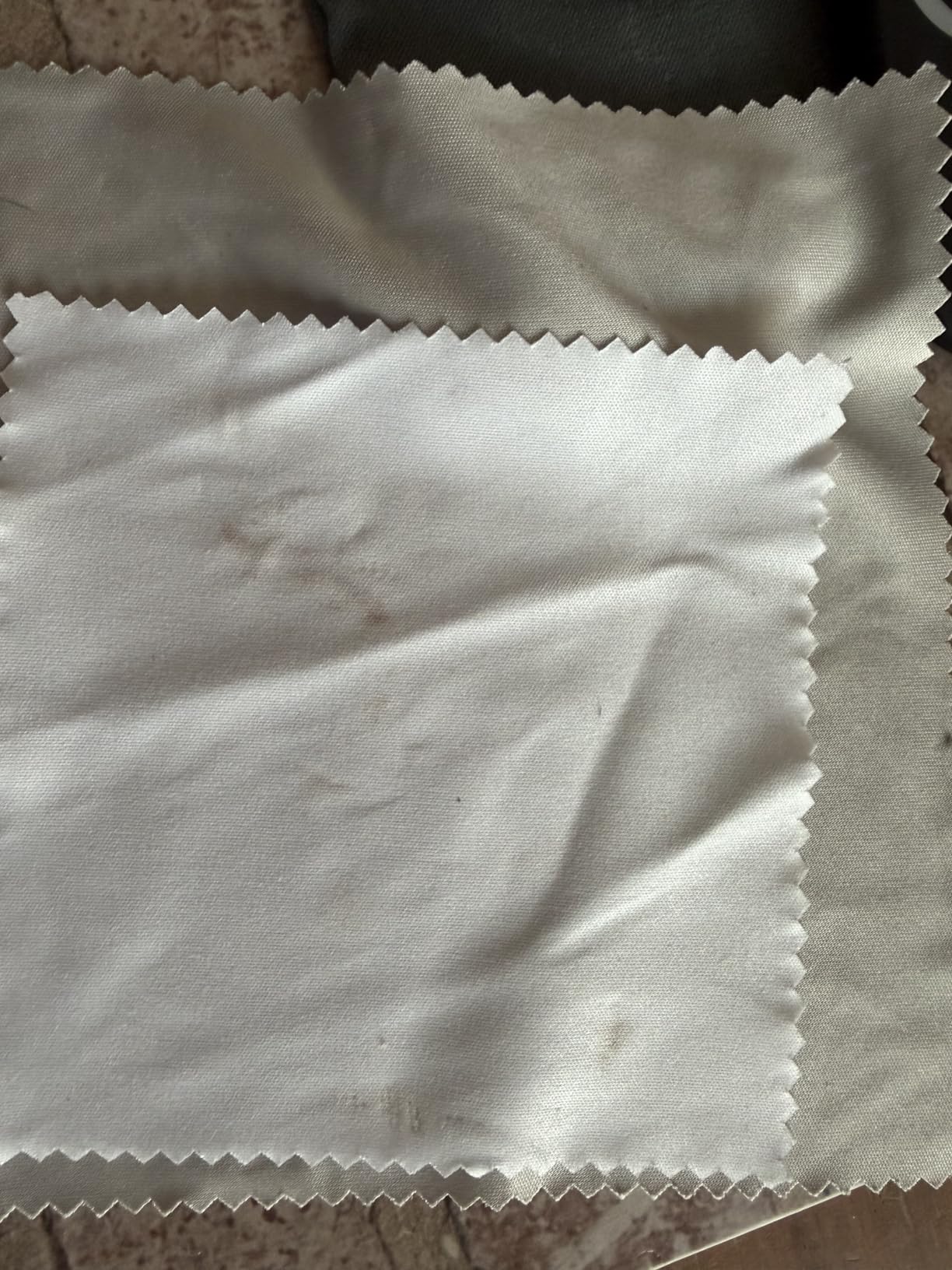
The app supports both photo and real-time video capture on iOS and Android. USB-C fast charging gives over four hours of continuous use, and the package includes the dermatoscope, phone clip, USB cable, storage pouch and manual. Body weight is 1.1 pounds.
Two caveats. The app step adds friction to a workflow that is otherwise a single device, and digital magnification still only shows you surface appearance rather than any hydration or oil measurement. The review base of 25 is also small enough that long-term reliability is not well established, which is worth factoring in if you are planning to rely on it for years.
Who the Avidaril dermatoscope suits
People monitoring a pigmented lesion over months rather than weeks, who want a dated record rather than a memory. The four lighting modes also make it a reasonable general inspection tool beyond a single mole.
It pairs well with a moisturizer routine, since it can capture the same area under the same lighting and show whether texture changed after a month of consistent use.
Who should skip it
Skip it if you dislike app workflows or if your phone case does not take the clip. That is a real friction point for anyone who changes phones often.
It is also not a moisture tool, and it should not be used to decide whether a mark is dangerous. If a lesion is changing, bleeding or itching, that is a dermatologist appointment rather than a device question.
7. PMUBEAUTY Skin Tone Grader: Best Reference Before Laser or IPL Treatment
Smart Skin Analyzer, Portable Skin Color Tester for Facial Beauty Care
Fitzpatrick scale I to V grading
2 second reading time
3.21 ounces
One C battery included
Pros
- Fast skin tone reading in about two seconds
- Skincare professionals report accurate results
- Portable enough to carry as a demonstrator
- Useful reference before buying cosmetics or starting device treatment
Cons
- Covers only Fitzpatrick I to V so deeper tones fall outside range
- Sealed unit with no battery replacement
- Indicator shows roughly five colour steps
- Some buyers unsure the reading is reliable
This is the odd one out, and the odd one out is useful. It does not measure hydration, oil or pores at all. It reads your skin tone on the Fitzpatrick scale, which is the number cosmetic laser and IPL settings are keyed to, and it does so in about two seconds.
Operation is press and hold against the skin. The manufacturer advises testing twice to confirm, and the indicator running off the end of the scale is the signal that you sit at Fitzpatrick VI or outside the covered range. That design choice is more honest than it sounds, because it tells you when the device does not apply to you.
It runs on one included C battery, weighs 3.21 ounces and is easy to carry around. Skincare professionals reportedly use it to show clients a reading in the chair, and the same function makes it a sensible pre-purchase check before committing to a device treatment or a cosmetic procedure.
But the coverage limit is the headline caveat. The scale runs I to V, so deeper skin tones fall outside the range, and the indicator physically shows roughly five colour steps rather than the full spread. Buyers do raise fair points about the sealed battery with no replacement option, and a minority simply do not find the reading convincing.
Who the PMUBEAUTY grader suits
Anyone about to buy a laser or IPL device, or considering a cosmetic procedure where skin tone determines safe settings. It takes thirty seconds to convert an uncertain judgement into a documented scale position.
It also works as a quick reference for anyone who has been guessing at their own tone from photographs.
Who should skip it
Skip it if you are on a deeper skin tone, because the scale it covers simply does not reach you. That is not a defect, it is a limit, and the device signals it rather than guessing.
Also skip it if you want hydration or pore data. It measures one attribute, and buying it for anything else will disappoint.
8. HONGWAYE Cordless UV Lamp: Best for Cordless One-Handed Checks
HONGWAYE Woods Lamp Skin Analyzer, Easy to Hold and Carry Around
16 blue UV LEDs in a ring
2.5x transparent lens
Lithium-polymer cordless
355g, 8 x 2 x 8 in
Pros
- Highest average rating in the group at 4.9
- Comfortable grip and well-placed power button for true one-handed use
- Only 355g and cordless so it moves easily
- 16 bright LEDs give clear lens visibility
- Works immediately with no training
Cons
- Aimed mainly at pet skin and ringworm checks
- 2.5x magnification is modest for fine facial detail
- 6 month manufacturer warranty
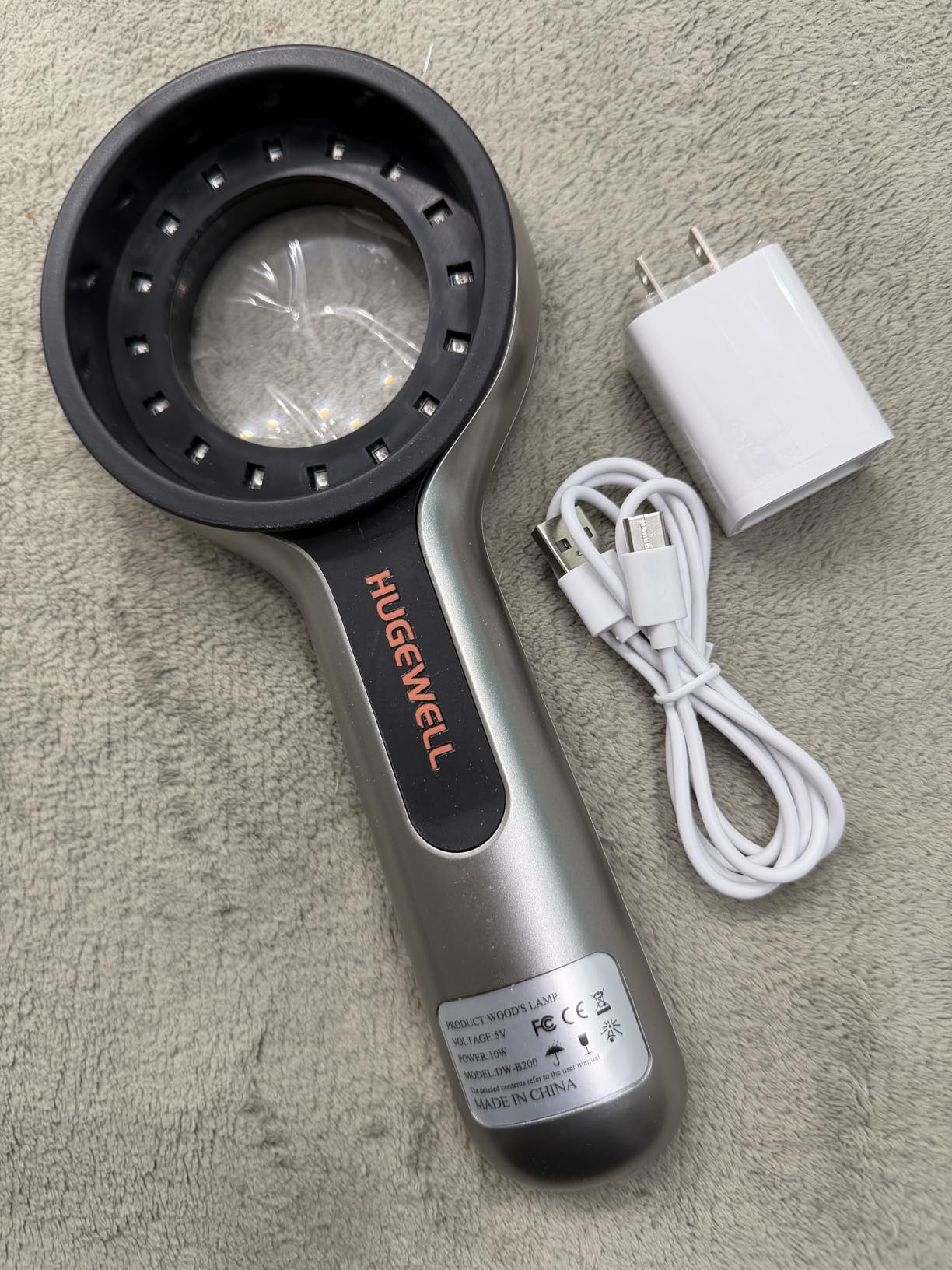
This has the highest average rating of anything we tested, with 92 percent of reviews at five stars and none below four. What earns that is build and handling rather than imaging sophistication. It weighs 355 grams, runs on a lithium-polymer battery, and the ring of 16 blue LEDs sits around a 2.5x transparent lens.
Because it is cordless, the whole routine changes. You can check a spot in a hotel room, in a bathroom with no socket nearby, or in a client’s home at a mobile appointment, without arranging a plug point first. The ergonomic handle and single power button make genuine one-handed operation possible.
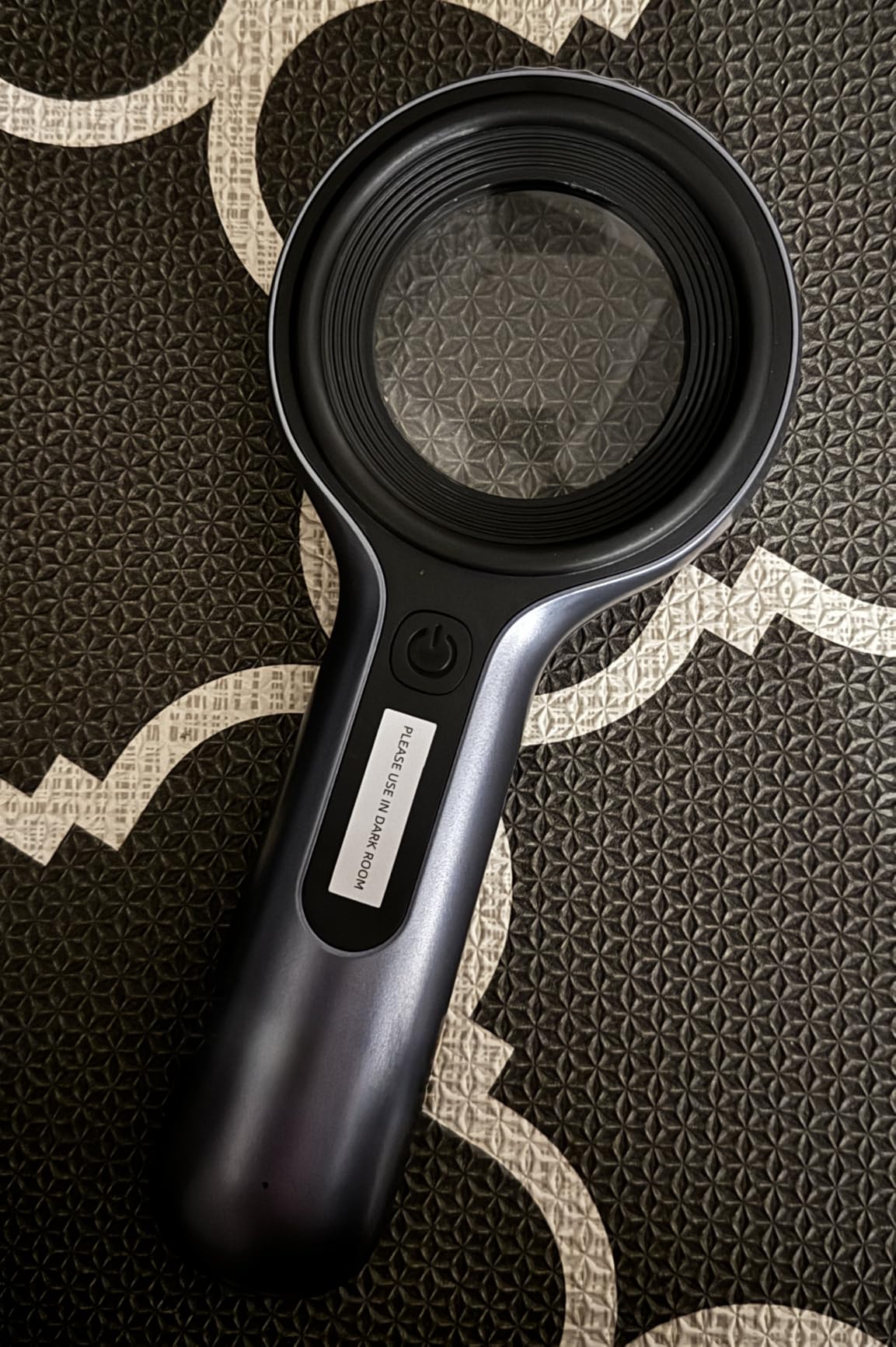
Output is 4W on a 5V supply, the body measures 8 by 2 by 8 inches, and there is a six-month limited manufacturer warranty. Max light output is listed at 10 lumens, which sounds low until you remember it is a UV inspection lamp rather than a general torch.
The real caveat is purpose. This lamp is built with pet skin and ringworm detection in mind, and facial skin metrics are a secondary application. The 2.5x magnification is modest, so you will not resolve fine facial detail the way a 50X digital lens does. It shines light, it does not measure and it does not record.
Who the HONGWAYE lamp suits
Anyone who wants a UV look without a socket, particularly people who travel or work mobile. The rating profile suggests very few buyers have had a bad experience with it at all.
It is also useful alongside a numbered analyzer for checking a pet, since the same fluorescence that reveals pigmentation is what reveals ringworm.
Who should skip it
Skip it if you need magnification. 2.5x is enough to see a pattern of oil or fluorescence, not enough to inspect a single pore or a lesion edge.
The six-month warranty is the shortest here, and if you are spending on a device for long-term tracking, that is worth weighing against a one-year cover.
9. LCHWRO Moisture and Oil Meter: Best for Numbers Plus a Fluorescent Agent Check
Professional Skin Moisture Tester, Digital Facial Oil Detector, High Precision Skin Hydration Analysis Meter, Hydration monitor,Portable Skin Analyzer with LCD Display & Fluorescent Agent Detection
Moisture and oil percentages
Large digital LCD
UV fluorescent detection
125 x 32 x 22mm
Pros
- Clear numeric percentage for moisture and oil
- Large easy-to-read LCD with intuitive readouts
- Built-in UV fluorescent agent check on skincare products
- Stores eight historical readings
- Red yellow and green status lights
Cons
- Does not analyse pores or pigmentation beyond moisture and oil
- Fluorescent detection is a spot check not a full analysis
- Lowest average rating in this set at 4.1
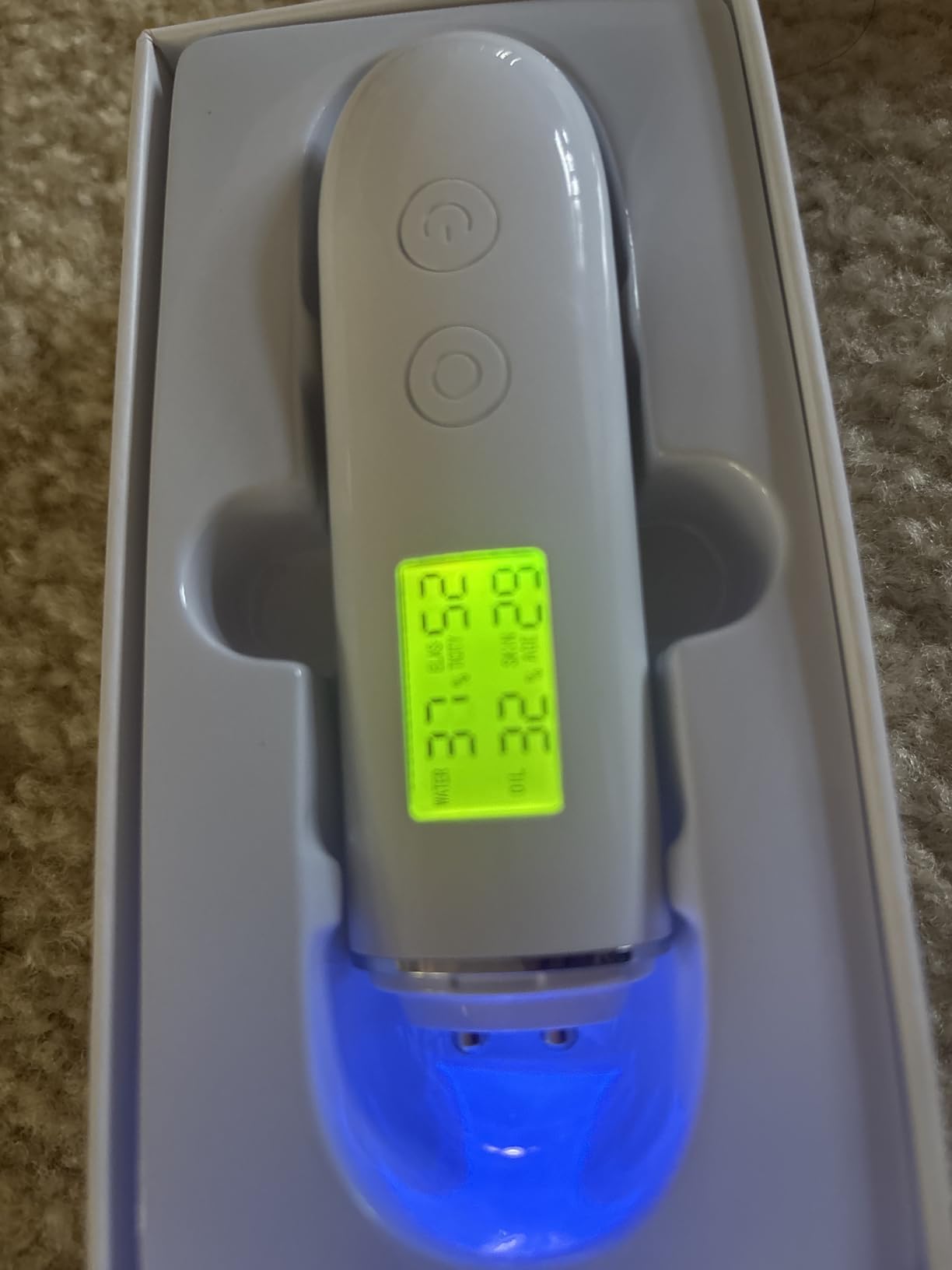
This is the most useful budget meter in the group, and the fluorescent agent detection is what separates it from the simpler impedance testers. Point the UV function at a product and it gives you a rough check on whether the formula contains fluorescent agents, which is something no other device in this list does.
The everyday function is quantitative. A sensor measures skin moisture and oil levels within seconds and the large digital LCD shows both as clear percentages. Three warning lights, red, yellow and green, give you an at-a-glance state indicator when you do not want to think about the numbers.
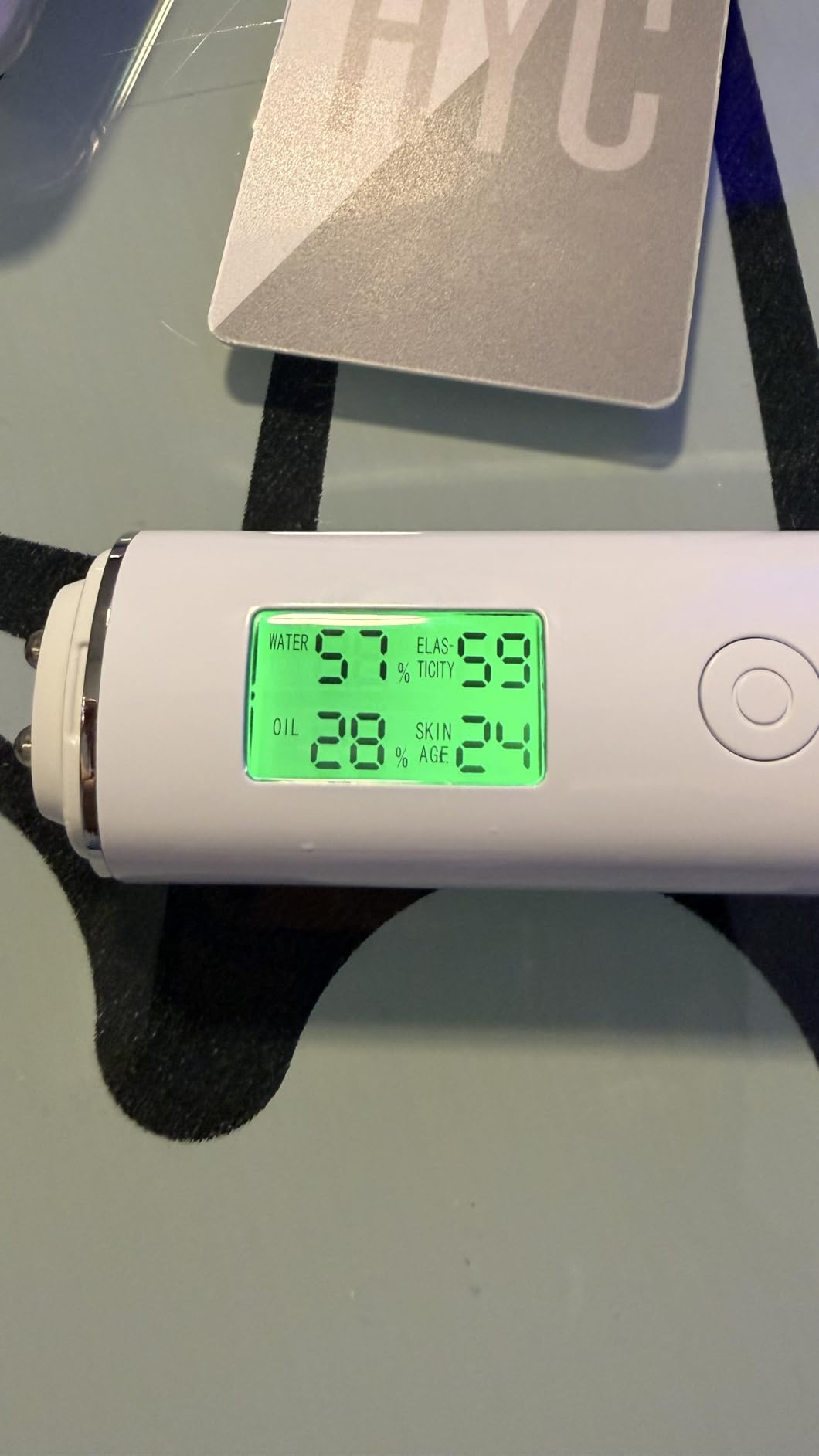
The memory function stores eight sets of test records, which is more history than the five-reading model earlier in this list, and enough to run a simple two-week comparison of a new moisturizer. The body measures 125 by 32 by 22mm and weighs 4.66 ounces.
It also carries the lowest average rating here at 4.1, with a 12 percent share of two-star reviews pointing to occasional accuracy complaints. The fluorescent detection is also a spot check rather than a full product analysis, so treat a positive result as a prompt to read the ingredient list, not a verdict.
Who the LCHWRO meter suits
Anyone building a hydration or oil record on a strict routine, particularly if you are switching between two moisturizers and want evidence rather than impressions. Eight stored readings is enough to see a direction of travel.
It is also worth having if you buy skincare from marketplaces and want a quick first pass on a product before it reaches your face.
Who should skip it
Skip it if you care about texture, pores or pigmentation. It measures two numbers and a fluorescence check, and the fluorescence check is not a product analysis.
Given the accuracy complaints, treat consecutive readings as the signal rather than any single result. Two readings that agree mean something; one reading on its own does not.
10. Lmaqfum 12 Inch Analysis Machine: Best for Split-Screen Before and After
Skin Analysis Machine, 12 Inch LCD Screen Digital Scalp Camera for Hair Analysis, 50x/200x Dual Heads, Skin Health Detection Use for Home, Salon and Spa
12 inch LCD live imaging
50X and 200X follicle lenses
2, 3 and 4-quadrant split
Plug-in use
Pros
- 12-inch screen makes pore detail easy to see and users compare it to a skin sonogram
- High resolution live image reveals blackheads and ingrown hairs
- Split-screen comparison across 2
- 3 or 4 quadrants
- Calibration-free instant setup
- Screen sizes available at 5
- 7 and 12 inch
Cons
- No written guidance on interpreting the images
- Must be plugged into power during use despite the battery
- Some units report zoom and photo quality faults
- Desk-sized rather than portable
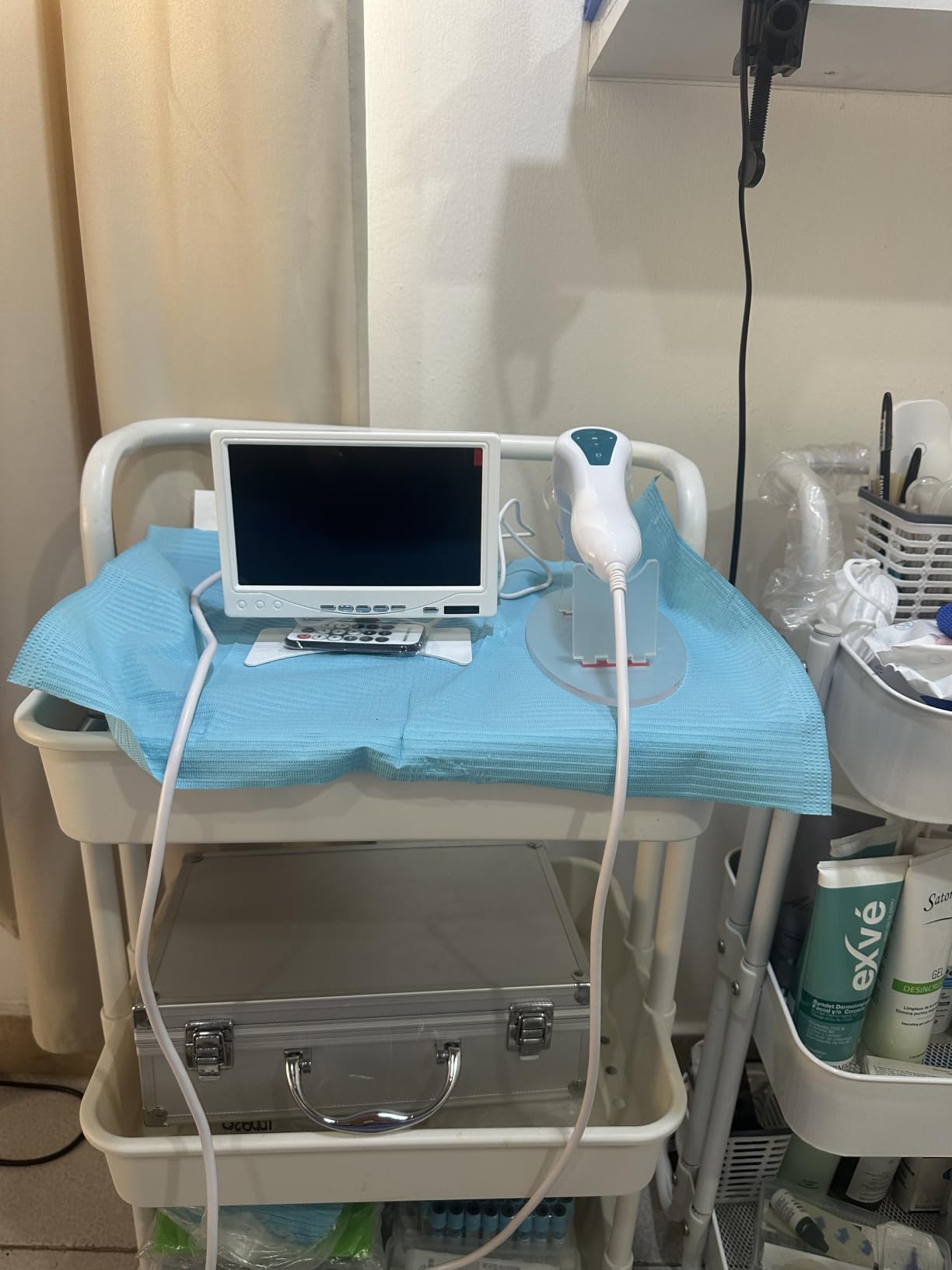
The biggest screen in the group, and the split comparison mode is its real advantage. You can put two, three or four live views side by side, which turns it into a genuine before-and-after station. Salon and head spa operators use it to show clients the magnified image live, and that social function is part of the appeal.
Image quality is described as high resolution, with users reporting blackheads and ingrown hairs appearing that were not visible to the naked eye. The 50X skin lens and 200X follicle lens cover both face and scalp, and the device detects scalp sebum levels, hair texture and elasticity plus epidermal pigmentation variation.
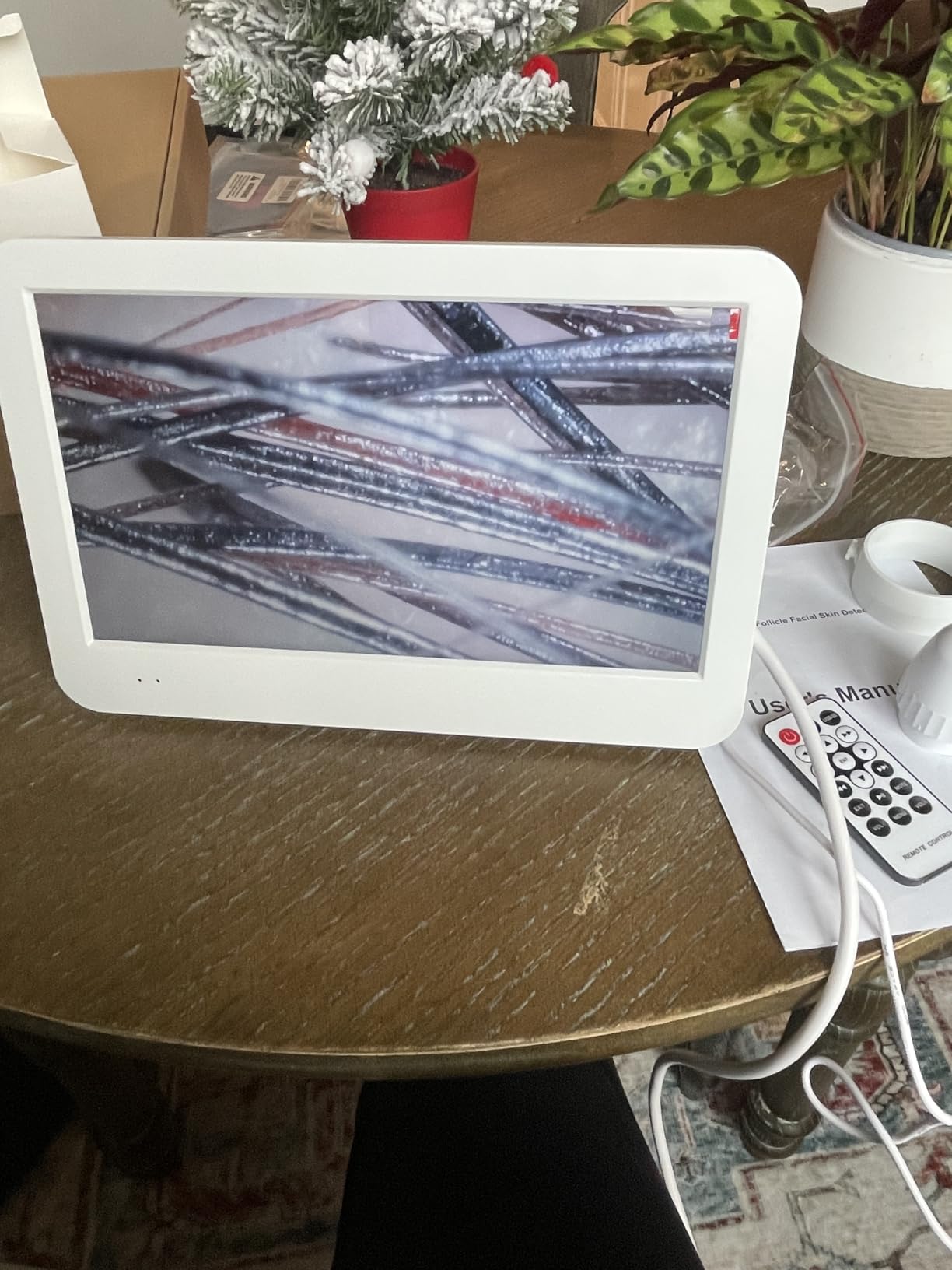
Setup is calibration-free and instant, and image freeze, zoom and storage are all included. It is also offered in 5-inch and 7-inch variants, which is the practical choice unless you have desk space to spare. The package measures 15.35 by 13.78 by 3.23 inches and the body weighs 3.2 pounds.
Three complaints recur. Several buyers explicitly note there is no written guidance on what the follicle and skin images actually mean, which is the same documentation gap that affects the whole magnification category. It must be plugged into power during use despite the included lithium battery. And some report being unable to zoom out properly or getting poor photo quality. At 16 reviews, that is a small base to draw firm conclusions from.
Who the Lmaqfum machine suits
Salon, spa and head spa operators who want a client-facing screen, and home users with a dedicated desk who want the largest possible view of texture. The quadrant comparison is the feature that makes long-term tracking far easier than taking manual photos.
Pick the 5-inch or 7-inch version if desk space is tight, since the imaging is the same.
Who should skip it
Skip it if you need portability. A 3.2 pound desk unit that needs a power socket is a fixture, not a travel device, and the rechargeable alternative earlier in this list fits that brief better.
Skip it if you are looking for a quantified reading. The pigmentation variation it notes is visual, and without any interpretation guide you are looking at a picture without a key.
How to Use a Skin Analyzer at Home So Two Readings Match?
Almost every complaint we found about these devices traces back to inconsistent conditions rather than bad hardware. Five steps fix most of it.
Fix the time. Take every reading at the same point in your day, ideally morning, before any skincare goes on.
Strip everything. No makeup, no moisturiser, no sunscreen on the measured area, and clean hands.
Control the light. Use the same room, the same lamp, the same time of day, and avoid direct sunlight. For UV lamps this means the same dark room every visit.
Repeat the read. Take two or three readings on the identical spot and write down all of them. A spread of more than a few points is measurement noise, not a change in your skin.
Compare over weeks, not days. A 30-day trend from a 2 to 4 week baseline is a signal. A jump after a sheet mask is not.
Forum users have reported peaks of roughly 44 percent water content on the cheeks and occasionally near 50 percent on the forehead, reached immediately after a sheet mask. The striking part is that the reading was gone by the next morning even with several moisturisers layered on top. If your log looks like that, your device is working and your expectations need adjusting.
What Skin Analyzers Cannot Diagnose
None of these devices is a medical device, and none of them can tell you whether a mole is melanoma, whether a patch is eczema, or whether your barrier is compromised. Every one of them reads light reflected from or emitted by skin, and turns that into an image or an estimate of surface properties.
That boundary matters most in two places. First, a changing, bleeding, itching or rapidly growing lesion needs a dermatologist, not a device and not a monthly photo comparison. Second, if you are on prescription actives or treating a diagnosed condition, the decision belongs with the prescriber.
Skin tone adds a second honest caveat. These systems segment colour signatures, and segmentation trained on lighter skin can under-report redness on deeper skin because redness reads as a shift within a darker baseline. The one device here that states its range openly, the Fitzpatrick I to V grader, is better for this reason than one that quietly reports a number outside its validated range.
There is also a commercial question worth naming. Devices that recommend products may benefit from selling them. Treat every product recommendation as a suggestion and check the ingredient list yourself, particularly if you are managing rosacea-prone skin, where a wrong active can undo months of careful work.
How to Choose the Right Skin Analyzer for Your Skin?
App, handheld probe, UV lamp or dermatoscope? Pick your device class first
There are four distinct classes here and they are not substitutes for each other. Impedance probes like the SHQYMBLT and LCHWRO units give you a moisture and oil percentage you can log. UV lamps like the NaSeny and HONGWAYE units make hidden pigmentation, oil and fluorescence visible without contact. Digital magnifiers like the Yhaofu, Pewoaoa and Lmaqfum units show you surface and scalp detail on a built-in screen. Dermatoscopes like the IBOOLO DE-3100 and Avidaril units combine polarized optics with a phone to give you a recorded image of a lesion.
Decide which question you actually want answered. Product efficacy points to a probe. Sun damage and pigmentation points to a UV lamp. Texture, blackheads and scalp point to a digital magnifier. A changing mole points to a dermatoscope with storage.
What to prioritise on your first purchase
Portability beats screen size if you will actually use the device. A meter in your bag that gets used daily will beat a desk console that gets used once. After that, prioritise whatever feature answers your actual concern.
Warranty length is a reasonable tiebreaker among near-identical magnifiers, since a one-year cover is a better bet for a bathroom device than six months. Build quality matters more than any listed specification: a dim tube or a screen defect ends the experiment regardless of what the box claims.
How to read a hydration number without chasing it
Treat hydration as a range measured over weeks, not a target. Realistic cheek readings cluster around the 40 to 50 percent band, and they are transient, which is why post-mask peaks always disappoint by morning. The useful question is whether your evening reading is higher two weeks into a new moisturiser than it was on day one.
Write your numbers down outside the device. The memory functions here hold five or eight readings, which is enough for a fortnight and not enough for a real chart, and a spreadsheet costs nothing.
Where skin tone changes the reading
Redness and pigment segmentation are the metrics most sensitive to baseline skin tone. If your skin is deeper, treat colour-based scores as directional and lean on measurements that do not depend on colour, which is another argument for pairing an imaging device with an impedance meter.
The Fitzpatrick grader exists precisely because a documented scale position is more reliable than an estimate made from a photograph. If you are planning any device treatment, establish that number first.
What the running costs look like after you buy it
None of the ten devices here requires a subscription, which is a genuine change from the app-based AI analyzers that dominate search results. The AI skin analysis apps are free to download and often carry in-app purchases for the report itself, so the effective cost of a single analysis is unclear and the history retention is usually tied to the account.
Physical devices are cheaper over time. The running costs are batteries for the impedance and UV models, and a phone for the dermatoscopes. If a change spot, texture or hydration is what you want to track over months, a device you own is the better structure than an app you rent.
Frequently Asked Questions
Are skin analysis machines worth it?
Yes, as a measurement tool, not a diagnosis. A home skin analyzer is worth it when you want to compare a reading against a reading taken the same time of day, in the same light, on the same spot. That comparison is how you find out whether a new moisturiser or active actually changed anything. It is not worth it if you want a diagnosis, a treatment plan, or a single decisive number, because a single reading is noisy and none of these devices is a medical device.
What is the best device for skin analysis at home?
It depends on the question. For general pigment, oil and hydration visibility, a UV wood’s lamp is the most reliable and most used. For a number you can log, a bioelectric impedance moisture and oil meter gives you percentages. For pores, blackheads and scalp, a digital analyzer with a 50X and 200X lens is best. For recording a changing mole, a dermatoscope with phone capture and lesion storage is the right tool.
What is the No. 1 brand recommended by dermatologists?
Dermatologists do not generally endorse a home skin analyzer brand, and any page claiming a single dermatologist-recommended device should be read with care. What clinicians do recommend is a baseline photograph and consistent sun protection. Dermatologist-grade on a product page usually describes image quality or an optical specification, not a clinical validation, so treat the phrase as a marketing term rather than a medical one.
Can ChatGPT do skin analysis?
Not clinically, no. A general AI assistant works from a photograph, so it can offer a general description of what it sees but has no sensor data, no consistent lighting and no calibrated reading. It cannot measure transepidermal water loss, sebum level or a melanin index, and it cannot screen for lesions. A phone-based AI skin analysis app is a different category: it runs an algorithm over your photo, which is more consistent than asking a chatbot, but it remains an estimate rather than a measurement.
What are the best at-home skin care devices, and do any of them tighten skin?
The at-home device market splits into three groups. Measurement devices are skin analyzers, and every one in this roundup belongs there. Treatment devices include red light therapy and microcurrent, which act on skin. Cleansing devices are separate again. No skin analyzer tightens skin, because measuring is not treating. If tightening is your goal, you want a treatment device class, and a skin analyzer is only useful for checking whether that treatment is changing anything.
The Verdict: Which Skin Analyzer Comes First
The NaSeny Wood’s Lamp is the first pick among the best skin analyzers for home skincare in 2026, because it does the most useful thing for the widest range of people with the least amount of fuss. If you need numbers rather than images, take the SHQYMBLT meter for portability or the LCHWRO meter for the fluorescent agent check. If you need to look closely at pores, follicles or a single lesion, the Yhaofu, Pewoaoa and Avidaril devices cover magnification and recording between them.
Whichever you choose, the protocol matters more than the hardware. Same spot, same light, same hour, at least two reads, and a comparison four weeks later. A skin analyzer only earns its place in your bathroom if you let it build a history rather than chase a single number.