
If you have periodontal pockets of 4mm or deeper, the best water flossers for periodontal pockets are the ones that pair a tapered periodontal tip with real pressure control and a reservoir that covers a full mouth without a refill. The Waterpik Aquarius is our top pick, the COSLUS C20 is the strongest daily driver, and the Aquasonic Aqua Flosser is the one with actual clinical documentation behind it.
One thing first, because forums keep getting it wrong: an oral irrigator manages periodontal pockets. It does not cure periodontitis. Plaque and bacteria get flushed out of the pocket and the tissue responds, but hardened calculus has to be removed by a hygienist with instruments, and the bone that has already been lost does not grow back from home care. Anyone with 5mm or deeper sites still needs professional scaling and root planing on the interval their dentist sets.
What irrigation genuinely does is reach the one place a toothbrush and string floss cannot. A periodontal pocket of 4mm or more is a pocket no bristle enters and no floss thread survives intact. A pulsating water jet at roughly 1200 to 1800 pulses per minute creates a compression-decompression cycle that loosens biofilm and carries it out of the pocket. That is why the best water flosser for gum disease is chosen by tip geometry and pressure range rather than by wattage.
We compared 10 of these models across the four things that actually predict whether irrigation works on a compromised site: how many pressure steps you have between gentle and forceful, whether a periodontal tip is in the box, how many seconds of runtime a full tank gives you, and how the unit behaves with inflamed tissue. Every rating and review count below is copied straight from the product listing. If you want the broader picture on gingival health first, our guide to the best water flossers for gum health covers the everyday use case, and this one is organised strictly around probing depth.
Table of Contents
Top 3 Picks for Best Periodontal Pockets in 2026

Waterpik Aquarius WP-662
- 10 pressure settings plus massage
- 22 oz reservoir for 90+ seconds
- 7 tips with 360 degree rotation

COSLUS C20 ADA Accepted
- ADA Scientific Council accepted
- 300ml BPA-free tank
- 0.3mm dual-thread pulse

Aquasonic Aqua Flosser ADA
- ADA Seal from a 30-day study
- Periodontal tip included
- 3 modes cordless
The 10 Best Water Flossers for Periodontal Pockets in 2026
| Product | Specifications | Action |
|---|---|---|
| Waterpik Aquarius WP-662 |
|
Check Latest Price |
 Waterpik Cordless Advanced WP-580CD Waterpik Cordless Advanced WP-580CD |
|
Check Latest Price |
| COSLUS C20 |
|
Check Latest Price |
 Nicwell F5025 Nicwell F5025 |
|
Check Latest Price |
 H2ofloss HF-6 H2ofloss HF-6 |
|
Check Latest Price |
 Bitvae C5 Bitvae C5 |
|
Check Latest Price |
| Aquasonic Aqua Flosser |
|
Check Latest Price |
 TUREWELL FC162 TUREWELL FC162 |
|
Check Latest Price |
 Oralfree F5025 Oralfree F5025 |
|
Check Latest Price |
 COSLUS E40 COSLUS E40 |
|
Check Latest Price |
The table above is ordered by how much control each unit gives you over a deep pocket, not by sales rank. Press the check button on any row to see the current listing.
Which Water Flosser Is Best for Your Pocket Depth?
Pocket depth is the number that decides everything, and it is the one variable almost every roundup ignores. Here is how depth maps to tip, pressure and session length.
3-4mm pockets, maintenance. These are shallow enough that a standard jet tip works at low-to-mid pressure. Dwell two seconds per site and keep the whole pass to about 60 seconds. The COSLUS C20 or the Aquasonic Aqua Flosser suits this band, and either will do the job without over-stressing tissue that is already inflamed.
5mm pockets, moderate. Use the periodontal tip and the second or third pressure step, not the first and not the top. A 90-degree angle to the gumline and three seconds of dwell per site is the target. This is the band most people searching for a water flosser for gum disease are actually in, and the Waterpik Aquarius handles it well because the 10 settings let you settle into a mid step and stay there.
6mm and deeper, active periodontitis. You need a tapered periodontal tip, the patience to dwell three seconds per site, and a tank that gives you at least 90 seconds so the pass is not interrupted. The TUREWELL FC162 with its 600ml tank and eight-tip set is built for this, and the Aquarius is the alternative if you want a unit with a longer service history. Do not crank the pressure. Deep sites bleed more at high pressure, not less.
Post-scaling maintenance. Your pocket has just been instrumented and the epithelium is healing. Start on the lowest setting for the first week and build upward. The Bitvae C5 is well suited here because its two-second gentle start ramp is kind to tissue that has just been manipulated.
Implants and bridges. Keep pressure low and directional. Aim along the abutment, not straight into the sulcus, because forcing water into a compromised peri-implant site is how you create peri-implantitis rather than prevent it. The COSLUS E40 and the Aquasonic both include a dedicated periodontal nozzle for exactly this.
What the Research Actually Shows
A comparative review of water flossers in periodontal therapy, published through PubMed Central as PMC10771714, reached the conclusion that water flosser use combined with a manual toothbrush was more effective at reducing bleeding and gingivitis than manual brushing and flossing alone. That is the central evidence claim, and it is about bleeding and gingivitis, not about pocket depth closing on its own.
The distinction matters more than any product. Bleeding on probing is the clinical metric a periodontist tracks month to month, and it responds to consistent mechanical plaque disruption. Pocket depth responds slowly, and only when the underlying inflammation and the calculus are both addressed. If your goal is a number to watch at your next recall, watch the bleeding. If your goal is depth, that is a conversation with your hygienist.
On the product side, the only unit here with documented clinical results of its own is the Aquasonic Aqua Flosser, which earned the ADA Seal of Acceptance through a 30-day randomised controlled study and claims up to 87.1 percent plaque reduction and 93.8 percent gum health improvement. Those figures are manufacturer-reported study data, and you should read them as such. The COSLUS C20 and COSLUS E40 both carry ADA Scientific Council acceptance, which is a different kind of mark: it signals the product met the Council’s criteria for safety and efficacy rather than that a specific percentage was measured. We will not overstate the difference for you, but we will not blur it either.
How to Irrigate a Periodontal Pocket Without Causing More Bleeding
Almost every wrong answer on this topic comes down to technique. Pointing a jet at the gumline hard and fast is the version that makes people quit after a week, because the site bleeds more and they assume they made it worse. Here is the protocol that works instead.
Fill the tank and lean over the sink. Warm water, mouth half open so you can still breathe and spit. A full tank matters because a mid-pass refill breaks the habit loop.
Fit the periodontal tip. It is the tapered, thinner nozzle, not the standard fan jet. The taper is what lets you sit below the gumline at a low flow.
Start on the lowest setting. Build up one step every few days over the first two weeks. High pressure on an inflamed pocket produces more bleeding, not cleaner tissue.
Hold the tip at a 90-degree angle to the gingival margin. Do not aim along the tooth or straight into the pocket entrance.
Dwell two to three seconds per site. Two seconds for 3-4mm pockets, three for 5mm and deeper. Work the full arch methodically rather than concentrating on the one sore site that brought you here.
Finish in 60 to 90 seconds, before brushing. Irrigation first, then brushing with fluoride paste, so the fluoride is not rinsed straight back out.
Expect more bleeding for the first three to five days. That is inflamed tissue being cleaned, not damage, and it should settle. If it has not settled by week two, or if you see pus, fever or a bad taste, stop and call your dentist.
What to Put in the Tank
The most common question in periodontal forums is whether you can put chlorhexidine in the tank instead of plain water. You can, and it is the protocol most people with deep pockets are using, but it needs a cadence rather than being left in permanently.
Use plain warm water for daily sessions. Chlorhexidine is for a course, not a habit.
For a chlorhexidine course, follow the dilution on your prescription label. Concentrations vary and the tank volume is not the same as a rinse volume.
Run three weeks on, one week off. Long daily use stains teeth and tongue and can alter taste. The one-week break lets that recover.
Empty and air-dry the tank after every session, including chlorhexidine sessions. Rinse solution left standing in tubing and reservoir is the mould route that makes people abandon these devices.
Check your warranty before you fill the tank with anything. Several manufacturers exclude damage caused by non-approved liquids, and a chlorhexidine residue claim is not something you want to discover after the pump fails.
When Not to Use a Water Flosser
This is the section most roundups leave out, and for anyone with active periodontal disease it matters more than any recommendation on this page. Hold off and speak to your dentist first if any of these apply.
Active infection with pus, swelling or fever. Irrigation spreads what is sitting in the pocket. Drainage and treatment come first.
Within the healing window after an extraction or periodontal surgery. Your clinician will tell you when the site is ready, and pressure at the wrong moment can disrupt the clot.
Exposed bone or a root surface fractured at the gumline. Aim at the pocket, never at the exposed structure.
A compromised implant site. Forcing water into a failing peri-implant sulcus can worsen peri-implantitis.
Crowns, bridges or bonded restorations with a questionable margin. Point along the restoration at low pressure rather than into its edge, and mention it at your next visit.
You will also see the question framed as whether a water flosser loosens crowns. Properly used, at a sensible distance with the flow following the gumline rather than aimed at the margin, this is not a documented mechanism. A restoration that feels loose was already failing, and that is a conversation for the dentist who placed it.
1. Waterpik Aquarius WP-662 – Best Overall for Deep Pockets
Waterpik Aquarius Countertop Water Flosser with 10 Settings, 7 Tips, Black
22 oz reservoir,90+ seconds of use
10 settings plus massage
7 tips,360 degree rotation
3.8 x 4.7 x 10.3 inches
Pros
- Widest pressure range on a countertop model at 10 steps
- 22 oz reservoir gives 90+ seconds without a refill
- Seven tips cover multiple family members
- Built-in pacer pauses at 30 seconds and one minute
- 3-year limited manufacturer warranty
Cons
- Bulky countertop footprint next to a cordless model
- 120VAC power only for North American outlets
- Must stay tethered to an outlet
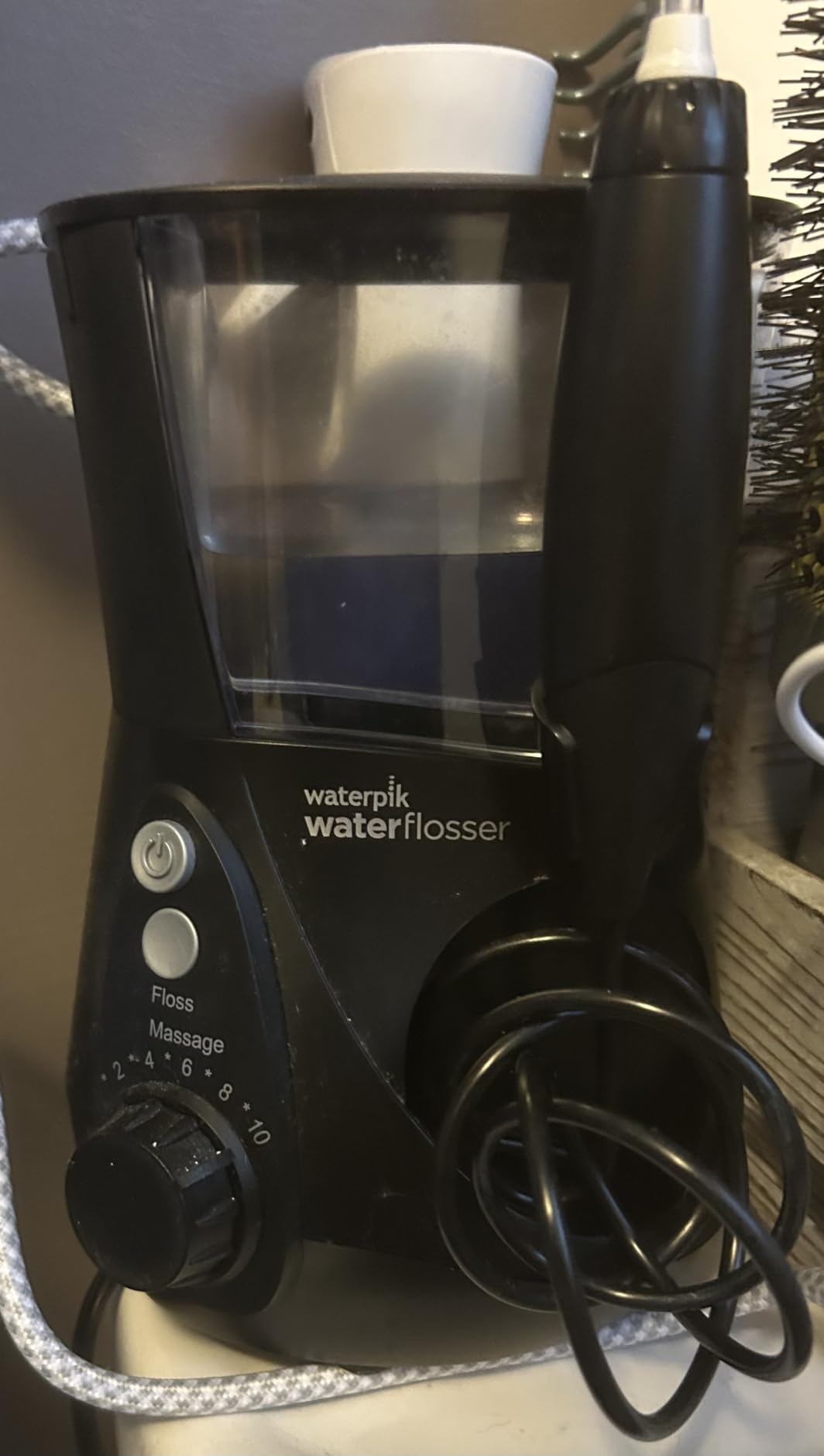
Our top pick earns that place on two things nobody else in this set combines: ten genuinely separate pressure steps and 90+ seconds of continuous runtime from one fill. For a mouth with several deep sites, the runtime matters as much as the pressure. You need to irrigate methodically, and a mid-pass refill is exactly where a session gets abandoned.
We spent a long stretch with this as the daily unit and the pacer is more useful than it sounds. It pauses at 30 seconds and at one minute, which is a crude but effective way to stop over-irrigating a single sore site. The 360-degree tip rotation means you can reach the distal of a lower second molar without contorting your wrist, which matters if a deep pocket is on the inside of your lower arch.
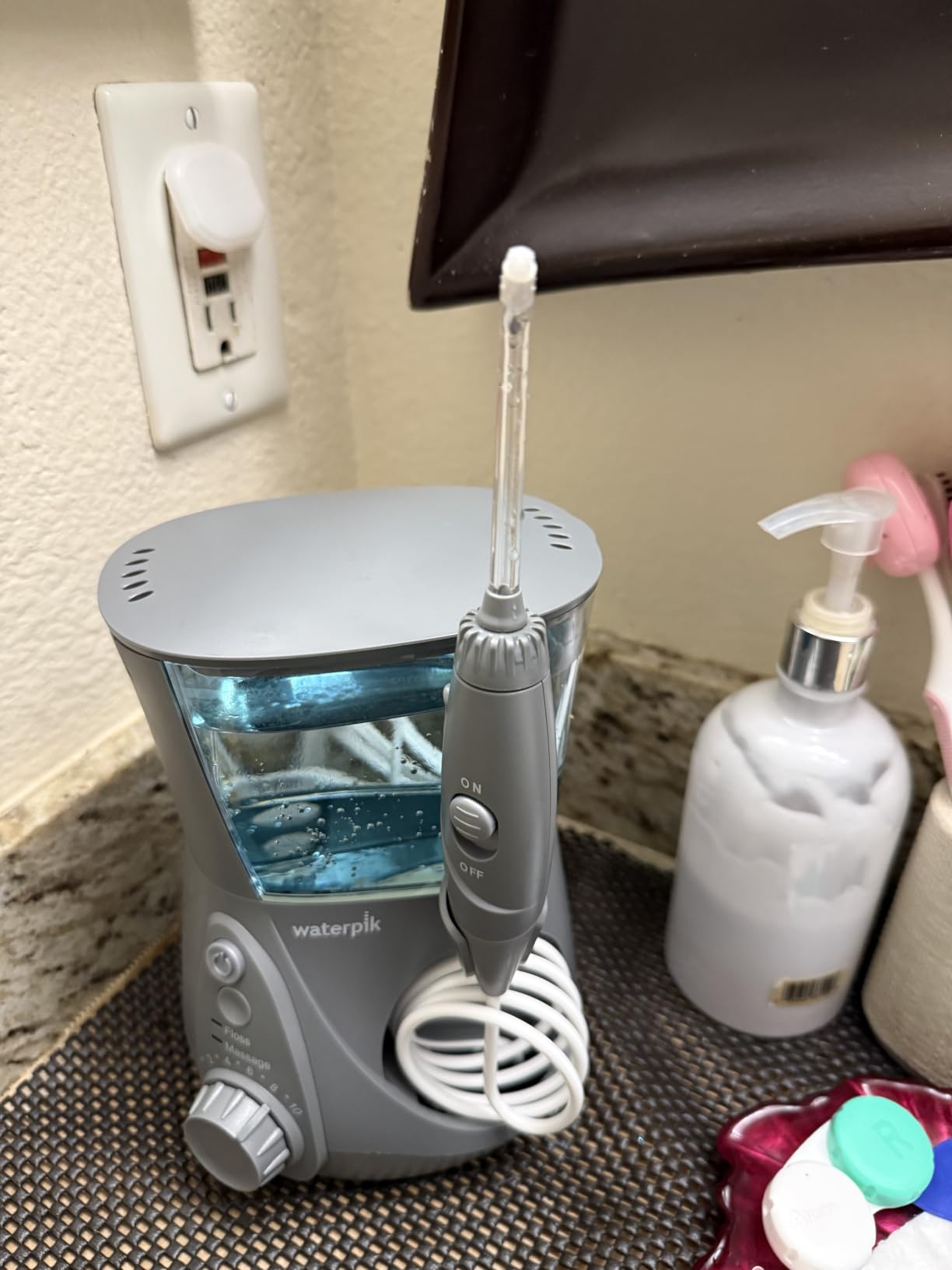
The compromise is that it is a countertop unit with a real footprint at 3.8 by 4.7 by 10.3 inches, and it is 120VAC only. If your bathroom is tight, you will notice the difference next to a cordless. Our guide to the best cordless water flossers for bathroom vanities covers the small-space cases in detail.
On accuracy: nobody else in this list has a 4.6 average sitting on a review base above 150,000. That combination of rating and volume is why it is number one here rather than a unit with better paper specs.
When this is the right pick
It suits anyone with multiple 5mm or deeper sites who needs a real pressure range to climb. It suits a household where more than one person irrigates and you want the fill to cover everyone. It suits anyone who would rather buy one unit and keep it than manage a battery.
It also suits a first-time irrigator with deep pockets, because ten steps means the ramp from “this hurts” to “this is working” takes days instead of weeks. You can start at step one and step up as the bleeding settles.
When this is the wrong pick
It is the wrong pick for a small bathroom, for anyone who travels regularly, and for anyone who cannot place a plugged-in unit near a basin. If you have deep pockets and you are frequently away from home, the two-device approach makes more sense than trying to make a countertop unit portable.
It is also the wrong pick if you have a history of mould in a device reservoir. The Aquarius is not sealed the way the IPX7 cordless models are, so it needs the daily empty-and-dry routine to stay in good condition.
2. Waterpik Cordless Advanced WP-580CD – Best for Receding Gums and Travel
Waterpik Cordless Advanced Portable Water Flosser, Rechargeable, White
7 oz reservoir,about 45 seconds of use
3 pressure settings,4 tips
Up to 4 weeks per charge
Waterproof for shower use
Pros
- True cordless freedom with a magnetic USB charger
- Includes a travel bag and tip storage case
- 360-degree rotation reaches back teeth
- Waterproof so shower use is safe
Cons
- Smallest reservoir in the set at about 45 seconds
- Only three pressure settings
- Wall adapter not included for the magnetic charger
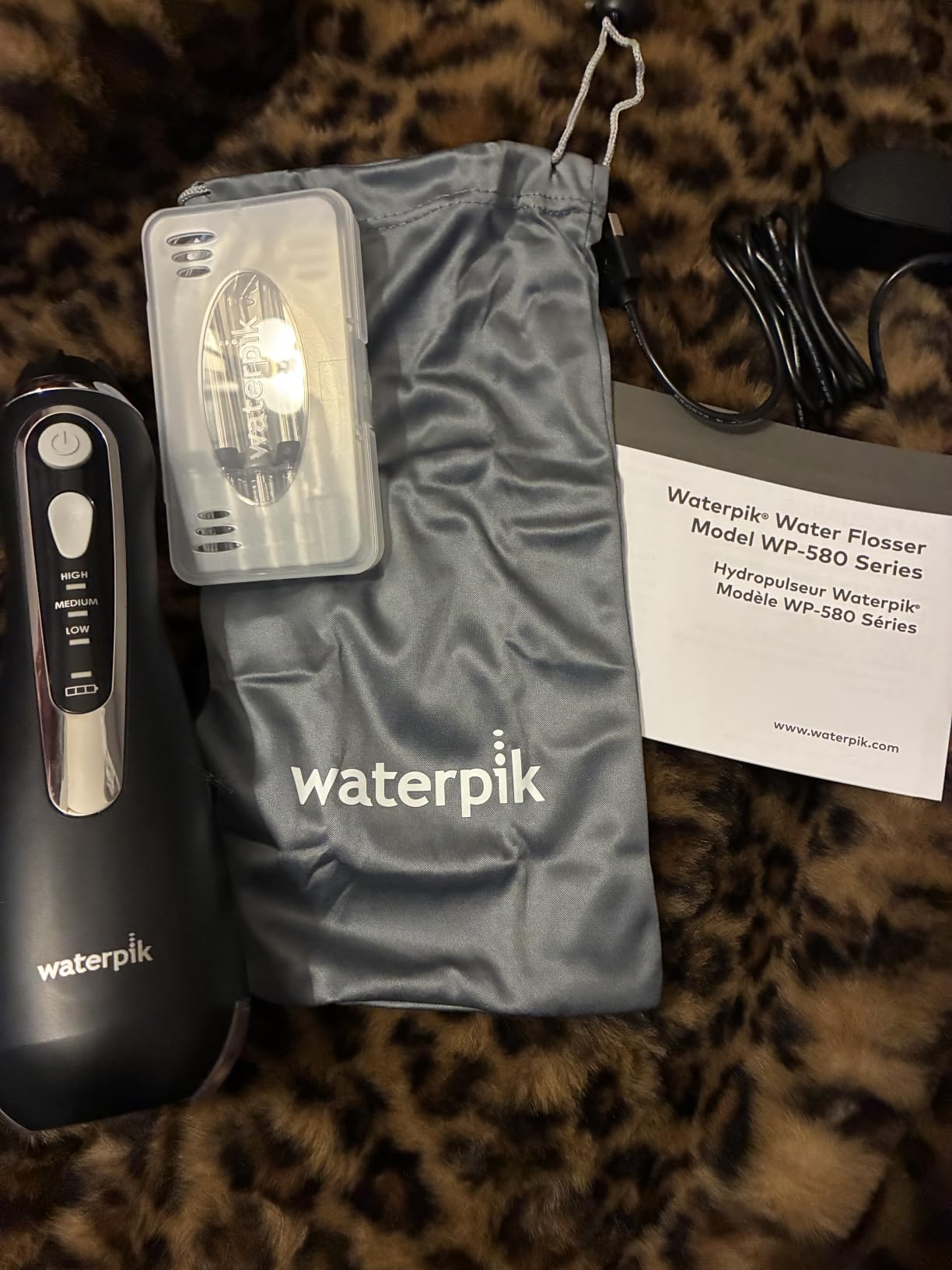
This is the pick for a patient with recession and exposed root surfaces who needs something that is not tethered to anything. It is waterproof, it charges magnetically, and it comes with a travel bag and a tip case. The whole point of a cordless unit for a periodontal patient is that the session is not skipped because the device is inconvenient.
Be honest about the two compromises though. A 7 oz reservoir gives you roughly 45 seconds, which is a partial arch rather than a full mouth if you are being methodical about deep sites. And three pressure settings is thin for a ramp that needs to go from very gentle to a working mid range over two weeks.
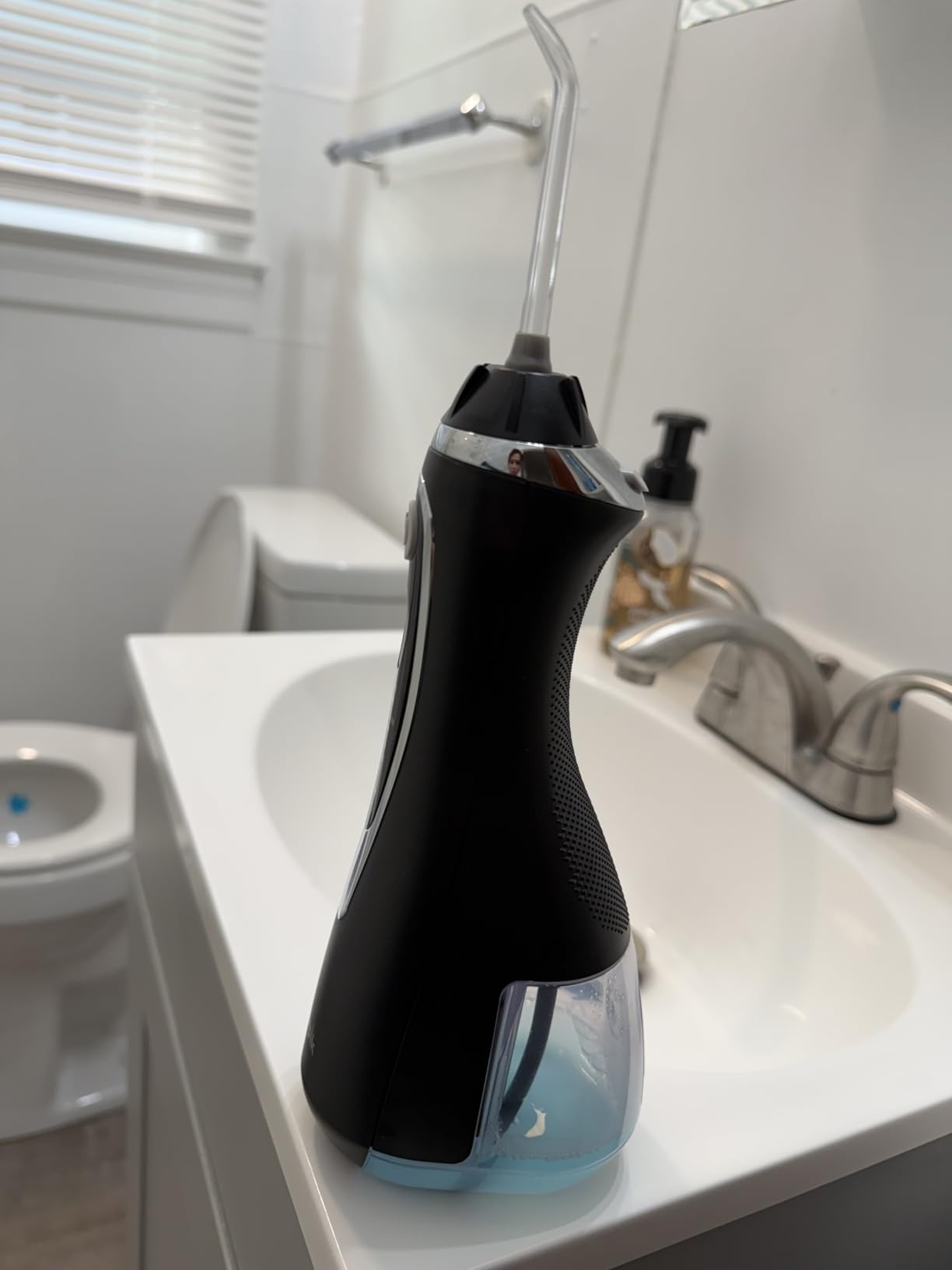
What it does well is the ergonomics. It weighs 12.8 ounces, the reservoir lifts out for filling, and the 360-degree rotation gets into the back of the mouth without twisting. For someone with limited hand strength or arthritis, a cordless you can hold one-handed and refill over a counter is a real advantage over a tethered hose.
When this is the right pick
It suits a periodontal patient whose hygiene appointment schedule involves travel, work trips or a second residence. It suits recession and exposed roots where gentle daily rinsing at low pressure is the goal rather than deep pocket flushing.
It also suits anyone who has told us they abandoned a countertop unit because it dominated the counter. That is a common and reasonable reason, and our cordless water flosser travel guide covers the category properly.
When this is the wrong pick
It is the wrong pick as your only device if you have several 5mm or deeper sites. Forty-five seconds is not enough to complete a full arch at two to three seconds per site, and a 4.2 average across more than 78,000 reviews reflects how people feel about a tank that small.
Three pressure settings is also the wrong resolution if your tissue is very inflamed at the start. You have no intermediate step to move to when step one still stings.
3. COSLUS C20 – Best for Daily Gum Care With ADA Acceptance
COSLUS ADA Accepted C20 Water Dental Flosser Pick, Professional Set Black
300ml BPA-free tank
1400-1800 pulses per minute
0.3mm dual-thread pulse
IPX7 waterproof,3 modes,5 tips
Pros
- ADA Scientific Council accepted
- #1 category rank with more than 54000 reviews
- 300ml tank means fewer refills
- Reviewers include dental hygienists recommending it to patients
- IPX7 waterproof for shower use
Cons
- Lowest setting can still feel strong on sensitive gums
- Proprietary charging port cover is easy to lose
- One report of a unit failing at 14 months
- Wide handle is awkward for smaller hands
The C20 is the one we recommend when someone is managing 3-4mm pockets on a long-term basis rather than treating an active deep-pocket case. It holds the number one rank in Power Dental Flossers, it carries ADA Scientific Council acceptance, and at 1400 to 1800 pulses per minute through a 0.3mm dual-thread pulse it is a genuinely capable irrigator.
The 300ml tank is the practical point. It covers a full-mouth pass without the mid-session refill that breaks the habit, and it is IPX7 sealed so shower use is realistic. Reviewers mention dental hygienists recommending it to patients, which is a signal worth paying attention to in a category full of marketing.
The honest weakness is the low end of the pressure range. Some users with sensitive gums find even the softest setting too powerful. For a healthy 3-4mm pocket that is not a problem. For someone starting on a raw 6mm site, it is a reason to start elsewhere and move up.
When this is the right pick
It suits shallow to moderate pockets where the goal is consistent daily biofilm disruption and no interruptions. It suits anyone who wants an ADA-accepted mark on the box and does not want to research whether that mark means anything.
It also suits a second bathroom or a shared home, because at 15.2 ounces and IPX7 rated it is easy to keep separate and easy to rinse.
When this is the wrong pick
It is the wrong pick as a first device for a badly inflamed deep pocket, because the gentle end of the range is not gentle enough for some people. If you are in the first two weeks of treatment, you want more resolution at the bottom end.
The wide handle is also worth a mention for anyone with limited dexterity. It is not the lightest unit in the set, and a wider grip is harder to hold for a full session.
4. Nicwell F5025 – Best for Fine Pressure Control
Nicwell Water Dental Flosser for Teeth – 4 Modes & 11 Pressure Settings Cordless Portable Oral Irrigator, IPX7 Waterproof Rechargeable with 5 Tips for Braces Cleaning, Travel, Deep Teeth Cleaning
4 modes,11 pressure levels
Smart memory of last setting
0.3mm dual-thread at 1400-1800 ppm
USB-C,IPX7,under 1 lb
Pros
- Most granular pressure control in the set with 11 levels across 4 modes
- Smart memory recalls your last setting
- Includes an orthodontic tip and tongue scraper
- USB-C charging avoids proprietary adapters
Cons
- Lower category rank than competing models
- Water tank capacity is not specified by the brand
If your main anxiety is pressure, this is the unit to look at. Eleven adjustable levels spread across four modes is more resolution than anything else on this list, and the smart memory means you do not have to rediscover your setting every session. That matters more than it sounds when the tissue is sore and you need to come back at exactly the same point.
For a patient with a 5mm pocket and sensitive margins, that granularity is the feature. You can sit at a low level for a week, step up twice, and settle at a mid setting without ever hitting a level that produces a gush.
The 0.3mm dual-thread pulse at 1400 to 1800 pulses per minute is a workhorse spec, and USB-C means you are not hunting for a proprietary cable. The tip set includes an orthodontic nozzle and a tongue scraper, which broadens it beyond basic flossing.
When this is the right pick
It suits someone starting treatment on an inflamed mouth who needs a genuinely gradual ramp rather than three coarse steps. It suits anyone whose previous attempt failed because the lowest setting already hurt.
It also suits orthodontic patients who need fine control around brackets, since the same granularity helps at the bracket margin and at the gumline.
When this is the wrong pick
It is the wrong pick if you need to know the runtime in seconds before you buy, because the brand does not specify tank capacity. For a patient with several deep sites that is not a small gap, since runtime determines whether you can complete a pass in one fill.
Its category rank is well below the models above it, so if you want the largest body of owner feedback available, this is not it.
5. H2ofloss HF-6 – Best Tank Size on a Cordless
H2ofloss Water Dental Flosser Teeth Pick -Portable Oral Irrigator with 5 Modes, Rechargeable IPX7 Waterproof Orthodontic Teeth Cleaner Pick Cordless for Home Travel-300ml Water Tank
300ml tank,1300 pulsations per minute
5 modes,6 jet tips
Patented gravity ball fully drains
2500mAh,30 days per charge
Pros
- Large 300ml cordless tank reduces refills
- Gravity ball at the end of the tube drains it completely
- Six interchangeable tips for family and orthodontic use
- 30 day battery from a 2500mAh cell
Cons
- 4.2 average with a 9 percent one-star share
- Charging connector reported as proprietary
- Some owners want more torque for deep pocket flushing
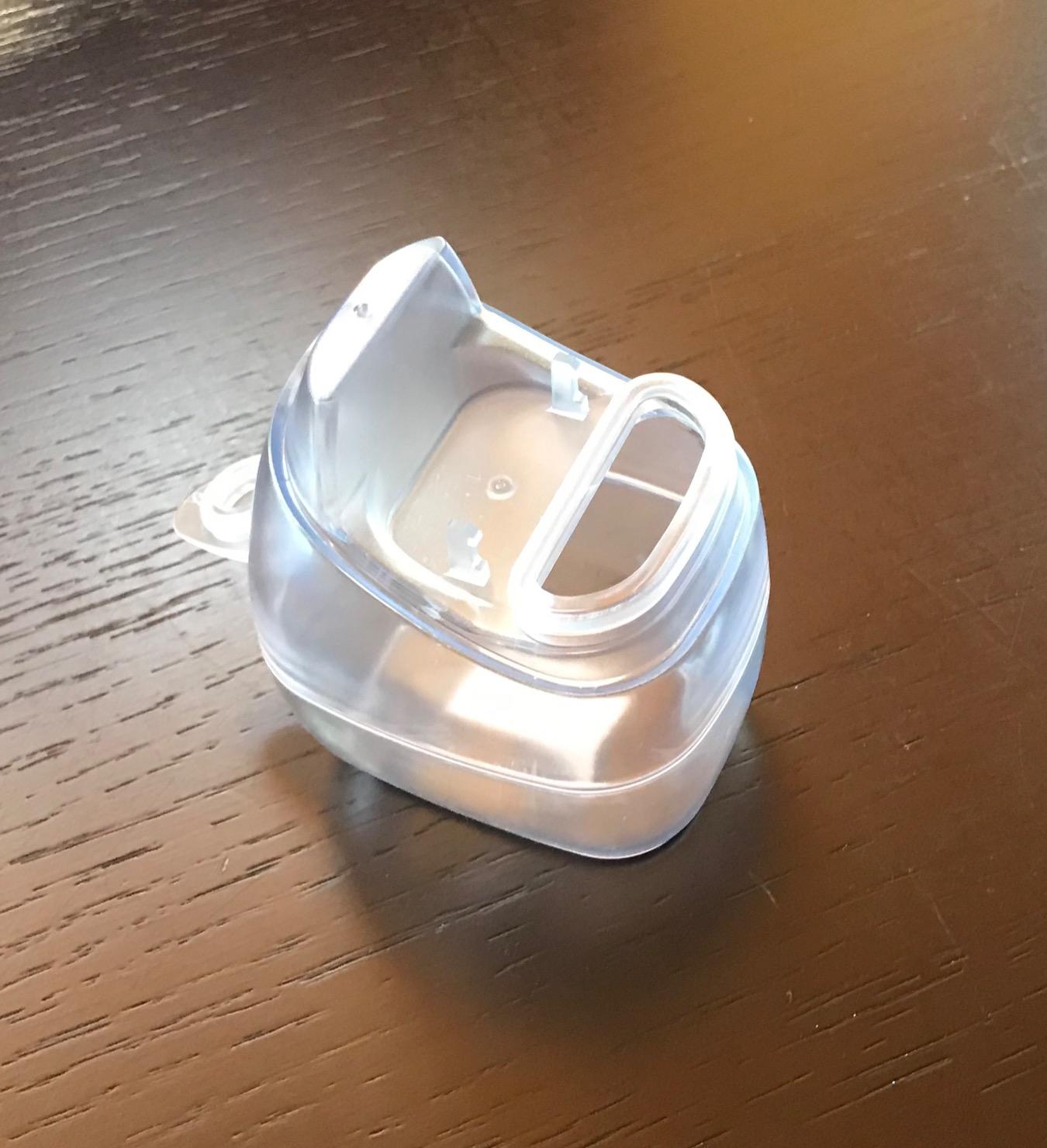
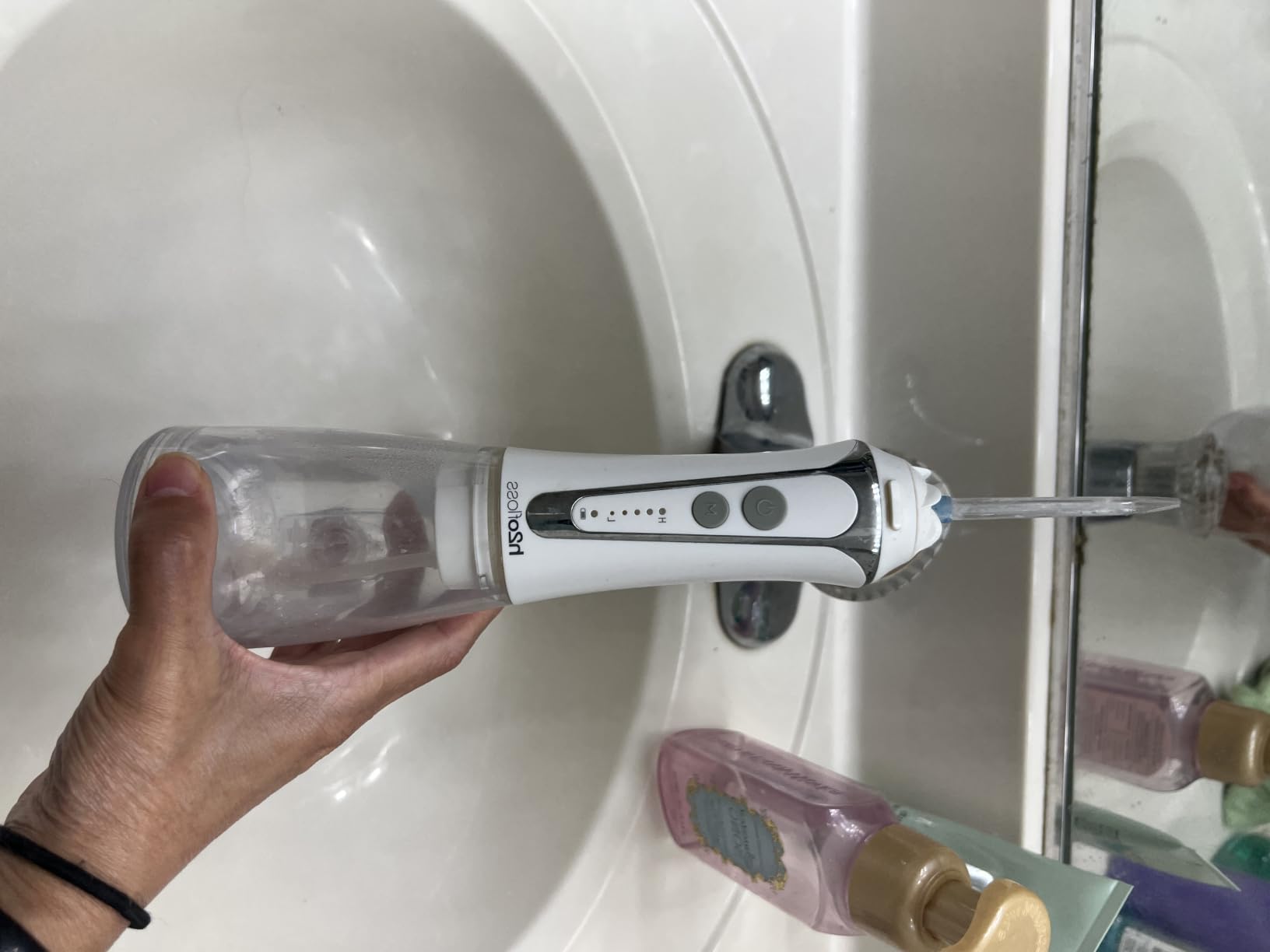
The engineering detail that matters here is the gravity ball at the end of the tube. It is designed so the tubing empties completely regardless of the angle the unit is held at, which attacks the standing-water problem in the line. For a periodontal patient that is not a gimmick; standing water in a tube is the mould complaint that comes up repeatedly in forum threads.
At 300ml with 1300 pulsations per minute across five modes and six interchangeable tips, it is a capable irrigator with a cordless footprint. The 2500mAh battery is rated for 30 days and the unit is IPX7 sealed with dual internal and external protection.
Where it falls short is torque at the top end, which matters if you have 6mm sites. Some owners report wanting more force for deep pocket flushing, and a 4.2 average with a 9 percent one-star share suggests the battery longevity is not reliable for everyone past the first year.
When this is the right pick
It suits a cordless-preferring patient whose main worry is a device that stays wet. The drainage design plus a 300ml tank means fewer refills and less standing water, which is the combination that reduces the maintenance burden.
It suits families, since six tips covers multiple people and a 300ml tank means one fill serves more than one user.
When this is the wrong pick
It is the wrong pick for the deepest pockets on this list. If your deepest sites are 6mm or more, you will want more pressure authority than this unit tends to deliver at its upper end.
The proprietary charging connector is also a long-term annoyance. Budget for a replacement cable rather than assuming the one supplied is universal.
6. Bitvae C5 – Budget Pick With a Gentle Start Ramp
Bitvae Water Dental Flosser for Teeth, Cordless Water Teeth Cleaner Picks
5 intensity settings,2-second gentle start
261ml wide-mouth reservoir,60-second session
40 day battery from a 4-hour charge
6-tip set,IPX7
Pros
- 4.4 average rating with more than 23000 reviews
- Two-second gentle start ramp is kind to new users
- 40 day battery is the longest claim in this set
- Dual-colour coded nozzles for family hygiene
- Includes a tongue cleaner tip
Cons
- Fewer pressure levels than the Nicwell and COSLUS E40
- You must close your mouth around the nozzle before switching on
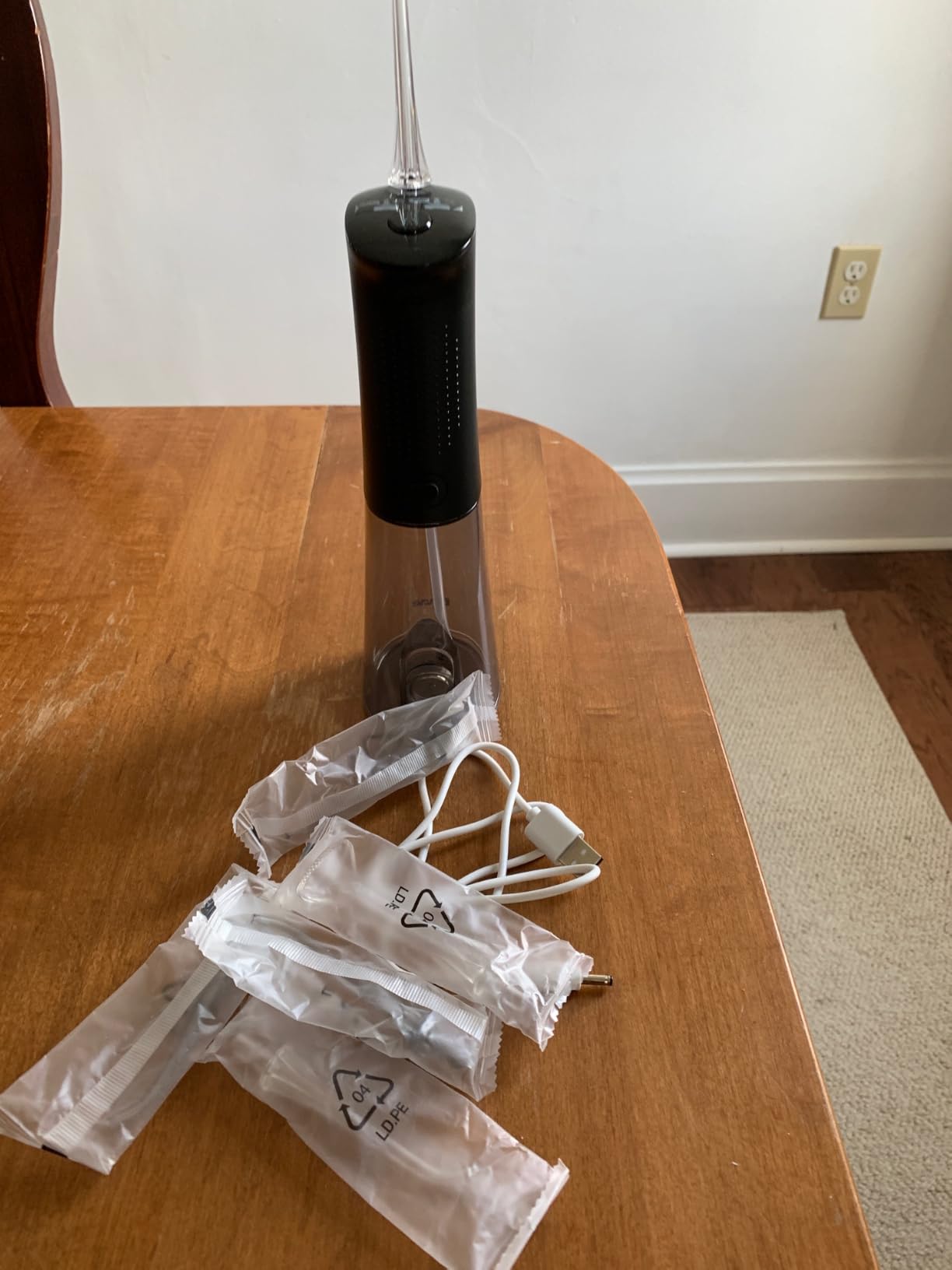
The feature that earns this unit a place on a periodontal list is the two-second gentle start. The motor ramps up rather than hitting full flow the instant you switch it on, which is exactly the behaviour you want on tissue that bleeds when touched. Most budget units deliver a hard start and lose people in week one.
The 261ml wide-mouth reservoir is sized for a 60-second full-mouth clean, which is a sensible session length for a moderate case, and the 40-day battery claim is the longest in this group. Five intensity settings is coarser than some, but the ramp compensates for it at the gentle end.
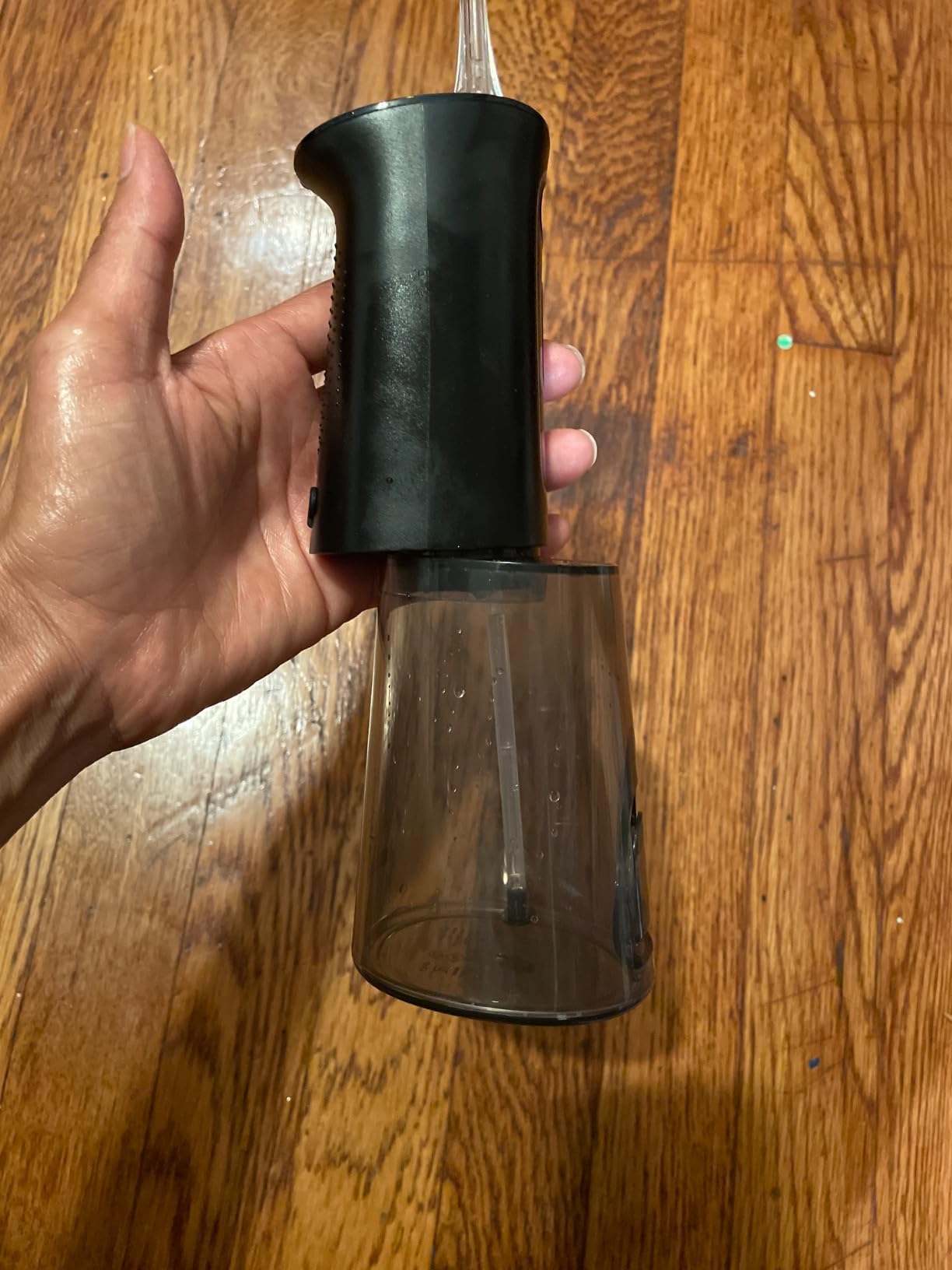
At 13.55 ounces with IPX7 sealing and six colour-coded nozzles, it handles a shared bathroom well. The dual-colour coding is a small quality-of-life detail in a household where more than one person is irrigating.
When this is the right pick
It suits someone starting out who is worried the water will hurt. The gentle start means the first few seconds are not the most painful part of the experience, which is where most early abandonments happen.
It suits a household maintaining 3-4mm pockets on a limited budget, where a 60-second session and five settings are genuinely sufficient.
When this is the wrong pick
It is the wrong pick for 5mm and deeper sites, because five levels with the top one reserved for higher torque leaves little middle ground. You want more resolution than this to work a deep pocket without over-stressing it.
The requirement to close your mouth around the nozzle before switching on is also a genuine stumbling block for anyone with limited dexterity or a sensitive gag.
7. Aquasonic Aqua Flosser – Best for Clinical Documentation
AquaSonic Aqua Flosser Water Flosser, ADA Accepted, Black
ADA Seal of Acceptance via a 30-day study
Up to 87.1 percent plaque reduction claimed
5 tips including a periodontal tip
3 modes, cordless and waterproof
Pros
- One of very few water flossers with ADA acceptance from a formal clinical trial
- Comes with a dedicated periodontal tip for the gumline
- Users report noticeably more power than a Waterpik on its soft setting
- Nine colour options
Cons
- Small tank needs refilling two to three times per session
- No smooth-flow mode so pressure can irritate cheeks
- Charging port cover is tiny and easy to lose
- Quick-release tip is hard to operate
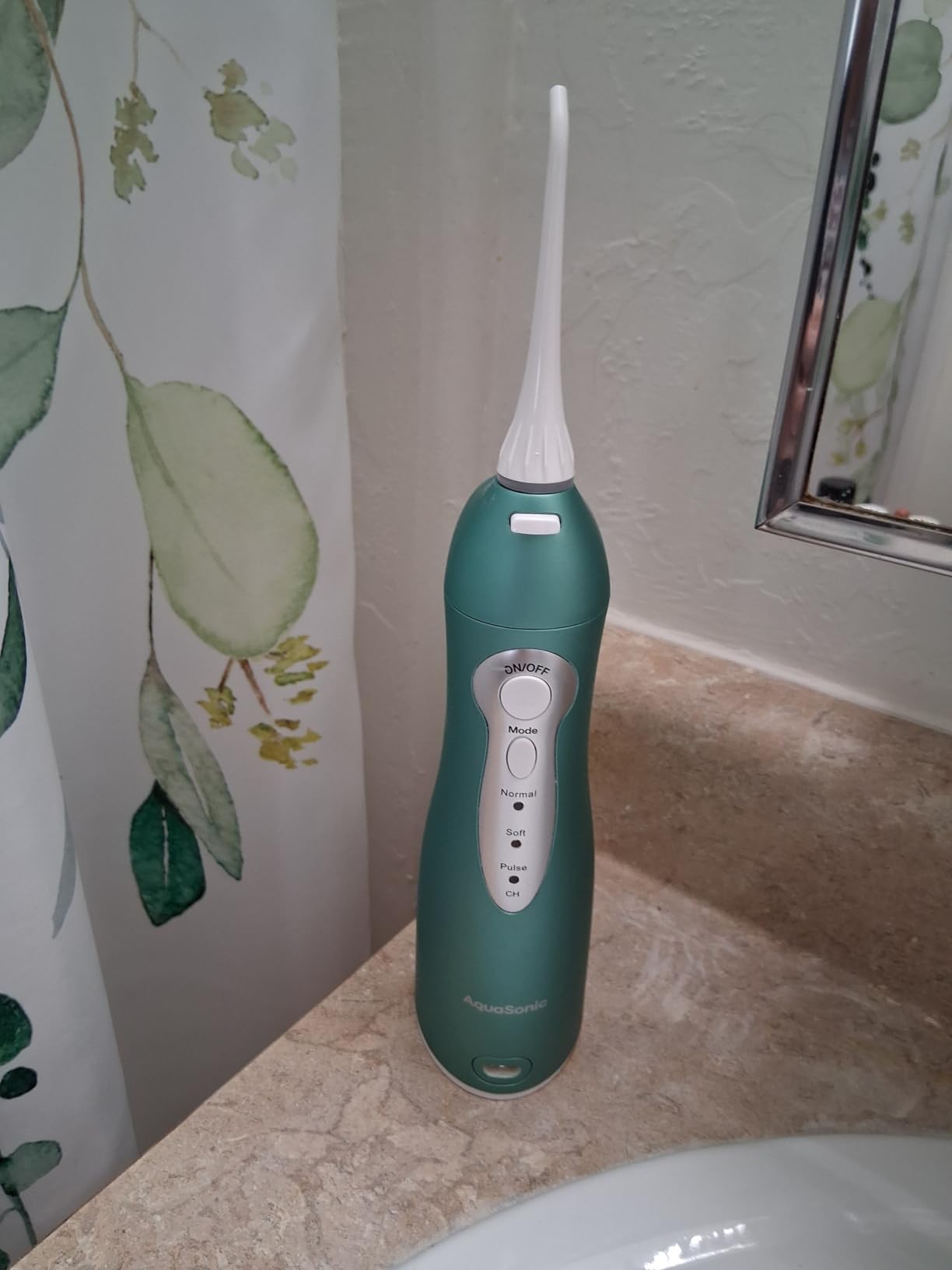
This is the one to buy if you want a mark on the box that came from a study rather than from a brochure. The ADA Seal of Acceptance here was earned through a 30-day randomised controlled study with 30 supervised subjects, and the manufacturer reports up to 87.1 percent plaque reduction and 93.8 percent gum health improvement. Read those as manufacturer-reported results, and note that the study measured plaque and gingival health rather than pocket depth.
It also comes with a dedicated periodontal tip aimed at the gumline, which removes the single most common frustration in this category, having to buy the correct nozzle separately. Owners consistently report more raw power than a Waterpik on its soft setting, which is useful if you have deep sites and need more than a gentle flush.
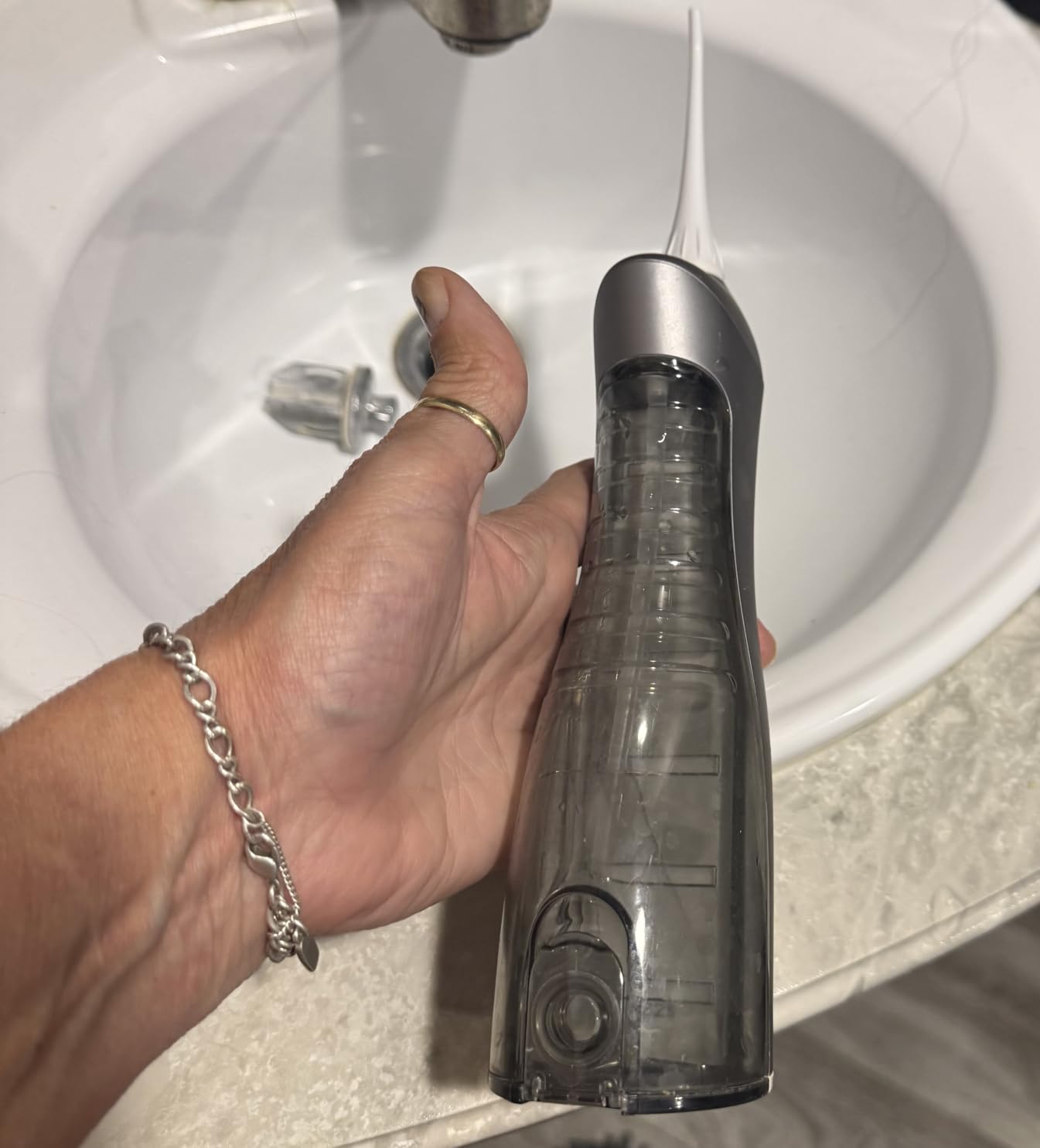
The small tank is the real cost here. Reviewers report refilling two to three times in a session, and the absence of a smooth-flow mode means some people find the pressure irritating to cheeks and gums rather than comfortable.
When this is the right pick
It suits someone who wants a documented clinical basis and a periodontal tip included out of the box. It suits a patient with deeper sites who needs more power than a mid-range unit delivers.
It suits anyone who is sensitive about which nozzle they are using, because the right one is in the box rather than a separate order.
When this is the wrong pick
It is the wrong pick if tank size determines whether you complete your session. Refilling two or three times per pass is the kind of friction that quietly ends a daily habit.
It is also the wrong pick if you have low tolerance for a harder jet. Without a smooth-flow mode, sensitive cheeks and tender tissue can take a beating even at a low setting.
8. TUREWELL FC162 – Best for 6mm and Deeper Pockets
TUREWELL Water Dental Flosser for Teeth/Braces, Water Teeth Cleaner
600ml tank,90 seconds of flow
10 settings,30-125 PSI,1250-1700 ppm
8 tips including periodontal,1 meter hose
100V-240V
Pros
- 600ml tank gives about 90 seconds of uninterrupted flow
- Ten pressure levels across a 30-125 PSI range
- Most complete tip set here at eight including a periodontal tip
- Universal 100V-240V voltage
- Quieter and smaller than many countertop units
Cons
- Power knob doubles as the on/off switch so intensity resets
- Top setting is weaker than a Waterpik at its maximum
- Some models show pump wear after 8-9 months
- Supplied with an American mains plug
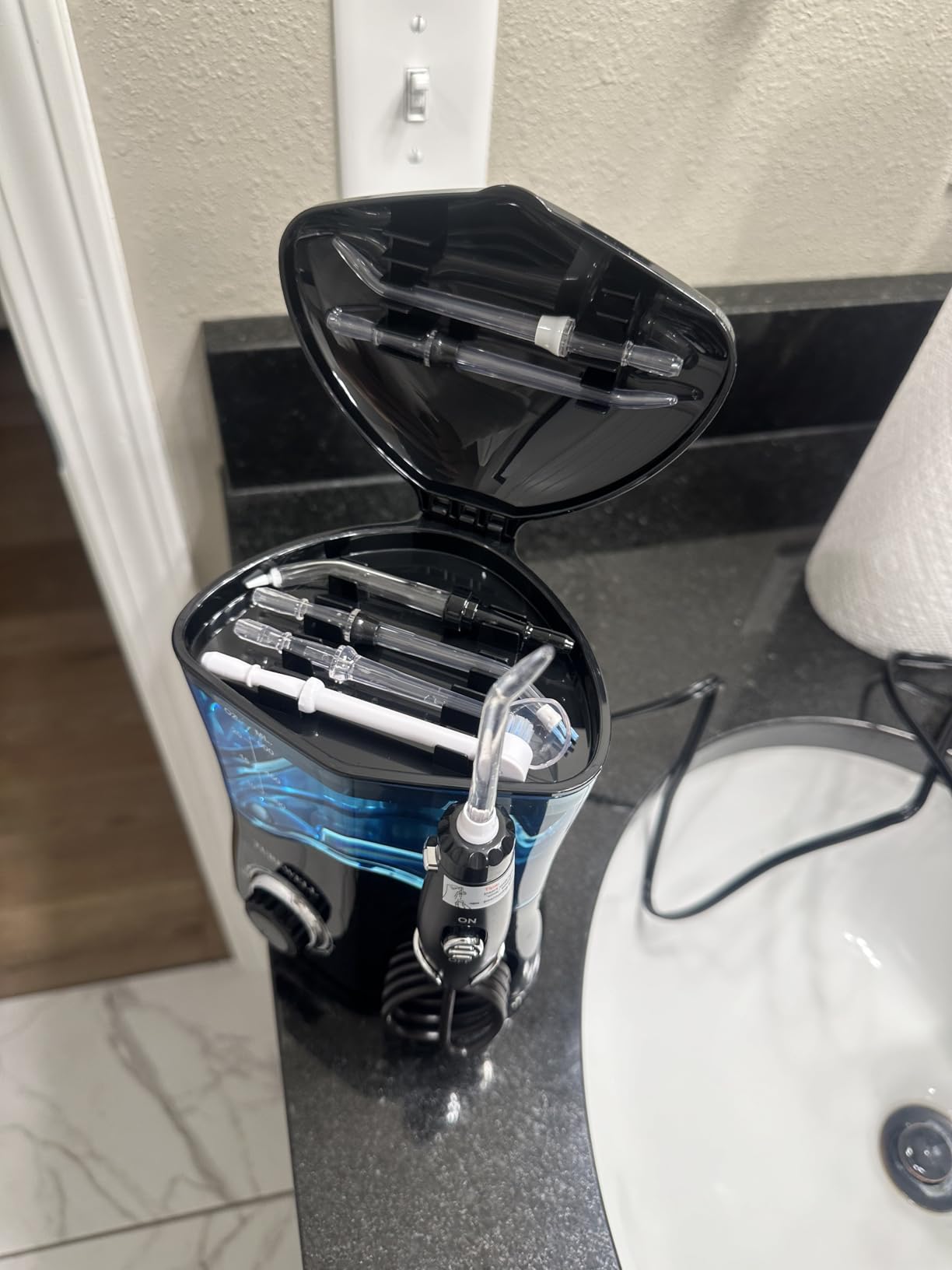
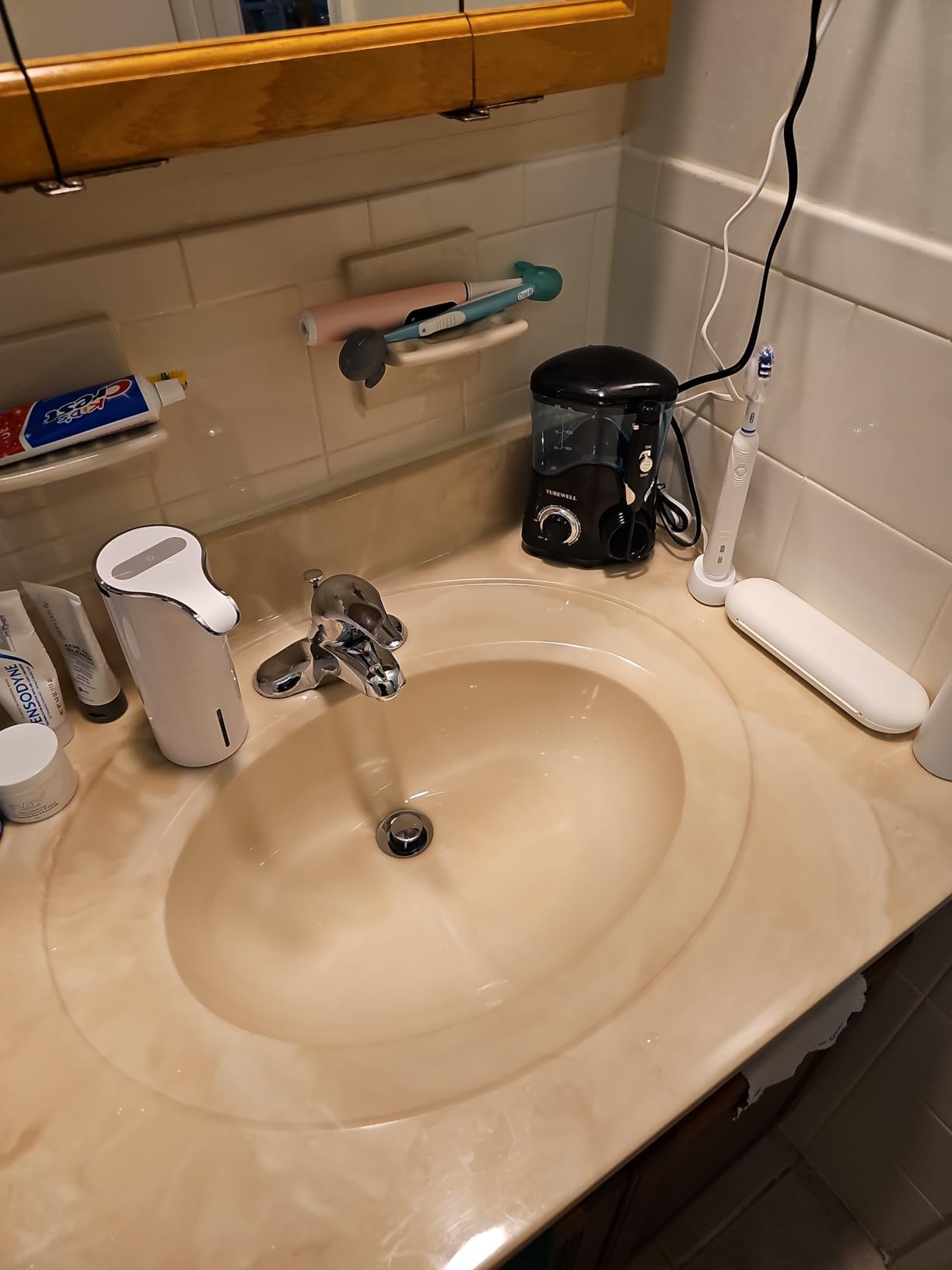
This is the unit for the deepest pockets in the guide. The 600ml tank with a one-metre flexible hose gives about 90 seconds of flow, so a 6mm site gets its full three-second dwell and a full arch is finished in one fill. The tip set of eight includes a periodontal nozzle and a toothbrush tip, which is the most complete inventory here.
Pressure runs through ten settings across a stated 30 to 125 PSI at 1250 to 1700 pulses per minute, and the 360-degree rotating nozzle with a handle-mounted on/off switch means you can stop flow without putting the device down. It is also quieter than a lot of countertop units, which matters in a small flat.
Two things temper that. Owners report the top setting is weaker than a Waterpik at maximum, so the highest number on the dial is not the highest pressure available in this category. And the power knob doubles as the on and off switch, so your intensity resets to a default every session, which is friction if you have carefully found a level that works.
Reliability reports split. Some owners report multiple models lasting years, while others describe pump grinding and tips popping out of the handle after eight or nine months. The American mains plug limits UK use despite the 100V to 240V range.
When this is the right pick
It suits anyone with 6mm or deeper sites who needs a full mouth covered in one fill. It suits households where several people irrigate, since a 600ml tank and eight tips cover more than a 300ml tank and five tips.
It suits anyone outside North America who wants a countertop unit, because the 100V to 240V range is wider than most plug-in competitors.
When this is the wrong pick
It is the wrong pick if you need the highest available pressure. The top of the range here sits below what the Aquarius delivers, and for a stubborn 6mm site that can be the difference between flushing and agitating.
It is also the wrong pick if you want your settings remembered. Having the intensity reset every time you lift the handle will test your patience over a long course of treatment.
9. Oralfree F5025 – Best for Limited Dexterity
Oralfree Water Dental Flosser Cordless for Teeth Cleaning – 4 Modes Oral Irrigator 300ML Braces Flossers Cleaner, Rechargeable Portable IPX7 Waterproof Powerful Battery for Travel Home
8.82 ounces,lightest model here
20-120 PSI,1500-1800 ppm
300ml tank,4 modes
IPX7 with double-sealing rings
Pros
- Lightest model in the set at 8.82 ounces
- 20-120 PSI range with 1500-1800 pulses per minute
- Double-sealing rings allow confident shower use
- Four modes including a soft mode for first-time users
Cons
- Lowest category rank in the set
- Fewer settings and tips than the Nicwell or COSLUS
- Only 12 months of after-sale service
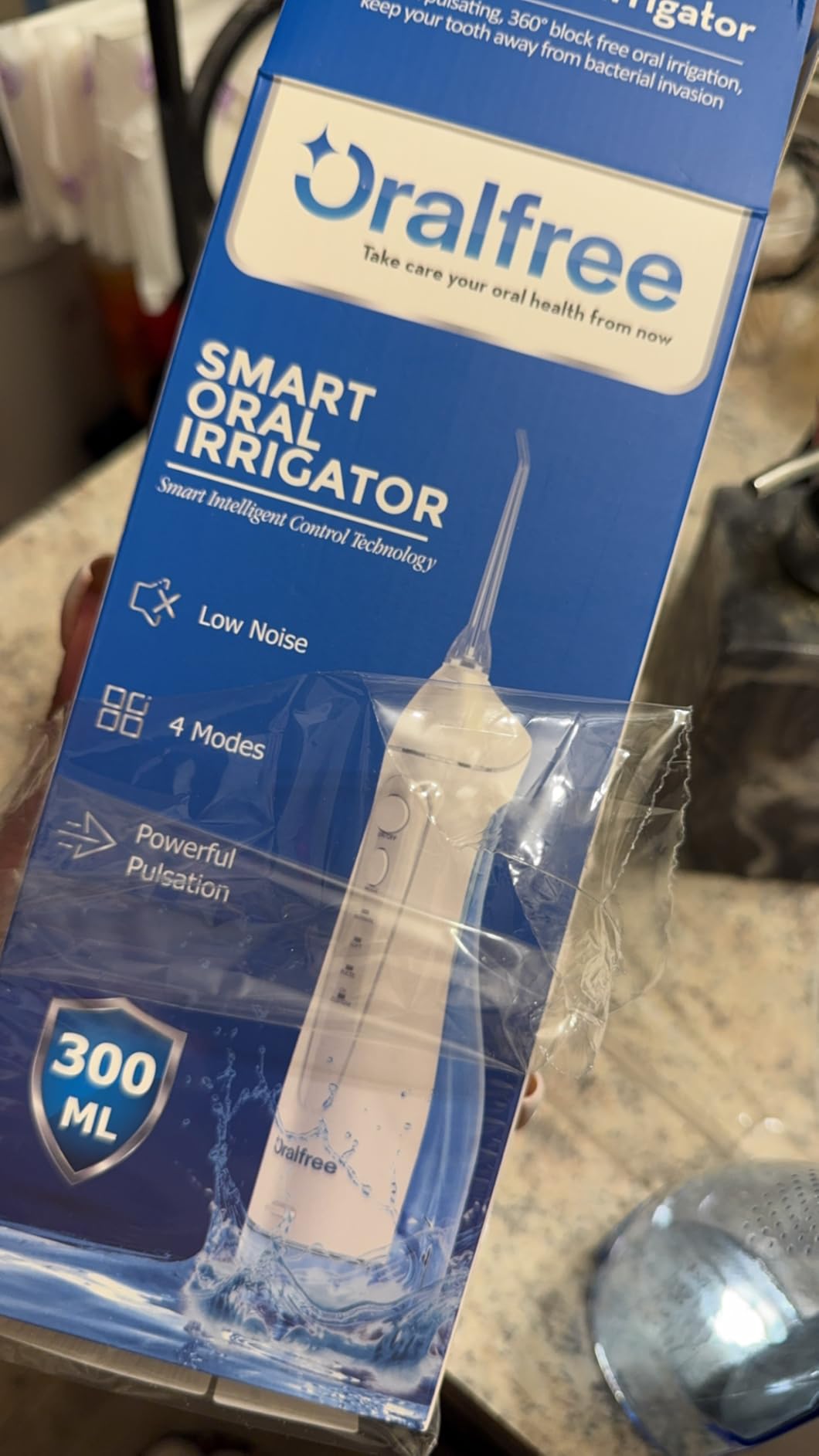
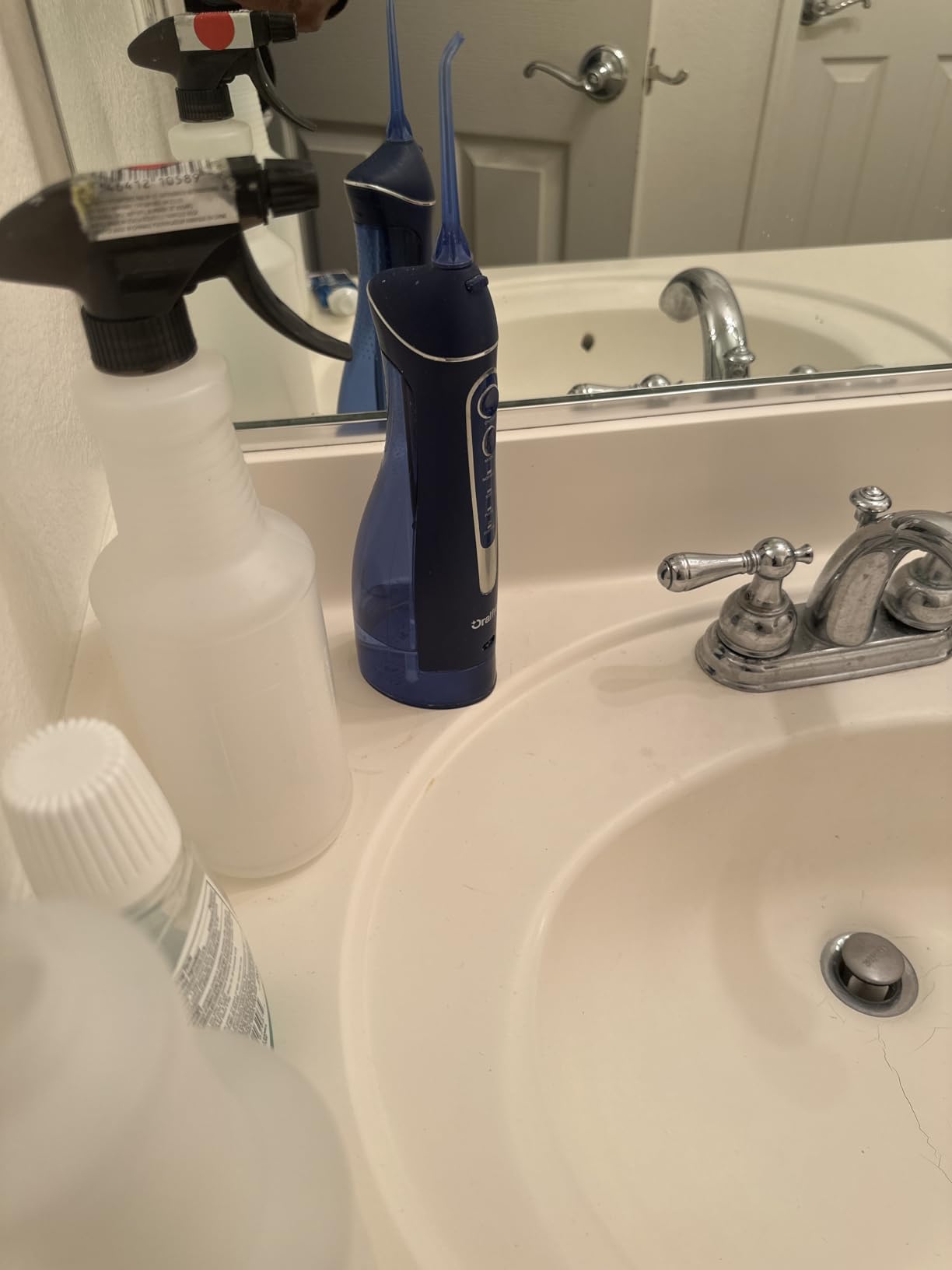
At 8.82 ounces this is the lightest model we looked at, and for anyone with arthritis, limited hand strength or a hand tremor that is the deciding feature. A device that is tiring to hold is a device that stops being used, and periodontal care only works if it is daily.
The pressure range is more than adequate for moderate pockets at 20 to 120 PSI and 1500 to 1800 pulses per minute, spread across four modes including a soft mode for first-time users. The 300ml tank and IPX7 rating with double-sealing rings make it a confident shower user.
The trade-offs are that it has fewer settings and tips than the Nicwell or the COSLUS models, and after-sale service is 12 months rather than two years. If you need fine-grained pressure adjustment, this is not the one.
When this is the right pick
It suits anyone whose grip is the limiting factor. It suits a single person irrigating who can manage a 300ml tank comfortably with one hand.
It suits smaller bathrooms too, at 2.76 by 3.54 by 8.27 inches with a removable tank, so it stores easily between uses.
When this is the wrong pick
It is the wrong pick if you need many pressure steps to manage inflamed tissue over a two-week ramp. Four modes is serviceable but it is not granular.
It is also the wrong pick for very deep pockets, since the highest pressure it delivers sits below the leaders in this list.
10. COSLUS E40 – Best for Shared Households
COSLUS ADA Accepted E40 Water Dental Flosser, 10 Pressure Levels, Black Pro
10 pressure levels with a stepless dial
300ml tank for multi-user sharing
Standard,orthodontic and periodontal nozzles
IPX7,30 day battery per charge
Pros
- Stepless dial adjusts pressure smoothly mid-session
- Includes a periodontal nozzle with standard and orthodontic
- Compact and light enough to hold comfortably with arthritis
- Customer service praised for replacing a device out of warranty
Cons
- 300ml reservoir drains fast and needs frequent refills
- Sensitive to charger choice with mismatched adapters
- Harder to dry fully between uses which raises a mould concern
The stepless dial is the reason this is here. Instead of stepping through fixed levels, you roll the pressure continuously from 1 to 10 with one finger, which means you can fine-tune mid-session against a single site without restarting the device. For deep pockets that get more tender the longer you go, that control is genuinely useful.
It ships with standard, orthodontic and periodontal nozzles, and the 300ml tank is designed for multi-user sharing. Owners with arthritis rate the grip positively and customer service is reported as good, including a replacement outside warranty.
Its weaknesses are real. The 300ml reservoir needs refilling more often than the 600ml models, and buyers raise a mould concern because it is not as easy to dry fully between uses. It is also sensitive to the charger, so use the correct adapter rather than a generic USB supply.
When this is the right pick
It suits a household sharing one device, since the tip set and tank are built for that. It suits anyone who wants to change pressure continuously rather than in fixed steps.
It suits a patient with multiple sites of differing depth, because a dial lets you treat a 3mm and a 6mm pocket differently within the same session.
When this is the wrong pick
It is the wrong pick if you irrigate several deep sites and would rather not refill mid-session. The 300ml tank is the most frequent refill complaint in this group.
If you have had a mould problem in a device before, weigh the drying concern carefully. A unit that is awkward to dry completely is the one most likely to need replacing in a year.
How to Choose a Water Flosser for Deep Gum Pockets?
Tip type decides whether the device is useful to you. A periodontal or Pik Pocket tip is tapered and thin, which is what allows a low-pressure stream to sit below the gumline. A standard fan jet is designed for above the gumline and will not do the same job. The Aquasonic and the COSLUS E40 both include one. If a unit does not, budget for a replacement nozzle before you commit to it.
Pressure granularity matters more at the low end than the high end. You are not trying to blast a pocket clean. You are trying to flush it at a level the inflamed tissue tolerates for two to three seconds. Eleven levels beats ten; ten beats five; three is a compromise. Start at the bottom and step up over two weeks, not on day one.
Convert reservoir size into seconds, not millilitres. A millilitre figure means nothing to most people. Roughly, 250 to 300ml gives you about 60 to 90 seconds of flow and 600ml gives you around 90 seconds plus headroom. If you have several deep sites, you need enough runtime to complete a full arch in one fill or the session simply will not happen daily.
Countertop versus cordless for periodontal use. A countertop unit with a hose gives you more runtime and more settings and takes up counter space permanently. A cordless unit gives you freedom and better sealing and a smaller tank. For deep pockets, runtime wins. For a patient who travels, a smaller sealed device that they will actually use twice a day beats a better machine sitting in a cupboard.
Maintenance burden is a selection criterion, not an afterthought. Empty the tank and let the unit air-dry every single day. Run a white vinegar flush weekly. Replace tips every three to six months. If a unit is hard to take apart and dry, assume it will develop biofilm and expect to replace it rather than keep cleaning it. This is the most common reason in periodontal communities that people give up on a device entirely.
The ADA Seal of Acceptance is worth checking, but know what it means. It signals that a product met the Council’s criteria for removing interdental plaque and reducing gingivitis between teeth. It is not a statement about periodontal pocket depth or about periodontitis. Treat it as a baseline quality signal, not as clinical permission to skip professional care.
Frequently Asked Questions
Can I use a water flosser if I have gum disease?
Yes, with the caveat that it manages rather than cures. Irrigation flushes plaque and bacteria from pockets of 4mm and deeper, which no brush or floss can reach, and clinical review PMC10771714 found water flossers plus manual brushing beat brushing plus flossing for reducing bleeding and gingivitis. It does not remove hardened calculus, and it will not close a deep pocket on its own. Keep your professional cleaning interval.
Why don’t dentists recommend water flossers?
Most dentists do recommend them, but as an addition to professional care rather than a substitute for it. The ADA’s position is that water flossers complement interdental cleaning. The reason they are careful about the recommendation is that irrigation flushes plaque while scaling removes calculus, and only one of those happens at home. Ask your hygienist which tip and which pressure level they want used on your specific sites.
What can I add to WATERPIK for periodontal disease?
Plain warm water for daily use. If your clinician has prescribed chlorhexidine, follow the label dilution, use it on a course of about three weeks, then take a week off to let staining and taste changes reverse, and empty and air-dry the tank after every session. Check the warranty before using any non-approved liquid, since several manufacturers exclude liquid damage.
Can a WATERPIK loosen crowns?
Used at a sensible distance with the flow following the gumline rather than aimed at the restoration margin, this is not a documented mechanism for loosening crowns. A restoration that feels loose was already failing. Do aim water along the restoration at low pressure rather than into its edge, and mention any movement to the dentist who placed it.
Which water flosser is best for periodontal disease?
For deep pockets, pick on tip type, pressure resolution and runtime rather than price. The Waterpik Aquarius leads on ten pressure steps and 90+ seconds of flow, the COSLUS C20 suits 3-4mm maintenance with ADA Scientific Council acceptance, and the Aquasonic Aqua Flosser is the only one here with its own 30-day clinical study behind its ADA Seal. Match the unit to your measured pocket depth.
What is the #1 dentist recommended water flosser?
There is no single answer, but the Waterpik Aquarius is the model dentists and hygienists mention most often in reviews, largely because it combines a wide pressure range, a large reservoir and a periodontal tip in one box. The Aquasonic Aqua Flosser is the one with formal clinical documentation, and the COSLUS C20 and E40 carry ADA Scientific Council acceptance. Ask your own clinician which tip and setting they want for your sites.
Has anyone improved 5mm pockets with a water flosser?
Forum users managing 5mm pockets describe a real but gradual pattern over roughly three to six months of consistent home care: less bleeding, pinker tissue, and pockets that measure shallower at a recall. Hygiene professionals on those same threads are consistent that a water flosser is a useful addition and that the cleaning interval matters more than the device. Expect months, not weeks, and track bleeding rather than depth.
What pressure setting should I use on deep pockets?
Start on the lowest setting, hold the tip at a 90-degree angle to the gingival margin, and dwell two to three seconds per site. Step up one level every few days over the first two weeks. High pressure on an active pocket produces more bleeding, not cleaner tissue, so a slow ramp is more effective than a strong start.
How long does it take for gum pockets to heal with a water flosser?
Bleeding usually settles within three to five days of consistent daily irrigation, because that is soft tissue responding to cleaner conditions. Pocket depth is far slower, taking three to six months of consistent home care alongside professional scaling to register any change at a recall. If bleeding has not improved by week two, or you have pus, fever or a bad taste, contact your dentist.
What type of floss is best for periodontal disease?
For pockets of 4mm or deeper, not traditional string floss, which tends to shred against deep sites and rarely reaches the base. A periodontal irrigator tip or an interdental brush sized to the pocket will do more. String floss still has a place for tight contacts below 3mm, and cleaning between the teeth and along the gumline is a complement to irrigation rather than a replacement for it.
The Verdict on the Best Water Flossers for Periodontal Pockets
For 6mm and deeper sites, the Waterpik Aquarius is the pick, because ten pressure steps and 90+ seconds of runtime in one fill is the combination that lets you irrigate a full arch methodically rather than in a rush. The TUREWELL FC162 is the alternative when tank volume matters more than pressure ceiling. For 5mm pockets, the Aquarius again, or the AquaSonic if you want the periodontal tip in the box and documented clinical data behind it. For 3-4mm maintenance, the COSLUS C20 does the job well and carries ADA Scientific Council acceptance.
Whatever you choose, the technique matters more than the unit. Lowest setting, 90-degree angle, two to three seconds per site, 60 to 90 seconds total, before brushing. And remember what irrigation is: a very good way to keep a pocket clean between appointments, and no substitute at all for the professional scaling that removes calculus.